Resources
Article by James M. Lang in the Chronicle of Higher Education. Suggestions ways to create a teaching philosophy that will be remembered by a search committee or a tenure and promotion committee. Recommends: thinking about end goals; distinguishing general and specialized courses; giving specific examples; and citing influential sources.
Link from Vanderbilt University, Center for Teaching. Describes purpose and elements of portfolio as well as general guidelines. Includes reflection questions on teaching to jump-start the writer. Has links to other websites with resources and exercises to help with drafting the portfolio.
Link from University of Michigan, Center for Research on Learning and Teaching. Provides suggestions on how to begin drafting document. Includes characteristics of effective statements. Has a rubric with elements that search committee may consider. Addresses questions that job candidates may face relating to the teaching philosophy.
Link from Washington University in St. Louis, The Teaching Center. Suggests four questions to consider: 1) Why do you teach? 2) What do you teach? 3) How do you teach? 4) How do you measure your effectiveness?. Offers formatting tips and strategies for beginning the first draft of the document.
Link from Ohio State University, University Center for the Advancement of Teaching. Describes purpose and components of a philosophy of teaching statement. Gives formatting suggestions and includes examples from humanities, sciences, and social sciences. Provides links to other sites and hard copy references.
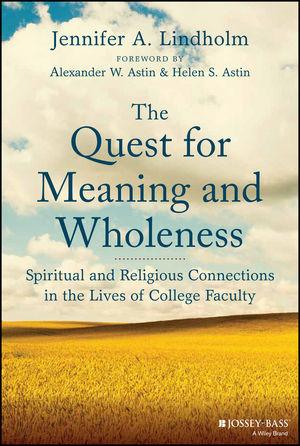
Click Here for Book Review Abstract: If institutions are to create campus environments that provide welcoming and engaging contexts for personal and professional development of students, faculty, administrators, and staff, all members of campus communities must be willing to look closely not just at what they do (or do not do) on a daily basis, but also why. This book offers an analysis of how faculty perceive intersections between spirituality and higher education, and what implications their spiritual inclinations have, not only for undergraduate education, but also for faculty life within academic workplaces. The Quest for Meaning and Wholeness draws on the 2012 Faculty Beliefs and Values Survey of just over 8,500 faculty employed at a range of institutions, and features faculty voices to answer the “So what?” question about why administration, faculty developers, and researchers should care about the spiritual and religious lives of faculty. (From the Publisher)
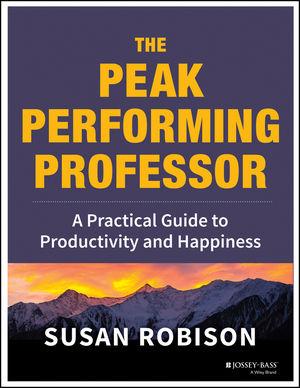
Click Here for Book Review Abstract: Grounded in research on neuroscience, faculty development, work productivity, positive psychology, and resilience, this faculty development guide is filled with the techniques and strategies that go beyond a discussion of work-life balance and teaching tips to offer practical tools for managing the life of the professor while maximizing his or her potential. Faculty who complete the book’s exercises are able to anchor their work, roles, and use of time in their most deeply held values, to integrate their personal and professional lives into a seamless garment, and to create a legacy of a life well-lived. (From the Publisher)

Pedagogies for the Future illustrates a unique and exciting endeavor whereby a group of academics across one university developed a professional learning community for the purposes of investigating, articulating and developing their scholarship of practice. Through their collaborative efforts, these educator-researchers sit at the forefront of calls to take teaching seriously in higher education and to recognize the powerful potential of interdisciplinary collaboration. The book provides a model for establishing learning communities in higher education and demonstrates that such work is not only possible but also successful. From vision to reality, Pedagogies for the Future offers important insights into the complex nature of researching teaching and learning in higher education from the perspectives of those directly engaged in it. This book will be of great interest and value to both scholars and administrators. (From the Publisher)
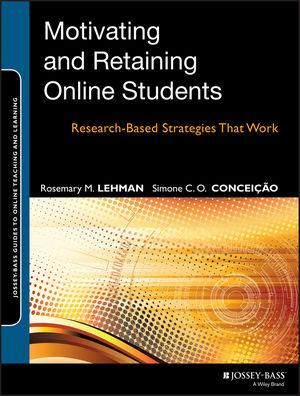
Finally, the first research-based book of sound strategies and best practices to help instructors motivate students to complete their online courses. Although studies support the effectiveness of learning online, students often fail to complete online courses. Some studies have found that as many as 50–70% drop out of their online courses or programs. Retention is not only a growing expectation and imperative, but it is also as opportunity for faculty members to take the lead in innovating, researching, and implementing new strategies while demonstrating their effectiveness. Designed for instructors and instructional designers, Motivating and Retaining Online Students is filled with empirical research from the authors’ study of motivation and retention strategies that can reduce online learner dropout. Focusing on the most important issues instructors face, such as course design; student engagement and motivation; and institutional, instructional, and informal student support strategies, the book provides effective online strategies that help minimize student dropout, increase student retention, and support student learning. While helping to improve the overall retention rates for educational institutions, the strategies outlined in the book also allow for student diversity and individual learner differences. Lehman and Conceição’s proven model gives instructors an effective approach to help students persist in online courses and succeed as learners. (From the Publisher)
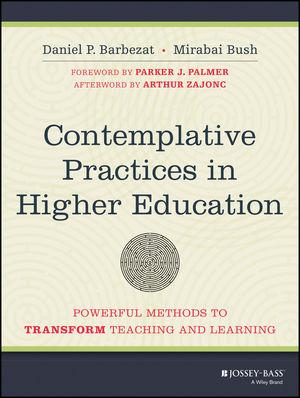
Click Here for Book Review Abstract: Contemplative pedagogy is a way for instructors to: - empower students to integrate their own experience into the theoretical material they are being taught in order to deepen their understanding; - help students to develop sophisticated problem-solving skills; - support students’ sense of connection to and compassion for others; and - engender inquiries into students’ most profound questions. Contemplative practices are used in just about every discipline—from physics to economics to history—and are found in every type of institution. Each year more and more faculty, education reformers, and leaders of teaching and learning centers seek out best practices in contemplative teaching, and now can find them here, brought to you by two of the foremost leaders and innovators on the subject. This book presents background information and ideas for the practical application of contemplative practices across the academic curriculum from the physical sciences to the humanities and arts. Examples of contemplative techniques included in the book are mindfulness, meditation, yoga, deep listening, contemplative reading and writing, and pilgrimage, including site visits and field trips. (From the Publisher)
Wabash Center Staff Contact
Sarah Farmer, Ph.D.
Associate Director
Wabash Center
farmers@wabash.edu