Resources
As a teacher trained in textual analysis and the religious practices of living human communities, the language of images, videos, and recorded sound are not my mother tongue. Yet, I know that for my students, communicating in an era where these visual forms of communication are the lingua franca of the people they lead means that they must develop the capacity to deploy images and cinematic narrative styles to engage their leadership teams, parishioners, board members, students, or volunteers in not-for-profit organizations. So must I. Given the powerful digital image-making and sharing tools that over 77% of the US population carries in their pockets, working in video and image while teaching is not a problem of a lack of technology. A lack of fluency keeps us from speaking these languages. However, like learning to communicate in a foreign language, the only way forward is to begin to speak. Many of us have had the experience of trying to hold a conversation in a language where we have novice level competency. We search for words, we stumble over the technicalities, we feel our intelligence level has been dropped by decades because we have only the most rudimentary vocabulary to express complex ideas. Learning to work in the visual languages of digital media is no different. We may have fabulous pedagogical visions for what is possible, but our capacity to capture those ideas and craft them to our satisfaction feels elementary and gawky. We have all been trained by our daily exposure to visual culture to recognize good visual communication when we see it. As veteran radio producer Ira Glass once noted, when we start a new form of creative work, our taste often outdistances our ability and causes us to become discouraged in what we produce. And as professors, we often do not want to appear a beginner, especially in something we are trying to teach our students. Rather than continuing to practice that new creative form, many of us, cowed by the challenge, stick with what we do best. We work primarily in text and demand that our students do so as well, whether or not this is to their detriment in the performance of their leadership when they leave our programs. After my first miserable quarter of teaching youth ministries online a decade ago, I realized that I was going to have to learn to play online if I was going to be able to teach online. The easy student interactions, the joy of conversation and dialogue, the embodied relationality of the physical classroom was gone, and I was either going to have to quit teaching or figure out how to do some of those things in a virtual environment. That is what drove me to join Facebook, and I began to reconnect with family members and friends far distant in time and space, practicing the skills I needed to teach online. I re-discovered how to be playful, to delight in connection with other human beings, to share things that were important to me in online settings. Practicing those skills in an environment where I was not the expert allowed me to develop them and deploy them in my teaching work. Likewise, I think faculty benefit from opportunities to play with new forms of visual communication outside of the classrooms in order to learn how to work with those languages. This could take many forms. My own faculty at Iliff brought in a photographer for a playful session during faculty retreat where we learned how to compose images and edit them with Snapseed. We wandered the retreat center, snapping photos and editing them digitally on our phones, then enjoyed a slide show at the end where we explored the resulting images. During the “Teaching with Digital Media” Workshop at the Wabash Center last summer, we sent faculty with disparate teaching contexts and fields of expertise off for an afternoon to create a “Teach Something in a Minute” video (a classroom exercise that Elizabeth Drescher had previously developed with her students at Santa Clara University). Participants decided on their topic, storyboarded videos, shot them around campus, edited them in free available software, and screened them that evening. We set minimal criteria (videos had to be one minute long; had to include titles, moving and still images; needed a soundtrack; all members of the three person team had to be involved in creating it), but otherwise allowed them to do what they could in the time allotted. We also invited the participants in the Wabash Programming Leadership Event into a similar activity to create short videos communicating the significance of various Wabash Center programs last October. The trajectory of these experiences for participants has been the same. Disbelief at the enormity of the task without adequate instruction in the technologies and techniques. Frustration at their lack of prior experience in filmmaking. Emerging eagerness to give it a try as they work together. Laughter and camaraderie as they shoot the material. Frustration with learning editing techniques as they try to pull together the piece in limited time. Moderate satisfaction with a finished project. Pride in their team’s efforts and emerging confidence to try again another time. No faculty inservice on the importance of digital media or demonstration of someone else’s use of digital media in teaching would serve as well as playfully engaging in the task of speaking the new language together and using it to teach one another.

When the Scholarship of Teaching and Learning (SoTL) emerged, it often concentrated on individual faculty practice in one classroom; it is now, however, increasingly common to find work in SoTL focused more broadly. SoTL studies may engage with a cluster of courses, a program, a particular population of students, a pedagogical approach, or a field—all of which are represented in the essays collected here by authors from a diverse array of institutions and nations. This volume features examples of SoTL research conducted in, and applied to, a variety of contexts and disciplines, offering a theoretical framework for an expanded vision of SoTL—one that moves beyond the individual classroom. (From the Publisher)

Many students struggle with the transition from high school to university life. This is especially true of first-generation college students, who are often unfamiliar with the norms and expectations of academia. College professors usually want to help, but many feel overwhelmed by the prospect of making extra time in their already hectic schedules to meet with these struggling students. 33 Simple Strategies for Faculty is a guidebook filled with practical solutions to this problem. It gives college faculty concrete exercises and tools they can use both inside and outside of the classroom to effectively bolster the academic success and wellbeing of their students. To devise these strategies, educational sociologist Lisa M. Nunn talked with a variety of first-year college students, learning what they find baffling and frustrating about their classes, as well as what they love about their professors’ teaching. Combining student perspectives with the latest research on bridging the academic achievement gap, she shows how professors can make a difference by spending as little as fifteen minutes a week helping their students acculturate to college life. Whether you are a new faculty member or a tenured professor, you are sure to find 33 Simple Strategies for Faculty to be an invaluable resource. (From the Publisher)
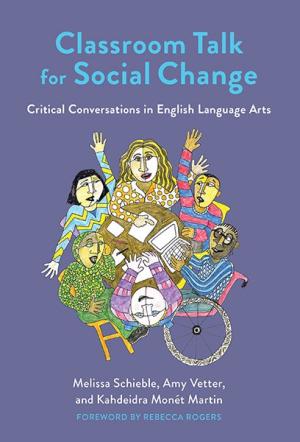
Learn how to foster critical conversations in English language arts classrooms. This guide encourages teachers to engage students in noticing and discussing harmful discourses about race, gender, and other identities. The authors take readers through a framework that includes knowledge about power, a critical learner stance, critical pedagogies, critical talk moves, and vulnerability. The text features in-depth classroom examples from six secondary English language arts classrooms. Each chapter offers specific ways in which teachers can begin and sustain critical conversations with their students, including the creation of teacher inquiry groups that use transcript analysis as a learning tool. (From the Publisher)
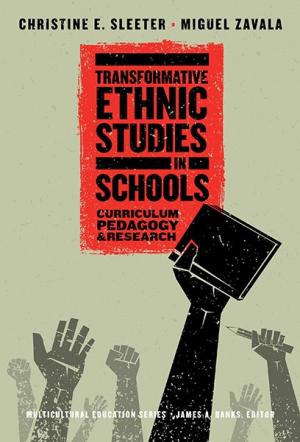
This timely and compelling book conceptualizes Ethnic Studies not only as a vehicle to transform and revitalize the school curriculum but also as a way to reinvent teaching. Drawing on Sleeter’s research review on the impact of Ethnic Studies commissioned by the National Education Association (NEA), the authors show how the traditional curriculum’s Eurocentric view of the world affects diverse student populations. The text highlights several contemporary exemplars of curricula—from classroom level to district or state-wide—illustrating core concepts in Ethnic Studies across a variety of disciplines and grade levels. A final chapter considers how research on P–12 ethnic studies can be conceptualized and conducted in ways that further both advocacy and program sustainability. Transformative Ethnic Studies in Schools is essential reading for educators working to transform schools by rehumanizing learning spaces for all students. (From the Publisher)
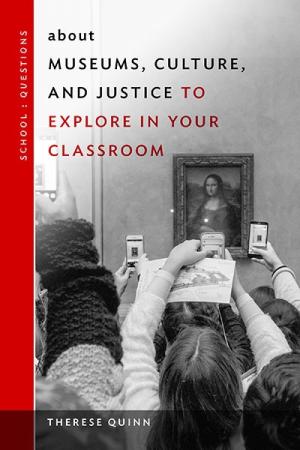
Museums are public resources that can offer rich extensions to classroom educational experiences, from tours through botanical gardens to searching for family records in the archives of a local historical society. With clarity and a touch of humor, Quinn presents ideas and examples of ways that teachers can use museums to support student exploration while also teaching for social justice. Topics include disability and welcoming all bodies, celebrating queer people’s lives and histories, settler colonialism and decolonization, fair workplaces, Indigenous knowledge, and much more. This practical resource invites classroom teachers to rethink how and why they are bringing students to museums and suggests projects for creating rich museum-based learning opportunities across an array of subject areas. (From the Publisher)
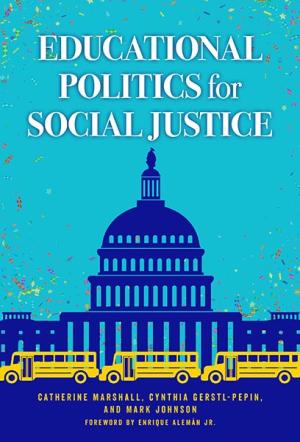
Employing a social justice framework, this book provides educational leaders and practitioners with tools and strategies for grappling with the political fray of education politics. The framework offers ways to critique, challenge, and alter social, cultural, and political patterns in organizations and systems that perpetuate inequities. The authors focus on the processes through which educational politics is enacted, illustrating how inequitable power relations are embedded in our democratic systems. Readers will explore education politics at five focal points of power (micro, local/district, state, federal, and global). The text provides examples of how to “work the system” in ways that move toward greater justice and equity in schools. (From the Publisher)
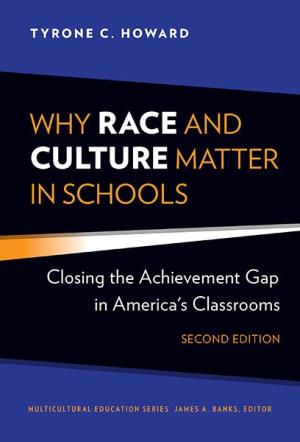
Issues tied to race and culture continue to be a part of the landscape of America’s schools and classrooms. Given the rapid demographic transformation in the nation’s states, cities, counties, and schools, it is essential that all school personnel acquire the necessary knowledge, skills, and dispositions to talk, teach, and think across racial and cultural differences. The second edition of Howard’s bestseller has been updated to take a deeper look at how schools must be prepared to respond to disparate outcomes among students of color. Tyrone Howard draws on theoretical constructs tied to race and racism, culture, and opportunity gaps to address pressing issues stemming from the chronic inequalities that remain prevalent in many schools across the country. This time-honored text will help educators at all levels respond with greater conviction and clarity on how to create more equitable, inclusive, and democratic schools as sites for teaching and learning. (From the Publisher)

In the first blog of this series (“Nobody Goes to the Cinema to Read the Screenplay"), I noted that I’ve tried to boost my multimedia literacy by becoming a student of the cinema and seeking convergences between filmmaking and homiletics for the purposes of enlivening the preached word, communicating the gospel, and impacting hearers and their/our world. One of the most delightful ways of boosting cinema literacy is by attending film festivals and their accompanying “talks.” At a recent documentary film festival, I heard about “Impact Teams,” and knew immediately that this is one of those impactful (!) convergences between filmmaking and preaching. Preaching professors guide students toward paying careful attention to their hearers and identifying what impact their preaching might have on them. Noted homiletician Thomas Long encourages preachers to identify a one-sentence “function statement” for each sermon.[1] This statement identifies what a preacher wants the sermon to do to/for the hearers in light of what the biblical text does and in light of what is known about the hearers and their lives. In other words, the preacher identifies the hoped-for impact of the sermon on individual hearers, the church, and maybe even the world. Often the first weeks of introductory preaching courses are dedicated to helping novice preachers get to a faithful function statement in order to craft a sermon that will do what the preacher (with the guidance of the Holy Spirit, of course) hopes it will accomplish (e.g., inspire, comfort, challenge, motivate, encourage, etc.). A good place to begin is to help preachers identify the impact sermons have had on them. Because this task does not come easy (surprising as that might be), getting some distance from the discipline of homiletics altogether is often a helpful starting place. A Film’s Impact on the Viewer Have you ever wondered why the majority of people have a conversation with someone about the films they see and the majority of worshippers (so it seems) rarely talk about their worship experiences with another? Somehow, we’ve been culturally formed to identify a movie’s impact on us beyond “I liked it” or “I didn’t like it.” We’ve developed a sense that movies are supposed to affect us and in this age of expanding cinematic literacy we’ve gained the capacity to articulate such effects. The preaching classroom is served by taking the discussion one step further and exploring with students what created the impact, e.g. lighting creates mood, camera angle forces point of view, the pace of dialog might create a sense of immediacy. “The filmmaker organizes shots, camera movement, editing, and music to elicit certain reactions so that viewers will respond right on cue precisely as intended.”[2] Learning the techne of filmmaking points to the intentionality of a filmmaker seeking (unapologetically!) a hoped-for impact on the viewer. A Sermon’s Impact on the Hearer Grasping the cinematic intentionality of a filmmaker aids recognition of the homiletic intentionality of the preacher. What tools do preachers have to create mood or to adopt a point of view, for example? How can preachers choose and use these tools to accomplish the sermon’s hoped-for impact? Even beyond homiletical techne, students begin to develop an appreciation for the power of preaching. In other words, with some intentionality, sermons can do things. (It’s worth noting that intentionality can be Spirit-led and, therefore, need not be equated with manipulation as some have been led to believe.) Sermon Impact Teams While many preachers learn to embrace the need to identify their sermon’s hoped-for impact, far fewer preachers embrace the encouragement to find out what impact a sermon actually has had on their hearers. Preachers can learn from filmmakers in this regard as well. Not only do filmmakers work toward a desired impact, but they often have “impact teams” to find out how films affect their viewers. It doesn’t take blockbuster budgets for preachers to adopt sermon feedback practices in order to find out how their sermons are received by their hearers. • Consider soliciting responses to two or three written feedback questions posed on the back of the bulletin. • Designate one table at the coffee hour following worship as the sermon roundtable where members of the “sermon impact team” facilitate conversation. It is important to remember that this is not the occasion for the preacher to receive ego strokes or ego strikes. Instead, consider asking simply, “What happened to you during the sermon today?,” “What in particular made this experience happen for you?” With a bit of coaching, congregation members will soon embrace the power of the pulpit for their lives. What has been said about the screen can most certainly true about the pulpit: Movies change us. . . We can benefit, in other words, from an honest dialog with movies that probe the affairs of life, even unpleasant or disturbing events and conditions. And we become better critics with deeper self-awareness through spirited post-movie discussions that make us consider our values and refine our point of view, and even sometimes challenge us to think differently.[3] [1] Thomas G. Long, The Witness of Preaching, 3rd ed. (Louisville: Westminster John Knox Press, 2016), chapter 4. [2] William D. Romanowski, Cinematic Faith: A Christian Perspective on Movies and Meaning (Grand Rapids: Baker, 2019), 55. [3] As noted by Los Angeles film critic, Justin Chang. Romanowski, 26.

One of the most common pedagogical errors I see in course syllabi is confusing a learning activity for a learning outcome. This often becomes evident when reviewing course learning objectives. A professor will write a course objective that reads "The student will participate in class discussions." Or, "The student will write a 12-page paper on an assigned topic." Or, "The student will submit two case studies from their ministry context." Those assignments provide clear expectations of student learning activities, but they reveal little about desired learning outcomes. What is the student supposed to learn as a result of doing those activities? Or, in what ways and to what extent will those activities provide evidence of student learning? The potential miss in confusing a learning activity for a learning outcome is that a teacher will be satisfied with grading an assignment, like a research paper, but fail to assess what learning (knowledge or skill) the student has acquired. A learning activity is something you want the students to do in order to achieve a learning outcome. A learning outcome is the evidence the student provides that they have understood a concept, gained knowledge, mastered a level of competence, or changed affect (attitude, appreciation, or opinion). This can be tricky in that sometimes an assignment can be the outcome. For example, in an English composition class writing an effective essay can be an outcome. But in a theology or philosophy course, writing an essay may be a learning activity that leads to an outcome. In the former, the teacher assesses the quality of the student assignment, like form, grammar, styles, etc. In the latter, the teacher assesses the essay for evidence of critical thinking, correct application of theological concepts, logical reasoning, avoiding errors of bias, sound interpretation, responsible use of facts, comprehensiveness, etc. Well-written Learning Objectives Can Help One way to overcome the trap of mistaking one thing for another is to design well-written learning objectives. Instead of identifying what a student will do ("The student will write a case study," "The student will read the text"), which is a learning activity, identify what the student will demonstrate ("The student will demonstrate . . .") which is a learning outcome. Avoid being satisfied with vague educational terminology like, "The student will understand . . ." without providing a criterion for what constitutes understanding. Use a taxonomy of learning to define the quality, characteristic, or criterion of understanding you will look for in your learning outcome (e.g., Wiggins and McTighe's taxonomy of understanding). Rubrics Can Help Another way to reveal the learning intent of an activity is by applying a learning assessment rubric. A well-written rubric will identify the criterion and the quality of learning outcomes. Some rubrics evaluate the product of a student assignment, but fail to identify the learning that is supposed to result from the assignment. Elegant rubrics can do both, but at least try to write your rubrics for outcomes of learning and not merely for evaluating a student product (an assignment). It can help to differentiate outcomes from activities by placing them in different headings in your course syllabus. Needless to say, your learning activities should align with your published learning outcomes: (1) In what ways will the learning activity help the student achieve the learning outcome (if it doesn't, then don't assign it), or (2) In what ways will the learning activity demonstrate that the student has achieved the learning outcome? Attached is a graphic handout that can help you differentiate an activity (assignment) from an outcome.
Wabash Center Staff Contact
Rachelle Green, Ph.D.
Associate Director
Wabash Center
greenr@wabash.edu