Search Results
9336 results found using the following search criteria: .
In this provocative book Warren A. Nord argues that public schools and universities leave the vast majority of students religiously illiterate. Such education is not religiously neutral, a matter of constitutional importance; indeed, it borders on secular indoctrination when measured against the requirements of a good liberal education and the demands of critical thinking. Nord also argues that religious perspectives must be included in courses that address morality and those Big Questions that a good education cannot ignore. He outlines a variety of civic reasons for studying religion, and argues that the Establishment Clause doesn't just permit, but requires, taking religion seriously. While acknowledging the difficulty of taking religion seriously in schools and universities, Nord makes a cogent case for requiring both high school and undergraduate students to take a year long course in religious studies, and for discussing religion in any course that deals with religiously controversial material. The final chapters address how religion might best be addressed in history, literature, economics, and (perhaps most controversially) science courses. He also discusses Bible courses, and the relevance of religion to moral education and ethics courses. While his position will be taken by some as radical, he argues that he is advocating a "middle way" in our culture wars. Public schools and universities can neither promote religion nor ignore it. Does God Make a Difference? increases our understanding of a long and heated cultural conflict; it also proposes a solution to the problem that is philosophically sound and, in the long run, eminently practical. (From the Publisher)
Praise for Radicalizing Learning This is a book that is so interesting that I had trouble putting it down. It is well written; there is new material; it articulates familiar concepts in such novel ways that your thought patterns get hijacked reading it. Adult learning and its processes are examined from a socialist perspective with a focus on social justice. Stephen Brookfield and John Holst have written a monumental text in the field of adult education. It is a bold, ambitious book, beautifully written and uncompromising in its social justice agenda. It is sure to become a classic in the field. This book offers new readings of the theory, politics, policy, and practice of radical adult education and learning where people's lives are understood as complex and interrelated matters. Brookfield and Holst's poetics and deeply human prose sound rebellious; the authors confront some of the main radical trends in the field of adult education including critical theory, transformative learning, and popular education. (From the Publisher)
Higher Education and First-Generation Students offers readers a rich understanding of the experience of students who are first in their family to attend college. This book contends that first-generation students are isolated and marginalized on many large college campuses and considers learning communities and critical multicultural pedagogies as vehicles to cultivate community, voice, and place for this new majority of students. This book is a theoretically informed study of the lived experience of FG students and draws on their voices to demonstrate how their insights interface with what we, as educators, think we know about them. What can we learn from these students? How might their insights inform and shape the learning spaces we create for them? (From the Publisher)
Learning and Teaching Across Cultures in Higher Education contains theoretical rationale, resources and examples to help readers understand and deal with situations involving contact between learners or educators from different cultural backgrounds, as well as giving insights into the new global context of higher education. (From the Publisher)
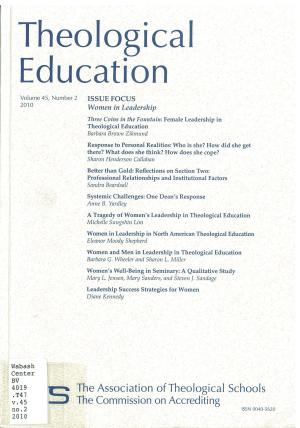
Journal Issue. Full text is available online.
In October 2008 The American Academy of Religion published the findings of an eighteen month study (conducted with funding from the Teagle Foundation) on “The Religious Studies Major in a Post–9/11World: New Challenges, New Opportunities.” Re-published here, this AAR-Teagle White Paper provides the opportunity for four respondents to raise issues and questions about the teaching of religion in their own institutional contexts. First, Jane Webster describes how the White Paper's “five characteristics of the religion major” find expression in her biblical literature course. Then James Buckley suggests some of the general level teaching issues provoked by the study and analyzes how well the White Paper aligns with how the teaching of religion is conceived in his Catholic university context. Tim Jensen draws comparisons between the White Paper and the higher education structures and goals from his university context in Denmark, raising questions about what motivates students to major in religious studies, the “utility” of a religious studies major, and whether students' religious and spiritual concerns ought to enter the classroom. And finally Stacey Floyd-Thomas finds surprising similarities between the state of the religion major and the various crises facing contemporary North American theological education.
One page Teaching Tactic: establishing a predictable structure with discussion questions at the start of each class.
One page Teaching Tactic: students learn to create models in order to increase their grasp of nuanced theological arguments.
One page Teaching Tactic: a method for improving students' sermons.