Search Results
9333 results found using the following search criteria: .
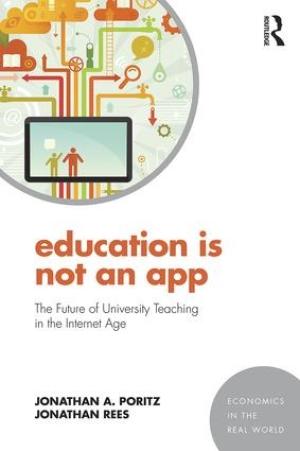
This book captures the frustration of many faculty who are witnessing the decline of faculty governance against the rise of administrative fiat, particularly in areas that impact pedagogical choice. In seven main chapters, the authors provide a detailed view of the systems and decisions that are so often thrust upon faculty. They do a superb job describing the landscape of MOOCs, FLOSS, and LMS in everyday language. They deal with a broad range of issues to show the ways in which faculty are being (sometimes willingly) deskilled through technology. These authors are not dismissive of technological innovation, but they are wary of some aspects of it. They are aware that this book will quickly become outdated but teachers will find that the evidence and core arguments presented here remain worthy of attention. Education is Not an App is a manifesto of sorts, calling faculty to embrace their freedom to make pedagogical choices, a freedom that is often smothered by administrative decree. For instance, the authors argue, new learning management systems are often presented to faculty as across-the-board, time-saving solutions for all, not as the political flashpoints they should be. For these authors, educational technology tends to “seek constrained truth for the advantage of specific powers that be” (3), just as the simplest app constrains as it empowers. Several key assumptions and at least one conclusion here might irk some readers. First is the assumption that face-to-face education is superior to online education, with very limited exceptions. The authors assert that the work that happens between people in classrooms produces more critical thinking, and therefore more meaningful learning than most experiences online. This reader agrees, but not all will. Another assumption is that faculty will have the ability (or the interest) to keep current with new technologies and will have institutional support in using the ones they choose, a lofty goal on both counts. Few faculty have the time to school themselves on emerging technologies, and pressures such as student evaluations reward conformity. These authors conclude, quite rightly, that faculty jobs are in danger because of the “the kind of university governance that makes this kind of [edtech] abuse possible” (37). This book highlights many issues that raise concern (not least, the rise of “instructional designers”), but we do not yet know that student learning suffers in this tech-heavy environment. The authors focus more on academic freedom and far less on student learning. Poritz and Rees are correct that educational technology – with its unbundling and deskilling and administrative oversight – threatens academic freedom and the autonomy of thought we hope to teach our students. It invites monitoring and assessment that faculty should resist; at the very least, teachers should consider at length the costs of simplifying their teaching lives through technology. “At the risk of sounding alarmist” (74), faculty in all disciplines should read this book. Even those who resist as much as possible should be aware of the changing landscape. We gain and lose in the decisions that we make, but we stand to lose more from decisions made for us.
This book is one among fifty others within the Multicultural Education Series. According to the series editor James A. Banks, these books “[summarize and analyze] important research, theory, and practice related to the education of ethnic, racial, cultural, and linguistic groups in the United States and education of mainstream students about diversity” (xiii). Özelm Sensoy and Robin DiAngelo’s book focuses on social justice. For distinction from the commonplace notion of social justice, Sensoy and DiAngelo use the alternative term “critical social justice.” By critical social justice, they mean: (1) recognition of unequal social power relations at the individual and group levels in society; (2) understanding of one’s place within these relations of unequal power; (3) critical thinking on what knowledge is and how it is produced and acquired; and (4) action informed by the best understanding of what social justice is and sound methods for its realization in society (xxi). Sensoy and DiAngelo provide guidelines for teaching and learning social justice. The book consists of twelve chapters. The chapters include: pictures; charts; figures; vocabulary lists; boxes for definitions of key terms and reminders of ideas and concepts if discussed in a previous chapter; questions for discussion; and instructions for learning activities. The authors intend for persons to read the chapters in their numerical order. The content of the book is cumulative, with each chapter building upon the one that precedes it. There is an underlying logic in the linear progression of the chapters. Chapters 1 and 2 deal with instructional matters, providing students with guidelines for learning social justice course content (6-18), instructors with guidelines for grading student performance (19-21), and both with an overview of critical theory in social justice courses (25-27). Chapters 3 to 5 define the concepts and operations of culture, socialization, prejudice and discrimination, and oppression and domination (36-40, 51-57, 61-73). Chapters 6 to10 define ableism, sexism, racism, and classism and describe how they pervade social institutions (82-86, 104-115, 123-129, 142-144, 156-162, 177-182). Chapter 11 refutes 13 common statements that are used to discredit social justice education (186-197). Based on Sensoy and DiAngelo’s definition of critical social justice, Chapter 12 specifies four learning outcomes for social justice education and crafts possible scenarios for illustration of the kinds of actions for each outcome (200, 203-204, 207, 211). Though written primarily for white readers, Sensoy and DiAngelo’s book merits consideration by all readers interested in social justice education in pluralistic society. The series editor notes that “most of the nation’s teachers are white, female, and monolingual” (xii). Using the terms “we” and “us” throughout the book, Sensoy and DiAngelo acknowledge their associations with this demographic group (120). Given the fact of intersectionality – that any one person has multiple associations – race or ethnicity cannot be a person’s only identification (138, 175). The complexity of human subjectivity warrants the concern of all persons with social justice in a world characterized by ever-increasing diversity.

Essentials of Online Teaching: A Standards-Based Guide could contribute to lively and relevant discussions about the challenges and opportunities of online courses. The book is unique because it takes the reader on a journey from the preliminary design of a course through its development and final phase of instruction. A further distinctive feature of the book is that it includes source materials from hundreds of teachers who have extensive knowledge of and experience with teaching online courses. By collaborating with such a diverse group of educators, the authors provide an impressive set of approaches to guide teaching decisions, assessing students’ progress, and reflecting on factors that influence a successful, online teaching experience. The book is a wonderful and needed resource that offers helpful models and examples of courses that integrate a range of interactive methods for learning such as discussion forums, blogs, and chats. The book begins with a general overview of online education and describes technologies for effective teaching as well as what a teacher should focus on before the semester begins. After offering suggestions on how to launch a successful online course, McCabe and Gonzáles-Flores examine how teachers monitor and support students’ learning once the course starts. In addition, they address ways to evaluate students during the middle weeks of a course and how to evaluate the effectiveness of the course design in case improvements are needed to enhance the teaching and learning process. Other important aspects of online teaching and learning are collaboration and assessment. The authors provide explanations and examples of how discussions and collaboration should work as well as how to evaluate standards of practice. In the Introduction, McCabe and Gonzáles-Flores discuss the scope of foundational theorists in distance education as well as the current work of researchers in the field. The book is a useful resource for teachers who are “new to online teaching or those who want to improve their practice” (3). This book will also benefit educational and corporate trainers, academic administrators, department heads, decision-makers, entrepreneurs, teachers, and students who work with online course development and training. In fact, anyone interested in education can use Essentials of Online Teaching: A Standards-Based Guide to “understand the challenges online instructors and trainers face and design products to serve their needs” (4). In an early chapter, the authors show how online education has evolved over the years and how various models can effectively work for teachers and students. Historically, online teaching as a “concept and term sprang onto the educational landscape in the late 1980s as computer conferencing software began to support interaction between teachers and students” (22). Eventually, those in education, including researchers, marketing professionals, and program developers started conversations that grew into new ways of instruction. In early conversations, these new ways used passive language that de-emphasized the personal dimension in teaching. According to the authors, passive language sends an incorrect message; namely, an implication that online courses are characterized, primarily, by automation rather than an active and interactive process of teaching and learning. Hence, this book describes an interactive process from beginning to end where students and teachers take advantage of asynchronous communication and do not allow remote access or intermittent exchange prevent engagement, reflection, or assessment. Recognizing the unique character of online courses, the authors encourage as much activity as possible by teachers helping students navigate the online environment through a variety of pedagogical and management strategies.
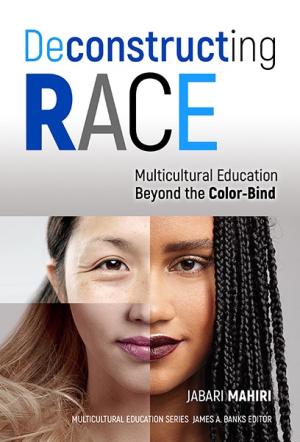
Deconstructing Race is a book written by a teacher to other teachers. It combines empirical data with critical race theory and pedagogical research with three objectives: at the theoretical level, the book offers teachers an overview of applied critical race theory; at the pedagogical level, Mahiri offers a wide sample of ethnographic data (mostly interviews) and literary analysis (Chapter 2) that both inform and illustrate the theoretical framework; third, and perhaps most importantly, Deconstructing Race offers an alternative framework “beyond the Color-Bind.” Aptly drawing on Derrida’s work, Mahiri diagnoses that “rapidly changing micro-cultural identities and practices of individuals cannot be contained in the static racial categories assigned by white supremacy” (7). The author advances the notion of “micro-cultures” to account for the myriad ways in which subjects assume different cultural positions, practices, choices, and perspectives. The hyphen in the expression seeks to underline the experience of multicultural individuals who always live in-between. The theoretical apparatus (Chapters 1, 2, 3, and 9) sandwiches a set of five chapters in which the author exemplifies the inadequacy of racial categories by presenting several interviews grouped according to the five official categories of race (briefly presented in chapter 3). The wealth of interviews and testimonies cannot be summarized here, but they all point to how institutionalized racial categorizations completely miss the mark as descriptors of identity. The ethnographical data amply demonstrates in turn that identitarian “boxes” cannot be decided in advance and theoretical notions need to be sharpened to reflect what Mahiri calls the phenomenon of hyperdiversity. For educators in the fields of theology, religious studies, or multicultural ministry, the main appeal of this contribution may reside precisely in the richness of its ethnographical survey and, more specifically, in the testimonies of subjects classified within a certain race. Their experiences push racial categories to come undone in favor of other “ancestral, ethnic, and national origin identifications” (78). Furthermore, this new construction of identities, Mahiri explores, is performed through digital media where subjects negotiate real-world and virtual identities – subverting the former by performing new identifications in the latter. From this standpoint, Deconstructing Race offers a glimpse of what resistance looks like in the age of digital media. Whereas the ethnographic account is definitely the book’s main strength, its theoretical framework calls for further elaboration. Mahiri takes a descriptive approach to ethnographic analysis with the subsequent advantage of presenting the experiences of the interviewed subjects in their rich complexity. However, self-descriptions are not sufficiently analyzed. For instance, to what extent is the emphatic insistence on the notion of “identity” (regardless of the axes that define it) not itself a philosophical project in need of deconstruction? How might a more robust analysis of contemporary capitalism – a concept mentioned a couple of times in passing but that names the cause, one might argue, of mass population movements that inform the identities presented – inform alternative racial imaginaries?
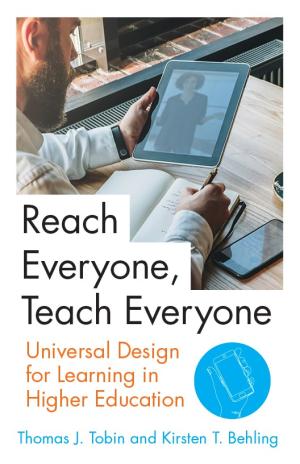
Advocates for the rights of people with disabilities have worked hard to make universal design in the built environment “just part of what we do.” We no longer see curb cuts, for instance, as accommodations for people with disabilities, but perceive their usefulness every time we ride our bikes or push our strollers through crosswalks. This is also a perfect model for Universal Design for Learning (UDL), a framework grounded in the neuroscience of why, what, and how people learn. Tobin and Behling show that, although it is often associated with students with disabilities, UDL can be profitably broadened toward a larger ease-of-use and general diversity framework. Captioned instructional videos, for example, benefit learners with hearing impairments but also the student who worries about waking her young children at night or those studying on a noisy team bus. Reach Everyone, Teach Everyone is aimed at faculty members, faculty-service staff, disability support providers, student-service staff, campus leaders, and graduate students who want to strengthen the engagement, interaction, and performance of all college students. It includes resources for readers who want to become UDL experts and advocates: real-world case studies, active-learning techniques, UDL coaching skills, micro- and macro-level UDL-adoption guidance, and use-them-now resources. (From the Publisher)

I ask students to laugh at death with me. Rather than treating death as off-limits or something that must be approached with absolute solemnity, I ask students to laugh. And when I make jokes about death and they stare at me with horror, I remind them that it’s ok to laugh about death. I like to think that they eventually get used to me. Discussions about trauma often coalesce around healing, but this orientation forecloses the (im)possibilities inherent in trauma. Quick movements from trauma to healing also assume the inherent value of life as opposed to death. Rather than treating life and death as opposites, the death positivity movement suggests that death is a part of life and the ongoing ecosystem. Death becomes something active, something that can be done (and done well), instead of avoided until it overtakes the agency of a body (or mind) that is actively attempting to remain alive. The death positively movement maintains that individual human lives may not continue forever, but life does. I teach about this movement in my course “Religion Outside of Religions,” a course that draws on theories and methods often used to study religious traditions to explore aspects of contemporary U.S. culture that aren’t considered overtly religious. The death positivity movement, therefore, serves as an example of an orientation to the so-called natural world that occurs outside of overt religious traditions. Students explore the myths, rituals, beliefs, and ethical systems that guide this movement, especially as they develop in contrast to broader medical and funerary practices in the U.S. Through this process, students often confront their own assumptions about death, especially as these assumptions tend to be informed by the medical and funerary practices opposed by the death-positivity movement. These confrontations push students beyond life-death binaries and some even learn to laugh at my jokes (I keep wondering if I should start listing that as a learning outcome). Might we, as teachers, adopt this posture to trauma? What would it look like to push ourselves past the binary of trauma and healing? What if we accept and adapt to the trauma that is always already in our midst? What if we refuse to tidy up traumatized psyches behind the closed doors of licensed counselors, much like the corpses made to look eerily lifelike in funeral homes? Teaching about different approaches to death can reorient the assumption that trauma is bad and healing good. This is a particularly important reorientation within a context where trauma is often ongoing and not a one-time event. The death positivity movement recognizes that some people live in closer proximity to death than others and that the deaths that result from this proximity can and should be avoided. As Everything Dies: A Coloring Book About Life! says, “I know everything dies, but there seems to me to be a big difference between something dying to feed another living thing, and this strange knack we have for needless death. These are deaths that don’t feed life. These are deaths of entire species and peoples and places. Humans seem to do this a lot.” (58) Recognizing that all deaths (like all lives) are not equal given our current political systems, the movement argues for breaking the culture of silence around death, including the culture of silence around systems that locate some bodies closer to death as a result of race, sexuality, gender, disability, class, or location. By opening these questions, the death positivity movement pushes us to teach recognizing that trauma is often ongoing and systemic, rather than a one-time event. The death positivity movement encourages us to ask why life is necessarily better than death. It also begs the question of whether trauma must end with healing, suggesting that trauma, like death, is ever-present and not something to be avoided but, rather, to be engaged. These are ideas to bring to students and to let challenge our own assumptions about teaching, particularly around the place of trauma in the classroom.
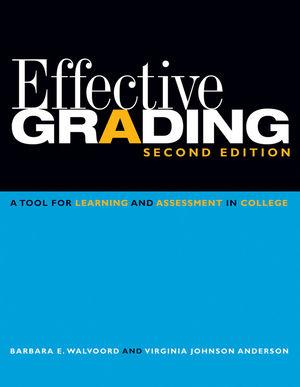
The second edition of Effective Grading—the book that has become a classic in the field—provides a proven hands-on guide for evaluating student work and offers an in-depth examination of the link between teaching and grading. Authors Barbara E. Walvoord and Virginia Johnson Anderson explain that grades are not isolated artifacts but part of a process that, when integrated with course objectives, provides rich information about student learning, as well as being a tool for learning itself. The authors show how the grading process can be used for broader assessment objectives, such as curriculum and institutional assessment.
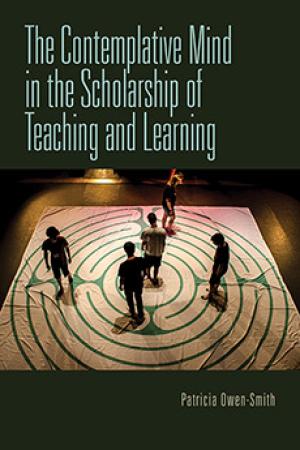
In The Contemplative Mind in the Scholarship of Teaching and Learning, Patricia Owen-Smith considers how contemplative practices may find a place in higher education. By creating a bridge between contemplative practices and the Scholarship of Teaching and Learning (SoTL), Owen-Smith brings awareness of contemplative pedagogy to a larger audience of college instructors, while also offering classroom models and outlining the ongoing challenges of both defining these practices and assessing their impact in education. Ultimately, Owen-Smith asserts that such practices have the potential to deepen a student’s development and understanding of the self as a learner, knower, and citizen of the world.
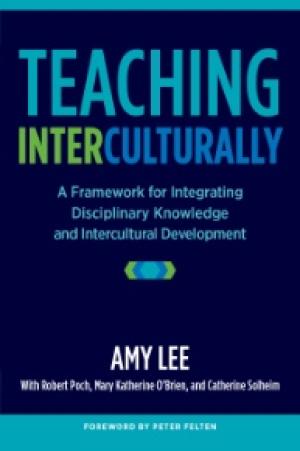
Click Here for Book Review How can I simultaneously support students' critical engagement with course content and develop their intercultural awareness? Most faculty have multiple diversities present in any given classroom or academic program— whether from an influx of international students or an increase of students from low-income, first generation, and/or racial/ethnic minority populations— and are concerned about how to maintain a rigorous curriculum and ensure that all their students succeed, given disparate backgrounds and varying degrees of prior knowledge. This book provides faculty and instructors with a theoretical foundation, practical tools, and an iterative and reflective process for designing and implementing an intercultural pedagogy. The authors bring to bear the expertise of their various disciplinary backgrounds to offer a responsive, integrative framework to develop and continually refine a pedagogy that both promotes deep disciplinary learning and supports intercultural outcomes for all students. The authors offer a framework that is flexible enough to be responsive to the experience, environment, and particulars of a given teaching and learning situation. The text incorporates narrative text by the authors, as well as first-person reflections, classroom activities, and annotated assignments that illustrate the dynamic process of intention, experiment/implement, critique, and refinement that characterize pedagogy and intercultural interaction. The authors bring to bear the expertise of their various disciplinary backgrounds, a deep knowledge of effective pedagogical practice, and their experience and grounding in intercultural practice: Amy in composition/writing studies, Mary Katherine in international education with rich experience as a faculty development trainer, and Bob and Catherine, respectively, an historian and a family scientist. This book is intended both for individual reading as well as for collective study in learning communities.
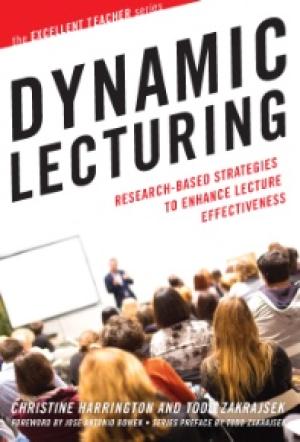
Click Here for Book Review Is the lecture an outmoded teaching method that inhibits active learning or is it a potentially powerful tool that is an essential part of every teacher’s repertoire? This book presents up-to-date research on the different types of lecture, on what constitutes effective lecturing, and on the impact of lecturing when done appropriately and well. It fills the void in professional development resources on how to lecture, validating the practice when it’s aligned with the educational mission of creating engaged learning environments. Christine Harrington and Todd Zakrajsek demonstrate that, rather than lecture and active learning being mutually exclusive or either-or propositions, the effectiveness of the former can be greatly enhanced when combined with active learning techniques through what they define as dynamic lecturing; and provide context about the need to balance these approaches to meet the needs of students as they progress from novice to advanced learners. They present a range of strategies that enhance student learning during lectures. They open each chapter with the evidence behind each lecturing strategy they describe, and conclude with practical suggestions for quick application in the classroom. They offer readers the lecture planning and evaluation tools for reworking their lectures in ways that provide high-level engagement and achievement for their students. The opening section of the book explores the benefits of lecturing and describes the different modalities of lecture, with an assessment of the advantages and disadvantages of each. The second section focuses on educational strategies to enhance the lecture, including, among others, activating prior knowledge, emphasizing important points, effectively using multi-media, making concepts meaningful via examples, and the importance of retrieval practice. Each covers the underlying theory and research, and advice on how to align the engagement techniques with instructional goals. The book concludes with guidance on effective planning for lecturing and helping chairs, administrators, or peers engage in effective evaluation of the lecture. This is a dynamic resource for all faculty interested in revitalizing their teaching. The strategies are succinct, easy to incorporate into lectures and, done well, will have immediate impact and increase student mastery of course content. (From the Publisher)