Search Results
9325 results found using the following search criteria: .
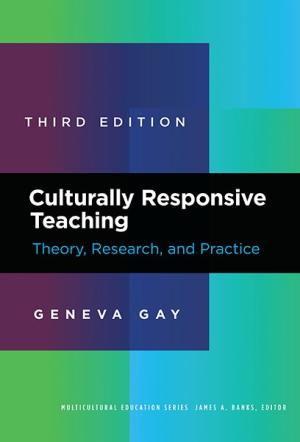
Geneva Gay is renowned for her contributions to multicultural education, particularly as it relates to curriculum design, professional learning, and classroom instruction. Gay has made many important revisions to keep her foundational, award-winning text relevant for today’s diverse student population, including: new research on culturally responsive teaching, a focus on a broader range of racial and ethnic groups, and consideration of additional issues related to early childhood education. Combining insights from multicultural education theory with real-life classroom stories, this book demonstrates that all students will perform better on multiple measures of achievement when teaching is filtered through students’ own cultural experiences. This perennial bestseller continues to be the go-to resource for teacher professional learning and preservice courses. While retaining its basic organization and structure, the Third Edition features: -New research that validates the positive effects of culturally responsive teaching. -Examples that broaden the racial and ethnic groups that can benefit from culturally responsive teaching. -More information on the needs and benefits of culturally responsive teaching with young children. -More attention to the quality of life for students of color in colleges and universities. -The addition of Practice Possibilities at the end of chapters that describe how culturally responsive teaching can be implemented. (From the Publisher)
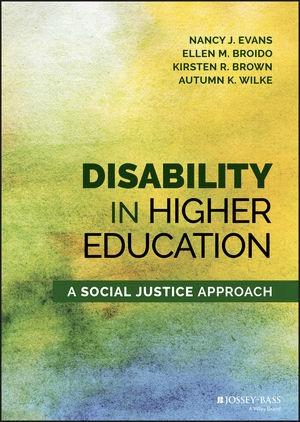
Disability in Higher Education: A Social Justice Approach examines how disability is conceptualized in higher education and ways in which students, faculty, and staff with disabilities are viewed and served on college campuses. Drawing on multiple theoretical frameworks, research, and experience creating inclusive campuses, this text offers a new framework for understanding disability using a social justice lens. Many institutions focus solely on legal access and accommodation, enabling a system of exclusion and oppression. However, using principles of universal design, social justice, and other inclusive practices, campus environments can be transformed into more inclusive and equitable settings for all constituents. The authors consider the experiences of students, faculty, and staff with disabilities and offer strategies for addressing ableism within a variety of settings, including classrooms, residence halls, admissions and orientation, student organizations, career development, and counseling. They also expand traditional student affairs understandings of disability issues by including chapters on technology, law, theory, and disability services. Using social justice principles, the discussion spans the entire college experience of individuals with disabilities, and avoids any single-issue focus such as physical accessibility or classroom accommodations. (From the Publisher)
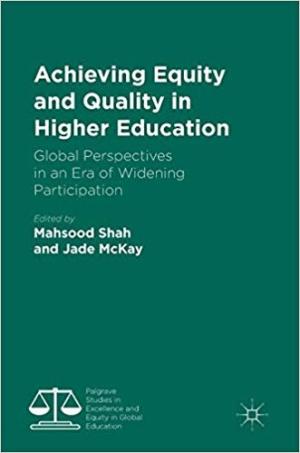
Across the world, higher education is witnessing exponential growth in both student participation and types of educational providers. One key phenomenon of this growth is an increase in student diversity: governments are widening access to higher education for students from traditionally underrepresented groups. However, this raises questions about whether this rapid growth may in face compromise academic quality. This book presents case studies of how higher education institutions in diverse countries are maintaining academic excellence while increasing the access and participation of students from historically underrepresented backgrounds. Including case studies spanning four continents, the authors and editors examine whether increasing widening participation positively impacts upon academic quality. This volume will be of interest and value to students and scholars of global higher education, representation and participation in education, and quality in higher education. (From the Publisher)

This book is not a list or an overview of various theories of ethics. Nor is it a didactic manual for specific teaching units on moral education aimed at some group based on age or a particular theme (although some educational frameworks will be proposed). As the title suggests, the book intends to seek the starting points or foundations without which no moral education would be possible. The goal is to formulate and tackle the key questions that precede all moral education. What makes “good vs. evil” language possible and meaningful? Can virtue be taught and learned? What makes our actions good? What is the condition of human nature? Are we naturally good, or evil? What constitutes an educator’s right to morally influence anyone else (not just a child)? What is the goal of moral education? What does a morally educated person look like? And how can we ensure the coveted moral result? Or—in the words of Jan Amos Comenius, the “teacher of nations”—how to educate a person to not only know what is good, but also to want what is good, and to do what is good “even when no one is looking?” (From the Publisher)
As we begin thinking about our fall courses (sorry!), we may again find ourselves facing unfamiliar teaching contexts; some of us may be teaching courses that are online or hybrid or “HyFlex” (*insert brain-exploding emoji here*) for the first time; some of us may be trying to make in-person classes work, under the totally compromised conditions of social distancing; some of us may be anticipating a pivot, yet again, as we watch the Covid caseloads rise in our states. Now, more than ever, it is important for us to be “transparent” in our teaching. Transparency will help students learning online for the first time, students for whom the college experience is one big “hidden curriculum” anyway, students at some remove from their instructors and peers, students in generally uncertain times. The concept of “transparency” in learning and teaching in higher education emerged out of the work of Mary-Ann Winkelmes, now at Brandeis University. This Faculty Focus article also offers a helpful synopsis, but, essentially, when designing assignments, it’s important for us to be clear, explicit, and direct about the “purpose” (i.e., why have students do the assignment), “task” (i.e., what students are being asked to do and how), and “criteria” (i.e., how their work will be assessed). One thing I love about this transparent teaching intervention is that, while it benefits all students, it has been shown to especially help students from underserved populations succeed. It’s not always easy to be transparent, so some reflection and excavation may be needed here. There are a lot of differences between experts and novices, but one distinction is that so much for experts is tacit, intuitive, hidden, seamless, “natural.” I recently picked up bike-riding again, for the first time in 25 years, and it has been astounding to discover how many difficult, intricate, and unexpected steps are involved in what seem to be the simplest of actions: braking entails figuring out which foot to put on the ground when I stop, and not toppling over as I do so; signaling entails being able to take one hand off the handlebars and still maintain balance (while not toppling over as I do so); riding the mile and a half to work entails being able to make it up previously unappreciated hills with a complex arrangement of gear switching and leg burning (and not toppling over as I do so . . . are you noticing a theme?). Yet my cyclist friends make this all look easy! So, when I lead workshops on transparency, I encourage all of my expert colleagues to think about the following questions in order to unearth their assignments: Purpose (the skills practiced, the knowledge gained): What are the learning objectives for the assignment? Do these objectives align with any of your overall course objectives or goals? Why is the assignment important for students to do? How might this assignment have importance or relevance beyond the course? What would be an “authentic” assignment for this subject matter, field, or associated profession? Task (what to do and how to do it) Does the kind of assignment make sense, given its purpose? What is the genre or type of assignment? Who is the audience and what role(s), if any, should students take on? Is there a sequence or “scaffolded” series of steps that students should follow? Are there any pitfalls to avoid along the way? Criteria (what excellence looks like, with criteria in advance to help students to self-evaluate): By what standards will the assignment be graded? Is there a rubric or checklist that students can be given, at the outset, to guide their work? What opportunities will students have had to practice before the final deadline? Who will give formative feedback besides you? Are there any excellent examples (especially annotated ones) for students to learn from? I began to incorporate transparency into my own assignments several years ago. Check out this “movie review” assignment, from my Religion & Film course, to see how I tried to clarify purpose, task, and criteria. What might this look like in your classes? Going further, some colleagues at the University of Virginia and I developed an assignment rubric to help faculty gauge the transparency of their assignments. We wanted to be as transparent as possible about transparency! Good luck.
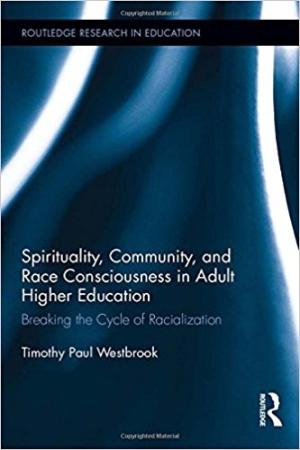
Drawing on the lived experiences of Black students in adult degree completion programs at predominantly White, Christian institutions in the southern United States, this book presents a model for reimagining adult higher education. Westbrook explores the reasons students enrolled in degree programs, how they experience their predominantly white institutions, and how their experiences affect their lives. Employing Critical Race Theory and Christian theology as frameworks for evaluating the students’ experiences, the author sheds light on the ways African American experiences to inform, critique, and shape Christian adult learning in higher education. (From the Publisher)
For Kenneth Ngwa, Drew Theological Seminary, teaching is not just a vocation but it’s a way of life. He confesses, “I cannot but teach.” Teaching is about a community of learners coming together to make meaning from a set of texts or artifacts. “I think teaching is a powerful tool, ” continues Ngwa, “to shape not just individual perspectives but how society functions.” He teaches classes in the Hebrew Bible and is an important voice in the field of African Biblical Hermeneutics.This podcast is taken from the "The “I” That Teaches” video series - project that invites senior scholars to talk about their teaching lives. These scholar-teachers candidly discuss how religious, educational, and family backgrounds inform their vocational commitments and, also, characterize their teaching persona. From the vantage point of a practiced teaching philosophy we get an intimate account of the value and art of teaching well.

When our courses went online in the spring, many of our students kept their cameras turned off in class. It was eerie. When my students wouldn’t say anything, I felt like I was speaking into a void, and my imagination started running wild. Was anybody else really out there? Maybe they had all just . . . left? Even when most students were talking, I wondered about those who weren’t. Were they still paying attention? I had no idea. It’s tempting to address this problem by adding a strict camera policy to our syllabi for the fall: Students must keep the camera on during online classes. Several of my colleagues are doing just that. I understand the impulse, and I agree that we need to find ways to help our students stay focused in our online classes. Making sure that we can see them and that they know it would be a simple start. But let’s think more before we add a camera policy to our syllabi. Why do students want to turn their cameras off in the first place? I’m sure some of them do it so that they can goof off without their professors noticing. But not all of them: Some students are embarrassed about what people will see in their homes: Poverty. A mess. A crowded space. A virtual background will hide all that, but students can only use one if their computer meets certain system requirements. On an older computer with older software, the virtual background won’t work. And of course, poor students are more likely to have an older computer. The camera makes some students acutely self-conscious, which makes sense given that it broadcasts a closeup of one’s face to the entire class for the entire class period. My favorite description of the experience is from “Why Zoom is terrible”: “You feel like every eyeball is on you, like a very intimidating job interview." I share this experience. Honestly, just reading the line from the New York Times makes my heart race. After the first painful month of Zoom meetings, I began turning the camera off as often as possible. It made the meetings less exhausting, and it became much easier for me to focus and to listen to what people were saying. If students are feeling overly self-conscious, they won’t learn well and won’t speak much. Are there other reasons for keeping the cameras on? We might think that seeing each other’s faces improves communication. In non-virtual face-to-face interactions, it does. Without noticing it, we process and interpret a flood of subtle facial cues, adding to what we learn from the other person’s words and tone of voice. But on Zoom, the imperfect video feed obscures those crucial small cues. We just don’t see the faces well enough, and so, we get faulty cues which can mislead us. We might communicate better with the cameras off. Requiring cameras to be on probably helps some students pay attention and the cameras allow us to see that our students are still there. But seeing their faces probably doesn’t improve our conversations, and the cameras make other students self-conscious, and thus less likely to participate and pay attention. So, can we find other ways of checking that our students are paying attention? I think so. In my class, we’ll develop a set of norms together. I plan to ask them: How do we normally show each other that we’re paying attention and that what others are saying matters to us? If we have cameras off, most of our usual ‘I’m listening’ signals won’t work, so what should we do instead? I’m looking forward to seeing what they come up with! In the meantime, here are some ideas of my own for confirming that they are paying attention: Gentle cold calling (soft-ball questions). Have them type questions, comments, and answers to questions in the chat. Mini quizzes or mini papers partway through class. Exit slip at the end of class: “What was the most important thing you learned in class today and what question do you have?” All of these will be low-stakes assignments; and students will get full credit if it looks like they paid attention. Like the rest of us, I am looking forward to seeing my students’ faces again, but my Zoom class is not the right time for that. I’ll save that for office hours and small group discussions. In class, I’ll settle for their profile pictures and their voices. Note: I wish the idea about developing a set of norms was my own, but I got it from one of my esteemed colleagues at Stonehill.
Hospitality does not begin faraway, but near. We learn what hospitality is by reaching out to persons near to us—persons we pass by every day, persons who share our highways and hallways, our sidewalks and side streets. This past fall, forty-eight leaders from around our community gathered to tell “near stories” to one another about their experience of race and racism, privilege and power in their lives. These community leaders included local judges, superintendents and principals of schools, CEOs of health systems, business owners, college administrators, and, notably, police officers—the very leaders shaping the response to the unholy trinity of Covid-19, systemic racism, and misinformation. This group of busy, highly educated leaders committed to twelve hours of honest dialogue about the history and ongoing impact of racism in our country and our community. The dialogue followed what is known as a “caring circle” model—a model that requires participants, first and foremost, to listen actively to one another without judgment. That is, it asks us to “hear each other to speech,” as the racial justice activist Nelle Morton exhorted. The difficult realities of our shared life together in the United States—things like our biases, the past and present ways in which we have discriminated against persons based on the identities we decided were most important, the ongoing effects of racial violence and trauma—are not always easy to hear into speech among friends, much less among powerful community leaders. But the dialogues didn’t start with these difficult topics. The conversations begin with questions designed to reset the frame of the relationships in the caring circle. Participants were no longer their job titles or their positions of formal authority, they were human beings subject in myriad ways to the fundamental need to belong. The circle began: Tell me an experience of when you belonged? Tell me an experience of when you felt excluded? Participants start by relearning in a highly structured, formal way how to practice hospitality to one another, and this allows them to hear each other to speech about what we know to be some of our most profound, shared needs as human beings: the need to be recognized as whole persons with complex, unique stories that have something to contribute to the “we are” part of “I am because we are.” At the same time, circles emphasize the need to recognize in others something of the “I am”—something that connects who I am deeply to who you are you, to what it means to be human. That is, they start with near stories that illumine in their very particularity something of the universal ties that bind us together. Though some might quibble with the phrase, they are religious stories in the sense that they aim to “re-bind” (re-ligare) us together—to reaffirm our shared commitment to hospitality in the face of hostility and reinforce the threads that bind us together in the face of the threats that tear us apart. I would like to believe that these dialogues and the relationships they established prepared our community to respond with greater integrity and humility to the systemic and institutional racism at the heart of the racial uprisings this summer. Like so many things in this moment, the justification for my belief may only be confirmed with the advantage of hindsight. But as I turn my attention more fully to this fall’s syllabi, I am even more convinced that my tendency to fill weeks with content needs to be mitigated by the foregrounding of process and the centering of relationships in the classroom. It is not that content is unimportant. The “deep dive dialogues” among community leaders included content—presentations about systemic racism, health inequities, and implicit bias locally, for example—but this content was embedded in multiple processes of relationship building throughout our time together. In this way, the intimacy of hearing each other to speech in our small groups became the starting point for listening to what the presentations had to teach. What I have been describing is likely familiar to many who have attended (perhaps even led) workshops and trainings related to racial justice. But all too often the pedagogical insight does not quite make the leap from the workshop to the classroom. Even among well intentioned faculty whose courses are most amenable to flipping the classroom and devoting several weeks to relationship building and near stories, content always threatens to colonize the curriculum; the participatory language of covenant gives way to convenience, transposed into the more expedient and expected legalese of a learning contract. When teaching courses animated by issues of social justice (are there any that aren’t?), we knowingly enter into a charged space—even before we take roll on the first day of classes. As we enter a Fall semester in which pandemics, politics, and protests will be carried daily into our classrooms—by both persons and pedagogies masked and unmasked—this is the question I find myself returning to in the design of my syllabi: how do we help set the conditions for what Parker Palmer describes as a necessary paradox, namely, a charged but hospitable classroom, one in which the practice of hearing each other to speech is as much a process as an outcome? If our religious studies and theology classrooms are to be places of preparation for creative engagement in this imperfect world, to borrow from Faith Ngunjiri’s understanding of servant leadership, then we do well to make ample space in our courses for modeling discursive practices that counter hate speech with hospitality, callousness with compassion, and the pathology of violence with the promise of peace. For me, one way to do this with integrity will be to commit to the caring circle model as a pedagogical anchor for the course and not merely an ice-breaker in the first week of class.
“Teaching is an art and not a science,” states David Blix, Wabash College. It is about “interacting with students” in a “friendly manner” which is to say that teaching is about what he does in his everyday life. A deeply engaged student-centered teacher of religions of the world, Blix was a Carnegie Scholar at the Carnegie Institute for the Advancement of Teaching in Palo Alto, California.This podcast was taken from the "The “I” That Teaches” - a video project that invites senior scholars to talk about their teaching lives. These scholar-teachers candidly discuss how religious, educational, and family backgrounds inform their vocational commitments and, also, characterize their teaching persona. From the vantage point of a practiced teaching philosophy we get an intimate account of the value and art of teaching well.