Search Results
9325 results found using the following search criteria: .
Unprecedented. The current communal struggle to live through the viral pandemic is often called – unprecedented. In choosing to use this word, we are not so much trying to communicate that this moment of prolonged upheaval has never before happened. Historians routinely remind us that viral pandemics are part of United States history (e.g., Spanish flu pandemic, 1918). By using the word “unprecedented” we are trying to communicate, through our fear and uncertainty, that our experiences from before, our knowledge from before, our underpinnings from before are inadequate to inform us here and now. What is unprecedented is our lack of knowledge and our inability to make meaning. We can no longer make certainty stick. Decisions are reduced to flimsy guesses, uninformed hunches, or heartfelt wishes. This urgent time is unprecedented because our language fails to communicate this gargantuan experience of ambiguity, liminality, communal grief and loss. We say unprecedented because we are afraid. In other words, “…. when the crisis is upon us and the ‘ordinary’ collapses, life gets complicated very quickly.” (Barbara Holmes, 2021) The current complications have left us stymied. How do scholars teach when the ordinary has ceased? How do we teach when we are plunged into a space of unknowing? The vantage point of the Wabash Center allows my staff and me to dialogue with a wide swath of colleagues across the United States, Canada and Puerto Rico. From multiple sources, we are being told that colleagues are exemplifying the behaviors of exhaustion which more typically occur during the last portion of the semester. We are in the first weeks of the semester – we are just getting started, yet we are teaching tired. What does it mean that the faculty is fatigued in the first quarter? How do you make it to the end of the semester? What happens when those tasked with meaning making come up short? Education is a matrix of traditions, routines, habits and schedules. Our syllabi lean into the teaching arc; we begin the semester, then we look to mid-term, then finals bring the eager closure. Typically, by week 3 or 4 of the semester, colleagues are realizing the weaknesses in their syllabus design and becoming aware of the students’ capacity to manage the course. In the past, and given the semester arc, it is in these early weeks when adjustments are made, adaptations and corrections are formulated. Good teaching makes course corrections along the way. Good teaching adjusts to the students in the conversation. Good teaching is flexible, responsive, nimble. However, this semester, we are getting the message that colleagues are too tired to adjust, too weary to listen for their students. Colleagues are reporting that the distraction of the viral pandemic is keeping them from noticing their students; keeping them from being fully present in the classroom. Colleagues are looking for the finish line and the semester is barely underway. What does it mean to teach during long-term crisis? How do you stay healthy when the crisis stretches out into years? What does it mean if your personal tiredness negatively impacts your teaching? Fatigue is a symptom of anxiety, prolonged uncertainty, and sorrow. Faculty communities cannot ignore, nor take for granted, the wellbeing of its members. Even if your institution has a mobilized response to the pandemic, the emotional and spiritual effects upon individuals and communities cannot go unattended. We must notice the hardship and toll placed upon our colleagues during this academic year and design new measures of faculty care. We need faculty wellness strategies and practices which heal crisis fatigue. In this urgent time, contemplation might be a communal practice to employ. Barbara Holmes’ latest book entitled Crisis Contemplation: Healing the Wounded Village provides insight, guidance, and wisdom for our not knowing and tiredness. Dr. Holmes writes on page 57: As it turns out, contemplation that arises from a crisis or collective trauma is a displacement of everyday life and a freefall into ‘what comes next.’ As the crisis sweeps away our former life together, our arrogance and fantasies, all we can do is reflect on the memories of another and more tranquil existence, and accustom ourselves to a new and welcoming darkness. The darkness to which I refer is not a space of fear. It is an involuntary centering in a reality that is not always available to use when our egos are lit. Crises open portals of a deeper knowing. When the crisis occurs, the only way out is through, so we take a cue from nature and relax into the stillness, depending upon one another and the breath of life!” The only way out of this crisis is through this crisis – together. Learning to accustom ourselves to a new and welcoming darkness requires intention. Stepping into the portals of a deeper knowing takes courage. Dr. Holmes instructs us that rising to this occasion might mean doing less. This might be a time for introspection, stillness, silence, mindfulness, contemplation. Rest! Take time out and off! Do less! In this crisis time, let us slow down.
Dialogue about these questions: How can we teach better during COVID? What does it mean to be mindful of our students’ burdens, aware of the trauma our students are carrying - so that their trouble does not impede their learning? What approaches and practices of teaching might lower student anxieties so that they might learn? What assignments can we design that will have a generative impact upon the students’ churches, neighborhoods, families, and communities? To what places beyond our secluded campuses can we send students to explore in order to expand their learning? In what ways might honesty about our own identities inspire our students? What contemplatives spiritualities re-ignite and foster our passions for teaching – even during the viral pandemic?
(Part Four of a Five Part Serialized Blog) There’s a difference between mending and healing. When we talk of healing, we are talking about going back to the “before” times, back to the time before harm occurred. However, we can’t always return to those places, can we? When we talk about mending, we are describing something being patched up but still bearing the scars of the injury or wound. During the process of learning how to teach and participate in this course, I witnessed the power of art to mend. At the end of each two-week period, our classroom of artists would upload images of their pieces to our course page. We would meet together for two to three hours to share our work, to discuss together the challenges of making each piece, and to mark the spiritual shifts taking place through the practice of making art in the midst of everything happening in the world and in our personal lives. Darci and I facilitated the conversation and took the posture of co-learners with the artists in the space. We realized quickly that the process of making and sharing art was a spiritual practice for our class in this pandemic learning time, because of the way it reconnected the threads to one another that were severed through online learning and lockdowns. It also connected us by holding space for the ongoing rage and grief we felt. During the semester, Black people were continually murdered by police and vigilantes, and as we witnessed together the aftermath of the Atlanta spa shootings of Asian women. Art and the process of creating art did not allow us to cover up our feelings. Art exposed the anger and grief we felt, utterly and viscerally. Art did not make room for short cuts and avoidance of those experiences and reactions that felt raw and painful. Every two weeks, we gathered to witness, learn, and confront what art had brought out in us and through us. We participated in visible mending. Art stitched us together in our grief, joy, and gratitude in a time that felt like crisis and chaos. As part of each bi-weekly project, I posted a podcast discussing the material for the week together with current events and personal stories. The week of the Atlanta spa shootings hit me especially hard. I saw my mother and grandmothers in the faces and names of the women who were gunned down. Everything I knew and taught about U.S. imperialism, militarism, and the historic and policy-based sexualization of Asian women across the trans-pacific and here in the U.S. felt incredibly close. I kept thinking of every instance, and there have been many, where I or someone I knew was on the receiving end of anti-Asian racism and violence. I thought about the systematized invisibility of anti-Asian racism and violence and the gaslighting of Asian people at the denial of our histories and experiences. All of which were glaringly evident in the way police and the media reported on the Atlanta spa shootings. The rage bubbled over then, intermingled with the physical pain of grief, a burning spot in my chest that had been there my whole life, but felt suddenly unbearable. I wanted to cancel the podcast and cancel our class meet up for that week. I didn’t have the energy or the filter to proceed as normal. In a fog of grief, I swiftly wrote out the class cancelation email and the apology for the missing podcast, but I never sent it. After I wrote out the memo, I remembered what this class had shown and taught me through our weeks together. Art doesn’t cover up. Art radically reveals. Art calls us to bear witness to the truth-telling limited by words alone. I showed up that week when it would have been perfectly acceptable to disengage. I reframed the podcast around the texts of the lives of Asian women throughout U.S. history and trans-pacific history. What did it mean to un-colonize the image and embodiment of Asian women through the eyes of the divine presence? To unmake the lies about Asian women as only flesh for white supremacist consumption through the practices and processes of art? What would that mean to and for me as an Asian and Korean American woman? At the end of our class meeting, we closed with a practice I call the Gaze of Gratitude. A practice I’ve developed as an online teaching ritual, for times when words fail. We used Zoom in gallery mode to scroll through each square, to behold each artist’s face and without words, to gaze upon each person with gratitude and to allow that gratitude to peer and shine out of our eyes and expressions. I wept. I couldn’t help it. I was once again in awe of the space that making and talking about art could facilitate; a space to reveal and contribute to necessary mending in community.
Given the continued effects of the viral pandemic, compounded by weather disasters, world news of crisis and devastation, rising incidents of racism, plus any troubles unique to your own family, etc. – THIS IS A COMMUNAL MOMENT OF LONG-TERM STRESS. Teachers must ask, in the midst, how are we showing up? We know everyone is not equally affected by this moment, everyone is not participating in the same reality, and yet we know all of us are strained, taxed, and stressed. Uncertainty fatigue is pervasive. This conversation helps know how to check-in with self, students and colleagues. We discuss the difference between submission and surrender for the health of self and community. We discuss ways of coping with despair, suffering, how to be together in sorrow, grief, and practices of spirituality which will hold us during this extended chaos.
Our only chance to achieve collective happiness comes through extensive conversation punctuated here and there with votes, which will themselves over time, in their imperfections, simply demand of us more talk. ~ Danielle Allen [1] I grew up during the transition from handwritten comments on high school report cards to a pre-populated set of options for teachers to deploy each quarter in a tidy, standardized font. The most frequently deployed comment on my cards: Talks too much in class. Reading Danielle Allen’s Our Declaration, a lively and provocative defense of the centrality of equality in the Declaration of Independence, I have come to appreciate that perhaps I was just a budding democrat, joining the timeless quest to “achieve collective happiness” through “extensive conversation.” I am not sure my teachers saw it through quite the same lofty lens. While the college classroom is no stranger to the phenomena of the student who talks too much—and most often, those students look a lot like me—it seems the more pressing concerns have to do with the stifling (or alternatively, trifling) of conversation. We can’t talk about the election, the protests, the mask mandate, the insurrection, the [fill in the blank with any issue of collective importance] because. . . it is too polarizing, it leads to cancel culture, it offends. . . . Or, in that familiar, euphemistic sleight of hand in every professor’s tool belt: we have too much content to cover, too many lecture slides to get through. We might well ask, are we doing enough to encourage that most fundamental habit of a democratic people: talking with one another? What would it mean to organize our syllabus around the conditions for conversation? This does not mean content drops out. But in this particular moment, I have found that a little content goes a long way—that what many students appreciate most is simply the opportunity to talk, or more accurately, to be heard. I spent the month of June piloting a college-level course for local high school students. Though there were several elements that made this course idiosyncratic—small class size, embedded mentors, self-selected three-week summer intensive—it was a reminder of how our classrooms can promote the habits of the heart de Tocqueville and those who followed him saw as the seed from which formal democratic institutions arise and are sustained. At the start of our second week of class, I invited another student to come in and facilitate a talking circle process, to model the underlying circle logic of restorative practices we had been focusing on. I rarely use circles like this in class, aware of, among other things, the fine line one walks between modeling conversation and group therapy, as well as the problems of scale and trust in classes that tend towards the 25–35 student range rather than the 5–8 range. But in this unique setting, the circle process worked well on many levels including, most importantly, modeling the relationship between speaking and being heard—of having a voice. Critically, I was a participant in the circle, not the circle-keeper (or facilitator). This meant that conversation did not flow, as too often happens in seminars, from professor to student to professor to another student. After finishing the circle, the students requested that we do another one before the end of our three weeks together. This time the students designed the questions, skillfully constructing a set of guiding prompts that moved back and forth between lighter fare (funniest memory from class) and self-evaluation (how will you bring what you learned in this class into your life after class ends?). A consistent refrain in that closing circle was how different this class was than what they have experienced in high school. Here they were co-creators, rather than passive recipients of knowledge. Their views were sought out, heard, and had an impact on the flow and content of the class. The passion with which they critiqued their high school experience gave me pause to wonder about what models students entering our college classrooms have for “talking too much” in class, or, rather, “achieving collective happiness” through “extensive conversation,” that is, for becoming participants in a democracy. It is easy to dismiss the unique features of a college classroom as not applicable to the wider forums where fellow citizens struggle to recognize one another as the “we” in “we, the people.” But I take some hope from the other consistent refrain in our class: these students were hungry for practical advice on how to have conversations with people with whom they disagreed about the issues we are facing as a society. In a class on race, resistance, and reconciliation, what they most wanted was to be heard and to learn better how to hear others—a request for the very thing college seminars would seem to be designed for, the very thing that democracy demands of us. That is hopeful: A generation cognizant that they do not have good models for this, that the hegemonic social media landscape in which their communication skills are being developed are not up to the task. Circles, of course, are not a panacea; they, too, are threatened by the same hyperbole of many trending “solutions” to the ills undermining our democratic experiment. I am under no illusions that the work we do in our classrooms will magically solve the crises of societal and institutional trust, or even that it will hold at bay the forces intent on undermining the conditions that make the work of democratic habit formation central to the academic mission and our classrooms. Nonetheless, I am committed to finding ways our classrooms can “demand of us more talk”—but not just talk by me, the professor. The last thing I want on student evaluations is: Professor talks too much in class. [1] Danielle Allen, Our Declaration: A Reading of the Declaration of Independence in Defense of Equality (New York: Liveright, 2014), 82.
(Part Three of a Five Part Serialized Blog) Pivots or shifts in our thinking away from western and colonially oriented epistemologies are hard. The academy is a colonial entity. It is invested in colonizing us, thoroughly and into generations; colonization of thought processes and embodiments, the way we collect knowledge, our communal epistemologies, and the way we assess for learning. For BIPOC this is especially painful because we are familiar with these processes of systematic and structural erasure. We know intimately the violence of colonial erasure on our bodies, our tongues, our names, and even our food. The colonial academy, as an extension of supremacist ideologies everywhere, strives to domesticate our expression ourselves and our experiences, the way we analyze those experiences, the way we believe, create, and recreate the same tools that keep us bound up. The academy has convinced us that measures and rubrics can help us determine if what people create holds meaning or value. Meaning and value for whom? I’m not saying we need to throw away all the rubrics. I don’t hate rubrics. I am saying, we might consider that there are other ways to reflect back to students and ourselves how and what we are learning. However, the shift away from what we’ve asked ourselves and students to do from our earliest school years requires a lifetime of undoing. Often, we are learning and unlearning along with the students in our classrooms. The good news is that we can practice that cultural classroom shift together. Art can help us pivot if we let it. Our artists found the pivot from a reading and writing classroom to a maker’s classroom, disorienting at first. We could tell students felt like we would pull the rug out from under them at any moment. We were shifting from accountability to rubrics and grading scales to accountability to community and relationships. We practiced showing up for one another in vulnerability where one person’s art was not better than another person’s art, but just as meaningful, even if differently expressed. We were shifting from ordered time where we scrunched learning into one week after another with posts and responses as proof of learning, to a more suspended understanding of time and internal and external processing and contemplative time as work At first, this type of conversation occurred frequently: Artist: “I don’t have to write a research paper on this material?” Professors: “No, it’s there to inspire your creativity and challenge you. Show us what you’ve learned through your art and in your check-ins.” Artist: “So, I only have to purchase art supplies? There’s no booklist?” Professors: “Yes. Only art supplies. You are going to read, listen, and watch things in class, but we will provide them.” Artist: “I’m not a real artist, so does that mean I won’t do well in this class?” Professors: “You are a real artist. Did you do the piece? Did you colleagues and co-artists learn from your piece? Did you learn from their pieces? Show us how you are growing and being challenged. Push yourself and you’ll do well.” As they started each piece, we asked artists to reflect on themselves, the tangle of pain and joy in their lived experiences, the world, current events, and what Spirit was saying to each of them through the work of their heart and hands. How was what emerged as a work of art both of them and of the divine presence? How was it both meant for themselves and for the community beyond them? Students started making art in their comfort zones, many of them started the course leaning on familiar mediums, sketching or painting. By the end of the course, artists had pressed themselves into using other mediums. At the conclusion of the semester, we had digital art, sculptures, wire art, woodwork, poetry, and photography. We incorporated oral storytelling in small and large group synchronous sessions. Artists told us the stories that inspired their work, their daily experiences, their theological reflections on the world, and even shared ancestral wisdoms with one another. Sometimes, in response to the stories and the histories, there was only silence. We silently and carefully held one another through our little zoom boxes on the screen. Silence also teaches. Silence is also part of the process.
I believe we can create an altar-like pedagogy that turns the classroom into a sacred space where we nurture our students’ mindbodyspirit, where teaching is acknowledged as a sacred ritual of raising consciousness, and where we pay homage to and connect with the history of our ancestors’ struggle and resistance. — Norell Martínez [1] By early spring of last academic year, I was done! Having taken on too many administrative projects and an additional teaching load, I was spent in all the ways that one could be depleted—mentally, physically, spiritually, emotionally, and otherwise. My soul was tired. Yet I still had another course to teach in the spring quarter, and it was one that I had not taught previously. At that point, I knew that the best I could offer students was to read some books together and ponder how they related to our praxes of ministry leadership. In all honesty, I hadn’t even fully read all the books prior to the course, but I knew that I was interested in exploring these particular texts for wisdom and challenge and thought the students might have a similar response. Nevertheless, the course ended up being quite meaningful and engaging, no thanks to my lack of preparation. I tried to read two weeks ahead and prepare video lectures that touched upon the materials just enough to invite critical discussions within our Learning Management System. In our synchronous Zoom sessions, I came as I was, as we all were—tired and overworked, but intrigued and enlivened (and frustrated at times) by the materials we were reading. It was not my best teaching nor my best course design; nevertheless, it was transformative for several students personally and professionally. To make time this summer for rest and replenishment, I spent several days at a retreat center reading, journaling, and reflecting on the past year in preparation for the next one. While reading, I came across a teaching metaphor that spoke directly into my weary soul and encompassed all of what I had experienced in the last year and a half: a pedagogy of ofrendas (offerings). For Latinxs like me and millions of others around the globe, ofrendas are the things that one gives or sacrifices, usually for the love of and/or loyalty to what we hold most dear—our familia (family), our comunidad de fe (faith community), our gente (people). In our faith communities, we give ofrendas in the forms of money, resources, time, and talents. In broader Latinx cultures across time and location, however, ofrendas are most often shared on altares (altars), the purposes of which are to “create sacred spaces, spaces of prayer and ritual, and sites of offering and memory [. . . ] to connect with our ancestors,” as described by Norell Martínez. Moreover, Martínez argues that we create such sacred spaces—such altares with ofrendas—in our educational work. Ofrendas include all that we put into our courses in preparation, instruction, and evaluation, as well as our unique embodiments and care for the materials, our students’ transformation and learning, and the creation of just pedagogical spaces. Martínez states this much more eloquently: The mental and emotional energy we put into our lessons, the pedagogical tools we use. . . and the passion we have for raising consciousness are our ofrendas to our students. Likewise, we teach our students that the work they are doing, the knowledge they produce in our classroom, is their ofrenda. By envisioning each contribution, we make to the learning experience as an ofrenda on the altar of the course, what is required of us as teachers is expanded beyond fixed notions of what a “proper” course should contain and what roles we should play as main contributors. In addition, no ofrenda is too small and each is experienced as an expression of intentionality and care toward the creation of an altar filled with the beauty of all contributions. What if I had framed my entire course as an altar and each of our contributions as ofrendas? How might it have created an even more lovely, more sacred space for transformation (while at the same time allowing creative expression and acknowledgement of my own embodiment as a biracial Latina)? Given the world that we were surviving in the moment and the challenges each of us faced, I know now that what we offered collectively was enough; what I as a teacher offered was more than enough. All teaching and learning is altar-making, and my ofrendas only comprise one small part of the altar of any given course. In pandemic life, my ofrendas look different (much smaller, in fact); however, the sacredness of the ofrendas themselves is not diminished and, perhaps, is even increased. In this next year, especially amidst the continuing uncertainty of COVID-19 strains and infection rates, I am hopeful that practicing a pedagogy of ofrendas will aid in creating the grace-filled space so critical to my own survival and soul care in the work of teaching and learning. Such a pedagogy might itself be a loving ofrenda for students, colleagues, and institutions alike. [1] This and all other quotes in this piece are from Norell Martínez, “A Pedagogy of Ofrendas: The Altar as a Tool for Integrating Social Justice in the Classroom,” in Voices from the Ancestors: Xicanx and Latinx Spiritual Expression and Healing Practices, eds. Lara Medina and Martha R. Gonzales (Tucson: The University of Arizona Press, 2019), 367-369.
2022 Hybrid Teaching and Learning Workshop for Early Career ReligionFacultyTeachingUndergraduates Schedule of Sessions All Virtual Sessions – Thursdays, 4:00-6:00 EST Session 1 - March 24, 2022 (virtual) Session 2 - April 28, 2022 (virtual) Session 3 - May 26, 2022 (virtual) Session 4 - June 30, 2022 (virtual) In person: July 25-29 Wabash Center in Crawfordsville, Indiana Session 5 - September 22, 2022 (virtual) Session 6 - October 20, 2022 (virtual) Session 7 - December 1, 2022 (virtual) Leadership Team Carolyn M. Jones Medine, Ph.D., University of Georgia Joseph L. Tucker Edmonds,Ph.D.,I.U.P.U.I. Participants Ashleigh Elser,Hampden-Sydney College Brennan Keegan,College of Charleston Denise Flanders,Taylor University Elissa Cutter,Georgian Court University Emily Kahm,College of Saint Mary Joanna Kline,Gordon College Kristyn Sessions,Villanova University Mary Kate Holman,Benedictine University Samah Choudhury,Ithaca College Sarah Emanuel,Loyola Marymount University Scott Ryan,Claflin University Ashlyn Strozier,Georgia State University Seth Gaiters,University of North Carolina Richard Klee,University of Notre Dame For More Information, Please Contact: Paul Myhre Senior Associate Director Wabash Center 301 West Wabash Ave. Crawfordsville, IN 47933 myhrep@wabash.edu Instructions for Leaders Description This workshop invites faculty in their first five years of full-time teaching who are tenure track, continuing term (lecturer, instructor, teaching scholar) and/or full-time contingent faculty to join a relational community of peers and leaders who are committed to creating a collaborative learning cohort of committed and skilled teachers. This collaborative learning cohort will focus on: an understanding of the philosophy and practice of the teaching profession, reflecting on teaching philosophies and practices; sustaining a generativelifeasteacherandfashioning our identities as teachers; negotiating institutions, expectations, and career trajectories; teaching in contexts marked by diversity, particularly in the time of pandemics. The hybrid workshop will gather 14 participants for seven online sessions and an in-person summer session at Wabash Center. Sessions will include small group and plenary discussions, structured and unstructured social time, and time for personal and communal discovery, relaxation, restoration, exercise, meditation, restoration, and shared meals. Workshop Goals To create a collaborative learning cohort of teacher-scholars To create a space toexplore andnavigate the intersectingchallenges of teaching, research, and service To develop the practice of critical reflection on teaching To explore strategies for thriving in institutional,politicaland personal contexts Participant Eligibility Tenure track, continuing term, and/or full-time contingency 1-5 years of full-time teaching Job description or contract that is wholly or primarily inclusive of teaching Teaching in accredited college or university in the United States, Puerto Rico or Canada Doctoral degree awardedbyJanuary 2022 Tenure decision (if applicable) no earlier than January of 2023 Institutional supportand personal commitmentto participate fully in workshop sessions and to complete the teaching fellowship project in 2023 academic year Application Materials Please complete and attach the following documents to the online application: 1. Application Contact Information form 2. Cover letter: Describe how you hope this workshop will support and/or enhance your identity as a teacher-scholar during this stage of your academic career (300 words) Answer in two paragraphs: How has COVID had an impact on your teaching career? (250 words) 3. Brief essay: How doyour contextsand commitments inform, shape, and conflict with your teaching philosophy and practices?(250 words) How has acritical moment inan introductory classshaped your teaching practice?What was the teaching goal for that day? What happened?Howdidyou respond?(250 words) 4. Academic CV (4-page limit) 5. A letter of institutional support for your full participation in this workshop from your Department Chair, Academic Dean, Provost, Vice President, or President. Please have this recommendation uploaded directly to your application according to the online application instructions. Honorarium and Fellowship Participants will receive an honorarium of $3,500 for full participation in the workshop. In addition, participants are eligible to apply for a $2,500 workshop fellowship for work on a teaching project during the 2023 summer and fall term. Read More about Payment of Participants Read More about the Digital Workshop Fellowship Program Important Information Foreign National Information Form Policy on Participation (Digital Cohort) COVID policy

A quilt is an extraordinarily familiar and surprisingly profound item. Owned by many, quilts are remarkable cultural artifacts—a factor not lost on many of our students, who are from a region with a rich history of quilting. In the Fall of 2019, I asked my students to create a community quilt as a class project. The quilt was intended to be an accompaniment to a course that combined philosophy of religion and theology with a focus on human identity within the Christian tradition. Without any prior experience, the students in this course designed, sewed, and assembled a quilt in the space of three months. As a result, the abstract notions of the course took on the texture of rough fabric in their hands. While threading needles proved an enduring challenge, notions of fellowship and of relational identity came together like stitches on quilt-blocks, something readily accessible and extraordinarily familiar. In exploring Christian notions of identity, the course takes Genesis 1 as its point of departure. This text is foundational for Christianity in terms of understanding the human condition and the connection between humanity and divinity. But what does “being created in God’s image” mean to the average twenty-year-old? In a secular university context, I have always found it challenging to connect students to what seem like lofty intellectual and devotional traditions. In the past, I have explored examples of Orthodox iconography as a way of providing a window into these traditions. Yet even an icon-making workshop with opportunities for hands-on experience was not as successful in bridging that gap as I had hoped. It appeared that it is not just doing or making that was important, but the accessibility of the object being constructed as well. A quilt, by contrast, is extraordinarily accessible. While it provides warmth and comfort, its significance is much more than simple utility. Quilts are created according to long-standing traditions, embellished with artistic flourishes, and often given as gifts. Dignity quilts are used to clothe the sick and dying, while memory quilts might incorporate the clothing of those who have passed on. Most importantly, most students from this region own a quilt, which carries with it the memories of their childhood, connections with its maker, and for many, a sense of comfort and home. I encouraged the students to choose a theme for their blocks that included something personal both figuratively—like a story or memory—and literally—like fabric or another material element from their lives. The results were startling. One student focused on the joys of the “local,” using fabrics dyed with local berries and bark from a native birch tree, printed with words from a resident poet. Another student created a more abstract block representing something of the depths opened by grief over a recent family loss. A member of the university football team cut small squares from a range of jerseys to create a mosaic of his player number and, in so doing, indicated the way in which his identity as an athlete brought together so many facets of his experience. A student who came from far away used fabric from clothing that connected her to her life back home. The quilt blocks demonstrated most effectively how history, community, context, and craft are enfolded within identity Where in the past it had been challenging to prompt class discussions, this time students worked with their hands and conversation flowed freely and casually about the dense readings and complex ideas we covered. What is more, as the quilt came together, so did the class community. Sitting around the quilt sandwich became an opportunity for sharing, for connection, and for new understanding. The intricacies of the course materials became accessible because the students were exploring these materials via the metaphor and labour of quilting. This meant they explored their own identity and their connections to each other in parallel to the insights traditionally drawn from Genesis 1. Ironically, in arranging the quilt squares, the students chose sashing that evoked the gold and brown colours of Orthodox icons. In effect, the quilt became a contemporary, lived expression of iconography, one that drew together the identity of the class community into an image that reflected something greater. The completed quilt will not win any state fair competitions, and yet its crooked lines and rough finish speak of how intellectual complexities of identity are made plain in the place where one lives and by the work of one’s hands. This quilt project demonstrated the astonishing layers of connection possible when incorporating local cultural traditions and material practices into the abstract discourses of a third-level philosophy of religion course. It also created an analogue, where students could attempt new skills alongside new theoretical concepts and have the freedom to try and fail at both. As a student remarked, “The freedom to take risks and support one another in our physical explorations was mirrored in the discussions as well; students felt more free to take intellectual risks when discussing the texts because we had each already grown by failing in some way: sewing a quilt square upside down, or making wonky stitching, or struggling with the basics of threading a needle.”
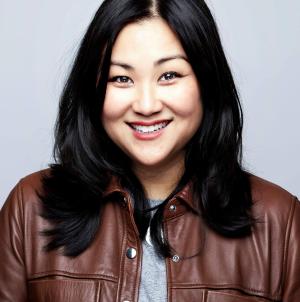
During the past year and a half of the pandemic, the uprisings for racial justice, the continued fight for LGBTQIATS justice, the struggle for the rights of immigrants, and the global impact of climate change, I discovered an urgency in myself to create and to grow things as a way to resist and refuse the death dealing all around us. The realization of so many lives lost, generations cut off, and futures extinguished weighed heavier each day. As a coping mechanism, I feverishly planted things in my garden, from herbs to vegetables, and grew green things in my home. I willed each and every plant to thrive and flourish, even as I felt rage and, at times, despair about the state of the world. I wondered if others felt the same. If colleagues and students felt weary, depleted by the constant weight of white supremacy pressing down on every inch of our lives. I started asking myself if what I was teaching even mattered anymore. Did what I was assigning students to read and write speak back to the now? Did the topics we were discussing speak truth and do the work of witnessing the rage and anguish of the past and present? Did my lectures also speak into the creation and necessary intentionality of embodied joy as an act of refusing oppression in our lives? Did the classes I designed speak into the flourishing futures we were trying to co-create? Here’s the pivot. Once our institution was entirely online and I realized that as educators, we had collectively reached a level of exhaustion and depletion that would continue into the future, I craved bringing the practice of creation and spirituality back into the classroom in a tangible way. I wanted to bring back the spiritual practice that art had been in my life. In sum, not only the act of creating a piece of art, but the process that undergirds that creation. The work and discipline of noticing the big and small things in daily life and in the world as a response to so much death—death meted out by white supremacy, anti-Black racism, anti-Asian violence, heteronormativity, bigotry, and ableism, to name just some of what we were are living through. I was also sick of words. Words can be full, but they can also be rather empty. People asking, “Hi, how are you?” without actually wanting to know. Sometimes there are things you feel, things you know, things that are ancestrally grounded in you that are unspeakable because they are so real and so incredibly meaningful. Sorrows and joys too deep to speak about in any coherent or fulsome way that an outsider could understand. There are things we experience that can’t and won’t be spoken about on demand. The days that we were living in felt heavy in this way: there weren’t enough words to carry the weight of it all. I began to wonder if there was a different way to teach and participate in the expression of community and lived experiences without centering words, to instead allow the unspeakable things within to guide us in a semester-long online class. I invited Rev. Darci Jaret, a local artist and theologian in Atlanta, to teach with me and we started working on creating our dream classroom. A space where students might use visual art to think theologically about art as a spiritual practice and a necessity for doing ministry and pastoral care in today’s world. As part of planning for this course, now dubbed, Spirituality and the Arts, we decided there would be no graded written work and instead we would focus our time on accountability through shared process and artwork. Students would create six pieces of visual art which moved from their personal journey to their theological understanding of the Divine presence, to pieces inspired by artists like Gabriel Garcia Roman’s Queer Icon series and Alvin Ailey’s Revelations. We would paint, sketch, and sculpt. The pieces were connected to one another, spiraling out from self, back to community and the world, and back to the self. The final project would be a gift and blessing for another student in the class, a sending back into the world equipped to mend through a deeper appreciation of how the practice of making and praying through making changes our thinking, our theologies, and how we embody ourselves in the world. A major shift we made for this class was to let go of weekly assignments. We would take space and time for each piece of art. Instead of having pieces due each week, we gave students two full weeks to complete each piece. They were asked to manage the time as they saw fit but to remain accountable to sharing their process with the group. Each week, students were given relevant material to read and watch, ranging from scholarship on spirituality and pastoral care through art to watching documentaries about the decolonization of societies and neighborhoods through art making. We thought of the scholarly material for each week as a place for grounding and growing inspiration, raising significant questions, and challenging bias. Art and creativity do not occur or appear on demand but like any living thing, are nurtured into being through acknowledgement, trying this or that, and deep contemplation of what we encounter in the world, in ourselves, and in others. We encouraged our artists to think about and wrestle with the course material and provide video updates on their process at the end of the first week of each project. We asked them to cheer one another on as some projects were easier or more difficult for people depending on what was being worked out through each piece. We often repeated that is ok to just read and think, and to start and start over. The only thing to submit for a grade was the piece of art at the end of each two-week period. Everything that occurred up to that point was part of the practice of learning to be in community through accountable process.