Scholarship on Teaching
This post will focus on developing anti-racist and anti-ableist modes of assessment, and how things like contract grading can be a way for students to create their own forms of success in classrooms (instead of being held unfailingly to one standard model of “success” that doesn’t fit most students).
Recent student demands within the academy for “safe space” have aroused concern about the constraints they might impose on free speech and academic freedom. There are as many kinds of safety as there are threats to the things that human beings might care about. That is why we need to be very clear about the specific threats of which the intended beneficiaries of safe space are supposed to be relieved. Much of the controversy can be dissolved by distinguishing between “dignity safety,” to which everyone has a right, and “intellectual safety” of a kind that is repugnant to the education worth having. Psychological literature on stereotype threat and the interventions that alleviate its adverse effects shed light on how students’ equal dignity can be made safe in institutions without compromising liberty. But “intellectual safety” in education can only be conferred at the cost of indulging close-mindedness and allied vices. Tension between securing dignity safety and creating a fittingly unsafe intellectual environment can be eased when teaching and institutional ethos promote the virtue of civility. Race is used throughout the article as the example of a social category that can spur legitimate demands for “dignity safe space.”
The demographics of college campuses are changing and necessitate faculty provide a safe and inclusive environment for learning. The purpose of this study was to examine how faculty establish a sense of belonging in their classrooms, using focus group methodology to explore issues of power, privilege, and access at the postsecondary level. Faculty (N = 33) representing multiple identity groups discussed opportunities and challenges in effectively reaching diverse groups of students. Three thematic categories emerged illustrating how faculty prepare their courses for inclusive content, develop in-class instructional practices including methods regarding assessment, and believe in professional responsibility through persistent role modeling.
Video. Posted on EduCause website. To make higher education sustainable, we must understand the incoming generations. It's true that we're serving more and different generations than ever. And one sector that's often misunderstood is Generation Z. David Stillman, who spoke at the recent Educause Annual Conference, is the co-author of "Gen Z @ Work: "How The Next Generation Is Transforming The Workplace." He wrote the book with his Generation Z son, Jonah Stillman. A conversation with the Stillmans revealed four things we should know about Gen Z. Number one, students in Gen Z are the first digital natives.

A growing number of people completing or holding graduate degrees now seek non-faculty positions—also called alternative academic, or “alt-ac” positions—at different stages in their careers. While an increasing number of people with doctoral degrees are hunting for a diminishing pool of tenure-track faculty jobs, most degree-granting institutions do not adequately prepare their graduate students to enter the new reality of the alt-ac job market. Yet the administrative ranks in higher education institutions are growing, as colleges and universities are creating a diverse range of positions that support teaching and learning efforts. Focusing on the range of potential alternative career choices, this highly practical book offers tools and prompts for readers who are: -Considering whether to choose an alt-ac career path -Seeking specific alt-ac positions -Advising graduate students or mentoring recent professional graduates -Encountering alt-ac career challenges The authors offer case stories—their own and those of colleagues across North America in alt-ac roles—with concrete examples designed to help readers pursue, obtain, and excel in a wide variety of alt-ac positions. The book can equally be used as a resource for graduate courses on professional development and job-market preparation. (From the Publisher)
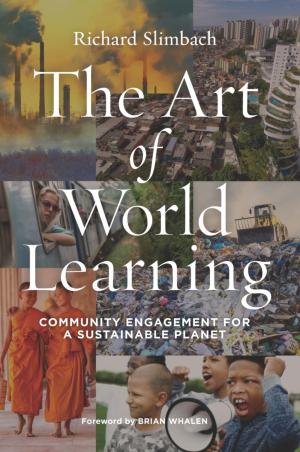
This is a visionary, consciousness-raising book that asks us to rethink the purposes and design of study away and study abroad experiences in the context of a broadened set of global threats, including climate disruption, soaring inequality, ecosystem breakdown, the dying off of distinct languages and cultural communities, and the threat of a nuclear catastrophe. As we ask students to truly comprehend this world from the privileged perspective of the global North, Rich Slimbach asks us to consider two fundamental questions: What and how should we learn? And having learned, for what should we use what we know? A panoply of pedagogies and methods of inquiry – from study away/abroad and service-based learning to diversity programming, environmental education, and community-based research – aim to develop students who both understand the challenges faced by global communities and act in ways that advance their social and environmental health. What temperaments, social habits, and intellectual abilities will they need to help heal their corner of creation? And what pedagogical perspectives, principles, and procedures can best support them in this creative challenge? Rich Slimbach argues that transforming student consciousness and life choices requires a global learning curriculum that integrates multi-disciplinary inquiry into the structural causes of problems that riddle the common good, along with mechanisms that bid students to cross borders, to pay attention, and to listen to those unlike themselves. At its heart, this book proposes a truly transformative approach to community-engaged global learning. (From the Publisher)

When the Scholarship of Teaching and Learning (SoTL) emerged, it often concentrated on individual faculty practice in one classroom; it is now, however, increasingly common to find work in SoTL focused more broadly. SoTL studies may engage with a cluster of courses, a program, a particular population of students, a pedagogical approach, or a field—all of which are represented in the essays collected here by authors from a diverse array of institutions and nations. This volume features examples of SoTL research conducted in, and applied to, a variety of contexts and disciplines, offering a theoretical framework for an expanded vision of SoTL—one that moves beyond the individual classroom. (From the Publisher)

Many students struggle with the transition from high school to university life. This is especially true of first-generation college students, who are often unfamiliar with the norms and expectations of academia. College professors usually want to help, but many feel overwhelmed by the prospect of making extra time in their already hectic schedules to meet with these struggling students. 33 Simple Strategies for Faculty is a guidebook filled with practical solutions to this problem. It gives college faculty concrete exercises and tools they can use both inside and outside of the classroom to effectively bolster the academic success and wellbeing of their students. To devise these strategies, educational sociologist Lisa M. Nunn talked with a variety of first-year college students, learning what they find baffling and frustrating about their classes, as well as what they love about their professors’ teaching. Combining student perspectives with the latest research on bridging the academic achievement gap, she shows how professors can make a difference by spending as little as fifteen minutes a week helping their students acculturate to college life. Whether you are a new faculty member or a tenured professor, you are sure to find 33 Simple Strategies for Faculty to be an invaluable resource. (From the Publisher)

Recasting burnout as a crucial phase of service, Building Resilience Through Contemplative Practice uses real-world case studies to teach professionals and volunteers unique skills for cultivating resilience. Viewing service and burnout as interdependent throughout phases of stability, collapse, reorganization, and exploitation, the book uniquely combines elements of adaptive resilience theory with contemplative practices and pedagogies. Drawing on the author’s extensive experience working at the intersection of service and contemplative practices, this is the first book to demonstrate how and why professionals and volunteers can reframe burnout as an opportunity for resilience-building service. User-friendly case studies provide tools, skills, and exercises for reconstructive next steps. Chapters address personal, group, and structural levels of service and burnout. Illuminating the link between adaptive resilience and burnout as a normal and useful phase of service, Building Resilience Through Contemplative Practice is a necessary resource for professionals and volunteers across a wide range of service settings. (From the Publisher)

For those who wrestle with transformative learning or who need help breaking down the myths of learning, Inspired Learning offers 50 insights from the personal stories and experiences of award-winning professors. Through sharing personal vulnerabilities, adversities, and triumphs, distinguished educators illuminate the often uneasy and challenging path to learning. Drawn from perspectives across multiple disciplines, brief essays probe race, culture, and identity while inviting readers to consider and re-consider their own transformative journeys in engaging and personal accounts.From suggestions for connecting with mentors and taking advice from others to lessons on valuing failure and developing curiosity, this book grants readers permission to develop their own identity as learners - whether they are new to a college setting or experienced faculty members. Inspired Learning questions what it means to be a learner and offers how an open-minded environment can be beneficial and instructive for transformative learning. (From the Publisher)