Resources

Walking along the long stretch of beach, the cross-section of the dunes revealed the stringy roots of the foliage penetrating and crisscrossing below the surface. This suggests that despite the shifting of the sands comprising the dunes, the roots help anchor the plants and enable them to continue thriving. Similarly, deans can draw upon their knowledge of the school’s history and roots to maintain a certain stability despite significant changes taking place around the institution.
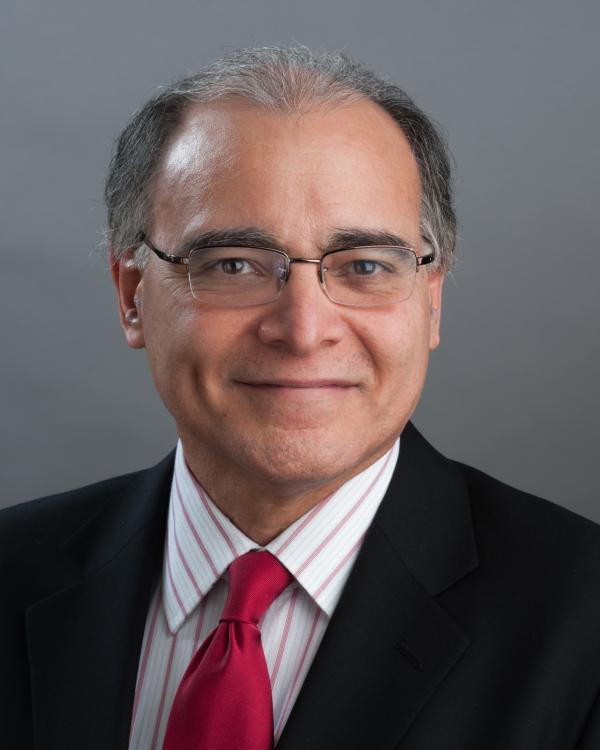
The 2017-18 Deans’ Colloquy was constituted by a diverse group of deans representing 11 schools in the USA and Canada. Drs. Deborah Krause (Eden Theological Seminary), Luis R. Rivera (Garrett-Evangelical Theological School), and Paul Myhre (Wabash Center for Teaching and Learning in Theology and Religion) were the facilitators. The group met in Mustang Island for the second half of the colloquy. One of the topics for reflection was: “the Dean’s leadership role in times of deep changes in theological education.” The Deans were given an assignment to spend 45 minutes walking around the beach to identify aspects of the physical environment that may evoke thoughts or visions on the topic. They returned and shared their findings in small groups and then in plenary. It was a rich conversation. The group decided to share some of their reflections in the Wabash Center’s blog series for Theological School Deans. Instead of presenting thoughts in one particular way, they decided to do it freely . . . like the wind . . . like the waves . . . . The next 10 posts in this blog series represent some of those reflections.
Persons new to the office of the Dean may soon discover the need to acquire a new set of skills to effectively carry out the job. Those skills range from supervision, pastoral care (yes, more than you imagined!), educational administrative planning, curriculum design and planning, political acumen, budgeting and financial management, and assessment. Of these, none seems to puzzle novice deans more than educational assessment. While it can seem daunting, as I sometimes tell deans asking for help in this practice, "It's not rocket science, but it helps if you know what you're doing." There are six types of assessment practices, which, used together, will provide the dean a multifaceted and holistic view of student learning outcomes. These will provide deans, and Faculty, the data needed to evaluate the effectiveness of the curricula and to make wise and appropriate adjustments. Good data, rigorously derived, make for better decision-making than hunches, good-sounding ideas, predilections, or fads. As well, these assessments will provide the information needed to demonstrate rigorous academic practices to accrediting bodies. The Six Types of Assessments DIAGNOSTIC Diagnostic assessment measures a student's, or a class of students', strengths, weaknesses, knowledge, and skills prior to an instructional set (a course), or prior to starting a program of study. Examples of diagnostic assessments used in theological schools include the TOEFL language proficiency exam given to international applicants, and the GRE. Some schools may administer writing assessments to evaluate the need for remedial work in preparation for academic writing in a degree program. Some DMin programs use the MAT as part of their admissions requirements. Some schools administered the MMPI personality inventory as part of their application process (which, upon taking, the seminary intake counselor suggested I should not go into ministry; advice I ignored and went on to have a successful ministry career. So there.). FORMATIVE Formative assessment practices give evidence of a student's performance during instruction, during a learning experience, or in the midst of a course of study. Formative assessments are applied regularly at intervals throughout the instruction process. An example is a multi-faceted "mid-course" assessment with a faculty adviser to review academic performance and progress through a degree program course of study. This can include a student's self-assessment about their progress in formation goals. For students, formative assessments is an opportunity to receive feedback on academic performance and other goals. SUMMATIVE Summative evaluations measure a student's achievement at the conclusion of an instructional set or course of study. The most obvious course level summative assessment are final exams and the final grade a student receives in a course. At the program level, summative assessments can include a grade distribution analysis, program retention and completion rates, graduating class profiles, and, a grade point analysis of graduating students (highest, lowest, median, average). NORM-REFERENCED This assessment practice compares a student's performance against a national or other "norm" group. Some denominations require candidacy and ordination exams that demonstrate competencies in areas such as biblical exegesis, theology, polity, and worship and sacraments. These denominations can provide comparative data to show your students' placement in norm-referenced evaluations and exams. Due to the loose and broad interpretation of accreditation standards, the wide variety of theological school cultures and contexts, and the range and amorphous nature of what constitutes effective ministry practice or pastoral competencies, norm-referenced assessments are a challenge in theological schools. CRITERION-REFERENCED This assessment practice measures a student's performance against a published goal, specific objectives, or standards. In theological schools the most common criteria are interpretations of accreditation standards in program goals and the derivative student learning outcomes embedded in courses and program components. The application of well-designed assessment rubrics aid in the assessment of criterion-referenced evaluations. BENCHMARK Benchmark evaluations are similar to some of the above. These practices are used to evaluate student performance at periodic intervals, or at the end of a grading period. They can be used to predict student performance on end-of-course summative tests, or, end-of-program competencies evaluations. Benchmark evaluations can also be used to predict student performance post-graduation. The use of alumni surveys evaluated with alignment with degree program goals can help in benchmark assessment. Again, the range ministry contexts in which alumni serve, and the amorphous nature of what constitutes ministry competencies, provide a challenge for theological schools to establish benchmarks. The increasing attention to competency-based programs will likely require schools to identify "benchmarks" as indicators of levels of competencies. How many of these six assessments do you apply in your evaluation practices in your school? Which might you need to implement to provide a richer and more balanced assessment profile for your school? How, for whom, and where will you publish the results of your assessments? For information? For accountability? For reporting?
At many schools, the new academic year will begin with an interim Dean at the helm of the academic administration office. That's not a stretch for a guess as most deans in theological schools have a 4.3 to 4.5 year tenure. In most cases the interim deans will have come out from among the faculty---these are well-meaning, generous people willing to step up to the need of the moment. Most will likely not have previously served as dean, but will do a good enough job keeping the academic enterprise of the school going smoothly to some extent or another. They are to be thanked, for they'll give up a lot during their interim, and take on a responsibility that is critical to the institution; challenging, often thankless, and at times, overwhelming. Meanwhile, another group will step up to a different task: searching for the next dean. Before coming up with a list of questions to ask the candidates, the search committee will do well to answer the following questions for themselves: 1. How do we define success? Getting clear about what success means in your context and offering that vision to prospective deans is more fruitful than asking the question of them (e.g., "What is your vision of success for our school?" The honest answer to which is, "I can't know that yet."). What constitutes success is contextual to your school. The answer lies in the culture, shared values, academic intent, and the aspirations of your particular school. Some indicators of success are measurable, while others are aspirational. The one will keep you grounded, foster accountability, and inform strategies; the other will pull you forward---especially during difficult times. The clearer you as a search committee are about these, the more helpful in discerning your best choice among candidates. 2. What are the biggest challenges we face? While a search committee will put on a good face for a prospective dean and share all the good things about the school, a dean needs to know what challenges she or he will face coming to the position. To the extent the committee has done due diligence in identifying those challenges, has avoided self-referencing ("We're a great school because we believe we are."), and can be transparent and honest, will be the extent a prospective dean can discern whether or not there's a good "fit." That "fit," however, goes beyond personal likability, transactional familiarity, or cultural affinity. The best "fit" for a dean goes more to function than to role. All deans play the same role (they all have the same job description). Function, however, goes to the needs the school has at a particular point in its trajectory and within its contexts. A school in the midst of an institutional transition requires different functions of its dean than a school entering a period of development. A school requiring significant strategic re-organization needs a different dean than does a school in the midst of a crisis. No mature or experienced dean will be naive enough to think the job will be smooth, easy, or challenge-free. But deans need to know what the school requires of them that may not appear in the job opening announcement. The "right" dean will be the one who can help the school address its challenges. 3. In what areas must our new Dean create change and development; and how much change can we stand? Helping a school address its challenges will mean bringing about some level of change. A worthwhile conversation with a prospective dean will be about how well the school handles change and responds to challenges. If a school has change-fatigue from recent developments or transitions, it's not likely it will respond to an energetic, enthusiastic dean who sees herself as a "change agent," or to the impatient dean who "wants everything done by yesterday." Deans will of necessity bring about change in the institution---it's the nature of the job. How much change a school can stand is a product of capacity and willingness. Let the dean know where you stand. At the end of the day, one can only lead the willing. When it comes to making changes and following through, how willing is the school (Faculty, administration, Trustees)? 4. In what ways will the new Dean add value to our school? Let's face it, the hiring interview process is a process of seduction. Each party does its best to look good and be desired. Even the best-prepared search committee can get snookered by a slick candidate or fall in love with a personality. Secondary characteristics, inconsequential capacities (she's a good skier; he's an avid hiker; she knows Brad Pitt!), and "good feelings about" the candidate can tip the vote in favor of a safe, cool, or comfortable candidate. One question that can provide a corrective to bias is being clear about what value a particular candidate will bring to the school. What will the prospective dean bring to the institution that you need and which another cannot provide? 5. What was the President's relationship with the last dean? What will be the new relationship? While the search committee cannot take responsibility for the relationship between a president and dean---past or future---it is critical that the importance of the relationship be recognized. To a certain extend, a President's relationship to the dean will make or break the job. A common question during the search interviews with deans is about the triangulation between dean, president, and faculty. Typically, the question is couched in terms of "How strong an advocate will you be for the Faculty?" While insecure faculty members may wish to hear that will be the new dean's primary focus, a seasoned dean will likely take a different perspective. Certainly an effective dean will be supportive and a resource for the Faculty in its work of research and teaching. But deans are stewards of the institution, and not advocates of one group over others. At the end of the day the dean needs to ensure that decisions benefit the institution in order to benefit all. That stance inherently sets the dean up for dealing with perpetual internal competing interests and needs. To the point, "Making Faculty happy is not my job," may be the most honest response. Happy interviewing! There's a good dean out there for your school. Choose wisely.
Early adopters of instructional technologies, for years, have been trying to raise awareness of the need for theological education to be adaptive (never mind innovative--that just seems not in the DNA of most theological schools) to the emerging realities of learning in higher education. Many have been warning that "the Digital Natives are coming!" Well, the Digital Natives are here, and as a result, most theological schools are obsolete; they just don’t know it. That is, the way most theological schools teach is obsolete. Students have changed, and as a result, so has the nature of education and learning. Here are some characteristics of the incoming students in seminaries (adapted from Beloit Colleges "Mindset" lists): They are the sharing generation, having shown tendencies to share everything, including possessions, no matter how personal. Having a chat has seldom involved talking. Their TV screens keep getting smaller as their parents’ screens grow ever larger. Rites of passage have more to do with having their own cell phone and Skype accounts than with getting a driver’s license and car. A tablet is no longer something you take in the morning. Threatening to shut down the government during Federal budget negotiations has always been an anticipated tactic. Growing up with the family dog, one of them has worn an electronic collar, while the other has toted an electronic lifeline. Plasma has never been just a bodily fluid. With GPS, they have never needed directions to get someplace, just an address. There has never been a national maximum speed on U.S. highways. Their favorite feature films have always been largely, if not totally, computer generated. They have never really needed to go to their friend’s house so they could study together. They may have been introduced to video games with a new Sony PlayStation left in their cribs by their moms. A Wiki has always been a cooperative web application rather than a shuttle bus in Hawaii. They have always been able to plug into USB ports Their parents’ car CD player is soooooo ancient and embarrassing. Since they binge-watch their favorite TV shows, they might like to binge-watch the video portions of their courses too. “Press pound” on the phone is now translated as “hit hashtag.” The water cooler is no longer the workplace social center; it’s the place to fill your water bottle. There has always been “TV” designed to be watched exclusively on the web. Yet another blessing of digital technology: They have never had to hide their dirty magazines under the bed. Attending schools outside their neighborhoods, they gather with friends on Skype, not in their local park. They have never used Netscape as their web browser. “Good feedback” means getting 30 likes on your last Facebook post in a single afternoon. They are the first generation for whom a “phone” has been primarily a video game, direction finder, electronic telegraph, and research library. Electronic signatures have always been as legally binding as the pen-on-paper kind. They have largely grown up in a floppy-less world. XM has always offered radio programming for a fee. There have always been emojis to cheer us up. Donald Trump has always been a political figure, as a Democrat, an Independent, and a Republican. Amazon has always invited consumers to follow the arrow from A to Z. In their lifetimes, Blackberry has gone from being a wild fruit to being a communications device to becoming a wild fruit again. They may choose to submit a listicle in lieu of an admissions essay. By the time they entered school, laptops were outselling desktops. Once on campus, they will find that college syllabi, replete with policies about disability, non-discrimination, and learning goals, might be longer than some of their reading assignments. Whatever the subject, there’s always been a blog or a Youtube channel for it. A movie scene longer than two minutes has always seemed like an eternity. As toddlers, they may have taught their grandparents how to Skype. Wikipedia has steadily gained acceptance by their teachers.(1) Closer to home: The majority of your incoming students have taken at least one online course, in elementary school, high school or college; they don't need a "tutorial" or orientation to using an LMS (but many of your Faculty do!). A paper syllabus is useless to them. They expect that most of the information they need for your class will be on a digital platform (an LMS, a website, or an app) on a screen (a laptop, a tablet, or their phones). Whatever they produce in your class, for whatever subject, will be digital to some extent. And, they are better at Powerpoint than you. The reality is that as theological schools we hold on to an industrial-aged model in a digital world. Furthermore, the imagined future students we push our admissions office to find to fill our classroom seats and residential halls don’t need us to learn. Classroom instruction as a signature pedagogy is obsolete. That may seem an overstatement, but here are examples of how Digital Natives challenge ideas of how you learn and from whom. At 13 Patrick McCabe learned robotics from the internet. He even demonstrates how to teach a robot to learn. Amira Willighagen was seven years old she took it upon herself to learn how to sing opera music. Growing up in Pakistan, there were no instructors in town that could teach Usman Riaz how to play percussive guitar, so he learned it from the internet. "I wanted to learn more about that so I just let the internet be my teacher," Usman said, "You learn from exposure and you learn from watching other people and that's exactly what I did except that instead of having the person physically in front of me I had a portal to them through the computer." He says, "There's so much out there available for everybody that they don't need to sit and worry about whether they don't have a teacher or not, you just need an internet connection and the desire to want to learn something and that's really it." Arguably, the most important role of a dean is to be the visionary that shapes the educational values and enterprise of the school. Does your vision for your school align with the realities of a digital world? Is your Faculty teaching in the ways Digital Natives need to learn? Expect to be taught? Is your Faculty preparing ministers with skills for a world that no longer exists? Is your Faculty as attentive to the ways of teaching and learning as much as they are to what they teach? Will your next incoming class find they've signed on to an industrial age system of education that is obsolete? Where is your school situated in the landscape of online theological education? (1) Adapted from Beloit College's "Mindset" lists.
Change is the constant in theological education, though it may not seem so from some vantage points. Most people in an organization desire a sense of permanence. Given the nature of the day-to-day routine, most people experience on the job, it's not difficult to appreciate they are lulled into a sense of stability and immutability in their organization. From their perspective, the constancy of the job gives a sense of continuity. Even for Faculty, the annual rhythm and cycles and the academic year can give an unwarranted sense that things change slowly from year to year. From the perspective of the dean, however, change is the constant---intended or not. Deans will confront, manage, resist, hold at bay, or instigate change every year. Most deans would welcome a single year with a minimum amount of change that can provide a "breather" from the steady stream of issues, challenges, and problems that bring about some level of change at multiple levels. Unfortunately, the nature of the job means deans will work amidst a constant swirl of change. C. William Pollard, author of The Soul of the Firm, provides a perspective on change that is critical to theological education in this era. Pollard said, "Without change there is no innovation, creativity, or incentive for improvement. Those who initiate change will have a better opportunity to manage the change that is inevitable." Leaders in theological education should also take his caution to heart: "Learning and innovation go hand in hand. The arrogance of success is to think that what you did yesterday will be sufficient for tomorrow." Theological school deans, then, should embrace that change is part of their job, and accept that not everyone will like it. Deans, however, are also stewards of change in their organizations. As such, wise deans will also question change---that is, they will avail themselves of critical questions that can help them discern the purpose, necessity, and nature of the change they will lead. Questioning Change Here are sample perspectives that can help deans "question change": Do you have a legitimate rationale for the change? Can you rely on good data to inform the change? How much change do you need? What can help leverage the change? (trust, data, internal authority, external pressures?) What is the institution's capacity to absorb change? Has the institution navigated a similar change in the past? Did it succeed or fail? Why? How much risk can you absorb? What will you have to give up to realize the change? Who will you leave behind? What do you want to preserve? What will people grieve? What may be unintended consequences? What level of change is required? (Drastic or incremental?) What type of change is needed? (cultural, organizational, administrative, policy, technological, structural, programmatic, developmental, evolutionary, social?) What is your timeline for change? Is there a window of opportunity that creates urgency? Will your mission change as a result of the change? Does it need to? Will the change actually solve the problem being addressed? Who will commit to the change? Who is most invested in the change? In staying the same? Do you have the resources to make the change? How will you know the change is successful? What metrics will you use? Who will most benefit from the change? Who will be the most disadvantaged by the change? How will the change impact curriculum? Faculty? Students? Finances? The seminary culture? Administration? Can you see the changes through? (Will you leave office or the institution before the change is completed?) Abigail Brenner cautioned that "Change without transition may only serve to recreate old scenarios and reinforce old patterns of behavior. For change to have a salutary effect on us, we need to learn to effectively work with it and not to run the other way when it presents itself." ("The Nature of Change," Psychology Today. May 6, 2011).
Most theological school deans enter the office from an academic field of study---religious, theological, or ministry--distant from the field in which they now hold responsibilities: academic administration. Scholarly research soon takes a back seat to less esoteric and more pragmatic research. Spreadsheets, reports, budgets, and schedules become the daily tools to consult. It's time to trade in your Logos Bible software for a robust project management software, a tolerable student management system, and a handful of administrative apps to bring order out of the chaos that is your new normal. Theological school deans will need to broaden their horizons beyond the scope and focus of their academic guild. They need to become knowledgeable and stay current, on a wide religious landscape in order to ensure the school's academic programs remain relevant and address the real current challenges of their constituents---congregations, denominations, and students. The training of future religious leaders requires not merely understanding current realities but anticipating future trends and challenges. [caption id="attachment_211996" align="alignleft" width="300"] Computer Key orange - Research[/caption] Here are links to research sites that can help the dean keep her or his finger on the pulse of the religious landscape. How well do your curricular courses of study reflect or address what you find at this sites? The Association of Religion Data Archives A data nerd's and religion researcher's dream. Contains international and national data and statistics on religion, religious groups, and denominations, including data on U.S. congregational membership. Includes informative educational American religion timelines, and an interactive Community GSI maps and profile reports section. You can build your own congregational or student profile interactive pin map as well as viewing selected maps and areas of interest. America's Changing Religious Identity from the Public Religion Research Institute PRRI’s research explores America’s changing cultural, religious, and political landscape. PRRI’s mission is to help journalists, scholars, thought leaders, clergy, and the general public better understand debates on public policy issues, and the important cultural and religious dynamics shaping American society and politics. Cool Congregations From Interfaith Power & Light, the Cool Congregations program is designed to support faith communities as they “walk the talk” by reducing their own carbon footprint, thus helping to cool the planet. A side benefit of the program is the ‘multiplier effect,’ as congregants are encouraged to model the same energy saving behavior at home that they see at their congregation. Collegeville institute on Vocation and Collegeville Institute: Exploring Vocation in Community The Seminar on Vocation across the Lifespan brings together theologians, social scientists, and ministers to develop a more comprehensive theology of vocation from infancy through old age. The goal of the Seminar is to create resources for congregations and seminaries on the evolving nature of Christian faith and identity throughout the stages of the lifespan. Exploring Vocation in Community was developed in 2011 to serve the broader life of the church and ground the theological work of the Seminars in the lived experiences of Christians in congregations. 50 Ways to Get a Job What are your graduates going to do with that theological degree they just received? Truth is, in five years 50% of them will probably not be in ministry--and a goodly number will experience forced termination along their professional ministerial lifespan. 50 Ways to Get a Job is an interactive site addressing the span of vocational arc. Studying Congregations If you haven't come from the field of practical theology you may not be familiar with the long-standing work of the Studying Congregations projects. The site contains great tools and resources for seminarians to study congregations. Many of the frameworks and guides for studying congregations can be applicable for studying your own theological school---its context and mission. Religious Worlds of New YorkReligious Worlds of New York News from my home town. No city or region of the country is as religiously diverse as New York. The site offers many educational resources on religions and interfaith dialog. Given the new data from the America's Changing Religious Identity (see link above), this may be a portend of things to come. How well is your theological school preparing ministers for a more diverse world? Sunday Assembly The Sunday Assembly claims to be the world’s fastest growing secular community. The Sunday Assembly was started by Sanderson Jones and Pippa Evans, two comedians who were on the way to a gig in Bath when they discovered they both wanted to do something that was like church but totally secular and inclusive of all—no matter what they believed. The first ever Sunday Assembly meeting took place on January 6th, 2013 at The Nave in Islington. Almost 200 people turned up at the first meeting, 300 at the second and soon people all over the world asked to start one. How's that for "church growth"? Association of Theological Schools in the United States and Canada Keeping up with the latest developments in theological education is critical to the dean. The Association of Theological Schools (ATS) is the accrediting agency for 270 graduate schools that offer post-baccalaureate professional and academic degree programs to educate persons for the practice of ministry and for teaching and research in the theological disciplines. The Commission on Accrediting of ATS accredits the schools and approves the degree programs they offer. If you're new to the deanship, ATS offers much more than you may imagine. Wabash Center for Teaching and Learning in Theology and Religion Bookmark this site! The Wabash Center supports teachers of religion and theology in higher education through meetings and workshops, grants, consultants, a journal and other resources to make accessible the scholarship of teaching and learning. All Wabash Center programs are funded by Lilly Endowment Inc. If you're new to the deanship, be sure to sign up for their Colloquy for Theological School Deans! What other helpful research sites for deans have you discovered? Share your stuff.
One of the most critical skills theological school deans need, arguably now more than ever before, is that of problem-solving. The challenges facing theological schools continue to become more technologically complex, socially entangled, costly, and multi-faceted. It is evident that most deans are not just dealing with programmatic, administrative, and technological problems, they are dealing with wicked problems. The experience can feel like trying to unravel an endless tangled cord. Horst Rittel, one of the first to research wicked problems, references ten characteristics that describe this sort of complicated challenge: Wicked problems have no definitive formulation. Therefore, it becomes difficult for a dean to define the problem that needs to be addressed. This is a significant challenge given the tendency for people to want to know the one answer and simplest solution to a complex problem. With complex problems, it's never about just one thing. Wicked problems have no stopping rule or criteria upon which to determine "solving." Unlike challenges with clearly defined outcomes and measures of completion, wicked problems are persistent and tend to be moving targets. The answer to "When will we ever solve this problem?" is "Never." Solutions to wicked problems are not true or false; they can only be good or bad. When deans tackle wicked problems the best approach is to choose the best strategy at the time. Arguing about what "should" or "should not" be is pointless. There is no complete list of applicable "moves" for a solution to a wicked problem. Wicked problems require deans to be imaginative, fleet, flexible, and innovative. There is always more than one explanation for a wicked problem, with the appropriateness of the explanation depending on the individual perspective of the perceiver. Hence, deans will constantly deal with the impasse of multiple interpretations. The President will see it one way, the Faculty another, Trustees in their own way, donors and students differently altogether. Where one sits in the system determines one's perspective. It should come as no surprise, then, that no one will see the problem in the same way the dean does. This requires a multi-disciplinary approach to most wicked problems, as no singular perspective suffices. Every wicked problem is a symptom of another problem. Like a knotted bunch of cords, pulling on one end of the problem merely creates tension and tightens the knot on the other end. Deans need to be systems thinkers, understanding the interconnected complexity of the enterprise. No solution of a wicked problem has a definitive, scientific test. When proposing strategies for addressing complex problems deans often face the call to give evidence or proof that the action will be successful. That's just not possible with wicked problems. They require the courage to risk and the ability to adapt along the way. Every wicked problem is unique. The problems facing theological schools are endemic to all schools merely by virtue that they are systems of a type. But it remains true that each dean will have to solve their own problems in their own context. Finally, to paraphrase Rittel, deans attempting to solve a wicked problem must be fully responsible for their actions. That's the burden of leadership. Few, if any, in the organization will take responsibility for tackling wicked problems. That comes with the job of being the dean. While not all problems a dean faces are wicked, those that are will be the most demanding. Even difficult problems can have a solution, and most deans can get adept at tackling them. But wicked problems will be the most challenging to educational leaders due to the indeterminate scope and scale required to address them. Wicked problems can't be fixed; they'll be the bane of every successive dean and President in office. Questions: What are the wicked problems you face in your school? Who are you consulting with on addressing the wicked problems? Are you aware of your biases which may hinder you from seeing alternative and imaginative approaches? Are you alert to unintended consequences as you apply strategies to wicked problems? In what ways are you defining and interpreting the wicked problems to the various audiences in your school?
Every once in a while, integration becomes the golden fleece in curriculum design, teaching, and assessment. Deans can feel pressured to identify the way the curriculum, and the Faculty, integrates subjects and learning in the curriculum and its course of study. They may feel frustrated when called upon to find ways to demonstrate, through assessment, that integration is taking place: what it looks like, to what degree, for what outcome. This points to a fundamental challenge: in what ways and to what extent are the things learned in seminary transferable (applicable) to ministry contexts? Novice deans often wrestle with some basic questions. What are we trying to integrate--subjects, fields of study, concepts, skills----all of them? Who is supposed to do the integration--faculty? Students? How do we assess integration? What evidence do we look for? How do you grade it? What does it look like, anyway?! Attempts to engage the faculty in how to integrate the curriculum become frustrating and ultimately futile. If you are frustrated trying to integrate, maybe you're focusing on the wrong thing. Transference of learning. A more helpful framework to focus on may be transference of learning. Transference of learning is a powerful indicator of higher order learning. It denotes the ability of a student to take something learned in one context or a particular field of study, and apply it in a different context or field of study. Transference of learning provides evidence of higher order learning: synthesis, imagination, application, innovation, and creativity. Focusing on transference of learning keeps the focus where it belongs: the student's attainment and mastery of learning. One common attempt among faculty is to focus on integrating content learning---concepts from distinct and diverse fields of study. While that is possible, in reality, it rarely happens by intent or design, and more often than not by serendipity, if at all. Busy faculty members rarely spend enough time in conversation among themselves about their own scholarship, fields of expertise or even discuss their own teaching and courses to creatively design integration in a course of study. Focusing on transference of learning can be a more effective framework for faculty discussion about teaching and learning and its outcomes. Ask a professor "How do you strive to integrate what you teach in your course with what students are learning in a course in a different field of study?" and you'll likely succeed in merely stumping the teacher. Ask, however, "What are those things in your course you want to see your students use or apply in other courses as they continue their courses of study?" and you'll likely get a clear and confident response---and a hint about what to look for. While the concept of transfer of learning is easier to grasp than the vague "integration," it must nevertheless be applied with informed rigor in order to be effective as a framework for teaching and learning in the curriculum. Dale H. Schunk provides a list of types and characteristics of transfers of learning from the literature of educational research. The summary below can serve as a guide to develop program level goals, craft course learning outcomes to align with those goals, and point to evidence for assessment. Types and Characteristics of Transfer of Learning Overlap of learning between situations and contexts: the original and transfer contexts are similar ("near") What is learned in one context enhances learning in a different setting ("positive") Knowledge of a previous topic is essential to acquire new knowledge ("vertical") Knowledge of a previous concept is not essential but helpful to learn a new concept ("horizontal") Explicit new knowledge transfers to new task ("literal") Use some aspect of general knowledge to think or learn about a novel problem ("figural") Transfer of learning involves abstraction requiring conscious formulations of connections between contexts ("high road") Abstracting situations from one learning context to a potential transfer context ("forward reaching") Abstracting in the transfer context features of a previous situation where new skills and knowledge were learned ("backward reaching"). Engaging the Teaching Faculty in conversation about transfer of learning can re-shape its thinking about course methodology and learning outcomes. Using transfer of learning as a framework for assessment may make evaluation of "integration" a less stressful and more effective way to measure student learning. Starting Questions What evidence do you have that students use what they learn in one cognate field of study as applied in another? What evidence do you have that students are able to apply what they learn in academic courses in their ministry contexts? What evidence do you have that students are able to apply what they learn in core courses in their field-based studies and supervised ministry experiences? What transference of learning do you wish to see in what students are learning in basic Bible courses to homiletic courses? What transference of learning do you wish to see between acquired academic skills and ministry context competencies? SOURCE: Schunk, D. (2004). Learning theories: An educational perspective (4th ed.). Upper Saddle River, NJ, USA: Pearson, p. 220.
Theological school deans are not just theological leaders for their institution, they must be EDUCATIONAL leaders. That is, they must implement sound educational practices related to curriculum, instruction, supervision, assessment, and administration. There is a variety of ways to assess the effectiveness of the curriculum, and there are several levels of assessment (program-level, course-level, student testing, student projects, etc.). While faculty members can focus on course-level and individual student learning assessment, academic deans need to focus on program-level assessment in order to evaluate the effectiveness of the school's curricular course of study. Here are ten basic curriculum assessment tools every academic dean needs, nine are covered in previous posts: Outcomes alignment worksheet Syllabus assessment worksheet Curriculum maps Program-level rubrics Alumni survey Grade Distribution report Program retention and completion rate worksheets Entering student profile Graduating class profile Student course evaluations In this final entry of the series we review: 10. Student course evaluations that are worth the trouble Student course evaluations, a form of indirect assessment, can be a meaningful component of a school's formative assessment of its curriculum. Unfortunately, most course evaluation tools do not provide sufficiently meaningful data to be helpful. One evidence may be how difficult it is for most schools to collect meaningful data from the evaluations. Another is how students tend to see them as a chore, resulting in cursory responses and a low rate of return. Further, in most cases, the data collected rarely is analyzed at depth or used to prompt pedagogical actions for improvement in teaching and learning. Two approaches can help make course evaluations worth the trouble for students and for deans. First, a better-designed course evaluation tool, and second, a procedure that helps ensure a higher response rate. 1. A well-designed student course evaluation tool An effective student course evaluation tool will provide data and feedback that is meaningful. That is, the information from student feedback should address issues of pedagogy that are relevant, measurable, and actionable. For example, the mythical Central Generic Theological Seminary gathers the following clusters of information on its student course evaluations: (1) Student profile information (2) Feedback on program-level goals (3) Feedback on instruction and pedagogy (4) Feedback on instructor effectiveness (5) Feedback on the relevance of the course to the practice of ministry (6) Feedback on program and learning integration. In order to make these clusters meaningful, the instrument focuses on instructional effectiveness and curricular program goals, not on what students "like" or "enjoyed." Additionally, the clusters of items are co-factored to yield meaningful interpretation. See the attached "Anatomy of a Student Course Evaluation Tool" which shows how the instrument is structured by clusters and for co-factor analysis. Download Anatomy of student evaluation Once the student evaluations are collected (CGTS uses its learning management system (LMS) for its course evaluations) the dean prepares an aggregate report for the Faculty. The aggregate report includes a comparison of selected items over the course of several semesters. The comparison focuses on areas targeted for improvement based on the student evaluations. Here are some examples: In Example 1 the dean compares student responses to degree program goal 1.A across two semesters. Additionally, the report compares two related items by gender. In Example 2 the dean highlights three instructional items related to coursework (knowledge, principles, skills) and compares the responses over three semesters. This report item shows improvement in the most recent semester indicating that the interventions faculty members applied in their courses to address these issues are having a positive effect. In Example 3 the dean compares a cluster of items related to instruction over three semesters. This feedback becomes important for the Faculty of CGTS in helping it realize the need to be more overt in applying pedagogical strategies that help students be more aware of the course learning objectives and to create learning experiences that yield a higher response from students about achieving the course outcomes. As a result of this feedback, the dean led the Faculty in applying teaching and learning practices to increase the effectiveness of these items. You can download a copy of the student course assessment questionnaire here 2. A rigorous procedure for assessment The second strategy employed by CGTS is the implementation of policies and procedures that help ensure a high rate of return on student course evaluations. The school's policy makes completion of the student course evaluation part of the course completion requirements. Students who do not complete the course evaluation do not receive a grade for the course. Additionally, the school has put in place the procedures to help ensure this indirect assessment data set is part of the formative assessment plan. A Student Course Evaluation Sample Here is a sample of student course evaluation questions with questions that cover the various clusters for co-factor analysis. Download Student Course Evaluation sample