Resources
Throughout the spring and summer, from my porch, and in the comfort of my rocking chair, I had noticed bats feeding on insects under the street light. Then, on Sunday night, a bat came into my house. Sitting up in bed, reading on my iPad, I was enjoying an uneventful evening. Silently, a bat flew into my bedroom. I felt it enter before I saw it. I looked up from the iPad screen in time to see long flapping wings fly through, into the adjoining room, and out of sight. Startled and immediately panicked, my shrieks, calling on “JESUS!” “Jesus…. JESUS!!!” was what broke the silence. My fever pitched, full-throated summons for “JESUS!” continued as I jumped from the bed, ran to door the bat had just flown through and slammed it shut. Still shrieking, I realized there were two other doors in my bedroom which, to keep the bat from circling through again, must be closed. I ran from door to door, slamming each door and commanding Jesus to save me. By day break, I had barely slept. My heart was still racing. I could not get myself out of panic. I got dressed and waited for 7:00 AM – when Campus Services opened. Promptly at 7:00AM I emailed Campus Services. It was a distress email – “Please come now! Bat in house! Hurry!” At 7:10AM my doorbell rang. I ran down the stairs – fully expecting to be devoured by the silence shattering bat. A campus facilities colleague, donning a face mask and holding a fishing net, entered my house. The bat wrangler looked at me and asked, “Are you okay?” Meeting his gaze, I answered in a tone of defeat, “No.” I showed John upstairs to the scene of the incident. As we walked, he talked to me about the habits of bats. As he talked, I decided his net was not big enough to capture the intruder. John said from my description, the bat in my house was a Brown Big – Eptesicus fuscus – a protected bat in the state of Indiana. They eat insects and only attack when threatened. John’s information did not comfort me. After the inspection, John lingered in the kitchen chatting with me and waiting to see if the bat might move around again. Before leaving, he gave me his cell phone number so I could direct dial. The rest of the day I was skittish. I heard noises that were not there and saw bats in previously familiar shadows. I creeped around my own house and dreaded nightfall. I considered going to a hotel, but talked myself out of it. The next day, campus facilities personnel returned with a professional bat remediator. The inspection began in the bedroom and carefully scoured the first and second floors, then both men went into the attic. They found evidence of bat activity in my attic, but no roosting. They said that was good news. I was unconvinced. They scheduled a time to return to repair possible places where bats might be entering the house and to clean up the evidence of bat activity. The purpose of my bat report is not necessarily about the bat. I am mostly reflecting upon my reaction to the bat. Before the bat flew into my bedroom, I would have told you that I would not have panicked. I would have said that I would have likely been startled, but I would not have thought that I would have shrieked and run around the room like a character in a cheap horror movie. I have lived in the city, on dairy farms, and in suburbs. I am accustomed to critters, inside and outside. What had happened? Why was I so …. raw…. so… not myself …. so emotionally fragile? A few days before the bat invasion (okay one bat might not be an invasion) the news broke that Chadwick Boseman had died. When I heard the news, I sat on my couch and wept as if a beloved family member had passed over. What is happening? Why am I so …. emotionally spent? As a clergy person, I know to be a non-anxious presence, especially in times of crisis, loss, and emergency. I have experience sitting with families in emergency rooms, courthouses, and funeral homes to console and reassure. Even with my years of experience, nothing has prepared me for months of quarantine, months of re-organizing our programming, months of loss, uncertainty, grief, and anticipated terror – with no end in sight. My bat report is that I know first-hand that the cumulative stressors of 2020 can take a toll on body, mind and spirit. My sheer panic is evidence of the personal toll. We are exhausted. We have protest fatigue. We do not ask IF another Black person will be publicly killed by the police. We ask WHEN will another Black person be publicly executed by the police. Adding to the worry, the public protests organized by Black Lives Matter become more violent as unwelcomed agitators incite incidences of vandalism and cause significant harm. The presidential election season strains of acute disagreement, mud-slinging, and deep-seated ire. We dread election day, regardless of its outcome, for its promise of increased violence and national confusion. The death toll of COVID 19 signals the number of families grieving – we are nearing 200,000 grieving families in the United States and a million more grieving families around the world. Schools are trying to figure out how to keep students, faculties and administrators safe by taking calculated health risks for which they have little medical guidance. The surreal decision-making processes feel like roulette wheels and crap games in Las Vegas. We all know persons who have been furloughed, are unemployed, and continue to be underinsured. Parents are home schooling, working from home, and trying to keep family together – all at the same time. Person’s who live alone are in seclusion and loneliness. The exhaustion is palpable. For those of us who pay attention as the malaise of dis-ease, flagrant white supremacy, and uncouth violence rages on in daily life, a price is exacted from our bodies, minds, and spirits. How will our extorted souls find relief? When the bat flew into my bedroom, I freaked. Unbeknownst to me, I had reached my own psychic limit; I could not take one more thing and the bat was one more thing. When I no longer felt safe in my own house, I became terrified. The year 2020 has us all living on the verge of some kind of madness. I applaud colleagues who routinely work with mental health needs. I suspect the mental health experts know what I learned, again and some more, over the last couple of days. A foil for stress, anxiety, loss, fear, and terror is kindness. When I freaked-out about the bat in my house, my colleagues, friends, and family were steadfast and caring. The facilities colleagues who immediately came to my house were kind to me. No one told me that my fears were unfounded or that I should not have reached out for help. The bat remediation man was considerate as I reenacted the bat flying into my bedroom genuinely trying to convey my terror, but undoubtedly looking ridiculous. No one laughed at me or my fear. When I told family and friends about my panic, and chided myself for “over-reacting” – no one followed that line of conversation. Their kindness to me was to tell me that I get to respond to a bat in my house anyway I need to respond. A beloved neighbor said that if it happens again, to please text him – no matter the time of night or day. His concern for me made me tear-up. In 2020, gestures of kindness are not to be taken for granted. African American women are accustomed to being treated as invisible. Our distresses are typically ignored, belittled, or erased. Or, we are told we are strong and we can handle anything/everything – even our own terror. We are, by the metrics and actions of white supremacy and patriarchy, invisible or superhuman. Both are narratives meant for dehumanization and violence. Even so, here is my bat report. In a world where Black bodies do not matter, and the distresses of Black women are oftentimes ignored, when my colleagues and friends rallied to help me, I was healed, at least a little bit. Their attentive responses and care were life giving and life affirming. In my fear, kindness made all the difference. As we wade into our classrooms and into the fall semester, let us take the power of kindness with us. Let us engage our students with care and genuine concern, as best as we can. Remember, they might have recently had their own version of a bat in their house. Our classrooms are not separate from, or immune from, the loss, grief and panic which permeates our daily lives. Attempts at compartmentalization works against kindness, care, and a holistic understanding of why we come together to learn. During the multiple pandemics of 2020, we cannot pretend that classroom sessions (even on-line) are outside of this current, unrehearsed reality. If in our own panic, we cannot model calm for our students, let us not try to pretend. Know that the pretense and charade of normalcy will not form, but will de-form students. If/when you realize your strength and determination has wavered, do not be afraid to ask for care, help, and kindness. For easy access, several bat nets have been are placed around my house. I think I have gathered myself enough so that next time I will not freak-out. But if I do, I will not harshly judge myself as inadequate or lacking. I will call Jesus!, neighbors, and colleagues for help.
In the early sixties, our three-generational family lived in a tight-knit African American community in north Philly. Van Pelt Street, just off of Diamond Street, was a long city block of home owners who knew each other, looked out for each other, and cared for all the families on the block. Both sides of the street consisted of row houses – meaning all the houses connected together. This version of architecture in NYC is called brownstone, but since Philadelphia houses were made of brick, they were called rowhomes. The entrance to the homes were marble stairs with stoops just outside of each door. Neighbors would sit on their stoops like country folk sit on their front porches. Sitting on the stoop was a daily activity for almost every household. As children, my brother and I, once we knew not to run into the street, were free to wonder up and down the street playing and visiting neighbors on their stoops. Visiting neighbors, while never being out of my parents’ or grandparents’ watchful eye, gave us a sense of interdependence and community. My parents knew that the farther from home we wondered, the more loving eyes watched us, watched over us and kept us safe. One of our favorite neighbors was Mr. Joe. Mr. Joe had salt and pepper, closely cut hair and smelled of motor oil. His hands were large and rough and his voice was warm and round. I can’t remember a time Mr. Joe did not smile when he saw me. Mr. Joe wore blue coveralls, and in the pocket of his coveralls, we soon learned, was candy. Mr. Joe would come home from work, go inside, then in short order, return to sit on his stoop. When my brother and I saw Mr. Joe on his stoop, we would go for a visit. Mr. Joe never disappointed – he was always glad for our visits and always offered us candy. If my brother was offered a piece of candy while I was not with him, he would say to Mr. Joe, “Can I have one for my sister?” And, Mr. Joe would say of course, reach back into his pocket and give my brother a second piece of candy. Brent would run home and give me my piece candy. If I was visiting Mr. Joe without Brent, and Mr. Joe gave me a piece of candy, I would simply say, “Thank you” to Mr. Joe, then run home and give my brother my piece of candy. Brent, seeing I only had one piece, would ask, “Why didn’t you ask for one for me?” My brother and I soon learned I was too shy to ask, too shy to say anything other than “thank you” even to beloved neighbor Mr. Joe. As a child, I was unable to voice what I needed. Sometimes saying what you need seems intimidating and scary. By the way, Brent never took my one piece of candy for himself. Years later, I was in a conversation with my Dean. The Dean had just taken the administrative post a few months before, and had scheduled conversations with each faculty person. The conversations were to get acquainted and to talk about curriculum participation. At my appointment, the Dean and I were having a congenial conversation. Then, his last question stumped me. The Dean asked me, “What do you need?” The question halted me. My hesitation was as much due to the way he asked the question, as the question itself. The Dean asked the question as if he intended to act upon my answer. Feeling the sincerity of the question gave it more gravity. In the moment, I felt disappointed that I had no real answer. This was not like the moment with Mr. Joe when I was too shy to say what I needed. By the time I sat with the dean, I was a well-voiced scholar. The question posed by the dean revealed that I had not done sufficient reflection or imagination work to rise to the level of his inquiry. Indeed, what do I need to teach well, better, or differently? The question was not a question of supplies. The Dean was not asking if I needed ink pens or a new desk chair. And, he was not asking about such things as Maslow’s hierarchy of needs, nor was he making an inquiry about the existential nature of my being. The Dean was asking me - what do you need in order to improve your teaching? What do you need to further immerse yourself in your own pedagogical project? What support do you need to engage the issues of your work? What can our intellectual community do to support your teaching agendas, practices, habits, or experiments? In this moment, I realized I had been so busy doing my project, I had taken little time to imaginatively reflect upon the doing of my project. I did not know what I needed and, in that moment, I could not say what I needed. Knowing what you need takes meditation, contemplation, inquiry, investigation, consideration, creativity and maybe -- conversations with friends that may involve drinking brown liquor, eating fatty foods and dancing. At the risk of stating the obvious, change is here to stay. In this moment, to engage the question “what do you need?” requires a more than cursory understanding of the context our work inhabits. The changes wrought in higher education, in general, and in our classrooms, specifically, are many and large. This season of COVID 19 quarantine, the Black Lives Matter movement, the extraordinary dilemma of government leadership, the shifting weather patterns, the US and global economic volatility, and global transformations are here to stay and have critical bearing upon our teaching lives. Even the notion of change being here to stay does not mean we are now static – in any way. The changes themselves are still changing. This dynamism, shifting, twisting and uncertainty is the new normal. We are surrounded personally, corporately, and nationally by grief, loss, and uncertainty. Our classrooms, our students, our selves have changed and will continue to change. We cannot be too shy or voiceless in engaging the question of need, and we cannot be unprepared or lacking critical reflection and imagination to answer this question with depth, guts and heart. Brothers and sisters, what do you need in order to teach - right now? In the midst of this ever-deepening flux, what would it mean to create space for conversation which can hold liminality and certainty as creative tension so that the emerging educational paradigms our society spawns now, and into the future, is nurtured? The Wabash Center has been working toward creating space so that colleagues can reflect and plan for what is needed in the right-now and the soon-to-be. Here is some of our work product: Launch of the Digital Salons in September. The six Digital Salons, bringing 95 colleagues into conversation to talk about what is needed. Improving The Wabash Center Journal on Teaching Creating online symposiums to be in conversation with major artists Webinars dedicated to antiracist practices Podcasts with more than 5,000 downloads Partnership with the Collegeville Institute about creative writing for scholars who want to speak into the public square Our staff is doing our own training in cultural competency Searching for new associate director Expanded online resource pages and materials created Three new blog series were created: Teaching for Social Justice and Civic Engagement; Teaching and Learning During Crisis; Director’s blog series “Teaching on the Pulse.” and more to be announced soon… It took me a couple months, but I did answer my Dean’s inquiry about my needs. The answer I gave him was thoughtful, generative, and, suggested my need for a new trajectory in my teaching project. Strengthening the ecology of our schools likely means providing one another with what is needed.
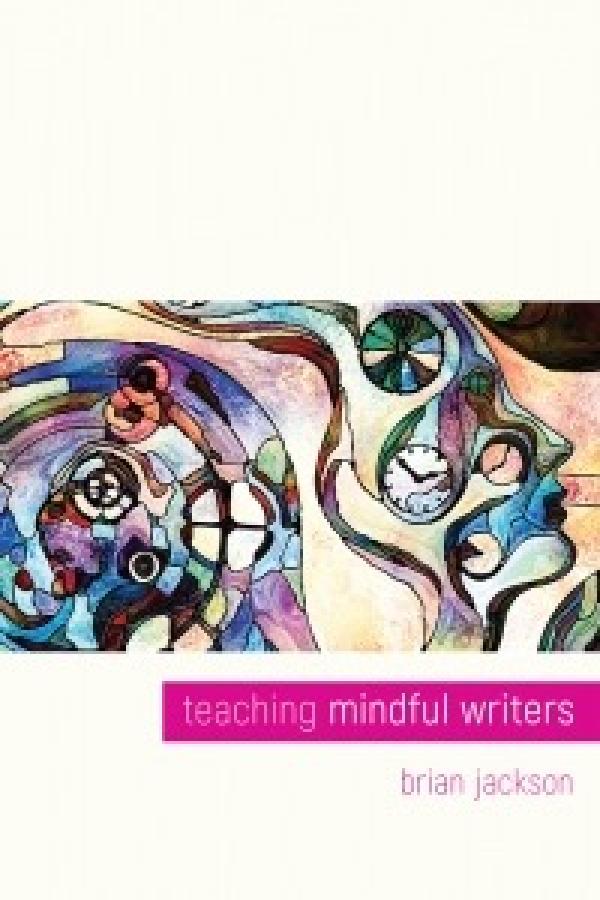
Teaching Mindful Writers introduces new writing teachers to a learning cycle that will help students become self-directed writers through planning, practicing, revising, and reflecting. Focusing on the art and science of instructing self-directed writers through major writing tasks, Brian Jackson helps teachers prepare students to engage purposefully in any writing task by developing the habits of mind and cognitive strategies of the mindful writer. Relying on the most recent research in writing studies and learning theory, Jackson gives new teachers practical advice about setting up writing tasks, using daily writing, leading class discussions, providing feedback, joining teaching communities, and other essential tools that should be in every writing teacher’s toolbox. Teaching Mindful Writers is a timely, fresh perspective on teaching students to be self-directed writers. (From the Publisher)
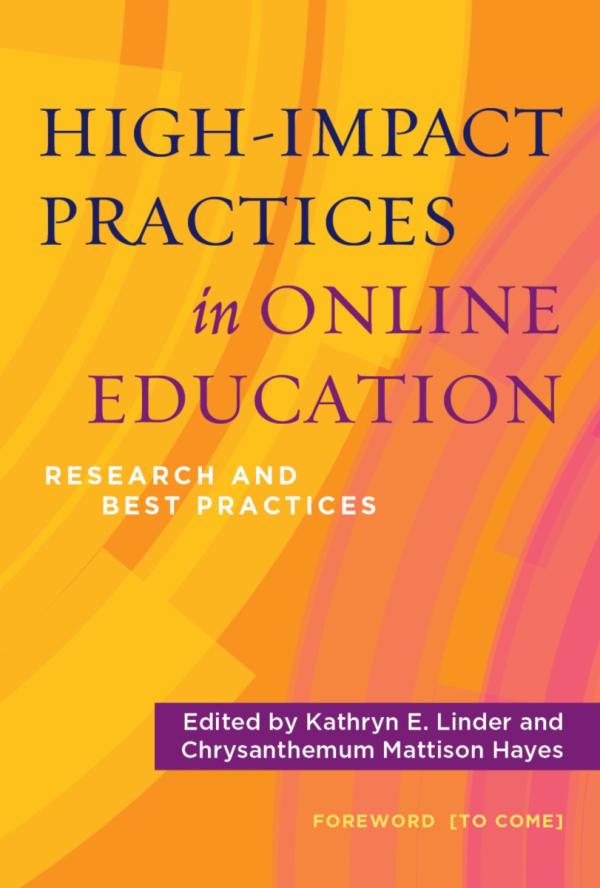
What are the potential benefits of high-impact practices (HIPs) for online education? That is the key question addressed in this well-researched collection of essays. Whether the reader is new to innovative theory and techniques in online education or an experienced distance educator, they will find a valuable resource here. Each contributor provides a helpful short list of key takeaways and a solid bibliography at the end of their chapter. The introduction and conclusion by the editors, Linder and Hayes, set the framework for the discussion and aptly describe possible future directions for teaching online, blended, or face-to-face courses. High-Impact Practices in Online Education reads like a dynamic conversation on research with practical recommendations for how to strengthen a variety of teaching contexts. Each topic selected for inclusion covers a specific high-impact educational practice. That list was largely identified in 2008 by George D. Kuh as ten critical components of undergraduate education. First-year seminars, learning communities (LCs), writing-intensive courses, and internships were among those featured components. These practices are still considered high-impact, but newer practices, such as ePortfolios, have been added in subsequent years. All have become part of developing educational strategies to impact student retention and graduation rates. So, where will readers find what they most need in this collection? For some, a particular topic will draw their attention. My suggestion is to resist that impulse. Try, instead, reading the introduction and conclusion before sampling individual chapters. Understanding the context for the conversation about HIPs matters. The research and literature in this emerging field has been somewhat scattered, but a representative sample is nicely gathered and incorporated into this single volume. There are no chapters specifically on theological education or religious studies. That said, there is much of worth to educators in those disciplines. For example, June Griffin’s “Writing-Intensive Classes” or Pamela D. Pike’s “Internships” speak directly to theological and religious educators. The same can be said about Stefanie Buck’s “High Impact Practices and Library and Information Resources.” No doubt other readers will discover other favorites as well. Remember that any one of these chapters could make a dramatic difference in most teaching and student learning. Is there one overarching idea offered as a takeaway? Yes, and it is that best practice principles are, in the end, more important than modalities. That is a valuable point to have in mind as exciting new technologies continue to emerge.
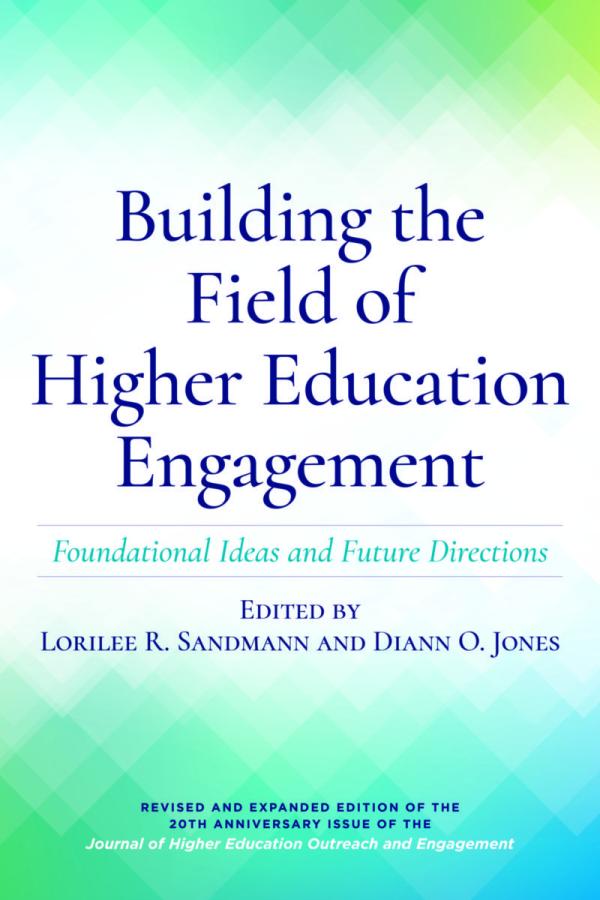
Building the Field of Higher Education Engagement: Foundational Ideas and Future Directions presents twelve landmark articles from 1996-2012 that contributed significantly to the emergence of the field of engagement. Along with the articles, the book presents updated commentaries and responses by the original authors or noted scholars to the questions they proposed. The format of this publication is thoughtful as each chapter presents conversation-provoking questions about engagement across academic disciplines. In addition, Chapter 13 is a prospective look into the future. Nine authors provide their insights to what engagement may look like in the next two decades. This book is valuable to those in the specific field of religious education as it strives to rethink the work of the academy. Lorilee Sandmann states that colleges and universities remain one of the greatest hopes for intellectual and civic progress because they search for answers in light of pressing problems (xiii). Furthermore, higher education in its highest ideals is committed to the scholarship of engagement. She defines engaged scholarship as a mutual relationship between academia and the community that leaves a positive legacy for all partners (xiv, 196). These concepts challenge established notions about higher education. First, this book examines the most foundational values of education. Engagement should be built from these values and not the expectation to do research and achieve tenure. As a result this creates ripples in the culture and expectations of the academy so that a new or revised model for higher education may emerge. Second, this book challenges the way educators see themselves and how they are to engage the community. The community has come to view them as ivory tower elites. Conversely, this volume challenges institutions and educators to participate in outreach to the community at large. The text provides several interdisciplinary examples of outreach. It is important because it generates conversations about the role of faculty and their role in outreach. This is a valuable contribution as the book also gives suggestions on how engagement and outreach can be measured so as to be included in the tenure process. Another valuable idea is the notion that knowledge is now non-linear. It was expected that the academy would study, research, and provide solutions for the world. The consequence is that the academy does not answer the questions the community is asking. In a non-linear world, the community has knowledge. The academy must necessarily be more engaged in the world that surrounds it. Through interdisciplinary dialogue, the text provides valuable insight into these conversations. For theological educators this is an important book because it provides language to understand the complex relationships between the community and the academy; as well as that between faculty and administration. It causes the reader to reimagine the requirements of tenure and the meaning of higher education in a fast-changing cultural milieu. This book conceptualizes the changes in the work of the academy so that one is better prepared to engage an institution’s culture and values so that it may be more true to education’s highest ideals and values.

The notion that learning is not an outcome of teaching is a challenging conundrum to those who teach. Perhaps for two reasons, first, it’s counter intuitive, and second, it begs the question, “Well then what am I teaching for if not to bring about learning?!” While teaching and learning are two sides of the same coin, the reality is that it is possible that what learners actually learn in a given lesson or course has little connection to what the teacher does or is trying to teach. We can imagine that some of this has to do with poor teaching. But some of it has to do with other complex dynamics of learning, including motivation, confirmation bias, attentional states, and capacities. A teacher who does not understand principles of learning, neglects to prepare well-designed learning outcomes, fails to ensure student engagement, and fails to apply sound instructional practices will likely not bring about meaningful learning. But the concept that “learning is not an outcome of teaching” goes deeper than that. The idea has to do with the fact that learners need to be, and are, active participants in their own learning. Regardless of our particular educational intent as teachers, students bring to the learning experience their own expectations, felt needs, goals, assumptions, frames of reference, and limitations related to the learning experience. Those factors often are more determinative of what will actually be learned than will anything the teacher intends or works toward. Experienced congregational ministers are familiar with this phenomenon. Regardless of how well they craft a sermon and despite how intentional they are in being clear about the purpose, function, and objective of the sermon, the fact is that the “real” sermon is the one that is heard by each parishioner in the pew and not the one preached from the pulpit. The preacher may be preaching the one sermon he or she prepared for Sunday, but there will be as many sermons heard as there are people in the sanctuary. This phenomenon always makes for interesting conversations at the door as the pastor greets the parishioners. If five people comment on the sermon on their way out, the preacher will be left wondering how and when it was that they heard those five different things in the sermon! The concept that learning is not an outcome of teaching can challenge certain educational approaches, like “teaching by telling,” lecturing, or an exclusive diet of direct instruction. If learners are active agents in their own learning, then we need to use those educational approaches that tap into what students bring to the learning experience. Ways to Ensure Better Outcomes The best way to ensure better learning outcomes is to design for student engagement. • Facilitate ways for students to discover their own learning and insights • Allow students to negotiate their own learning goals and facilitate ways for them to achieve them • Focus on problem-posing (which requires data gathering, observation, analysis, and interpretation) as well as problem-solving • Cultivate student's capacity for learning how to ask questions rather than getting good at answering teacher’s questions • Facilitate ways for students to construct their knowledge rather than providing them with information • Help students articulate their prejudices and bias • Help students uncover and identify their misunderstandings • Help students identify their resistance to new ideas • Allow students the options of approaching learning in the ways (modalities) they need. • Ensure that students apply knowledge to demonstrate learning, including through non-academic venues.
With the possible exception of Drew University Theological School where I was on faculty for twenty years, the Wabash Center has been the most influential institution to my vocational formation. I participated in my first Wabash workshop in 2000 and received my first grant in 2001. Since then, I have worked as a consultant, workshop/colloquy leader, blogger, and committee member. For twenty years, I have been a stalwart fan of the Center’s important mission. I have regularly traveled to and from Crawfordsville, Indiana – but never thinking, in my wildest dreams, that one day I would call C-ville home. Peering out of the van windows as I was being comfortably driven to and from the Indianapolis airport, the sight of confederate flags made me uneasy. I have noticed on many occasions the gun racks and guns in the pick-up trucks parked in the drug store parking lot. Like many towns in America, racial/ethnic diversity is still a contested issue in Crawfordsville. The Wabash Center staff has learned to be conscious of the racist climate and prejudicial views of some members of the Crawfordsville community, and they make every effort to limit negative interactions and foster hospitable space for participants when we leave the campus and venture into the town. The generous hospitality of the Wabash Center always seemed to over-shadow the backdrop of its location in small town middle America. However, visiting, even regularly, is quite different from taking up residence. I have become a resident of 47933! How did this happen? The Tuesday before Thanksgiving 2018, my phone rang. When I answered, my enthusiastic colleague informed me that the position of director for the Wabash Center had been posted. The friend was calling to encourage me to apply for the position. I asked smugly, “Is the Center going to still be in Crawfordsville, Indiana?” With the response of yes, I changed the subject. I had no interest in living in a small, rural town in Indiana. The call ended with my friend asking me to consider applying and me saying, unequivocally – no! Over the next weeks, my rigid response gave way to a full-blown process of vocational discernment. During the weeks, I quickly learned, again, that vocational discernment is not for the weak hearted, cowardly, or those who give a hasty “no.” As I pondered the possibility of the move, the new job, the new responsibility, the new reality, many people, trying to assure me that I should consider the position, reminded me that the most stressful times in life are divorce, death of a loved one, and moving across country. I cannot say I was grateful for the data. My discernment churned deeply – unearthing unfamiliar, difficult, and at times exhausting, questions. To lighten the burden of the challenging discernment process, I turned to read the masters. In this instance, the masters I read for guidance, wisdom, and strength were Maya Angelou and Toni Morrison. When you put Maya Angelou in conversation with Toni Morrison – you get inspiration and more to the point – you get trouble. In my case, tectonic plate shifting trouble! Toni Morrison spoke first as I wrestled with whether or not to make application for the job of director of the Wabash Center. Morrison spoke to me directly, personally, through her novel Home. In the novel, after the character Cee has gone through a long regimen of prescribed healing, Miss Ethel talks to her about freedom … Look to yourself. You free. Nothing and nobody is obliged to save you but you. Seed your own land. You young and a woman and there’s serious limitation in both, but you a person too. Don’t let Lenore or some trifling boyfriend and certainly no devil doctor decide who you are. That’s slavery. Somewhere inside you is that free person I’m talking about. Locate her and let her do some good in the world. As I reflected upon Morrison’s lesson, I was confident I had accomplished a modicum of the work of freedom in my 57 years on the planet and in my womanist approach to teaching. Yet, in considering if I should make application to the post at Wabash, I was being asked to do it again, some more, but deeper and with more tenacity. I was haunted in my discernment by the notion of re-locating and getting re-acquainted with my inside free person. I did the work of conversation, meditation, and prayer; she found me. This time she informed me that we were moving to Crawfordsville, Indiana. I cannot say exactly when in this discernment and transition that Maya Angelou reached out to me and joined the conversation – but she did. Through her poem entitled “On the Pulse of Morning,” Dr. Angelou spoke into me to… Give birth again To the dream…. Each new hour holds new chances For new beginnings. Do not be wedded to forever To fear, yoked eternally To brutishness. The horizon leans forward, Offering you space to place new steps of change. Here, on the pulse of this fine day You may have the courage To look up and out upon me, The rock, the river, the tree, your country…... In my big scary move toward freedom in, of all places, Crawfordsville, Indiana, I am placing new steps of change, giving birth again, and eager for the pulse of the fine day. I have moved to Crawfordsville, and, so far – I like it very much. I am not suggesting that anyone else uproot their lives and move to unfamiliar spaces. I am bearing witness to my experience from which I have learned that the work we are about as teachers committed to being free people and committed to the work of freeing others has chasms, demands, and opportunities which, regardless of how long you have done this work – will surprise and disorient. I am learning anew that the work of freedom requires new-fangled excavations, renewed explorations, and new ideas about old thoughts for the doing of good in the world. I’m thinking about buying a pick-up truck. To say that I tumbled into Crawfordsville is an understatement. Like most cross-country moves, there was stress, distress, decision fatigue and moments of utter confusion. As well, there were experiences of family, friends, and strangers helping in my uprooting and successful replanting. I am soundly in this new place, in this new job, in this new phase of freedom and free-ness, of being free and of teaching freedom in new ways. I am especially grateful for new friends, and new fictive kin who are helping me get oriented, set-up and settled in. My big scary move was met by folks with large hearts and willing hands of compassion and care. The Wabash Center will be celebrating twenty-five years of service in 2020 - at the same moment I am assuming the position of Director. I am humbled and glad to be part of the staff in this celebration. My blogging will continue under the moniker Teaching on the Pulse as homage to my wise-ones, Morrison and Angelou. In my blogs, I will keep you updated on the work of the Wabash Center as well as provide my observations and testimony to the goings-on in the religion academy and world. I am pleased that the Lilly Endowment, Inc (our exclusive funder) will be conducting a year- long program assessment. This program evaluation will allow us to dream about future directions and foci of the Wabash Center. During the year of assessment, our programming will not be curtailed. Also, the staff and I are adding a few items to the program planning for which I am focusing. I will be convening a group of senior African American women colleagues to write a second volume of the anthology Being Black/Teaching Black. This second volume, written in creative non-fiction, will focus on the ways the cultural, intellectual, racial, and spiritual formation of African American women shaped their classroom teaching. We are partnering with the Malcolm X Institute on the Wabash College campus to celebrate their fifty years of service. This blog will keep you informed as we move forward with assessment, the typical programs, and these new initiatives. Loosing my free person from inside me has begun in Crawfordsville, Indiana and at the Wabash Center!
There’s a term for the anxiety many novice instructors feel about the online teaching-learning environment. It’s called “transactional distance.” This relates to the dissonance of feeling “distant” or disconnected from students when one is used to only the experience of the face-to-face classroom experience. Tisha Bender, in Discussion-Based Online Teaching To Enhance Student Learning (Stylus, 2013), identified the pedagogical components that can mitigate the discomfort of transactional distance (something that potentially affects both teacher and student online). Interestingly, but not surprising, they are the same things that are applicable in the classroom learning environment. Arguably there is as much, if not more, transactional distance in a traditional classroom experience as there is online. I've done classroom observations where I witnessed over half of the students spending most of their time on Facebook, Instagram, and shopping sites while an oblivious professor lectured on. Here are the things we know enhances student learning: For the student: Experiencing a sense of belonging Having a safe place where they can risk learning Having the opportunity to learn from others Feeling self-motivated to learn Receiving feedback from the instructor Understanding and feeling comfortable in the social environment of the learning context. For the instructor: Practicing hospitality in the learning environment Providing a place where respect and affirmation of others' opinion is affirmed Providing opportunities for collaborative learning Giving feedback Creating the conditions for learning (interest, curiosity, challenge, and meeting student needs) Understanding and managing the social environment of the learning context (classroom or online). All that to say, one way to overcome anxiety about transactional distance is to remember: • Learning is learning, in whatever context • Learning is a social phenomenon; pay attention to the important “non-instructional” dynamics of the learning environment and experience • It is the application of sound pedagogy that makes the difference in the effectiveness of learning (context and modes are secondary) • The context of learning matters, but no context is perfect and learners have great capacity for being resilient when it comes to contexts of learning • Pedagogically sound course design can mitigate the challenges of the online environment that create transactional distance • The role of the instructor is critical to effective learning. The two absolutely necessary components for successful online learning are: (1) teacher engagement, and (2) student participation. Whether you teach in the traditional classroom environment, design a hybrid course, or facilitate an online learning experience, how well are you paying attention to transactional factors for successful learning?
You may have heard the announcements that the Wabash Center has launched a new open-access, online journal, The Wabash Center Journal on Teaching. The entire contents of the inaugural issue of the journal is now available for free download online. For twenty-two years the Wabash Center has been publishing Teaching Theology & Religion (TTR), owned by Wiley-Blackwell. Now we’ve moved our whole editorial team from TTR to this new publishing venture in order to make our efforts available digitally without subscription. Although the Wabash Center will no longer be involved in the publication of TTR, Wiley-Blackwell intends to continue publishing it with a new editorial team beginning with volume 23 (January 2020). When we started TTR as a new and unknown center for teaching in the 1990s, we needed the prestige of a major publisher in the field of religion and theology to lend gravitas to the emerging field of the scholarship of teaching and learning. But for many years now we have regretted the paywall our articles have lived behind, limiting our ability to promote this scholarship, support authors, and inspire readers. The Wabash Center Journal on Teaching will continue publishing the high-quality, peer reviewed scholarship on teaching in the fields of theological and religious studies that has been the hallmark of TTR for over two decades. The new journal carries forward the same scope and focus of scholarship – but now our efforts will be freely available online. In the new journal you’ll find the popular Teaching Tactics. In addition to Forums (with contributions now listed individually) we will also highlight Special Topic sections. And the new journal reintroduces Book Reviews, which were removed from TTR in 2015 to allow more space for articles in the print journal. So while you’ll find The Wabash Center Journal on Teaching familiar, you will also begin to notice new developments. The open-access online platform allows us to provide convenient links to sources on the internet and links back to previously published articles. But more than that, the new platform provides the opportunity for The Wabash Center Journal on Teaching to become more than just a print journal available online. It’s easy to insert links to video clips, graphics, or sound files – although these links must be found on the web or created by authors. It takes a leap of imagination to conceive how teaching issues and contexts, arguments and evidence, could be represented graphically, in motion, visually. Until now, the written word would have seemed to be the distinctive home for sustained rigorous, reflection on teaching. But we’re moving into a new world in which the “text” that creates and makes legible academic thinking needn’t be limited to words on a page. So we issue this challenge to our readers and authors: send us sustained critical reflection on your teaching practice and context that explores the boundaries and possibilities of representational forms and genres available on an open-access online platform. 4 Highlights of the Inaugural Journal Issue 1. “State of the Field” essays by: Frank M. Yamada Eugene V. Gallagher and Joanne Maquire A Conversation with Maryellen Weimer (longtime editor of The Teaching Professor, and leading authority on disciplinary based scholarship on teaching) 2. Reflections on the teaching legacy of Dr. Katie Geneva Cannon by several of her former students: Stacey M. Floyd-Thomas Karen K. Seat Miguel A. De La Torre Angela D. Sims Edwin David Aponte 3. Special Topic: Threshold Concepts in Biblical Studies (with contributions from John Van Maaren, Tat-siong Benny Liew, Richard A. Ascough, and Jocelyn McWhirter) 4. Teaching Tactics Zoom in on Interpretive Skills by, Amy Beth Jones, Stephanie Day Powell The Buddha's Positionality, by Christina Anne Kilby Maximizing Engagement between Online and On-Campus Students Via Zoom, by Daniel Orlando Álvarez Does This Sound Religious?, by Amy DeRogatis, Isaac Weiner
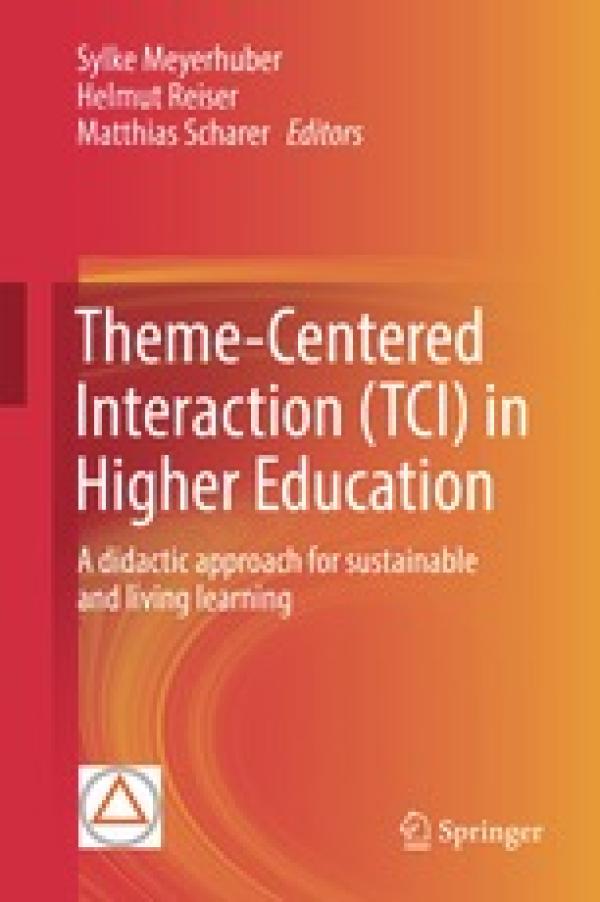
This book presents thoughts on and experiences with the introduction of Theme-centered Interaction (TCI) into academia. TCI is a systematic didactic, ‘living learning’ approach originally developed by social psychologist and pedagogue Ruth C. Cohn. The book explains and introduces the method, attitude and theory of TCI to a broader, higher education audience and relates it to such questions as: How does a teacher in academia achieve a lively and engaging atmosphere in their seminars? How do young academics as leaders-to-be learn how to act socially sustainably in groups? Using practical examples, the book shows how TCI can work in higher education to achieve participation and integration, reflectivity and humane connectedness of academic teachers and students, and professional development of senior and junior academics. (From the Publisher)