Resources
Recently, my burden, challenge, and task was to write my father’s obituary. Obituaries typically allow 800 to 1,200 words to depict and describe a person’s entire life. As a writer, this was a daunting task. As a daughter, it was impossible. How to proceed? After reading the obituaries of other family and friends - noting their style and form - I decided my challenge was to cover my father’s 90 years on planet Earth by giving facts and data. I wrote and then checked the accuracy of dates and spelling. The draft read like a file for a candidate for the witness protection program. I scrapped that version and launched into version 2. I soon stopped myself. My flowery prose and long sentences sounded like a rejected Hallmark card. Finally, I sat and considered my father and those mourning him. In this time of homegoing and celebration of life, what did I want to assure my family and community about my father? I decided, with resolute conviction, that I would write Lloyd R. Westfield was a noble man – because he was. The final obituary emphasized his courage, strength, and fortitude of care and concern – all traits of nobility. I told people about his life-long journey as a musician, special education teacher, school psychologist, and churchman. Mostly, I wrote about his passion for his family and for our African American community, and the many ways this love was steadfast. I wrote a good obituary – one that described my daddy as a man who was earnest, dignified, generous, and loving. I knew I was writing a narrative that rarely appears in racist America about Black fathers, yet it is a story that was my every-day, family experience. I wrote his obituary as a gesture of resistance against the distorted portrayals which slot all Black men into a few, flimsy, stereotypic categories assigned to them. Writing Daddy Lloyd’s obituary was an act of compassion for the un-named African American men whose stories of unwavering commitment to their families is un-appreciated, overlooked, or ignored. Writing dad’s obituary has made me consider how I write lectures. I do not often lecture in my courses, but when I do, how do I write what I write? Do I give the data and basic concepts, and then expect students to resonate with cold facts? Do I tell them “my version/my answer” to the question at hand without considering their perspectives, contexts, and situations? Do I spend time choosing vernacular which will invite them into deeper thought and heightened resonance, or simply rely upon the stilted, obsequious vocabulary of the religious academy? Do I lecture to my students the same way I would lecture to colleagues, and then wonder why students are lacking understanding when, in fact, it is my communication skills that are sub-par? Relying upon facts and data as lecture material is thwarted by the adage “Content is cheap.” In the digital age, students have as much or more access to data than the person who is lecturing. It is commonplace for Siri and Google to know more facts with greater accuracy than the person lecturing and for students to consult Siri and several search engines during the lecture. Learning to write lectures which resist multiple un-contextualized definitions, lists of statistics, and block quotes is a challenge worth attempting. The challenge is to design a lecture whose argument is not based upon a contrived or universalist understanding. We must lecture to demonstrate and expose our own modes of epistemological creativity and scholarly meanderings. In other words, lectures are more valuable to students if they are works of art rather than mundane spreadsheets set to words. Writing a good lecture takes time, as it is as much engineering and architecture as it is poetry and prose – a complex enterprise, indeed. My best lectures are those that have been given several times and have the benefit of re-consideration and rewriting after questions, answers, conversation with my students. Like my father’s obituary, any topic warranting the writing of a lecture will be much too large and expansive to be satisfied by one lecture. It behooves the writer to contemplate the needs of the students who will hear, witness, and glean from the lecture. Clarity about the viewpoint of the lecture is as important, or more important, than writing the thesis statement for the lecture. Students do not want the delusion of neutrality; they want to hear your opinion, consider your “take,” and then have the opportunity to resonate and align or disagree, question and debate. Good lectures are evocative, provocative, and able to bring complexity to the learning journey without befuddling the learners. When I consider the better/best lectures I have heard, the lecturer has exposed, claimed, and shared their own thinking rather than hiding behind a mask of non-committal to the material at hand. The lecturer made their own social location clear in the stance they took, rather than claiming some kind of generic essentialism to the work. And the lecturer worked at the craft of words, which helped me know what they were saying while they were saying it. Dense materials can be lectured, but the words to convey the density must be carefully chosen so the listeners, the students, can hear and access the materials. This is not a dumbing-down of material. This is the craft of writing in such a way that there is flow, synergy, and wide thresholds of encounter and discovery. Listeners must be able to see the pieces as well as the whole of a lecture. I suppose it is possible to elevate a poorly written lecture into a good lecture by the way it is performed; however, most of us cannot rely on our performance. Drawing the listener in, locating them in new worlds, challenging them to new perspectives, providing a previously unconsidered rationale – this is the “work” of a well-written lecture. We must not doubt that students are seeking disruption of, and a counter-narrative to, the hegemonic imagination that has been reveled as moral bankrupt at this moment in history. As I have learned from my beloved teacher, Katie Geneva Cannon, the best lectures seek to debunk, unmask, and disentangle so students might have the where-with-all to change the world toward justice. Writing an obituary is not easy. Writing a lecture is not easy. Each, in its own way, asks that we not ignore the tender fragility of our souls, but speak our souls into the room. Each written piece is the work of healing – us and them. The writing is simultaneously truth-telling, soul-speaking, and hegemony-challenging. I exhort you not to write lectures or obituaries if your goals are any less.
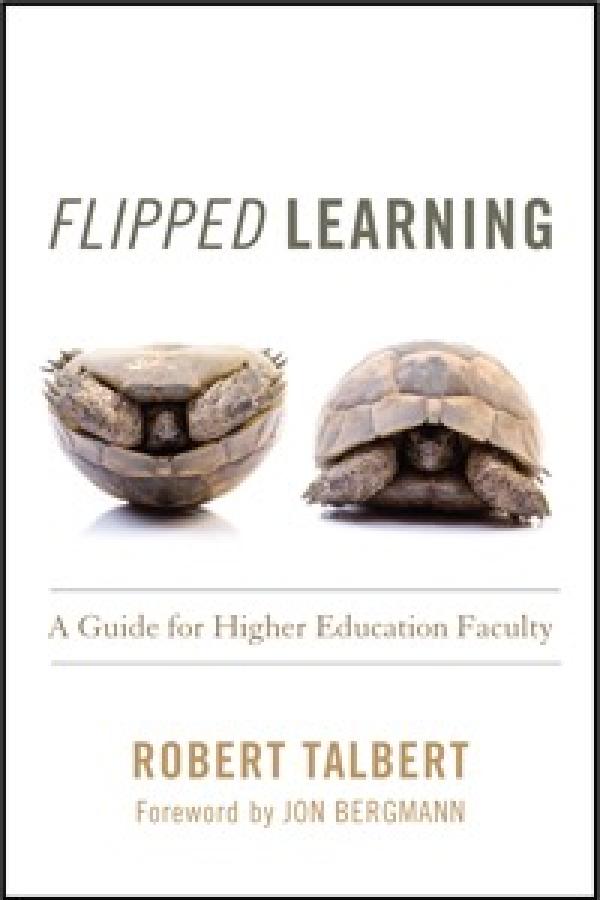
Robert Talbert’s Flipped Learning: A Guide for Higher Education Faculty is intended for three separate categories of instructors engaged in the process of flipped learning in higher education. He intends his monograph to appeal to “the curious,” “the newbies,” and “the veterans,” otherwise known as those first investigating flipped learning, those experimenting with flipped learning and looking to fix or expand on their early forays into it, and those who have taught at least one fully flipped class and want to “hone their craft” (xviii-xix). He divides the monograph into three sections. The first, “What Is Flipped Learning?” offers definitions and histories of flipped learning, and models of what flipped learning looks like in the classroom. The second section, “Flipped Learning Design” provides guidelines for designing a syllabus, lessons, and classroom activities using flipped learning. Finally, the third section, “Teaching and Learning in a Flipped Learning Environment” addresses variations on the flipped classroom and common student complaints about the method. While Talbert intends his book for use by all higher education instructors, it is probably most useful for those in STEM, business, or social science classrooms. Talbert uses his initial chapter, “What Is Flipped Learning, and Why Use It,” to work through definitions and misunderstandings of flipped learning. While flipped learning is commonly believed to consist of assigning videos of lectures for students to watch before class time, Talbert explains that flipped learning is a methodology rather than a specific technique. Flipped learning, he asserts, aims to ensure that students first encounter the new material on their own, outside of class, and then work to nuance their understanding and build skills around that material in the classroom. In this way, students develop the ability to access new material independently and then do the more challenging work of integrating and developing that information in the classroom with assistance from both classmates and the professor, or “expert.” The second chapter, “The History and Theory of Flipped Learning,” traces the method’s history to establish that it is neither new nor a fly by night fad, but rather a sensible pedagogical strategy built on a solid base. Chapter three, “Models of Flipped Learning,” offers a range of examples from math, business, and economics to demonstrate flipped learning approaches. In each example, Talbert draws from largely mathematics-based courses, suggesting that students read and watch videos about concepts before coming to class to work together on problem sets, the opposite of a traditional STEM course in which concepts are introduced in lecture and students then depart to work on problem sets on their own. (It is noteworthy that although Talbert argues in the earlier chapters that flipped learning is more than watching videos before class, this is, in fact, a primary method that he demonstrates.) As a religious studies professor, it was hard to see how this method would change the basic format of my humanities classes, in which student read material ahead of time, usually guided by discussion questions, and then come to class for a brief lecture that fills in details and group conversations or a class discussion, informed by their reading. While I have no objection to a book providing instruction on pedagogy for the STEM/business classroom, Talbert’s apparent inability to acknowledge the different structure of the humanities is significant. In failing to recognize that his methods would not significantly change the traditional structure of humanities classes, he has failed to properly acknowledge his book’s disciplinary scope and to correctly identify the audience to whom it would be the most useful. In these fields, flipped learning makes a notable difference from traditional pedagogical methods in which students first encounter new concepts in class. In the humanities, however, students traditionally encounter new material through reading assignments before class. That material is then elaborated upon and explored in classroom lectures, discussions, small groups, and activities. It is difficult, even with one or two humanities-based examples, to see how Flipped Learning dramatically would change my humanities classroom. Chapters four, five, and six address the nuts and bolts of how to flip a class. Here, Talbert offers both many more specific guidelines and, in a couple of instances, he draws examples from the humanities classroom. For instance, in chapter four, he suggests providing students with a list of reading questions that guide students toward increased complexity of thinking, gradually moving from reading comprehension and synthesis questions to conceptual and analytic questions. Chapter five offers insight into how to construct the activities. Throughout this chapter, Talbert offers cogent summaries of key theories on learning and course design, and while he rarely suggests a technique with which I am unfamiliar, his explanations of how and why they are effective are certainly likely to help me refine my technique. Chapter seven provides adaptations to the flipped learning model, primarily for low technology educational environments. It also addresses a number of student objections to the flipped classroom, ranging from student complaints about having to teach themselves to gripes that flipped learning takes too much time outside of class. On a practical note, Talbert also addresses the risks of participating in a flipped-learning classroom while untenured or in a contingent position. In each of these situations, he offers concrete advice for mitigating the risk of pedagogical experimentation, particularly reactions from students who are adjusting to a new line of teaching. These chapters were, perhaps, the most useful, as they provided language for addressing student dissatisfaction with new methods and were, perhaps, the most applicable to non-mathematically oriented classrooms. Throughout the book, I was struck by Talbert’s dry tone. Although I am accustomed to academic writing I found this to be a bit of a slog, which is a less than ideal model for a book dedicated to methods of teaching and learning. More importantly, while the author claims the book will be useful for all of the divisions of higher education, it is constrained by the author’s primary orientation and expertise, and most (though not all) of his examples are drawn from STEM, business, and mathematically oriented social sciences such as economics. Nonetheless, Talbert provides background research that will allow readers to refine and justify some of their existing techniques, helping them engage student learning both within the classroom and beyond it.

Trauma is like a mirror that we don’t want to look into. It captures us at our worst angles. It accentuates what we want minimized and overlooks what we wish to be prominent. In trauma, we see projected the unwanted aspects of our realities in such a startling way that we forget everything over which we might have control. Sometimes we don’t have control over a lot. And if we are lucky, we are graced with a reminder that less can be more. To be clear, I don’t mean to make asceticism a virtue. Rather, I want to honor the irrelevant revelation where many on the brink find humor and solace—the fleeting thought of how “it could be worse.” On the flip side of that sentiment is an appreciation for the chance to no longer take what one has for granted. It is this latter posture that I think we teachers should become more accustomed to inhabit. If you follow me on social media, then you know that half of my best pedagogy comes from lessons learned while parenting. As I write, my six-year-old is wrestling in his first tournament. Kid Newton loves the sport. I like that he loves it. But the anxiety in the gym is as airborne as the body odor. And as these children face off, I can read the look in their faces. They are not scared of each other. They are afraid of their own limitations. Throughout this tournament, I have seen a lot of different coaching styles. I don’t have the foggiest idea about wrestling technique, yet I do know enough about teaching-learning to see what isn’t working. And the number one way to fail seems to be throwing a lot of new information at a student/athlete in the midst of a stressful situation. This results in a lot of takedowns, tears, and tantrums. I’ve also picked up some practices that seem to work on the mat, if not in the classroom. When trauma finds your students, consider having them do the following: Breathe. At a Wabash consultation, my colleague Dr. Melanie Harris would frequently lead my cohort in a few moments of collective breathing before we dove into the topic of the day. This may have been the single greatest takeaway from these intensive professional development experiences. In just a few silent moments of respiration, I found assurance that I had survived the previous moment and could be present in the current one. My mind stopped wandering to the future. My thoughts stopped dwelling on the past. So when I sense that my students are stressed or at dis-ease, I push pause on whatever we are doing and have us breathe. When we reenter into the activity, we are so much more prepared for what may come. Have space to be heard, read, and seen. Just like athletes need to breathe, people in trauma need a moment to vent. This doesn’t necessarily involve conspicuous expression, but perhaps just a moment to acknowledge what one has observed can go a long way. If I have a sense that we are in the middle of a traumatic moment, I like to start punctually but give students a chance to release their thoughts within the formal classroom time. This gives them license to work through preoccupation rather than be consumed by the trauma occupying them. Sometimes I just quickly name the event and have students free-write individually as they see fit. Other times I announce that we’ll take three minutes to talk about (or not) whatever they think needs to be discussed. In this situation, I move to the side of the classroom so that students can relate to each other as peers instead of to me as their instructor. When we move to our next activity, students seem to be calmer and more collected. Relax in their strengths. The traumatic moment can be a teachable moment, but not for skill acquisition. This is not the time to trot out radically new content. Instead, consider how you can bring out the things students know. What are the things that have been practiced, drilled, and rehearsed? Giving students a chance to bring these out will orient them toward the “more” ahead. Leaving a little room for free association or creative application can even bring a little hope in the midst of despair. As students rise to the occasion of just one task, they can remember that they have risen before and will rise again. None of these activities are novel. In fact, if you incorporate them into your regular teaching practices, they’ll be that much more effective in moments of testing. At the end of the day, the challenge isn’t ending the trauma. It is dealing with it. Just remember that you, in fact, do have the tools to begin doing so.
There are at least two uses of the phrase “good enough.” One meaning commonly found in public discourse denotes minimal, less than best effort. The other meaning, a more technical one from psychology, requires a focused discipline of self-awareness that guards against unhealthy perfectionism (“I can and I will be perfect”) or academic narcissism (“I can and I will know it all”). I often hear the more negative meaning in theological education: “I don’t want my students to be good enough,” a colleague said to me after reading my recent blog,[1] “I want them to be better than good enough.” After seeing the course learning goal to “define and give examples of good enough pastoral care,” a student remembered a motivational saying from their childhood that ran “good enough is the enemy of excellence.” These are important concerns if good enough means minimal, irresponsible engagement. However, taken as a discipline of ongoing rigorous self-awareness, good enough teaching and learning is an important part of pedagogical excellence. I believe teaching and learning must be good enough, in this sense, to support thriving.[2] Good enough teaching and learning involves identifying and responding to the predictable misconnections in our craft so that thriving is an available possibility for all teachers and learners. A Mishap in Connecting the Dots I recently made a teaching mistake involving extreme connect-the-dots. While I was familiar with the burgeoning market of adult mindfulness coloring books, a colleague introduced me to “extreme connect-the-dots” at a theory-heavy small academic meeting. The meeting involved wonderful academic papers and a lot of sitting and listening, and the exercise provided a strategy for mindful focusing. I was surprised that connecting the tiny numbered dots from one-to-seven-hundred-and-something to make my own dot-to-dot “Mona Lisa” did help me focus. Later, I decided to try this in my classroom in a week-long intensive course that met from 8:30 am-5:00 pm for five days straight. I am always up for new strategies for focus and energy in such a setting! In addition to trustworthy strategies like varying course activities and scheduling mid-week field work, I purchased an extreme connect-the-dot book called something like “florals and other calming themes.” I tried out a few and then distributed some pages I had not yet completed myself. This turned out to be a mistake. During the mid-morning break the first day, a student came up and said that I might want to take a look at how she had connected the dots. To my surprise, once the dots were connected, one “floral and other calming theme” image depicted a human being in troubling cultural stereotype. Embarrassed, I ended that connect-the-dot opportunity and replaced it with coloring sheets. After processing the mishap with my student, I decided not to use class time to address the event since other students had not worked on the images. In hindsight, not disclosing what had happened to other students was likely a missed teaching and learning moment that could have benefitted the class. While not perfect, the class went well, overall. An Overall, Good Enough Class Overcoming the felt need for pedagogical perfection is a constant struggle. I am increasingly wary of the word “perfect” in my home or classroom. When my son was in preschool, one day he said, “my day was good, overall.” Struck by his use of the word “overall,” I asked what he meant. He said that anyone can make three mess ups and have an overall good day. He proceeded to tell me about his mess ups that day—not listening, not paying attention to his body in space, hurting someone’s feelings. He explained that tomorrow you can do better if you work on these mess ups today. As a pastoral theologian invested in good enough teaching and learning, I find the idea of an overall good enough day to be a helpful assessment tool. I hope to train and learn with budding theologians whose excellence includes (1) being aware that they will inevitably make mistakes and (2) practicing the courage needed to address and learn from mess ups in order to (3) be ever mindful of confessing and minimizing harm in the world. A good enough learning environment is not perfect, but rather thoughtful and open to continued learning. One way to connect the dots before class, metaphorically, is to think about the students and teachers who do not have the luxury of making mistakes, not even one minor mess up in a day not to mention three. Absurd Expectations Academic pressures around perfectionism often have complex aspects. Immigration, poverty, identity politics, the school to prison pipeline, and uneven preparation for graduate education from preschool to PhD contribute additional stress for some students who have to fight for a place at a table that likely was designed without “them” in mind. These same systemic pressures force some students and teachers to have to be perfect in unhealthy ways – no learning curve, no grace in student evaluations, no wiggle room for mistakes. If only we could connect the dots ahead of time, theological educators could better support colleagues and students who live and learn with such heightened anxiety. “Would you rather imagine me be in prison or in school,” asked a DACA recipient who was talking with my class about the fragility of his citizenship status that pressures him to excel in all areas as a student. With a high school GPA above 4.0, multiple leadership experiences in school and extracurricular activities, and a model resume already at a young age, he recognizes the absurd expectations placed on him to be able to have a chance at keeping his family together. “Imagine,” writes bell hooks, “what it is like to be taught by a teacher who does not believe you are fully human [and therefore] really believes [you] are incapable of learning.”[3] It’s not hard for my DACA recipient friend and teacher to imagine. With my citizenship and other privileges, I commit to stretch my imagination to connect the dots so that no one is dehumanized in my classes, so that everyone has a chance to be good enough, to have overall good days, to thrive in their dreams. And yet the learning around that must be on-going rather than a static perfection. Dreaming of an Open Invitation to Good Enough Learning Days I’ve been imagining what it would look like to treat my syllabus, booklists, classroom space arrangements, and use of time, assignments, and discussions as working together to open a pathway for belonging when absurd expectations exclude some students from thriving. What does it feel like when everything is instead working well in a learning environment? For me, on the best good enough learning days (1) I feel prepared enough, (2) students arrive prepared and energetic enough, (3) there is enough of a sense that the subject at hand matters deeply, (4) multiple voices and perspectives are voiced and heard, (5) students and I hear new connections and disconnections verbalized in the learning encounter, (6) unanticipated new insights and questions deepen conversation, (7) we are all still thinking about the class beyond the constraints of our time together in a classroom or online, and (8) something from the class may spill over into coffee conversations, office hours, semester assignments, even program assessment. On your best good enough learning days, what would you add? Indeed, such a day would really be a good enough learning day! I conclude these reflections with some open questions for theological educators teaching religion in a politically challenging time. Are really good days available to all of the students in my class or the colleagues in my school? How about in your context? On each account, what are the avenues of participation for students and faculty? What are the roadblocks? What collaborations, accountabilities, self-reflection habits, and continuing education will help me connect as many dots as possible in advance of the class? How will I identify and respond to predictable misconnections in real time? How can theological educators work strategically in our own classrooms and across institutions to support dreamers’ thriving? [1] This blog follows from a previous blog entitled “The Privilege of Good Enough? Challenges of Radical Hospitality in Theological Education,” published November 9, 2017, at https://www.wabashcenter.wabash.edu/2017/11/privilege-good-enough-challenges-radical-hospitality-theological-education/ [2] I have in mind supporting the thriving dreams of all who embark in teaching and learning in hopes of honing critical tools and collaborative practices to address a suffering world yearning for new ideas and strategies of transformation. I also have in mind Dreamers as the group of students who seek support for more humane immigration reform. I dedicate this blog to the tenacity of the Dreamers who teach me to work for systems that allow good enough teaching and learning to be available to all. For further information in this historical moment, download a toolkit to support Dreamers here: http://www.scholarshipsaz.org/students/educators/. [3] bell hooks, Teaching critical thinking. New York, NY: Routledge, 2010, p. 2.

Every time I walk into a classroom or workshop for the first time, I hear the voices of elders in the long, Black-led struggle for justice pressing the questions: “How are you going to bring people into the movement? How are you going to plant the seeds and bring forth a revolution of values?” My thoughts are always about what it means to model the just peace of the society that is and has yet to be. The orientation I bring to the classroom or workshop space is one of religion and nonviolent social change focused in civic engagement and social action. The tasks and challenges we face today in the religious studies and peace studies classrooms are not unlike those faced over the past several decades. Rev. Dr. Martin Luther King, Jr. gave his “Breaking the Silence: Beyond Vietnam” sermon 50 years ago. In the sermon King called us to a “revolution of values.”[1] The revolution of values is a move away from a thing-oriented society toward a human-oriented society. It helps to create a society where everyone has their needs met and no one is oppressed. King was speaking out against the value the United States placed on the evils of racism, materialism, and militarism. According to elder Grace Lee Boggs, a revolution of values and building up the Beloved Community, are "about redefining our relationships with one another, to the Earth and to the world; about creating a new society in the places and spaces left vacant by the disintegration of the old; about hope, not despair; about saying yes to life and no to war; about finding the courage to love and care for the peoples of the world as we love and care for our own families.”[2] The recent wave of political and social violence against Black and Brown people, women, queer, non-gender conforming people, and religious minorities is not new. It is just more overt. The risks of talking about religion, politics, and the politics of religion in the classroom are high. We see friends and colleagues being labeled “dangerous.” Yet, our tasks as teachers are to critique and improve society. We do the emotional and complicated work of instilling in our students' religious literacy, a political consciousness, and a sense of calling. A large part of moving students to political consciousness and calling is the idea that human beings are all connected to one another, to the past, to the ancestors, and to the future. In other words, becoming politically conscious is to move toward the understanding that who I am is related to who you are. Simultaneously, the move toward calling presses the idea that what I do is related to social responsibility. Ultimately, what I believe about and how I live has consequences for others. In my courses, religious literacy becomes a tool for moving students into a new political consciousness. Students learn about the beliefs and practices of a variety of religious traditions and the political implications of those traditions. Along the way, students are given the opportunity to reflect on their own beliefs and practices. The pedagogical tools I have found useful in the endeavor to create a revolution of values and a new political consciousness are: Be authentic and present. I try to think of my teaching in terms of a pedagogy of relationship and community. I spend time during the first weeks of a semester allowing students to get to know one another. I treat classroom spaces as community spaces. As the professor, this means being vulnerable and transparent. Students know when a teacher is not being real. I cannot ask students to share their personal stories and experiences without being willing to do so as is appropriate. Make it real. I ask students to reflect on why religious literacy and political consciousness are helpful in their work, their relationships, their vocation, and in their civic engagement. If students can make the material relevant to themselves they are more likely to take it with seriousness. Making it real means exposing students to practitioners and the stories of real people. Teachers having their limits and being transparent about those limits allows students to see do likewise. Be clear about the end goal. If the point is to move students toward a revolution of values, then we must develop a pedagogy of transformation and hope. Too often religious and political discourse is about what we are against. In the words of elder Vincent Harding, “No matter what form education may take . . . I am convinced that one of its most important responsibilities is to nurture the realization that we can change our lives for the better, that another creative, more democratic way of life is possible, that the seeds of such a new way are already alive within us, needing to be nurtured.”[3] In these times the stakes are very high. How are we bringing people into the movement? How are we planning the seeds for a revolution of values? What are working toward? [1] King, Jr., Martin Luther, “Beyond Vietnam,” Available online at https://kinginstitute.stanford.edu/king-papers/documents/beyond-vietnam. Accessed March 8, 2016. [2] Boggs, Grace Lee. “The Beloved Community of Martin Luther King.” May 20, 2004. Yes. http://www.yesmagazine.org/issues/a-conspiracy-of-hope/the-beloved-community-of-martin-luther-king. Accessed August 14, 2014. [3] Harding, Vincent, and Daisaku Ikeda. America Will Be!: Conversations on Hope, Freedom, and Democracy. 2013, 174.

Laughter is an important ingredient in my classroom. I bank on my ability to make students laugh with my often-droll sense of humor, but I also frequently rely on professional comedians through the magic of the Internet. The status of Islam and Muslims in political satire, specifically in the genre of comedy news, provides ample fodder for this need, through projects like The Onion, The Daily Show, The Colbert Report, and Full Frontal (and as much as I cherish Last Week Tonight, John Oliver rarely explores the topic of religion). Indeed, humor also has a long tradition in Islamicate history as well—ranging from the likes of Joha/Nasreddin Hodja to Azhar Usman—but in this blog post, I want to focus on the portrayal of Islam and Muslims in Western satire, sometimes called “fake news.” For better or for worse (often for worse), moreover, the appetite for fake news stories (which at times genuinely fool people!) may also be on the rise. Although this trend can have dire consequences, it renders the genre all the more fertile for generating understanding in the classroom. Lots of learning takes place through the slow, careful, and sometimes tedious (even boring) study of details, but cathartic moments can have a uniquely lasting impact on students. I often seize the moment to employ humor in the classroom not only as a way to keep students interested, but also as a means of transformation. Indeed, things are often funny because they are subversive, because they surprise us—kind of like being tickled. It doesn’t work so well to tickle yourself; because you expect it, there’s no surprise. This element of surprise works particularly well, I find, when combined and contrasted with more traditional modes of pedagogy, such as textual analysis, historical inquiry, and site visits. Accordingly, I select short video clips that I use in class bearing in mind what questions they may generate about a given issue. Some of my favorite examples follow: One of the few Last Week Tonight segments that deals with Islam focuses on a Supreme Court case about the permissibility of inmates growing beards in federal prisons. The clip portrays the Supreme Court Justices as talking animals, as a way to self-consciously heighten interest in the Supreme Court—which not only induces at least a few chuckles, but also offers a meaningful opportunity to discuss First Amendment issues in the context of American religion. Why oh why don’t the “moderate” and “peaceful” Muslims speak up? This clip from Full Frontal with Samantha Bee explores this question as well as myths that Muslims don’t cooperate with law enforcement, or that they hate the United States. The Daily Show’s “Senior Muslim Correspondent,” Hasan Minhaj, has a smart bit about Southwest Airlines’ removal of a Muslim passenger for allegedly speaking Arabic. That Minhaj himself is a brown Muslim speaks to the rhetorical role of his character as well, and he offers a semi-comical but mostly sober reaction to Trump’s election victory. This segment raises an important chicken or the egg question about the nature of political satire: do political motivations inform comedy news or is comedy a way to express political messages? Regarding hysteria over Muslims conspiratorially taking over the United States with their “shari‘a law,” this clip from The Daily Show about mosques and this clip from The Colbert Report about “radical Muslim snacks” (i.e., halal food) have proven successful and provocative in the classroom, by effectively positioning the level of public paranoia in relation to what kinds of practices Muslims actually promote. Clips like these allow me to ask a real but also rhetorical question to my students (who are formally studying Islam): would any of you feel pretty comfortable and informed about defining “shari‘a” on a national news program in front of millions of viewers (who haven’t formally studied Islam)? (Routinely, no one volunteers.) Where do you think the “real news” anchors get their information about this stuff? They probably Google it, I suggest, as food for thought. And people always interpret Google results with wisdom and measure, right? Is Obama a Muslim? No, he’s not. And never was. He even jokes about this, for example, during his remarks at the White House Correspondence Dinner. One of my all-star comedy news clips to use in class comes from the archives of The Colbert Report. It focuses on the aftermath of the 2011 massacre committed by Norwegian Anders Breivik, whom many media outlets quickly identified as a Middle Eastern Muslim, despite coherent evidence. To quote Colbert, “Just because the confessed murderer is a blonde, blue-eyed, Norwegian-born, anti-Muslim Crusader…does not mean he’s not a swarthy ululating Middle Eastern madman.” I find this clip particularly effective as a teaching tool because it not only highlights the absurdity of how sensation-driven journalists reacted to the event, with flamboyantly transparent anti-Muslim bias, but it also pushes the envelope past what the viewer might expect, by presenting a sequence of awkwardly cathartic punch lines. On the unmeasured way in which mainstream media covers religion and violence, this segment on “decoy Muslims” from “The Onion News Network” pushes the envelope by suggesting baby Muslims should be murdered for fear of their possible ties to terrorist attacks. In my experience as a teacher, this kind of humor, which rides the line between grotesque offense and revealing reflection of popular perceptions, can open doors for frank dialogue about complex issues that even engaged students may otherwise find unapproachable because of political sensitivity. Finally, as a spoof on TSA terrorism prevention, this Key & Peele skit offers an ridiculous but lucid critique of airport theater in which a bunch of would-be “Muslim terrorists” in a cave plot to deceive security officials but find themselves stymied by restricting themselves to a 3.4-ounce bottle of toothpaste, as opposed to the 3.5-ounce bottle on which they modeled their attack. Importantly, this flagrantly flippant skit doesn’t downplay the important of national security, but rather invites inquiry: How might the nation achieve this security? Where does one draw the line between personal liberty and public safety? What about non-Muslim terrorists? In conclusion, I have always found humor an effective pedagogical tool in the classroom. And as the onslaught of violently misleading media attention to Islam and Muslims, consumed by our neighbors and students alike, appears to be speeding up, I think the right combination of satire, subversion, and laughing out loud can provide a uniquely powerful classroom presence and learning experience. What are your favorite comedy news clips? Please share them in the comments section below.
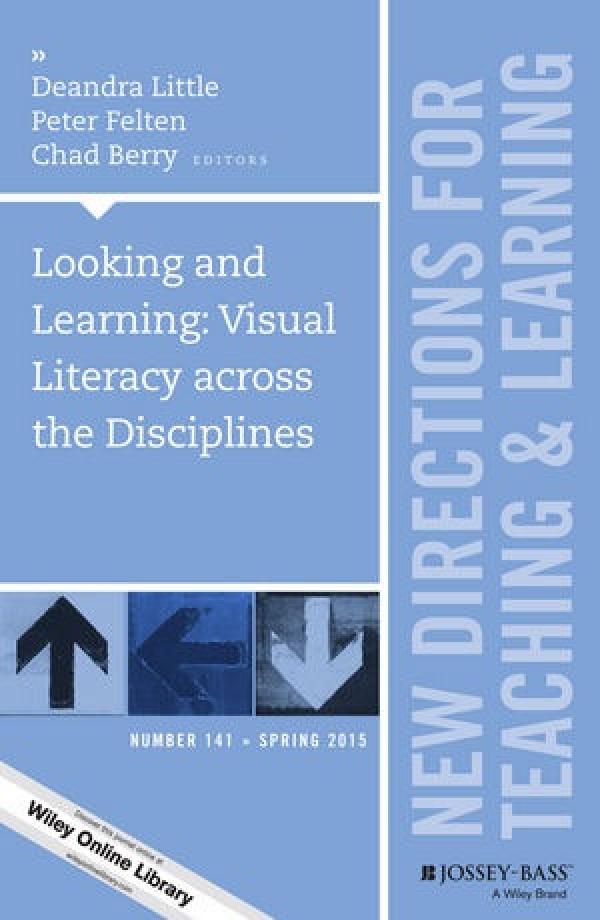
The editors of Looking and Learning argue that institutions of higher education have required textual literacy for centuries, but now are facing a problem: they have not cultivated visual literacy in an age when visual input has risen exponentially in volume, pace, and cultural significance. Little, Felten, and Berry propose to address this problem pedagogically throughout academic curricula. Eight contributing authors bring disciplinary-based tools to the conversation, discussing pedagogical approaches and outcomes for students’ development of visual literacy as a means of depth-learning. One of the most valuable features of this volume is the introduction of the Association of Colleges and Research Libraries’ (ACRL) definition, promotion, and list of observable performance standards with outcomes for visual literacy (3, 8). Looking and Learning then details particular courses and pedagogical approaches by professors who claim that visual learning significantly enhances student perceptions of data and experience, deepens engagement with course material, and sharpens critical thinking skills – all important outcomes for effective education. Chapter one, for example, focuses on visually-based pedagogical approaches for learning astronomy. A pedagogical shift came to Anthony Crider when he began to emphasize visual and information literacy skills rather than content delivery in his courses (16). He found that as a result, his students learned to think through problems more deeply and effectively. Now, close observations of the objects and phenomena in space are required, followed by deductive thinking to frame arguments for hypotheses and proofs. Chapter two provides pedagogical tools that move students from subjective reactions to critical responses when encountering a visual input. In this chapter, like Crider, Michael Palmer focuses on developing the critical skills for visual literacy, rather than content-based learning. Likewise, chapter three shows how Katherine Hyde uses photography to cultivate sociological mindfulness and social identity (31). Cedar Riener teaches about visual perception in chapter four, using pictorial illusion to demonstrate that perception is not always accurate. Chapters five and six speak to “deep learning” through work with visual media including historical paintings (Steven S. Volk), and film-making (Alison J. Murray-Levine). The intent is to slow visual inputs so there is actual engagement and analysis of the subject matter as a visual story and language. Chapter seven introduces the process and structure of critique in the area of visual arts (Phillip Motley). The volume concludes in chapter eight with Deandra Little providing suggestions and strategies for teaching visual literacy throughout a curriculum (87). For those who are visually impaired or have difficulty interpreting visual cues and yet are able to hear, there is little aid in this volume. One exception occurs in chapter five where historian Steven S. Volk helpfully introduces students’ auditory input for a person who is not sighted, discovering that learning is enhanced for everyone. Perhaps auditive literacy is the next logical educational contribution for learning by senses. Data and experience come through many senses; pedagogical approaches are likely to have to address these different avenues of learning as attention to differing abilities expands both culturally and legally. Ultimately, the editors and contributors call for all teachers and students to “learn to look and look to learn” (5). Such a challenge seems obvious, achievable, and pedagogically meaningful (for the sighted) as an effective educational focus for literacy – literacy for a visual age.
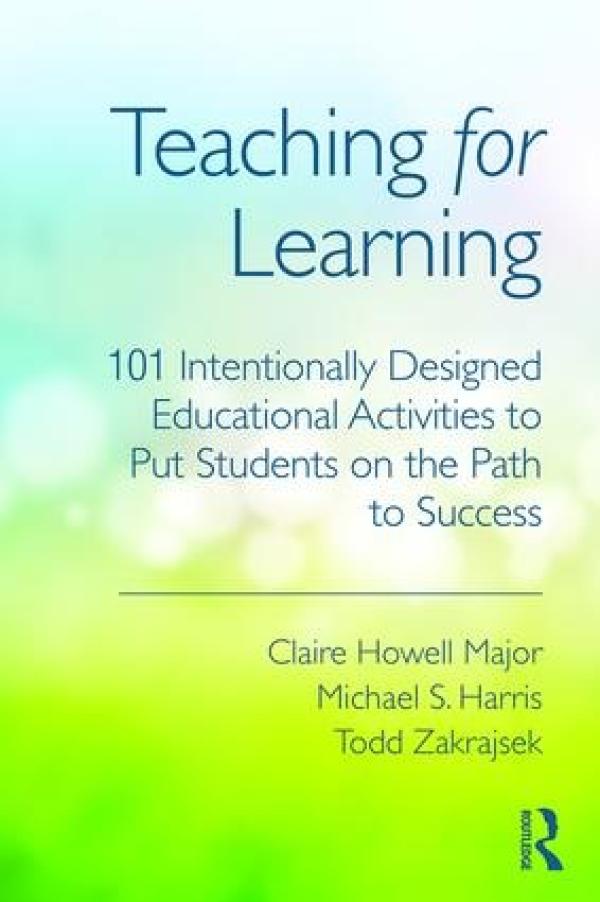
The authors of this extremely helpful book open with an observation that is often true: there is a lot of research on how to teach effectively, but “this information tends to be inaccessible to most instructors, as it has been published piecemeal in journals that instructors frequently do not read” (xi). To help remedy this lamentable situation, they have sifted through hundreds of studies in teaching and learning in order to compile a list of educational activities that both work in real world settings and are supported by research. In other words, if you have ever wondered what kinds of teaching actually lead to learning (retention, critical thinking skills, creative application), and you would like to do a better job of varying your pedagogical approaches, then this book will be of interest to you. Each of the eight chapters focus on a particular kind of teaching and learning format, including lecture, discussion, peer teaching, academic games, reading strategies, writing, graphic organizers, and metacognitive reflection. In clear prose, the authors explain the strengths and drawbacks of each kind of teaching as well as what researchers have found concerning each approach’s effectiveness. For example, lectures work better when instructors keep the lectures short, focused on essentials, and when accompanied with frequent quizzing and guides to effective note-taking. After establishing what works according to research, the authors provide detailed “Intentionally Designed Educational Activities” (IDEAs) to help instructors teach in a way that has been proven to lead to learning. Again, using lecture as an example, some of the suggested activities include guided note-taking, a “find the flaw” exercise, the Socratic seminar, and lecture bingo. The IDEAs, which are delightful and often fun, are cross-referenced with other teaching activities in the book and include helpful “pro-tips” to give additional guidance on implementation. This clear structure makes the book one that can be read cover-to-cover as well as a handy reference volume for specific classroom situations. Both seasoned and new teachers will get a lot out of this book. New instructors will find the help they need when trying to translate their graduate education into effective teaching. More seasoned teachers will find some tried-and-true methods confirmed but will also encounter new ideas to reinvigorate the classroom. While some of the 101 IDEAs in the book are clearly designed for mathematics or scientific fields, the vast majority are well-suited to humanities and social sciences and will be right at home in religious studies and theological departments at both undergraduate and graduate levels. This book has the potential to greatly improve our day-to-day teaching; our students will be grateful.
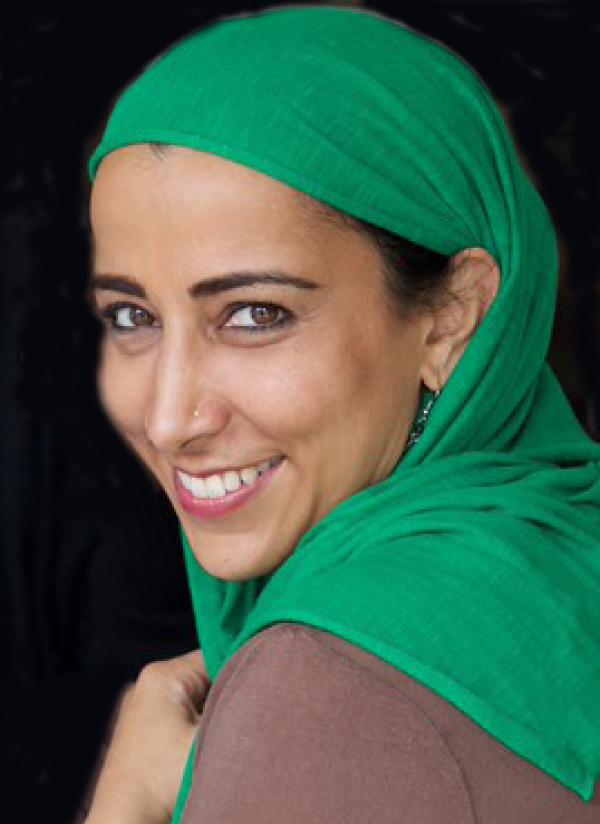
Najeeba Syeed-Miller Assistant Professor Claremont School of Theology I write in a time when the study of Islam is of paramount importance. This blog entry focuses on the teaching of Islam in interreligious settings, with an eye toward the notion of pluralism. So often, engaging this tradition starts with the
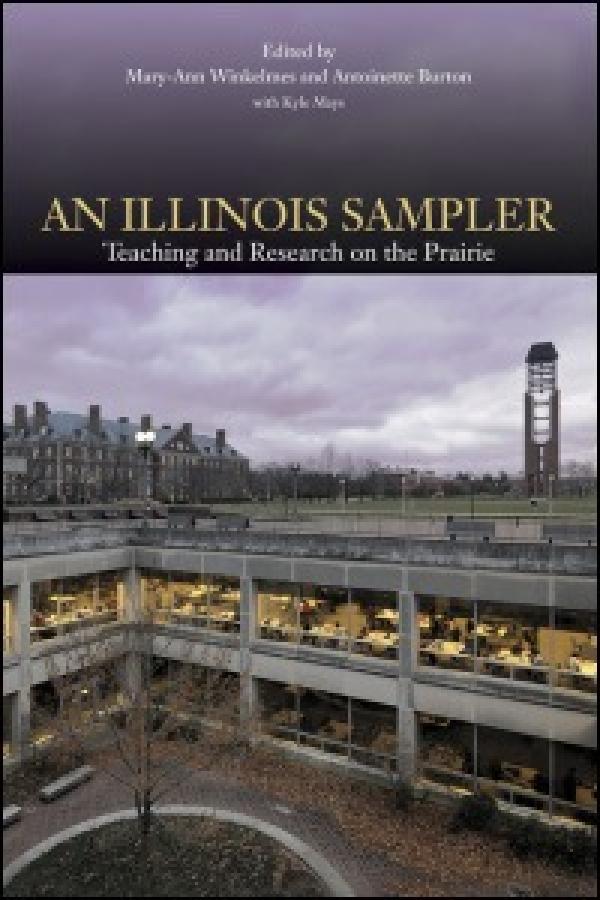
While this book is dedicated to students, chapters showcase the dedication of professors to providing effective learning formats in diverse fields. An Illinois Sampler: Teaching and Research on the Prairie highlights teaching methods at the University of Illinois that can be applied elsewhere. It would be an excellent book for a new professor, including one looking for field opportunities for their students. The nineteen chapters are very short, but in essence provide quickly consumable case studies of everything from inmate education and research abroad to flipped classrooms and the standard lecture format. It would work well for a small group discussion of education students who could read it together while in session. Topics for small group discussion could include holistic education, teaching from the sciences and humanities, and student-centered learning. Higher education administrators might also appreciate an overview of some of the programs at the University of Illinois. However, these chapters are just glimpses of the authors’ insights; some readers might need to pursue further research. Examples like Rosu’s highlights of the iFoundry program created by the engineering faculty and Denofrio-Corrales and Lu’s innovative Chemistry and Biology of Everyday Life (CBEL) course structure organize around students’ interests. Precisely how they do it could be the theme for another book. Instead of a recipe, we are given a taste of the passion and flavor of University of Illinois teaching practices. This book is dedicated to students. The authors capture a learning environment that alumni and current students can be proud of, but the Illinois Sampler shows that across the spectrum, the professors dedicate their work to their students. In pages of reflection by faculty in the humanities and sciences serving traditional and nontraditional students, teaching with traditional and nontraditional methods, An Illinois Sampler teaches what it means to teach: It is a statistics professor trying to make numbers lead to a better quality of life. It is a lecturer uncovering the living complexity of once simple fairy tales. It is an education behind bars professor who liberates minds. It is the professor learning from collaboration with their students, and reigniting a teaching passion for and by them. This book acts as a sampler in its composition, moving from highlights in music to math to literature to science to dance. Unconventionally juxtaposed, one discipline does not outweigh the other. Everyone will be able to find something appealing in it because of the broad inclusion, and, readers will gain knowledge from perspectives across disciplines. It should also be noted that contributors “vary not only by expertise but also in age, gender, nationality, career stage, and even their position in the academic hierarchy” (ix). The real success of this book is the variety. An Illinois Sampler is both a recommended read and endeavor.