Resources
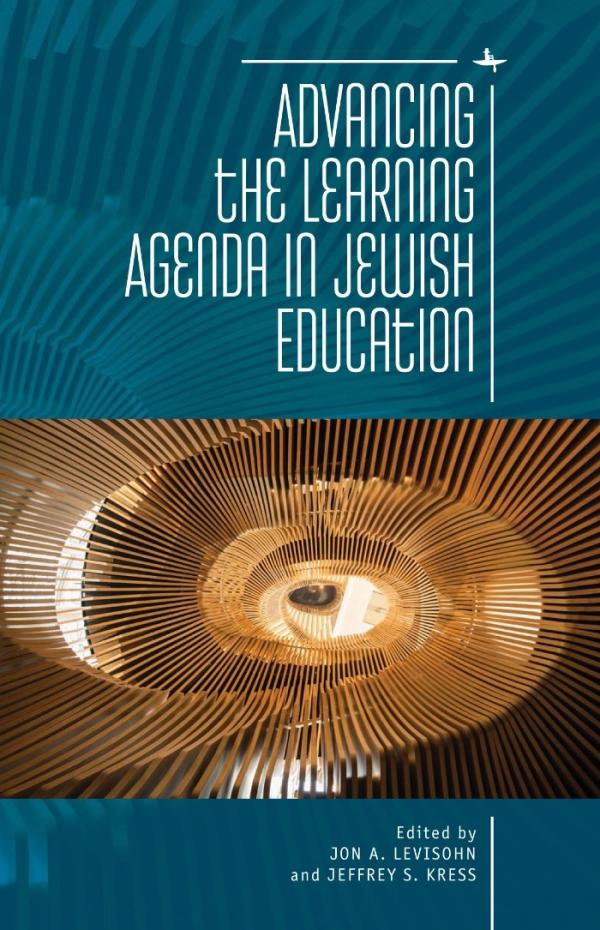
Jewish educational projects and programs are thriving, attracting philanthropic support for exciting and creative approaches in every sector and setting. But underneath that energy, we are not as clear as we ought to be about desired outcomes, the kinds of learning needed to achieve these, and how those kinds of learning actually occur. This volume is the first of its kind to bring together scholars from inside Jewish education and from the learning sciences. It offers a set of critical perspectives on learning, sometimes borrowing models from other domains (such as science) and sometimes examining specific domains within Jewish education (such as havruta learning or the learning of Jewish history). Collectively, these contributions help to advance a smarter, sharper conversation about Jewish learning that matters. (From the Publisher)
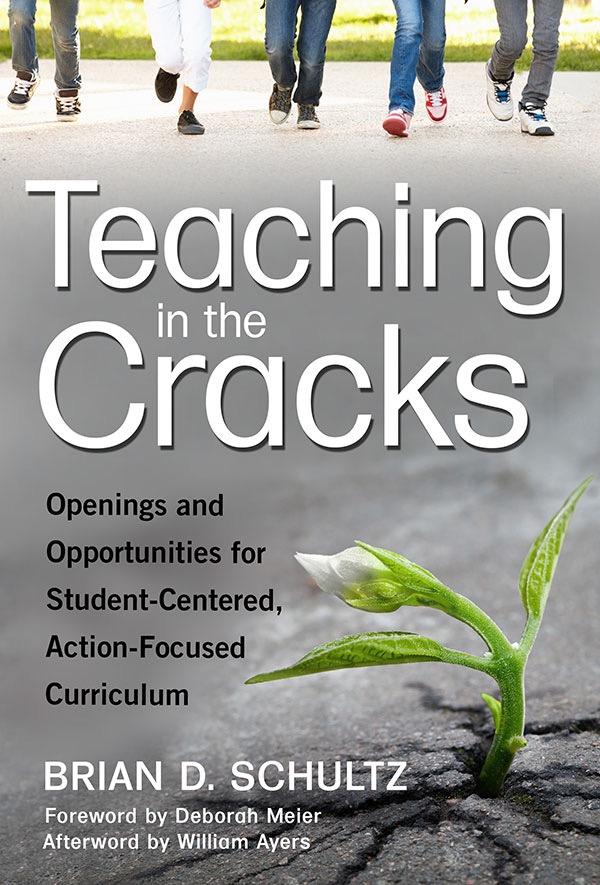
Teaching in the Cracks: Openings and Opportunities for Student-Centered, Action-Focused Curriculum Brian D. Schultz New York, NY: Teachers College Press, 2017 (xiv + 128 pages, ISBN 9780807758311, $29.95) Teaching in the Cracks by Brian D. Schultz, a professor of education at Northeastern Illinois University in Chicago, explores ways to make current K-12 classrooms more student-empowering, justice-oriented, and action-based. It is not that already available curricula are not student-empowering, have no concern for justice, or seldom inspire creative student actions; What most concerns the author are school systems that dictate almost everything that students experience, think, and do. In such a system, says Schultz, learning is largely top-down, authoritarian, controlled by agendas that perpetuate the status quo, and “bombarded by standards, assessments, [and] evaluations” (86). Shultz’s critiques and enthusiasm focus on reforming this “troubling” system and more specifically on transforming current everyday curricula in classrooms (86). His proposal, however, stays at the level of reforming or transforming, rather than completely negating or overhauling our current educational practices. That is why he calls his suggestive methodology and transformative tactics “teaching in the cracks.” He encourages educators to find creative loopholes in the present system where they can make education more democratic, collaborative, and thus bottom-up. Schultz acknowledges that his proposal sounds great on paper but is hard to implement in the classroom, and so throughout he offers numerous practical examples of proposed curricula and how they are working around the nation. Examples vary, covering everything from a single classroom, the entire school’s curriculum, forming close partnerships with surrounding communities, and specific topics, to teacher preparation (all covered in chapters two to six). Together they make this book an invaluable reference for field educators. In particular, chapter six, “Becoming the Teacher I Want to Be: Finding Support to Teach in the Cracks,” and chapter seven: “Turning the Corner: Techniques, Resources, and Tools for Taking-Action,” should be helpful for those who would like to implement the proposed learner-centered class education in a seemingly impotent school context. In chapter six, Schultz gives two fine examples of veteran teachers who introduced several effective strategies that are applicable to other contexts as well. To be sure, contexts differ. Yet, as long as a similar school structure is involved (for example, executive administrators, a sizable student body and its own governing entity, supportive community groups, and an aspiring teacher), these strategies would be beneficial anywhere. Websites introduced in chapter seven are extremely useful resources too. This book is not per se a theoretical book on student-centered, action-focused curriculum. Rather, it is full of vivid examples of actual current practices. Some readers may find this book insufficiently radical to make a dramatic change in the existing school system, but that is not the author’s purpose. Its particular strength lies in its unabashed focus on the classroom itself. The author believes that the real change can and must happen in each individual classroom where the teacher and students meet for daily education, before any large-scale systematic change is possible. In this respect, this book provides a small, yet reliable, hope for most field educators who, like me, aspire to create a more learner-led class environment.
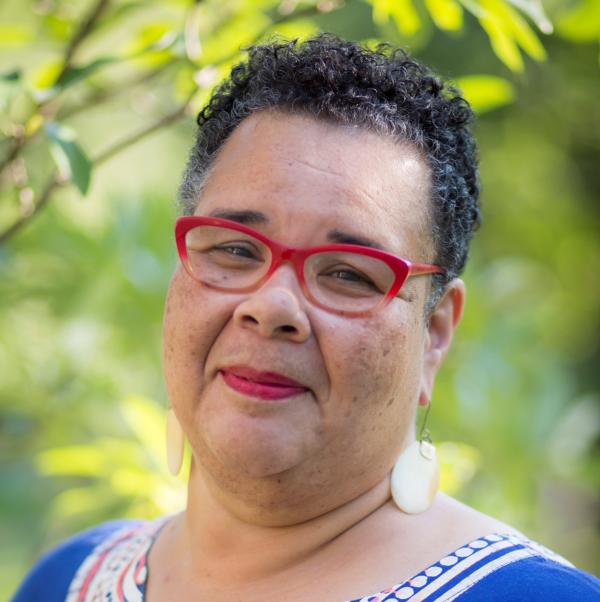
Belonging is a yearning of the soul. Our life’s quest is often about finding the place, purpose or persons to which or to whom we belong. We need to feel at home; we yearn to feel accepted, swaddled by our relationships. We want to experience being part of something bigger than our finite, individual, selves. The experience of belonging makes us keenly aware of the connectional-joy of humanness. Equally, the experience of alienation, of having no place to call home, of being deemed inferior, is a profound experience of dehumanization and is soul dampening. Twenty-first century racism would have minoritized people believe that we are “welcome,” only then to be immersed in experiences of disrespect, disregard and hatred. At best, this creates a psychic quandary for us. At worst, this harm is debilitating to our ability to teach and to learn. The magnitude of the need to belong necessitates a pedagogical priority, especially in those white schools with minoritized persons on faculty, on staff and in the student body. The seminary where I am on faculty is located in a very affluent New Jersey suburb. The town is a bedroom community for executives and corporate giants of Manhattan. Consequently, we enjoy clean streets, splendid restaurants, a preponderance of shopping, great theatre, and a world-class jazz club. Also, consequently, is the existence of a clear two-tier caste society: those who live here and those who come to work as cashiers, waitresses, nannies, elder care worker, gardeners and secretaries. I, due to faculty housing, live in this town. Typically, the workers who come to town are African-American and Latinx. The residents are typically white. I am routinely treated by fellow residents, as well as by commuter workers, as if I do not belong here. I am African-American living in this affluent county – an embodied oxymoron, at best. I pay taxes here, vote here, work here, but, from the gaze of the racist eyeball, I do not belong here…. I’ve lived here for twenty years. Recently, I was having breakfast at the local diner with our dean, Javier Viera. Dean Viera, born in Puerto Rico, is fluent in Spanish. When the waitress came to our table to take our order, she was, as she always is, pleasant, and, in retrospect, sad. I did not notice her sadness until it morphed into a smile. What made her smile was when Javier greeted her in Spanish and ordered his breakfast in Spanish. When Dean Viera spoke to her in Spanish it both surprised and delighted her. Her face lit up like a Christmas tree. At his speaking, she went from an almost invisible presence to a woman of dignity. This drastic shift happened when she was spoken to in a language which signaled her belonging – or more accurately, her shift happened when she received the signal that she was not alone, not alien. The Dean could have ordered in English. I did. Instead, in that moment he chose a language which invited the waitress to know a little bit of who his people are, what his allegiances are, and the kind of man he is. In this moment of belonging, he code-switched. A few years ago, I drove into the school parking lot and whipped into a space designated for faculty. I literally parked in front of the sign that read “Reserved for Faculty.” Distracted by my own thoughts, I got out of my car, opened the back door to get my briefcase and bags, then shut both car doors. Still distracted as I walked, I headed up the path to the seminary building, intending to go straight to class. Joe (not his name) was a facilities staff person whose job it was to place temporary signs around campus for upcoming events. Joe had worked at the school longer than I had and by that time I had been there for more than ten years. Joe, seeing me park in faculty parking, stopped hammering a signpost near the space where I parked. He shouted over to me, “You can’t park there.” In Black woman fashion, I decided I did not want to be bothered, this day, with this kind of #$%@##. Without replying or acknowledging him in any way (ignoring is a Black woman survival strategy), I kept walking. Joe raised his volume and shouted in my direction, “That’s for faculty. YOU can’t park there.” As I entered the building I looked over my shoulder to see that the sign-man had left his assigned task, walked over to my car and was inspecting the parking tag in my car window. I suspect Sign-man was surprised when my tag read “Faculty.” Even when I “belong,” Sign-man, on the lowest tier of the hierarchy, believes he can police me and tell me that I do not belong. WTH! $%##*! Though my enthusiasm at the start of any fall semester wanes, my clarity of purpose sharpens. At the end of the orientation worship service I position myself in the hallway. As the new students leave the chapel, I ferret-out the new African American and African students, shake their hands, read their name tags aloud. I ask in which degree program they are enrolled and inquire about their fall course selection. While doing this, I keep an eye on the stairway. If it looks like a student who I have not spoken with is going down the stairs, I, in true old-Black-church-woman style, snap my fingers to get his/her attention, then wave them over to me. As I corral each student, I use Black church gestures and tones telling them, don’t wait for trouble, then decide to come find me; come sit in my office soon and we will get acquainted. I tell them to email me and we will have coffee or lunch - soon. I want them from their first day to know, at least a little bit, that they are not alone in this place. I tell them that the protocols and practices of respect, decency, and regard of Black church culture are, with their presence, operative and that I am a representative of our shared culture. I want them to know that this school has something of merit to offer them if they can just figure out how to extract the best and leave the rest. I want my gesture to signal to them my availability to help with this leg of their holy journey. I tell them, I, like the other old women of our church tradition, in any given moment, can reach in and down to my DD-located-coin-purse for a piece of money, a freshly pressed handkerchief, a peppermint candy or a straight edge. For me, the importance of this gesture is like what our dean did for the waitress. Or, more importantly, an antidote for when, not if, the sign-man speaks to them on our campus. I am trying to communicate, in the midst of all the hollow rhetoric of “welcome,” that they belong in our school because our people have fought and won the right for us to be in this place. I code-switch. I code-switch in ear-shot of the public to signal to the African and African-American students, at least a little bit, that their racial/cultural identity is part of this place and that their/our expressions of religion, faith, values and community are here, at least a little bit. It does not take Jim/Jane Crow era signs reading “Whites Only” at the water fountains and bathrooms to make people of color feel unwelcomed. Strategies of hatred and alienation are maintained in the DNA of the institution as well as by the sign-posters on payroll. By now, I have been at my desk long enough to have a modicum of authority, some institutional voice, and can exercise some mother’s-milk-given moxie. At this stage, I possess less fear of reprisal or sabotage and more orneriness. My orneriness is one of the gifts of having survived into crone-hood; it is a gift from the ancestors, a pay-off of having earned the distinction of full professorship and being near retirement. As a person who has earned influence and power in this profession, I feel it my obligation to use this cachet to tell Black students that they belong and then to work until it happens. This year, after my practice of greeting all the students of the African diaspora, I made my way to the foyer for the buffet lunch. I was joined in the que by a tenure-track faculty colleague who is Korean. A new student came up to my colleague and, in greeting each other, they spoke in Korean. After the brief exchange, my colleague introduced me to the student in English. I was glad my colleague also understands the necessity of code-switching to assist Korean students in feeling that they belong, at least a little bit. Later that week, the same colleague and I went to dinner. We chose a sushi restaurant. The maître d’ greeted us at the restaurant entrance, then sat us at a table. He took my friend’s drink order in Korean and mine in English. Once the man left the table side – I playfully feinted insult and asked my friend why the maître d’ had not spoken to me in Korean. My friend tipped his head forward and, looking at me over his glasses, smiled. The truth telling of his culturally familiar gesture made me laugh out loud.

Theological education centers on attention. Attending to another person’s thoughts, their arguments, their conceptions – studying, parsing, comparing, etc. This is not a novel claim. The Jewish philosopher Simone Weil, however, claims that there is more going on as we work out a geometry problem, tussle over a difficult argument, or wade through a difficult theological text. Attention in academic studies, she argues, trains us for prayer and for loving our neighbors (“Reflections on the Right Use of School Studies with a View to the Love of God” in Waiting for God, 57-66). Weil implies that attention is like a muscle. Giving attention to academic studies trains that muscle so it can be flexed by attending to God in prayer and attending to our others in love. Prayer first. Contemplation consists of attention: “the orientation of all the attention of which the soul is capable toward God.” Studies train that muscle. More is therefore happening when we carefully attend to the thoughts of others in the theological classroom. Even a geometry problem can accomplish this. If we have no aptitude or natural taste for geometry, this does not mean that our faculty for attention will not be developed by wrestling with a problem or studying a theorem. On the contrary, it is almost an advantage. … Never in any case whatever is a genuine effort of the attention is wasted. It always has its effect on the spiritual plane and in consequence on the lower one of the intelligence, for all spiritual light lightens the mind. If we concentrate our attention on trying to solve a problem of geometry, and if at the end of an hour we are no nearer to doing so than at the beginning, we have nevertheless been making progress each minute of that hour in another more mysterious dimension. Without our knowing or feeling it, this apparently barren effort has brought more light into the soul. The result will one day be discovered in prayer. What is Weil doing? She is shifting the telos of study according to her religious imagination. “Students must therefore work without any wish to gain good marks, to pass examinations, to win school successes.” Rather, “applying themselves equally to all their tasks, with the idea that each one will help to form in them the habit of that attention which is the substance of prayer . . . To make this the sole and exclusive purpose of our studies is the first condition to be observed if we are to put them to the right use.” The telos of study—good marks or the aptitude for prayer—orients the student’s motivation and intention. Now love for others. Love for our neighbors is also served through academic studies. Weil’s argument tracks along the same lines as before. Love requires attention. Thus, by training our attention-muscles through academic studies, we are better able to flex those muscles toward our neighbors. She explains: Not only does the love of God have attention for its substance; the love of our neighbor which we know to be the same love, is made of this same substance. Those who are unhappy have no need for anything in this world but people capable of giving them attention. The capacity to give one’s attention to a sufferer is a very rare and difficult thing; it is almost a miracle; it is a miracle. Nearly all those who think they have this capacity do not possess it. Warmth of heart, impulsiveness, pity are not enough. . . . Only he who is capable of attention can do this. So it comes about that paradoxical as it may seem, a Latin prose or a geometry problem, even though they are done wrong, may be of great service one day, provided we devote the right kind of effort to them. Should the occasion arise, they can one day make us better able to give someone in affliction exactly the help required to save him, at the supreme moment of his need. If Weil is right (I believe she is) then we could say something bold like this: careful, patient, and deliberate attention to the thoughts, arguments, and conceptions of others can serve not only the cultivation of one’s abilities as a theologian, but also one’s capacity for loving attention to God and others. We are bombarded today with distraction and constantly lured with promises of entertainment, but wouldn’t it be wonderful if theological education were forming persons fit for contemplation? Today, partisanship and fear so quickly divides us, but wouldn’t it be wonderful if theological education were forming citizens capable of compassion? What if – dare we dream – that through attention, theological education could train us for love?

A major task that our students will have to undertake is to create a sustainable way of life. To do so, they need to be able to understand how to analyze themselves, especially how their behaviors and worldviews are connected with social and environmental effects. To our misfortune, this is also the living generation with perhaps the least ability to self-analyze, to patiently plot out long-term goals, and to withstand the psychological pains of self-transformation. To meet the demands on this generation for sustainability, I made metacognitive tasks central to an introductory course on world religions, with a personal emphasis on sustainability. I was surprised at the degree of resistance and struggle at metacognitive tasks, and I have recommendations to improve success. Context and Problem I teach at a racially diverse R1 state university with some unique courses on world religions. Namely, we teach an introductory course that is offered statewide and that is reciprocally accepted at colleges across the state. In addition, there is a general course with more students and fewer credit hours, a traditions course for humanity students and religious studies majors, and a graduate-level course that examines the concept of “world religions.” For the introductory course, faculty are free to take their own approach that would appeal to humanities and non-humanities majors alike. I chose to reorganize my version around sustainability. I am in some ways following the lead of scholars like Mary Evelyn Tucker who advocate that we integrate environmental concerns into our classrooms and scholarship. But, more fundamentally, I am expanding my work on racial minority communities—Asian American, African American, and Native American—who are increasingly concerned with the coupling of social justice and environmental racism. Thus, my goal of centering a world religions course sustainability has foundations in the pressing issues of social and environmental degradation that my racially diverse student body are confronting in their communities. Since students are, or will soon be, facing these great problems, I thought that they would be willing to take on relatively simple challenges of self-evaluation. I was both right and wrong. I created course assignments that required students to analyze themselves and the natural world around them utilizing metacognition. Metacognition—in its simplified definition of reflection and “thinking about thinking”—is natural for the religious studies classroom because it undergirds common practices in religion. However, its formal definition in cognitive science and pedagogy has not been commonly applied in our field. As psychologist Anastasia Efklides articulates, “metacognition is a representation of cognition that provides awareness of cognition” (138). Largely in pedagogy, this image of cognition provides students the ability to see why they should know information and how they will be tested. When students become conscious of where information sits in this “image,” they can adjust study habits to be more efficient test-takers and with practice become proactive learners who “seek solutions to any problems they may encounter” (McGuire, 16). Skill in metacognition can be incorporated into lecture, class activities, exam preparation, and post-exam assessment. Tests can focus on one’s skill in knowing where information sits. Additionally, as my Georgia State colleague Molly Bassett has done, metacognition can be incorporated into multiple-choice exams in religious studies (Bassett). In these ways, the practice of representing cognition can be incorporated to nearly any class, and can help students develop more control over course content and help provide instructors a better sense of how their students are learning. Upper-division courses can utilize metacognitive tasks to reexamine the same topic or idea at multiple points in the semester, thus allowing the class to see how they are applying different processes of interpreting the same thing and deriving different results. Introductory courses do not have this luxury of focus. Instead, I had students examine the only consistent object through the semester: the students’ selves. I broke the self into two sides—how one sees oneself and how one sees the world—and detailed religious conceptions of the self and worldviews. I accordingly created two assignments and a final paper to bring these two tasks together. The first metacognitive assignment is called the Creature Journal. It is an observation journal, like scientists, observe plots of land over time, but modified for the religious studies classroom. Based on research supported by Wabash, I found an expansive definition of “person” in indigenous cultures that includes animals, plants, and natural features like mountains and lakes (Norton-Smith). Students may choose any “person” (which I replace with “creature”) as long as they can observe it throughout the semester. For each journal entry, they take on the worldview of a different religion and write down their observations. The trick is that even though they are observing something else, they are really discovering their selves because they get to vicariously be someone else for the period of the assignment. For example, in one memorable creature journal, a student observed a tree with the lens of Hindu karma and reincarnation, and saw that the tree swayed like a person in the breeze. In fact, a common comment from students is that they have never taken the time to see a nonhuman as a living thing and have never observed the lack of care it receives. Thus, by looking outward they learned to form an image of their interconnection or lack-thereof to other “creatures”; this practice also conforms to the more formal definition of metacognition. The second assignment is called Reflections. To help students form an image of their selves to reflect upon, I created a diagram of the construction of worldviews and a model of a cycle of learning and transformation. With these two images, students are asked to reflect upon worldviews and how they transformed. To simplify the assignment, each part of the assignment takes one step in the cycle and students choose one aspect of their worldview to analyze. The aspects are drawn from the diagram of worldviews, which depicts major categories, like values, beliefs, experiences, and senses, that undergird worldviews. The aspect of the worldview is any part of any category, like the belief that “everything happens for a reason.” In the Reflections students consider where the aspect came from, what it means for them today, and how it might transform in the future. The trick for the Reflections is that the even though they are analyzing their selves, they are really discovering how they see the world. For example, one student discussed how charity became central to her core values. When the student was in middle school, her family became involved in a charity that distributed clothes to the homeless, and now in college, she cannot see her life without a significant dedication to charity. In this way, through the assignment, she practiced analyzing her self and formed an image of the self that is connected to values, a habit of giving, people in general, and her family. In the final paper, which brings together the two metacognitive assignments, this student was able to compare her own history and conception of charity to the worldviews of other religions. Thinking-about-thinking thus enabled the student to understand that traditions shape religious worldviews and individual experiences reinforce particular aspects of religious worldviews. The final paper also asks students to consider how an aspect of their worldview assists or deteriorates sustainability. In this example, the practice of charity towards the homeless aids social sustainability, since it upholds the stability of society, and environmental sustainability, since it reuses clothing and household items that otherwise would go directly to landfill. Consequently, the student was able to connect her practices to society, the environment, and religious worldviews. In such ways, metacognition can be an important vehicle for developing systemic, multileveled thinking that is essential for reforming one’s relationships in order to create a sustainable world. Struggles and Advice While a few students leave with dramatic transformations in understanding their selves and worldviews, along with an experience connecting complex current issues to the study of religion, a significant portion of the students resisted metacognitive activities and assignments. I anticipated a little resistance because metacognition is unusual for courses, but I hoped that the desire to work on a significant issue of their day and Millennials’ narcissistic tendencies would make up the difference. This generation—the Millennials—are notoriously narcissistic (Hoover; Howe & Strauss), so I hoped that spending the semester focused on themselves would be natural and productive. The problem is that narcissism also entails fragility, and self-analysis threatens the stability of the self (which is an important step of self-analysis). As a result, students consistently asked why they needed to think about themselves, and I developed a few ways to mitigate these issues. Pointing externally, students complained that course information was not being provided. To counter this, I consistently provided study guides at the start of each unit of the course. I also utilized concepts in class lectures, discussions, and activities, and the assignments required the use of course concepts. One student objected that the course focused too much on my own interests and not enough on religion. To meet this issue, I explained thoroughly several times throughout the semester that according to department practice each professor teaches this course by centering their own expertise and using it as a glue to introduce religions to students with diverse academic interests. Moreover, every reading and lecture was on religion. I also anticipated the concern over focusing on a theme that may seem too based in my own politics. To mitigate this concern, I emphasized the ethical and moral argument that environmental and social degradation is a problem for all the world’s peoples and that religions’ collective wisdom can alleviate the impact of our collective follies. The study guides, assignments using course concepts, clear goals for the course, and ethical call for self-evaluation all helped to address student anxiety with metacognition and self-analysis. Overall, I found that, in addition to the practical adjustments just outlined, there is a need to consistently and frequently encourage and relieve students as they take on metacognitive tasks. I keep assignments open to different levels of self-analysis and self-disclosure, so students can choose the level of sensitivity or superficiality with which they are comfortable. I model self-analysis by alternating humor and seriousness, light self-deprecation and deep self-critique, personal stories and scientific data on the impact of my own choices. With student preapproval, I also highlight interesting and solid work done by the students. I found this multilevel honesty and support brings students to feel strong, especially those who want to become responsible citizens of the world as well as those who had already taken on responsibilities in their lives, such as students with considerable family commitments, dedications to communities, and who have taken on military service. Given the pushback by anxious Millennials, the conscious and consistent efforts to alleviate anxieties, and the potential benefits of incremental self-transformation and sustainability, I feel it is worth it to tackle metacognition and sustainability in the religious studies classroom. My numerical validations have so far taken a hit, but the qualitative value of self-confident and self-evaluating students self-sacrificing for the good of the world outweighs the costs, in my opinion. References and Other Sources Bassett, Molly H. “Teaching Critical Thinking without (Much) Writing: Multiple-Choice and Metacognition.” Teaching Theology & Religion 19, no. 1 (January 2016): 20-40. Efklides, Anastasia. “The New Look in Metacognition: From Individual to Social, From Cognitive to Affective.” In Metacognition: New Research Developments, ed. Clayton B. Larson, 137-51. New York: Nova Science Publishers, 2009. Hoover, J. Duane. “Complexity Avoidance, Narcissism and Experiential Learning.” Developments in Business Simulation and Experiential Learning, 38 (2011): 255-60. Howe, Neil and William Strauss. Millennials Rising: The Next Great Generation. New York: Vintage Books, 2000.

How do theological educators help students face the constant reality of failure? Picture this scenario: a second career divinity student suffers health and financial troubles that impede her studies. The impact of these issues revives past psychological wounds. Enduring this morass of difficulties leads to the student’s failure in several class assignments. Further, the weight of the unresolved emotional burdens, partly resurrected through themes in classwork, results in crippling pessimism, angst, and depression. The student begins to conclude that dropping out of school is the only solution despite the negative ramifications this decision will have on her career goals. What are the pedagogical possibilities for instructors and students with regard to issues of failure both in and out of the classroom? In addition to keeping students aware of campus and local health resources that accommodate various needs (including psychological and counseling services, for instance) instructors can develop a helpful methodological ethos around success and failure in the classroom. As the prophet Jeremiah testified, “You shall say to them, ‘Thus says the Lord: When people fall, do they not get up again? If they go astray, do they not turn back?’” (Jer. 8. 4) Pedagogical strategies for encouraging students to confront and overcome failure begin with instructors modeling a lack of fear in this regard. Teachers are not perfect. Nor are lectures, teaching plans, or classroom activities executed perfectly at all times. Responding to hiccups in real time classroom settings indicates there is a way back from past failures as well as traumas that may be at the root of student underperformance. This models effective coping strategies for students. Further, it is helpful to assist students to find ways of processing how the legacy of trauma, both collective and personal, affects learning. Part of the impact of trauma is the defensive posturing in individuals and societies that tends to obscure the origins or initial events that contributed to experiences of upheaval. Theological education, which assists in the dissemination of epistemologies based in critical inquiry, enables students to interrogate traditional and received interpretations, even if, in some cases, only to validate them. Just as the use of critical inquiry in coursework can provide opportunities for facing themes and opening pathways related to trauma in social experience, so can pedagogical strategies, structured in this framework, hone methodological skills of survival and success for students. Developing opportunities for students to enact these strategies also enables instructors to assess the usefulness of particular methods and modes of presentation. The familiar mantra, “If at first you don’t succeed, try, try again,” was originally written to encourage students in the educational process. Indeed, teachers can develop specific strategies to help students face problems in classroom performance. These include not only acknowledging difficulties when they arise but also incorporating tactics that analyze obstacles in classroom exercises. For example, tracing patterns or connections, dissecting complications, wrestling with incongruities, working through potential solutions, and testing their implications in classroom exercises model the confrontation skills necessary for overcoming failure. Built on the paradigm of evaluation, critique, and re-evaluation, such teaching methods can help develop the kinds of students who encounter defeat, yet refuse to fail.
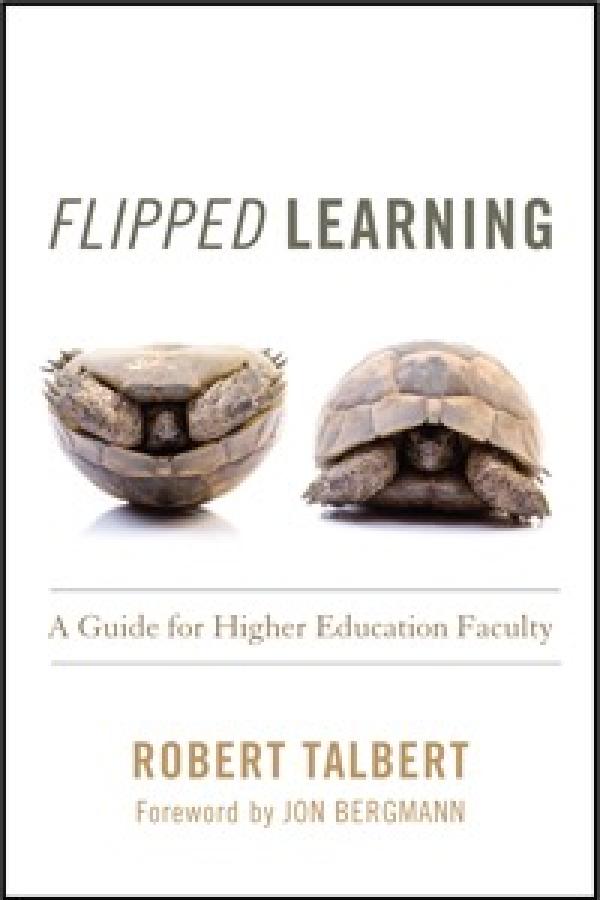
Robert Talbert’s Flipped Learning: A Guide for Higher Education Faculty is intended for three separate categories of instructors engaged in the process of flipped learning in higher education. He intends his monograph to appeal to “the curious,” “the newbies,” and “the veterans,” otherwise known as those first investigating flipped learning, those experimenting with flipped learning and looking to fix or expand on their early forays into it, and those who have taught at least one fully flipped class and want to “hone their craft” (xviii-xix). He divides the monograph into three sections. The first, “What Is Flipped Learning?” offers definitions and histories of flipped learning, and models of what flipped learning looks like in the classroom. The second section, “Flipped Learning Design” provides guidelines for designing a syllabus, lessons, and classroom activities using flipped learning. Finally, the third section, “Teaching and Learning in a Flipped Learning Environment” addresses variations on the flipped classroom and common student complaints about the method. While Talbert intends his book for use by all higher education instructors, it is probably most useful for those in STEM, business, or social science classrooms. Talbert uses his initial chapter, “What Is Flipped Learning, and Why Use It,” to work through definitions and misunderstandings of flipped learning. While flipped learning is commonly believed to consist of assigning videos of lectures for students to watch before class time, Talbert explains that flipped learning is a methodology rather than a specific technique. Flipped learning, he asserts, aims to ensure that students first encounter the new material on their own, outside of class, and then work to nuance their understanding and build skills around that material in the classroom. In this way, students develop the ability to access new material independently and then do the more challenging work of integrating and developing that information in the classroom with assistance from both classmates and the professor, or “expert.” The second chapter, “The History and Theory of Flipped Learning,” traces the method’s history to establish that it is neither new nor a fly by night fad, but rather a sensible pedagogical strategy built on a solid base. Chapter three, “Models of Flipped Learning,” offers a range of examples from math, business, and economics to demonstrate flipped learning approaches. In each example, Talbert draws from largely mathematics-based courses, suggesting that students read and watch videos about concepts before coming to class to work together on problem sets, the opposite of a traditional STEM course in which concepts are introduced in lecture and students then depart to work on problem sets on their own. (It is noteworthy that although Talbert argues in the earlier chapters that flipped learning is more than watching videos before class, this is, in fact, a primary method that he demonstrates.) As a religious studies professor, it was hard to see how this method would change the basic format of my humanities classes, in which student read material ahead of time, usually guided by discussion questions, and then come to class for a brief lecture that fills in details and group conversations or a class discussion, informed by their reading. While I have no objection to a book providing instruction on pedagogy for the STEM/business classroom, Talbert’s apparent inability to acknowledge the different structure of the humanities is significant. In failing to recognize that his methods would not significantly change the traditional structure of humanities classes, he has failed to properly acknowledge his book’s disciplinary scope and to correctly identify the audience to whom it would be the most useful. In these fields, flipped learning makes a notable difference from traditional pedagogical methods in which students first encounter new concepts in class. In the humanities, however, students traditionally encounter new material through reading assignments before class. That material is then elaborated upon and explored in classroom lectures, discussions, small groups, and activities. It is difficult, even with one or two humanities-based examples, to see how Flipped Learning dramatically would change my humanities classroom. Chapters four, five, and six address the nuts and bolts of how to flip a class. Here, Talbert offers both many more specific guidelines and, in a couple of instances, he draws examples from the humanities classroom. For instance, in chapter four, he suggests providing students with a list of reading questions that guide students toward increased complexity of thinking, gradually moving from reading comprehension and synthesis questions to conceptual and analytic questions. Chapter five offers insight into how to construct the activities. Throughout this chapter, Talbert offers cogent summaries of key theories on learning and course design, and while he rarely suggests a technique with which I am unfamiliar, his explanations of how and why they are effective are certainly likely to help me refine my technique. Chapter seven provides adaptations to the flipped learning model, primarily for low technology educational environments. It also addresses a number of student objections to the flipped classroom, ranging from student complaints about having to teach themselves to gripes that flipped learning takes too much time outside of class. On a practical note, Talbert also addresses the risks of participating in a flipped-learning classroom while untenured or in a contingent position. In each of these situations, he offers concrete advice for mitigating the risk of pedagogical experimentation, particularly reactions from students who are adjusting to a new line of teaching. These chapters were, perhaps, the most useful, as they provided language for addressing student dissatisfaction with new methods and were, perhaps, the most applicable to non-mathematically oriented classrooms. Throughout the book, I was struck by Talbert’s dry tone. Although I am accustomed to academic writing I found this to be a bit of a slog, which is a less than ideal model for a book dedicated to methods of teaching and learning. More importantly, while the author claims the book will be useful for all of the divisions of higher education, it is constrained by the author’s primary orientation and expertise, and most (though not all) of his examples are drawn from STEM, business, and mathematically oriented social sciences such as economics. Nonetheless, Talbert provides background research that will allow readers to refine and justify some of their existing techniques, helping them engage student learning both within the classroom and beyond it.
Enhancing Learning and Teaching with Technology: What the Research Says Rosemary Luckin, editor London, UK: UCL Institute of Education Press, 2018 (xxxv + 334 pages, ISBN 978-1-78277-226-2, $41.95) The overarching conclusion one might draw from this research-oriented review of current studies regarding education and technology is that we simply do not know enough about the effects of digital resources on teaching and learning. As the authors of this edited volume repeatedly point out, media reports about educational technology typically highlight negative findings and ignore positive associations. Technology champions and detractors rely primarily on face-value benefits or concerns in making their cases for or against educational use. Few studies have empirically considered the interplay among specific learning theories, educational contexts, embodied practices, and various technologies that might enhance learning. Without such research, we cannot draw defensible conclusions about the educational effectiveness of technology resources for formal and informal learning. Organized in six parts – two that focus on learning factors and four related to educational challenges that might benefit from technological resourcing – the text is at times jargon heavy, particularly for readers unfamiliar with computer programming lingo or European educational policies and practices. A six-page glossary offsets some of this difficulty. Diagrams described as color-coded are printed in black and white, which complicates interpretation. Chapters are short (averaging seven or eight pages), so topics are covered succinctly with little detail to bolster analytic claims. Seven evidence-based learning principles are introduced (2-8) and referenced throughout the text, as are a list of nineteen learning approaches (see Table 2.1, 36). These frameworks serve to tie different case studies together. At the end of each section, the editor summarizes key findings in a bulleted list that can serve as a quick reference for readers. The case studies provided focus primarily on school-age children and Science, Technology, Engineering, and Math (STEM) subjects or language development, although some chapters address adult learners. Most helpful for Reflective Teaching readers would be the discussions of video production recommendations (chapter 2.4), location-triggered learning (chapter 2.5), gaming and unintentional learning (chapter 3.1), digital access and cheating (chapter 3.2), engaging learning environments (chapter 3.3), and the use of tablets and smartphones in education (chapter 4.2). For those interested in assessment and professional development issues, the last section of the text covers learning analytics and technology-enhanced coaching for teachers. Readers in institutions experimenting with Massive Open Online Courses (MOOCs) might find the presentation of MOOC development priorities (chapter 5.2) useful as a discussion resource in policy-making conversations. On a more general education level, the short discussion of self-testing and the value of asking students to indicate how certain or uncertain they are about their answers as a strategy to encourage self-reflection on learning (chapter 1.2) may prompt educators to consider whether right answers are sufficient measures of deep knowledge acquisition. Institutional assessment plans often seek to ascertain how well students are integrating and transferring knowledge from one context to another, which depends on deeper forms of understanding. Using this chapter to spark departmental or faculty-wide conversation about what constitutes deep, transferable knowledge could inform assessment design work as well as individual course grading schemes.
Advocates for the rights of people with disabilities have worked hard to make universal design in the built environment “just part of what we do.” We no longer see curb cuts, for instance, as accommodations for people with disabilities, but perceive their usefulness every time we ride our bikes or push our strollers through crosswalks. This is also a perfect model for Universal Design for Learning (UDL), a framework grounded in the neuroscience of why, what, and how people learn. Tobin and Behling show that, although it is often associated with students with disabilities, UDL can be profitably broadened toward a larger ease-of-use and general diversity framework. Captioned instructional videos, for example, benefit learners with hearing impairments but also the student who worries about waking her young children at night or those studying on a noisy team bus. Reach Everyone, Teach Everyone is aimed at faculty members, faculty-service staff, disability support providers, student-service staff, campus leaders, and graduate students who want to strengthen the engagement, interaction, and performance of all college students. It includes resources for readers who want to become UDL experts and advocates: real-world case studies, active-learning techniques, UDL coaching skills, micro- and macro-level UDL-adoption guidance, and use-them-now resources. (From the Publisher)
Urban Preparation contributes to a needed body of research on race that investigates “mechanisms, systems, structures, and practices that have a real bearing on students’ opportunities to learn” (vii). Urban Preparation highlights the scholarship of leading researchers who address questions related to race, poverty, achievement gaps, and the academic performance of minority students. An underlying thesis of Urban Preparation is that students in general, and minority students in particular, succeed when appropriate measures are in place. This is a resource for scholars in a variety of disciplines, including but not limited to: education, law, sociology, psychology, health, political science, and social work. The book begins with an overview of the Race and Education series at Harvard Education Press. The series editor, H. Richard Milner IV, lists several objectives that guide the series and he challenges those in power to work “for the good of humanity, to interrupt systems, policies, and practices that work only for some while others remain underserved” (ix). Reasons are given for focusing on the intersection of race and education and questions are asked related to poverty, transportation, housing, and employment, among others. In the Introduction, Chezare Warren explains why he wrote Urban Preparation: “to subvert dominant narratives that insist on casting urban-dwelling young, black men and boys as ‘at-risk’ or ‘disadvantaged’” (1). He shares the stories of these young people as counter-stories that portray them as hyper-vulnerable. He is also convinced that social inequities and stories of failure must be examined alongside counter-stories of resilience, persistence, accomplishment, and triumph. The book highlights the stories of seventeen young black men who are members of the inaugural graduating class of Urban Prep Charter Academy for Young Men, referred to as “UP.” UP is a high school for boys in the Englewood neighborhood which has one of the lowest median household incomes among Chicago’s Southside neighborhoods. However, UP is widely recognized for 100 percent of its graduating class gaining admission to four-year colleges and universities. Urban Preparation aims to: (1) describe the organizational design of UP; (2) examine the intersections of place and space to discern factors that motivate young black men to succeed against the odds; and (3) explore the factors that help narrow “opportunity gaps” for urban youth, and the implications of these factors (3). The book’s qualitative data consists of interviews, field notes, memos, and participants’ responses in order to construct a “coherent continuous narrative around dominant themes” that emerged from analyzing data (8). From the data, Warren chronicles the real-life experiences of the first graduating class by grouping the students into five composite characters with overlapping characteristics. The title of the book is derived from the school’s name but the book tells the stories of the seventeen students and “the meaning associated with growing up in an urban environment” (18). More than anything else, the book gives a better understanding of the academic and cultural strengths of urban minority youth in secondary and postsecondary settings. Urban Preparation is fundamentally a counter story as well as a critical study that challenges educators and all those interested in improving the education outcomes of black men and boys to listen to them and to learn from them.