Resources

On rotation, I teach a graduate-level course entitled “Introduction to Early Christian Thought.” And every year — in the week of course evaluations — I have a conversation with my students that has become an important feature of their education: a conversation about how teaching evaluations are gendered.Once you’ve seen the pattern, you can’t unsee it. Men are routinely described as “brilliant,” “authoritative,” or “the best lecturer I’ve ever had.” Women, by contrast, are “kind,” “caring,” “approachable,” “compassionate,” or “pastoral.” Men “really know their stuff.” Women “really care about students.” Expertise attaches to men; emotional labour attaches to women.The same holds for grading. Students often expect women to be gentler, more flexible, more indulgent. A male lecturer who grades firmly is “rigorous” or “serious.” A woman who does the same may quickly become “harsh” or “unfair.”Having taught in three different academic institutions over the past decade, I have several examples which have made this very clear. I’ll mention just one here: a student received a B from me and a B from a male colleague. The student challenged my grade — not his. Same work, same outcome, different reaction. Nearly every woman in academia has a version of this story.I speak openly with my students, then, about gender bias before they write evaluations. Not because I want to avoid critique — I value thoughtful critique — but because evaluations stick. Many evaluations I receive are positive and thoughtful. Some are wonderfully memorable. My personal favourite is “Professor Thomas is a badass.” But, it is hard to forget that I “grade like a man.”ResearchRecent work in higher-education research confirms what many women have long observed:A large-scale experimental study found that female instructors receive significantly lower evaluations than male instructors for identical teaching, even when students never interact with the instructor in person (MacNell, Driscoll & Hunt, Innovative Higher Education, 2015).A 2025 analysis using natural-language processing on tens of thousands of comments showed that men are more frequently praised for “competence” and “authority,” while women receive comments about warmth and personality, regardless of teaching quality (Zamora & Ayllón, 2025).A comprehensive review argues that student evaluations often reflect biases — including gender — more than they reflect actual learning or teaching effectiveness (Uttl, White & Gonzalez, Studies in Educational Evaluation, 2017).These are not small effects; they are systemic patterns. What I Ask of My StudentsSo I ask students to pause before they complete an evaluation and consider a few questions:Am I using different language for a woman than I would for a man?Am I expecting more emotional labour — more nurturing, more availability — from this instructor?Am I reacting to discomfort about standards or grades by labelling them “unfair”?Am I evaluating teaching, or evaluating whether this lecturer fits my image of what authority looks like?Honest evaluations are essential. Students should say what worked, what didn’t, what could be clearer or more engaging. But fairness requires noticing our assumptions. It asks us to evaluate teaching rather than gender stereotypes.If we care about justice and equity in higher education, one simple starting point is here: noticing the words we use, the labels we reach for, and the people we instinctively challenge first. Notes & BibliographyMacNell, L., Driscoll, A., & Hunt, A. N. (2015). “What’s in a Name: Exposing Gender Bias in Student Ratings of Teaching.” Innovative Higher Education, 40, 291–303.Uttl, B., White, C. A., & Gonzalez, D. (2017). “Meta-analysis of faculty gender and teaching evaluations.” Studies in Educational Evaluation, 54, 22–42.Zamora, C., & Ayllón, S. (2025). “Gender Bias in Qualitative Course Evaluations: Evidence from NLP Methods.” (Open-access working paper).

Last semester, my dean very briefly mentioned that a student compared their classroom experience to shopping on Amazon, evaluating courses based on convenience, clarity, and efficiency. Students pay tuition, professors deliver knowledge, and assignments become products exchanged for grades. Initially, I laughed – it felt relatable, even humorous – but soon that laughter turned into personal pedagogical reflection. I paused to consider: Have our theological classrooms unintentionally become marketplaces?Reflecting honestly on my teaching practices, I recognized an uncomfortable truth: sometimes my syllabus reads like a product description listing knowledge and theories, promising clear outcomes, neatly packaged insights, and efficient delivery. Subtle pressures – course evaluations, enrollment metrics, accreditation standards – often shape how I structure my courses, sometimes nudging me toward clear, measurable outcomes. I humorously imagine adding “Fast shipping guaranteed!” next to the grading criteria, but beneath the humor lies a serious question: Have I unintentionally reinforced transactional expectations in theological education?A student’s recent questions encapsulated my growing unease: “Will your class provide everything I need for effective pastoral care and counseling in ministry?” and “Will this material prepare me adequately for the State Licensed Professional Counselor exam?” Their sincerity reminded me of an Amazon customer checking product specs before placing an order. The questions made me pause and again consider transactional exchanges.The commodification of education isn’t new – Paulo Freire famously critiqued the “banking model,” where teachers deposit knowledge into passive students (Pedagogy of the Oppressed [Continuum, 2003], 72). Yet, the Amazon analogy brings a renewed sense of urgency for us. As theological educators, we may have internalized institutional priorities for clarity, efficiency, and predictability, reinforcing transactional interactions rather than transformative engagements. We may unintentionally frame knowledge as a neatly packaged commodity, delivered promptly and evaluated by customer satisfaction ratings in the form of course evaluations and professor rankings.However, a theological education which truly emphasizes formation often emerges through reflective collaboration, relational experiences, mutual empowerment, and communal learning – processes that are inherently less clear, less measurable, and less efficient in my teaching experience. This means theological education often isn’t neat or predictable; it thrives on ambiguity, relational vulnerability, and surprising discoveries. These messy and complicated processes invite unique transformations, precisely the opposite of what Amazon Prime delivery promises.As theological educators, we face an important challenge: What does it mean to create a learning community where students discover who they are becoming together, especially when our educational culture quietly favors predictable transactions over relational and messy learning?Learning with my students about how to care for each other and the community, I recall countless sessions where careful listening and authentic storytelling reshaped not only my students but myself as well. While I can’t pinpoint every transformative moment, I vividly remember instances when a student’s deeply personal narrative unexpectedly transformed class discussions, moments when students intentionally empowered each other through their presentations, and times when they embodied mutual care by genuinely and courageously sharing their presence and vulnerability. These experiences remind me daily of the profound power of empathic listening, communal care, and collective transformation – practices that inherently resist quick-fix, Prime delivery solutions.Acknowledging our complicity in this commodification is uncomfortable yet necessary. Rather than positioning students as consumers by saying student-centered pedagogies, we must reflect critically on our institutional and pedagogical practices. How do accreditation standards, enrollment pressures, and evaluation metrics shape our teaching and interactions? How might we, as theological educators, reclaim our agency and intentionally resist transactional frameworks?This critical reflection invites concrete shifts: embracing pedagogical practices that prioritize relational depth, tolerating ambiguity, and explicitly framing courses as collaborative journeys rather than neatly packaged transactions. It might also require courageous institutional conversations about how to evaluate genuine educational transformation rather than student satisfaction or predictable outcomes.If your theological “package” arrives later, messier, or even missing a piece or two, maybe consider it a hopeful sign. After all, genuinely transformative theological education rarely comes neatly boxed. Sometimes the best “deliveries” leave us slightly surprised, nervously laughing, and deeply transformed. Notes & Bibliography:Freire, Paulo. 2003. Pedagogy of the Oppressed. 30th anniversary ed. New York: Continuum.
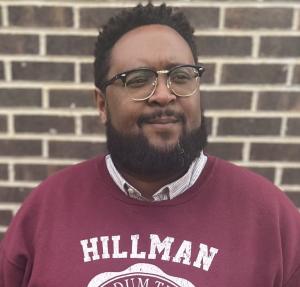
One of the coolest parts of my job at the Wabash Center is curating this blog space with the support of Paul Utterback, our Communications and Digital Media Administrator. Week after week, we have the privilege of sharing reflections from scholars and educators, helping others navigate the rapidly evolving landscape of teaching and the teaching life. As we wrap up one of our biggest years yet (more than 70 new blog posts), I want to take a moment to highlight the pieces that resonated most with readers. It’s no surprise that artificial intelligence—and how educators are responding to its growing presence in the classroom—captured significant attention. Alongside this, our top posts reveal a deep concern with what it means to teach as one’s most authentic self. Questions of identity, belonging, vulnerability, how we show up for our students in our full personhood, remain central to the work of teaching.Gathered here are the top five blogs of 2025:Plagiarism as Gaslighting in the Time of Artificial IntelligenceCommon Questions 2“I love Dr. Parker, but…"Show Your WorkDifficult, but Fun: Reclaiming Joyful Formation in the Age of AI Happy Reading! See you all in 2026!

Welcome to the Common Questions, an exciting initiative brought to you by the Wabash Center for Teaching and Learning in Theology and Religion. In this series, we bring together some of the most esteemed scholars and educators in the field to engage with a central, thought-provoking question. The goal is to challenge and inspire. By exploring these questions, we hope to create a dynamic platform for scholarly dialogue, illuminate complexities in education, and enhance our understanding of the transformative power of teaching and learning in these vital disciplines. Featuring a diverse range of perspectives, this effort is a means of expanding the borders of academic rigor with profound spiritual and philosophical inquiry. This time, we asked… “Where is the most foreign place you have visited? How might this experience with foreignness inform/influence your teaching?”Gathered here are responses from:Eric C. Smith, Iliff School of TheologyKatherine Turpin, Iliff School of TheologySharon Higginbothan, Chatham UniversityShatavia Wynn, Rhodes CollegeYii-Jan Lin, Yale Divinity School If you are interested in sharing you response to this prompt or future Common Questions, please reach out to our blogs editor, Donald E. Quist at quistd@wabash.edu.

The Bible and Ethics is an emotional class for me to teach, and it is often an emotional class for my students to take. In most other classes that I teach, I try to put brackets around our conversations, like bumpers for novice bowlers. I encourage students to stay in the text of the Bible or in the world of its composition: “Okay, but where to you find that idea in the passage you just read?” I’ll ask repeatedly. Or: “That sounds like a pretty modern idea. Can you find evidence in the text that our ancient authors would have understood that concept?”But in my class The Bible and Ethics the conversation zigs and zags between ancient worlds and more modern ones. We’ll spend an entire class session on how seventeenth-century American Puritans applied the biblical story of Amalek[1] to their own experiences. Or how the 1995 Disney film Pocahontas might shed light on the Bible’s account of Rahab.[2] The Bible and Ethics class is about what biblical laws and stories meant in their ancient contexts. But it’s also about what these passages do: both the actions they have inspired in others as well as the – sometimes predictable, sometimes surprising – attitudes they generate within us. In that respect, this class often gets personal, even emotional. We shudder together at Cotton Mather’s 1689 sermon[3]that urges his listeners to beat Native Americans “small as the Dust,” just like the Israelites annihilated the Amalekites. Students prickle at Lori Rowlett’s suggestion that Rahab can be read as a colonizer’s dream girl,[4] all too eager to capitulate to invaders. “I talked to my mom about this story” – one student told me after class – “and we both agreed that Rahab is brave. Besides, what other choice did she have?” She flushed a little. I did too, weighing whether to simply affirm this student’s complaint or to rearticulate the Rahab-as-colonial-fantasy argument. In the end, I tried to do both.In Part 1 of this series,[5] I explained the invitation I issue in this class for students to read biblical texts through the eyes of marginal characters. I define marginal characters as individuals that experience violence or are otherwise silenced; or those who are represented as “other” by virtue of their perceived ethnic difference, for example. During the course of the semester, we read examples[6] of scholars – ancient and modern; religiously devout and not – who have done this kind of work. I then give students the opportunity to try their hand at this kind of biblical rewriting. The idea, again, is to expand our consideration of who is human and who deserves our attention. I tell my students that, at its heart, this is an exercise all about paying attention: both to the surprising details the text itself may yield about this overlooked character and also to what you experience in the act of rewriting this account. Paying attention both to the Bible and to your own of experience retelling its story, I tell them, will offer you crucial information.Here are the directions I give students for this assignment: Select a story we have discussed in our class. Within that story, choose a character that sits on the margins of this story, by dint of the violence inflicted upon them or because of their perceived outsider status.Each rewriting should be between 400-500 words and should consciously inhabit the perspective or direct its narrative gaze on a marginalized character. (This doesn’t mean you have to adopt that character’s first-person perspective although you may choose to do that).Each rewriting should be a contextually-conscious and detailed reworking of the biblical text it is based on. That means that it needs to be footnoted, clearly deploying our secondary reading (reading 3-4 references). It should also directly reference the biblical story (4-5 references). Both sets of footnotes should explain how the specific details of the assigned reading have informed your creative reimagining. At the end of the document you must include a brief (300 word) reflection that responds to the following questions: (1) Why did you choose this character? (2) What emotions or features of this character’s experience were you attempting to convey? (3) What made this assignment challenging? (4) What was your major take-away from this assignment? If it changed the way you interpret the passage you selected, explain that. If it did not, explain that too.This assignment tends to bring up big and varied feelings in students. Students often express frustration with the absence of biblical content to go on and the demands this assignment makes on their creativity. Some struggle to present their chosen characters as intelligible. Others have told me that imagining the lives and losses of these figures have made them feel a spectrum of defensiveness, anger, liberation, and sadness. This assignment often reveals something to the student about how they have learned to read the Bible. It showcases the power of both the biblical story and their received lens for interpreting it. At its best, this assignment also gives them sense of how it might feel to read otherwise. Notes & Bibliography[1] https://www.sefaria.org/Exodus.17.10?lang=en&aliyot=0[2] https://www.sefaria.org/Joshua.2?lang=en[3] https://www.degruyter.com/document/doi/10.9783/9780812204896.53/html[4] https://www.bloomsbury.com/us/culture-entertainment-and-the-bible-9780567228789/[5][6] https://jibs.hcommons.org/2022/11/02/4-2-brownsmith-call-me-by-your-name/

When emotion replaces inquiry, teaching falters. Fred Glennon reflects on passion, objectivity, and missed opportunities in ethical classroom dialogue.

Recently, I discovered “tea mindfulness,” the term I use for turning the time used in making and drinking tea into moments of meditation. While I have enjoyed tea mindfulness as a means of intentionally thinking and reflecting, I wanted to move beyond the personal practice and engage others in mindful conversation. I started imagining what tea mindfulness might look like in community. Making and sharing tea is an act of hospitality. I thought intently on how to be mindful, intentional, and hospitable while incorporating the practice of drinking tea with my students and colleagues. I considered my Human Diversity course where we encounter, engage, and explore difficult topics which sometimes lead to cognitive dissonance. In a nutshell, Human Diversity builds cultural competence by increasing student’s self-awareness and cross-cultural awareness. Modifying a tea mindfulness practice in the classroom by focusing on mindful conversation and group engagement seemed like a winning strategy for cultivating cultural competence. It would give us the opportunity to engage meaningfully while nurturing appreciation for each other. Thus, the beginning of “Tea, Connections, and Necessary Conversation.”As students entered the classroom, they would encounter a tea station with hot water, an assortment of teas, sweeteners, creamers, lemon wedges, and snacks. At each student’s seat I placed a menu highlighting the variety of teas available, along with an index card. Students moved toward their seats, wondering what was going to happen next. Once everyone had arrived and was seated, I welcomed them to participate in Tea, Connections, and Necessary Conversation, offered directions, and facilitated the process for each student to prepare their tea of choice. One by one they approached the tea station, requested their tea bag, doctored their drink, and engaged in small talk before returning to their seats. After everyone was served, the connections began. Present were: Daniel and DeAndre, twin brothers and basketball players from Metro-Detroit; Josephina, a business major from Grand Rapids; Carl, a thirty-five-year-old non-traditional student who serves as a resident assistant on campus; Abbie, a homeschooled freshman in her second semester; Aisha, an exceptional athlete, who is making her mark on the women’s basketball team; and Eli, a student from a homogenous rural community in Northern Michigan.[i] These are a few of my Human Diversity students whose differences brought them together at Kuyper College. My intention for Tea, Connections, and Necessary Conversation was to provide an opportunity for the students to link up, interface, and join together in dialogue to learn more than surface-level information through engaging, exploring, and experiencing an interchange of thoughts about their similarities, differences, and even points of cognitive dissonance.As students paired up I simulated a “speed dating” activity. I asked a series of questions, where students could enter into short conversations to compare and contrast their interests, insights, perspectives, and experiences. Following two to three minutes of interaction, students would find a new partner and begin a new conversation. The classroom buzzed with excitement, motivating the shyest students to share and dialogue in genuine ways. Questions/prompts included:Tell me about some traditions or rituals your family participates in? Are there new traditions or rituals you would like to introduce to your family?Identify three things you and your conversation partner have in common. Although you share these commonalities, how do you express them differently?What is one word in the English language that irritates you when you hear it? What is another word you could use to replace it?With each question, communication grew deeper, mutual respect increased, and opportunities for connection beyond the classroom became a possibility. The start of necessary conversations began with tea and connection and continued throughout the semester.Human Diversity is a challenging course; it encourages reflection on the difficult truth that we harbor bias and prejudice, engage in racist thinking, and use microaggressions in our daily lives. We spend time confronting these fallen parts of ourselves and identify ways to become our best selves with the Holy Spirit’s advocacy. By engaging and exploring the seven dimensions of diversity (gender, age, ability, religion, race/ethnicity, sexual orientation, class) and the oppression associated with each one, we covenant to love God, others, and ourselves, and seek liberation. This is not an easy task, but Marianne Williamson encourages us by saying – “As we let our own light shine, we consciously give other people permission to do the same. As we are liberated from our fear, our presence automatically liberates others” (A Return to Love [HarperCollins, 1996]).Necessary conversations are those dialogues that are initiated after the introduction of stories of hard history, culture, and personal experiences. Asking questions, actively listening, and sometimes agreeing to disagree, we grow in self-awareness and cross-cultural awareness and build our cultural competence. Tea, Conversation and Necessary Conversations intentionally provided opportunities for some students to speak to each other for the first time, hear each other’s stories, gain an understanding of one another, and have fun. In one student’s words, “While drinking Jasmine Green tea, relationships became deeper, joy came forth, friends were made.” Notes & Bibliography[i] Names of students changed to protect privacy.
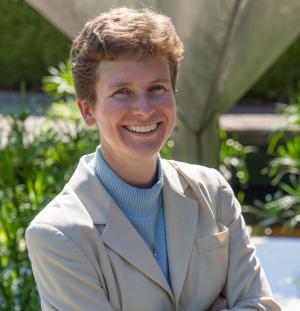
This is one of the nerdiest statements I will ever write: I was recently on a bus traveling from Istanbul to Iznik (ancient Nicaea) with a group of Wesleyan scholars on a tour of ancient Christian sites in Asia Minor for the 1700th anniversary of the Council of Nicaea. Yes, we visited the ruins of the basilica where the Council of Nicaea was held on the anniversary—to the day—of the start of the council. If you understood even partly why this was exciting, congratulations! You’re a nerd too.Aside from seeing a bunch of old rocks (how my parents described the pictures I sent them), we gave talks during the long bus rides about various aspects of history and theology related to the ecumenical councils. As a participant, I got to observe a kind of wild teaching different from my own. I came home with ideas.People frequently ask about my use of technology if I’m going outside: “How do you show them videos or PowerPoints?!” I don’t. (Honestly, I don’t use them in my indoor classrooms either.) On the tour bus, though, I saw some teachers thinking about analog versions of the technology they would use in the classroom. The tour guide himself wanted to describe some geography of Turkey to us on the first day, and people struggled. In a classroom, he might have pulled up a map on the projector. Or if we’d been in my elementary classroom, he’d have pulled down the correct map from the roll screwed to the wall. Instead, he handed a large map to one of my colleagues and asked him to hold it up at the front of the bus—even walk down the aisle if people needed to see better. Later on the trip, one colleague tried to explain her conception of a Trinitarian doctrine and drew a large diagram on a piece of butcher paper for us, again walking closer to people as they needed.I was also fortunate to tour the necropolis under the Vatican and a set of catacombs in Rome, and there again I watched my guides give excellent presentations with analog visual aids. These two tour guides had a packet of images printed off, each laminated for longevity and bound with metal rings. They flipped through the packet at the proper times in their spiel to help us see what they described—an analog PowerPoint!All of this has me thinking more about one colleague’s thoughtful question: “I need to use the projector for showing some things, or I have maps I like to use. Help me think about making analog versions of digital aids so I can teach outside more.” I’ll bet we can be more creative. All of our digital realities had analog versions to begin with, right? My students don’t know that a “file” was a thing before computers—but it was. What is the digital thing replacing, and can we go back to the original?If we can go back to the original, there is still the question of whether we want to, which is partly a question of ease. Presumably, we’re using the digital version of a thing instead of the analog because it is easier or more efficient. Why would we go back? Well, I’ve been reading some Wendell Berry lately, so I’m wondering if there are situations when doing things the less efficient way is better for reasons other than productivity. Which leads me back to the question of why I take students outside in the first place. Are those reasons worth working through the challenges of this choice? Yes, for me they are. Need to show students a passage in Greek? Have them bring their NT and work through it together. Or make a handout. Yes, it will take a little more time, but perhaps that little more time is enough for some of them to figure it out because they’re holding something in their hands and tactilely working with the thing. Buy a big map if you use a lot of them. Or draw one. My students love when I draw because I am so bad at it.Are there technologies that might be hard to replicate? Yes. A reader recently got in touch to ask about hearing-impaired students—do I use a microphone? No, I don’t. We don’t even have that capability in our classrooms. But on this tour of Turkey, we used whispers—devices with headphones that each of us wore while our guide had the device with a microphone that transmitted to all of us. This is a great technological invention for hearing in spaces full of people or cars. Perhaps we could invest in a set for classroom use outdoors? For non-hearing-impaired students, is it more important to rely on each other to understand what’s happening—even if it’s less efficient—or do I value more the clarity they would gain from hearing me better the first time through?I realize I’ve asked more questions than given answers, but the question of how to teach outside the classroom—or even inside the classroom—is always going to ask us to consider our values. How we teach is an extension of why we teach. And the more aligned our how is with our why, the more our students will receive the formation we hope for them.

I had planned to use this blog post to grumble about (antiquated, exclusionary, misguided) notions of “rigor” and how many of my colleagues seem to assume that if your students all get good grades, or if the average class GPA is “too high,” you must be too easy of a teacher, there must be grade inflation, you must be giving out easy A’s. I assigned a movie review paper in my upper-level Religion and Film course. I took many steps to help students prepare for writing a successful movie review, which is worth 10 percent of their final grade:Read the movie review assignment I created (which includes a detailed rubric of my criteria for evaluation) in class and ask any questions. Read a chapter on writing about movies for homework, which includes a description of movie reviews; discuss this genre in class.Watch a short YouTube video by a professional movie critic about movie reviews for homework; discuss this video in class.Read Anne Lamott’s “Shitty First Drafts” essay and discuss in class the importance of drafting and revising – and starting a paper early enough to provide time for that process.Find their own three examples of online movie reviews in class, take notes on what those reviews seem to have in common and what makes a strong movie review; discuss findings in class.Practice writing a short movie review in class; get feedback on it from the instructor.Listen to their peers read examples of those in-class movie reviews and note what they thought was good.Be constantly reminded about the purpose and content of a movie review by their instructor.I was all ready to write about how students did so well on this assignment … and then to wonder how anyone could label the process I put students through as NOT rigorous? There was so much scaffolding! So much prep! So much required just for this one paper – more than I think most people ask of their students, especially for a relatively short paper (2 pages minimum).Except the thing is: students didn’t do all that well on this assignment.The grade average was an 87 percent or B+. Now, this is a far cry, certainly, from averages in some classes that are, even when curved, still in the D-range. A B+ is a solidly respectable individual grade. But I would have expected most of these papers to be A’s, given all of the above. A few were, but not most.The movie reviews contained errors that the above activities should have (I would have assumed) prevented. For instance, many of the papers were more like critical analyses (another genre we discussed) rather than reviews. Their appraisal wasn’t obvious or consistent. They didn’t include details from the films to back up their assertions. They reviewed films that didn’t really relate to religion. They wrote about movies that were too old. They included tracked changes, misspellings, typos, and incomplete sentences.So my anticipated blog post went a bit sideways. What did student performance on this assignment, instead, teach me? I’m considering several possible (definitely not exclusive) lessons:It’s not enough to teach students the importance of, for instance, not turning in their shitty first drafts; I’ve got to actually build it in/require it as a part of the process – or it may not happen.It’s probably a good idea (ok, it is a good idea) to provide students with annotated examples, so they get exposed to a range of quality and the reasons for it.I could spend more time explicitly identifying common mistakes or pitfalls of movie reviews (e.g., too much analysis, not enough review) and either demonstrating or leading students in an activity where we explore how to fix those issues.I could give them class time for peer review and/or revision.I could build in an actual revision process, where they take my feedback and fix the issues for a new deadline (and a potentially better grade).I could assign multiple movie reviews, so they can take what they learned from this assignment and apply it to the next; my guess is that those grades would improve (this has happened in other classes when I gave the same type of assignment multiple times).There will always be a range of effort and performance on any given task?Instructor efforts cannot guarantee student success; there are limits to how much instructors can do to affect positive student outcomes.What else?Mostly, I think I should actually talk to my students to try to find out what went awry. Why or where were they confused? What got lost in translating the rubric to an actual paper? What roadblocks did they encounter? Where was I unclear? What, if anything, could I have done to help them better prepare? Maybe I’ll learn something to make the above prep list even better for next time.

For the past several years, I’ve gotten obsessed with Orpah: Naomi’s other Moabite daughter-in-law in the biblical story of Ruth.[1] Often overshadowed by the story’s eponymous hero, Orpah can be read as Ruth’s opposite. When Ruth leaves everything to follow Naomi, Orpah returns to her people and her land. Ruth becomes an Israelite, Orpah remains a Moabite. I’ve been interested in Orpah ever since reading Laura Donaldson’s piece, “The Sign of Orpah: Reading Ruth through Native Eyes.”[2] Donaldson urges us to rethink this character’s often-maligned decision to remain a Moabite in light of contemporary assimilation pressures and erased cultures. What does it mean, she asks, to read Orpah’s choice as brave instead of bad? My course, The Bible and Ethics, encourages students to get curious about Orpah’s story, to relate to her point of view, and to understand her choice to return home as intelligible, even heroic. This encouragement is part of a larger effort to humanize biblical characters that are often ignored or disparaged either within a given biblical story or in the history of its interpretation. If we can get curious about people less visible in a powerful text, the theory goes, it might prime us to see humanity more acutely elsewhere. The idea is to notice beauty, complexity, and pain in individuals and communities we have learned to ignore. But this kind of reading and seeing is difficult. Getting curious about Orpah is particularly challenging both because we have learned to overlook her and because her biblical mentions are scant. Sometimes my students don’t see the point. Why consider the story of Orpah when we have the compelling duo of Ruth and Naomi? Why follow Michal when we can think about her captivating husband, David? Why imagine the perspective of Lot’s wife or of the children who die in the smoking ruins of Sodom and Jericho when Abraham, Lot himself, and Joshua are demanding our attention? The pull of the biblical authors’ own attention is strong. Following the stories of Orpah, Michal, Lot’s wife, or a child in Sodom is like sitting in a darkened theater and trying to keep track of a character who has left the stage. Maybe they never walked on stage to begin with. Either way, it would be easier to just keep watching the show. Fortunately, we have examples of scholars and poets who have taken up the challenge of reading for characters whose stories have been lost, erased, or never written. Saidiya Hartman’s “critical fabulation”[3] and Wilda Gafney’s “Womanist Midrash”[4] offer cues and strategies to grapple with absence and to shine a light on individuals – fictional and actual, ancient and modern – whose presence we ignore. I want to be clear that this way of reading rarely makes converts. And that’s not really the point. Students, by and large, remain committed to our biblical protagonists and find accessing curiosity and empathy for marginal characters quite difficult. Poetry helps. Poetic re-imaginings of biblical stories are some of the most potent teaching tools I have both because they are pithy enough to be experienced collectively during a class meeting and because they invite us to explore the emotional quality of this kind of reading. Natalie Diaz’s “Of Course She Looked Back”[5] is a great example. Diaz’s poem – affectingly unpacked by Pádraig Ó Tuama in his Poetry Unbound podcast episode[6] – witnesses the destruction of Sodom from the perspective of Lot’s wife. What I love about this poem is where it begins. Of course Lot’s wife looked back at the ruination of her adopted home, the poet declares. In fact, “you would have, too.” As she fades from the biblical story, together with the silenced screams of Sodom’s children, Lot’s wife asks us to imagine ourselves as among the forgotten. Notes & Bibliography[1] https://www.sefaria.org/Ruth.1?lang=en[2] https://onlinelibrary.wiley.com/doi/10.1002/9780470775080.ch10[3] https://muse.jhu.edu/article/241115[4] https://www.wjkbooks.com/Products/066423903X/womanist-midrash-volume-1.aspx[5] https://onbeing.org/poetry/of-course-she-looked-back/[6] https://onbeing.org/programs/natalie-diaz-of-course-she-looked-back/