Resources by Donald Quist

Welcome back to Common Questions! In this series, we bring together some of the most esteemed scholars and educators in the field to engage with a central, thought-provoking question. The goal is to challenge and inspire. By exploring these questions, we hope to create a dynamic platform for scholarly dialogue, illuminate complexities in education, and enhance our understanding of the transformative power of teaching and learning in these vital disciplines. Featuring a diverse range of perspectives, this effort is a means of expanding the borders of academic rigor with profound spiritual and philosophical inquiry. This time, we asked…What about your work do you find most beautiful? What would it take to plan for more of this kind of beauty in your work?Gathered here are responses from:Sonya Cronin, Florida State University / The Carrier Pigeon PostJoshua Ryoo, Azusa Pacific UniversityGabrielle Thomas, Emory UniversityBrian Hillman, Towson UniversityAndrew P. Wilson, Mount Allison UniversityWonchul Shin, Villanova UniversityIf you are interested in sharing you response to this prompt or future Common Questions, please reach out to our blogs editor, Donald E. Quist at quistd@wabash.edu.
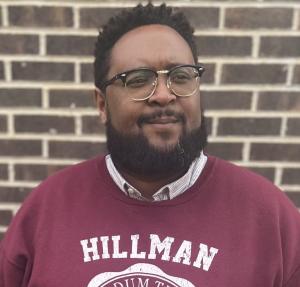
Since 2022, I have had the distinct privilege of serving as an editor and conversation-partner for Director Lynne Westfield through her ongoing written contributions to the Wabash Center. What began as a professional collaboration quickly became something more generative, more human—an evolving dialogue grounded in trust, care, and a shared commitment to clarity of thought and purpose in teaching.From the very beginning, I found myself drawn to Lynne’s voice. There is a particular kind of vulnerability in her writing, an openness that does not seek performance but instead insists on honesty. Month after month, for more than four years, I have sat with her words, responding not simply as an editor marking a page, but as a reader invited into a living, breathing intellectual and spiritual practice. With each blog post, I became a deeper admirer of her work—not because it sought perfection, but because it refused to hide from complexity.Those monthly exchanges were never transactional. They were conversations. They required attention, patience, and a willingness to listen beyond the surface of the text. As an editor, I believe it is important to understand one’s role is not to refine the author/artist into something more “polished,” but to help them become more fully themselves on the page.Many of the blog posts with Lynne have now found new life in her recent book, Thinking Teaching, out now from Cascade Books. Watching that manuscript take shape has been profoundly rewarding. It marks the second time I’ve had the honor of witnessing Lynne bring a book into the world, following her earlier work, Glimpses of Me and Mine (2023). To see the arc of her ideas develop from individual reflections to a cohesive, enduring text has been a reminder of what sustained writing practice can do.Editing, at its best, is an act of care. A good editor does not impose themselves onto the work. They do not flatten the writer’s voice into something more familiar or marketable. Instead, they listen. They ask questions. They create space for the writer to hear themselves more clearly.Over the years, working with Lynne has sharpened my understanding of what it means to be a compassionate and effective editor. For those engaged in similar work, I offer a few guiding principles:Listen for the writer’s intention, not just the sentence’s structure.Editing is not only about correctness; it is about coherence between what the writer means and what the reader receives.Protect the writer’s voice at all costs.Your job is not to rewrite the work in your own image. The distinctiveness of a writer’s voice is their greatest strength.Respond, don’t dictate.Frame your edits as invitations or inquiries rather than commands. This keeps the process collaborative rather than hierarchical.Cultivate patience and trust.Good writing, and good editing, takes time. Trust that clarity will emerge through conversation, not force.What I have learned through this work is that editing is not a neutral act. It is relational. It requires humility. And when done well, it becomes transformative, not only for the writer, who is given the space to grow and refine their voice, but also for the editor.To work with Lynne Westfield has been to witness an author bloom steadily, courageously, and without compromise. In supporting that process, I, too, have been changed. I have become a more attentive reader, a more patient collaborator, and, I hope, a more generous thinker.This is the quiet gift of editing: when we commit ourselves to the flourishing of another’s voice, we often find our own deepened in the process.Please check out Lynne Westfield’s latest…Thinking Teaching: Stories, Insights, and Strategies to Ignite Reflection, Discussion, and Imagination – Out Now!
One of the coolest parts of my job at the Wabash Center is curating this blog space with the support of Paul Utterback, our Communications and Digital Media Administrator. Week after week, we have the privilege of sharing reflections from scholars and educators, helping others navigate the rapidly evolving landscape of teaching and the teaching life. As we wrap up one of our biggest years yet (more than 70 new blog posts), I want to take a moment to highlight the pieces that resonated most with readers. It’s no surprise that artificial intelligence—and how educators are responding to its growing presence in the classroom—captured significant attention. Alongside this, our top posts reveal a deep concern with what it means to teach as one’s most authentic self. Questions of identity, belonging, vulnerability, how we show up for our students in our full personhood, remain central to the work of teaching.Gathered here are the top five blogs of 2025:Plagiarism as Gaslighting in the Time of Artificial IntelligenceCommon Questions 2“I love Dr. Parker, but…"Show Your WorkDifficult, but Fun: Reclaiming Joyful Formation in the Age of AI Happy Reading! See you all in 2026!
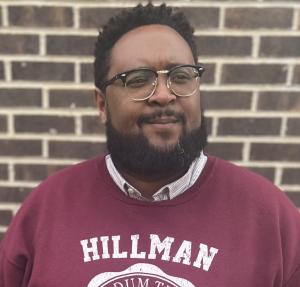
I am not a scholar of Religion or Theology. However, my work as a creative writer and professor of Creative Nonfiction often involves identifying everyday divinities; finding the sacred in small things, the flawed, and the profane. Many of the readers/contributors to this blog might recognize my name as a kind of curator for this space. I serve the Wabash Center as an Educational Design Manager, a job that has brought me great opportunity to learn, share and reflect approaches to teaching and the teaching life. When I became aware that one of our blog publishing dates would fall on Juneteenth, I wanted to take the opportunity to write about it and perhaps encourage others to learn and teach more about the subject…Juneteenth: What is it?June 19, 1865: Gordon Granger of the Union army arrived in Galveston, Texas, to inform enslaved African Americans of their freedom and that the Civil War had ended. General Granger’s announcement put into effect the Emancipation Proclamation, which had been issued nearly two and a half years earlier, on January 1, 1863, by President Abraham Lincoln.Juneteenth is an annual commemoration of this event and the end of slavery in the United States after the Civil War. It has been celebrated by African Americans since the late 1800s. It is the longest running Black holiday. Also known as Freedom Day, Jubilee Day and Cel-Liberation Day.The day was first recognized as a federal holiday in 2021, when President Joe Biden signed the Juneteenth National Independence Day Act into law after the efforts of Lula Briggs Galloway, Opal Lee, and others.I grew up knowing nothing about Juneteenth. This history was not taught to me in my public schools. I first became aware of the day and its significance in college, thanks to my first African American literature professor, and the book by Ralph Ellison. When I heard the story, I was angry. Understandably, I think. The idea that slavery in the United States continued quite a while after the Emancipation Proclamation was deeply frustrating. But I was also upset with the fact that this event seemed whitewashed from my education. Why wasn’t this major moment in African American history discussed every Black History Month? Why wasn’t this made a part of the curriculum I was given?Another part of me was unsurprised. As a Black person in America, I am familiar with the ways my homeland can defer its promises of equality, and how inconvenient histories can be overlooked in order to affirm narratives of American exceptionalism. The story of Juneteenth complicates our understanding of the Civil War, Lincoln’s legacy, and the 13th Amendment to the U.S. Constitution.I wouldn’t encounter Annette Gordon-Reed’s Juneteenth until I was a teacher myself, assigning it to myself and my graduate students to read together. Together, along with other supplementary texts, we’d learn more details about the factors which led chattel slavery to continue in America years after it was said to have ended…States with little or no Union Soldier presence refused/ignored the order to free enslaved people.Border states, including Delaware, Maryland, Kentucky and Missouri, and of course Texas, ignored emancipation.Slave owners threatened to kill slaves if they tried to leave. Some slavers moved to Texas to keep people enslaved. Galveston, Texas was the last stronghold.The Emancipation Proclamation didn’t apply to Indian tribes. The five “Civilized Tribes” (Cherokee, Choctaw, Muscogee, Chickasaw, Seminole) owned Black, Mixed and Indigenous slaves. Chattel slavery among these tribes was not officially ended until 1866.These factors demanded considerable time and effort to navigate and prompted questions that were uncomfortable for the learners and for me as well. But I believe more was gained by engaging with Juneteenth in the classroom—a greater understanding of ourselves in relation to our citizenship, our communities of belonging, and one another.I wish I had the opportunity to have learned about the event sooner in my life and more often throughout my matriculation through academia. Even if it would have been awkward at times. I wish to have been able to observe this commemoration of freedom earlier, and the chances I might have had to unpack its significance with teachers and fellow students.There is no real discussion about freedom in America that does not invoke the lived experience of Black people. As the poet Terrence Hayes suggests, Black people share a historical and constant relationship to freedom. To take this further with a question: in lessons about the liberation found through God’s grace—the freedom from fear discovered in faith and divine will—why wouldn’t we center the lived experiences of a systemically subjugated population? Why not ask students to engage with a moment that signifies a turn toward a more moral universe? I would like to make a case for making Juneteenth a point of discussion in classrooms across all fields of study, but especially in theological and religious education with its potential to position scholars who lead communities and shape public thought. There is so much to be gained in the teaching of Juneteenth.Here is a resource, a Juneteenth Reading List cultivated by the Smithsonian’s National African American History Museum: CLICK HERE. As we consider how we might craft lessons around this holiday, making sure to read as much as we can on the subject feels imperative.If there are readers who have had success teaching Juneteenth and would like to share a reflection on their experience, reach out at quistd@wabash.edu.