Resources
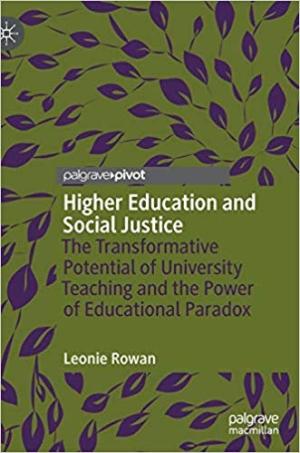
At a recent workshop on “Diversity, Civility, and the Liberal Arts,” I found myself in the company of faculty and staff teams from small colleges and universities around the United States who find themselves, like Leonie Rowan, “motivated by a desire to create university contexts in which diverse learners feel themselves to be included, valued, and safe” (1). This desire names the telos, or end, towards which critical, liberative pedagogy aims – freedom. Unlike the Aristotlean defense of the liberal arts as education suitable for free persons (read: male, property-owning citizens), Rowan’s notion of freedom extends to all learners, especially those whose participation in higher education has been constrained by the unjust dynamics of the sociohistorical contexts in which they happen to be born. Rowan argues that education can be transformational when the decision-making processes in higher education – from curriculum and syllabus design to admissions policies and the student support portfolio – begin with the question: “For whose freedom – in whose interests – do we, now, labor?” (4). It is an important question that suggests that not all student-centric approaches lead to models of student-as-customer and higher education as a private good. For readers who have followed debates about diversity and inclusion in higher education since at least the 1990s, the terrain Rowan is covering and the companions along the way will likely be familiar – notably, the relationship centered, liberative philosophies of Paulo Freire, bell hooks, and Parker Palmer. Like many social currents today, it is difficult to avoid a sense of déjà vu when reading about education and “its fundamentally constructed and negotiated nature” (16) and the need for academics to embrace “the idea that language is a site of struggle” (18). The key move Rowan makes is the attempt to get underneath these now familiar discursive moves in order to understand “what it actually, really, feels like to study within a university classroom” (15). In so doing, she sides with social justice theorists like Nancy Fraser whose notion of participative parity juxtaposes classical questions of social justice as distributive justice with questions related to recognition and representation: “do people have the opportunity to participate in an environment on an equal footing” (14)? The middle chapters demonstrate how pedagogical decisions that flow from notions like participative parity have the potential to transform student engagement. Empirical evidence for this potential is drawn largely from Rowan’s own classroom experience educating future teachers from diverse backgrounds in an Australian university. The data sets consist of student course and instructor evaluations as well as brief “doorstop” interviews with students, most of which confirm what she highlights in the scholarly literature about student engagement and diverse learners. These chapters would, in the end, make much better stand-alone scholarship of teaching and learning articles, offering insights from her own successes and failures to create the type of classroom space she desires. In a telling example of the challenges of actualizing this type of space from chapter four – for me, the strongest section of the book – Rowan describes what she refers to as “one of the most appalling lessons I have ever taught” (115). She acknowledges that in her attempt to empower diverse learners with a lens for critically interpreting past discrimination against First Nations people, she inadvertently opened the door to “inappropriate and offensive language.” The effect was immediate: the goal of a charged but hospitable environment (one of Palmer’s educational paradoxes) devolved into something “destructive and frightening.” Despite her extensive background and skills as a facilitator of difficult dialogues, she acknowledges that this episode created fissures in the class that could not be overcome – indeed, “several of the participants never returned to the class again” (115). What is most striking about this example in the context of her overall argument is the short shrift she gives it. Offered under the heading “A Summary and a Pause,” she relates this anecdote in the space of a page or two, as a kind of aside. Yet, for me, this anecdote is at the heart of her project, illustrative of the pitfalls of liberative pedagogies that fail to adequately acknowledge the priority of her other pedagogical concern: relationships. She concludes the anecdote with an apology to all the students involved, and in this gesture – as well as the telling of the anecdote itself – Rowan reveals herself to be the kind of caring, reflective, intentional pedagogue needed to hold educational paradoxes in creative tension and to resist conflating “giving students an opportunity to have their individual voices” and “anything goes” (116). Yet, the reader is left wondering what she would do differently next time? The evidence she has gathered from years of student evaluations and the practical wisdom she has accumulated teaching these topics semester after semester surely has something important to say about how this might be handled, whether in forms of restorative practice for that particular class or decisions she made the next time to create a more “sufficiently hospitable” (116) environment before introducing similar content. Given her primary data sets for the rest of her argument, it may also have been instructive to hear how students processed that experience in their evaluations. This particular example points to a challenge that has become more acute in recent years as attempts to create participative parity in college classrooms and curriculum have sparked various forms of resistance by those who perceive this type of parity as a threat. While Rowan acknowledges this challenge, the lack of engagement with recent scholarship on concepts like white fragility risks limiting the liberative early insights of luminaries like hooks, Freire, and Palmer. Emerging research on best practices for engaging straight white males as social justice allies on college campuses reveals something about the educational paradox faculty face when introducing issues of social justice in their classrooms – environments that help some diverse learners feel valued and safe may have the opposite effect on other diverse learners (e.g., Vianden 2018). Rowan alludes to this paradox when she coins the term “furiety,” which she refers to as an approach that recognizes, on the one hand, multiple dimensions of diversity including individual differences within traditional categories (e.g., race) and, on the other hand, “a commitment to intellectually charged activities approached through pedagogical variety” (87). Furiety opens a way into a deeper analysis of the example above. More importantly, for those of us who struggle daily to live into the question “For whose freedom – in whose interests – do we, now, labor,” Rowan’s further development of the term may encourage us to respond with greater integrity: “All of my students.”

When it comes to effective teaching, “less is more.” While the brain is an amazing information and multi-sensory processor, research suggests it can only effectively learn one new thing (concept) at a time. The maximum number of “bits of information” the brain can process at any given time is eight (like in the “eight bits” of a computer chip), or, as sometimes notated “7 +/- 2″ (seven plus or minus two).* When it comes to teaching, we do well to focus on teaching one new concept at each learning session (that’s one new concept per class session!). That guide can help inform the structure and scope of your course. It's a helpful corrective to the common anxious temptation of trying to cover too much during a course. So, for a twelve-week course, teach twelve interconnected or derivative concepts! No more! How much information are you trying to pass on to your students in one sitting? How effective are you in focusing on the single most important thing you want your students to learn during a single class period? To be more effective in your teaching, try these suggestions: • Aim at teaching only one thing at a time (one concept, one principle, or one big idea) • Focus on teaching a central concept and no more than two derivative concepts • Spend time on rehearsal of the concept (define it, clarify what it is and what it isn’t, provide examples and non-examples, illustrate it, apply it) • Test for comprehension • Correct misunderstanding(s) of or about the concept • Provide an opportunity for learners to apply the concept. The truth is that learning is a complex enterprise and we are not very efficient at it. Learning involves multifaceted and interrelated processes like attention, motivation, comprehension, concept attainment, rehearsal, reinforcement, acceptance, valuing, accommodation, and application. In order to teach effectively we need to facilitate the learning process for our students as much as possible. Two guidelines that will always serve us well in teaching are: (1) less is more, and (2) K.I.S.S. ("Keep it simple, stupid"). *See George Miller, “The Magical Number 7, Plus or Minus 2: Some Limits on Our Capacity for Processing Information,” Psychological Review 63:81-97 (1956). More current literature on learning that takes into account brain research supports this concept.
This short essay describes a teaching strategy that addresses a key threshold concept in undergraduate biblical studies courses – how an interpreter’s location within a particular tradition influences that interpreter’s understanding of biblical texts about gender, sex, and sexuality. It is a companion essay to John Van Maaren’s “Transformative Concepts and Troublesome Knowledge: Toward a Threshold Concept Framework for Biblical Studies,” also published in this issue of the journal.
This short essay describes a teaching strategy that addresses two of the threshold concepts named by John Van Maaren in his essay “Transformative Concepts and Troublesome Knowledge: Toward a Threshold Concept Framework for Biblical Studies,” also published in this issue of the journal.
One-page Teaching Tactic that sends students walking around campus to take photos that fit prompts sent by the professor using What'sApp.
One-page Teaching Tactic that works with embodied metaphors and drawing to help students draw relationships between complicated concepts.
One-page Teaching Tactic that has students write creatively in the voice of an ancient person to help them learn to exercise sensitivity to historical, social, political, and social contexts of ancient documents and gain proficiency in reading texts critically and sympathetically.

Recently I was working with my IT colleague, Dr. Justin Barber, on a project to use machine learning to gather data about student experience in our hybrid classes from our LMS (Learning Management System). Big data comes to theological education! Our curriculum committee was testing a common perception that our distance students felt better about their experience in the classes after they had been together on campus. To test this assumption, we asked Justin to do something called “sentiment analysis” on the discussion forums to see how the emotional tenor of their interactions changed once they had been together in space and time. Full disclosure: Justin is brilliant, and I often have no idea what AI (Artificial Intelligence) magic he has rendered. So, we always have to sit down for him to explain the results to me. Before performing the sentiment analysis, we summarized the aggregate posts of each discussion with three keywords to get a sense of the content of each discussion (excluding the common words that occur in almost every post like "the", "a", etc.). Then these three words would be analyzed before and after the campus visits to see if they were, on the whole, more positive after the students had been together. The three word combinations were often just the topic for the week and two key related terms. Hilariously, a colleague’s class in “Ancient and Emerging Practices” came up with the trio: church, tickle, sexuality. I had to explain to Justin who Phyllis Tickle was when he became concerned about what on earth was going on in that class. But as we scrolled through data from hundreds of forums over five years of data, week by week, the main word that showed up again and again was “thanks.” Thanks. As we scrolled, I was reminded of so many student posts that began with that word. “Thanks for sharing that story.” “Thanks for bringing up that topic, because I was wondering about it, too.” “Thanks for making that clearer, because when I read it I was totally confused.” While the results of the sentiment analysis were largely insignificant, this moment of realization of the function of gratitude in our online classrooms has stuck with me. It drew together something in my lived experience, but it was still surprising how often that it made the top three. Thanks. Not only in classes where emotional intelligence and personal sharing is expected, such as pastoral care courses, but in history classes, Bible classes, comparative religion classes. Many faculty fear a loss of relationality in online classes. They worry that peer-to-peer learning is diminished, that learning becomes a form of correspondence course between students and faculty. In my doctoral pedagogy class, students worry that conversations in online forums will mimic the trolling vitriol of Twitter comments. But here was dispassionate evidence that an attitude of respectful engagement was the overwhelming norm in all of our classes. In simple list form, we discovered over and over again the simple acknowledgement of indebtedness to another student: Thanks. As Justin and I processed this surprising result, we talked about how some of this polite deference might be a reflection of the somewhat tenuous nature of online community. Perhaps in situations where relationships aren’t reinforced by regular embodied interaction, a level of additional respect becomes a habitual marker of conversation in order to maintain connection and compensate for the way text doesn’t communicate body language, tone, or attentiveness. More cynically, this profusion of thanks might be a signal of perfunctory niceness, something that both our majority white female student population and church-related vocation students are socialized to perform. I like to think of this habit of gratitude as a way that students hold one another’s stories and learnings as gift. The esteemed religious educator Dr. Anne Streaty Wimberly once led a retreat in a church that I later served as youth minister. Even years later, the young people in that community remembered her as the “thank you for sharing lady” because she had taught them to receive every word spoken into the circle as gift, which required verbalized gratitude. Opening up a laptop in a faraway city to re-enter a challenging class alone can be a difficult discipline, particularly for students who already have very busy lives. Finding colleagues there who hold your contributions with respect and gratitude makes that space more gracious and inviting. And so our students, without our prompting, learned together to say thanks.

Theological education in the United States finds itself in untested circumstances today. Rapid social change is creating an increasing multicultural, multiracial, and multireligious context for leadership formation. At the same time, international enrollment, cross-border educational initiatives, student and faculty exchanges, and more are connecting US theological schools with a global community of Christian teaching and learning. How do US theological institutions “locate” themselves within this global ecology of theological formation so as to be both responsible participants and creative shapers within it? That is, how do they discern their proper place and role? It is questions like these that the contributors to this volume explore. Building on the decades-long discussion about the globalization of US theological education, this book argues that, in engaging such questions, US theological institutions have much to gain from a sustained conversation with the burgeoning literature on the internationalization of American higher education. This research offers theological institutions a trove of insights and cautionary tales as they seek to discern their rightful place and role in educating leaders in and for a global Christian church. (From the Publisher)

I have often assumed that students have more facility with technology than I do. Unfortunately, this assumption has been wrong and student learning has paid the price. So now, when there is likely to be a steep learning curve for some students relative to equipment (like recording on the iPhone) or a platform (like Vimeo) or learning management system (like Moodle), I integrate facility with technology into course assignments. For example, in a semester-long, face-to-face preaching course, students must record and post their third sermons into Moodle after preaching them in a local congregation. Unfortunately, I realized that even with weeks (if not months) of notice that such a requirement is upon them, many students would spend more time worrying about equipment failure than the sermon itself. Then after preaching they would spend hours trying to upload their sermon onto a video sharing platform only to run into trouble posting on the university’s learning management system. Even more, my teaching assistants’ available hours were being used up troubleshooting for anxious students and tech-savvy students were reaching the end of their willingness to assist classmates (and ashamed to admit some resentment). Clearly an interruption in the cycle was needed and the onus was on me to be the interrupter. What follows is an iteration of my new m.o. I continue the practice of letting students know early in the semester (essentially, the first day) that they will be responsible for recording and posting sermons. But now, my very next sentence is, “And, know that by the time you get to sermon three you will have had numerous opportunities to increase your facility with the technology that is needed to fulfill that part of the assignment.” At that point, I turn the class over to a teaching assistant who introduces herself, articulates the extent to which she will be available to provide tech assistance, notes the portion of the syllabus that clearly outlines the technological requirements for the course, and distributes a “how to record and post videos of sermons” handout. Perhaps the most helpful change I made was to adapt an assignment in week three. I replaced the typical online text-based discussion forum with a visual post. In other words, instead of typing their response to the weeks’ reading, they posted a two-minute video. While this low-stakes assignment had a desired deadline, students were not penalized if they were late if they were having tech troubles. The TA was available to meet with students in pairs or groups of three to assist with their recordings and postings. Lo and behold, the discussion on the material was already beginning as students honed their recorded reflections. This assignment gave us a sense of how many (and who) might need additional tech assistance. We set up out-of-class tutoring sessions accordingly. By this point, everyone had already succeeded, albeit with some assistance.. Additional unforeseen blessings were 1) the posts were much more animated and creative than usual, which yielded more engaging discussion threads; and 2) students had begun to overcome the squeamishness of seeing themselves on video and hearing their recorded voices. A second major change is one I wish I would have discovered a decade ago. For the first two sermons in the class, I would operate the camera and a teaching assistant would post the videos. Of course, I got into this habit because I started teaching preaching before everyone carried around their own device (yes, there was such a time!). Now that nearly (!) everyone has such equipment readily available, it would be a wasted learning opportunity for students (and a waste of my energy and time) not to utilize it. Therefore, every student takes responsibility for being the camera operator for one peer. Not only is this valuable for the camera operator, but an additional benefit is that the preacher practices communicating his/her needs (e.g., location of camera, desired angle), which is good preparation for enlisting a helper in the congregation. While the stakes are getting higher, we set up a backup camera just in case a preacher forgets to charge his battery or a fellow classmate forgets to push “record.” Once again students have to transfer the digital recording to a platform that can be easily accessed on Moodle. At this point, we review and emphasize the handout’s recommended privacy settings. After repeating this process for one additional in-class sermon, students are well prepared to plan for recording sermon three. They are enjoying a sense of accomplishment and getting credit for it! Even more, they can now focus on preparing faithful and impactful sermons for the congregational setting, instead of anxiously anticipating their technical demands.