Resources
Creating classrooms where learners have agency, trust, and are encouraged to bring their own knowledge to bear upon the conversation is challenging but possible.What does it mean to craft learning activities with more variety and intention than long lists of required readings? What if ah-hah! moments require cognitive dissonance?What if we attempted less volume of material and more depth of the material in our classrooms? Learning to teach better requires risking new practices.
2023 LGBTQ+ Faculty Round table: Queering Pedagogy and Self-care Gathering Date May 24-26, 2023 Kimpton Hotel Monaco Chicago, Chicago, Illinois Team Gina A.S. Robinson, Associate Director Pamela Lightsey, Meadville Lombard Theological School Rodolfo Nolasco, Garrett-Evangelical Theological Seminary Participants Phillis I. Sheppard, Vanderbilt University Bryan N. Massingale, Fordham University Su Yon Pak, Union Theological Seminary Renee K Harrison, Howard University School of Divinity Xochiti Alvizo, California State University - Northridge Luis Menéndez-Antuña, Boston University School of Theology Teresa Smallwood, United Lutharan Seminary - Gettysburg Junehee Yoon, Drew Theological School Craig Ford, St. Norbert College Honorarium and Fellowship Participants will receive an honorarium of $2000 for full participation in the Round Table. In addition, participants are eligible to apply for a $5000 project grant. Read More about Payment of Participants Important Information Foreign National Information Form Policy on Participation Description The aim of this roundtable was to curate a conversation that explored the uniqueness and normativity of LGBTQ+ faculty experiences; consider ways that embodied perspectives might positively and negatively affect pedagogy; addresses the rapidly changing ways identities, current discourse and practices affect teaching; and reflect upon the ways that deep political & theological divides are challenging to queer theory and theology. Additionally, the conversation is designed to help determine how to attend to self-care and determine vocational aspirations in unsafe contexts. On the first evening Anna Deshawn, an Ambie award-winning podcast creator and digital radio host of E3 Radio, facilitated a conversation about the impact they are making in the queer community through their podcast Queer News. Anna Deshawn uses their digital platform to curate conversations at the intersection faith and LGBTQ+ identity. DJ Caryn Robinson created an atmosphere of queer joy by playing music by LGBTQ+ artists and allies. The second day of the gathering was a time to reflect upon the ways LGBTQ+ professors, as embodied professionals enter spaces (some safe, some more challenging) to do the work they are called to do. The leaders grounded the first half of this conversation with two questions: “Who is the LGBTQ+ self that teaches?” and “What pedagogy heirlooms can you share?” These questions invited participants into an exploration of the uniqueness and normativity of LGBTQ+ faculty experiences. Dr. Danie Buhuro facilitated the second half of the session which centered embodiment and self-care. The day ended with an excursion to Lips Chicago to explore teaching in drag. The final session opened with an in depth debrief on what participants learned from the drag performers about embodiment and teaching. Dr. Stephanie Crumpton closed with a ritual to help the participants reclaim rest in their lives as faculty persons. All participants are eligible to receive a $5,000 non-competitive small grant. Description To address the rapidly changing ways identities, current discourse and practices affect teaching To reflect upon the ways that deep political & theological divides are challenging to queer theory and theology To determine how to attend to self-care Description Tenure track, tenured, continuing term, and/or full-time contingency Teaching religion, religious studies, or theology in an accredited college or university in the United States, Puerto Rico, or Canada Identify at LGBTQ+ (Edit)
As a toddler, the Grammy-winning musician esperanza spalding heard Yo-Yo Ma play cello on Mister Roger’s Neighborhood and decided she wanted to play music like that. In an interview, she said it was Ma’s “total body activism during the music” that captivated her. A jazz-bassist, vocalist, and composer, esperanza moves with her music, which defies genres, and hopes to create a physical experience of resonance in her audience. As a professor of practice at Harvard, she hosts jam sessions at the studio at Harvard’s ArtLab so that participants can improvise and make music together. In her heart, she wants to be someone in “deep co-learning” with her students. How can our classrooms be spaces of co-learning that welcome creativity, collaboration, and even improvisation? How can we recognize the body as a valuable site of learning, so that the knowledge we gain would not be over our heads, but would speak to and touch our innermost yearning and desires? If this is difficult to do in an in-person classroom, is there any hope for online teaching via Zoom? Last spring, I taught an online course on Spirituality for the Contemporary World for Master students and community learners. I have learned so much about embodied teaching and learning: guided meditation, listening to music and poetry, art appreciation, rituals, Tai Chi, cross-cultural discussion, and much more. I want to reflect on a few memorable moments from the class. I invited Professor Cláudio Carvalhaes to speak on “The Pandemic and the Re-imagination of Rituals” because I knew him to be a creative teacher, preacher, and liturgist. Carvalhaes discussed the relation of ritual to our body and earth. He shared his experiences of leading workshops on liturgies on four continents of the world, which led to the book Liturgies from Below. At a time of crisis, he said, it is important to draw from the experiences of the community to craft liturgies and prayers that respond to the people’s needs. At the end of the presentation, he invited students to offer prayers with the movements of their bodies. He explained what he was going to do and invited students to warm up by standing, shaking loose, moving from side to side, and turning around. He demonstrated how to do these to ease the students. Then he picked up his guitar and sang four stanzas of a song. As he sang the first stanza on happiness and thanksgiving, he invited students to move to embody memories of happiness and joy. Similarly, he sang the second stanza on sadness and the third one on anxiety and invited students to imagine movements to express them. In the final stanza, he closed by asking God to hear our prayers, which were all in our bodies. During the pandemic, feelings of grief, helplessness, and uncertainty are stored in our bodies, as the book The Body Keeps the Score says. Acknowledging these feelings through movements of prayers helped us to connect with these emotions. Doing this together made us feel less alone. Students appreciated the time with Carvalhaes as they were given the freedom to experience the power of ritualizing through their embodied selves in their own ways. I also invited Episcopal priest and artist the Rev. Susan Taylor to lead a class on spirituality and art. Some years ago, I invited her to speak in my class in person and she brought a lot of art supplies with her. She wanted us to try out and create a collective art project at the end and the process was inspiring. This time, I told her, the class was online and I would appreciate it if she could include doing art in the class. She told me to ask students to have their art supplies, such as painting and drawing mediums, brushes, pieces of paper, color, palette knives, etc., on hand. She made a presentation on how arts help individuals and churches during a time of pandemic and strengthen our relationship with God. She shared photos of her art and included a detailed explanation of the process of working through a 7’x 6’ painting entitled “Skyflowers.” Introducing the process of how we would make art together, she offered a lot of encouragement for us to explore and tune out the self-judgmental voice. On Zoom, we could see her painting in her studio, adding shades and layers of colors to her work. We spent some time creating our own art and afterward we shared our experience of making art and what this meant to us. We also discussed how to include art in our own spiritual life and ministries. The brief moment of creating art transformed us from spectators to participants. It was wonderful to see students trying to express themselves in new ways and hear what art evoked in them. Since the class met for an hour and a half in the evening, I decided to teach Tai Chi movements for several minutes in the middle of each class. I began by teaching simple Tai Chi exercises so students could understand the principle of balancing Yin and Yang in the movements. I also posted a video from YouTube so that they could follow the exercises if they wanted to practice more. After we practiced these exercises in several classes, I was able to teach them several Tai Chi movements by breaking down the steps. Even though we practiced only a few minutes in class, a student was motivated to learn further about the practice of Tai Chi. We easily succumb to Zoom fatigue in online classes when teaching is didactic, usually with a PowerPoint presentation, and students become passive onlookers. But there are many ways to expand the possibilities of sensory experiences, even in a Zoom meeting. esperanza spalding invites us to think about teaching as embodied adventures. I have been stretched and learned so much from my co-learners.
We were halfway through the first day of class when a student started viciously criticizing a TED talk I had just shown. It wasn’t hard to determine where the student’s criticism was coming from. He was furious that I would consider a woman worth listening to. He was spewing misogynistic hate in a room that was 70 percent female. On the first day of class. I responded to the student’s misogynistic rant in my usual way. Trying to stay calm, I seized on something he was saying I could spin into a statement I agreed with, interrupted him with a “yes, and,” and proceeded to explain the value of the points made by the woman in her talk, being sure to emphasize how important and insightful they were. I never heard a misogynistic word out of him again. He never mistreated his female peers (I monitored closely) and by the end of the term was thoughtfully engaging with readings by female authors. It probably helped that he was surrounded—in my class alone—by thirty brilliant young women who were living proof of women’s intellectual capacities. It also helped that I was a white male, in a position of authority, who had not let him get away with saying misogynistic things unchallenged, even if I did use a strategy inspired by nonviolent conflict transformation techniques rather than direct confrontation and criticism. This story illustrates the power of embodiment, even in the form of a video. I doubt assigning a book or article by a woman would have elicited the same visceral reaction. Honestly, it usually takes me strategically getting a little angry in class to get students to stop routinely misgendering authors as “he,” despite my best efforts to ward off that habit, including through strategies like making cover pages for PDF readings that include a short biographical statement on the author. We often think of “embodiment” in teaching as referring to the kind of presence the teacher has in the classroom. Perhaps we also need to find ways to apply embodiment strategies to the authors we assign. Do we lose some of the power of a diverse syllabus when the authors remain just names on a page? In my classes, I try to use media to help highlight the diverse array of voices I hold up as worth listening to. Sometimes I assign a video or podcast or invite a guest speaker in person or on Zoom, but since most of the assigned readings are books, individual chapters, and articles, I also find other ways to help my students see our authors as real people. I often weave short videos or clips of lectures by our authors into my lessons. Lacking those, I’ll include a photo of an author alongside a quotation from their work in a slideshow. These aren’t complicated interventions; however, I fear that without them my students miss the diversity in my syllabi. This is perhaps most true of those students who most need to see it, those so steeped in patriarchal culture that even a “Barbara” or “Maria” becomes a “he.” Such interventions might not be the best idea if the message your reading list sends is that your field is dominated by cishet white men or that they are the only ones worth listening to, reading, or studying. Applying embodiment strategies to authors assumes that we’ve already done the work of diversifying our syllabi with the voices of those whose gender identity, sexual identity, racial identity, ethnic identity, nationality, language background, disability, age, religion, socioeconomic status, etc., both reflect the full diversity of humanity and affect their scholarship. As a white male, I don’t often deal with the kinds of challenges to my authority and expertise other educators experience, at least not from my students (as an adjunct, administrators and my tenure-track colleagues routinely devalue my expertise and experience). This means that my embodiment in the classroom is not particularly fraught. If anything, I have to take care not to be too intimidating lest my presence stifle participation. My identity and positionality also give me a platform and a responsibility to challenge worldviews that dehumanize and devalue those whose backgrounds, identities, and experiences are different from mine. Making the authors in my syllabi a little more real for students is one small way I pursue that goal.
#1 It is not enough to teach against injustice in its myriad forms of racism, sexism, islamophobia, homophobia, patriarchy, classism, ableism, antisemitism, white supremacy, etc. It is not enough to rail against what is wrong and what must be changed, restructured or done away with. We, those entrusted with the responsibility of educating, must teach toward, teach visioning, teach futuring, must teach what we are in favor of, teach what we are for, i.e., the complex notions of community, solidarity, partnerships, coalitions, and collaborations. #2 We cannot settle for, nor be placated by, that which comes with individualized successful escapes, successful assimilation, successful fleeings into the dark nights, successful trickeries, and moments when one or two outsmart, outwit, out fox, or beat back the oppressors. While that is good, that is not enough. These kinds of successes are illusions and meant to deceive. They come at a high, high price. #3 In taking up the struggle, fighting, resisting, we must be about more than …. swimming against the tide, standing against the wind, raising a fist against evil or bullies or the common enemy or fiend. Resisting. Clinching our fists, fighting, while necessary, keeps us from handling tools and opening our hearts. All of these acts-against are, indeed, noble – but not enough. Our liberation must include acts of vulnerability, creativity, imagination, risky business and designing for new kinds of hopes for communal living. #4 We, the collective us – those who are mindful, aware, woke, conscious, faithful, and living as if all lives depend upon all other lives, and all Black lives matter, and that the human family or our earth-house really truly means everyone, all lives matter, and not just a select few who possess all the power, and land and clout, and the vote, not to mention all plants, all animals – the seen and unseen which make-up the tapestry that is our planetary home, all must understand that passive waiting or simply resisting is not enough. It is foolish to think that we can save just a small percentage of the people and the land, and the animals if the rest goes asunder. We are all interconnected. All life affects all other life. The collective us must teach to understand that all of humanity are intertwined and interrelated, and our survival is threatened by the overwhelming greed and selfishness of a few; so, we must decide to teach what we are in favor of and not just what we are against. #5 Friends, Toward what will we teach? What will we be for? What will we be in favor of, say “aye” to? What vision will we cast for our community as a common good? What will we build together? What will we sacrifice, together, for all our children? Who will ally, join, partner, pioneer, and experiment? With whom will we be in solidarity? We know that what we imagine will happen; that’s the nature of imagining. #6 And if we can, and if we do, make this shift – move from being against to working for that which we are in favor of, then: How will we teach our students to think strategically for what we are for? To mobilize for the new marvelous? To know practices of creativity, healing, dream casting, imagination, wonder, planning, no longer to combat against, but to use their energies for what we have agreed will be our hopeful future? How will we teach our students to call up from the deep? What will it mean to teach our students to depend upon their own abundances, knowledges, courages, and hard work? Can they learn to cooperate rather than compete? #7 Teacher, what do you champion? I am hoping it is love, compassion, empathy – for all of life – Lottie, Dottie and Everybody! And that you come to believe that life for some does not mean living at the expense and fodder of others who have been, for generations, weakened, impoverished, downtroddened, and victimized for the survival and thriving of a few others, selected as special, chosen, or entitled by birthright or muscle or raw greed.
Earlier this year, the song, “We Don’t Talk About Bruno,” from the animated film, Encanto¸ emerged as a viral sensation. The film’s protagonist, Mirabel, is seeking counsel from her reclusive uncle, the aforenamed Bruno, who is difficult to find because their family has ostracized him for his propensity to speak uncomfortable truths. Both of my children, one in middle school and the other in elementary school, reported that nearly everyone was singing this track. My eldest child even offered to show me some of the countless covers of the song on TikTok and YouTube. In my experience teaching at a freestanding seminary, I have observed that there are also students that theological educators don’t talk about, or talk less about, whether within our own institutions or across guild contexts, such as the American Academy of Religion and Society of Biblical Literature. Our conversations often focus upon two kinds of students: the ones who inspire us and the ones who terrorize us. Amid what almost always feels like a demanding academic semester, it is easy to talk about the students who are enlivening our classrooms and motivating us to sharpen our pedagogical skills. And we rightly seek collegial support concerning those students who abuse, antagonize, and aggravate us for a myriad of reasons, including discrimination based on race, ethnicity, gender identity, ability, nationality, and sexuality. I can think of two kinds of students that we don’t talk about as much as the terrific and the terrible. The first is the tired student. I teach at a denominational seminary with increasing ecumenical, ethnic, and racial diversity within our student population. The Master of Divinity degree is required for ministerial ordination in the denomination to which my seminary belongs, the Presbyterian Church (U.S.A.). Therefore, our Presbyterian students are generally not full-time pastors during their studies with us. More of our students from different ecclesial traditions are already full-time pastors and seeking further education to augment their capacities for ministry. Some are bi-vocational pastors leading congregations and balancing multiple responsibilities. In addition to working at least two jobs, they are also primary caregivers for young children, aging parents, and other family members. The tired student I am describing is also exceedingly thankful. During the nationwide racial reckoning in response to the killings of Ahmaud Arbery, Breonna Taylor, and George Floyd two years ago, my seminary implemented a broad and comprehensive plan for Black reparations, which included new scholarships that cover the full cost of tuition and fees for every admitted African American student. In addition, my seminary offers generous scholarships that support the entire cost of tuition for every other non-Black student in a first-level master’s degree program. For some of the students in my classroom, these scholarships have made it possible for them to pursue a theological education. But because all these scholarships require full-time enrollment, I encounter the tired student who is juggling my syllabus along with other family, ministry, and work commitments. One pastor who I admire shares this wise counsel utilizing the metaphor of juggling: One must discern which balls are made of rubber and which are made of glass when prioritizing one’s schedule. The “glass” tasks must not be dropped because they will shatter whereas the tasks that are made of rubber can fall to the ground. For the tired student, I am aware that my assignments and class sessions are more like rubber than glass, especially in comparison to their other responsibilities. The tired student is sometimes unable to show up or perform well on an assignment. Or the cost of showing up and performing well requires a herculean effort with substantial costs in terms of the tired student’s mental, physical, and psychological health. The second kind of student we don’t talk about is the triumphalist student. It is more precise to describe this student as one who comes from a more theologically conservative ecclesial context in comparison to my seminary. Some of my students are unfamiliar with historical-critical methods of biblical interpretation, postcolonial theology, and progressive Christianity. They have not heard of scholars such as Katie Geneva Cannon, Walter Brueggemann, and Kwok Pui-lan. They are unaccustomed to theological inquiry that identifies and criticizes some Christian doctrines and practices. Their conceptions of church history revolve around a search for examples of Christians enacting courageous witness and exemplifying the triumph of God’s goodness over evil. Yet renowned church historian Justo González observes the story of Christianity, when told fully and honestly, includes beautiful moments of awe-inspiring faith and ugly episodes where it is difficult to discern the divine presence. As an historian of Christianity in the United States, the only way that I can teach a full and honest history is to confront the active participation and complicity of Christians who committed and perpetuated the sins of settler colonialism, slavery, sexism, nativism, and other oppressive injustices. And my lessons do not always have heartwarming endings that uplift the soul. There are certainly moments of reflection and application, but some chapters of Christian history are sinful and irredeemable. There is diversity with the “triumphalist student” I am describing such that I do not want to present this kind of student as a monolith. Some students experience our seminary classrooms as liberative spaces where they can expand their ways of thinking theologically about themselves, God, and Christian ministry. Other students undergo a complex process of educational formation with stages of disorientation and deconstruction preceding reorientation and reconstruction. And a few students remain resistant to our methods of pedagogy. We talk some about the “triumphalist student” who testifies to a metanoia from our curriculum, but we need to talk more about how these students return to congregations that are unprepared to receive their transformed approaches to ministry and theology.

The online discussion board has long been ubiquitous in synchronous and asynchronous education, so much so that it is notoriously dull. It can be all too easy for discussion board posts to become a regurgitative learning task. When learners find themselves summarizing reading assignments, they often consign the discussion board to mere “busy work” designed to micromanage their progress. Yet through a “crowdsourcing” model, the medium offers an opportunity for learners to become content creators, adding to the knowledge base for the course out of their experience, expertise, and exposure to a variety of content sources. The discussion board has great potential for creativity, playfulness, and student-centered learning. Once we break free from the temptation to check up on whether the assigned reading has been accomplished, a discussion board can be a location for practicing key curricular goals such as critical thinking or theological reflection on the material or topic at hand. Freed from enforcing compliance, it can be easier to break open the multimedia capacity present in a good Learning Management System. I encourage students to engage the subject matter by curating a weekly journal of images, music, or video that reflect their thoughts on the topic at hand. While some still prefer to write their thoughts for a post, the ability to record a video, post artwork, or share music and poetry appeals to a broader range of students. The variety of ways of engaging makes for a lively discussion as students respond to one another’s offerings. To encourage this, I avoid requiring a certain quantity of replies to co-learners’ posts but instead include an “asynchronous participation grade” in my syllabus that specifies how much time per week each learner should spend reading and interacting with discussion board(s). Crowdsourcing learners’ experiences and media exposure for cultural analysis can further encourage learners to act as experts in their own cultural contexts. When I teach my Biblical Families elective, I use this method to contrast ancient and modern ideas around family and related topics. I provide content on ancient context through reading assignments while learners post and respond to case studies on the same topic either from the media or their ministry contexts (I ask for their posts to be equally distributed between the two over the course of the semester) in which they name the cultural constructions implicitly communicated in the conversation or media item. Some hilarity inevitably ensues as we comment together on commercials and experiences alike. It leads to a broader variety of contexts than I alone would be able to provide and increases learner investment in the project of cultural analysis. The increased prevalence of asynchronous courses and virtual presence can make community building a challenge as casual hallway conversations become less frequent if not impossible. One key element of learner formation is the mutually supportive community they can be to one another. A discussion board can be a helpful place to model this by making the steps toward a long-term project both public and collaborative. For this model, I create a “topic” within the forum under each student’s name. They can then crowdsource questions and ideas about their projects, not just with me but with their co-learners, receiving more responses and resources and having the opportunity to exhibit their expertise as adult learners. In my introductory Educational Ministry course I also have students post a weekly quote from the assigned reading that speaks to their educational philosophy, creating a running vision board that they can use when they write their theology of teaching and learning at the end of the semester. When teaching about the religiously unaffiliated, learners took on a “spiritual-but-not-religious discipline” and journaled the experience on the discussion board so that they could respond to and encourage one another throughout the semester. Crowdsourcing the discussion board requires a degree of trust that learners have prepared for their asynchronous participation well enough to critically engage and add to rather than prove that they have received content. This model opens up the possibility for participants to bring creativity and imagination to their posts and communicates that each learner’s cultural context is essential to the course, not a distraction from it. Learners become co-creators of multimedia course content, bringing their experience, expertise, and exposure into the virtual classroom. As such, they practice collaborative learning and experience how they can become a resource to one another in and outside of class.
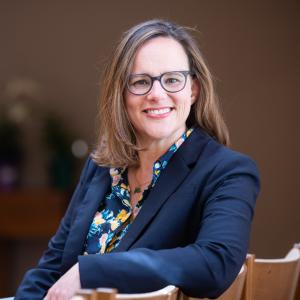
One of the cruel ironies of teaching in Atlanta is that the so-called fall semester always begins in the damp-flames-of-hell climate that is August in Georgia. But this morning, as I sit with my coffee on my back porch, I recognize the halting, modest signs that a proper fall may arrive after all, despite all evidence to the contrary. I see a few yellow leaves drifting to the grass from the weeping cherry tree. Likewise, I notice the tip top of the Japanese maple tree is hinting at its fall purple-red glory. The air, while still sticky, carries a whisper of crispness. I could sit here for a while, if I can just slow my mind and let my senses help me pay attention to the world. Embodiment should come easily to me. I am a practical theologian whose specialization is the relationship between theology, education, and ecology. This intersection can hardly be imagined absent a strong commitment to embodiment, to the ways in which we understand our bodies to inhabit particular places and relate to other bodies; to see, to breathe, to taste, to hear, and to touch. In honoring the body’s knowledge, we name its vulnerability, and the ways in which we are tied to the vulnerability of other bodies.[1] I have tried to counter false narratives that would suggest that a real academic somehow transcends her embodied self. I have developed practices to help ground me in my heart and body, and when I’m able to commit to these practices, everything else seems to flow: my research, my teaching, even those administrative tasks. Easier said than done, though. In our institutions of higher education, serious inquiry has been conflated with dispassionate objectivity, learning with the cognitive work of recalling and interpreting.[2] We might even struggle to recognize the needs and honor the knowledge of our own bodies, as individual scholars and human beings.[3] Speaking for myself, I might spend hours crouching at my computer, loathe to break my supposed focus. With high hopes, I might have scheduled a workout or a walk with the dogs for later in the afternoon, only to abandon those plans when it seems I do not have time. I might eat breakfast and lunch at my desk. Now, after two years of remote work and learning, I think the question of embodiment is insisting itself to us in new and powerful ways. I think we begin to find our way toward an answer by first looking within. How do you begin your day? Environmental education scholar Mitchell Thomashow writes, “Consider two different ways of greeting the day. You can step outdoors wherever you may be in order to feel the temperature, wind conditions, light, sounds, and smells, or whatever visceral impressions fill your senses. Or you can immediately glance at your phone to check your messages, email, or whatever virtual information gets you oriented.”[4] On good days, I might begin the workday at my writing desk at home, which faces out a window, and quietly work on research and writing projects for an hour before the rest of the family awakens. Sometimes I might check in online with some colleagues who also arise early to write before turning to our other daily tasks. It’s a tiny act of resistance to the culture of accelerated and sometimes frenetic work demanded by the pressures facing so many of our institutions.[5] But more often than I would like to admit, I start my day by checking my institutional email on my smart phone before my feet even hit the floor. It’s a seemingly small thing, but the net result is that, from the start, my mind is in a reactive state. I respond to every demand, every email, every knock on my door, with little sense of purpose or vision. I end the day exhausted, my eyes and shoulders strained, with seemingly little satisfaction to show for it. This way of being is not sustainable, of course. And as orientation approached this fall, I was confronted in a new and urgent way with the limitations of approaching my work without mental and emotional intentionality. Even deeper, I was confronted with the poverty of the life of the mind absent a steady, trusting, and grounding practice that honors my own body’s knowledge. Thanks to a benign but persistent virus that took up residence in my inner ear in August, I found myself unable to be in crowded spaces, to process complex visual or aural stimulation, to look at my computer screen, or even read without becoming very dizzy. I would clench my jaw and “power through” whatever task was before me, practically racing back to my office to close my eyes—no fluorescents, please!—or rest my head on my desk until the next thing. I barely got my syllabus revised and was grateful for a colleague who volunteered to build my course website for me. To my surprise, though, I could work in the yard, walk the dogs, and even do yoga with little difficulty. The body that found itself queasy and unsteady after just twenty minutes of looking at my computer screen was calmed and centered by these practices that grounded me in sensory experience, slowed my mind, and allowed room to reflect, think, and be present. Embodied practices that I once had perhaps too eagerly broadcast as a countercultural “choice” became a necessity and a source of salvation. As I write this, episodes of dizziness and disorientation are, happily and as expected, becoming less frequent and less severe. Yet I am clinging to a reordered pattern for the morning, landing me here, on my porch, greeting the day with all of my senses, watching the leaves turn and listening to a chorus of birds and bugs. There is so much to do, it’s true. But might you also find a place to pay attention to the world, and your body’s place in it? A place where you could sit, just for a while? [1] Judith Butler, Precarious Life: The Powers of Mourning and Violence (New York: Verso Books, 2004), 26-27. [2] Furthermore, the ways in which learning is structured in so many of our institutions reveal a disembodied “implicit curriculum” observable in how our classrooms are arranged, the kinds of assignments we make, and the reduction of embodied exercises and classroom breaks to reluctant “accommodations” we make so that the mind can continue the work of learning, unencumbered by the inconvenient needs of the human body. See Elliot W. Eisner, The Educational Imagination: On the Design and Evaluation of School Programs (New York: Macmillan, 1979), 97. [3] It is, of course, important to acknowledge that “embodiment” has historically carried additional risks for too many scholars and students in institutions with unexamined racist, sexist, and heteronormative assumptions. See, for example, Carol B. Duncan, “Visible/Invisible: Teaching Popular Culture and the Vulgar Body in Black Religious Studies,” in Being Black, Teaching Black: Politics and Pedagogy in Religious Studies, edited by Nancy Lynne Westfield (Nashville: Abingdon Press, 2008), 3-15. [4] Mitchell Thomashow, To Know the World: A New Vision for Environmental Learning (Cambridge: The MIT Press, 2020), 75. [5] Maggie Berg and Barbara K. Seeber, “Introduction,” in The Slow Professor: Challenging the Culture of Speed in the Academy (Toronto: University of Toronto Press, 2016), 1-15.
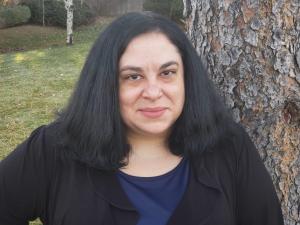
There are two subjects about which I am passionate as a teacher and scholar: leadership formation and decolonial praxis. These areas may seem to be at odds with one another, at least in white western worldviews; but disrupting colonial frameworks and ways of being and doing leadership in ministry and theological education is a necessary endeavor for those of us who continue to long for worlds beyond death-dealing hegemony and homogeneity. As an early career Latina teacher and scholar, I feel this longing in my bones. Perhaps more importantly, I experience these longings from students both in my courses and in the wider institution. But what do you do when the very students who express such deep desires for change—even explicitly longing for a dismantling of western/white/colonial structures, processes, and epistemologies—function in ways that are wholly aligned with “possession, control, and mastery” as the ultimate display of white, self-sufficient masculinity, as Willie James Jennings articulates?[1] In other words, how does one teach decolonial praxis in a course about decolonial praxis, particularly with well-meaning and well-intentioned white students who praxis coloniality? The first time that I taught a course on ministry leadership and decolonial praxis, I was not prepared for the embedded resistances that I encountered from students, particularly socially and/or politically progressive white students, that sometimes contradicted the very praxes we were reflecting upon that same week. Of course, such actions were so subtle and automatic that the students themselves were unable to recognize them; but that’s how colonialism works its deadly charms—in the corners and cracks of the unconscious. As educators, our most important task is to unmask that which lies just underneath the surface of what students articulate in word, speech, and affect, as a learning for the whole, and with kindness, respect, and compassion. As bell hooks said, “We practice interrogating habits of being as well as ideas. Through this process we build community.”[2] After that first course, and like any good scholar, I researched what others had written about decolonial pedagogies in the classroom and white racial identity formation and resistances. I also engaged in wisdom-seeking conversations with trusted educators and scholars on their own practices for mitigating colonial praxes in their classrooms. Through this process, what began to appear were patterns of behavior for what I and others had experienced. In gaining clarity about the nature and origins of some of these movements on the part of white students, I was better able to respond in the moment and incorporate pedagogies and practices to mitigate these in my courses. Here are just a few of the subtle embedded resistances that were unmasked.[3] Co-optation. Whether it be in online or in-person discussions, many white students—unintentionally and without awareness—often take up time, space, and/or voice in class conversations and take over ideas, characteristics, and practices of nonwhite others, collapsing them into their own worldviews and subsuming them for their own purposes. For example, I noticed that a few white students in my class resonated with particular attributes or characteristics associated with some postcolonial and decolonial communities and leadership. Identifying that their own communities and/or leadership exemplified some of these attributes, they signified their ministries to be “decolonial” (yet remained situated contextually as majority white, middle-upper class congregations not necessarily allied with those most harmed by colonization and colonialism nor engaged in any kind of stated decolonial praxis). These attempts at possession and control also come in the form of collapsing decolonization into movements for gender, LGBTQ, or socioeconomic equity without acknowledging the racialized foundations and socio-historical trajectories of colonialism. Ultimately, students’ desires to not be seen as carriers of colonialism resulted in them perpetuating the very colonial characteristics they were attempting to deny. Silence. Several of the scholars with whom I spoke shared their experiences of white students maintaining silence in class in order to give space to students of color to speak or share or, more often than not, out of a fear of doing or saying “the wrong thing.” Unfortunately, this itself highlights the privilege one has to practice opacity as an exercise of power, leaving others to perform vulnerability for the benefit of white students’ learning. In my experience, white students—and even white colleagues—who say little to nothing in intercultural or interracial spaces often end up perpetuating the “white gaze” on students and colleagues of color as if they are being monitored or put upon to present in particular ways. Resignation. When the depths of our collective entanglements with colonialism are realized more fully, one of the most frequent responses from white students is to “burn it all down,” a form of resignation to the irreparability of religious and secular systems alike. It’s as if starting over completely, dismantling current structures, or working outside of institutional church spaces to create something new will rid us of our colonial ways of being and doing. Such a totalizing response arises from the privilege of being able to transcend or separate oneself from those very structures with little consequence or loss of power. Students of color in my courses have tended to not articulate such statements because the legacies and forces of colonization impact them more intensely and intimately than their white counterparts (though, of course, intersections exist). These students have not had the option or power to “burn it all down” and have learned to navigate within such systems for survival, with many finding spaces of joy and flourishing in spite of colonialism’s strongholds. Simply burning something down doesn’t make it disappear; it simply takes on another form. Unmasking such praxes in the classroom takes discernment, patience, and care on the part of the instructor. In the next blog post, I will share some of my pedagogical learnings around unmasking. [1] Willie James Jennings, After Whiteness: An Education in Belonging (Grand Rapids, MI: William B. Eerdmans Publishing Co., 2020). [2] bell hooks, Teaching to Transgress: Education as the Practice of Freedom (New York: Routledge, 1994), 43. [3] While postcolonialism and decoloniality are intersectional in nature—meaning that they also seek to dismantle imposing eurowestern constructions of gender, sexuality, class, caste, etc.—the construction of racial hierarchies and white supremacy in the subjugation of non-white “others” assumes, historically and presently, a foundational place in the colonial project. Furthermore, because I noticed this phenomenon taking place with white students (regardless of their gender, sexual identity, or class), the praxes named here necessitate a specific focus on race as a socially constructed phenomenon.
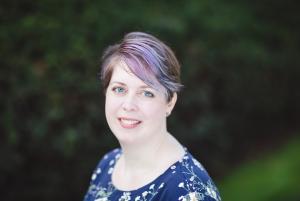
One of my favorite genres of fantasy fiction is the “magical door” story – tales where a person finds a mystical, strange doorway into another world. Alice in Wonderland is probably the best-known example, but I’m more fond of the contemporary takes, especially Seanan McGuire’s Every Heart a Doorway (2016) and the Wayward Children series that follows it. In McGuire’s books, children disappear into doorways that lead them to worlds where they feel profoundly at home – sometimes pretty ones, like a world where everything is made of candy, but just as often menacing worlds where lightning can raise people from the dead or where they fight alongside merpeople against the Eldritch horrors of the deep. Besides being the ultimate escapist fantasy for anybody who felt wildly ill-at-ease and out of place in their adolescent years (everybody, perhaps?), these stories also convey that we aren’t really looking for a docile, perfect place to be – we just want to be where we know we fit. This magical door framework recently snuck up on me during an exercise on teaching – we were asked to artistically represent our teaching selves, or the “bother” that spurs us on as professors. Without realizing the connection to some of my favorite books, I quickly crocheted some drab ribbons into a doorway – and on the other side of that doorway, I painted wild and colorful movement, represented in glitter and pom poms and sticky foam. This is how I see my teaching in theology – trying to coax students through a doorway into a world that is bright and overwhelming, chaotic but lovely. Looking at my hasty picture afterwards, I found myself realizing again why students can be so hesitant to jump into this wild world. The doorposts are pretty, in their own way, and they certainly are familiar. We all cling to groundedness when we’re uncertain, and higher education is constantly uncertain, with students suddenly struggling with topics they once found simple, oscillating between the career plans they expected and the ones that better fit their skills, fretting at each new professor’s style of teaching and grading. While my students as a group aren’t particularly religious, for some, their fundamental beliefs about God or the universe or that everything happens for a reason are one of the few stable parts of their identity. My theology class threatens to shake up even that. So, at least on the tough days, they cling to the doorposts and lintels like a toddler avoiding a bath, grasping onto anything rooted until the danger has passed. Or, maybe just as often, they go quiet and inward, not wanting to step through the portal into a conversation they feel unprepared for. Questions and options seem to help – “Do you want to get into groups now, or should we do a poll first?” “I know we might not know much about vows of silence, but who in here needs complete quiet to do homework?” I get them talking about themselves first, and our content second. That way, they can peek through the windows before deciding whether to come outside, and that first tiny step might be enough to build momentum. It’s a helpful reminder that my students are always doing hard work to engage with me and the readings I assign – almost any class day brings up questions. “Do I believe this?” “Could I live that way?” “What commitments would I die for?” “What commitments will I live for?” Even for the non-religious, theology class always holds the potential for deep introspection alongside factual learning, and introspection is hard. With my doorway image in mind, I can recall the importance of gentleness and compassion in my role – not easy-ness, but a gentleness that reminds me to notice the uncertainty, even fear behind the disengagement, and to be ready to try again and again to connect with each individual. I can see more clearly how chaotic and overwhelming the field seems, especially to those who have never crossed the threshold, and look for ways to reassure them that there is something familiar and good on the other side, and that I’ll accompany them until they find it. I remember well a young Latina student pulling me aside after the last day of class and whispering to me, almost like a secret, “Until this class, I didn’t realize I could be both Catholic and a feminist!” She had found her place to belong in the mess of it all. It helps me remember how badly we all want to find a place where we feel welcome, and to create that with both my affect and my syllabus. Every day is a doorway in theology class, and my role is to stand behind it, beckoning, and reassuring, “It’s wonderful here. All you have to do is take another step.”