Resources
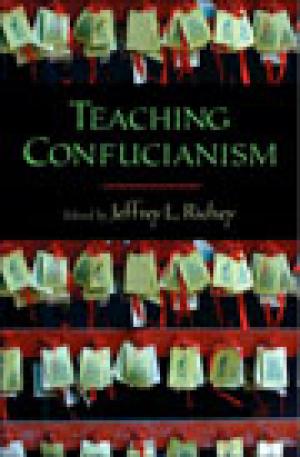
Even the most casual observer of Chinese society is aware of the tremendous significance of Confucianism as a linchpin of both ancient and modern Chinese identity. Furthermore, the Confucian tradition has exercised enormous influence over the values and institutions of the other cultures of East Asia, an influence that continues to be important in the global Asian diaspora. If forecasters are correct in labeling the 21st century 'the Chinese century,' teachers and scholars of religious studies and theology will be called upon to illuminate the history, character, and role of Confucianism as a religious tradition in Chinese and Chinese-influenced societies. The essays in this volume will address the specifically pedagogical challenges of introducing Confucian material to non-East Asian scholars and students. Informed by the latest scholarship as well as practical experience in the religious studies and theology classroom, the essays are attentive to the various settings within which religious material is taught and sensitive to the needs of both experts in Confucian studies and those with no background in Asian studies who are charged with teaching these traditions. The authors represent all the arenas of Confucian studies, from the ancient to the modern. Courses involving Confucius and Confucianism have proliferated across the disciplinary map of the modern university. This volume will be an invaluable resource for instructors not only in religious studies departments and theological schools, but also teachers of world philosophy, non-Western philosophy, Asian studies, and world history. (From the Publisher)
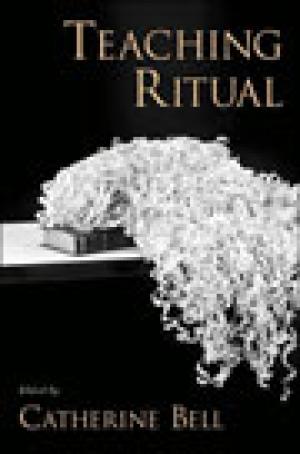
AAR Teaching Religious Studies Series (Oxford University Press) Many teachers share an interest in bringing a better appreciation of ritual into their religious studies classes, but are uncertain how to do it. Religious studies faculty know how to teach texts, but they often have difficulty teaching something for which the meaning lies in the doing. How do you teach such "doing"? How much need be done? How does the teacher talk about the religiosity that exists in personalized relationships, not textual descriptions or prescriptions? These practical issues also give rise to theoretical questions. Giving more attention to ritual effectively suggests a reinterpretation of religion itself-an understanding less focused on what people have thought and written, and more focused on how they engage their universe. Many useful analyses of ritual derive from anthropological and sociological premises, which may be foreign to religious studies faculty and even seen by some as theologically problematic. This is the first resource to address the issues specific to teaching this subject. A stellar cast of contributors, all scholars of ritual and teachers experienced in using ritual in a wide variety of courses and settings, explain what has worked for them in the classroom, what has not, and what they have learned from the experience of being more real about religion. Their voices range from personal to formal, their topics from ways to use field trips to the role of architecture. The result is a rich guide for teachers who are new to the subject as well as the experienced willing to think about new angles and fresh approaches. (From the Publisher)
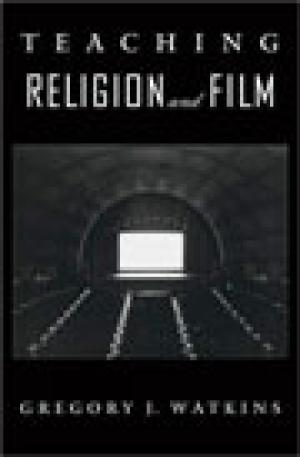
In a culture increasingly focused on visual media, students have learned not only to embrace multimedia presentations in the classroom, but to expect them. Such expectations are perhaps more prevalent in a field as dynamic and cross-disciplinary as religious studies, but the practice nevertheless poses some difficult educational issues — the use of movies in academic coursework has far outpaced the scholarship on teaching religion and film. What does it mean to utilize film in religious studies, and what are the best ways to do it? In Teaching Religion and Film, an interdisciplinary team of scholars thinks about the theoretical and pedagogical concerns involved with the intersection of film and religion in the classroom. They examine the use of film to teach specific religious traditions, religious theories, and perspectives on fundamental human values. Some instructors already teach some version of a film-and-religion course, and many have integrated film as an ancillary to achieving central course goals. This collection of essays helps them understand the field better and draws the sharp distinction between merely "watching movies" in the classroom and comprehending film in an informed and critical way. (From the Publisher)
This book is based on the argument that detailed and developmental formative feedback is the single most useful thing teachers can do for students. It helps to clarify the expectations of higher education and assist all students to achieve their potential. This book promotes student learning through formative assessment and feedback, which: * enables self-assessment and reflection in learning * encourages teacher-student dialogue * helps clarify what is good performance * provides students with quality information to help improve their learning * encourages motivation and self-confidence in students * aids the teacher in shaping teaching Underpinned by the relevant theory, the practical advice and examples in this book directly address the issues of how to motivate students to engage in formative assessment effectively and shows teachers how they can provide further useful formative feedback. (From the Publisher)
Paradox and surprise face those who pursue deeper spiritual practice, theological wisdom, and even a religious calling "into the ministry." Unbeknownst to incoming students, the pursuit of theological education in established institutions today furthers a faith that is recognizable in delight and compassion, even as it may just as easily deform it into a moral duty and autonomous professionalism so divisive in today's religious ecology. How may those drawn into ministry formation today receive its deep theological treasures and sustain a vibrant faith with a theologically expressive delight able to companion the suffering of self and others? (From the Publisher)
Working One-to-One with Students is written for Higher Education academics, adjuncts, teaching assistants and research students who are looking for guidance inside and outside the classroom. This book is a jargon-free, practical guide to improving one-to-one teaching, covering a wide range of teaching contexts, including mentoring students and staff, supervising dissertations and how to approach informal meetings outside of lectures. Written in an engaging, accessible style and grounded in experience, this book offers a combination of practical advice backed by relevant learning theory. Featuring a wealth of case studies and useful resources, the book covers areas including: º Supporting students º Encouraging independent learning Mentoring coaching and personal tutoring º Developing peer groups and buddying programmes º Dealing with diversity, difficult students and ethical dilemmas º Supervising the undergraduate dissertation º Supervising postgraduates in the arts, social sciences and sciences. This book is a short, snappy, practical guide that covers this key element of a lecturer's work. In the spirit of the series (KEY GUIDES FOR EFFECTIVE TEACHING in HIGHER EDUCATION) this book covers relevant theory that effectively informs practice. (From the Publisher)
How should you prepare for the first day of class? How can you encourage all students to participate in discussions? How do you ensure disabled students can take part in field work? Increasingly, universities are drawing from a less traditional group of students – international students, disabled students, part time students, and mature students. This book offers specific, practical advice on the issues that teachers encounter when teaching in a diverse classroom. Inclusion and Diversity highlights good practice for all students, and provides a helpful structure around the day-to-day experiences of staff and students as they make contact with each other. With reference to the international literature, and discussing some of the educational principles that underpin an inclusive curriculum, this book covers a wide range of useful topics so that teachers will have quick access to guidelines on different aspects of teaching and learning: o small and large group teaching o e-learning o work placements o students’ lives out of the classroom o personal tutoring o skills agenda o assessment o employability and further study Addressing a range of themes, including student age, ethnicity, disability, sexuality and gender, this book aids all practitioners in higher education today – particularly those new lecturers meeting their students for the first time – to develop a better understanding of the issues involved in teaching a diverse range of students. (From the Publisher)
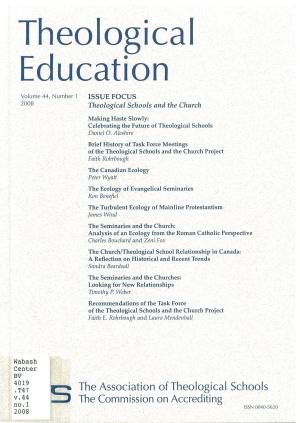
Journal Issue. Full text is available online.

Journal Issue.