Resources
Academic Motherhood tells the story of over one hundred women who are both professors and mothers and examines how they navigated their professional lives at different career stages. Kelly Ward and Lisa Wolf-Wendel base their findings on a longitudinal study that asks how women faculty on the tenure track manage work and family in their early careers (pre-tenure) when their children are young (under the age of five), and then again in mid-career (post-tenure) when their children are older. The women studied work in a range of institutional settings—research universities, comprehensive universities, liberal arts colleges, and community colleges—and in a variety of disciplines, including the sciences, the humanities, and the social sciences. Much of the existing literature on balancing work and family presents a pessimistic view and offers cautionary tales of what to avoid and how to avoid it. In contrast, the goal of Academic Motherhood is to help tenure track faculty and the institutions at which they are employed “make it work.” Writing for administrators, prospective and current faculty as well as scholars, Ward and Wolf-Wendel bring an element of hope and optimism to the topic of work and family in academe. They provide insight and policy recommendations that support faculty with children and offer mechanisms for problem-solving at personal, departmental, institutional, and national levels. (From the Publisher)
This book offers an accessible introduction and a comprehensive guide to a range of ideas on creativity in education. The book provides an overview of the major theories related to creativity and explores the implications for policy and practice. The popular topic of creativity has given rise to a large number of theoretical positions, sometimes contradictory or contested. This book clarifies and organises these approaches so that teachers understand where particular pedagogical and curricular practices originate and can develop them coherently. Topics covered include: Creativity in a social context Creativity and technology Creativity and curriculum planning Assessment and creativity Group creativity Managing creativity Tools of creativity The creative learner Creativity and cognition Creativity as expression Approaches to Creativity is an invaluable resource for those who wish to reflect on creativity and explore and engage in the modern discourse of education. It will be of value in teacher education, postgraduate studies, curriculum design and administration. (From the Publisher)
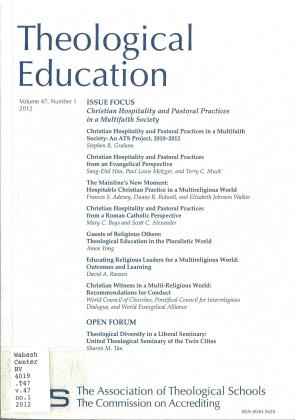
Journal Issue.
The hallmark feature of Winning Grants is its accessible, step-by-step approach to the grant-writing process, which will not change with the exception of a reordering of the steps for clarity and flow. It is within this established and very successful step-by-step framework that this new edition will address significant changes in the grantseeking landscape since the 3rd edition published in 2008. The book features new material on the role of technology (more foundations of all sizes going paperless and conducting application submissions via websites and/or specific forms online), the explosive growth and proliferation of donor advised funds (DAF's) the differences in approach between new projects and existing/continuing projects, and techniques for submitting grant proposals to larger foundations versus smaller foundations with little or no staff. In addition: A new section will be added on the role of new media and online social networks in the grantseeking and grantmaking process. A new section will be added on public funding, which has never been explored in previous editions but is a constant source of questions. The budget chapter will be overhauled, simplified and updated with current thinking and best practices A companion website will replace the CDROM and house all pertinent worksheets, examples and resources The Glossary and Terms of Use will be completely refreshed New proposal examples will be added including: general operating, new project, existing project, collaborative proposals. (From the Publisher)
This book is designed to help nonprofit organizations craft proposals for grants from foundations, companies, and government agencies. Ellen Karsh, a writer and former director of the Mayor's Office of Grants Administration, in New York, and Arlen Sue Fox, associate executive director for development at Sunnyside Community Services, also in New York, significantly update this edition from 2005 by including interviews with grant makers about how the current economic crisis is affecting their giving and how grant seekers can improve their chances of garnering support. The book includes a proposal checklist, a glossary of terms, sample grant forms, and a list of Web sites that provide information on grants offered by foundations, corporations, and the government. —from the Chronicle of Philanthropy (From the Publisher)
This book offers you no-frills essentials and down-and-dirty tricks for producing great grant-writing results. (From the Publisher)
Click Here for Book Review Abstract: Research has demonstrated that cooperative learning is one of the most highly effective teaching strategies, while new findings from neuroscience confirm the brain’s natural inclination to think socially. But simply putting students in a group is not enough. The authors of The Power of the Social Brain see “interdependent thinking” as the missing piece of the collaborative puzzle. This authoritative book provides practical strategies, informed by research from neuroscience and education, to help groups function more effectively and thoughtfully. By adding the “cognitive dimension” to cooperative learning, this book will help readers apply new protocols and strategies for more successful, affirming, and productive group work in classrooms and professional educational learning communities. Book Features: Fresh parallel insights on interdependent thinking from the arts, architecture, business, the community, and sports. Approaches for leveraging cooperative learning to improve thinking, problem solving, performance, and mutual support across a wide range of settings, including classrooms, teams, and professional learning communities. Instructional strategies from experienced classroom teachers for teaching young people to think and work interdependently at home and at school. Reflective questions at the end of each section to help guide thinking, stimulate conversation, and catalyze change within a learning community or classroom. (From the Publisher)
If leaders are made, not born, what is the best way to teach the skills they need to be effective? Today's complex times require a new kind of leadership--one that encompasses a mind-set and capabilities that can't necessarily be taught by conventional methods. In this unique leadership book, Sharon Daloz Parks invites readers to step into the classroom of Harvard leadership virtuoso Ronald Heifetz and his colleagues to understand this dynamic type of leadership and experience a corresponding mode of learning called "case in point." Unlike traditional teaching approaches that analyze the experiences of past leaders, case in point uses individuals' own experiences--and the classroom environment itself--as a crucible for learning. This bold approach enables emerging leaders to work actively through the complex demands of today's workplace and build their skills as they discover theory in practice. Through an engaging, you-are-there writing style, Parks outlines essential features of this approach that can be applied across a range of settings. In the process, Leadership Can Be Taught reveals how we can learn, practice, and teach the art of leadership in more skilled, effective, and inspired forms. Sharon Daloz Parks is director of leadership for the New Commons--an initiative of the Whidbey Institute in Clinton, WA. She has held faculty and research positions at the Harvard Divinity School, Harvard Business School, and the Kennedy School of Government at Harvard University. (From the Publisher)
Journal Issue.
Journal Issue.