Resources
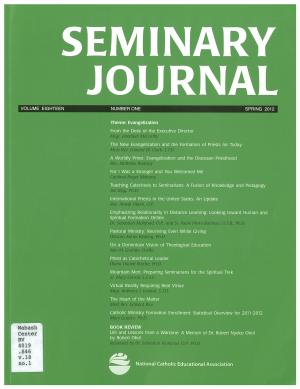
Journal Issue.
This book utilizes the theory of intersectionality to focus on the divergent identities and experiences of marginalized groups and to analyze the ways these experiences infiltrate the classroom. It examines teaching and learning as integrated and synergistic practices and highlights the personal and institutional power dynamics existing between scholars and students. Starting with the premise that institutions of higher education must pay attention to the ways intersecting identities and structures of privilege and disadvantage enter all educational settings, the contributors to this text represent a range of academic disciplines and they are both scholars and students. This approach demonstrates that ideas related to teaching and learning should not follow models that separate teachers, students, and disciplines, but rather that significant learning occurs in the areas where they overlap. Each chapter provides pedagogical strategies and methods for classroom practice that facilitate student learning, equitable classroom environments, and a social justice agenda. (From the Publisher)
- includes a framework for the sustainability of new educational paradigms based on the combination of formal and informal learning processes supported by network and mobile technology (NMT)  - provides a series of recommendations on how to use attitudes towards NMT gained outside the school to integrate formal and informal learning  - gives a teacher training approach on how to use network and mobile technology-based informal learning to enhance formal learning pathways An ever-widening gap exists between how students and schools use communication technology. Using Network and Mobile Technology to Bridge Formal and Informal Learning introduces new methods (inspired by ‘pedagogy 2.0’) of harnessing the potential of communication technologies for teaching and learning. This book considers how attitudes towards network and mobile technology (NMT) gained outside the school can be shunted into new educational paradigms combining formal and informal learning processes. It begins with an overview of these paradigms, and their sustainability. It then considers the pedagogical dimension of formal/informal integration through NMT, moving on to teachers’ professional development. Next, the organizational development of schools in the context of formal and informal learning is detailed. Finally, the book covers the role of technologies supporting formal/informal integration into subject-oriented education. (From the Publisher)
From the Publlisher A Curriculum of Imagination in an Era of Standardization In A Curriculum of Imagination in an Era of Standardization: An Imaginative Dialogue with Maxine Greene and Paulo Freire, explores with the reader what is meant by imagination in the work of Maxine Greene and Paulo Freire and their relevance in an era of increasingly standardized and highly scripted practices in the field of education. The author explores how imagination permeates every aspect of life with the intent to develop capacity with the readers to look beyond the taken-for-granted, to question the normal, to develop various ways of knowing, seeing, feeling, and to imagine and act upon possibilities for positive social and educational change. The principal aspect of the work illustrated in this book that distinguishes it from other work is that an “imaginary” dialogue between Maxine Greene and Paulo Freire runs through the book using actual citations from their work. Each chapter starts with such a dialogue interspersed with the works of others and the author’s critical autobiographical reflections. With a brief overview of the socio-cultural evolution of imagination from pre-literate times to the present, the author explores some of the current iterations of imagination including the eugenics movement and “dark” imagination, sensing gaps and creative/critical imagination, metaphors as the language of imagination and empathy as social imagination. Reflecting upon emerging tensions, challenges, and possibilities curriculum workers face in such an era of standardization, the author calls for a curriculum of imagination. After providing a brief overview of the socio-cultural evolution of imagination from pre-literate times to the present, the author looks at some of the current iterations of imagination, including the eugenics movement and “dark” imagination, sensing gaps and creative/critical imagination, metaphors as the language of the imagination, and empathy as social imagination. All of these ideas are then incorporated in a curriculum of imagination that is envisioned through Joseph Schwab’s four commonplaces of curriculum followed by a discussion of emerging tensions, issues and possibilities for praxis and scholarship in present and future inquiry.
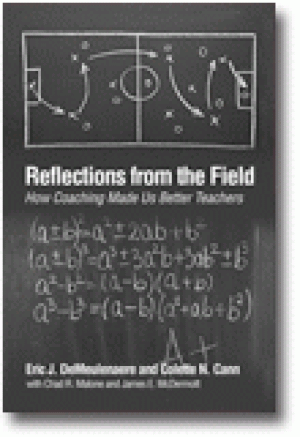
Click Here for Book Review Abstract: The coaching metaphor first entered the educational literature over twenty-five year ago when Ted Sizer urged classroom teachers to model the pedagogical relationship between coaches and athletes. Yet, since then, educators have rarely drawn direct lessons from the athletic arena for their practice... until now. DeMeulenaere, Cann, Malone and McDermott, in this groundbreaking analysis, explore the implications of athletic coaching for improved pedagogy. They offer concrete lessons and suggestions for best practices in the classroom. (From the Publisher)
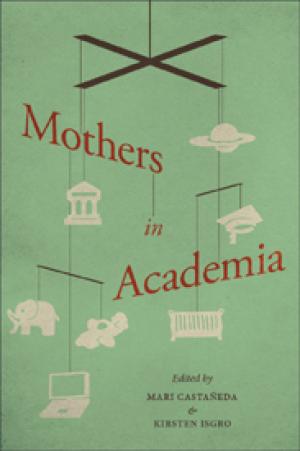
Featuring forthright testimonials by women who are or have been mothers as undergraduates, graduate students, academic staff, administrators, and professors, Mothers in Academia intimately portrays the experiences of women at various stages of motherhood while theoretically and empirically considering the conditions of working motherhood as academic life has become more laborious. As higher learning institutions have moved toward more corporate-based models of teaching, immense structural and cultural changes have transformed women’s academic lives and, by extension, their families. Hoping to push reform as well as build recognition and a sense of community, this collection offers several potential solutions for integrating female scholars more wholly into academic life. Essays also reveal the often stark differences between women’s encounters with the academy and the disparities among various ranks of women working in academia. Contributors—including many women of color—call attention to tokenism, scarce valuable networks, and the persistent burden to prove academic credentials. They also explore gendered parenting within the contexts of colonialism, racism, sexism, ethnocentrism, ageism, and heterosexism. (From the Publisher)

Journal Issue.

Because teachers' comments shape student writers Written from one teacher to another, Nancy Sommers’ Responding to Student Writers offers a model for thinking about response as a dialogue between students and teachers — and for thinking about the benefits of responding to writers as well as to their writing. Braddock Award–winning Nancy Sommers has taught composition and run composition programs for more than three decades; she currently teaches writing and mentors future teachers in Harvard’s Graduate School of Education. In this resource, which is based on her research and her travels to two- and four-year colleges and universities, she focuses on the roles that teacher feedback plays in writers’ development and offers strategies for moving away from responding as correcting. This is a free resource for instructors. (From the Publisher)
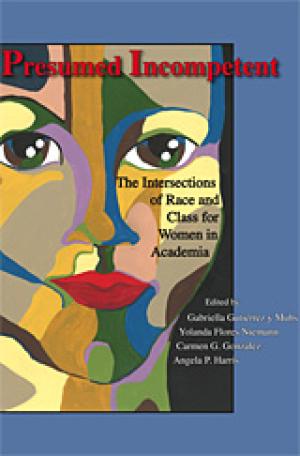
Presumed Incompetent is a pathbreaking account of the intersecting roles of race, gender, and class in the working lives of women faculty of color. Through personal narratives and qualitative empirical studies, more than 40 authors expose the daunting challenges faced by academic women of color as they navigate the often hostile terrain of higher education, including hiring, promotion, tenure, and relations with students, colleagues, and administrators. The narratives are filled with wit, wisdom, and concrete recommendations, and provide a window into the struggles of professional women in a racially stratified but increasingly multicultural America. (From the Publisher)

The study of classical Jewish texts is flourishing in day schools and adult education, synagogues and summer camps, universities and yeshivot. But serious inquiry into the practices and purposes of such study is far rarer. In this book, a diverse collection of empirical and conceptual studies illuminates particular aspects of the teaching of Bible and rabbinic literature to, and the learning of, children and adults. In addition to providing specific insights into the pedagogy of Jewish texts, these studies serve as models of what the disciplined study of pedagogy can look like. This book will be of interest to teachers of Jewish texts in all contexts, and will be particularly valuable for the professional development of Jewish educators. (From the Publisher)