Resources
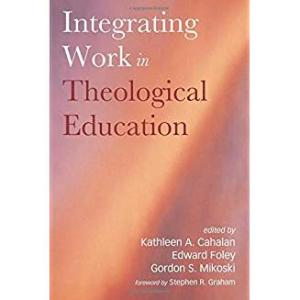
Click Here for Book Review If only we could do a better job of helping students at "connecting the dots," theological educators commonly lament. Integration, often proposed as a solution to the woes of professional education for ministry, would help students integrate knowledge, skills, spirituality, and integrity. When these remain disconnected, incompetence ensues, and the cost runs high for churches, denominations, and ministers themselves. However, we fail in thinking that integrating work is for students alone. It is a multifaceted, constructive process of learning that is contextual, reflective, and dialogical. It aims toward important ends--competent leaders who can guide Christian communities today. It entails rhythms, not stages, and dynamic movement, including disintegration. Integrating work is learning in motion, across domains, and among and between persons. It is social and communal, born of a life of learning together for faculty, staff, administrators and students. It is work that bridges the long-standing gaps between school, ministry practice, and life. It's a verb, not a noun. Here a diverse group of theological educators, through descriptive case studies, theological reflection, and theory building, offer a distinctive contribution to understanding integrating work and how best to achieve it across three domains: in community, curriculums, and courses. (From the Publisher)
2008 Wabash Center Workshop Series Teaching College Introductory Religion Courses From November 2007 to November 2008, the Wabash Center hosted a series of workshops at regional guild society meetings across the United States and Canada. These daylong workshops emphasized collaborative, hands-on work, and small group discussion on aligning the goals, design, and assessment of college introductory religion courses. Follow-up Department Grants Participants were eligible to apply for a non-competitive $2000 Introductory Course Department Grant to host a workshop on teaching introductory courses at their school or in their region. Teaching and Learning in College Introductory Religion Courses, by Barbara Walvoord (Blackwell, 2008). Participants received a copy of this book, which presents the findings from a 2-year empirical study of 533 introductory courses in theology and religion at 4-year colleges and universities, both public and private across the U.S. Complete List of Workshops San Diego CA – November 16, 2007 National Conference of the AAR and SBL Workshop Leaders: Eugene Gallagher, Connecticut College Priscilla Pope-Levison, Seattle Pacific University Rebecca Todd Peters, Elon University Atlanta, GA - March 7, 2008 Southeastern Commission for the Study of Religion – Regional Meeting of AAR, SBL and ASOR Workshop Leaders: Katherine Jones, Wofford College Rebecca Todd Peters, Elon University Tina Pippin, Agnes Scott College David Ratke, Lenoir-Rhyne College Michelle Tooley, Berea College Dallas, TX - March 14-15, 2008 Southwest Commission on Religious Studies-Southwest Regional Meeting of AAR, SBL, and ASOR Workshop Leaders: Katherine Jones, Wofford College Lucinda Nolan, Catholic University of America John Starkey, Oklahoma City University St. Paul, MN - March 28, 2008 Upper-Midwest Regional Meeting of AAR and SBL Workshop Leaders: Lori Hale, Augsburg College Martha Reineke, University of Northern Iowa Elna Solvang, Concordia College (MN) Kimberly Vrudny, University of St. Thomas (MN) River Forest, IL - April 4, 2008 Midwest Regional meeting of AAR Workshop Leaders: Shane Kirkpatrick, Anderson University Clodagh Weldon, Dominican University Martha Reineke, University of Northern Iowa Newberg, OR - May 2 Pacific Northwest Regional meeting of AAR, SBL, and ASOR Workshop Leaders: Priscilla Pope-Levison, Seattle Pacific University Richard Steele, Seattle Pacific University James Wellman, University of Washington Worcester, MA – May 17, 2008 College of the Holy Cross Workshop Leaders: Rosemary Carbine, Holy Cross Eugene Gallagher, Connecticut College Vancouver, BC – June 3, 2008 Congress of the Humanities and Social Sciences Workshop Leaders: Katherine Jones, Wofford College David Ratke, Lenoir-Rhyne College Chicago, IL - October 31, 2008 AAR National Meeting Workshop Leaders: Lucinda Nolan, Catholic University of America Priscilla Pope-Levison, Seattle Pacific University Boston, MA - November 21, 2008 SBL National Meeting Workshop Leaders: Eugene Gallagher, Connecticut College Elna Solvang, Concordia College (MN) Questions Please Contact: Paul Myhre Associate Director, Wabash Center myhrep@wabash.edu 1-800-655-7117
2016-17 List of Peer Mentoring Clusters Funds for mid-career faculty of color who have been participants in a past Wabash Center workshop or colloquy More about the Peer Mentoring Program List of 2016-2017 Peer Mentoring Clusters Sustaining a Sense of Vocation through Latino/a Peer Mentoring Gregory Cuéllar, Austin Presbyterian Theological Seminary (Cluster Leader) Cláudio Carvalhaes, McCormick Theological Seminary Angela Tarángo, Trinity University Christopher Tirres, DePaul University Santiago Slabodsky, Hofstra University Working Together as Colleagues for Mutual Mentoring & Success Miguel De La Torre, Iliff School of Theology (Cluster Leader) Luis León, University of Denver Albert Hernández, Iliff School of Theology George Tinker, Iliff School of Theology Jennifer Leath, Iliff School of Theology Michele Watkins-Branch, Iliff School of Theology Keeping the Faith: Teaching Hard Truths in Troubled Times Stacey Floyd-Thomas, Society of Race, Ethnicity, and Religion (Cluster Leader) Anthony Pinn, Rice University Juan Floyd-Thomas, Vanderbilt University Divinity School Blanche Cook, Wayne State University Mentoring for Interdisciplinary Latinx Religion Scholars Jacqueline Hidalgo, Williams College (Cluster Leader) Neomi DeAnda, University of Dayton Peter Mena, Phillips Theological Seminary Navigating Mid-Career in Teaching and Research for Korean Women Faculty Wonhee Anne Joh , Garrett-Evangelical Theological Seminary (Cluster Leader) Seung Ai Yang, Chicago Theological Seminary Boyung Lee, Pacific School of Religion Nami Kim, Spelman College K. Christine Pae, Denison University Jin Young Choi, Colgate Rochester Crozer Divinity School Philadelphia Peer-to-Peer Mentoring Cluster Nyasha Junior, Temple University (Cluster Leader) Emerson Powery, Messiah College AnneMarie Mingo, Pennsylvania State University Stephanie Crumpton, Lancaster Theological Seminary Richard Newton, Elizabethtown College Seen Yet Unseen: Underrepresented Asian American Faculty Hyun Paul Kim, Methodist Theological School in Ohio (Cluster Leader) John Ahn, Howard University School of Divinity Bo Lim, Seattle Pacific University Roger Nam, George Fox Evangelical Seminary Paul Cho, Wesley Theological Seminary Mentoring Through Marginalized Realities: Female Faculty of Color at Beloit College Debra Majeed, Beloit College (Cluster Leader) Jennifer Esperanza, Beloit College Nicole Truesdell, Beloit College Lisa Anderson-Levy, Beloit College Sonya Maria Johnson, Beloit College Peer Mentoring Cluster Carolyn Medine, University of Georgia (Cluster Leader) Melanie Harris, Texas Christian University Helen Rhee, Westmont College Swasti Bhattacharyya, Buena Vista University Teaching the Bible in a Rapidly Changing World Kenneth Ngwa, Drew Theological School (Cluster Leader) Aliou Niang, Union Theological Seminary (NYC) Andrew Mbuvi, Shaw University Divinity School AliceYafeh-Deigh, Azusa Pacific University Discernment in These Times: Career Explorations of Four Teachers Who Lead While Called to Follow Stephen Ray, Garrett-Evangelical Theological Seminary (Cluster Leader) Nancy Westfield, Drew University Theological School Barbara Holmes, United Theological Seminary Twin Cities Dale Andrews, Vanderbilt Divinity School African American Women Negotiating Academia with Self-Care Mitzi Smith, Ashland Theological Seminary (Cluster Leader) Sheila Winborne, Northeastern University Janice McLean-Farrell, City Seminary of New York Peer Mentoring Cluster Julia Speller, Chicago Theological Seminary (Cluster Leader) Lee Butler, Chicago Theological Seminary JoAnne Terrell, Chicago Theological Seminary Christopher Ringer, Chicago Theological Seminary Cultural Taxation on African American Mothers in Theological Education Andrea White, Union Theological Seminary (NYC) (Cluster Leader) Stephanie Buckhanon Crowder, Chicago Theological Seminary Monica Coleman, Claremont School of Theology Yolanda Pierce, Princeton Theological Seminary Chanequa Walker-Barnes, McAfee School of Theology More about the Peer Mentoring Program Additional questions, please contact: Dr. Tim Lake laket@wabash.edu Associate Director, Wabash Center
Grants for mid-career faculty of color who have been participants in a past Wabash Center workshop or colloquy More about the Peer Mentoring Program List of 2017-2018 Peer Mentoring Clusters Womanist Scholars in Contemplative Conversation for Strengthening the Soul Nancy Lynne Westfield, DrewTheological School (Cluster Leader) Annie Lockhart-Gilroy,DrewTheological School Kimberleigh Jordan, DrewTheological School Lisa Thompson, Union Theological Seminary, NY How Shall We Sing the Lord’s Song in a Strange Land? Peer-Mentoring for Vocational Longevity among Caribbean American Biblical Scholars Margaret Aymer Oget,Austin Presbyterian Theological School(Cluster Leader) Steed Davidson,McCormick Theological Seminary Mignon Jacobs,Fuller Theological Seminary Althea Spencer-Miller,Drew University Womanist Separation for Wholeness Wilda Gafney, Brite Divinity School at Texas Christian University (Cluster Leader) Pamela Lightsey, Boston University School of Theology Valerie Bridgeman, Fuller Theological Seminary Peer Mentoring Cluster: Transnational Korean Women Faculty Mentoring K. Christine Pae, Denison University (Cluster Leader) Jin Young Choi, Colgate Rochester Crozer Divinity W. Anne Joh, Garrett-Evangelical Seminary Nami Kim, Spelman College Boyung Lee, Pacific School of Religion/Iliff Seung Ai Yang, Chicago Theological Seminary Teaching as Racialized Bodies Grace Kim, Earlham School of Religion (Cluster Leader) Grace Kao, Claremont School of Theology Linda Thomas, Lutheran School of Theology at Chicago 1903: Returning to the Past, Negotiating the Future Roger Nam, George Fox University (Cluster Leader) John Ahn, Howard University Divinity School Paul Cho, Wesley Theological Seminary Paul Kim, Methodist Theological School in Ohio Bo Lim, Seattle Pacific University Being a Paracletos to One Another: Peer Mentoring Cluster for Four West-Coast Korean-American Biblical Scholars Eugene Park, San Francisco Theological Seminary/Graduate Theological Union (Cluster Leader) Uriah Kim, Graduate Theological Union Kyong-Jin Lee, Fuller Theological Seminary Janette Ok, Azusa Pacific Seminary at Azusa p.p1 {margin: 0.0px 0.0px 0.0px 0.0px; font: 15.0px Arial; -webkit-text-stroke: #000000} span.s1 {font-kerning: none}

On election night last year when Donald Trump won the presidential election, I was traveling in Greece visiting the historical and religious sites. Several days before the election, I visited the Acropolis and climbed up Mars Hill where Paul delivered his sermon to the Athenians (Acts 17:22-31). The fact that I was in Athens, the cradle of Western democracy, prompted me to think about the development of democratic institutions and their relationships to an empire. The word “democracy” in Greek combines the elements dêmos and krátos, and means literally, “people power.” However, only adult male citizens who owned land could participate in Athenian democracy. Women, slaves, children, and lower-class people were excluded. Athens once had the strongest military power among the Greek city-states and harbored imperialistic impulses. The Delian League, created by the Athenians in the 5th century BCE, captured cities, colonized and enslaved peoples. Athens suppressed revolts among the League’s members and collected dues from them in exchange for protection. In our modern day, democracy has not prevented countries from turning into imperialistic powers. The British once ruled an empire so vast that the sun never set on the empire. While British subjects enjoyed democracy at home, colonized subjects did not have self-autonomy and had to obey British rule and laws. In the US, Donald Trump’s slogan “Make America Great Again” appealed to deep-seated American imperialistic desire, especially among non-college educated white men. I began teaching a class on liberation theology shortly after Trump’s inauguration. My reflection on the relationship between democracy and empire prompted me to find ways to heighten my students’ consciousness about the image of the US and the impact of American policies abroad. During our first class, we discussed the changing political and social contexts in which we studied liberation theology. There were a significant number of international students from Asia and Africa in the class. I invited them to share reactions to Trump’s election from news reports from their countries. I also asked them to share their thoughts on the slogan “Make America Great Again.” A number of them said that the US is already the most powerful country and has a major effect in their own countries. They were concerned about how Trump’s presidency would affect global stability and foreign policies. After Hillary Clinton lost the election, some commentators discussed what Clinton’s loss would mean for the future of feminism. Others wondered why her coalition of women, racial and ethnic minorities and lesbian, gay, bisexual, and transgender people could not pull off a win. I discussed with students Columbia University professor Mark Lilla’s widely read essay “The End of Identity Liberalism.”[1] He warns that American liberalism has focused too much on identity politics and diversity issues, such as race, gender, and sexuality. This focus is disastrous for democratic politics for it fails to provide a unifying principle. Instead, he argues that we have to engage more in conversations about class, war, political economy, and the common good. Lilla’s essay has created a lot of debates, and some said that “identity politics” addresses real problems of discrimination. In our class discussion, I helped students to see two important points. First, we have to take an intersectional approach and see the various forms of oppression as mutually constitutive. Second, we have to avoid the tendency of focusing too narrowly on identity issues in the US, without paying attention to larger social, economic, and political forces shaping the world at the macro-level. Commentators outside of the US have taken the election of Donald Trump and raised it up as an example of how democracy can become dysfunctional. Some of my students were shocked when Trump was elected, and his first 100 days in office have created chaos and presented us with “alternative truths.” When my students felt depressed by the current political situation, I reminded them that democracy is a project and it requires vigilance in protecting it. We should not think that American democracy is the best institution, for it has been polluted by big money and big donors. Trump said during his campaign that he was free from Wall Street’s influences. But his cabinet and close advisors include many billionaires and people from Goldman Sachs. His currently proposed health care policy and tax reforms will benefit the rich and take away from the elderly, the sick, and the poor. I reminded students that democracy has been used as an ideology to further the cause of empire. In the 19th century, the spread of Christianity was part and parcel of the “civilizing mission” of the West. In the 20th and 21st centuries, the protection of democracy has been given as a reason for military intervention and regime change. In the name of democracy, the U.S. has supported military coups, toppled governments, and created regional animosity and instability. Democracy has taken several centuries to develop in Western countries, and cannot be superimposed by power and might from without. Within the course of one week, Trump ordered a military strike in Syria and the U.S. dropped a 22,000-pound bomb on ISIS forces in Afghanistan. It is vitally important to educate students to become global citizens who understand the consequences of US actions in the wider context of the world. A good beginning is to understand how democracy and populism can be used to serve imperial interests. [1] Mark Lilla, “The End of Identity Liberalism,” New York Times, November 18, 2016, https://www.nytimes.com/2016/11/20/opinion/sunday/the-end-of-identity-liberalism.html.
Lack of awareness about what Islam is and how its followers are religiously motivated to act, coupled with heightened tensions during the 2016 presidential campaign about the patriotism of American Muslims, led me to offer “Arabs and Muslims in the Media” as a first-time offering this semester. The twenty-one students who registered for the seminar include seven who have yet to declare a major, nine who registered for credit through the Critical Identities Studies (CRIS) Program, first-year Beloiters, graduating seniors, an exchange student from Ireland, and four born into Muslim households. Both of my teaching assistants had taken a minimum of one course with me that featured at least one section on the teachings or rituals of the world’s fastest growing religion. “Arabs and Muslims in the Media” was the first exposure to Islam, or to any of the daily realities of Muslims, for the majority of the class. We opened the seminar by engaging with Linda Martin Alcoff’s “The Problem of Speaking For Others,” an essay that challenged students to reflect upon their own positionality and privilege as they approached the two major assignments: a 200-word entry for this blog and a PSA about Islam and/or Muslims. Later in the first week, the class raised questions about the essay and their own insecurity about appearing to “speak” for followers of Islam. The sentiments of one student sums up the concerns of the rest: “I never thought about the impact of my own words on this level before, or how wrong we can be about what we think we know. I’m worried that I am not qualified to complete the final assignment.” To address such concerns, students received a brief survey of Islamic history and the emergence of Muslim communities in the U.S., along with an introduction to beliefs and practices, and the role of gender and sexuality, in Islam. Throughout the seminar, we critiqued a variety of visual and written representations. Guiding our journey were two primary texts: Evelyn Alsultany, Arabs and Muslims in the Media, and Moustafa Bayoumi, How Does It Feel to be a Problem: Being Young and Arab in America. Students reflected on the readings in various ways. Ryan, for one, noted, “By reading [Bayoumi’s work], I was opened up to the realities of young Arabs in America. I was able to read the real struggles they face from these negative stereotypes.” We watched a number of films, Youtube videos, and documentaries including “Frontline: Muslims,” “Persepolis,” “Jihad for Love,” and “The Kingdom of Heaven.” Students were also directed to analyze and review a film, selected from a list of more than 100, whose plots/characters featured Muslims and/or Islam. Interestingly, nearly half the class zeroed in on four: “Malcolm X,” “Slumdog Millionaire,” “The Battle of Algiers,” and “Dirty Pretty Things.” Our TAs, Grace Gerloff, and Joshua Randolph, also created a demo PSA that unpacked the concept of jihad. Their efforts helped students visualize what they could accomplish. While I focused on potential content for both the blog entry and PSA, Grace and Joshua mentored students on technical aspects and how to focus on a single idea. Students will present their PSAs during a public forum on May 5. Here’s a selection of student blog entries. Some students focused on the content of what they learned: Nikki: “Many Americans seem to view the hijab as a plea for help by its wearer, as though it were a sign of oppression rather than religious expression.” Constance: “The Qur’an states that both men and women should dress modestly, but what modesty means is up to interpretation.” Sasha: “Many people think that hijab refers to a specific style of garment worn by Muslim women but in reality, the concept of hijab is present in both Christianity and Judaism as well as other religions and cultures, just under different names.” Alberto: “In the Qur’an, Muslims are reminded that they are not the only people of God.” Diego: “The term “Allahu Akbar” is an Islamic phrase that translates to ‘God is Great.’ This is a phrase that is used in celebration, prayer, happiness, and many other occasions to thank God. However, the phrase is commonly tied only to terrorists.” Charlie: “The Angel Gabriel made me reevaluate the way that I was looking at Islam. Though the connection of Islam to Christianity and Judaism was something I had talked about before, this was the first explicit example I had seen that explicitly linked the three Abrahamic religions.” Chris: “The religion we have been told is the ‘enemy’ of the West, is in actuality more similar to our Christianity than we would currently like to believe.” Joe: “In high school, I enjoyed a series of action novels where the protagonist was an American special forces operative fighting to protect American interests from his Muslim enemies.These books contained blatant generalizations about the violent nature of Islam. I didn’t necessarily believe these statements, but I never questioned them.” Ryan: “By taking this class, I have been given great resources about the Muslim religion and the Quran which have allowed me to be able to pick apart what I have been taught and relearn the truth about Muslims and their beliefs.” Seamus: “This course taught me that no matter how many statistics you may know, they are not nearly as valuable as discourse, and the various identities involved, and the perspectives that they bring.” Jessica: “I personally knew nothing about Islam or any of its teachings before this class and the one thing I was very interested in was the hijab. In papers and stories, it is almost portrayed as a sign of oppression, which is not the case at all. I learned from this class the power of personal identity.” Other students reflected upon their own socialization: Kirsten: “There has been a call in the West to ‘save the oppressed Muslim women’ because of the belief that Islam is an oppressive religion. When I was younger, I fell for this ploy and believed that Islam required women to dress in a specific way.” Katlyn: “I grew up in a conservative household, I heard considerable stereotypes of Muslims. It narrowed my idea of women in Islam.” Diane: “I took this course because I thought it would be a great way to reflect and dive into how I might be able to navigate stereotypes and deep-rooted, false narratives as an aspiring journalist.” Hana: “I’ve learned that being Muslim and Anti-Zionist should not automatically qualify me as being anti-Semitic.” Still, others reflected upon the impact of technology on their new knowledge: Hoodish: “This class taught me that censored media is indeed very destructive. I intend to confront these people by making them acknowledge their biases towards Islam.” Ashley: “Video, specifically, has allowed me to learn about the different struggles that Muslims face depending upon their class, nationality, sect, immigration status, gender, sexuality, age, race, and family status.”
Conferences and Larger Gatherings Hosted by the Wabash Center Most of our programming is designed for small groups, hosted at our facilities on the Wabash College campus, and enrolled through a competitive application process. Occasionally we host larger gatherings on specific a specific pedagogical topic of pressing concern. AAR & SBL 2025 Annual Meeting (Boston) 2024 Annual Meeting (San Diego) 2023 Annual Meeting (San Antonio) 2021 Annual Meeting (Virtual sessions) 2020 Annual Meeting (Virtual) 2019 Annual Meeting (San Diego) 2018 Annual Meeting (Denver) 2017 Annual Meeting (Boston) ETS Sessions 2019 Annual Meeting (San Diego) 2018 Annual Meeting (Denver) 2017 Annual Meeting (Providence, Rhode Island) Conferences for Doctoral Programs 2016 Conference for Doctoral Programs 2014 Conference for Doctoral Programs 2012 Conference for Doctoral Programs 2008 Conference for Doctoral Programs 2006 Conference for Doctoral Programs 2004 Conference for Doctoral Programs 2002 Conference for Doctoral Programs 1999 Conference for Doctoral Programs 1996 Conference for Doctoral Programs Special Topic Conferences 2009 Pedagogy of Online Theological Education 2009 Theology & the Arts Consultation 2006 Pastoral Leadership for Public Engagement 2006 Women as Teachers and Mentors 2005 Theological Faculty and Librarians 2003 Teaching and Technology 2002 Teaching and Technology Graduate Program Teaching Initiative A grant initiative and consultation series that ran from 2011 through 2016. 2014 GPTI Summative Conference 2012 GPTI Summative Conference (November) 2012 GPTI Summative Conference (April) Teaching the Intro Course Conferences following the publication of Barbara Walvoord's Book, Teaching And Learning In College Introductory Religion Courses (Blackwell 2008), including a series of workshops at regional and national meetings of the AAR-SBL and on college campuses around the country. 2008 Teaching College Introductory Religion Courses 2005 The Introduction to Religion Class Educating Clergy Conferences with representatives from over 90 theological schools to discuss the pedagogical implications of the book published by the Carnegie Foundation for the Advancement of Teaching, Educating Clergy: Teaching Practices and Pastoral Imagination, by Charles R. Foster, Lisa Dahill, Larry Golemon, and Barbara Want Tolentino (Jossey-Bass, 2006). 2006 Educating Clergy Conferences Complete List of Past Workshops, Colloquies and Conferences
Hosting Sessions on Teaching at Academic Conferences and Guild Meetings Over the years, the Wabash Center has attended and hosted a variety of sessions, meals, and other events at a variety of conferences. AAR-SBL 2025 Sessions on Teaching Wabash Center’s Events at the 2025 AAR & SBL Annual Meetings Read more Past Conferences of the AAR-SBL Sponsoring Sessions and Hosting Events Our most consistent and robust programming at academic conferences has been at the annual AAR-SBL Conference. Read more Contact Sarah Farmer, PhD Associate Director farmers@wabash.edu Meetings we often sponsor: AAR Annual Meeting June Sessions Canadian Federation for the Humanities and Social Sciences Evangelical Theological Society Religious Education Association Society for the Arts in Religious and Theological Studies (SARTS) Society of Christian Ethics
I am convinced that all eurocentric philosophical thought and movements – yes all – are oppressive to those who come from colonized spaces. When I contemplate every philosophical contribution made by the so-called Age of Enlightenment, it becomes obvious that the French Revolution’s battle cry for Liberté, Egalité, Fraternité was never meant for her future colonies in Vietnam or Algiers. Hegel’s entire endeavor for a historical truths rests on the presupposition of the superiority of the Europeans and the inferiority of non-whites. In his 1824 book, Vorlesungen über die Philosophie der Weltgeschichte, Northern Europe - specifically the German Spirit - is the Spirit of the new World whose aim becomes the realization of absolute Truth as the unlimited self-determination of Freedom, a Freedom which has as its own absolute form itself as its purport (341). Such a Freedom was never meant for the “inferior” in need of civilization and Christianization. Even the U.S. rhetorical end to our daily oath of “liberty and justice for all” was never meant to include those from African descent, nor their neighbors south of the border. The “all” in eurocentric philosophical thought just meant whites, definitely not her colonies or those among the colonized who followed their stolen raw material and cheap labor to the center of Empires. Abstract philosophical thought must be constructed to reconcile the quest for liberty and equality among whites with their purposeful exclusion of those whom they colonized. The issue is not so much hypocrisy on the part of the colonizer spewing rhetoric about liberty; but rather, philosophically justifying oppression through freedom-based language. The move to the abstract serves the crucial purpose of obscuring the economic need of dispossessing and disenfranchising the colonized and their descendants. Universal eurocentric celestial concepts of rights blinds the oppressed to the concrete feet-on-the-ground reality of oppression at the hands of such freedom loving whites. Over 125 years ago, José Martí saw the danger of adopting a eurocentric worldview detrimental to the existential intellectual space occupied by the colonized. He called the oppressed of the world to create a new way of thinking based on our indigeneity. To make our wine out of bananas (“Nuestro vino de plátano”) means such a wine would naturally be sweet. But if we instead make our wine out of the fruits of Europe and it becomes sour (“y si es agrio”), then we are stuck with it (“es nuestro vino”). Eurocentric philosophical thought not only sours our wine but also our teaching. To build liberative edifices on eurocentric philosophical foundations reproduces the same consequences as pouring new wines into old skins. Even our beloved liberation theological movements have, more often than not, looked toward their oppressors for means of expression. How much richer would our liberative thinking have been if we looked to our own original thinkers like Martí rather than the European liberal thinkers of the time? When those of us seeking a liberative pedagogical methodology rest upon eurocentric philosophical paradigms, we construct resistance on shifting sand, contributing to our own oppression. And worse, when we teach in our classrooms our resistance to eurocentric thought, regardless of how loud, fearless, and passionate we may be, we are undermining our students’ ability to bring about subsistent change. The difficult task before us who call ourselves liberative scholar-activists is how do we think new thoughts that are less a response, and more an indigenous radical worldview different from the normative philosophies which have historically justified our subservient place within society. True, we must learn the Eurocentric canon if we hope to obtain PhDs and be considered learned, even though our white colleagues need not bother with the discourses occurring on their margins. But rather than looking at the esteemed eurocentric thinkers who have historically written philosophies to remove us from humanity and the fruits of liberation, what would happen if we possessed the dexterity to teach what the children of the colonizers legitimized and normalized as well as a different worldview based on lo cotidiano - the every day of those purposely written off Hegel’s metaphysical dialectical history. To teach from the margins disabuses the regurgitation of foreign and deadly philosophical paradigms in favor of those which resonates with the least of these. Not solely to understand the world – as important as this may be, but also for its transformation.

Due to the diversity of Muslims in the southern Ontario region, my classes on Islam always bring together students from a variety of different sectarian, legalistic as well as interpretive, understandings of Islam. For instance, in my “Introduction to Islam” course, one can find Sunnis from various regions of the world, Shias from Ithna al-Ashariyya and Ismaili backgrounds, and Ahmadiyya Muslim students as well – all in one classroom. With such diversity, intra-Muslim dialogue becomes one of the best pedagogical tools I can use to help all of my students (Muslim and non-Muslim alike) understand the complexities of Muslim identity and the great debates that have shaped Islamic thought. While teaching about these many facets of internal Muslim diversity can be a delicate matter and care must be taken to create an atmosphere of curiosity and mutual respect, engaging the real-life distinctions present among Muslims in the classroom can bring the subject matter to life in remarkable ways. Muslim differences are on display quite regularly in the daily news, yet much Muslim discourse tends to downplay their significance. In classes, I try to cultivate greater openness to exploring these differences in an effort to understand them better and build relationships, rather than to dwell on them from a particular partisan standpoint. I point out that for centuries sectarian differences have remained far more resistant to accommodation than differences in jurisprudence. Despite contemporary voices calling for an Islamic ecumenism that embraces Shia as well as Sunni practitioners, early differences over religious leadership have led to enduring intramural rivalries, exacerbated in the last decade by patterns of sectarian mobilization amidst protracted power struggles in present-day Iraq, Syria, and Lebanon as well as simmering tensions in Pakistan, Bahrain, and Saudi Arabia. In order to unpack this history, students learn that the past politicization of sectarian differences has left an imprint on communal attitudes, beliefs, and narratives. In the absence of a robust, well-developed framework for Islamic ecumenism, conflicts rooted in problems of theological, as well as socio-political and economic exclusion, have the potential to cascade in destructive ways, with events in one country or context impacting tensions in other regions. Since the regular class sessions are devoted to helping the students navigate these historical tensions intellectually, I also facilitate supplementary “dialogical” sessions for interested students who would like to explore classroom topics in more detail. These sessions enable some of the best conversations about differences to emerge. For instance, I always open the dialogical session with a student asking a question or sharing an experience. In one session, a student who was a leader of my university’s Muslim Student Association (MSA) started the conversation by stating, “I cannot pray behind a Shi‘ite Muslim.” This statement, of course, was met with a strong reaction from one of my Ismaili students who was himself a member of the Ismaili Student Association (ISA). For the rest of the session, we had a very important sharing of different understandings of Muslim prayer and the meaning infused in different forms of prayer. From this one session, a dialogue between the MSA and the ISA started. We then formed a weekly dialogical session in which the leaders of these two groups and some of their members came together to discuss differences and similarities in rituals, beliefs, and understandings of history. After a year of dialogical sessions, the same student who had stated that he could not pray behind a Shi‘ite Muslim shared with me that “every chance I get I try to pray with a Shi‘ite Muslim.” Another pedagogical tool that I like to use when teaching about sectarian differences in Islam is taking my students on a field trip to the Aga Khan Museum of Islamic Arts in Toronto, the first museum in North America dedicated exclusively to Islamic Arts. Instead of learning through a lecture or textbook about Islam, students learn through rare art, artifacts, material culture, and stories about the different historical circumstances within which these objects were created. They also learn about the Ismaili Muslim community and Prince Karim Aga Khan IV, who is the current spiritual leader of Ismaili Muslims. Known internationally for his various charitable works and developmental projects (the Aga Khan Development Network is a well-respected NGO in the development field) and in Canada for opening the Centre for Pluralism in Ottawa as well as the Aga Khan Museum and Ismaili Centre in Toronto, the man whom Ismailis regard as their 49th Imam provides a counterpoint to many non-Muslim preconceptions about Muslims. Although the Aga Khan Museum highlights particular Ismaili and Shia experiences, it also sheds light on the character and internal diversity of traditional Islamic civilization in a much broader sense. During the field trip, students experience a general tour of the permanent collection. This enables them to learn about many artistic, intellectual, and scientific heritages of Islam and its many cultures, from North Africa to Southeast Asia. In addition, the Aga Khan Museum offers regular exhibits of contemporary Muslim art as well as programs featuring international artists and scholars, thus affording opportunities to learn about more recent manifestations of Muslim music, poetry, and thought through mediums as diverse as workshops, lectures, live performances, and film screenings. Since the museum is located adjacent to the Ismaili Centre, students also get a tour of a distinctive space for community assembly and worship, with its unusual architecture, a library, and a jamat khana (prayer hall) for daily prayers. Muslim and non-Muslim students alike testify that this field trip offers a rich, immersive experience and encourages them to reflect on Islamic religious and cultural heritages in new and exciting ways.