Resources
Former dean of the Harvard Graduate School of Education, Jerome Murphy writes as a seasoned educator about how to best care for yourself as a teacher in the midst of daily stress. This book applies to the stress of academia as well as ministry. It is a book I would recommend to students preparing to teach and to serve in ministerial vocations. Murphy highlights the source of stress that afflicts educators: our own responses to stress. When difficult situations arise, we tend to respond in one of three self-defeating ways: ruminating on the negative, rebuking ourselves, or resisting our emotions. Murphy draws from the literature on mindfulness to point out the health benefits of becoming aware of our emotions in the moment and accepting our shortcomings. As an alternative to the cycles of rumination, rebuke, and resistance, Murphy offers a list of instructions that help educators focus on their own values, summarized by the acronym “MY DANCE.” Each letter represents a phrase discussed in the following chapters. “Minding your values” advocates understanding our own life goals and naming our best version of ourselves. Knowing who we want to be helps us evaluate whether our actions are in line with our values. The next chapter, “Yield to now,” captures the importance of in-the-moment mindfulness, trying to stay present to ourselves and others, and includes exercises for practicing mindfulness. “Disentangle from upsets” also highlights the role of mindfulness in preventing us from being consumed by our stress. The chapter titled “Allow unease” instructs readers to attend to the discomfort of negative feelings. “Nourish yourself” emphasizes intentional self-care and practices of gratitude, while “Cherish self-compassion” takes self-care to a deeper level. The last element of the acronym is “Express Feelings Wisely.” In each of these chapters, Murphy brings in personal anecdotes from years of administration and leading workshops for teachers and school principals. He intersperses these lessons with some of his own personal struggles, such as his wife’s diagnosis with Alzheimer’s disease. In these glimpses of personal sharing, the reader gets a sense of how these practices of self-care have been imperative for someone who has transitioned from being a dean of a Harvard graduate school to a full-time caregiver for his wife of nearly fifty years as she slowly loses her ability to recognize him. This book draws our attention to the humanity of all educators: we are not simply vessels of information or mediums of higher learning. Each person has his or her own struggles in living daily life, on top of the demands of our teaching vocations. Attending lovingly to our limitations and caring for ourselves in the midst of these struggles is crucial if we are to be effective as teachers and healthy individuals. I recommend this book to anyone who wants to learn how to better care for themselves in the midst of life’s demands.
I was recently talking with my former doctoral advisor about a new position I accepted with the university where I teach. His seminary is exploring innovative ways of delivering courses, and I wanted his counsel as I investigate moving my programs completely online. As we were talking, he simply said, “The educational landscape has changed, and we must change with it if we are to survive.” This is something that I am fully aware of and advocate for. However it meant something more profound coming from someone who I respect, someone who has been at the forefront of practical ministry education and yet often concedes that keeping up today is more difficult than ever. It is time to change. And not just our feelings on distance or online education, for that is now simply a question of location. Education occurs in the classroom, and that classroom may be in a traditional face-to-face format or an online format or both. In short, distance or online education is here to stay. The challenge that is before us remains a consistent two-fold challenge: what content will we deliver, and how will we deliver that content. This two-fold challenge is both a matter of content and context (or community). It is because of this essential nature of education that constructivism has maintained such a central theory of education. Originally devised as an educational theory by John Dewey and provided a psychological foundation by Jean Piaget, constructivism is a process where a learner constructs meaning based on their subjective perception of objective reality. Briefly stated, constructivism is an active process where learners construct meaning together in a learning community through their shared experience rather than simply receiving processed information from an expert. Content is gauged against the individual and shared experiences of the learning community as meaning is generated out of conversation, collaboration, conflict, and consensus. All of this is essential to understanding the profound nature of this short collection of essays which is the focus of this review . Stabile and Ershler, the editors, have gathered together a team of educational constructivists to assess the theory’s continued validity in this social media era. By their own admission, “Social media is constructivist” because it “embodies constructivism itself as the users engage in the development of their own meaning” (1). While this volume tackles the enormous complexity that is the digital village, the technical use of social media is not the focus here. It is assumed that faculty are tweeting, instagramming, snapping, and pinning along with their students (or, at least, are aware that this is how people communicate today). No, the focus is on whether constructivism remains a viable option for engaging the learning process. Each of the authors seems to give a shared assent, then, to two assertions: (1) the social media era is inherently invested in crafting meaning through the shared experience of community engagement; therefore (2) constructivism remains a (if not the) viable learning theory because of its focus on crafting meaning through shared experience of community engagement. If we who teach undergraduate, graduate, doctoral, and post-doctoral students are going to remain relevant, then we must no longer see ourselves as experts who disseminate information to our paying customers. We must see ourselves as conversation partners, community facilitators, and wise mentors. We must begin constructing the classroom around a workable theory that respects our current digital age. Thankfully, for those who are unfamiliar with learning theories, Stabile and Ershler offer a timely and thoughtful collection of essays to introduce the reader to an essential theory that is still as useful today, if not more so due to the connectivity of the social media age, as it was when crafted nearly a century ago.
This is a book for assessment professionals; it is the rare teacher in higher education who would be able or willing to get this deep into the weeds of higher education assessment design and deployment. Many of the fifty-two authors contributing to this volume are affiliated with the Educational Testing Service and most seem to be practitioners of assessment for corporations or academic institutions. As the foreword clearly states, the authors are a mix of psychometricians and cognitive psychologists “bringing measurement science into real-world practice” (xx). The book is geared to a multidisciplinary audience, including “educational measurement researchers,” “assessment development practitioners,” and graduate students interested in the measurement of cognition. It is not suitable for classroom teachers interested in exploring course or program assessment. The greatest value of this volume for the average faculty member at any type of institution will be to provide a lens through which to view the many requests from higher administration to comply with particular types of assessment practices. The first part of the book, which comprises ten chapters, covers frameworks for assessment, and several of the earlier articles in this section are general enough to provide useful insight into assessment protocols. Most of the other two sections, focusing on Methodologies (six chapters) and Applications (seven chapters), are so detailed and technical as to be inaccessible to non-professionals in the field of assessment. A few articles stand apart from this: “Assessing and Supporting Hard-to-Measure Constructs in Video Games” by Valerie Shute and Lubin Wang, and “Conversation-Based Assessment” by G. Tanner Jackson and Diego Zapata-Rivera – both provide interesting alternative visions for approaching assessment and offer promising departures from the typical standardized written assessment. This volume is full of cutting-edge research on cognition and assessment couched in language inaccessible to those outside the field. The brief “Final Words” section contains a plea that classroom faculty should note: “in order for the work in this Handbook to have the best chance of finding its way into practice, we need to be ambassadors of this research while understanding that it will require time, patience, and functional prototypes to persuade clients and users to believe the scientific and social evidence” (586). This is not the entry-level volume that will allow faculty to help as ambassadors of this sort. This anthology will be of interest primarily to those whose professional focus for research or practice is cognition and assessment in education.
Foundations of Adult and Continuing Education lays a foundation of the history, theory, research, policy, and practice of the amorphous expanse known in North America as adult and continuing education. Undoubtedly constructed as a resource for graduate students in the burgeoning field, this text lucidly summarizes complex and daunting theory without stripping the data of interest and nuance. That is high praise for what could have easily been just another bulky textbook. Constructed of twelve chapters, divided into three sections, this work defines contemporary perspectives of the field, examines the foundations of the field, and focuses on the contexts of adult and continuing education (ix). The text gives a cursory summary of the historical rivalry between terms vying for lexical dominance of the then nascent field and while “there is still not a universally accepted definition today” one can trace certain themes and trends among the most noted definitions (3). The text presents different forms, purposes, and providers of adult education and even addresses the social forces affecting the expansion of the field (technological innovation, globalization and the global market, as well as seismic demographic shifts associated with rising levels of educational attainment, aging populations, and an increase in racial and ethnic diversity) (11-20). It outlines the prevailing historical patterns in adult participation and addresses some of the challenges that adult learners face, such as long waiting lists for ESL programs, limited formal educational background (especially among seniors [42-43]), the often-ignored relationship between social class and participation, as well as the influence race and ethnicity have on participation rates within adult education programs. Perhaps the most harrowing statistics are those involving unemployed and underemployed adults and the working poor. Foundations references the US Census of 2012 when reporting that 10.6 million Americans are among the working poor (59). According to this research, “women are twice as likely as men to be part of the working poor” and Hispanics and Blacks are “twice as likely as Whites and Asians to be among the working poor” (59). Educational attainment and working poor status appear to be linked as the U.S. Bureau of Labor Statics in 2012 reported that while only 2.1 percent of college graduates were categorized as working poor, “21.2 percent of those who had less than a high school diploma” (60) were categorized as such. Another startling revelation is related to the identity of adult educators. Identifying the boundaries of adult and continuing education (ACE) as a field is complex and requires educators to define not just education but also adulthood (“a relatively new social construct in American society” explored in greater depth in chapter 7), and to work in a field awash in acronyms and associations. They must try to construct a sense of professional identity in a field which necessarily works within structures of power and simultaneously challenges those structures (108, 117). Readers might be surprised by the inclusion of a chapter on philosophy in a text summarizing the history and vital components of what is commonly described as a predominately applied field. However, the inclusion of such is quite necessary considering that it is paramount to investigate “many ways of thinking” and the frameworks we use “for thinking about broader issues and social problems” (137). In fact, the authors describe philosophy in those exact terms. Coming from a religious studies background and being something of a theory-head, I found this chapter particularly engaging. It touches on everything from belief to Postmodernism and Critical Race Theory (CRT) and brilliantly illustrates the implications of such theory for the practice of education in general. The chapter, “Historical Perspective: Contexts and Contours,” is equally compelling because of its willingness to question the value of history for the field and investigate this history via its diffusion, “the spreading of ideas through newspapers, lectures, and academic and popular writing” (177). American history is intimately tied up with education and literacy: literacy and education took center stage during era of Reconstruction, illiteracy was viewed as a hindrance to the effort of the World Wars, and today, education and assimilation are still closely linked (191-192). Learning about the limited role the federal government is allowed, constitutionally, to play in the realm of adult education (as explicated in chapter 8) is eye-opening. The few times the federal government has stepped into the realm of adult education has had to do with immediate national interest (adult literacy, English language learning, literacy for military, and even job training for women working in production to strengthen the war effort of WW II) (264-267). The chapter “Technology and Adult Learning” could be a separate book itself. The protean nature of new technologies, the effect of technology on neural cognitive activities, and the dire need to develop “critical evaluative skills” in adults as well as in children in the age of the Internet are expertly addressed here (314). The two chapters dedicated to the expansive landscape of adult education map the varied spaces and contexts in which adult education takes place. While one chapter focuses on adult education within more formal contexts (within work, where adult education overlaps with the territory of higher education, inside programs of basic education and ESL learning, and military efforts), the other traces the outline of adult education as it occurs within a community context (faith-based programs, adult learning within museums and libraries, wellness programs, and civic engagement groups – especially those rooted in social justice). These two chapters spotlight just how diverse in topic, motivation, and method adult education can be. For newcomers to adult education like myself, the crisp explication of the regions and modes of what constitutes the field is exceptionally enlightening, as I have previously found it difficult to isolate what in fact constitutes, and does not constitute, adult education. While noticeably constructed with Education graduate students in mind, this book has something to teach anyone even tangentially interested in lifelong learning, community building, education, employment, and the effects of technology on North American culture. As an academic advisor working within the halls of higher education and a lifelong learner myself, I see this text as a great resource for graduate students and educators in all disciplines but I also recommend it to those invested in education and learning outside the confines of formal educational structures (church leaders, community organizers, volunteers, and policy advocates).
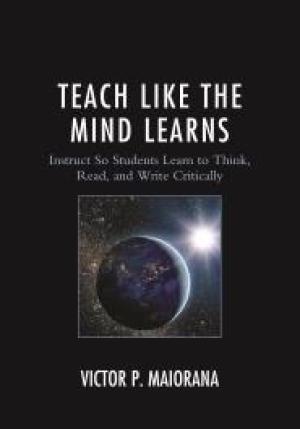
This volume is the most recent of a triumvirate of interrelated works Maiorana has recently published. Teach Like the Mind Learns builds off Fixing Instruction: Resolving Major Issues with a Core Body of Critical Knowledge for Critical Instruction (2015) and Preparation for Critical Instruction: How to Explain Subject Matter While Teaching All Learners to Think, Read, and Write Critically (2016). Maiorana’s larger project is an ambitious one. He takes aim, with broad brushstrokes, at rote-learning styles of instruction, a specter he calls “serialism” and describes as the “teaching profession’s weak default instructional strategy” (4). He contends that this pervasive style inhibits “our innate ability to think critically” (155). As an antidote, Maiorana offers his own unique instructional framework. He argues that subject matter is universal and critical in nature across disciplines. He also argues that one can teach how the mind learns, and as a result, promote teaching that gets students to write, speak, and observe critically. One can do this by utilizing “mind grammar,” which he defines as the “innate, systematic, and patterned way that the human mind encounters the world and all its subject matter” (6), At the core of mind grammar instructional techniques are what he calls “subject matter displays.” Much of the practical approach involves formal concept mapping and displaying the explanation of a certain term or concept with related activities. The book unfolds in two main parts: part one provides an overview of Maiorana’s theoretical basis for critical instruction, and part two offers numerous examples of activities and instruction sets using this framework. Teach Like the Mind Learns is a tough nut to crack. This is largely because it is a closed intellectual loop. The only other instructional literature Maiorana cites in footnotes and references in passing are his own two earlier works on the topic. He even instructs the reader to purchase his previous books so one can better follow the self-referential citations that abound in each chapter. The first-time reader must further master Maiorana’a distinctive vocabulary, from mind grammar to “Itechniques” and “Imethods.” Consequently, the learning curve for reading Teach Like the Mind Learns is steep. It is largely predicated on the assumption that the reader has read and embraced Maiorana's earlier works. There are some helpful insights throughout, including the example teaching exercises that make up the second half of the book. But as Maiorana’s approach avoids engaging with any other instructional literature beyond his own, it is ultimately not clear how one might use this approach in combination with other pedagogical styles and resources to improve classroom instruction. Further, he suggests a remarkable universality to his framework, regardless of specific context – from elementary through college-level instruction – a bold one-size-fits-all approach. In a world of opportunity costs, limited time, and limited energy, someone looking to explore “how the mind learns” would be much better off diving into the established science of learning literature. There are numerous accessible works on its foundations and praxis, and several that are specifically about improving instruction at the college level, such as James Lang’s Small Teaching (San Francisco: Jossey-Bass, 2016) and Donelson Forsyth’s College Teaching (Washington, D.C.: American Psychological Association, 2016).

Over the past several weeks, we have seen over and over again violence against people, mostly women of color, presumed to be Muslim. The attackers have been white men who targeted their victims based on the victim’s presumed religion. Some of the increase in these hate crimes can be attributed to a rise in anti-Muslim rhetoric from political leaders which emboldens those with xenophobic views to be more public. However, the lack of a large public outcry against such crimes comes from long held racist assumptions rooted in Orientalism about Muslims which are reinforced by the media, popular culture, government narratives, and, too often, by some non-Muslim religious narratives. The question for any religious studies teacher in these times has to be: what can I do to help counter these assumptions, attitudes, and false narratives? Taking such a question seriously is not without risk, but teaching about religion is not a politically neutral endeavor. Talking about religion, teaching about religion, is political. My entire teaching career has been motivated by how narratives create our reality. This is not something new. After all, bell hooks, Edward Said, Stuart Hall, Paul Ricoeur, Judith Plaskow, Dwight Hopkins, Sheila Davaney, and many, many others have pressed for decades about representation and the creation of narratives. However, in our current cultural and political climate I often find myself pausing to consider the narrative, or better, the counter-narrative that needs to be told. Our assumptions about other people are shaped by the information we possess. In many instances, the information we possess is limited at best and ill-informed at worst. This understanding informs how I think about teaching religion. When teaching my “Introduction to Religious Studies” classes I have two goals in mind. First, I want to raise the students’ awareness of the relationships between religion and politics. Religious language is used to justify violence by non-state groups who claim religious identities. Religious language is also used to justify laws and policies about abortion, the death penalty, military strikes, violence, human rights, women’s rights, LBGTQ rights, etc., etc. Second, I hope to raise the level of students’ religious literacy. If our assumptions about other people are shaped by our knowledge, then introducing students to the commonly held beliefs and narratives of various religious communities should result in students having a better understanding about others. When I teach religious studies courses I use a human centered approach. As often as possible, I try to expose students to different practitioners within and among religious traditions. The challenge is always finding the balance between giving students general information about religious beliefs without generalizing and essentializing an entire tradition based on the beliefs of individual practitioners. The larger point is to humanize religious beliefs and practices. When students hear the stories of others, students find ways to connect with folks on a human level. Making a human connection then allows for a different kind of conversation about the interplay between religion and politics. The stereotypes and ill-informed assumptions start to be replaced by new knowledge. As students begin to think differently about human beings and the practices of religion, they also begin to ask critical questions. One of the questions students often ask is about the media’s and popular culture’s engagement with religion. Many students notice that religion is mostly presented as conservative, damaging, and/or violent with very little attention given to religious people who are working to create positive social change rooted in justice. It is during these moments that I am able to introduce to students groups and individuals who might be labeled “prophetic activists.” The idea of prophetic activism is as old as religion itself, but the term as I am using it comes from Helene Slessarev-Jamir. Slessarey-Jamir defines prophetic activism as “religion [that] is being used to frame progressive politics that prophetically calls for justice, peace, and the healing of the world.”[1] Some of the groups I tend to introduce in class include: Jewish Voices for Peace, SpiritHouse Project, Christian Peacemaker Teams, Muslim Advocates, and Four Winds American Indian Council. For example, Jewish Voices for Peace has consistently spoken out against anti-Muslim hate, be it a Chanukah ceremony to overcome racism and Islamaphobia or showing up at airport protest against the “Muslim Travel Ban.” It is prophetic activist groups such as Jewish Voices for Peace that help provide a counter-narrative of justice and nonviolent social change rooted in religion. I started out asking how religious studies teachers can help counter the racist and xenophobic assumptions, attitudes, and narratives that lead to violence and/or silence. My suggestions include a human-centered approach to teaching religion, to make the connections between religion and politics overt, and to provide counter-narratives that are rooted in justice and nonviolent social change. Most importantly, I think it is up to those of us who teach about religion to provide opportunities to change, confront assumptions, and to call out violence done in the name of religion or because of religion. [1] Helene Slessarev-Jamir, Prophetic Activism: Progressive Religious Justice Movements in Contemporary America (New York: New York University Press, 2011), 4.
Despite deans playing critical roles in education, little is known about the knowledge, skills, and dispositions needed for the job, or the practical dilemmas they face on an almost daily basis. Each chapter of this international collection opens the role up for examination and critique, developing a deeper understanding of what it means to be a dean, and offering insights into the transition into the role, managing the daily demands and expectations of it, and what it means to exit the deanship. The book brings being a dean and the leadership inherent in the position into sharp focus based on international perspectives on doing the job.
Click Here for Book Review Not everyone is surprised at the rumor suggesting that Karl Wolfe, Dean of The University School, recently told Rebecca Swingle, new professor at the school, that a promotion could be more easily attained were she to sleep with him. Certainly those least surprised were several female students who had been the target of the Dean's amorous behavior. But the question remains--who might stand and suggest that such behavior should not occur in a divinity school, of all places? The Dean's Demise offers readers a fictional case study in how something like sexual harassment impacts a divinity school's educational vision, its theological understanding of community, and the practical issues of governance.
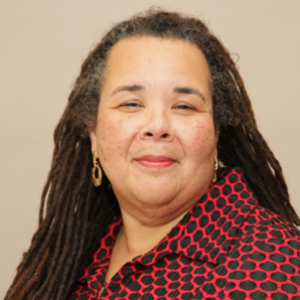
Higher education is a by-the-book, highly structured reality. From syllabus design (written for students as well as for administrators) to navigating the tenure track process; from classroom lesson planning to student assessments; as well as the preconceived even contrived ways articles and books are selected for publication – those of us who teach in the academic world participate in a rigid reality. For a scant few colleagues, this rigorous reality creates spaces for thriving and the production of new knowledge. It is the promise of this constructed reality. Dangerously, the same austere reality creates ease and opportunity for those who are harbingers of racism, sexism, classism, and heterosexism to have tremendous platforms of harm against colleagues and students of color. The strata of oppressive, hegemonic forces in the larger politic of U.S. society are duplicated in the reality of higher education with too few opportunities for checks-and-balances of justice and equity. Subtle and blatant acts of dehumanization go unchallenged. Gestures of ignorance and insensitivity are commonplace. Those colleagues who routinely wield their biases, prejudices, ill wills, and ignorance toward people of color and non-white cultures are too often gatekeepers in this reality. Challenged to navigate this strange reality and stymied to negotiate with persons who would see us fail, there is little sanctuary for us unless we create it for ourselves. While scholarship is my passion and joy, I never feel at home. My experience of displacement/up-rootedness is neither unique nor rare. For African American women and other colleagues who are othered and systemically marginalized, the reality of education is designed so that we remain strangers, even in the familiarity of academic spaces. Our outsider status is galvanized by the white feminist patriarchs, also known as patriarchs-in-drag, who refuse to do critical reflection on relationships with othered women and people of color. Elisabeth Schussler Fiorenza dubbed this experience of oppression in its many forms as kyriarchy. While naming the experience does not alleviate the circumstance, it does make me feel oriented…known. To never be at home is to contend with the accusations that we cannot do “classical” scholarship while at the same time reeling from the critique that our ethnic/cultural approaches are quaint, interesting…exotic. Our work and scholarship is othered along with our personhood. This constant confusion sends firm messages that we are not safe, not welcomed to be authentic or real. In the midst of this zero-sum experience of hostility, we are expected to be grateful for posts designed for occupation by white men. In this environment students quickly clue into those who are unwelcomed and deemed to be without authority, making our classrooms spaces unnecessarily conflictual and contentious. We are not at home. I have often heard othered colleagues describe this reality as the experience of being erased. Surely, as those who are Imago Dei, made in the image and likeness of God, we cannot be summarily negated. I am not sure when I started this habit, but it helps me survive/cope. Each spring, after commencement, I bring a laundry basket to my campus office. I gather up those personal items that adorn my office. I pack up the family photos, artwork, cards, and gifts given by students and friends throughout that year. I pack up my coffee mug, teapot, and the snacks in my desk. I balance my potted plants on the very top so they do not get damaged or squished. With heaping laundry basket in-hand, I move out of my office. Once at home with my laundry basket, I incorporate those items into the décor of my home. My office plants are nestled among the other plants in my living room, home office, and bedroom. The artwork and other items find a place on the shelves and in the bookcases. Then, in late summer, as the fall semester approaches, I make the decision to move back into my office – or not. If I move back in, I go around my house picking and choosing those art pieces that will adorn my campus office and assist my work in the coming year. I discuss with my plants and ask for volunteers to come to my campus office. Once back in my office, I carefully place the photos, paintings, sculptures, and plants. I move back in, only for the year. Knowing I will move out gives me strength and courage. Each year, this ritual helps me navigate the death-dealing space that is the academy. It reminds me of my choice and my freedom. This ritual rekindles my own agency and intrinsic power. I move back in because of my own choice and not out of obligation, confinement, nor to stave off erasure by these institutions. Those political practices designed to divide and conquer, which are meant to keep us feeling unwelcomed, are weakened when I exercise this agency. Moving out of my office each spring lets me know I am free to leave the institutions that do not nurture me or my kind. Knowing I have a choice helps me keep my rage in check. Moving into and out of my office reminds me that I am not homeless. The confusion, disarray, and disturbance that would reasonably result from being unwelcomed has little sting and warrants only momentary guile when I remember that our particularity is our gift to the world from the Divine. We are a people for whom this racist, sexist, homophobic, kyriarachal academic world is a reality that requires the skills of ornery-ness and imaginative cunning—skills for which we are quite adept. The knowledge and belief that the love, sacrifice, and values of our ancestors and wisdom-kin are steadfast provides hope. Audre Lorde wrote, “In our work and in our living, we must recognize that difference is a reason for celebration and growth, rather than a reason for destruction” (Oberlin College Commencement Speech, 1985). A Luta Continua.
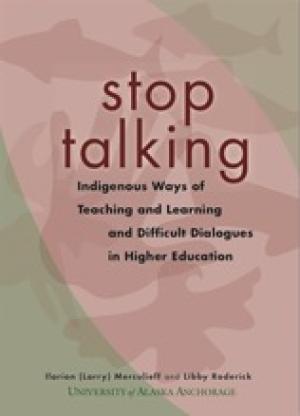
In 2009, authors Ilarion Merculieff and Libby Roderick participated in the second of two higher education projects sponsored by the Ford Foundation’s national Difficult Dialogues initiative. This project was designed to “turn the tables” on traditional academic professors so that Alaska Native people would become their own teachers (iii). This book, Stop Talking, tells the story of the second project, laid out in a format that parallels the experience gained in a faculty immersion workshop with Alaska Native teachers, followed by an ongoing community of inquiry (chapters 1-5). The final chapters show the nature of change in pedagogy designed by faculty participants for one academic year and the assessment of the entire project, reflections, and strategies for changing higher education through indigenization (chapters 6 and 7). The goal of this project was to instill deeper understanding of traditional indigenous worldviews, issues, and pedagogies by fostering respect for different ways to be teachers and learners (x). Sixteen faculty members participated in experimenting with Native ways of teaching and learning and introducing “difficult dialogues” regarding Alaska Native concerns during a week-long intensive workshop. The flow of the intensive time together is outlined in the first four chapters. The format for teaching during the workshop included much silence, a slower pace, and no note-taking. Learning occurred by non-verbally internalizing that which was important because words, in the Aleut tradition, are considered a constraint on intelligence, getting in the way of living in the present; therefore, ground rules for the intensive workshop included paying attention to being part of a whole through deep connection, often wordless, thereby making one a “real human being.” Participants learned that Native pedagogies occur out of teaching practices such as slowing down to be in relationship with each other and the Earth, close observation and emulation, use of all senses in silence, storytelling, dance, and games. Participants used these practices throughout the week during daily workshops, and were invited to think about the courses they normally teach in light of such practices. The difficult conversation topics followed later in the week, when faculty participants began to deal with the institutional racism and the Western methodology of science and research used in institutions that ignores or devalues Native ways of learning and teaching. During the intensive, faculty began to integrate the particularity of their course material with a wider, deeper pedagogy. Afterward, the group agreed to meet monthly for one academic year to continue their community of inquiry. They conducted formal assessment of their work, and engaged in deep reflection together. Roderick’s call to this indigenizing of higher education is important: “If we can do these two things – learn from these ancient cultures fresh ways of approaching the tasks of learning while simultaneously working to overthrow the ongoing legacy of colonization that still plagues modern indigenous peoples – we will have accomplished a great deal” (ix). Indeed, such work is essential for equitable, deep education. This work is our future. This book, filled with story and wisdom, is our guide.