Resources
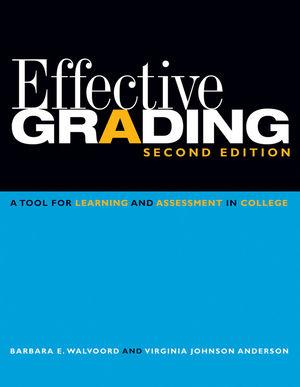
The second edition of Effective Grading—the book that has become a classic in the field—provides a proven hands-on guide for evaluating student work and offers an in-depth examination of the link between teaching and grading. Authors Barbara E. Walvoord and Virginia Johnson Anderson explain that grades are not isolated artifacts but part of a process that, when integrated with course objectives, provides rich information about student learning, as well as being a tool for learning itself. The authors show how the grading process can be used for broader assessment objectives, such as curriculum and institutional assessment.
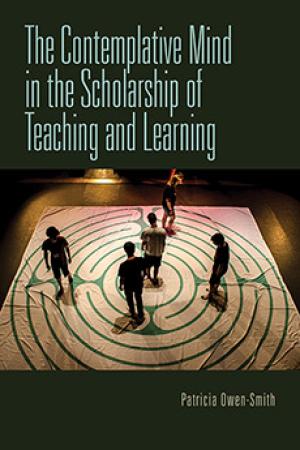
In The Contemplative Mind in the Scholarship of Teaching and Learning, Patricia Owen-Smith considers how contemplative practices may find a place in higher education. By creating a bridge between contemplative practices and the Scholarship of Teaching and Learning (SoTL), Owen-Smith brings awareness of contemplative pedagogy to a larger audience of college instructors, while also offering classroom models and outlining the ongoing challenges of both defining these practices and assessing their impact in education. Ultimately, Owen-Smith asserts that such practices have the potential to deepen a student’s development and understanding of the self as a learner, knower, and citizen of the world.
Click Here for Book Review How can I simultaneously support students' critical engagement with course content and develop their intercultural awareness? Most faculty have multiple diversities present in any given classroom or academic program— whether from an influx of international students or an increase of students from low-income, first generation, and/or racial/ethnic minority populations— and are concerned about how to maintain a rigorous curriculum and ensure that all their students succeed, given disparate backgrounds and varying degrees of prior knowledge. This book provides faculty and instructors with a theoretical foundation, practical tools, and an iterative and reflective process for designing and implementing an intercultural pedagogy. The authors bring to bear the expertise of their various disciplinary backgrounds to offer a responsive, integrative framework to develop and continually refine a pedagogy that both promotes deep disciplinary learning and supports intercultural outcomes for all students. The authors offer a framework that is flexible enough to be responsive to the experience, environment, and particulars of a given teaching and learning situation. The text incorporates narrative text by the authors, as well as first-person reflections, classroom activities, and annotated assignments that illustrate the dynamic process of intention, experiment/implement, critique, and refinement that characterize pedagogy and intercultural interaction. The authors bring to bear the expertise of their various disciplinary backgrounds, a deep knowledge of effective pedagogical practice, and their experience and grounding in intercultural practice: Amy in composition/writing studies, Mary Katherine in international education with rich experience as a faculty development trainer, and Bob and Catherine, respectively, an historian and a family scientist. This book is intended both for individual reading as well as for collective study in learning communities.
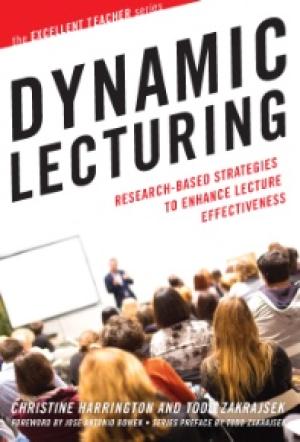
Click Here for Book Review Is the lecture an outmoded teaching method that inhibits active learning or is it a potentially powerful tool that is an essential part of every teacher’s repertoire? This book presents up-to-date research on the different types of lecture, on what constitutes effective lecturing, and on the impact of lecturing when done appropriately and well. It fills the void in professional development resources on how to lecture, validating the practice when it’s aligned with the educational mission of creating engaged learning environments. Christine Harrington and Todd Zakrajsek demonstrate that, rather than lecture and active learning being mutually exclusive or either-or propositions, the effectiveness of the former can be greatly enhanced when combined with active learning techniques through what they define as dynamic lecturing; and provide context about the need to balance these approaches to meet the needs of students as they progress from novice to advanced learners. They present a range of strategies that enhance student learning during lectures. They open each chapter with the evidence behind each lecturing strategy they describe, and conclude with practical suggestions for quick application in the classroom. They offer readers the lecture planning and evaluation tools for reworking their lectures in ways that provide high-level engagement and achievement for their students. The opening section of the book explores the benefits of lecturing and describes the different modalities of lecture, with an assessment of the advantages and disadvantages of each. The second section focuses on educational strategies to enhance the lecture, including, among others, activating prior knowledge, emphasizing important points, effectively using multi-media, making concepts meaningful via examples, and the importance of retrieval practice. Each covers the underlying theory and research, and advice on how to align the engagement techniques with instructional goals. The book concludes with guidance on effective planning for lecturing and helping chairs, administrators, or peers engage in effective evaluation of the lecture. This is a dynamic resource for all faculty interested in revitalizing their teaching. The strategies are succinct, easy to incorporate into lectures and, done well, will have immediate impact and increase student mastery of course content. (From the Publisher)
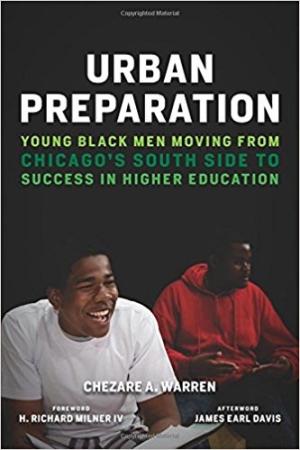
Urban Preparation contributes to a needed body of research on race that investigates “mechanisms, systems, structures, and practices that have a real bearing on students’ opportunities to learn” (vii). Urban Preparation highlights the scholarship of leading researchers who address questions related to race, poverty, achievement gaps, and the academic performance of minority students. An underlying thesis of Urban Preparation is that students in general, and minority students in particular, succeed when appropriate measures are in place. This is a resource for scholars in a variety of disciplines, including but not limited to: education, law, sociology, psychology, health, political science, and social work. The book begins with an overview of the Race and Education series at Harvard Education Press. The series editor, H. Richard Milner IV, lists several objectives that guide the series and he challenges those in power to work “for the good of humanity, to interrupt systems, policies, and practices that work only for some while others remain underserved” (ix). Reasons are given for focusing on the intersection of race and education and questions are asked related to poverty, transportation, housing, and employment, among others. In the Introduction, Chezare Warren explains why he wrote Urban Preparation: “to subvert dominant narratives that insist on casting urban-dwelling young, black men and boys as ‘at-risk’ or ‘disadvantaged’” (1). He shares the stories of these young people as counter-stories that portray them as hyper-vulnerable. He is also convinced that social inequities and stories of failure must be examined alongside counter-stories of resilience, persistence, accomplishment, and triumph. The book highlights the stories of seventeen young black men who are members of the inaugural graduating class of Urban Prep Charter Academy for Young Men, referred to as “UP.” UP is a high school for boys in the Englewood neighborhood which has one of the lowest median household incomes among Chicago’s Southside neighborhoods. However, UP is widely recognized for 100 percent of its graduating class gaining admission to four-year colleges and universities. Urban Preparation aims to: (1) describe the organizational design of UP; (2) examine the intersections of place and space to discern factors that motivate young black men to succeed against the odds; and (3) explore the factors that help narrow “opportunity gaps” for urban youth, and the implications of these factors (3). The book’s qualitative data consists of interviews, field notes, memos, and participants’ responses in order to construct a “coherent continuous narrative around dominant themes” that emerged from analyzing data (8). From the data, Warren chronicles the real-life experiences of the first graduating class by grouping the students into five composite characters with overlapping characteristics. The title of the book is derived from the school’s name but the book tells the stories of the seventeen students and “the meaning associated with growing up in an urban environment” (18). More than anything else, the book gives a better understanding of the academic and cultural strengths of urban minority youth in secondary and postsecondary settings. Urban Preparation is fundamentally a counter story as well as a critical study that challenges educators and all those interested in improving the education outcomes of black men and boys to listen to them and to learn from them.

When I was invited to participate in this blog series, I was preparing to teach, for the first time, a course on the Catholic sex abuse crisis. I had wanted to teach the course for quite some time but was held back both by my sense of not understanding adequately the massive amount of material that comprised the crisis and my anxieties about how this material might impact students. What about students who were survivors of sexual violence? What about students who understood themselves as faithful Catholics? Or who had left the Church angry and bitter? What about students—and this is particularly relevant to my geographical context—who were suspicious of Catholics as an exotic, mysterious, pseudo-Christian sect? I taught the class. I had students who identified with each of these subject positions. Neither their written work nor their in-class participation nor our informal one-on-one conversations contained any evidence that they were unduly troubled by the materials or unable to grasp with the questions they raised. In fact, it was our collective sense of inadequacy as we grappled with the enormity and complexity of what we were trying to interpret that left us feeling overwhelmed. But, as those who go to the gym more than I do—which wouldn’t take a lot—would say, it was a good kind of pain. This semester, as I am writing my contributions to this blog series, I am teaching, for the sixth time, a course focused on Jesus films. This is one of my bread-and-butter courses. It is popular with students and it works like a well-oiled machine. The films require us to grapple with questions about gender, race, sexuality, ethnicity, and violence, but I have never paused to worry that the course might run the risk of traumatizing my students. (Although the level of brutality in Mel Gibson’s The Passion of the Christ comes awfully close.) Given my experience over the years of teaching this course, however, I should know better. A few weeks ago, I got an email from a student who self-identified as a fundamentalist Christian, as someone who had been taught that the Bible was inerrant, literally true, and harmonious. The comparative, rhetorical analysis of the gospels that comprises the first few weeks of this course were challenging him in profound and unsettling ways. He was having to grapple with the idea—and the evidence—that the Bible did not speak with a uniform voice and that it may, in fact, contain tensions that simply could not be reconciled. This student was seeking out a conversation. Since I grew up in a very similar religious context, I am able to talk about these types of concerns, without undermining the perspective of the course. As I tell all of my students, they can enter and leave my class thinking that the Bible is the inerrant, infallible word of God, but they will have to grapple with the fact that we only have access to that word in a complex, rhetorically sophisticated document with multiple perspectives on who Jesus is and why he matters. Every semester I’ve taught this course, I’ve had at least one student with these concerns. Sometimes several. Some have sought out conversation. Some have worked through their concerns in assignments. Some have probably dropped the course—or just kept their worries under wraps. Some have been more open; others have been more hostile. Some have clung to an apologetic task; some have offered to pray for me. Some have the greatest trouble when we talk about the Bible; others face their Waterloo as we start talking about the films. Still, others find the greatest challenge when we review the history of American Christianity. My experience with this class reminds me that what we, as scholars of religion and theology, take as our baseline—that religious ideas, texts, and practices have a history, that they have been subjected to a variety of interpretations, that they have ugly legacies, that they vary by time and place—is a profoundly disturbing perspective to some people. Just as we have come to realize that “objectivity” is never truly neutral and that “secularity” entails a normative vision, we also need to grapple with the fact that the foundational moves of the academic study of religion and theology might be the most traumatic dimension of our courses for some of our students.
In "Arts of the Contact Zone, Pratt describes a manuscript from 1613 penned by Andean man named Felipe Guaman Poma de Ayala. The manuscript was a letter written to King Phillip III of Spain and was titled The First New Chronicle and Good Government. The manuscript details Spanish conquest in South America. Pratt cites the manuscript as an example of autoethnography. She writes, “Guaman Poma’s New Chronicle is an instance of what I have proposed to call an authethnographic text, by which I mean a text in which people undertake to describe themselves in ways that engage with representations others have made of them”. The New Chronicle ends with a revisionist account of the Spanish conquest. Pratt uses the manuscript as an example of an oppressed person or group resisting hegemony, and she connects the practice of authoethnography, critique and resistance to the creation of contact zones.
This essay explores challenges that arise for professors who teach critical theory in our current climate of conservatism. Specifically, it is argued that the conservative commitments to non-revolutionary change and reverence for tradition are corrupted in our current political and intellectual climate. This corruption, called "ideological imperviousness," undermines the institutional structures put in place to produce a functional educational environment that imposes an unjust vulnerability on professors and risks depriving students of the opportunity to acquire the critical skills necessary to combat their own vulnerabilities.
In its first century the American higher-education system was a messy, disorganised joke. How did it rise to world dominance?
Written assessment feedback has not been widely researched despite higher education students continually expressing the need for meaningful and constructive feedback. This qualitative study employing focus groups captures and interprets the student perspective of written assessment feedback. Participants were Registered Nurses and non-traditional entrants to higher education. The findings generated a framework of themes and categories representing the feedback process experienced by the students. The themes were ‘learning from’,‘the process of receiving’ and ‘making sense of’ feedback.When this framework incorporates strategies such as ‘feed-forward’, selfmanaged learning and personalized guidance it then represents a heuristic model of effective written assessment feedback. The model, created as a result of the research, should enhance the student experience and aid understanding of the complex processes associated with providing written assessment feedback.