Resources
This article discusses an experiential teaching method that uses secular activities that are simple, accessible, and analogous to religious practice in order to facilitate comparative religious study. These “analogous activities” – for example, social rituals, stillness, yoga, a social media fast, singing, nonviolent communication, and mindfulness meditation – provide a third point of reference that allows students to pivot between their understanding of religion and those of practitioners and scholars of religion. Experiential learning can be quite successful if deliberately sequenced to allow students to encounter a series of interpretive frameworks and structured with prompts and parameters that encourage reflection and critical analysis of their experience. In my course engaging in analogous activities not only impacted students' understanding of Asian religions, but also led them to question two previous assumptions: first, that religious beliefs were more important than religious practices, which is particularly problematic in regards to Asian religious traditions that place more emphasis on orthopraxy than orthodoxy, and second, that religion was something separate from one's everyday or lived reality.
Many early efforts at teaching preaching online incurred disastrous losses in quality. Revamped versions now claim to meet, and in some areas even exceed, classroom learning effectiveness, with potentially significant gains for students from non‚Äêdominant cultures. Students preach in local ethnic and denominational contexts, so a wider range of sermon styles can flourish in indigenous soil. Students hear immediate feedback from their community, and from their online peers and professor. Online discussion formats level the playing field for non‚Äênative speakers. By remaining embedded in their denominational and ethnic environments, student's cultural differences may be simultaneously affirmed and critiqued. This article describes capacities which predict success among preaching students, and how culture may influence the manifestation of these capacities. It details best practices and continuing challenges for professors making the transition to online preaching courses, as they seek to build culturally sustaining learning environments in which diverse students may flourish.
The increasing religious diversity in educational space has raised a legitimate question on how Catholic theology/catechesis must be taught in Philippine Catholic universities given the institutional mandate to educate students “into the faith of the Church through teaching of Christian doctrine in an organic and systematic way” (Wuerl, 2013, 1). On this note, the paper makes reference to “centered pluralism” (CP), a positional posture espoused by Georgetown University in dealing with this predicament. In an attempt to (re)appropriate CP into local context, there is a need to explore the Filipino conception of self/others as enveloped within the indigenous concept of kapwa. Hereon, the paper finds that CP is not just feasibly suitable in local context but with kapwa's more inclusive description of the relationship of self and others, a CP‐based teaching paradigm in theology/catechesis is a promising project in the educational scene of the Philippines.
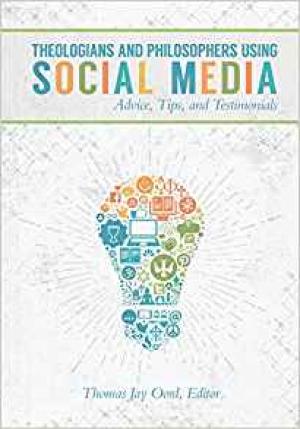
The insights in these 90+ essays are nothing short of inspiring! Their tips on best practices for social engagement, time management, social media as a resource for scholarship or creativity, technology and pedagogy, etc. will help readers tremendously. The contributors are diverse. They include.... - Public theologians like Ben Corey, Brian McLaren, and Richard Rohr - Younger scholars like Tripp Fuller, Jory Micah, and Alexis Waggoner - Biblical scholars like Michael Gorman, Joel Green, and Daniel Kirk - Philosophers like Helen De Cruz, Aaron Simmons, and Kevin Timpe - Establish scholars like James Crossley, Kwok Pui-lan, and Amos Yong - Scholars outside North America like Deane Galbraith, RT Mullins, Hanna Reichel, and Atle Sovik - Pastoral theologians like Patricia Farmer, Len Sweet, and Kurt Willems - Historical theologians like Kim Alexander and Christine Helmer - Science and religion scholars like Ron Cole-Turner, Karl Giberson, Lea Schweitz, and Jim Stump - Constructive theologians like Oliver Crisp, Grace Ji-Sun Kim, and Jason Lepojärvi - Ethicists like Miguel De La Torre, David Gushee, and Michael Hardin ...and the list goes on! Whether the reader is an armchair theologian, a professional scholar, a graduate student, or simply interested in how social media is changing religious and philosophical studies, that reader will find Theologians and Philosophers Using Social Media of great help.
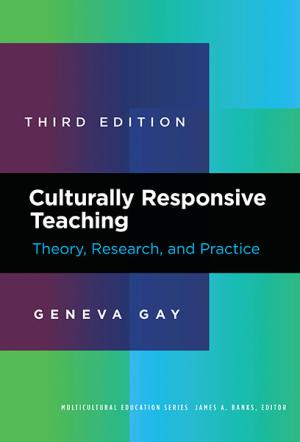
Geneva Gay is renowned for her contributions to multicultural education, particularly as it relates to curriculum design, professional learning, and classroom instruction. Gay has made many important revisions to keep her foundational, award-winning text relevant for today’s diverse student population, including: new research on culturally responsive teaching, a focus on a broader range of racial and ethnic groups, and consideration of additional issues related to early childhood education. Combining insights from multicultural education theory with real-life classroom stories, this book demonstrates that all students will perform better on multiple measures of achievement when teaching is filtered through students’ own cultural experiences. This perennial bestseller continues to be the go-to resource for teacher professional learning and preservice courses. While retaining its basic organization and structure, the Third Edition features: -New research that validates the positive effects of culturally responsive teaching. -Examples that broaden the racial and ethnic groups that can benefit from culturally responsive teaching. -More information on the needs and benefits of culturally responsive teaching with young children. -More attention to the quality of life for students of color in colleges and universities. -The addition of Practice Possibilities at the end of chapters that describe how culturally responsive teaching can be implemented. (From the Publisher)
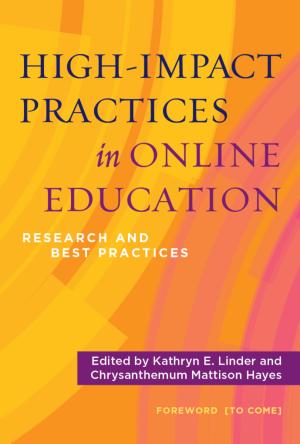
Click Here for Book Review This is a valuable collection of well-researched essays focused on the use of high-impact practices in online education. Readers will find both theory and best practices that can strengthen distance, blended, or face-to-face courses. - Gary Eller, University of Nebraska - Omaha This volume offers the first comprehensive guide to how high-impact practices (HIPs) are being implemented in online environments and how they can be adjusted to meet the needs of online learners. This multi-disciplinary approach will assist faculty and administrators to effectively implement HIPs in distance education courses and online programs. With a chapter devoted to each of the eleven HIPs, this collection offers guidance that takes into account the differences between e-learners and traditional on-campus students. A primary goal of High-Impact Practices Online is to share the ways in which HIPs may need to be amended to meet the needs of online learners. Through specific examples and practical suggestions in each chapter, readers are introduced to concrete strategies for transitioning HIPs to the online environment that can be utilized across a range of disciplines and institution types. Each chapter of High-Impact Practices Online also references the most recent and relevant literature on each HIP so that readers are brought up to date on what makes online HIPs successful. The book provides guidance on how best to implement HIPs to increase retention and completion for online learners. (From the Publisher)
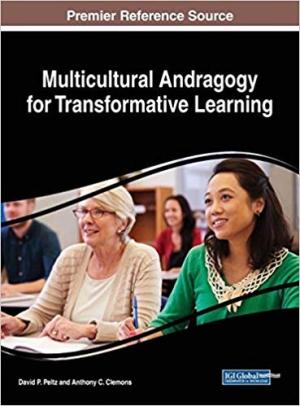
In the Foreword and the Introduction of Multicultural Andragogy for Transformative Learning, the editors lay out the goals and the structure of this multi-author volume. But the reader will not get past the first paragraph of the Forward before encountering one of many punctuation errors that plague the volume. In addition to multiple punctuation errors, some chapters contain so many spelling and phrasing errors that the reader is distracted from engaging with the content. Further, the quality of the research, the quality of the writing, and the author’s ability to support his/her assertions varies widely from chapter to chapter. The result is a collection of chapters that are very loosely connected, with little consistency in how each author engages with the intersection of multiculturalism, andragogy, and transformative learning. The volume is organized into three sections. The first provides the reader with the foundations for understanding the learning theories of andragogy and transformative learning and how both relate to culture. The second section examines andragogy and practice in a variety of cultural contexts. The final section describes “transformative multicultural andragogy” (xvii) in practice. While some chapters stand out as cogent and applicable, too many other chapters suffer from lack of editorial attention and guidance. The first section of the volume would most benefit from said guidance. Each chapter explains the theory of andragogy; many also describe transformative learning. Andragogy is also explained in detail in the Preface, making much (and in one case, most) of these initial chapters repetitive. Rather than re-explaining these theories, these chapters would be better spent connecting adult learning in various contexts to multiculturalism. Some of the chapters in sections two and three are valuable as stand-alone articles on their stated topics, but as a whole the chapters do not work together to enlighten the reader about multicultural andragogy as it relates to transformative learning. To be fair, the editors state that they “have set a broad scope for the theme” of exploring the intersection of culture, andragogy, and transformative learning (xx). However, only a few of the authors explore all three of these concepts. When a chapter in a volume is notable for addressing the stated topic of the volume, the scope of the volume is perhaps too broad. In the Preface and Conclusion, the authors state that “the primary focus of this text has been to elicit the connection between cultural perspectives and adult learning” (xxiv, 270), and in the Conclusion, they propose a new learning model representing the relationship between andragogy, transformation learning, and multiculturalism. What one would hope to learn from this volume is how they interact, not just that they do, so that the model can be tested and reproduced in an adult learning environment. The editors are correct that the relationships between these concepts should be explored and described, and that adult education would benefit from such work. However, Multicultural Andragogy for Transformative Learning lacks the focus and editorial oversight to accomplish that goal.

My journey into online education was indirect. I started out as a missionary-graduate student who was working on a Master of Arts degree from overseas. My first distance learning class was on cassette tape, but soon after our school developed online courses in which the primary interaction was through listservs. A few years later we saw the emergence of learning management systems (LMS) such as Embanet, WebCT, and Blackboard. Remember those days? In spite of the primitive digital medium we used, the courses worked. I attained both a broad and deep level of knowledge of Christian thought in these courses because our professor grounded his assignments and email discussions on good educational theory. At the time I hadn’t studied the literature of educational theory, but as my own post-missionary career began to overlap significantly with online education, I was determined to gain a better understanding of what kind of theory leads to effective online courses. While combing through the literature, I noticed that there seemed to be a philosophical connection between constructivism and distance learning. I kept digging to find out the reason behind this affinity between the two; at one point, I pulled philosophical layers back to Jean-Jacques Rousseau. What I found was that there have always been advocates for “learning by doing” and there have always been those who have regarded experiential learning as anathema. Emerging from the cross-fire, however, was John Dewey and his integration of the scientific method with social science research during the Progressivism period in the early 20th century. In Experience and Education (1938), Dewey described what happens when one’s life experiences intersect with new concepts or skills. He called this intersection the “learning situation” (pp 42-43). His book did not provide a diagram, but I imagine that if Dewey had sketched out this phenomenon it would have looked something like this: Note that the horizontal axis represents the continuity of past, present, and future experiences. The vertical axis represents a continuum of interactions ranging from personal reflection to interaction with people, places, and events. The two axes can move up and down and side to side depending on the connecting point between experience and interaction, but where the two meet is where the learning situation occurs. The metacognition swirl is a bit anachronistic, but I wanted the diagram to indicate the place where deeper reflection about one’s learning experience might take place. This simple “learning situation” as described by Dewey illustrates well the dynamic between student experiences and learning new concepts and skills. As I considered how to translate the learning situation into online education, I wanted to design courses that made use of learners’ past experiences and current contexts as resources for learning. Steve and Mary Lowes (2010) also contributed to my thinking for how to see the individual contexts of students separated by time and space as unique and relevant learning laboratories. (See also Bronfenbrenner 1979). The thought world of experiential learning and my applications of it to online course design and facilitation led me to the next step of my quest when McGaughy, McDonald, and I (2018) completed a qualitative research project based on the following research question: “In what ways does the interaction of past experiences and present community impact learning online?” We selected an online course used for study abroad programs at our institution, and through a triangulation of course evidence and a survey, we looked for common themes that addressed experiences of the students and their learning environment online. Three salient themes emerged: flexibility, travel, and communication. The theme flexibility represented both time and space. Students in the online program were empowered to study when and where it was most beneficial to their learning experiences. Although flexibility did not describe how experiences directly impacted learning, the participants’ descriptions of their flexible study times and locations shed light onto the intersection of context and learning. Travel tied directly into the research question. Participants reported how previous travels helped them relate to the topics of their online course. They also mentioned how encounters with people overseas opened their minds to intercultural communication concerns as well as recognizing variations of worldview. Expressions like “really made me think” and “my eyes were opened” related evidence for real-world experiences that had a direct impact on learning. Communication provided the bridge between the online medium and context of the student. As participants discussed matters related to communication, they would reflect on discussion boards, interactions with their professor, as well as face-to-face conversations with people at their sites. Interactions with students online led to “new insights” and “different points of view.” Conversations with people outside of class in their context also contributed to students’ learning new ideas and perspectives. This study provided evidence of Dewey’s learning situation in an online course, and the implications for distance education are important. As we imagine how to design, create, and facilitate online courses, we need to eradicate from our minds the mythological student who has been closed off from human contact and is unable to make cognitive connections between what they are learning and how it applies in their contexts. Rather, imagine our students as individuals who are surrounded by a learning laboratory, but also connected to a network of classmates in a shared digital learning space. Students who take courses online deserve creative course designs that maximize the online tools as well as point them to real-time, face-to-face learning experiences. As we envision the road ahead in the age of education without walls, consider these words of Dewey, “. . . it is not of new versus old education nor of progressive against traditional education but a question of what anything whatever must be to be worthy of the name education” (1938, p 90). Works cited: Bronfenbrenner, U. (1979). The ecology of human development. Cambridge, MA: Harvard University Press. Dewey, J. (1938). Experience and education. New York: Touchstone. Lowe, S. D., & Lowe, M. E. (2010). Spiritual formation in theological distance education: An ecosystems model. Christian Education Journal, 3, 7(no. 1), 85-102. Westbrook, T. P., McGaughy, M., & McDonald, J. (2018). An investigation into the implications of Dewey’s “Learning Situation” for Online Education. NET: An eJournal of Faith-Based Distance Learning, 2.
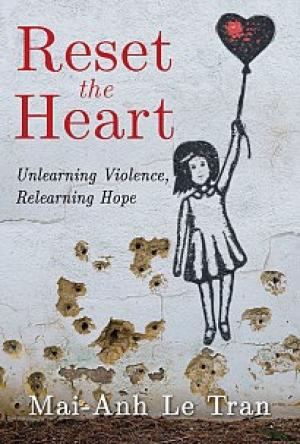
Mai-Anh Le Tran, an associate professor of religious education and practical theology at Garrett-Evangelical Theological Seminary, tackles a profound question in her book Reset the Heart: Unlearning Violence, Relearning Hope when she asks, “what does it mean to educate for faith in a world marked by violence?” Tran, who is a past president of the Religious Education Association, is an ordained elder of the United Methodist Church. This intriguing volume about the problem of faith in a violent world begins in August 2014 with the deaths of Eric Garner in New York City and Michael Brown in Ferguson, Missouri. Situated within this violence and racism, Tran allows three questions to guide her search for meaning and answers: “What does it mean to educate for faith in a world marked by violence? How are Christian faith communities complicit in the teaching and learning of violence? What new (or renewed) practices of faith and educational leadership can help us unlearn violence and relearn hope?” (10). The search for these answers provides her agenda for “resetting the heart” (10). Tran’s first two chapters struggle with her first question as she draws upon frameworks from social psychology, cultural studies, postcolonial theory, and racial formation theory. In Chapter Three, she examines the church’s complicity in the teaching and learning of violence. She offers a reframing of Charles Foster’s five major critiques of the church’s “catechetical culture” as a foundation of her answer. Finally, she attempts to answer her third question in Chapters Four, Five, and Six as she models relearning hope. Throughout this volume, Tran explores a number of subjects that interrelate with her subject including race as political theology, racism as a form of violence, religious education malpractice, and the erasure of historical memory. Her model for relearning hope includes practicing communicability, redeemability, and educability. She reminds her readers again and again of the vital importance of religious education and the role of the religious educator in fostering transformation. As she writes in her conclusion, “Let the people of God say ‘Amen.’ And let Christian religious educators remind the people what ‘Amen’ means” (164). Tran makes excellent use of a powerful theological writing technique rooted in what theologian Heather Walton describes as “performance autoethnography.” Her use of this technique makes the book’s content come alive in a faithful and academically solid narrative; Tran shows readers theology instead of just telling them. This is particularly true in her opening chapter as well as in Chapters Four, Five, and Six, when she integrates the support of 14 other theological voices that she engages as “theological reflectors.” This complex and stimulating writing does make the writing style in Chapters Two and Three, where Tran establishes her argument within the wider academic narrative, seem flat and uninspiring. Nevertheless, this is a very well-written narrative that is a pleasure to read. Tran provides readers with a valuable and insightful addition to the theological understanding of religious education. This volume should be added to all theological libraries and is a must read not only for academics who specialize in religious education but also for clergy and leaders in parish religious education.
If you are looking for a current collection of essays about the state of qualitative research in theological education, then this volume edited by Moschella and Willhauck will be extraordinarily useful. The contributors offer a broad-based, international approach to their topic, complete with case studies and a select bibliography. Together, they argue that qualitative research is essential to the formation of ministers and theological scholars. Moschella’s introduction provides a concise overview of how this collaborative project began, key themes in the field of ethnographic studies, and how each of the essays addresses these issues. There is real value here for the reader who is just plunging into the study of qualitative research and needs an overview of how the discipline is developing. This is a handbook in four parts, with fifteen chapters. As such, it is designed for both reading and reference. In addition to the introduction, most readers will benefit from the first two entries that comprise Part One, “Exemplary Research Essays.” Whitmore’s essay, “Theology as Playbook and Gamefilm: Explaining an Ethnographic Approach to Theology to a Sports-Centred Culture,” uses sports analogies to underscore the vital connection between theology and practice. This is one of several essays that emphasize the theological nature of ethnographic research. For theological educators, this is an important contention which broadens the discussion beyond contrasting qualitative versus quantitative methods and goals. Just how inclusive that discussion can become is indicated by Sorajjakool and Prachyapruit in “Qualitative Methodology and Pedagogy: A Study of the Lived Experiences of Thai Peasants within the Context of Western Development Ideology.” Part Two, “Issues in Education and the Practice of Research,” includes ten chapters that emphasize the embodied and contextual nature of qualitative research. They are also a reminder that the interdisciplinary nature of this work is a necessary and fitting response to the complexity and messiness of real life. While there are several strong essays in this group, particular note should be taken of “Promoting the Good: Ethical and Methodological Considerations in Practical Theological Research” by Graham and Llewellyn, along with “Just Don’t Call It ‘Ethnography’: A Critical Ethnographic Pedagogy for Transformative Theological Education” by Wigg-Stevenson. Part Three, “Integrating Qualitative Research into Theological Education”, includes Mellott’s “Qualitative Research in Theological Curricula” and Clarke’s “Wonder and the Diving Dance: The Lived Reality of Qualitative Research within a Master of Divinity Curriculum.” Both essays are valuable for theological educators and will repay rereading. The concluding section, Part Four, “Valediction,” is a single essay by Willhauck, “The Gift and Challenge of Qualitative Methods for Pastoral Formation.” Four major themes for teaching qualitative research are identified and briefly discussed including: contextualization, communication, reflection/reflexivity, and vocation (264). Willhauck’s elaboration on these themes makes a fitting conclusion to this extraordinarily rich and suggestive resource.