Resources
Less ambition and more conversational pedagogy to engage students struggling in this COVID-19 moment.
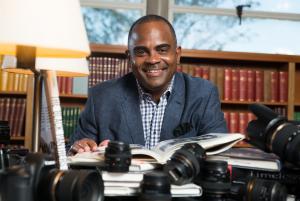
[caption id="" align="aligncenter" width="562"] Egypt https://www.flickr.com/photos/ralphwatkins47/43570551171/in/album-72157669384150857/[/caption] What is the promise of documentaries for teaching and changing the world? Is the documentary the new pedagogical model for everyday classrooms? Is the professor of tomorrow not a lecturer or one who uses the Socratic method, forums, discussion boards, and blogs, but rather are they documentarians? Is the professor of the “now “ one who makes their own documentaries as content for their classes? Is this the game changer? Nick Fraser, in his book Say What Happened: A Story of Documentaries says, “. . . docs have morphed into contemporary essays, becoming a form whereby we get to experience highly provisional stabs at reality, but, far more than fictions, which are usually finished and fixed in their own reality, they are transformed by it. . . . . The best docs celebrate a sense of the accidental. And they matter. Like unknowable bits of the universe, they come into existence when a collision occurs.”[1] Fraser argues in his book that documentaries matter, they change the way we see and engage the world. Documentaries educate us, transform us, and challenge us. Fraser argues that the documentary is the new long form essay, it is what people are watching as they read. We are no longer a culture that is rooted solely in the literate and oral tradition, but a new tradition has emerged and it is the documentary as reliable scholarly source. If Fraser is right, and I believe he is, then how does this new reality expand our opportunities to teach in ways that are truly transformative and liberating? In my Evangelism and Social Justice course I assigned Michelle Alexander’s book The New Jim Crow: Mass Incarceration in the Age of Colorblindness along with Ava DuVernay’s, Oscar nominated documentary, 13th: From Slavery to Criminal with One Amendment and to my surprise this pairing was a game changers.[2] The students got it because they read, they saw, they felt it, and our conversation was transformative. The students were able to weave the two forms of scholarship together. In this class, we were wrestling with the fact that God calls God’s church to spread the gospel and that gospel is one of justice. God is on the side of the oppressed and God calls us to set the captives free. God calls us to see injustice, call it out and address it by correcting it. We spread the gospel by being the gospel. My students got it. One of my students said to me, “I finally get what Black theology is all about. I get it and I have to do something. Thank you so much for assigning the documentary. I see it now.” When she said, “I see it now!” this was eye opening for me (pun intended). It was the wedding of these two, the written word and the visual demonstration of that word, that help my students see. My students are used to watching Netflix, all of my students had a subscription or access to someone’s subscription and this viewing came natural to them. They live in the visual world and I have found that documentaries, like books, are a part of their scholarly diet. Why not feed this appetite? Do documentaries really make a difference? Can they change the way we see the world and then make us act on behalf of justice? Let me cite one case as example of just how powerful documentaries can be. The Fall 2019 edition of The ARTnews reported, “Agnes Gund believes in giving her art away, with donations of hundreds of works from her collection to the Museum of Modern Art spanning decades and others to the many institutions she has supported. But the 81-year-old philanthropist thought she could achieve more by selling a treasured painting after seeing 13th (Ava DuVernay’s,13th: From Slavery to Criminal with One Amendment). Feeling a call to action, Gund choose to sell her favorite holding . . . for $165 million to billionaire investor Steve Cohen, after refusing his overtures for years. She then used $100 million of the proceeds from the sale in 2017 to launch the Art for Justice Fund, a partnership with the Ford Foundation and Rockefeller Philanthropy Advisors currently working against the scourge of mass incarceration through concrete and poetic means.”[3] Agnes Gund’s worldview was changed by engaging the work of Ava DuVernay. Gund saw and she acted! Can we get our students to see and act? Can we employ the use of documentaries in our classes in similar ways we have employed readings in the pass? Can we make our own documentaries and have them replace our lectures? What does it take to make your own documentary? All it takes is a camera, editing software, and our no-permissions-asking selves to just go and do it. In my African Roots of Black Theology class, I created a two-part documentary to start the class. The students engage my asking the question in the context that gave rise to the question. It is a new and more visceral way for them to engage in a new form of contextual visual education. My students got to travel with me as I traveled through Egypt. I used the daily vlog as way to tell the story, share my questions, pondering and musings. The students go with me to where my story begins and it begins in Africa. I also created photo albums for all major stops along my journey so that students could pause and admire the still images in conversation with the moving images. I offer these examples as a testimony of my first attempts and I look forward to seeing yours as we ask what are the now / next in pedagogical practices? Sample Documentaries: Vlog Style [su_vimeo url="https://vimeo.com/355109032" title="Part #1: Out of Egypt"] Part #1: Out of Egypt I’ve Called My Son: A Son’s Journey Black to Africa (https://vimeo.com/355109032) [su_vimeo url="https://vimeo.com/355118012" title="Part #2: Out of Egypt Final Cut"] Part #2: Out of Egypt Final Cut ) Portraits of Egypt https://www.flickr.com/photos/ralphwatkins47/albums/72157669384150857 Giza Pyramids https://www.flickr.com/photos/ralphwatkins47/albums/72157693534362690 Sakkara, Step, Red & Bent Pyramid https://www.flickr.com/photos/ralphwatkins47/albums/72157697707740291 The Cairo Museum https://www.flickr.com/photos/ralphwatkins47/albums/72157696165977282 The Temple of Aset https://www.flickr.com/photos/ralphwatkins47/albums/72157698917086034 Edfu and Komombo https://www.flickr.com/photos/ralphwatkins47/albums/72157699345621995 Luxor https://www.flickr.com/photos/ralphwatkins47/albums/72157669383738737 Karnak https://www.flickr.com/photos/ralphwatkins47/albums/72157698915679014 East Bank Temples https://www.flickr.com/photos/ralphwatkins47/albums/72157671458282618 Denderah https://www.flickr.com/photos/ralphwatkins47/albums/72157696165292492 Abu Simbel https://www.flickr.com/photos/ralphwatkins47/albums/72157697695476081 References [1] Fraser, Nick. Say What Happened: A Story of Documentaries. Faber & Faber; London, 2019. p. 28. [2] Alexander, Michelle. The New Jim Crow: Mass Incarceration in the Age of Colorblindness. The New Press; NY, 2012. DuVernay, Ava. 13th: From Slavery to Criminal with One Amendment. Netflix; 2016. [3]Sheets, Hilarie M.. “Justice League: How Agnes Gund’s $165 Million sale of a beloved painting helped get others to join the fight against mass incarceration.” In The ARTnews Fall 2019 VOL. 118, NO. 3, p. 75-76.
Writing for liberation of faculty voices to speak with courage and agency.
A conversation with Dr. Steed Davidson (McCormick Theological Seminary), Dr. Teresa Delgado (Iona College) and Dr. Christopher Tirres (DePaul University) about projects that connect the classroom to the wider world for social action.
Student formation is connected to a teacher’s spirituality. Hear insights on the use of mindfulness and imagination for re-orientation and flourishing.
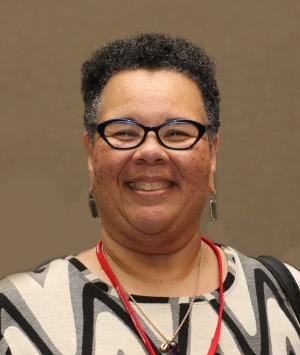
We are in the midst of unprecedented social upheaval. Many colleagues are being asked to migrate their teaching formats to online learning and curtail their interactions with learners to the digital spaces. Even so, I believe our roles as teachers can assist our students as we move through this crisis, together. Teaching during crisis can seem as if we are taxed beyond our capabilities, pushed beyond our job descriptions, and stretched beyond our capacities. According to the scientists and medical professionals, this particular crisis will last longer than a few days. The pandemic which grips our nation, and the world, will likely have a duration of months. We do not know how many months. We are likely participating in a paradigm shift in higher education. Before our very eyes, this crisis is likely causing long-term societal shifting. The abrupt behavioral shifts of the society are and will continue to affect the patterns and habits in our schools and classrooms. Practices of social distancing will likely linger in our society after the threat of the pandemic has been eliminated. The advantages of online learning will become more utilized as the threat of human proximity lingers in our shared memory. In the midst of so much abrupt and radical change - still yourself. Ask yourself not to panic, but to find balance and calm. The health, healing and wholeness of our schools and communities will require all of us to be attentive to this situation. Resist the impulse for “business as usual.” In these emotionally charged times, teachers are looked to as role models, as responsible people who set the tone and tenor in our classrooms of students as well as in our own families and communities. We are called to be a non-anxious presence even when we are struggling in anxious times and with our own personal anxieties. Faculties are being asked to immediately shift from a face-to-face format of course design to online learning. Teachers are having to quickly redesign 1,2,3, and in some cases, 4 courses to an online format in a matter of days. Migrating courses from face-to-face formats to online is not impossible, but it takes thought and preparation. Returning to the basics of your course seems key in this unusual/unprecedented situation. Format affects teaching, but it does not have to diminish or weaken your standards. Resist surrendering to your own frustration. Relax your typical standards for what “has to be taught.” A key is to keep your students engaged and keep your learning aim and goals as your guide – there are many, many ways to get to any one of those goals. What do you do? Do enough and do it well enough – it will not be how you planned, but it will be good enough. Do new and needed activities with your students. Remember the learning activities maybe new to you, but likely not new to your students. Do differently than you planned. Migrating from one format to another is no small task. Lean into the difference and know that teaching differently does not mean that your teaching will become inferior or bad. Change does not have to compromise quality. Remind yourself of the metaphor you employ when you think of yourself as a good teacher – in the best of times. Typical metaphors or similes for the good teacher are: gardener, light bearer, guide, architect, chef, builder, dancer. The list could go on. Each of these metaphors has in its wider narrative and iconographic knowledge the role of teacher in a crisis. For example, the gardener knows ways to combat drought or flood; the light bearer knows ways to keep the wicks trimmed and burning; the guide knows alternative routes should one path be blocked or destroyed; the chef knows how to save a ruined dish; the builder knows how to correct architectural errors; the dancer knows how not to get caught unaware when the tempo of the music suddenly changes. In this moment of unimaginable circumstance, use your imagination to encourage yourself for the ways you need to adapt your teaching and teaching persona. Refrain from allowing your classroom time (online or face-to-face) to dissolve into conversation exclusively about the health crisis. Continue to teach your course, even in its modified and adapted forms. Students are still enrolled in degree programs and still seeking graduation. Stay focused upon your course topics. It is likely that concentrating upon something other than the crisis will be refreshing to you and your students. Consider that this is also a time of opportunity, adventure, and new learning. The foil to crisis is creativity. Creativity is the tool of innovation and invention. Let go of that which would have you stay mired in established ways and current semester plans. Allow yourself to think new thoughts about your own old, rehearsed modes of teaching. Let the tropes go! Suspend judgement about the fictitious standard of teaching which no longer applies in this peculiar moment and let yourself be creative. Finish the semester strong by finding ways of engaging with your students on the course themes – it could be that straight forward! In this moment of social distancing, hand washing, quarantine, suspicion, and fear continue to take notice of your students. Inherently, teaching is a communal act. Even in online classrooms, pedagogical intimacy can encourage, strengthen, and hearten students. Students depend upon our words of assurance, our gestures of care, our attitudes of warmth and belonging. Be empathic with your students, remembering that they too are in crisis. The Wabash Center has provided a dedicated page for online teaching - https://www.wabashcenter.wabash.edu/resources/teaching-online/. We have also published podcasts of many interviews with colleagues who are well versed in online learning https://www.wabashcenter.wabash.edu/resources/videos/.
What if, rather than a burden, this moment is an adventure for teachers? Dr. Beverly McGuire (University of North Carolina, Wilmington) provides insights for determining how to move forward with the rest of the semester online.
In this moment of upheaval as we switch to online learning – don’t panic! Dr. Richard Ascough (Queen's University) helps colleagues know what questions to ask for online learning when the professor only has a moment to make the switch.
The pandemic of 2020 is changing teaching. With little to no notice, faculties have been asked to switch from face-to-face formats to teaching online. This conversation with Dr. Kimberleigh Jordan (Drew University) and Dr. Shively Smith (Boston University School of Theology) provides advice, perspective, and insights for this moment of immediate adaptation. We are glad these colleagues joined us by phone.
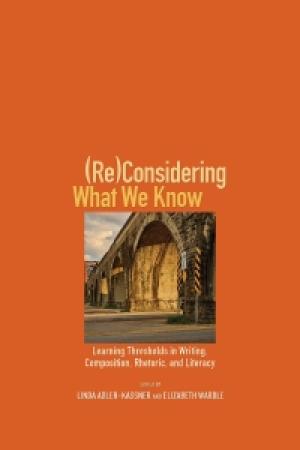
Naming What We Know: Threshold Concepts of Writing Studies, published in 2015, contributed to a discussion about the relevance of identifying key concepts and ideas of writing studies. (Re)Considering What We Know continues that conversation while simultaneously raising questions about the ideas around threshold concepts. Contributions introduce new concepts, investigate threshold concepts as a framework, and explore their use within and beyond writing. Part 1 raises questions about the ideologies of consensus that are associated with naming threshold concepts of a discipline. Contributions challenge the idea of consensus and seek to expand both the threshold concepts framework and the concepts themselves. Part 2 focuses on threshold concepts in action and practice, demonstrating the innovative ways threshold concepts and a threshold concepts framework have been used in writing courses and programs. Part 3 shows how a threshold concepts framework can help us engage in conversations beyond writing studies. (Re)Considering What We Know raises new questions and offers new ideas that can help to advance the discussion and use of threshold concepts in the field of writing studies. It will be of great interest to scholars and graduate students in writing studies, especially those who have previously engaged with Naming What We Know. (From the Publisher)