Book Reviews
In Free Speech on Campus, Sigal R. Ben-Porath outlines her focus at the outset: “I offer a framework for thinking about free speech controversies both inside and outside the classroom, shifting the focus away from disputes about legality and harm and toward the practical considerations linked to education and inclusion. I attempt to provide readers with strategies to de-escalate tensions and negotiate highly charged debates surrounding trigger warnings, safe spaces, and speech that verges on hate” (3). In order to accomplish her task Ben-Porath uses the first four chapters of her book to describe the “current tools” used to protect free speech and the “common myths” that cloud leaders’ understanding of the problem (7-28). She offers a “framework for inclusive freedom” (29-46) and notes the ways in which that framework can be used to respond to “intellectual and dignitary harms. . . without suppressing speech” (47-84), and then she describes the ways in which the same approach can be deployed in the classroom (85-102). In the conclusion to her book she then shows how conflicts that she has cited elsewhere could have been resolved by relying on “inclusive freedom” (103-128). The concrete illustrations include the debate over Halloween costumes and safe spaces at Yale (13); racial equality in Missouri (13-14); trigger warnings in Chicago (14); and controversial speakers at Berkeley and Middlebury (15-17). Ben-Porath depicts three tools that have been used by colleges and universities to respond to such conflicts: Some have appealed to the First Amendment and the freedom of speech; others have appealed to academic freedom; and still others have used “speech codes” to control dialogue on campus (18-20). These tools “pull in different directions” and Ben-Porath notes that there are subtleties on campus that often escape notice (21). Academic freedom, not freedom of speech, is the “core value” of America’s campuses – that commitment conditions the right to free speech, prohibiting things like plagiarism and the misrepresentation of the results of research, even if the First Amendment protects such conversation (20). “Inclusive freedom” offers a different approach. It is based upon a commitment to two key principles: “First, a commitment to teaching and research can only be fulfilled in the context of an open-minded and intellectually honest environment” (74); and “Second, all members of the campus community must know that they are invited to participate in this pursuit” (74). Readers of Ben-Porath’s work will have questions: (1) Is there a bright line between society’s concern with the freedom of speech and academic freedom on its campuses? If, as the author notes, university campuses are “both the mirror of American democracy and the window into its future” (8), can universities and society be so easily isolated? (2) Could issues of plagiarism and the misrepresentation of research results be ethical matters and, therefore, unrelated to the question of how freedom of speech and academic freedom differ and overlap? (3) More importantly, can Ben-Porath be so sure that the strife on America’s campuses can be avoided or defused? Those who perceive themselves as the architects of a new social order or who see societal battles as a zero-sum game will not be easily dissuaded. (4) Readers will also wonder if Ben-Porath undermines her project by presupposing that the categories of harm and violence are appropriately applied to academic discourse. As long as one assumes that language can be violent, then opening discourse to contributions from diverse perspectives will always be constricted by the possibility that one will be charged with acting immorally. (5) Finally, on a practical note, readers will find that the author’s method is not as clearly outlined as it should be in such a brief treatment of the subject. Questions aside, those who teach in North America will recognize some of the debates that Ben-Porath describes. The conflict that abruptly ended the deanship of Professor Elaine Heath at Duke Divinity School illustrates how intractable and bitter debates can be about these issues. For those who teach on seminary campuses, there are added layers of complexity. To one degree or another, issues of Christian community, formation, and participation in the life of the church are concerns unique to theological education. In addition, notions of belonging and academic freedom are conditioned in seminaries by centuries of debate over what makes for sound theology and authentic Christian community. For that reason, in the world of theological education, a solution to the volatility of conversation in the classroom and among its faculty is an even more urgent priority.
In Mentoring: Biblical, Theological, and Practical Perspectives, Thompson and Murchison provide a thoughtful collection of essays on Christian mentorship. As a whole, this collection contributes to the growing body of scholarly work on mentoring by offering “windows on mentoring that are biblically grounded, theologically informed, communally diverse, and generationally attentive” (3). The book is divided into four parts, with each of the fourteen chapters highlighting the twenty-one contributors’ unique analyses and insights on mentoring and being mentored. Part 1 surveys biblical perspectives on mentoring. As such, it begins with Brueggemann’s consideration of mentoring practices present throughout the Old Testament and concludes with a posthumous essay by Bartlett on passages in the New Testament that help to shed light on contemporary understandings of the term “mentor.” Part 2 examines the nature and task of mentoring from a variety of theological perspectives and methods. Drawing on the fields of pastoral ministry (Currie), homiletics (Long), ethics (Miles), and feminism (Rigby), the authors provide a range of mentoring models and resources that underscore the importance of positive mentoring relationships and practices in the formation of strong Christian leaders. On this Rebekah Miles writes, “Christian mentoring should include discussion of the ways that our professional goals contribute to the larger goals of Christian life” (83). Part 3, “Diverse National and International Communities of Mentoring,” explores Christian mentoring practices as shaped by particular contexts, including race, gender, and ethnicity. Those who wish to think critically about dominant systems of oppression, such as racism, xenophobia, and sexism, and to foster concrete practices for inclusive mentoring within biblical-theological frameworks will find a wealth of resources in the essays by Pollard, Cannon, De La Rosa, and Kwok. Of particular note is Canon’s proposal that womanist mentoring is a vocational call, “to do the work your soul must have” (123). This section also includes an historical essay by Johnson on mentoring in the Roman Catholic tradition. Finally, Part 4 contains three coauthored chapters that discuss mentoring as a mutually supportive practice that occurs across generations. Ottati and Hinson-Hasty’s essay, “Mentoring toward a Humane Disposition, Attitude, and Imagination,” describes mentoring relationships between the teachers and student, while Nishioka and Lowry and Wardlaw and Murray’s essays consider youth and cross-generational mentoring, respectively The book closes with an afterword by Marty that skillfully and poetically weaves together the insights and value of this collection of essays. He writes, “It is impossible to speak properly about mentoring in entirely impersonal and theoretical terms. Mentoring is and is about a profound personal dimension of scholarly and pastoral work” (223). Those working in theological schools or departments and in Christian ministry will find this collection of essays to be a valuable resource on the virtue and art of mentoring. The strength of this volume lies not only in its biblical and theological reflections on mentoring, but also in the range of everyday lived experiences and perspectives from which the authors write.
The pursuit of higher education has become increasingly popular among students of many different backgrounds and cultures. As these students embark on higher learning, it is imperative for educators and universities to be culturally sensitive to their differing individualities. Student Culture and Identity in Higher Education is an essential reference publication including the latest scholarly research on the impact that gender, nationality, and language have on educational systems. Featuring extensive coverage on a broad range of topics and perspectives such as internationalization, intercultural competency, and gender equity, this book is ideally designed for students, researchers, and educators seeking current research on the cultural issues students encounter while seeking higher education. (From the Publisher)
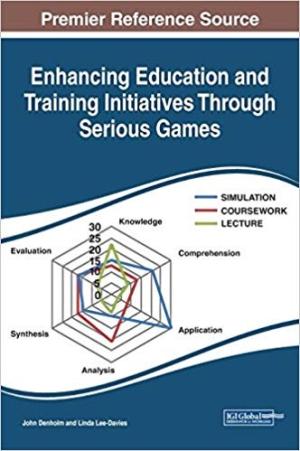
Games have become popular tools to enhance learning in both educational and business environments. Analyzing the link between games and their results on students can help provide advances for learning initiatives in the future. Enhancing Education and Training Initiatives Through Serious Games is an essential reference source that examines the impact that games and simulations have within different learning environments. Featuring in-depth discussions on relevant topics including self-reporting surveys, project management techniques, academic training, and game design, this publication is an ideal resource for academicians, students, business owners, and professionals that are interested in discovering the advances of serious gaming techniques. (From the Publisher)
Gaming technologies have become effective learning tools within education. Gamification has the potential to increase engagement using real-time feedback on learning activities, which allows students to reflect on their completion and retention of a learned activity. Gaming Innovations in Higher Education: Emerging Research and Opportunities is an essential reference work featuring the latest scholarly knowledge on the application of different gaming techniques within education to make learning activities more enjoyable and successful. Including research on a number of topics such as virtual laboratories, interaction media, and intrinsic and extrinsic motivation, this publication is ideally designed for academicians, researchers, and students interested in the benefits of providing an entertaining and intellectually-stimulating learning environment. (From the Publisher)

As educational standards continue to transform, it has become essential for educators to receive the support and training necessary to effectively instruct their students and meet societal expectations. To do this, fostering education programs that include innovative practices and initiatives is imperative. Preparing the Next Generation of Teachers for 21st Century Education provides emerging research on innovative practices in learning and teaching within the modern era. While highlighting topics such as blended learning, course development, and transformation practices, readers will learn about progressive methods and applications of 21st-century education. This book is an important resource for educators, academicians, professionals, graduate-level students, and researchers seeking current research on contemporary learning and teaching practices. (From the Publisher)
With a laudable personal openness and deep dedication to both their field of sociology and the practice of teaching, editors Christopher R. Matthews, Ursula Edgington, and Alex Channon premise their volume Teaching with Sociological Imagination in Higher and Further Education on the idea that the skills of reflexivity and critical thinking are not only skills they stress in their courses to train and develop students, but also skills that can and should inform their own teaching practice. This reflective nature is the guiding purpose of their essay collection, and the contributors therein address that same principle from a variety of angles. Such a reflexive approach, the editors write in their own section of the volume, “Introduction: Teaching in Turbulent Times,” is emphasized as “an exploration of the importance of teaching with sociological imagination, derived from a critical, reflexive engagement with our own situated practices, theorizations, and professional identities” (xvii). This openness regarding the positionality of the researcher and of the teacher is in large part what sets this volume apart. Briscoe (2005, Educational Studies 38, 23-41) noted that ideological positioning grants that while ideologies derive from one’s experiences and are influenced by one’s demographic positionality, the researcher (and in this case, the teacher) can have experiences that allow him or her to develop empathy with the other (33). The fact that Matthews, Edgington, and Channon foreground this idea sets the tone for the rest if the volume. For instance, James Arkwright’s essay focuses on education equality as seen through the lens of inclusion and accessibility. The case studies Arkwright includes illustrate the issues and themes of students confronted with short- and long-term illnesses, as well as disabilities, and their experiences in institutions of higher or further education. These cases are built upon by his own story of being an educator who uses a wheelchair, through which he even more strongly makes his case for why the current state of inclusivity may seem positive, while the reality of those inclusive policies in practice could be improved to achieve a greater degree of equity. Another demonstration of the efficacy of the volume’s premise is Pam Lowe’s entry on the role emotions may play in the learning experience. This topic is timely, as debates on trigger warnings and how or whether to address sensitive issues in class is ongoing. Lowe explores the complexity of educators’ attempts at balancing emotional and sensitive issues with academic objectivity. Teaching with Sociological Imagination in Higher and Further Education is a valuable collection of topics from a variety of professional angles, all focused on how educators teach reflexivity and critical thinking, while practicing those same principles as educators. In doing so, Matthews, Edgington, and Channon have provided a strong and diverse contribution to the fields of sociology and education, as well as a demonstration of the value inherent in exploring, understanding, and practicing how these fields are interlinked.
Going Online presents a hopeful view of online teaching. A professor in the NYU Tanden School of Engineering, Ubell seems aware that this position will contradict many professors’ perceptions. “Sitting at desks or moving about, our bodies and minds inhabit the classroom, often with the same ease and familiarity we find at home,” he writes, adding “Most of us assume it’s the ideal learning environment” (33). Going Online makes a case for recognizing the limitations of the face-to-face classroom and reconsidering the pedagogical practices that become possible outside of that setting. The collection might not persuade administrators and faculty whose familiarity with online education has led them to resist its expansion. However, it offers a useful survey of previous research and confronts pervasive misconceptions. These two features make it a valuable resource for sustaining conversations in universities looking to develop online experiential learning. In Chapter 1, “Dewey Goes Online,” Ubell writes, “Virtual education emerges as a workshop in which online students exercise functions essential for scholarship and professional life” (5). The professor’s role changes in an online setting because they “become facilitators, propelling students to engage in discourse through discussion and argument to generate and link ideas.” The move to an online format “often calls upon faculty to become far more engaged than in the classroom” (8). Going Online develops these two ideas – online courses facilitate active and experiential learning, and faculty become more dynamic and effective when teaching online – through theoretical discussion and practical applications. Going Online makes a point to dispel myths and misconceptions about online courses. Far from alienating or isolating students, online discussions unfold over time and provide space for reflection and “room for analysis, critique, and problem-solving” (9). The collection convincingly shows that the quality of online education equals or surpasses that of face-to-face instruction, but Ubell does not address the legitimate fears that can be summarized in one professor’s observation: “Machines have historically been used to increase profits by cutting the labor force” (54). In fact, part of faculty resistance stems from the low status attached to online courses. In “Why Faculty Don’t Want to Teach Online,” Ubell acknowledges that teaching online represents a risk for many untenured faculty. Those who contemplate migrating their courses online must confront the potential suspicion of colleagues. Ubell explores possible concerns such as “Will she be devalued, suspect, even ridiculed?” “Will her career be threatened?” and “Will she be exposed to hostile reactions from her colleagues?” (50). Alternatively, “will she be seen by some as adventurous, a risk-taker, an early adapter, unafraid of challenges?” (51). Going Online does not reassure teachers facing these risks, but this section asks faculty and administrators to confront the ways that prejudice against online education disadvantages those who shoulder those courses out of necessity or curiosity. These questions name problems and assumptions that might otherwise remain submerged in many conversations about program design. Ubell also acknowledges that the history of online education offers cautionary tales. “For years, for-profits dominated online industry” and greed turned many of those schools into “diploma mills” (55). Because of this history, many faculty at private and public universities fear that embracing online education means their institutions “will fall into the same contemptible void” (55). Ubell asks faculty to reframe this debate over online teaching: “the battle is not fought between brick-and-mortar and new digital space, but between old and new ways of teaching – between wise, old talking heads at the blackboard versus new approaches that encourage interaction among students and instructor” (55). However, learning to view the shift online in these terms is unlikely to satisfy the concerns of junior or contingent faculty worried about their status in the university; it will also do little to satisfy established faculty worried about how online programs will affect the status of their university. Ubell does not always take faculty objections to online teaching as seriously as I believe those objections merit, potentially limiting the reach and effectiveness of the collection. The concrete advice in Going Online will be particularly useful for academic programs or departments that are only now beginning to offer online courses. Chapter 3, “Active Learning,” by John Vivolo, Director of Online and Virtual Learning at the Tanden School, outlines technologies that make possible engaged discussions and interactive lectures. Chapter 7, “Migrating Online,” written with Sloan Foundation and Online Learning Consortium advisor A. Frank Mayadas, outlines the stages of designing an online program and situating it with an existing university structure. The strongest passages of the collection are those that describe the texture of an online class and acknowledge the practical needs that online programs meet. Mayadas writes: Schools that enter the online marketplace find that the largest fraction of students enrolling in their new online programs is drawn from nearby communities . . . Expect at first that most of your virtual student population will be regional – local students who are just as attracted to your programs as those who enroll on campus, but given various obstacles, are prevented from coming to campus. (70) Online courses are certainly more accessible to many students, and Mayadas asks readers to consider whether they may be more equitable too. For example, “Are women – who now make up a far greater proportion of students online than men – more likely to participate actively than in conventional male-dominated classrooms? What about the effectiveness of online learning for black, Hispanic, and other underrepresented students”? (69). Going Online does not elaborate on this point or explore these questions. Future researchers may want to take up this “next – and far more difficult – phase of quantifying the value of online learning” (69). As an early-career academic with experience designing and teaching online courses in rhetoric, composition, and literature, I recognized many of the advantages and pleasures that Ubell describes. In my experience, discussions that unfold online rather than in the classroom include more students and encourage careful thought rather than quick opinions. Often, online students who are geographically dispersed and working according to their own schedules are even more engaged than face-to-face students who display “eagerness, attention, and alertness” but “may just be performing according to conventional classroom rules” (48). Humanities teachers will likely bristle at some of Ubell’s descriptions of the face-to-face classroom, though. I share Ubell’s enthusiasm for online teaching and creative disruption, but I wondered if his dismissal of the conventional classroom as “artificial, often a space for listening, rarely open to practice and reflection,” reflects his experience in large lecture courses and the discipline of engineering (4-5). Many professors in the humanities build both online and face-to-face courses around critical reflection, active and peer-to-peer learning, and ethical argument. We would dispute the claim that “nothing has changed since Victorian times when classrooms and factories were built with pretty much the same purpose – for a docile workforce” (45). While this description runs counter to the experiences of many teachers, Ubell’s image of online courses will encourage readers who hope this growing form of education maintains the joy and rigor that propels our work.
This book is a collection of lectures given by Maxine Greene over a period of twenty-five years. Greene, who passed away in 2014, was an outstanding example of the integration of scholarship and the arts, aesthetic education and social thought. As such, this book is for all those who are interested in education and who seek to make their classrooms energetic, immediate, and alive with imagination and critique (vii-viii). It is a book for any educator in any discipline who seeks to embody transformative classroom experiences for their students. Variations on a Blue Guitar’s introduction and preliminary material familiarizes readers with Greene’s work and her role in the Lincoln Center Institute for the Arts in Education at Columbia University. The book is divided into five sections. The first introduces the reader to aesthetic education. Greene believes that aesthetic education creates different modalities of expression that result in new ways of doing education in the classroom. For Greene, engaging art in education elicits “fresh connections, unsuspected meanings, and. . . continuing discovery” (42). The second section works through the experience of the imagination and its implications in the classroom. One of the goals of education using art is to suggest alternative realities for the material being discussed. Greene describes concrete, purposeful, and evocative experiences with art. However, she also gives concrete examples of how one can live these experiences in moments of awareness in the natural world (72). Furthermore, she uses examples from literature, visual art, and even the natural world of these moments of awareness where an awakening occurs and one has a new field of perception of reality. The third section of the book moves from these experiences to the concrete classroom. Greene advocates for including art in active learning, critical questioning, narrative, meaning-making, authentic assessment, collaboration, and community (146). She champions the arts in a world that is increasingly technological and dependent on the internet and computers; some experiences can only be rendered through the arts (172). This emphasis on the arts does not ignore excellence and standards. In fact, art improves classroom standards that appeal to traditional banking models of education. In the fourth section of this book, Greene describes how minorities are a rich source of creativity and thinking outside the box. Education should strive not to rule others and furthermore it should not classify minorities or put them in hierarchies to silence them (198). Greene’s endeavor to give dignity to often silenced voices is a strength of this book. She states, “[T]he cruelest thing we can do. . . is to categorize young people. . . whether we call it ‘Asian,’ ‘Hispanic,’ ‘African American’” (152). Overall, this book is beneficial as Greene pushes the reader beyond conventional means of education. It is a helpful resource for teachers in all fields of the discipline as they discover new dimensions of themselves and their pedagogy.
What is expressly Christian about teaching in a Christian context? In this assessment of the state of Protestant Christian pedagogy and constructive vision for its improvement, Smith addresses a gap he perceives between the aspirations and actual practices of Christian teaching. Teaching in Christian contexts cannot be reduced to issues of content or philosophy; it requires intentionality of process. Smith’s laser focus on Christian pedagogy distinguishes his approach from other treatments of Christian teaching that emphasize the spirituality of the educator, such Parker Palmer’s work. On Christian Teaching resides within the practices stream of theological education, consistent with Smith’s other work including Teaching and Christian Practices, which he co-authored with James K. A. Smith. After laying out an extensive argument for how the integration of faith and education must attend to pedagogy, Smith engages the What If Learning approach (http://www.whatiflearning.com/) developed in conjunction with the Kuyers Institute for Christian Teaching and Learning, which he directs at Calvin College. Here the reader is invited to envision possibilities for seeing anew through a shared imagination between teacher and students, enabling students to choose meaningful engagement, and reshaping practice through attention to space and time. Surprisingly, however, Smith does not engage the important work already published by scholars of color on some of the very topics of his chapters, such as Willie James Jennings’ The Christian Imagination or bell hooks’ Teaching series. The reader would do well to engage Smith’s book alongside such other resources on imagination and pedagogy. Smith guides Christian educators in assessing the pedagogical home they create, an environment that forms students in particular practices and assumptions. He continually pushes readers to go beyond philosophy and content to wrestle with the implicit meanings their teaching practices may convey, privileging student perceptions of the classroom experience over the teacher’s intentions. From start to finish, Smith consistently grounds his book in the actual experiences of teaching. Examples from a wide variety of classroom settings abound: anecdotes relayed by his son at a Christian high school, Smith’s own experiences teaching language classes at the high school and university levels, and an array of stories received from colleagues and students. If Smith’s leadership of the Kuyers Institute is not enough to convince the reader to pay attention, the organic way he articulates his message amid such a diversity of classroom examples gives the reader a sense that Smith is indeed a master teacher, and that something significant can be learned from him. The title of the book indicates two of its limitations: it expressly addresses Christian teachers and institutional settings, and is focused on the four-walled institutional classroom setting. A third limitation is its one-directional movement from theology to practice that carries a hint of applied theology, “that faith can inform pedagogy” (viii). The reader must therefore raise two important questions alongside this book: Is the traditional classroom the best setting in which to enact Christian teaching? And, in what ways might the pedagogy in which we were formed already have shaped our theology? On Christian Teaching is written for educators across all disciplines who identify as Christian, especially those at Christian secondary and higher education institutions. It contains eleven manageable chapters of approximately fifteen pages in length, each with a journaling prompt and questions for reflection and discussion that facilitate reflection on one’s current practice of teaching and guide imagination for future practice. This structure makes the book ideal for reading among a group of educators who are ready to move beyond the questions of what and why they teach, to imagine the how of Christian teaching.