Book Reviews
The aim of Fundamentalist U is to “offer a more complete history of fundamentalist and conservative evangelical higher education” including the daily functioning of evangelicalism. The schools studied include Wheaton University, Gordon College, Biola University, Moody Bible Institute, Bob Jones University, and Liberty University. The task at all these schools is to balance academic legitimacy while maintaining reputations for religious purity. Laats defines the (evolving) distinctives of Christian fundamentalism and evangelicalism; outlines what it has meant for these schools to be “real” colleges or universities; demonstrates how the schools function as centers for both evangelicalism and fundamentalism; and examines the methods, models, and tools they have used to teach new generations of students. The distinctive realm of Christian fundamentalism includes an interdenominational religious network of K-12 schools, colleges, universities, and Bible institutes dedicated to the promulgation of orthodox Christianity and to “remaining true to the supernatural truths of real religion as revealed once and for all in the pages of an inerrant Bible” (5). It means maintaining a belligerent stance against modernism, high levels of authority vested in personalities and charismatic leaders, a defense of Whiteness, and rigid positions on race which are elevated into tests of loyalty. The distinctives of Christian fundamentalism (for example, conservatism) include a policing of all sexual behavior including homosexuality (which is framed as the ultimate sexual sin); traditional cultural attitudes around gender, family structure, and sexuality; and a constant monitoring of faculty and students regarding orthodox belief and action, in order, in part, to maintain their donor base, please fundamentalist parents, and ensure a regular flow of new students. Laats examines evangelicalism’s evolution into neo-evangelicalism, characterized by a willingness to critically examine beliefs, preparing students for missionary work, and the grafting of small government, free-market ideologies onto theology. Changing ideas about civil rights and racial equality forced schools to admit that racial segregation was an important part of evangelical character, that racial integration was “anti-Christian perversion” and that, in the 1970s, a fear of miscegenation and opposition to school desegregation orders fueled the formation of thousands of new K-12 Christian schools. Laats also outlines how the six schools studied became important intellectual centers for religious and political conservatism. The first unfortunate aspect of the book is that moderate black, brown, and white believers who are part of the evangelical tableau are not characterized. Second, a short section on what racism, anti-blackness, and white supremacy meant and still mean for African Americans is a much needed addition. That is, an acknowledgment that the toxic mix of equating whiteness with true Americanism, unqualified support of war, and the easy inclusion of conservative political orthodoxy with theology would have provided some ballast that most students and teachers would find useful pedagogically. Still, this is an excellent introductory text on (white) Christian fundamentalism and evangelicalism. It is well-researched, well-written, and a pleasure to read.

Control is Not a Four Letter Word provides an abundance of helpful information for everyone from the first-time teacher to the veteran teacher. After forty years of classroom experience, Sarah Clancy-Ballard bridges the gap between learning how to teach and establishing classroom authority. She believes a teacher sets the tone for the entire year in the first five days of a new school year (xii). The resonating theme of the text is that classroom control emerges from preparation and “the depth of commitment the teacher has to control the class” (xiii). The author examines the importance of first impressions, organizing and utilizing the written word, time management, and behavior management. Clancy-Ballard’s classroom teaching experience leads her to believe the secret to classroom management is a teacher’s ability to control their classroom when students feel that the teacher cares for them on a personal level (6). The author notes facial expression and remembering student names are the most important things a teacher can to do to set the tone and communicate interest in students as individual people. She values relationship building both inside and outside of the classroom as a vital part of a teacher’s educational philosophy. Clancy-Ballard stresses that teachers need to form relationships with janitorial staff, fellow teachers, and administrative staff, and encourages new teachers to watch “veteran teachers: what works and does not, and how it changes with each principal” (33). She provides a detailed look at how to organize the classroom space, utilize textbooks, handouts, and instructional boards, and create a daily classroom routine. The book covers dozens of examples of routine-driven agendas, inspiring readers to “establish a routine for the beginning of class” (46). Clancy-Ballard equips the reader with clear guidelines for implementing evaluation methods and time management within the classroom. She associates teacher time management and student assessment to classroom behavior management, pointing once again to the importance of preparation. The author emphasizes that “the student’s attitude about himself or herself and you is directly related to how he or she perceives they are doing in class,” thus connecting the teacher’s behavior to the student’s achievements (55). She encourages teachers to take inventory of their strengths and weaknesses, understanding how their “behavior in class will directly impact the behavior” of their students (66). Clancy-Ballard proposes a benevolent dictatorship approach in the classroom – treating students as intelligent individuals who have ownership of classroom management. By beginning the school year with clear expectations and explaining why the guidelines are instrumental to the class’s success, the teacher can establish control through preparation characterized by benevolent dictatorship (71). Control is Not a Four Letter Word is primarily written for first-time elementary school teachers; however, it can be a useful reference guide for teachers from elementary through high school. This book is a useful asset for school principals to utilize with teachers for discussion about the numerous reflection questions. This could help ensure appropriate application rises from knowledge. Professors at the undergraduate level, will find Control is Not a Four Letter Word a helpful tool to assist senior-level students as they leave the classroom and begin student teaching. During the first half of the school year, student teachers would benefit by using the text’s key concepts to observe and evaluate the lead teacher and their level of classroom control. By the second half of the year, student teachers would be well versed in the key concepts, and thus prepared to apply Sarah Clancy-Ballard’s methods in the classroom.

Timing is everything. It’s true for comedians and, according to Gail Taylor Rice, also for professors. Great comedians can hold an audience’s attention for over an hour because the attack-and-retreat nature of human attention. They know about volume control; high volume must be properly balanced with lower volume. Fast tempos must be tempered with slower tempos. In the book Hitting Pause, Rice makes a compelling argument in favor of recognizing and designing classes in light of the rhythms of learning. Professors often suffer from the cognitive bias of "the curse of knowledge." This malady makes it nearly impossible for experts to put themselves in the shoes of someone who is learning things for the first time. A result of this curse is that it’s nearly impossible to appreciate how much time is needed for comprehending material. Rice suggests that learners "might wish that there was a pause button connected to their college professors" (4). The pause button is a great metaphor. I think this idea could also be expanded as a highlighter pen for the lecturer. The professor needs to frequently slow down and make sure that students understand the importance of certain ideas. The book rightly challenges the status quo of today’s university classroom as a place where professors read PowerPoint slides in darkened rooms while the gravitational pull of more interesting things like Instagram claim the student’s valuable and limited attention. Rice suggests that well-timed pausing can introduce the right kind of novelty and reflection to pull students out of their penchant for succumbing to time-wasting distractions. Many educators believe the lecture is dead, and good professors will not use them. Lectures, however, aren’t necessarily bad; only bad lectures are bad. Rice offers solid research to give professors tested strategies for designing effective lectures that are punctuated with well-timed opportunities for reflection and emphasis. According to Rice, starting a class with a pause invites students to become emotionally invested in learning. Again, we are so busy planning what we will teach that we forget to see things from a student’s perspective. An intentional pause forces us to think of starting a class like a pilot preparing for take-off. A good pilot will dutifully attend to a check-list to make sure that the plane is in good condition; teachers also need to consciously attend to their students’ current ability to learn. The first half of Hitting Pause provides solid research about the pedagogical advantages of pausing. The second half contains numerous examples of starting pauses, mid-pauses, and closing pauses. Each example is categorized by appropriate setting and characteristics for use. The settings for use are divided into small classroom lecture, clinical or laboratory presentation, one-on-one session, conference presentations/in-service education, keynote/large-group presentation, course/unit, and online learning module. The characteristics include: affirming/positive, physical/movement, activates prior knowledge/experience, focuses/refocuses, creates community, generates curiosity, metacognitive, reviews, celebrates, commits to action, and provides a bookend. There are a great variety of examples which can be adapted to work in different settings. Overall, this is a valuable book for teachers who are hoping to be more learning-centered.
This textbook considers and addresses the design of online learning objects, electronic textbooks, short courses, long courses, MOOC courses, and other types of contents for open sharing. It also considers the design of online mediated communities to enhance such learning. The “openness” may be open-access, and/or it may even be open-source. The learning may range from self-directed and automated to AI robot-led to instructor-led. The main concept of this work is that design learning for open sharing, requires different considerations than when designing for closed and proprietary contexts. Open sharing of learning contents requires a different sense of laws (intellectual property, learner privacy, pedagogical strategies, technologies, media, and others). It requires different considerations of learner diversity and inclusion. It requires geographical, cultural, and linguistic considerations that are not as present in more localized designs. The open sharing aspect also has effects on learner performance tracking (assessments) and learner feedback. This textbook targets students, both undergraduate and graduate in computer science, education and other related fields. Also, professionals in this field managing online systems would find this book helpful. (From the Publisher)

Organization and Newness: Discourses and Ecologies of Innovation in the Creative University offers a view from a perspective of organizational education on the ‘new’, which analyzes the production of the ‘new’ within organizations, in relation to the inherent learning processes. Fundamental for this perspective is the question about the changeability of organizations, especially when these are not viewed only as instrumentally established regulatory structures but rather as social constructs. The contributions of this volume contour the complexity of newness in organization and form a bridge from critical analysis of imperative discourse of newness, to programmatic pleas of an organizational pedagogy, which is normative in nature, for a reconfiguration of organizational and societal relationships. The issue at hand shows how tightly the question about newness is constitutively woven into the self-conception of organizational education and pedagogy. (From the Publisher)
Assessment and evaluation have always been an integral part of the educational process. Quality and purposeful assessment can assist in students’ learning and their achievement. In recent years, considerable attention has been given to the roles of educational measurement, evaluation, and assessment with a view to improving the education systems throughout the world. Educators are interested in how to adequately prepare the young generation to meet the ever-growing demands of the 21st century utilizing robust assessment methods. There has also been increased demand in accountability and outcomes assessment in schools to bridge the gap between classroom practices and measurement and assessment of learners’ performance. This volume contains selected and invited papers from the First International Conference on Educational Measurement, Evaluation and Assessment (ICEMEA). (From the Publisher)
Recognizing the growing interest in competency-based education (CBE) in U.S. higher education, but also the lack of shared standards or practices around it, three experts produced this guide for other educators who are contemplating a move to (or revision of) this type of instructional program. The authors help those who are enthusiastic about CBE avoid pitfalls by offering practical guidance. They strike a cautionary tone throughout, beginning their Introduction with the sobering reality that “there are relatively few schools that have been able to move from interest to implementation” (1). One of the reasons for caution may be that even a definition of CBE is hard to come by. The authors joke that “if you were to ask ten people to define CBE, you would likely hear ten different answers” (2). Instead they offer five “hallmarks” of CBE: (1) “time is variable, and learning is fixed”; (2) there is “required demonstration of mastery or proficiency” which is (3) “determined by rigorous assessments”; CBE is (4) “focused on the student learning journey” and is (5) “offered in a flexible, self-paced approach” (3-4). Many educational programs would claim one or more of these hallmarks, but taken together, they represent a distinct departure from traditional education. CBE’s most famous feature may be the way it changes the relationship between learning and time by replacing the credit hour with continuous direct assessment. As the authors demonstrate, however, this change complicates everything from the transcript to faculty workload to accreditation. CBE’s intense focus on individualized student learning paths and assessment (“assessment on steroids,” as I once heard) is also significant because it changes what learners actually do to learn and what teachers do to teach. Traditional faculty roles are likely to be unbundled, “reassembled” (89), and redefined – or replaced – by roles like coach, tutor, and psychometrician. Given the challenge of defining CBE and the guide’s relative brevity, it would benefit from some case studies, at least for readers who are still trying to gain a clear picture of what a CBE program looks like and why an institution might adopt one in the first place. Cases would presumably also help CBE adopters appreciate why other institutions made the choices they did. The book reads instead like an insider’s guide. The book’s best feature, accordingly, is its soup-to-nuts review of issues that educators must consider when designing competency-based education. Chapters address institutional culture, program design, assessment strategies, staffing and business models, and approval seeking. Readers come away fully aware that CBE is not just a different teaching approach but a potentially radical disruption to education delivery.
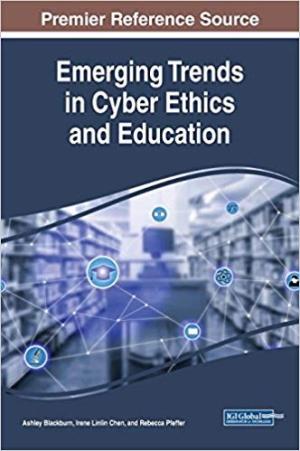
This edited volume is built around the belief that educators can no longer ignore issues of cyberethics in either the content they teach or the tools they use to teach it. Over the past few decades the internet, in its various manifestations, has integrated itself seamlessly into our lives to the point that questions about the responsible use of digital tools are unavoidable. Furthermore, most students are now “digital natives,” born into the digital age with no memory of life before the internet. This reality makes it all the more critical to teach cybercitizenship and responsible internet use in the classroom. Emerging Trends in Cyberethics and Education covers an impressively diverse range of topics and contexts in the course of eleven essays. It treats both K-12 and university-level educational contexts and considers classes that take place strictly online as well as those that meet face to face. The essays fall into three broad categories based on how they approach questions of cyberethics in education. First, there are essays that examine the ethical implications of using educational technology in the classroom, including questions of inclusivity and equal access, the quality of education made possible by digital tools and online environments, plagiarism and intellectual property rights, and discerning the accuracy of information available on the web. Second, there are essays that assess the role of educators in responding to challenges students face in online environments outside the classroom, cyberbullying being the most salient example. Finally, there are essays that consider how educators can teach students to be ethical users of the internet, social media, and other digital tools. Nevertheless, it is consistently clear throughout the book that these are not separate questions; the overarching concern among the authors is the cultivation of “cybercitizens” who can better navigate the complex promises and challenges of life in the digital age. The way teachers model responsibility and thoughtfulness in their use of digital tools, the steps they take in responding to violations of their students’ safety and privacy outside the classroom, and their efforts to explicitly teach cyberethics all play a role in this cultivation. Educators in all contexts and subject matter can make use of this volume and the challenging questions it raises; the theology and religious studies classroom is no exception. Religion classes are particularly well situated to cultivate students as citizens because the subject challenges students to critically reflect on their own beliefs and to understand those with very different ways of thinking and acting in the world. Teachers in these subjects must now consider how, in an era in which knowledge and human interaction is increasingly mediated through digital platforms, one can integrate questions about cyberethics and digital citizenship into course design. As the editors of this volume assert, “these discussions should no longer be optional” (xv).

Globalization directly affects all spheres of human activity. Higher education is no exception. Teachers are encouraged to engage emerging technologies and devices in the practice of their teaching with the hope of advancing student learning. The popularity of distance learning is one example of globalization’s reach. Anyone with an Internet connection can pursue higher education. Boundaries and barriers to education are easily crossed through Internet technology. Cooperation across international higher educational boundaries fosters new cooperation among faculty and raises questions about what connotes learning in diverse cultural contexts. Supporting Multiculturalism in Open and Distance Learning Spaces by Elif Toprak and Evrim Genc Kumtepe provides a detailed overview of contemporary cultural issues and complexities in distance education. The book helps teachers, researchers, scholars, and policymakers approach global education from a variety of cultural perspectives. The book is divided into three sections. Section 1, “Cultural Issues in Management and Global Distance Education,” describes the practical experience the authors gained when working in open or distance education environments. For example, this section covers such topics as the influence of gender on educational policies, the role of quality assurance, and the relationship between cultural perspectives and efficient distance learning. Section 2, “Cultural Issues in Theory and Technology,” looks at close cooperation between education, culture, and technology, starting from the rise of the modern digital era to contemporary contexts. It emphasizes how important it is for the educators to “effectively internalize the premodern, modern, and postmodern eras” (1) or risk either losing a necessary contact with their students or misjudging their conduct and aspirations. The important role of virtual culture and culturally-sensitive instructional design principles is foregrounded in Section 3, “Cultural Issues in Instructional Design and Communication.” For example, “Culturally Sensitive Instructional Design Principles for Online Learning Environments,” explores different components of culture in the learning space, analyzes Hofstede’s Theory of Cultural Dimensions, and evaluates other cultural frameworks and their application in distance learning. Supporting Multiculturalism in Open and Distance Learning Spaces is organized to share experiences and find efficient ways to nurture multiculturalism in learning environments. The book will interest both practitioners and scholars as it contains useful information on theoretical approaches to open and distance learning spaces, analysis of relevant studies, and practical advice on how to utilize various aspects of global education. The three sections with their specific foci enable readers to quickly surf the book without having to read every chapter. Each section contains a detailed reference list of literature, which is also an essential benefit of the book.
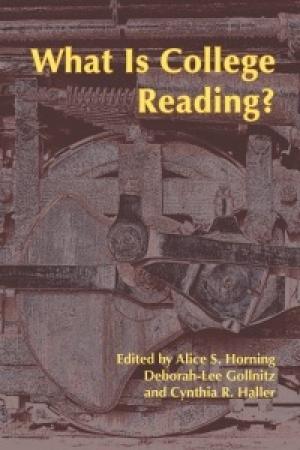
Co-published by CSU Open Press What is college reading? As college teachers we may assume that it is a process of comprehension, analysis, synthesis, and evaluation. But, as this edited volume overwhelmingly demonstrates, that is often not what it is for college students. How then can college teachers help students practice advanced reading skills? The problem is compounded by the fact that even college teachers who actively want to encourage students to read may unwittingly discourage advanced reading skills by, for example, giving reading quizzes in class (as discussed by Mary Lou Odom in this volume). This edited volume is a great resource for anyone wishing to engage questions about how to improve college reading. Some chapters provide useful practical suggestions. For example, Chris Anson shows how to formulate reading log prompts that require students to engage with the underlying ideas in the reading. Other chapters describe exercises such as in-class annotations (Davies) and says-does columns (Huffman). The volume also contains several insightful discussions of other factors influencing college reading that are more difficult to address, but no less important. For example, some of the authors observe that reading, which we may think of as an individual activity, is a “complex sociolinguistic task” (Hollander et al., 59), and “a collective and holistic enterprise” (Maloy et al., 71). Brian Gogan provides a thoughtful reflection on reading in relation to “threshold concepts” (concepts that students need to grasp in order to move forward in a given disciplinary context). College teachers may use these insights to make reading part of building an intellectual community in the class. The chapter by Young and Potter discusses how students are taught to read in K-12, where students are commonly given a decontextualized passage and then tested on their ability to understand inferences at the level of sentences or paragraphs. These students also commonly learn that for each question asked about the text, there is one correct answer in a multiple-choice format. They receive comparably little training in the advanced reading skills required for college, such as learning how to place a particular text into a connected web of texts that make up an ongoing disciplinary conversation, or asking their own higher-order questions and working with others’ questions that do not have a single “correct” answer. When students start college, therefore, they will commonly think of reading as looking for answers in a decontextualized excerpt; they are not accustomed to looking instead for interesting, productive problems in a web of texts (as also discussed in the afterword by Sullivan and Tinberg). Other authors discuss the importance of instructors connecting reading with writing, drawing on both the writing-to-read and reading-to-write conversations (Anson; Freedman). Some chapters refer to the by now widely known finding that the majority of students do not do what their instructors think they do when completing a research paper assignment, and how to address the implications of this for formulating new types of writing assignments (Horning; Young and Potter). Related to this, Laura Davies points out in her chapter that students who write poorly are usually referred to the university’s writing center, rather than asked about their reading skills, which underlie their writing. Several chapters also touch on how reading might be given a stronger institutional footing through, for example, being explicitly incorporated into writing-across-the-curriculum initiatives (Odom), linking courses (Sturtz et al.), or providing a reading-across-the-curriculum community on campus (Hollander et al.). In sum, as Leonora Freedman observes in her chapter, stronger responses to the problem of how to teach college reading skills can lead to increased student engagement as well as increased faculty morale. This edited volume is a very good place to start. It deserves a wide readership among college faculty and administrators, and this goal will no doubt be made easier by the fact that the publishers have made it free to download at wac.colostate.edu.