Resources
“Teaching in a Web Based Distance Learning Environment: An Evaluation Summary Based on Four Courses”
Examines the defense of orthodoxy and the campaign against political correctness on university campuses in the United States. Dangers of a conservative agenda; Analysis of paranoia, fetishism, and impostors among leaders attacking political correctness; Anti-intellectualism in U.S. life; Discrediting of critical efforts by conservatives; Role of diversity of students on college campuses in conflict; Individualism and political correctness; Change in idea of community.
Discusses the educational issues inherent in multicultural education and how students should learn about diverse cultures. Designing and implementing programs that are educationally valuable; Philosophical issues; Curricular issues; Faculty issues; Pedagogy; The process.
Social scientists generally agree that different cultures have different cognitive styles. New educational models which operate within a multicultural framework are necessary. As a result, traditional approaches to training educators must be adjusted if minority groups are to enter teacher education programs.

Calling for accountability, Practice What You Preach discusses ethical questions that arise in congregations and pastoral leadership. Formation of pastors, empowering leaders, resolving power struggles between clergy and laity--these and other critical pastoral issues are addressed by an ecumenical group of contributors. Divided into four parts: the way the churches train their pastors; the way their pastors live; the way communities worship; and the way communities behave, this collection identifies and offers positive solutions to areas where churches are often slow to change. Each essay begins with a case describing a typical problem--from wages to in-fighting--and then discusses what virtues or character traits might be developed to resolve the problem effectively. An eye-opener of a book . . . it will involve you from page one as it invites intelligent people everywhere to reckon with its courageous, timely content. (From the Publisher)
Summarizes evidence from two evaluative studies of the initial training course for new teaching staff at Oxford Brookes University, UK. Findings indicate that the course has had a positive effect for most of the participants. Presents evidence of the positive feedback in the form of comments from several participants. Attitude statements used in both studies are appended.
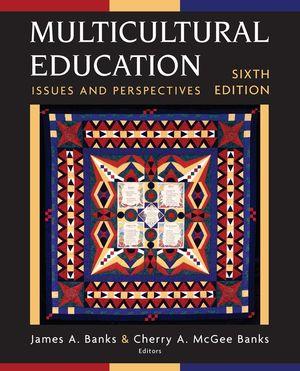
This handy reference is designed to help present and future educators acquire the concepts, paradigms, and explanations needed to become effective practitioners in culturally, racially, and language diverse classrooms and schools. The Fourth Edition reflects current and emerging research, concepts, and debates about the education of students from both genders and from different cultural, racial, ethnic, and language groups. (From the Publisher)
This book's basic premise is that present demographics suggest concepts of inclusion and cultural reflection are essential to any academic endeavor. Teachers and future teachers need to be aware of the emergence of multicultural education and how that plays out in the classroom. The volume presents a historical overview of the concept and stresses the need for greater awareness. (From the Publisher)
Wabash Center Staff Contact
Rachelle Green, Ph.D.
Associate Director
Wabash Center
greenr@wabash.edu