Resources

Paradox and surprise face those who pursue deeper spiritual practice, theological wisdom, and even a religious calling "into the ministry." Unbeknownst to incoming students, the pursuit of theological education in established institutions today furthers a faith that is recognizable in delight and compassion, even as it may just as easily deform it into a moral duty and autonomous professionalism so divisive in today's religious ecology. How may those drawn into ministry formation today receive its deep theological treasures and sustain a vibrant faith with a theologically expressive delight able to companion the suffering of self and others? (From the Publisher)

Working One-to-One with Students is written for Higher Education academics, adjuncts, teaching assistants and research students who are looking for guidance inside and outside the classroom. This book is a jargon-free, practical guide to improving one-to-one teaching, covering a wide range of teaching contexts, including mentoring students and staff, supervising dissertations and how to approach informal meetings outside of lectures. Written in an engaging, accessible style and grounded in experience, this book offers a combination of practical advice backed by relevant learning theory. Featuring a wealth of case studies and useful resources, the book covers areas including: º Supporting students º Encouraging independent learning Mentoring coaching and personal tutoring º Developing peer groups and buddying programmes º Dealing with diversity, difficult students and ethical dilemmas º Supervising the undergraduate dissertation º Supervising postgraduates in the arts, social sciences and sciences. This book is a short, snappy, practical guide that covers this key element of a lecturer's work. In the spirit of the series (KEY GUIDES FOR EFFECTIVE TEACHING in HIGHER EDUCATION) this book covers relevant theory that effectively informs practice. (From the Publisher)
How should you prepare for the first day of class? How can you encourage all students to participate in discussions? How do you ensure disabled students can take part in field work? Increasingly, universities are drawing from a less traditional group of students – international students, disabled students, part time students, and mature students. This book offers specific, practical advice on the issues that teachers encounter when teaching in a diverse classroom. Inclusion and Diversity highlights good practice for all students, and provides a helpful structure around the day-to-day experiences of staff and students as they make contact with each other. With reference to the international literature, and discussing some of the educational principles that underpin an inclusive curriculum, this book covers a wide range of useful topics so that teachers will have quick access to guidelines on different aspects of teaching and learning: o small and large group teaching o e-learning o work placements o students’ lives out of the classroom o personal tutoring o skills agenda o assessment o employability and further study Addressing a range of themes, including student age, ethnicity, disability, sexuality and gender, this book aids all practitioners in higher education today – particularly those new lecturers meeting their students for the first time – to develop a better understanding of the issues involved in teaching a diverse range of students. (From the Publisher)
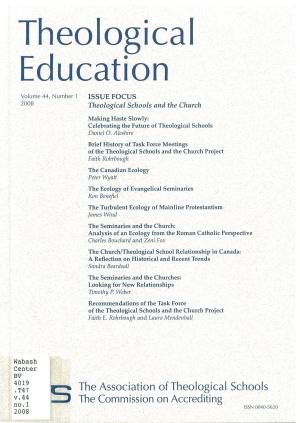
Journal Issue. Full text is available online.

Journal Issue.


Journal Issue.

Journal Issue.

This book dispels the myth that Black boys are synonymous with underachievement. It demonstrates how many progress into higher education, albeit against the odds, and offers solutions for policy and practice. There is a plethora of research focusing on the underachievement of Black boys. But little attention has been given to their positive achievement until this author's research on both sides of the Atlantic. The book follows black male students in the USA and UK who have successfully accessed higher education— at both elite universities (Harvard and Oxford) and less selective institutions. It sets out to establish the extent to which they have been exposed to the factors known to correlate with the underachievement of Black male youths, and to identify the factors that have led to their educational success and influenced their access to, and choice of universities. Part One sets the educational scene in each country. Part Two looks at the obstacles the students encountered, covering social class; parental social capital; racism and racial identity; and addressing the boys' own negative attitudes and behavior. Part Three unravels the factors leading to success, devoting attention to parental roles; positive encounters with schools, teachers and community; the influence of church; and the students' personal qualities and navigational smarts. Part Four reviews the boys' processes of choice and application to university and concludes with implications for educational policy and practice. Here is a book that can be used both as guide to policy development, and as a practical tool for use by parents, teachers and Black boys themselves to help gainaccess to higher education. (From the Publisher)
In The Four Cultures of the Academy, William H. Bergquist identified four different, yet interrelated, cultures found in North American higher education: collegial, managerial, developmental, and advocacy. In this new and expanded edition of that classic work, Bergquist and coauthor Kenneth Pawlak propose that there are additional external influences in our global culture that are pressing upon the academic institution, forcing it to alter the way it goes about its business. Two new cultures are now emerging in the academic institution as a result of these global, external forces: the virtual culture, prompted by the technological and social forces that have emerged over the past twenty years, and the tangible culture, which values its roots, community, and physical location and has only recently been evident as a separate culture partly in response to emergence of the virtual culture. These two cultures interact with the previous four, creating new dynamics. (From the Publisher)
Wabash Center Staff Contact
Sarah Farmer, Ph.D.
Associate Director
Wabash Center
farmers@wabash.edu