Resources
Part of the groundbreaking Connecting with e-Learning series, A Guide to Authentic e-Learning provides effective, working examples to engage learners with authentic tasks in online settings. As technology continues to open up possibilities for innovative and effective teaching and learning opportunities, students and teachers are no longer content to accept familiar classroom or lecture-based pedagogies that rely on information delivery and little else. Situated and constructivist theories advocate that learning is best achieved in circumstances resembling the real-life application of knowledge. While there are multiple learning design models that share similar foundations, authentic e-learning tasks go beyond process to become complex, sustained activities that draw on realistic situations to produce realistic outcomes. A Guide to Authentic e-Learning: • develops the conceptual framework for authentic learning tasks in online environments • provides practical guidance on design, implementation, and evaluation of authentic e-learning tasks • includes case studies and examples of outcomes of using authentic e-learning tasks Written for teaching professionals in Higher Education who teach online, A Guide to Authentic e-Learning offers concrete guidelines and examples for developing and implementing authentic e-learning tasks in ways that challenge students to maximize their learning. This essential book provides effective, working examples to engages learners with authentic tasks in online learning settings. (From the Publisher)
Radical Pedagogy argues that longstanding pedagogical aims and practices are ineffective in promoting learning and social change and proposes a new strategy for achieving these ends. Drawing on recent research in psychoanalysis, social psychology, and cognitive science, Bracher argues that the most effective way to solve social problems such as violence, prejudice, and substance abuse on a mass scale, as well as impediments to learning and personal well being, is through a pedagogy that addresses their common root cause: identity vulnerability.To this end, Bracher formulates psychoanalytically based practices to develop more resilient, secure, and prosocial identities for both teachers and students. (From the Publisher)
Teaching, Learning and Research in Higher Education offers a combination of critical perspectives and practical advice that is ideally suited for individuals interested in enhancing their practice through analysis and critique. The aim is to promote a critical understanding of one's own practices: to foster personal and professional formation through a reflexive engagement with one's environment and circumstances. At a practical level this means to continuously think about how to adjust practice rather than following a formulaic approach derived from any particular educational theory. Teaching, Learning and Research in Higher Education argues that academics can find space for their own agency in the midst of institutional policies and practices that serve to frame, as well as delimit and constrain, what counts as good academic work in teaching and research. This text bridges a gap between those books that provide a high-level analysis of contemporary higher education, the more practical texts on how to be a good teacher in higher education, and those texts which aim to improve teaching through better understanding of the learning process. Topical chapters include: Teacher-learner relationship, Learning groups, Practice-oriented learning, Teaching for diversity, e-learning, Assessment, Approaches to Staff Development, Quality assurance, Supervision and Research education, Doing research, and Teaching & Research. A must-have resource for higher education professions, academic developers, professionals, and anyone looking to improve their teaching and learning practices, Teaching,Learning and Research in Higher Education is also appropriate for continuing and professional development courses in the UK and teaching and learning courses in the US. Mark Tennant is Dean of the University Graduate School, University of Technology, Sydney. Cathi McMullen is Lecturer in the School of Marketing and Management at Charles Sturt University. Dan Kaczynski is Professor in the Educational Leadership department at Central Michigan University. (From the Publisher)
Collaborative working is an increasingly vital part of Higher Education academic life. Traditionally, university culture supported individual research and scholarship. Today, the focus has shifted from the individual to the group or team. Collaborative Working in Higher Education takes the reader on a journey of examination, discussion, and reflection of emerging collaborative practices. The book offers suggestions for developing practice via a broad overview of the key aspects of collaboration and collaborative working, informed by focused case studies and the international perspectives of the contributing authors. The book has three main parts: Part I: Examines the social nature of collaborative working from a practical and critical perspective, focusing on four dimensions of collaborative working: academic practice, professional dialogues, personal and organizational engagement and social structures. It considers organizational models, varied approaches, potential challenges posed by collaborative working, and reflection on the management of collaboration at different stages. Part II: Focuses on the different aspects of collaborative working, building on the dimensions introduced in Part I, and addressing the crossing of boundaries. It looks at different contexts for collaboration (e.g. discipline-based, departmental, institutional and international) using case studies as examples of collaborative strategies in action, providing learning points and recommendations for practical applications. Part III: In addition to considering forms of collaboration for the future, this part of the book engages the reader with athough-provoking round-table discussion that itself embodies an act of collaboration. Collaborative Working in Higher Education is a comprehensive analysis of how collaboration is reforming academic life. It examines the shifts in working practices and reflects on how that shift can be supported and developed to improve practice. Higher Education faculty, administrators, researchers, managers and anyone involved in collaborative working across their institution will find this book a highly useful guide as they embark on their own collaborations. (From the Publisher)
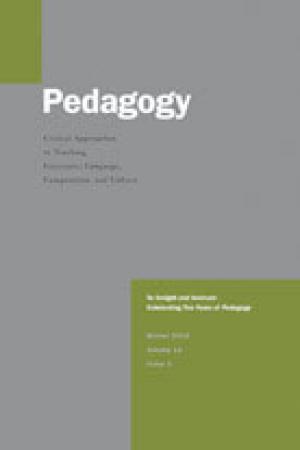
Journal Issue. This issue considers the sustainability of English studies and of the humanities as a whole in the context of shrinking budgets and job opportunities and of shifting resources. Exploring topics from academic freedom and globalization to digitization, diversity, and the value of a humanities-based education, “To Delight and Instruct” reexamines the work of the English professor and calls for a reassessment of the priorities and means that undergird it. Contributors examine the faculty’s fundamental responsibilities to classroom teaching, the university, and the community. Attending to the relationship between changing technologies and literacy in a global environment, the issue not only argues for a reassertion and reimagining of the humanities in the contemporary university but, perhaps as important, helps articulate a way forward.

Praise for Helping College Students Find Purpose A generous and inspiring book! In the spirit of 'convocation,' Nash and Murray call together both university faculty and student affairs professionals to provide them new means for helping more college students realize the highest purpose of higher education—that, in pursuing the means to make a living, one comes to make a meaning worth living for. Educators across campuses—faculty and administrators alike—will find in this book not only the importance of helping their students construct meaning upon which to base their academic and life ambitions, but also practical suggestions for doing so. Ultimately, those who will benefit most from this book are students whose education inside and outside the classroom is informed by the type of cross-campus, interdisciplinary approach to meaning-making put forth by the authors. This comprehensive compendium is a must-read for any higher education professional interested in responding to students' ubiquitous concerns about existential issues concerning purpose and meaning. It brings together classical and contemporary thought, conceptual depth, and concrete suggestions for practice. This scholarship is enriched and enlivened by the authors' personal perspectives and experiences, and by student voices and vignettes. Buy it and keep it handy as a source of wisdom and good counsel. A thoughtful, provocative, moving, yet practical guide for any teacher seeking to make the college classroom a space for inspiration and hope. (From the Publisher)
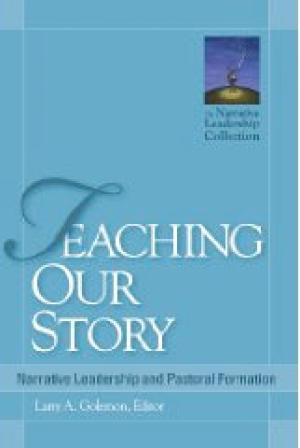
As congregations become intentional story-forming communities, they can shape the lives of millions of generative, faithful, and civic-minded adults. To do so, a framework that relates narrative work to the full range of congregational life is needed. Teaching Our Story offers such a framework, featuring essays that examine crucial shapers of narrative, outline a course in preaching that addresses crucial questions for today's church leaders, illuminate the creative power of listening to the collective stories of a faith community, and observe what can happen when first-year seminary students are asked to become story brokers--integrating the stories from their communities with biblical stories, their own personal stories, and the theological doctrines formed within the story of their tradition. (From the Publisher)
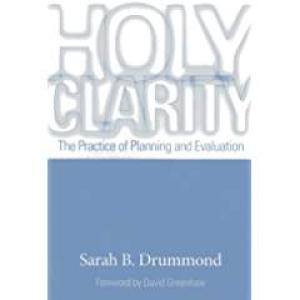
In Holy Clarity, Sarah Drummond explores the most basic reason leaders of religious organizations conduct evaluations: To find and create God-pleasing clarity regarding the organization's purpose and the impact of its activities. Leadership and evaluation are not separate disciplines, she argues. Effective leaders evaluate because they need to know what is happening in their organizations and how those activities are effecting change. Drummond first describes the way in which our postmodern culture makes clarity difficult to obtain. She then looks at holy clarity from a biblical and theological perspective and make the case that it is a spiritual discipline that can stand on its own theological merits. She presents four approaches to evaluation that can help a leader to guide a community toward greater clarity, both when evaluating or analyzing programs and when planning and starting programs. Finally, she considers the work of clarification as a faith practice, one that can make a pastor or layperson not just a better leader, but a better Christian who is more firmly grounded in God. Each chapter concludes with a fictional case study that provides a jumping-off point for discussion and helps bring her theory to life. (From the Publisher)
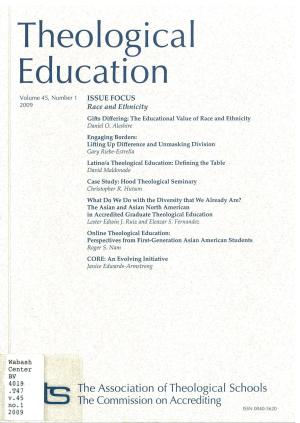
Journal Issue. Full text is available online.

Journal Issue.
Wabash Center Staff Contact
Sarah Farmer, Ph.D.
Associate Director
Wabash Center
farmers@wabash.edu