Resources
One page Teaching Tactic to help students learn how to participate in effective class discussions.
This interview was recorded in November 2012 in Jonathan Z. Smith's Hyde Park graystone. Professor Smith offers insights into how he thinks about his classroom teaching and his students' learning through descriptions of various assignments and classroom activities he has developed over more than forty years of teaching. The discussion ranges broadly over such topics as: how students read, the failure to adequately prepare graduate students as teachers, students' faith commitments, the use of newspapers (and humor) in the classroom, and the role of definition, de-familiarization, and critique of the study of religion in introductory classes. The discussion presents vivid glimpses into Jonathan Smith's teaching practice and his teaching persona, including the time a student brought a minister to class to do an exorcism because she thought he was the Devil.
This article describes the use of “Writing to Learn” assignments in a course on the Theology of the Protestant and Catholic Reformations. These short, informal assignments promote active learning by focusing on writing as a process for critical thinking and as a way to learn the content of the course. They help students creatively engage with the texts, thoughtfully reflect on them, and critically assess their significance. This article describes the theory behind these assignments, provides examples of different types of assignments as well as excerpts from student papers, and concludes with an evaluation of their effectiveness. The students in the course found the assignments helpful in learning the content of the course and their attitude toward writing in this course significantly improved.
The authors respond here to each other's essays published in this issue of the journal. In “Holding Us Accountable,” Anna Floerke Scheid and Elisabeth T. Vasko respond to Karen Teel's essay, “Getting Out of the Left Lane.” In “Challenges and Convergences,” Karen Teel responds to the essay “Teaching Race” by Anna Floerke Scheid and Elisabeth T. Vasko.
While a number of scholars in the field of Christian theology have argued for the importance of teaching diversity and social justice in theology and religious studies classrooms, little has been done to document and assess formally the implementation of such pedagogy. In this article, the authors discuss the findings of a yearlong Scholarship of Multicultural Teaching and Learning (SoMTL) study, which examined student learning and faculty teaching regarding race and white privilege in two theology classrooms. After a brief overview of the study's design and execution, we reflect upon our findings and draw out implications for pedagogical practices. In particular we discuss students' emotional responses to the material and the role of cognitive dissonance in student learning with respect to racial inequality via social structures. See a companion essay in this issue of the journal (Karen Teel, “Getting Out of the Left Lane: The Possibility of White Antiracist Pedagogy”) and responses by the authors of both essays, also published in this issue of the journal (“Responses: Toward an Antiracist Pedagogy”).
This article maintains that knowledge of the literature on multicultural education and social justice pedagogy is indispensable for white college professors who desire to teach effectively about racial justice concerns. In exploring this literature, I have noticed that many publications either articulate theory or reflect on concrete classroom strategies, while relatively few deploy theory to evaluate specific attempts at teaching for justice. This seems to me a gap worth filling. Speaking as a white, conventionally trained, Catholic theologian, I begin by explaining why I deem it appropriate to employ antiracist pedagogy. I then demonstrate that the literature on multicultural education and social justice pedagogy is essential to this effort by utilizing both types of literature, theoretical and practical, to analyze my own strategies and goals to date. Throughout, I discuss white antiracist theological pedagogy not as an accomplished fact, but as an emerging endeavor. See a companion essay in this issue of the journal (Anna Floerke Scheid and Elisabeth T. Vasko, “Teaching Race: Pedagogical Challenges in Predominantly White Undergraduate Theology Classrooms”), and responses by the authors of both essays, also published in this issue of the journal (“Responses: Toward an Antiracist Pedagogy”).
While teaching a course on religion and consumer culture in the United States, the author was intensely preoccupied with holding the interest of her undergraduate students during class sessions. Inspired in part by the subject matter of the course, she reflects here upon the extent that her courses on American religion drew upon the semiotics of commercial entertainment. While acknowledging the limitations and distortions possible in thinking of the teacher as an entertainer, this paper explores the teaching metaphor of the Vaudevillian Performer, arguing that if put in context with the work on reception in cultural studies, it can be a helpful model in the classroom.
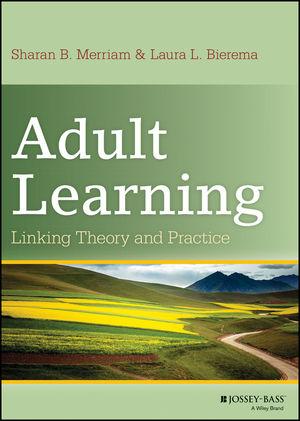
Click Here for Book Review Abstract: Solidly grounded in theory and research, but concise and practice-oriented, Adult Learning: Linking Theory and Practice is perfect for master’s-level students and practitioners alike. Sharan Merriam and Laura Bierema have infused each chapter with practical applications for instruction which will help readers personally relate to the material. The contents covers: Adult Learning in Today’s World Traditional Learning Theories Andragogy Self-Directed Learning Transformative Learning Experience and Learning Body and Spirit in Learning Motivation and Learning The Brain and Cognitive Functioning Adult Learning in the Digital Age Critical Thinking and Critical Perspectives Culture and Context Discussion questions and activities for reflection are included at the end of each chapter. (From the Publisher)
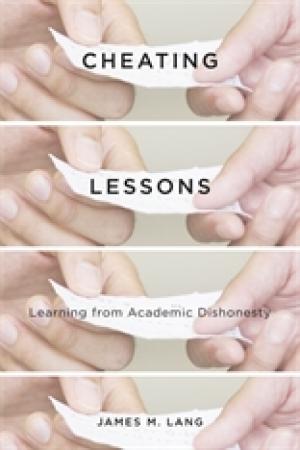
Click Here for Book Review Abstract: Nearly three-quarters of college students cheat during their undergraduate careers, a startling number attributed variously to the laziness of today’s students, their lack of a moral compass, or the demands of a hypercompetitive society. For James Lang, cultural or sociological explanations like these are red herrings. His provocative new research indicates that students often cheat because their learning environments give them ample incentives to try—and that strategies which make cheating less worthwhile also improve student learning. Cheating Lessons is a practical guide to tackling academic dishonesty at its roots. Drawing on an array of findings from cognitive theory, Lang analyzes the specific, often hidden features of course design and daily classroom practice that create opportunities for cheating. Courses that set the stakes of performance very high, that rely on single assessment mechanisms like multiple-choice tests, that have arbitrary grading criteria: these are the kinds of conditions that breed cheating. Lang seeks to empower teachers to create more effective learning environments that foster intrinsic motivation, promote mastery, and instill the sense of self-efficacy that students need for deep learning. Although cheating is a persistent problem, the prognosis is not dire. The good news is that strategies which reduce cheating also improve student performance overall. Instructors who learn to curb academic dishonesty will have done more than solve a course management problem—they will have become better educators all around. (From the Publisher)

Journal Issue.
Wabash Center Staff Contact
Sarah Farmer, Ph.D.
Associate Director
Wabash Center
farmers@wabash.edu