Resources
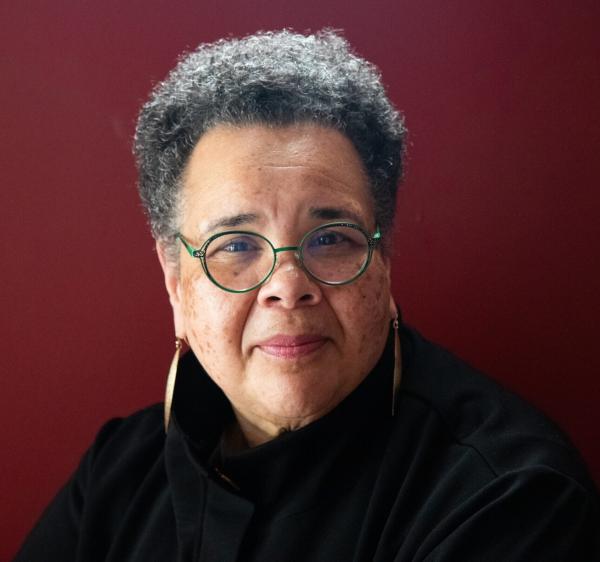
The practice of writing and publishing can be among the most life-giving dimensions of scholarship, and, at times, among the most difficult. Recently, I have held both joy and fear in the same open hand.My latest book is now available: Thinking Teaching: Stories, Insights, and Strategies to Ignite Reflection, Discussion, and Imagination.Thinking Teaching is a collection of blogs I have written for the Wabash Center over more than twenty years. In many ways, this volume most fully reflects my pedagogical commitments, both in content and in form. The book gathers sixty-six essays shaped by story, memory, wonder, and hard-earned wisdom—offerings intended to help teachers teach with greater imagination, reflection, and care. Each essay concludes with questions designed to spark conversation and communal discernment.Throughout the book, I draw from my experiences in classrooms and on faculties, while also leaning into the teachings and memories of family life. Womanist pedagogical commitments guide the work deeply. I understand education as a practice of emancipation, healing, and human flourishing. My hope is that this book will serve as a companion for individual readers, small groups, and faculty communities seeking richer conversations about teaching and the teaching life.Anyone who has published a book knows that writing and publication rarely unfold in a straight line. Books often arrive through detours, disappointments, revisions, unexpected grace and help from friends and colleagues. This was certainly the journey of this manuscript’s becoming.Around 2014, I began to imagine my Wabash blogs as a collected work. Though I had not written them according to a systematic plan, I sensed that together they traced meaningful terrain for colleagues engaged in conversations about teaching. I prepared a proposal for an anthology of these essays and carried it with me to a conference where scholarly and trade publishers gathered in search of new projects.I shared the proposal with several publishers. Most were not interested. Then, during a conversation with a fifth editor, I began to feel hopeful. We had a lively and engaging exchange about teaching, writing, and audience. As the conversation came to a close, she said gently, “Of course, you will expand each blog into a full chapter—right?”My heart sank.I wanted the brief essay form—those 750 to 900-word reflections—to remain intact. I believed the short form carried its own integrity, accessibility, and power. After thanking her for the conversation, I quietly set the project aside. With disappointment lingering close by, I placed the dream of a book-length collection on the back burner.Then, in 2022 I met Donald Quist. Donald became both editor and thoughtful conversation-partner for my writing life. He helped me trust my voice again—particularly my love for short-form creative nonfiction. What began as a professional collaboration soon grew into a relationship marked by shared imagination, intellectual curiosity, and mutual trust. Donald’s editorial guidance deepened my writing, clarified my sense of purpose, and refined my voice. Through his encouragement, I began once again to believe that these collected essays could make a meaningful contribution to theological education. Without hesitation, Donald urged me to pursue the book anew.With renewed confidence, I returned to the manuscript.I then called Jack Seymour for help. Together, we shaped a table of contents that finally felt coherent and spacious. My earlier attempts had been tangled and overworked. From among hundreds of blogs, Jack helped identify sixty-six essays for inclusion in the volume. I prepared a proposal for Wipf and Stock Publishers, and in the spring of 2026, the book came into the world. Somewhere between 2014 and 2026, this book slowly found its way toward becoming. Some books, this book, require more time to ripen before they are ready to meet the world.One of my deepest joys connected to this book is its cover art. The cover features an original painting, Eden #13, by Najee Dorsey, artist and founder of Black Art in America in Atlanta, Georgia. The artwork is luminous and beautiful. For the past two years, the Wabash Center and Black Art in America have been in creative partnership. Through that collaboration, Najee has generously shared his work and encouraged artists within his gallery community to contribute artwork for scholarly book covers. This partnership has blessed us in ways both marvelous and unforeseen.When I received the email from the publisher announcing that Thinking Teaching had been published, I felt an overwhelming sense of gratitude, joy, and humility. The dread and frustration that accompanied parts of the journey seemed to fall away. In their place was a deep appreciation for the possibility that my work might accompany colleagues, nourish meaningful conversations, and encourage more liberative approaches to teaching and learning.Reflection QuestionsIn the blog, I describe my resistance to expanding the brief essays into long chapters because I trusted the “integrity, accessibility, and power” of short forms. What forms of wisdom or truth might theology and religion teachers overlook because academia privileges length, complexity, or abstraction?Who are your trusted conversation partners who cheer you on, bring needed skills and expertise, and allow you space to shine in your writing and scholarly work? List them. Thank them.The writing of some books “require more time to ripen.” What in your teaching life is still ripening? What unfinished idea, classroom practice, or project might need patience rather than productivity?What are your practices of relief and release when dread seizes you? How can you better handle disappointment and rejection?For the colleagues who you mentor, advise, and support, how will you encourage their persistence, agency, and tenacity for their creative work?When your work brings you satisfaction and joy, how do you celebrate? How do you show appreciation for those who assisted you?
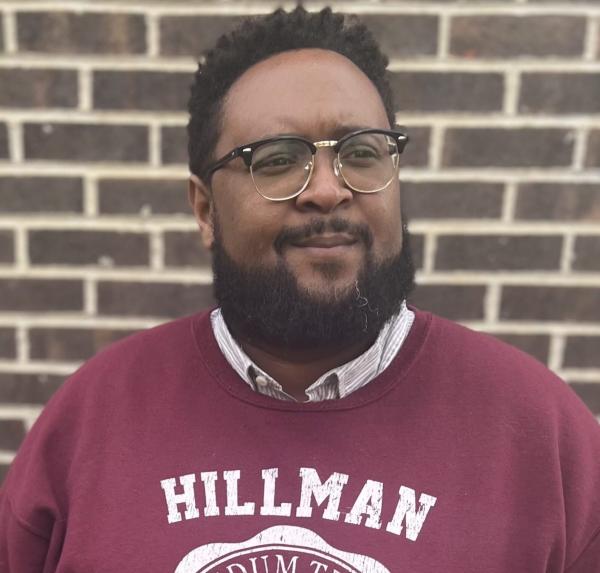
Since 2022, I have had the distinct privilege of serving as an editor and conversation-partner for Director Lynne Westfield through her ongoing written contributions to the Wabash Center. What began as a professional collaboration quickly became something more generative, more human—an evolving dialogue grounded in trust, care, and a shared commitment to clarity of thought and purpose in teaching.From the very beginning, I found myself drawn to Lynne’s voice. There is a particular kind of vulnerability in her writing, an openness that does not seek performance but instead insists on honesty. Month after month, for more than four years, I have sat with her words, responding not simply as an editor marking a page, but as a reader invited into a living, breathing intellectual and spiritual practice. With each blog post, I became a deeper admirer of her work—not because it sought perfection, but because it refused to hide from complexity.Those monthly exchanges were never transactional. They were conversations. They required attention, patience, and a willingness to listen beyond the surface of the text. As an editor, I believe it is important to understand one’s role is not to refine the author/artist into something more “polished,” but to help them become more fully themselves on the page.Many of the blog posts with Lynne have now found new life in her recent book, Thinking Teaching, out now from Cascade Books. Watching that manuscript take shape has been profoundly rewarding. It marks the second time I’ve had the honor of witnessing Lynne bring a book into the world, following her earlier work, Glimpses of Me and Mine (2023). To see the arc of her ideas develop from individual reflections to a cohesive, enduring text has been a reminder of what sustained writing practice can do.Editing, at its best, is an act of care. A good editor does not impose themselves onto the work. They do not flatten the writer’s voice into something more familiar or marketable. Instead, they listen. They ask questions. They create space for the writer to hear themselves more clearly.Over the years, working with Lynne has sharpened my understanding of what it means to be a compassionate and effective editor. For those engaged in similar work, I offer a few guiding principles:Listen for the writer’s intention, not just the sentence’s structure.Editing is not only about correctness; it is about coherence between what the writer means and what the reader receives.Protect the writer’s voice at all costs.Your job is not to rewrite the work in your own image. The distinctiveness of a writer’s voice is their greatest strength.Respond, don’t dictate.Frame your edits as invitations or inquiries rather than commands. This keeps the process collaborative rather than hierarchical.Cultivate patience and trust.Good writing, and good editing, takes time. Trust that clarity will emerge through conversation, not force.What I have learned through this work is that editing is not a neutral act. It is relational. It requires humility. And when done well, it becomes transformative, not only for the writer, who is given the space to grow and refine their voice, but also for the editor.To work with Lynne Westfield has been to witness an author bloom steadily, courageously, and without compromise. In supporting that process, I, too, have been changed. I have become a more attentive reader, a more patient collaborator, and, I hope, a more generous thinker.This is the quiet gift of editing: when we commit ourselves to the flourishing of another’s voice, we often find our own deepened in the process.Please check out Lynne Westfield’s latest…Thinking Teaching: Stories, Insights, and Strategies to Ignite Reflection, Discussion, and Imagination – Out Now!

Like so many of us, I’ve watched my standard assessments crumble under the assault of AI.I’d been doing a low-stakes writing assignment for years, asking students to very informally summarize and reflect on the reading. It’s been a great assignment, helping me ensure that most students work through the reading before class and come in to class prepared with ideas and questions, and students have generally liked it. But I’m starting to see AI-generated summaries (duh) and I’m sure more are coming. I’m also noticing that my more anxious students treat the assignment as something high stakes, obsessing about the end product in an assignment designed to focus on process. Bad for their stress levels, plus it tempts them to turn to AI which is bad for my stress levels.I’ve spent a lot of time trying to figure out what to do instead. I tried just dropping the assignment, but then my students didn’t do the reading. I don’t want in-class quizzes because they shift the focus to memorization and performance under pressure. I don’t want online quizzes because they seem even less AI-resistant than my current assignment. Some of my colleagues are switching to cold-calling, interrogating students in ways that remind me of law school pedagogy from the movies. I don’t want to cold-call because I have equity concerns and because I don’t want to put my students on the spot. I don’t particularly like it when it’s done to me, and I’m much less anxious than they are. And I don’t care for the atmosphere it creates in the classroom.Instead, I decided to come up with an assignment that supports what I do want:I want my students to read deeply, slowly and carefully, listening to the text as though it was a person they respected but had trouble understanding.I want my students to feel safe in my class, willing to speak honestly and to listen and think deeply.I want the assignment to be a tool that helps them do the reading, not an extra hoop for them to jump through.To get started, I had a long conversation with my first-year honors students early this semester, asking them to describe how they read. The conversation made me very happy. They responded with a wealth of detail. They annotate the book, underlining and writing in the margins (or on sticky notes or in a separate notebook). They mark key passages and put things in their own words. Several had elabrate, and personalized, systems. Some color code with highlighters and different color tabs, others insist on pencil only. In other words, my stronger students already know how to read actively in the way I want them to. And at least some of the time, they read that way for class. Knowing that, I decided to develop an assignment that has them read that way in a more intentional, structured, and consistent way. What I came up with is much like the “show the work” journal that Emily Gravett describes in her blog about teaching Religion and Film.My writing assignment is entirely analog. My students use a paper book, a notebook, and a pen. And the assignment takes them through the process that we know works: marking up the text, taking notes, jotting down questions, turning pages.Here are the instructions:You’ll submit pics of your work on Canvas for every reading assignment. These will be graded credit/no credit.Twice a semester, you’ll submit all the materials as a portfolio and that will be graded. This means you’ll hand in Your book (which will have your notes in it)Your notebook (the notes/reflections that didn’t fit in the margins of the book)I prefer that you write notes directly in the book and that you write by hand in the notebook. If you want to type or don’t want to write in the book, let’s talk about it and make a plan, OK? I’m interested in the process here (seeing your mind and heart at work!) and not in a clean and neat end product. That means that it is ok if your materials look messy. You’re allowed and encouraged to go back and add or revise materials after class. If you do that, don’t erase the original, just cross it out and add the new ideas afterwards.Feel free to use different colors, draw diagrams, cross things out, draw arrows, and so on. Make it work for you!This does not need to be formal writing. Play with it, swear if you need to, and feel free to complain about annoying ideas and confusing writing. Don’t worry about Writing complete sentences – bulleted lists are fine!Writing neatly (but I do need to be able to read most of it)Being rightWhen I grade the portfolio, I’ll be looking for evidence of strong engagement with the text. You should be Summarizing: Mark important points and put them in your own words, identify the thesis, draw diagrams if they help, note confusing areasReflecting: ask questions, articulate issues for the class to discuss, reflect on how the reading connects to your life or to other readingsWe’re 7 weeks in now and it’s going very well. We had to set aside some time for figuring out how to submit pics on Canvas. And some of them still don’t believe me when I say it doesn’t have to be neat. But they are doing good work. They come to class with their books and plenty of notes, they can find the passages that defeated them, and they ask about them. And – oh glory! – they have done the reading and thought about it and as a result they have interesting things to say.I’ll try it with my regular classes in the spring. Fingers crossed!For more visit: “Is This the End of the Take-Home Essay?”
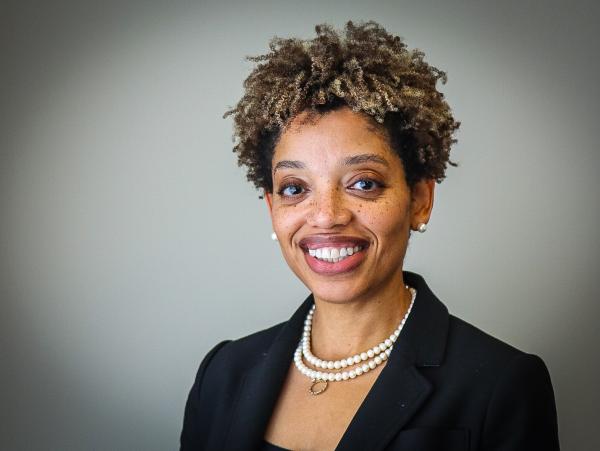
What they don’t tell you about writing while parenting a toddler … is anything. Radio silence. It never came up in graduate school. All the books told me to schedule writing and be disciplined. But what is discipline to my craft when caring first for my child, a growing, ever-evolving bundle of joy, creativity, and imagination?Write when he naps … What are naps to a 2-and-a-half-year-old? Write when he’s with the nanny or in school or at childcare … I am nanny. I am school. I am childcare. And at my choice. I want every minute of this wonderful life.What they don’t tell you is that writing while parenting a toddler will seem impossible to those who have never had to do it, or to those who did it under very different circumstances.What they didn’t tell me was that writing would come in sputters and scraps—notes scribbled on paper with crayon drawings of cars and trucks on the other side; voice memos recorded at the park, creaks from the swing and melodies of laughter as its soundtrack; random audio recordings during car rides on my commute to campus twice a month, stream of consciousness replacing satellite radio.They didn’t tell me that the creativity and imagination bursting from this little boy would awaken in me a fresh imagination to build new ideas like LEGO and shape and reshape recurring thoughts like the Play-Doh sent to us too soon for Miles to play with it. Keep it around long enough, my mom said, and he will grow into it.They didn’t tell me that when this little human inspires me, I will actually want to write. I will learn that I have things to say, things this human I am raising is giving me the confidence and courage to conjecture. What can I say that you would want to hear one day? What do you need to know that I can put on paper? If you see me writing, will you love words and ideas, too? Can we write together one day?What they didn’t tell me about writing while parenting a toddler is that this toddler will not always be a toddler. There are ideas and powers special to youthfulness that must be lived into while they are happening. So, let me tell you, in case no one has: Write the scraps. Record the memos. Watch them grow and allow yourself to grow into them in due time. Stay tuned.
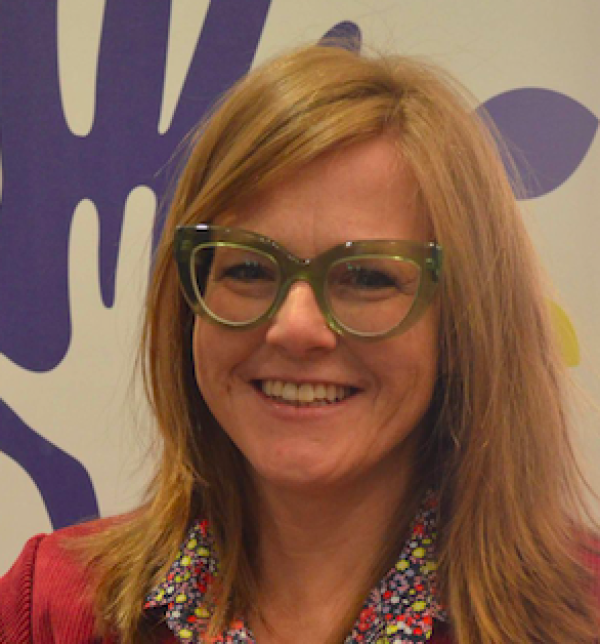
Going to the local art supply store was something one of my cousins and I used to love to do as kids. I remember how she used to walk up and down every aisle looking carefully at all the different kinds of paints, brushes, and pencils. I could almost see her thinking about how she would use each one to improve her next project. While I liked going to the store, I never really used to think of myself as an artist. But I do now. I view teaching as an art. It involves carefully designing syllabi, assignments, classroom activities, and more. And I love to shop for new tools to improve this craft. I remember acquiring a simple but extremely helpful tool about ten years ago, during a Wabash Center Workshop for Pre-Tenure Theology Faculty. A member of the leadership team, Rolf Jacobson, encouraged us to read at least two books on teaching each year. Since then, I’ve adopted this advice as discipline. If I haven’t read my two books by the end of the academic year, I read them during the summer. I’ve found that reading about teaching not only keeps me up-to-date in the field, but it often prompts me to revise my syllabi or classroom assignments, which, at the very least, reenergizes my classroom presence and practice. I’ve also picked up another helpful tool from Wabash—probably the most useful one I’ve found to date: writing about teaching. I began this practice on a regular basis when I was first asked to contribute to a Wabash blog series back in 2014. I was given a schedule of deadlines for my contributions (around five over the period of a year or two). I found that the schedule encouraged a helpful rhythm for me throughout the academic year. Every few months I had to set aside some time to really reflect on my teaching and articulate it to others. I have the benefit of working in a department in which all of the faculty members are both collegial and dedicated to teaching. While we often chat about classroom experiences and things that either work or don’t work in our classes, these conversations are usually brief because we are all just so busy. Setting aside the time to write about my teaching, whether for a blog or in a journal, gives me extra space for processing and reflection. Sometimes this extra space is a necessity. Like the time when I fell down on the first day of class (!), or during the last several years when teaching during multiple pandemics and traumatic current events. In these instances, writing about teaching has helped me to discover, articulate, and distill lessons about myself as a pedagogue and ways to facilitate more engaged learning for students. Other times, I’ve found that writing about teaching has elicited valuable advice and feedback from others. Several years ago I reflected on whether or not it is helpful to display emotions in the classroom while talking about difficult topics like racism. I now understand that, as a white teacher, I was not seeing my own privilege in even asking the question. Comments and feedback on this blog helped me to grow. Receiving viewpoints different from my own allow this to happen. As is the case with research articles and manuscripts, writing and publishing about teaching puts my work out there for others to see. While this sometimes feels vulnerable, the critiques I receive often help me to come to a fuller, more accurate view of the topic or what I could be doing better. In other cases, I write about teaching because something beautiful happened! This happens when I see a “light-bulb” click on for one of my students, or when a classroom conversation takes on a life of its own and results in a moment of organic learning. Sometimes I see the Spirit move in unexpected ways in the classroom or I find that an assignment I designed worked well. Sometimes all of these things happen at the same time. These are moments of beauty. I write about them and read about how other teachers have experienced them in their own classrooms, so we can all appreciate the beauty. Like when my cousin uses a good paintbrush, I use writing about teaching to ultimately enhance the beauty of my craft.
Writing Workshop Jointly Sponsored by Wabash Center & Collegeville Institute Breaking the Academic Mold: Liberating the Powerful, Personal Voice Inside You Event Dates Monday, July 10, 2023 to Sunday, July 16, 2023 Gathering Location Lake Junaluska, NC Leadership Team Sophfronia Scott Director of the MFA in Creative Writing Alma College Donald Quist Director of the MFA in Writing Vermont College of Fine Arts Instructions for Leaders Participants Roy Whitaker, San Diego State University Sarah Dees, Iowa State University Julie Meadows, Presbyterian College Nicholas A. Elder, University of Dubuque Michael Brandon, University of Louisville Samantha Miller, Whitworth University Kristina Lizardy-Hajbi, Iliff School of Theology For More Information, Please Contact: Sarah Farmer, Associate Director Wabash Center farmers@wabash.edu Stipend Each participant will be provided with travel expenses, meals, lodging, and a stipend of $1500. Read More about Payment of Participants Important Information Foreign National Information Form Policy on Participation Description This writing workshop is for scholars of religion and theology who have written exclusively or primarily in the scholarly genre for other scholars of religion but long to share their knowledge or personal experience in a more creative way with a wider audience. Many scholars yearn to speak to a broader audience through creative nonfiction, blogs, op-eds, and memoir. Many scholars want to write with more clarity and imagination. Participants in this workshop will develop their writing voice in service to topics they care about, and for which they have passion and curiosity. A combination of plenary, small group and individual instruction, our week together will help scholars free the creative spirit, structure their writing more effectively, and speak on the page in a truer, more engaging voice. Our focus will be on releasing the professors’ voice to the public square, giving permission to be imaginative, and finding new ways of being inspired. No previous experience publishing in creative writing genres is needed. Workshop Goals To create a collaborative learning cohort of teacher-scholarsto expand and deepen scholarly writing To navigate the intersectingchallenges of creative writing as an academic To develop new practices of creative writing in the service of teaching and scholarship of religion and theology To explore strategies for the authentic voice while thriving in institutional,politicaland personal contexts To write and receive feedback while also being in conversation with other creative writers Participant Eligibility Tenure track, continuing term, and/or full-time contingency teaching full time in college, university, or seminary Must be teaching in religion and theology or related fields Job description or contract that is wholly or primarily inclusive of teaching Teaching in accredited college, university, seminary in the United States, Puerto Rico or Canada Personal commitmentto participate fully in workshop with 100% attendance in all sessions Little to no experience with publishing in creative genres, but great interest in learning to write in creative genre
What happens at the Wabash Center is not meant to stay at Wabash. This is not a statement about confidentiality nor about alleged indiscretions. By design, the unambiguous gift of the Wabash Center to faculty colleagues in religion and theology remains conversations to support the life of teaching. Our workshops, colloquies, digital salons, and consultations create conversations to open new, and reinvigorate old, dimensions of teaching. It is our hope that the gleanings, learnings, new perspectives, reaffirmed approaches, needed information, refreshing analyses, renewed skills, modeled competencies, newly introduced notions, and the sheer fun of gathering together in hospitality and camaraderie will be implemented into classrooms as well as reinvested into faculty ecologies. What happens at Wabash is meant to be shared, taught, imparted, imitated and made public. As such, we hope our most recent workshop will be mined for distribution and circulation. The workshop was “Breaking the Academic Mold: Liberating the Powerful, Personal Voice Inside You.” It is a new collaboration with the Collegeville Institute. The online cohort gathered to learn the practices of creative non-fiction writing. We were led by Sophfronia Scott, Director of the Masters of Fine Arts Program, Alma College and Michael N. McGregor, Collegeville Institute faculty. A complete description of the workshop is on our website. The premise of the workshop is that learning to write in creative genres will improve teaching. The depth and critical importance of our conversation was revealed in the kinds of questions we raised and explored. Here are examples of our wonderings: What if developing your writing voice simultaneously assisted with developing the teaching voice? What if learning to operate in your power as a writer impacted your teaching capacity? What if by learning to claim the agency and power in creative writing you ignite your teaching? What if the skills, competencies, capacities of creative non-fiction writing had direct bearing upon your pedagogical decision making and judgement? What if getting a better handle on the human condition meant writing about it, then teaching about it - or vice versa? What if deeper understanding of religious experience was inherit in learning to write beyond the academic genre of writing? What if the hermeneutical challenge of our teaching can be best met through better story telling? What if developing and improving writing skills is a way to better communication and organization skills often lacked in the classroom? What if learning to write so that readers are emotionally moved would improve the ways we design courses or teach a session? What if freeing your imagination for writing contributed to freeing your imagination in teaching? What if the narrow and humdrum restrictions of academic writing was maintained as much by scholar’s self-policing as by the guild’s rigid expectations? What if writing was a tool to narrate yourself into new life as a teacher? What if the power and ability of voice could be unlocked by learning creative writing? What if moving people into new understandings and new grapplings with old ideas, meant harnessing the power and ability to write creatively? What if strengthening the voice for personal expression resulted in more authentic scholarship? What if through creative non-fiction writing our ideas were made more accessible to a wider audience who are asking similar questions as our students and colleagues about religion and theology? During the 6-day workshop we were afforded the luxury of large chunks of time to write into these questions, or to write about anything else we desired. It was a joy. These provocative, permission giving, and counter-cultural questions permeated our workshop and shaped our conversation in generative ways. Questions bubbled and were engaged in daily plenary discussions. The two workshop leaders made themselves available for one-on-one sessions where these questions were answered in private and focused on the personal. These questions surfaced in the sessions where we workshopped one another’s writings. Three times during the workshop each participant read aloud his or her original writing. One of the sessions was dedicated to the entire group providing constructive feedback to each writer while the writer listened to the critique (There are no tears during workshopping sessions!). Hearing from generous and care-filled colleagues about new writing was an act of trust and vulnerability. Providing feedback to colleagues during their writing process was a genuine act of confidence and collaboration. The mutuality, solidarity, and shared wisdom gave me a renewed sense of creativity and hope. I am able to provide a first-hand account from inside the workshop because I was a participant. It was my privilege to learn and grow alongside my peers. As Wabash Center Director, I want to continue to actively learn about teaching. Even at this advanced stage in my career, I want to learn more about teaching and the teaching life. I want to learn to write better, more accessibly, and with a more authentic voice. I have no doubt that by improving my teaching and my writing I will clarify my vision for the Center and lead us to a more generative future. After the workshop, I returned to my desk with this quote resonating in my spirit. It captures my experience in the workshop as well as provides me with clarity as we move into our future. Ralph Marston wrote: “Go often to where you have the indisputable knowing that life is good. Do, again and again, those things that affirm your highest hopes and best instincts … Touch, taste, feel, see, hear what compels you to care. Let life be good in ways that drive you to make it even better.” Thank you Sophfronia Scott and Mike McGregor. Thank you, Collegeville Institute. I hope our collaboration grows. A special thanks to my fellow writers and workshop participants for this adventure!
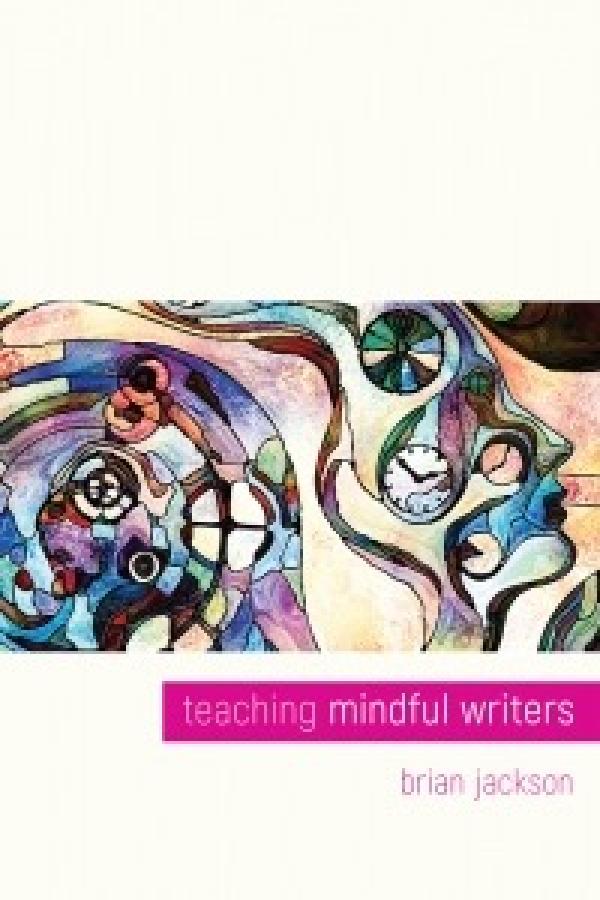
Teaching Mindful Writers introduces new writing teachers to a learning cycle that will help students become self-directed writers through planning, practicing, revising, and reflecting. Focusing on the art and science of instructing self-directed writers through major writing tasks, Brian Jackson helps teachers prepare students to engage purposefully in any writing task by developing the habits of mind and cognitive strategies of the mindful writer. Relying on the most recent research in writing studies and learning theory, Jackson gives new teachers practical advice about setting up writing tasks, using daily writing, leading class discussions, providing feedback, joining teaching communities, and other essential tools that should be in every writing teacher’s toolbox. Teaching Mindful Writers is a timely, fresh perspective on teaching students to be self-directed writers. (From the Publisher)
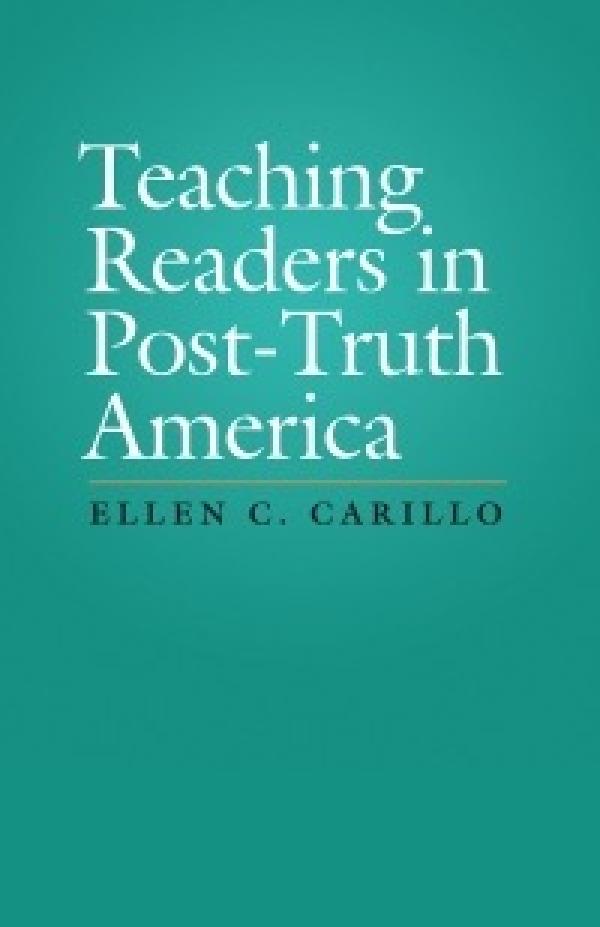
Many teachers have had cause in the last few years to ponder questions around teaching in a “post-truth” culture. How do reading, writing, and thinking change in a world in which groups cannot or will not agree on essential facts and rules of evidence? How can we teach meaningful reading in an overwhelmingly information-rich landscape? How can we heal the divisiveness that pervades so much of our culture, and how can we help students discern true from false? This book is written primarily for instructors in first-year college writing courses, but much of it will prove useful to frustrated teachers in any discipline. It does not give many specific recommendations for classroom strategies, but it does set out thoughtful ideas about how to think about teaching reading. The book begins with a chapter on “theoretical first principles.” Chapter 2 considers the ways in which standardized tests (and teachers in turn) encourage an unthinking reverence for text by dismissing the role of the reader. Carillo provides convincing evidence of negative outcomes from this approach. These two chapters set the stage for an argument in Chapter 3 about reading and writing as embodied, affective acts, as this writer is firmly against the devaluing of emotion and engagement so common in a world that prizes objectivity. In Chapter 4, Carillo argues that modeling and imitation have been given short shrift in reading instruction. She gives several useful tips for developing imitative exercises that help students see good reading and writing practices, and she especially trumpets the power of annotation, illustrated with a case study from her own teaching. The problems highlighted in Chapter 5, specifically targeting writing and composition instruction, are common to other fields as well: focus on reason over emotion; focus on traditional essay forms; and lack of focus on psychological studies that can enhance both teaching and learning. This book’s title promises more than it delivers, although it delivers a lot. Carillo’s insistence on redirecting students away from claims and argumentation and “toward stylistic elements that contribute to a text’s meaning” (41) will strike many teachers trained in other modes as difficult to attain. “Reading for argument” is, for Carillo, a problem: students only read for a relatively simplistic argument and miss so much that could make them stronger readers, such as inquiring about the how and why, not just the what. Yet many teachers find that students can’t even read for argument, a fact this book glosses over. That said, a call to encouraging more affective and empathetic reading is timely and needed. The use of Peter Elbow’s doubting and believing game (47-50) will be familiar to many in religious studies, as will the call to look outside one’s own discipline for expertise. This book helps teachers think about ways to mitigate aspects of culture that revere text and steer students “away from the language of negotiation and compromise” (114).
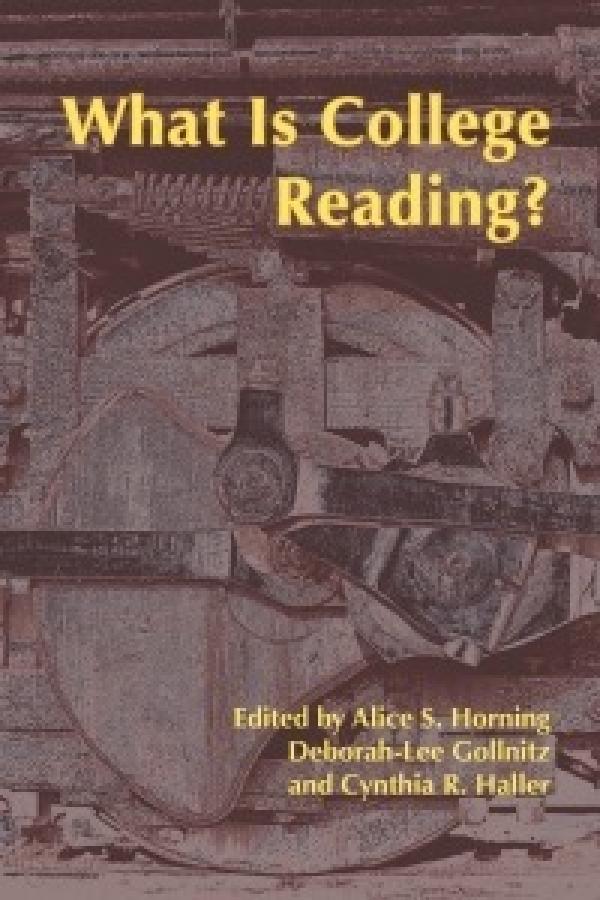
Co-published by CSU Open Press What is college reading? As college teachers we may assume that it is a process of comprehension, analysis, synthesis, and evaluation. But, as this edited volume overwhelmingly demonstrates, that is often not what it is for college students. How then can college teachers help students practice advanced reading skills? The problem is compounded by the fact that even college teachers who actively want to encourage students to read may unwittingly discourage advanced reading skills by, for example, giving reading quizzes in class (as discussed by Mary Lou Odom in this volume). This edited volume is a great resource for anyone wishing to engage questions about how to improve college reading. Some chapters provide useful practical suggestions. For example, Chris Anson shows how to formulate reading log prompts that require students to engage with the underlying ideas in the reading. Other chapters describe exercises such as in-class annotations (Davies) and says-does columns (Huffman). The volume also contains several insightful discussions of other factors influencing college reading that are more difficult to address, but no less important. For example, some of the authors observe that reading, which we may think of as an individual activity, is a “complex sociolinguistic task” (Hollander et al., 59), and “a collective and holistic enterprise” (Maloy et al., 71). Brian Gogan provides a thoughtful reflection on reading in relation to “threshold concepts” (concepts that students need to grasp in order to move forward in a given disciplinary context). College teachers may use these insights to make reading part of building an intellectual community in the class. The chapter by Young and Potter discusses how students are taught to read in K-12, where students are commonly given a decontextualized passage and then tested on their ability to understand inferences at the level of sentences or paragraphs. These students also commonly learn that for each question asked about the text, there is one correct answer in a multiple-choice format. They receive comparably little training in the advanced reading skills required for college, such as learning how to place a particular text into a connected web of texts that make up an ongoing disciplinary conversation, or asking their own higher-order questions and working with others’ questions that do not have a single “correct” answer. When students start college, therefore, they will commonly think of reading as looking for answers in a decontextualized excerpt; they are not accustomed to looking instead for interesting, productive problems in a web of texts (as also discussed in the afterword by Sullivan and Tinberg). Other authors discuss the importance of instructors connecting reading with writing, drawing on both the writing-to-read and reading-to-write conversations (Anson; Freedman). Some chapters refer to the by now widely known finding that the majority of students do not do what their instructors think they do when completing a research paper assignment, and how to address the implications of this for formulating new types of writing assignments (Horning; Young and Potter). Related to this, Laura Davies points out in her chapter that students who write poorly are usually referred to the university’s writing center, rather than asked about their reading skills, which underlie their writing. Several chapters also touch on how reading might be given a stronger institutional footing through, for example, being explicitly incorporated into writing-across-the-curriculum initiatives (Odom), linking courses (Sturtz et al.), or providing a reading-across-the-curriculum community on campus (Hollander et al.). In sum, as Leonora Freedman observes in her chapter, stronger responses to the problem of how to teach college reading skills can lead to increased student engagement as well as increased faculty morale. This edited volume is a very good place to start. It deserves a wide readership among college faculty and administrators, and this goal will no doubt be made easier by the fact that the publishers have made it free to download at wac.colostate.edu.