Resources
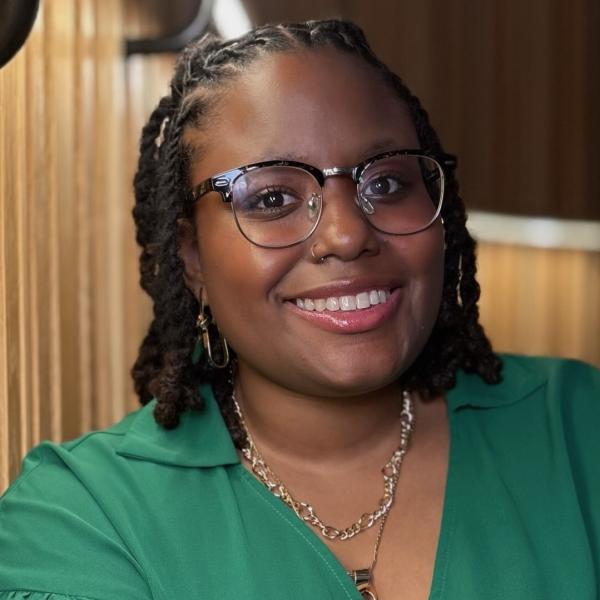
(NOTE: This is the second installment of a blog series. Check out the first by JJ. Warren here.)Welcome to My Virtual Desk!Much like my bedroom “office,” I have multiple screens, a half-drunk cup of tea, photos and relics that connect me with my loved ones, and Pride materials on full display. This is where I come to work, to focus, and to embody my identity as “Minister Brown” each week. Sometimes, visiting this campus is the difference between completing my assignments and letting my executive dysfunction win for the day.=Let me explain:Fig. 1 and 2: Photos of my desk on the CRCDS wing of the Gather Campus, decorated with meaningful representations of my personality and ideal workspace.As a “zillennial,” I’ve spent the last six years occupying virtual spaces as both a student and educator across PK–12, postsecondary, and adult education. As a result, I’ve spent a lot of time thinking about what it means to teach, learn, build relationships, and engage meaningfully with people through a screen. I have also come to understand aspects of my own neurodivergence that make learning and working entirely online incredibly difficult—and, at times, incredibly liberating.Sometimes I log onto the CRCDS virtual campus, walk my avatar to this desk, turn on the café music embedded nearby, mute my camera and microphone, and “clock in.” Other times, I visit the Church of the Young Prophets campus “downstairs,” where I’ve had the privilege of co-leading and cultivating community since 2023. Occasionally, someone else is there; often I am alone for hours. Practically speaking, there is no reason I need to be there. I could play café music from my computer, complete the same reading, write the same paper, or answer the same emails without opening Gather at all. Yet, I keep logging on to this pixelated workspace.Researchers Tessa Eagle et al. (2024) offer one explanation through their study of body doubling, a community-developed practice in which another person’s presence can support neurodivergent people in beginning, focusing on, or completing tasks. Of the 220 (predominantly neurodivergent) people surveyed, 186 reported being at least somewhat more likely to finish tasks in another person’s presence, describing body doubling interactions across physical and virtual spaces with friends, coworkers, strangers, and even prerecorded media. Personally, I learned the benefits of this experience long before I had language for it.Gather seems to occupy an interesting space between the virtual and the presential: I am physically alone, yet spatially aware of other people who may be working alongside me. For my neurodivergent brain, the perceived presence shifts something—rather than only watching and listening to a screen, I am navigating a space, making choices about proximity and interaction, and responding to visual cues around me. Perhaps the simplest way I can describe it is, the platform gives my brain somewhere to go.When another person enters the campus, we might talk; sometimes we use our private chat. We’re simply working in the same digital space, able to approach one another if we want interaction and equally able to continue doing our own thing. During weekly lectures, I interact with my peers and professors through interactive whiteboards, dynamic chats and emoji reactions, and move through conversations with ease. Unlike a Zoom or Teams meeting, Gather offers the possibility of lingering, both alone and in the company of others. In physical spaces, I am one who stays after to chat, check on a peer, ask another question, or share a laugh long after I should have left; on Gather, I find myself doing the same—without needing to enter a breakout room or send a meeting link.That capacity to linger centers the CRCDS virtual campus around more than just my productivity. My virtual desk locates me within the community in which I am being formed, despite living six hours from Rochester and time zones away from colleagues and friends. When I walk my avatar into this space and sit down, I am not only Jonelle sitting in her bedroom staring at another screen. I am a seminarian arriving on campus. I am Minister Brown showing up to study, work, collaborate, and become.Of course, having a space available and developing community within it are two different things. Gather can create conditions for spontaneous interaction, but technology cannot make us spontaneously interact; we must develop the habits that regularly bring us into this space. We must also consider the nuances of integrating new technology to a community that already struggles with effectively engaging online. I’ve personally spent hours supporting colleagues through digital literacy questions—both on Gather and on Populi, our Learning Management System—which reminds me that expanding the possibilities of virtual formation also requires us to consider questions of accessibility.Perhaps, then, the most important question of the CRCDS x Gather pilot is not whether we can build a virtual campus. Thanks to the Wabash Center initiative, we already have one. The more interesting question is how we will learn to inhabit it, making this interaction meaningful and accessible for our shared formation. Honestly, the possibilities are what excite me most. We are still discovering what we might do with this space and, perhaps, what this next generation of “digital disciples” might contribute to the larger conversation around hybrid learning and theological formation. NOTES & BIBLIOGRAPHY:Tessa Eagle, Leya Breanna Baltaxe-Admony, and Kathryn E. Ringland, “‘It Was Something I Naturally Found Worked and Heard About Later’: An Investigation of Body Doubling with Neurodivergent Participants,” ACM Transactions on Accessible Computing 17, no. 3 (2024), https://dl.acm.org/doi/epdf/10.1145/3689648. Accessed on October 4, 2026.
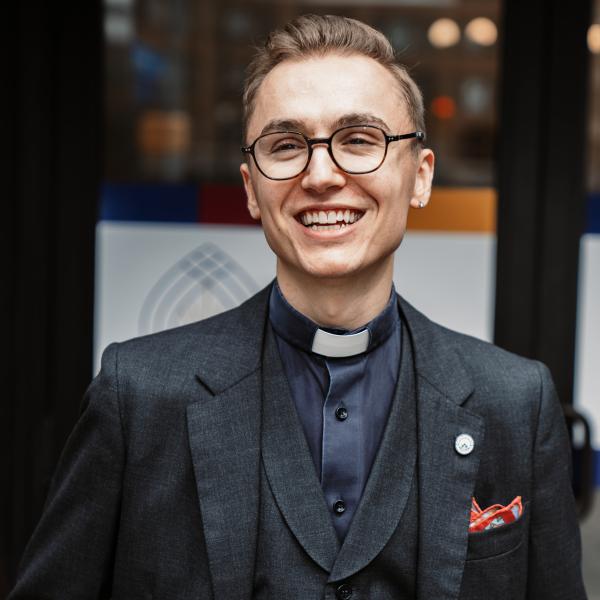
I started writing on a hot summer day in August, and at Colgate Rochester Crozer Divinity School that means classes are about to begin for the start of our 207th year. Our start date, which is earlier in the summer than at most institutions, isn’t the only queer (subversive; norm-transgressing) aspect of our community. You see, most students, and faculty, won’t set foot on our campus until Commencement in May. We are an intimate institution in size but diffuse in location. This isn’t a new reality. Since the COVID-19 pandemic, this institution, which proudly publicizes its commitments to “Peace. Service. Justice,” understands and has acted upon the conviction that online education is about more than convenience; it’s a matter of equity. And we are not alone. There are 174 ATS-accredited institutions currently approved to offer comprehensive distance education (50% or more of a degree), including four other divinity schools associated with the American Baptist Churches USA.[i]Thanks to President Angela D. Sims' leadership, the faculty’s flexibility, and the staff’s dedicated support and innovation, we have provided accredited theological education to students who would otherwise be unable to follow their callings due to various responsibilities and systemic injustices (such as being the primary caregiver for a family member and working multiple jobs), which preclude them from moving to a new city, commuting hours to and from campus, or attending class during work hours. Together, we have provided, and continue to provide, rigorous theological education to persons across the globe, primarily serving students from Black churches. Last spring, I had the opportunity to participate as second reader from Vienna, Austria, where I live with my German husband, in the MA thesis defense of a student located in Jamaica under the leadership of my colleague, Dr. Jin Young Choi, in Rochester, New York. The potential for transgressing the boundaries and confines of national borders in order to teach, learn from, and be deeply enriched by students and faculty around the globe is real and present. This is a queer context: close-knit and dispersed, historic and fully online, contextually-focused and internationally constituted. One identity doesn’t negate the other; their boundaries become porous and take on new meanings through our embodiment of them for such a time as now. But might something be missing in a community of learning such as this? Piloting a Virtual CampusThanks to a small project grant from the Wabash Center, we recently launched a virtual campus on the Gather platform in partnership with Young Prophets Collective, an LGBTQIA+-led nonprofit that designed a virtual church campus, which now houses the Colgate Rochester Crozer Wing (photo below). The virtual campus pilot seeks to continue this institution’s prophetic work, not only to provide access to classes and meetings, but to provide a shared sense of space and the unstructured communal formation that makes theological education different from merely reading texts at home or logging in for class while on the road.The open-ended, pedagogical question we’re asking is this: How might a virtual campus environment—one that enables spatial movement, ambient community (continuously present in the background of a shared environment, rather than requiring constant, direct interaction), and incarnational co-presence—transform the quality of theological formation and pedagogical engagement at Colgate Rochester Crozer? And, what intentional preparation for faculty, staff, and students alike is required to move from using such a platform as a novelty to integrating it as a quotidian habitat? We don’t have the answers, but we’re looking forward to pondering these questions together over the course of this fall semester. What You Can Expect From Us: CollegialityOur partnership with Wabash means a commitment to disseminate what we learn during this process – from the inevitable glitches and technical difficulties to the (hopefully) profound reflections on our own experiences as practitioners teaching, learning, and creating community as dispersed faculty colleagues. I have quickly become known in my institution for emphasizing “collegiality” as a guiding principle. Maybe this is due to our 6 to 9-hour time difference (depending on their location in the U.S.) and thousands of miles of distance can. At times, this can lead me to feel disconnected or out-of-the-loop on certain discussions and decisions. Or perhaps my emphasis on collegiality is a reaction to the heightened sense of alert that many of us feel in higher education at the moment—as democratic institutions once understood to educate and critically support the development of a responsible and learned citizenry are dismantled in real time. Or perhaps my push towards greater collegiality is due to the words of the queer theologian Marcella Althaus-Reid and how they ring uncomfortably true in this moment for so many: “a Queer theologian has many passports because she is a theologian in diaspora...”[ii] Collegiality can be a lifeline amidst the daily battle of simply persisting in our duties as best we can as professors of religion and theology—but it is not immediately or always available, especially in this moment.Over the next five months, you will hear from different members of our faculty, affiliates and full-time. We will spend time during two of our Fall 26 faculty meetings critically reflecting upon our experiences with the virtual campus. Not all of us will teach on the platform, in fact, most of us won’t. This is a pilot project, meaning no one is required to utilize the platform; it is an open, invitational phase. We’ll see if such an agency-oriented, organic approach works… My hope is that these conversations, the dedicated digital space in which all faculty, including affiliates, have personalized offices, and the invitation to write together as part of this blog series will all work together to enrich our experiences both as teachers and as colleagues both within and beyond our institution. Only time will tell. I hope you’ll stick around to find out, colleague. Notes & Bibliography[i] Association of Theological Schools, “Member School Distance Education,” accessed August 22, 2026, https://www.ats.edu/Member-School-Distance-Education.[ii] Marcella Althaus-Reid, The Queer God (Abingdon: Routledge, 2003), 7.

Democracy is the principle of governance marked by every person’s fair and equal treatment. In democratic societies, everyone has the same unfettered access to public goods and shares fairly in public life. Trust undergirds and upholds systems of democracy and these systems disintegrate when the people no longer trust. Importantly, this dependent relationship between democracy and trust exists in the public square and in the seminary classroom. Before I reflect upon democracy and trust in the classroom, I must share a bit about myself. I come to the work of religious and theological education from a career in corporate marketing. My understanding of the teaching and learning experience stems from my years in consumer brand management, during which I developed “muscle memory” in identifying a need, determining how my product uniquely meets that need, and presenting my product in ways that encourage a particular action (usually a purchase). During my time at corporations like the Ford Motor Company, Nabisco, the Fort Howard Paper Company, and The Coca-Cola Company, I was rewarded for my ability to assess my product’s performance knowing market conditions change. As it was with automobiles, cookies, facial tissue, and carbonated beverages, so it is with religious education. As a seminary professor with an eye towards democracy in the classroom, I recognize that classroom environments have shifted in ways that make trust an even more critical part of my pedagogical offerings. Trust must undergird democracy in my classrooms. In what follows, I share my thoughts on some of the actions I take to help build democracy through trust in my classrooms. Trust in the Virtual Classroom This year my fall semester students operated with a heightened sense of anxiety; more of them fixated on the smallest details of the syllabus and their performance. At first, I thought this was a life-stage function as we had many students who matriculated directly from their undergraduate experience. Upon further reflection, I determined that life stage was not the primary driver of this anxious student behavior. This group of students began their seminary journey with no in-person learning; they were 100% online. The lack of in-person interactions brought on by COVID-19 safety protocols (let alone being unable to see or encounter professors or each other outside of the classroom) contributed to students’ anxiety and distrust. I am a Biblical studies professor, currently teaching introductory courses and specialized electives. Students in my introductory class—which is required for the MDiv degree—began online instead of in person. Many of these students applied and were accepted to seminary before the COVID-19 pandemic and had no intention of attending seminary online. My fall 2020 students were all new to the seminary, and I was one of their first seminary professors. Most were new to online learning and they were different when it came to trust in my course. Their levels of trust were lower, and their levels of anxiety were higher than my former students’, who met in-person in traditional formats. Over the Christmas break, I was intentional about modifying my syllabus and reassessing some of my pedagogical practices to account for issues of student trust and anxiety. Consistency is critical when creating trust, allaying anxiety, and nurturing democracy in the classroom. Small details are essential in matters of classroom trust; therefore, I was careful to make sure the templates I used for lecture-discussion looked alike. While it is easier to repurpose material from other presentations, I converted presentation slides, so they matched visually. The title slide from my early “Ancient Near Eastern Context of the Hebrew Bible” presentation looks exactly like the title slide for my latter “Wisdom Literature” presentation. Something is comforting about seeing patterns. I imagined my students thinking, “I recognize this. Dr. Russaw has projected a slide that resonates with last week’s information presentation. This experience is not something new I have to manage in my day. I can relax and learn.” Secondly, I structured class sessions in the same way each week. Each session began with a centering moment and ended with “good words” of encouragement. My teaching assistant took responsibility for each week’s centering moment, and arranging for volunteers for the closing words. These consistent rituals did a couple of things. Students knew the centering moment signaled the official start of class. It was not uncommon to hear deep sighs at the end of the centering moment. It was as if students were saying, “Okay. I am in a (virtual) space where I feel comfortable. I can relax a bit and lean into the next couple of hours of learning.” Giving students a way to participate through volunteering to offer closing words helped build democracy because all students had an equal opportunity to participate, or not. We all, professors and students, live in a time of great uncertainty, and that uncertainty makes for anxiousness and distrust in the classroom. I hope that by attending to small actions we can take in our classrooms, our students will learn to trust and will be able to flourish in their learning.