The CRCDS x Gather Campus Pilot: A Student’s Firsthand Account
(NOTE: This is the second installment of a blog series. Check out the first by JJ. Warren here.)
Welcome to My Virtual Desk!
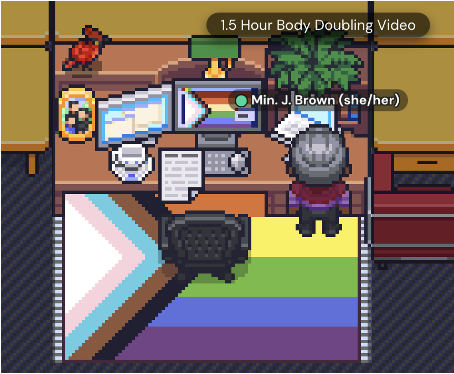
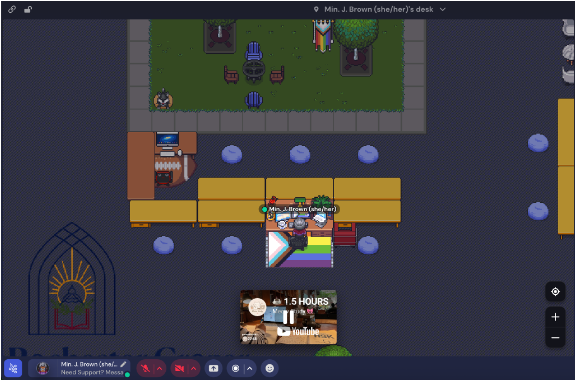
Much like my bedroom “office,” I have multiple screens, a half-drunk cup of tea, photos and relics that connect me with my loved ones, and Pride materials on full display. This is where I come to work, to focus, and to embody my identity as “Minister Brown” each week. Sometimes, visiting this campus is the difference between completing my assignments and letting my executive dysfunction win for the day.=
 |  |

 Let me explain:
Fig. 1 and 2: Photos of my desk on the CRCDS wing of the Gather Campus, decorated with meaningful representations of my personality and ideal workspace.
As a “zillennial,” I’ve spent the last six years occupying virtual spaces as both a student and educator across PK–12, postsecondary, and adult education. As a result, I’ve spent a lot of time thinking about what it means to teach, learn, build relationships, and engage meaningfully with people through a screen. I have also come to understand aspects of my own neurodivergence that make learning and working entirely online incredibly difficult—and, at times, incredibly liberating.
Sometimes I log onto the CRCDS virtual campus, walk my avatar to this desk, turn on the café music embedded nearby, mute my camera and microphone, and “clock in.” Other times, I visit the Church of the Young Prophets campus “downstairs,” where I’ve had the privilege of co-leading and cultivating community since 2023. Occasionally, someone else is there; often I am alone for hours. Practically speaking, there is no reason I need to be there. I could play café music from my computer, complete the same reading, write the same paper, or answer the same emails without opening Gather at all.
Yet, I keep logging on to this pixelated workspace.
Researchers Tessa Eagle et al. (2024) offer one explanation through their study of body doubling, a community-developed practice in which another person’s presence can support neurodivergent people in beginning, focusing on, or completing tasks. Of the 220 (predominantly neurodivergent) people surveyed, 186 reported being at least somewhat more likely to finish tasks in another person’s presence, describing body doubling interactions across physical and virtual spaces with friends, coworkers, strangers, and even prerecorded media. Personally, I learned the benefits of this experience long before I had language for it.
Gather seems to occupy an interesting space between the virtual and the presential: I am physically alone, yet spatially aware of other people who may be working alongside me. For my neurodivergent brain, the perceived presence shifts something—rather than only watching and listening to a screen, I am navigating a space, making choices about proximity and interaction, and responding to visual cues around me. Perhaps the simplest way I can describe it is, the platform gives my brain somewhere to go.
When another person enters the campus, we might talk; sometimes we use our private chat. We’re simply working in the same digital space, able to approach one another if we want interaction and equally able to continue doing our own thing. During weekly lectures, I interact with my peers and professors through interactive whiteboards, dynamic chats and emoji reactions, and move through conversations with ease. Unlike a Zoom or Teams meeting, Gather offers the possibility of lingering, both alone and in the company of others. In physical spaces, I am one who stays after to chat, check on a peer, ask another question, or share a laugh long after I should have left; on Gather, I find myself doing the same—without needing to enter a breakout room or send a meeting link.
That capacity to linger centers the CRCDS virtual campus around more than just my productivity. My virtual desk locates me within the community in which I am being formed, despite living six hours from Rochester and time zones away from colleagues and friends. When I walk my avatar into this space and sit down, I am not only Jonelle sitting in her bedroom staring at another screen. I am a seminarian arriving on campus. I am Minister Brown showing up to study, work, collaborate, and become.
Of course, having a space available and developing community within it are two different things. Gather can create conditions for spontaneous interaction, but technology cannot make us spontaneously interact; we must develop the habits that regularly bring us into this space. We must also consider the nuances of integrating new technology to a community that already struggles with effectively engaging online. I’ve personally spent hours supporting colleagues through digital literacy questions—both on Gather and on Populi, our Learning Management System—which reminds me that expanding the possibilities of virtual formation also requires us to consider questions of accessibility.
Perhaps, then, the most important question of the CRCDS x Gather pilot is not whether we can build a virtual campus. Thanks to the Wabash Center initiative, we already have one. The more interesting question is how we will learn to inhabit it, making this interaction meaningful and accessible for our shared formation. Honestly, the possibilities are what excite me most. We are still discovering what we might do with this space and, perhaps, what this next generation of “digital disciples” might contribute to the larger conversation around hybrid learning and theological formation.
NOTES & BIBLIOGRAPHY:
Tessa Eagle, Leya Breanna Baltaxe-Admony, and Kathryn E. Ringland, “‘It Was Something I Naturally Found Worked and Heard About Later’: An Investigation of Body Doubling with Neurodivergent Participants,” ACM Transactions on Accessible Computing 17, no. 3 (2024), https://dl.acm.org/doi/epdf/10.1145/3689648. Accessed on October 4, 2026.
About Jonelle M. Brown
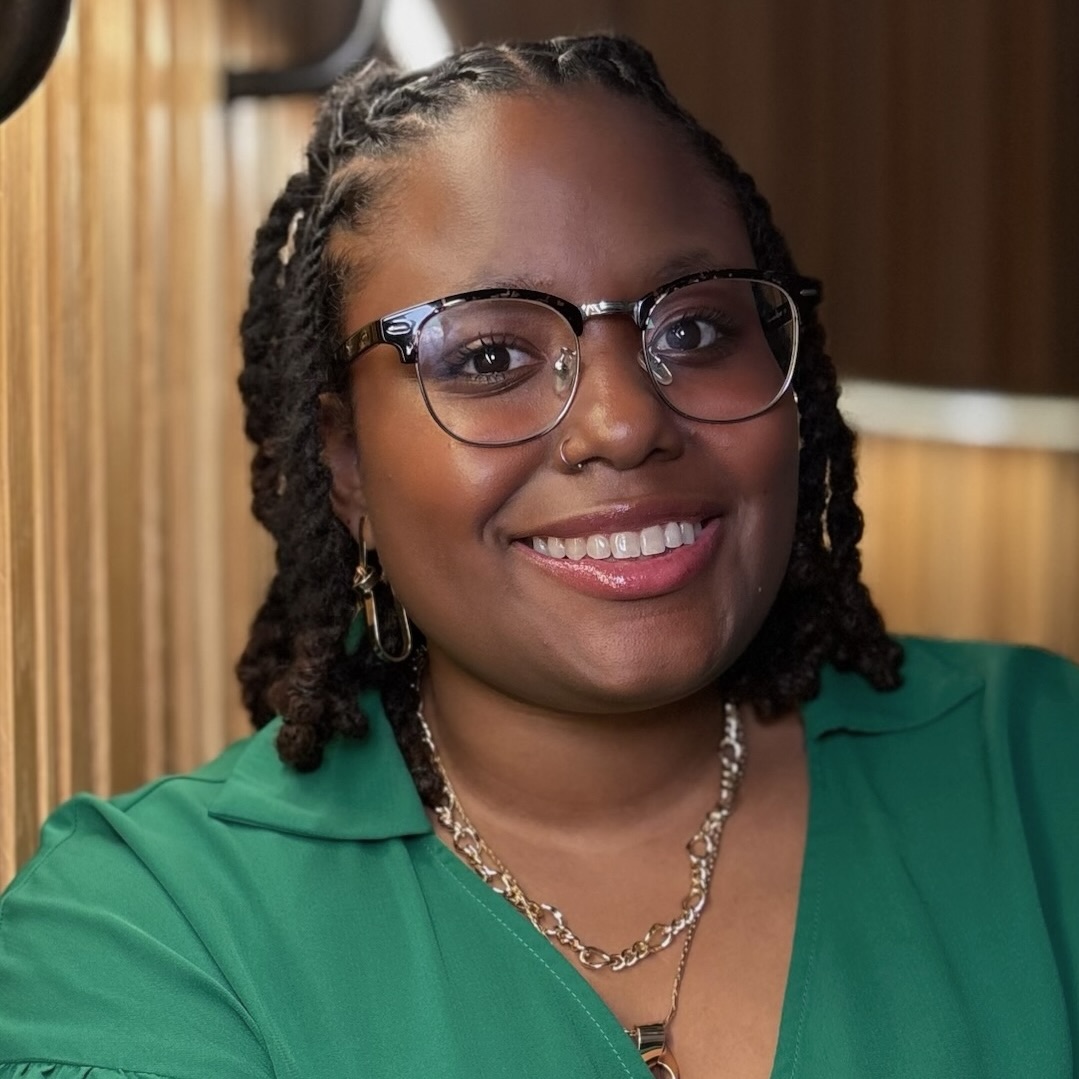
Jonelle M. Brown, MAT (she/her), is a bilingual educator, facilitator, seminarian, and minister of empowerment and engagement whose work explores the intersections of education, spirituality, identity, and belonging. Currently pursuing a theological education at Colgate Rochester Crozer Divinity School and serving her virtual LGBTQIA+ community at Young Prophets Collective, Jonelle brings six years of experience across PK–12 and adult education, ministry, and digital community-building into her emerging work as a public theologian. Across these spaces, she is particularly interested in how communities can rethink harmful systems to create more accessible, affirming, and liberative ways of learning and being together.