Resources
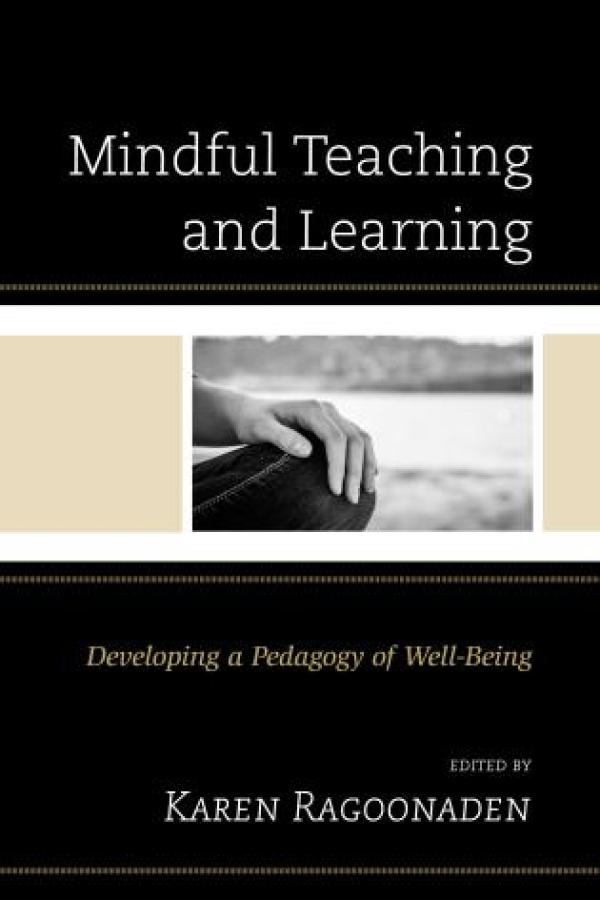
Teaching Mindful Writers introduces new writing teachers to a learning cycle that will help students become self-directed writers through planning, practicing, revising, and reflecting. Focusing on the art and science of instructing self-directed writers through major writing tasks, Brian Jackson helps teachers prepare students to engage purposefully in any writing task by developing the habits of mind and cognitive strategies of the mindful writer. Relying on the most recent research in writing studies and learning theory, Jackson gives new teachers practical advice about setting up writing tasks, using daily writing, leading class discussions, providing feedback, joining teaching communities, and other essential tools that should be in every writing teacher’s toolbox. Teaching Mindful Writers is a timely, fresh perspective on teaching students to be self-directed writers. (From the Publisher)
Naming What We Know: Threshold Concepts of Writing Studies, published in 2015, contributed to a discussion about the relevance of identifying key concepts and ideas of writing studies. (Re)Considering What We Know continues that conversation while simultaneously raising questions about the ideas around threshold concepts. Contributions introduce new concepts, investigate threshold concepts as a framework, and explore their use within and beyond writing. Part 1 raises questions about the ideologies of consensus that are associated with naming threshold concepts of a discipline. Contributions challenge the idea of consensus and seek to expand both the threshold concepts framework and the concepts themselves. Part 2 focuses on threshold concepts in action and practice, demonstrating the innovative ways threshold concepts and a threshold concepts framework have been used in writing courses and programs. Part 3 shows how a threshold concepts framework can help us engage in conversations beyond writing studies. (Re)Considering What We Know raises new questions and offers new ideas that can help to advance the discussion and use of threshold concepts in the field of writing studies. It will be of great interest to scholars and graduate students in writing studies, especially those who have previously engaged with Naming What We Know. (From the Publisher)
Out in the Center: Public Controversies and Private Struggles provides a fresh perspective on the inter- and intra-personal dynamics of writing center work. Building upon Greenfield’s and Rowan’s Writing Centers and the New Racism: A Call for Sustainable Dialogue and Change (2011), Condon’s I Hope I Join the Band: Narrative, Affiliation, and Antiracist Rhetoric (2012), and Denny’s own Facing the Center: Toward an Identity Politics of One-to-One Mentoring (2010), this edited collection presents the personal narratives of underrepresented voices in writing centers and invites critical conversation about the complexities of identity negotiation among tutors, writers, and administrators. While some writing centers claim to be neutral spaces where writing is engaged apart from the culture that produced it, this collection acknowledges the ways in which writing and collaborations around writing are always already both personal and political – shaped by a confluence of internal and external factors. Writers, tutors, and administrators bring their selves to the work, thereby making public their past, present, and emerging identities, which are inextricable from the social, political, economic, and cultural dynamics of the communities in which centers reside. The collection is organized into six parts – race, multilingualism, gender and sexuality, religion, class, and (dis)ability – some with more narratives than others. This imbalance likely speaks to the variety of submissions and also signals the need for even more narratives from underrepresented and marginalized perspectives. Additionally, while each part is purposefully arranged, the editors recognize that identities are intersecting and note in the review following each section that identity categorizations are fluid. Part I narrativizes the interplay between the reading or erasure of black female and male bodies in one-to-one consultations and the writing classroom and how those occurrences interconnect with public discourse on issues like black natural hair, Black Lives Matter, and black masculinity. Part II explores the benefits and complexities of multilingualism in the center and ways that tutors can leverage linguistic dexterity. Part III focuses on the role of gender and sexuality in the identity formation of writing center administrators and tutors. Part IV takes up religion, an identity-marker that is sometimes unseen, and asks how inviting disclosure of religious identities might challenge hegemonic norms. Part V considers how class converges with other identities in writing centers, inviting interrogation of economic standing and belonging. Part VI explores how learning differences can shape writing practices and influence pedagogical approaches to tutoring. The collection concludes with a final chapter and afterword that encourage readers to recognize the pedagogical and epistemic value of these lived stories in their own contexts and for future research. Engaging meaningfully and critically with these stories and the intricacies of intersecting identities that they underscore enriches our ability to create more inclusive practices in hiring, training, and tutoring – a worthy charge and a fitting ending for this valuable work.
Bridging the Multimodal Gap addresses multimodality scholarship and its use in the composition classroom. Despite scholars’ interest in their students’ multiple literacies, multimodal composition is far from the norm in most writing classes. Essays explore how multimodality can be implemented in courses and narrow the gap between those who regularly engage in this instruction and those who are still considering its scholarly and pedagogical value. After an introductory section reviewing the theory literature, chapters present research on implementing multimodal composition in diverse contexts. Contributors address starter subjects like using comics, blogs, or multimodal journals; more ambitious topics such as multimodal assignments in online instruction or digital story telling; and complex issues like assessment, transfer, and rhetorical awareness. Bridging the Multimodal Gap translates theory into practice and will encourage teachers, including WPAs, TAs, and contingent faculty, to experiment with multiple modes of communication in their projects. (From the Publisher)
Multimodal Composing provides strategies for writing center directors and consultants working with writers whose texts are visual, technological, creative, and performative—texts they may be unaccustomed to reading, producing, or tutoring. This book is a focused conversation on how rhetorical, design, and multimodal principles inform consultation strategies, especially when working with genres that are less familiar or traditional. Multimodal Composing explores the relationship between rhetorical choices, design thinking, accessibility, and technological awareness in the writing center. Each chapter deepens consultants’ understanding of multimodal composing by introducing them to important features and practices in a variety of multimodal texts. The chapters’ activities provide consultants with an experience that familiarizes them with design thinking and multimodal projects, and a companion website (www.multimodalwritingcenter.org) offers access to additional resources that are difficult to reproduce in print (and includes updated links to resources and tools). Multimodal projects are becoming the norm across disciplines, and writers expect consultants to have a working knowledge of how to answer their questions. Multimodal Composing introduces consultants to key elements in design, technology, audio, and visual media and explains how these elements relate to the rhetorical and expressive nature of written, visual, and spoken communication. Peer, graduate student, professional tutors and writing center directors will benefit from the activities and strategies presented in this guide. (From the Publisher)
Michael Rifenburg begins and ends his book with the melancholy story of a student who didn’t make it. A freshman at Auburn University, “Trey” was a star on the football field, but a dud in his classes. Rifenburg – then a master’s student working as a tutor for athletes – tries to help him, but it doesn’t work. When the Auburn football team wins a national championship a few years later, Trey has already dropped out and disappeared. Rifenburg’s book helps us understand what went wrong with Trey’s education. His ultimate argument – that writing teachers can better support student-athletes by understanding the embodied knowledge they bring from the playing field to the writing classroom – asks teachers to see the hidden talents in even those students labeled remedial. Rifenburg pushes past both the “dumb jock” stereotype and the tension that exists between academics and athletics in many colleges. He breaks down these misconceptions and boundaries to explain student-athletes as possessors of “a prior knowledge honed through bodily engagement with text and through writing practices that privilege the body as a central mode of meaning making” – a knowledge that has long gone unrecognized and untapped in the writing classroom, where the abstract practice of writing can seem disconnected from physical experience (5). As a graduate of Division I sports powerhouses like Auburn and the University of Oklahoma – where he worked in a writing center dedicated to serving student-athletes – Rifenburg is well-poised to make this argument. He was embedded for a season with the University of North Georgia’s men’s basketball team, where he attended practices and interviewed players and coaches about how they make meaning on the field. He performs detailed readings of baffling football plays from Auburn’s thick playbooks. His conclusion is that student-athletes learn complex theoretical plays through physical engagement, with the implication that this kind of learning is multi-modal, exacting, and collaborative – and potentially transferable to the traditional writing classroom. He concludes that student-athletes learn their sport through three “cognitive processes”: spatial orientation (or understanding their bodies in relationship to other bodies on the field), haptic communication (or physical touch, as when a coach re-positions a player’s hips), and scaffolded situations (or the step-by-step process through which players build up to learning a complex play). For Rifenburg, these skills are not that different from what writers do: position their ideas in relationship to other peoples’ (or spatial orientation), understand writing as a communal activity that takes place within and between groups of people (or haptic communication), and build upon many early drafts to create longer, complex texts (or scaffolded situations). He ends by prompting the reader to ask how these cross-currents between writing and playing can be leveraged to support student-athlete writers in the classroom. In the end, Rifenburg raises more questions than he answers. His description of the analogy between writing and playing sports is original and clear-sighted, but it remains only an analogy, as he stops short of offering strategies for putting this insight into action – an odd lacuna for a book that places so much emphasis on concrete, embodied experience. Indeed, I often found myself mindful of what is left out of Rifenburg’s book. While he displays deep familiarity with the field of writing studies, he does not acknowledge gender studies or disability studies, fields that are historically groundbreaking in exploring embodied meaning. Similarly, Rifenburg’s focus is exclusively on men playing high-profile, competitive, aggressive sports; do other types of athletes experience bodily knowledge differently? What of swimmers, runners, or dancers? Women athletes? Do student-athletes at small liberal arts colleges or community colleges – where athletics are not as prominent – experience a different kind of relationship between sports and academics? Rifenburg’s study opens the door for many important inquiries to follow. Ultimately, he provides a model for thinking about matter, mind, and underexplored student expertise.
Understanding Writing Transfer: Implications for Transformative Student Learning in Higher Education
While education is based on the broad assumption that what one learns here can transfer over there– across critical transitions – what do we really know about the transfer of knowledge? The question is all the more urgent at a time when there are pressures to “unbundle” higher education to target learning particular subjects and skills for occupational credentialing to the detriment of integrative education that enables students to make connections and integrate their knowledge, skills and habits of mind into a adaptable and critical stance toward the world. This book – the fruit of two-year multi-institutional studies by forty-five researchers from twenty-eight institutions in five countries – identifies enabling practices for, and five essential principles about, writing transfer that should inform decision-making by all higher education stakeholders about how to generally promote the transfer of knowledge. This collection concisely summarizes what we know about writing transfer and explores the implications of writing transfer research for universities’ institutional decisions about writing across the curriculum requirements, general education programs, online and hybrid learning, outcomes assessment, writing-supported experiential learning, e-portfolios, first-year experiences, and other higher education initiatives. This volume makes writing transfer research accessible to administrators, faculty decision makers, and other stakeholders across the curriculum who have a vested interest in preparing students to succeed in their future writing tasks in academia, the workplace, and their civic lives, and offers a framework for addressing the tensions between competency-based education and the integration of knowledge so vital for our society. (From the Publisher)
One page Teaching Tactic: students work in groups to identify and discuss differences between scholarly and non-academic sources.
This brief handbook and reference work was designed for college and university students interested in doing research. Charity Hudley, Dickter, and Franz present scholarly research as an exciting way for undergraduates to make the transition from students who learn to scholars who join an ongoing conversation as “masters of knowledge and challengers of the status quo” (5). The authors purposely construct the guide to serve not only as a resource but also as a model of a research-based approach to scholarly writing; they frequently comment on their own working methods and the research process that went into the composition of this text. The resulting book effectively demystifies the world of academia and the work of scholars, making research approachable and appealing. Throughout the guide, the authors encourage students to pursue their academic and personal interests by becoming researchers, and they provide an impressively comprehensive roadmap for the research process. The book takes a special interest in guiding first-generation college students and students from historically underrepresented populations. The tone is collegial, and the text abounds with concrete advice about navigating the concomitants of scholarly research, from how to email a potential research mentor (80) to how to identify and access campus resources that can assist with time and energy management (49). Chapter 2, devoted to getting started, describes what research looks like across several academic disciplines and details ways different schools support and reward undergraduate research. Personal accounts from student scholars provide additional relatable voices and create the sense of a broad academic community into which readers are invited. The authors also emphasize the importance of sharing research results with a variety of audiences; Chapter 5, “Writing and Presenting Research” (91-116), describes different venues for written and oral communication that increase the impact of a student’s project, including conferences, articles, books, and social media. A particularly valuable contribution of this book is its focus on empowering students from underrepresented populations. In addition to devoting a chapter to describing challenges that students from minority populations face and some tools for overcoming those challenges (“Underrepresented Scholars in the Academy: Making a Way,” [117-142]), the authors consistently highlight the value of diverse voices and backgrounds, and especially of the new questions such diverse viewpoints can generate. They frame the importance of greater academic inclusiveness and equity in a larger conversation about the powerful impacts researchers can have on their communities, emphasizing the value of interdisciplinary scholarship and community-based research. Although the book is addressed directly to an audience of undergraduates who are or who seek to become researchers, the authors also model numerous ways to offer such students practical support. Therefore the text may also serve as a valuable resource for teachers, mentors, and advisors who assist student researchers and ensure their success.