Resources
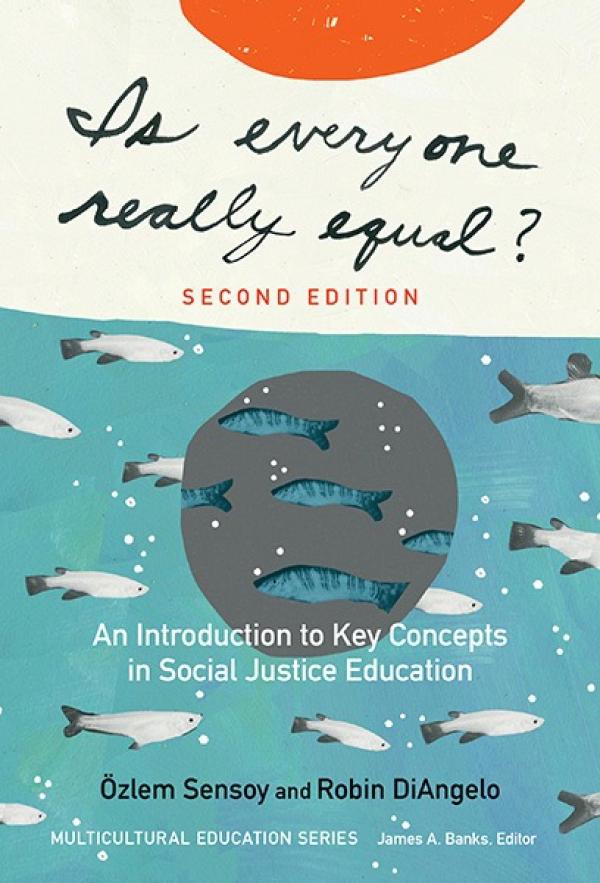
This book is one among fifty others within the Multicultural Education Series. According to the series editor James A. Banks, these books “[summarize and analyze] important research, theory, and practice related to the education of ethnic, racial, cultural, and linguistic groups in the United States and education of mainstream students about diversity” (xiii). Özelm Sensoy and Robin DiAngelo’s book focuses on social justice. For distinction from the commonplace notion of social justice, Sensoy and DiAngelo use the alternative term “critical social justice.” By critical social justice, they mean: (1) recognition of unequal social power relations at the individual and group levels in society; (2) understanding of one’s place within these relations of unequal power; (3) critical thinking on what knowledge is and how it is produced and acquired; and (4) action informed by the best understanding of what social justice is and sound methods for its realization in society (xxi). Sensoy and DiAngelo provide guidelines for teaching and learning social justice. The book consists of twelve chapters. The chapters include: pictures; charts; figures; vocabulary lists; boxes for definitions of key terms and reminders of ideas and concepts if discussed in a previous chapter; questions for discussion; and instructions for learning activities. The authors intend for persons to read the chapters in their numerical order. The content of the book is cumulative, with each chapter building upon the one that precedes it. There is an underlying logic in the linear progression of the chapters. Chapters 1 and 2 deal with instructional matters, providing students with guidelines for learning social justice course content (6-18), instructors with guidelines for grading student performance (19-21), and both with an overview of critical theory in social justice courses (25-27). Chapters 3 to 5 define the concepts and operations of culture, socialization, prejudice and discrimination, and oppression and domination (36-40, 51-57, 61-73). Chapters 6 to10 define ableism, sexism, racism, and classism and describe how they pervade social institutions (82-86, 104-115, 123-129, 142-144, 156-162, 177-182). Chapter 11 refutes 13 common statements that are used to discredit social justice education (186-197). Based on Sensoy and DiAngelo’s definition of critical social justice, Chapter 12 specifies four learning outcomes for social justice education and crafts possible scenarios for illustration of the kinds of actions for each outcome (200, 203-204, 207, 211). Though written primarily for white readers, Sensoy and DiAngelo’s book merits consideration by all readers interested in social justice education in pluralistic society. The series editor notes that “most of the nation’s teachers are white, female, and monolingual” (xii). Using the terms “we” and “us” throughout the book, Sensoy and DiAngelo acknowledge their associations with this demographic group (120). Given the fact of intersectionality – that any one person has multiple associations – race or ethnicity cannot be a person’s only identification (138, 175). The complexity of human subjectivity warrants the concern of all persons with social justice in a world characterized by ever-increasing diversity.
This book gives both more and less than what its title promises. For the editors of this collection, teaching “the whole student” requires engaged learning (“active, participatory, experiential learning that links doing with thinking”) and integrative pedagogy (“crossing and stretching traditional intellectual disciplinary boundaries”) (1). In turn, these commitments are part and parcel of a larger commitment to educating for social justice, and the essays take on a wide array of topics, including effective and balanced service-learning, learning communities “done well,” and the importance of meaningful, sustained diversity engagement. Some of the essays are rather auto-biographical while others focus on a particular course or program. As is the case with many books of this type, the collection is an uneven assortment, and it is not always clear how an essay pertains to the promised subject of “teaching the whole student.” For those reasons, it can be somewhat disappointing. Read in one way, however, hope emerges as a kind of connecting line and important theme. This is addressed most directly in the essay by Gillies Malnarich, who describes a moment of personal crisis as a teacher. She lay awake at night wondering, “What does it mean to educate for hope?” How can we make space for “raw, angry, heartbreaking, life-affirming hope… especially in our classrooms,” she asks, drawing upon both Paulo Freire and Rebecca Solnit’s writings (58). It also becomes clear that the kind of relational pedagogy being prescribed by many of the writers requires a willingness on the part of the teacher to bring his or her whole self into the classroom. In her essay on “Incorporating Social Justice into Teaching,” Kathleen Manning encourages readers to think of teaching as a spiritual act: “Teaching is not something learned once and perfected. The ever-changing nature of students, theory, and your personal and professional cycles as a person and professor make teaching an art. Because you are affecting people’s lives, approaching teaching and learning as spiritual practice places it in the realm of transcendence. Particularly when using principles of social justice to work toward a more just world, faith, trust, and authenticity must be part of the teaching and learning processes” (52). There are many helpful ideas and strategies here, including the “Where I’m From” poetry assignment, a powerful way for students to disclose important aspects of their identity and express “links between their faith tradition and ethnicity,” among other things (164 - the activity comes from Beverly Daniel Tatum’s Can We Talk About Race? [Beacon, 2007]). Some of the essays include useful appendices - see, for example, the collaborative learning self-assessment (77) or the chart describing experiential classroom activities to promote dialogue (143). Ultimately the strength of this book can be found in the questions that it poses more than in the answers it suggests. Each essay concludes with a set of reflection questions prompted by the content of the essay, and a patient, thoughtful reader could work her way through this book and be richly rewarded.
The Introduction to the second edition of Multiculturalism on Campus states that the book’s purpose is to provide “a comprehensive resource for students, faculty, and higher education administrators about multiculturalism and diverse populations on college campuses”(1). In addition to that goal, the second edition sets out, successfully, to give “greater voice to students who are not part of the dominant cultures” (1). The format includes clear and succinct case studies that assist in revealing the experiences of each group of these students on college campuses. Authors include discussion questions at the end of their essays to assist in processing the material and to move the conversation forward. Arranged into three perspectival parts with substantive essays addressing “Awareness of Cultural Issues,” “Information on Cultural Populations,” and “Critical Consciousness of Cultural Competence,” the book itself is a model of diversity and inclusion insofar as each essay can be understood as a roadmap for those who are just beginning to engage with the topic of multiculturalism on college campuses or it can serve to enrich and affirm the understandings of those who have been working in the area of student development and multiculturalism. The essays in the section on “Awareness of Cultural Issues” address foundational questions through the application of sociological, psychological, and student development theories. The discussions related to describing multiculturalism and understanding the effects of oppression on student development (Chapters 1 and 2) are filled with insights that can be related to the foundational concepts which have helped to shape curriculum in social justice and Catholic social teaching. In Part Two, descriptions of the various cultural populations that enrich our college campuses accurately reflect the diverse picture that exists today. Chapters on gender – “Men and Women” (Ch. 12) and “Lesbian, Gay, Bisexual and Transgender Students” (Ch. 13) – as well as the “Adult Student” (Ch. 14), “Students with Disabilities” and “Religious and Spiritual Diversity among College Students” (Ch. 15 and 16) are extremely helpful in presenting a dynamic picture of the reality that is the American college campus today. The information in these chapters is supported with data and cultural insights. Studies cited in each of the essays in this second section serve as significant entry points for further research while at the same time enlightening the newcomer to the diverse cultural context that shapes the lives of today’s college students. The abundance of information contained in the essays may seem overwhelming at times. However, each essay concludes with recommendations and discussion questions that provide support for the development of action plans that focus on inclusion. The questions assist students, faculty, and administrators with engaging in constructive critical discourse that leads to effective strategizing. Part Three addresses the ways in which the development of “Critical Consciousness of Cultural Competence” can occur. In this section, we come to understand that an intersectional framework is necessary for successful progress in developing the critical consciousness needed to engage in the work of inclusion and diversity. The work of social justice education is noted as holding the key to effecting change or progress in this area (384). The concept of an intersectional framework as presented here can be of assistance to those of us who are teaching courses in Catholic social teaching or peace and justice, as it demands the same competencies as those expected from the application of Catholic Social Teaching. The mastery of content along with the recognition of intersection of the various cultural contexts that inform the lives of students is something that needs to reverberate throughout the curriculum in higher education if we are to move forward as a society. The creation of inclusive campuses is the first step in bringing about real societal change and Multiculturalism on Campus is a valuable tool in making that happen.
In Using Action Inquiry in Engaged Research, Edward P. St. John, Kim Callahan Lijana, and Glenda D. Musoba offer readers a guide for organizing and using information for social justice in education. The authors pair a description of the Action Inquiry Method (AIM) with practices for the reader to use in his or her own context. In addition, the authors employ specific cases to explicate the relation of practitioners, institutions, partners, and researchers. Each case is followed by questions for individual or group reflection. The book includes sections written by researchers and practitioners, which models the varied roles and approaches to AIM as well as the benefits and challenges of collaboration in engaged research for social justice. Readers are challenged by an integrated understanding of the role of education and policy in social justice. The authors beneficially emphasize the K-16 pathways and the position of underserved populations. The authors remind the reader that the context of the cases and other examples in the text do not necessarily correlate to their own context. This recognition that there is no one right answer to an educational need is underscored by an emphasis on the experimental mode. Readers are encouraged to learn from failure instead of being paralyzed. Moreover, the authors provide ways for practitioners and researchers to challenge systems and practices that prevent justice. Indeed the tone of the book itself enables and encourages practitioners and researchers as they begin to engage AIM for the first time or collaborate in a new setting. As “an organizing guide,” Using Action Inquiry provides specific questions for the reader to use in assessing a situation and organizing a response. One of the possible weaknesses of this guide is that it does not provide an extensive introduction to AIM; however, the guide’s emphasis on social justice in education would beneficially complement another introduction to AIM. For scholars of religion and theology, Using Action Inquiry offers a way to question the role of university programs in relation to the pursuit of social justice. The authors outline specific ways in which programs and individuals can potentially assist underserved populations. Additionally, the structure of the guide promotes personal and group reflection. Consequently, university personnel could beneficially engage Using Action Inquiry as they attempt to restructure programs, recruit and retain students, and promote an institution’s mission. Moreover, the guide can be used in graduate courses to introduce students to AIM. While the text focuses on education research, those interested in other fields can apply this information to their own research context. In particular, the chapter on “Learning from Experience” offers practical suggestions for how to engage institutions and partners and to reflect on one’s role as a researcher. For those introducing theology students to ethnographic methods, Using Action Inquiry would encourage students to reflect on the ethical questions involved in research as they seek to promote social justice. At a time when higher education is in a state of transition, Using Action Inquiry in Engaged Research encourages practitioners and researchers to collaborate to recognize the needs of underserved populations, organize for change, and promote social justice in education.
Years ago, preparation for the beginning of school was a family affair. The cigar box for storage of pencils, pens, glue, and scissors was gotten by my father from the Pennsylvania State Store. Notebooks, book bags, and new sneakers were on my mother’s to do list. New clothes were my favorite preparation. A plaid skirt and dresses for me. My brother got pants and shirts, enough for the week. For our family, fulfilling this routine meant “we were ready!” for school to start. Now, years later, I am on the other side of the classroom podium. Yes, new shoes have been purchased, but my attention is on a different kind of preparation. I am uneasy and apprehensive. The hatred and moral outrage in the nation is weighing heavily upon my preparation. While racism is woven into the tapestry of USA democracy, we find ourselves in an unrehearsed moment. We are in an era where facts have empirical alternatives, immigrants are disinvited with police action, patriotism is routinely questioned, time-honored value systems are publicly maligned, and core social institutions such as family, religion, parenthood, marriage, and racial identity are under siege. When the classroom doors are flung open the students will likely be thinking about, and undoubtedly affected by, our moral crisis spurred on by recent domestic terrorism and the uninhibited displays of white supremacy. The national conversation about our morally bankrupt and inarticulate president will be on their minds. Or worse yet, if learners have ignored or closed themselves off from the surge of the Klu Klux Klan, the protests in all the major cities, and the many looming international disasters, then when they enter the classroom they will be hoping to continue the delusion of safety and security. Whether immersed in the national conversation or oblivious to it there is a new kind of vulnerability, uncertainty, mistrust and strain in our everydayness – I am unsettled and do not know how to prepare. What does it mean to “get ready” to teach when the national leadership is equivocating and mealy-mouthed about the inferiority and disposability of Blacks, Jews, Latino/s, recent immigrants, Muslims, LGBTQ, and the poor? When students cross the thresholds of our classrooms, their questions, concerns, beliefs, fears, confusions, fatigues, and misgivings will also flood through the door. It would be foolish to hide behind our own scripted syllabi, and then feign surprise when these issues bubble-up. Even if these volatile topics are not discussed forthrightly in our curriculum, students and colleagues alike are likely to act-out their fears and emotional distress. Our classrooms will be altered by the national conversation on hate in America – and rightfully so. My hunch is that the seminal inquiries will come when students (and colleagues) ask about our personal beliefs and values. The instances with the most magnitude are not likely to happen in the drama of a lecture or during a spirited debate in the classroom. I suspect the inquiry will come in subdued moments at the coffee urn or while riding together in an elevator. Students will ask, overtly or in a roundabout fashion, what you personally believe concerning patriotism, moral courage, and race. If you are a teacher with any standing in the faculty, or with any regard in the life of your students, you will be asked about your personal stance on white nationalism and white America. To be asked by your students to guide them with your own moral compass is a powerful request. It is a request that, for some teachers, is beyond our comfort zones and perceived professional boundaries. Tough luck! Students will be listening for the integrity of your conviction, your ability to be genuine about current injustices and the location of your moral passion. Be honest and believable. If we are to seize the power of our authority and step into our responsibility as moral agents who set examples of moral clarity, then we must know what we think before we are asked what we think. The moral volatility of this moment behooves all of us to know what we believe before we are asked - because we will be asked. During your preparation, reflection, and soul searching consider the risk and the cost of your values and weigh them carefully. Meeting the obligation of speaking for justice and against hatred has a price - sometimes a terribly high price. Silence also has its premium. The pundits and politicians cannot be our exemplars. Their disingenuous speak makes their ignorance vivid during the 24/7 news cycle. Most have done little personal or critical reflection – and it shows. When they incorrectly use vocabulary from the politics-of-racism lexicon, speak a-historically as if race politics is new, or reply in shallow, hackneyed clichés we know we are being led by persons who are ill-prepared and outmoded. The failure of moral leadership is, in part, the unwillingness to prepare before speaking. Soundbites cannot rule the day. The wild ride that is Trump’s presidency is only going to become more frenetic and incoherent. The collective experience of dangerous uncertainty and looming demise will not wane but continue to wax into the foreseeable future. The psychological torque produced by this fatigue will weigh heavily upon the stability of our classrooms and upon the teaching know-how we have come to rely upon. Our students, more than ever, will need us to create spaces that help them to make sense of all that is shifting, eroding, and slipping away. As teachers who accept the prophetic nature of our role and responsibility, we must tend to our own body health and keep consistent with our spiritual practices. If you must despair, do it in the privacy of your prayer closet. Allow your students to hear what you believe as a way of integrity and meaning-making. Show them how to create the voice of justice by being a voice for justice. Assure them that democracy can withstand this attack. Then hope like hell that it can.
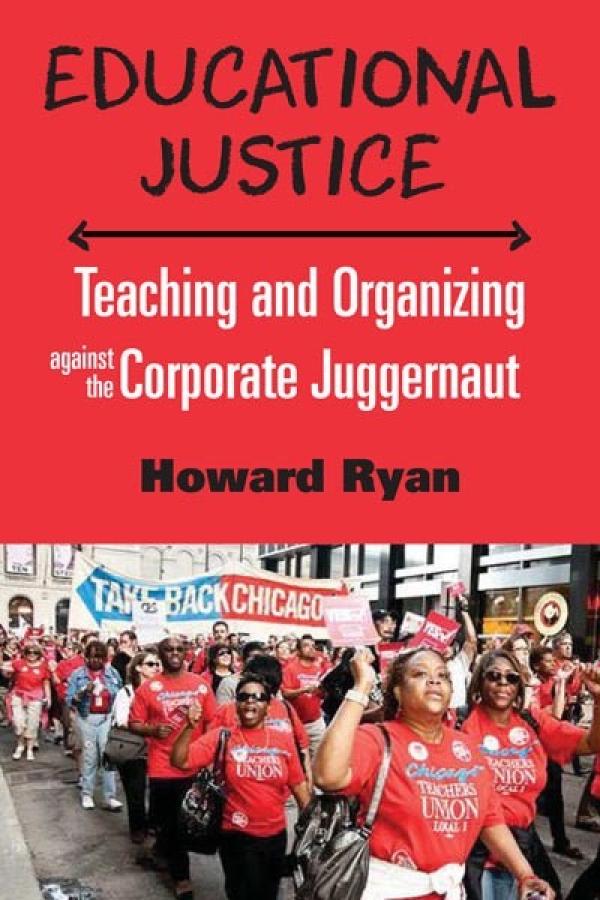
Educational Justice: Teaching and Organizing against the Corporate Juggernaut addresses what the authors call the corporate assault on public education. The book provides detailed stories concentrated in the Chicago and Los Angeles public systems that outline struggles and successes in regard to public schools. This collaborative book was written by Howard Ryan with Debra Goodman, Joel Jordan, and Joseph Zecola. Ryan describes school reform as corporate: “a package of public policies, private investments, and informal processes through which corporate and private actors are seizing control of education”(23). Ryan names teacher unions that partner with billionaires as part of the corporate juggernaut that places control of education in the hands of those who do not promote the best intentions of public education and leads to privatization of the school system. Ryan provides an elaborate and involved example of organization and resistance to privatization by Kelvyn Park High School in Chicago. He details the movements by parents, children, and teachers that lead to victory in keeping this one school from being privatized. Joel Jordan describes in detail how teacher unions fought back against the corporate movement and frames a strategic approach to the fight against school reform. In addition to providing an outline and methods for organizing to fight corporate school reform, the authors demonstrate school transformation through organization. Debora Goodman focuses on critical literacy, democratic schools, and the whole language movement. Goodman draws upon insights from progressive education, particularly whole language instruction, and progressive educators like John Dewey, Lev Vygotsky, and Paulo Freire to build a theoretical framework. She contrasts theories of literacy and teaching to further develop her thesis. Ryan provides a transformational organizational method as he describes the practices of Soto Street Elementary School in Los Angeles. He argues against scripted reading programs and supports solidarity among teachers – accomplished through family writing workshops, advocacy for literacy, and the addition of books available to students. Using the same rationale and promotion of transformation of reading, Ryan and Zecola present ideas on a curriculum model using Crenshaw High School in Los Angeles. It is promoted through an extended learning cultural model, extended learning time for teachers, collaborative units of study, and collaborative mapping and history. Additionally, they outline the need for extending learning into the community through internships and learning opportunities for parents. This book and the work of the authors might be difficult for those in public education outside of larger urban areas to relate to. The book addresses a critical issue facing public education but is limited by only looking at schools in urban settings. The book is valuable because it addresses public schools and social justice in a way that is challenging. The authors raise consciousness about how easy it is to take money from corporate sponsors and then be lured into an educational system dictated by those whose knowledge of how education actually takes place is limited.
Cláudio Carvalhaes Associate Professor McCormick Theological Seminary In Brazil There has been a recent uprising of students fighting for justice and better education. Several political developments have spurred the revolt of fourteen- to seventeen-year-old students in defiance of arbitrary laws of governors. Let me mention four events. First, it was
Nancy Lynne Westfield Associate Professor of Religious Education Drew Theological School The proximity of violence is the terror. Violence is not new – it is, for much of our society and in many, many ways, a preferred way of life. The illusion is that violence can be controlled, patrolled, contained,
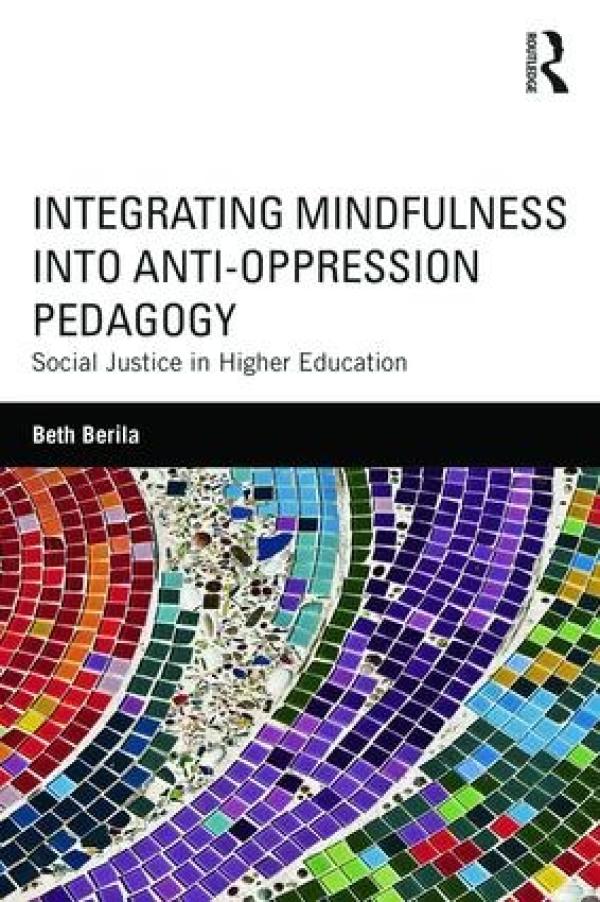
In the classroom, faculty often rely on a singular way of knowing -- allowing minds to enter the classroom while leaving bodies, spirits, emotions, and experiences outside the doors of the lecture hall or meeting space. Professor of ethnic and women’s studies at St. Cloud State University, Beth Berila imagines something more effective and embodied. After receiving tenure, she enrolled in a yoga teacher training program. She realized the contemplative practices of yoga and meditation could better her teaching, particularly in the area of social justice. Mindfulness could create a space for interrupting oppression and begin “the dynamic process of unlearning” that which may contribute to oppression (x). In each of seven chapters, Berila presents a theoretical framework, reflection and application for classroom learning, practices to cultivate mindfulness, and extensive bibliographic references. Berila’s project aims to recognize oppression and unlearn its destructive internalization for both the oppressed and the oppressor. Mindfulness, Berila argues, can dismantle privilege as well as dislodge internalized oppression. The practices she incorporates into her teaching prompts readers to reflect on their own educational techniques as potentially contemplative and communal spaces for learning. She offers introspective activities like pranayama (a form of breathing), journaling, and mindful awareness of the body. She also offers corporate activities that invite interaction and group discussion. Through both the introverted and extroverted approaches she acknowledges the possibility of triggering dissonance, trauma, and resistance. Berila is a skilled teacher and astute author; she knows well the risk and rewards of the activities she engages. The practices she advocates are new, thought-provoking, and stimulating. Berila is not unaware of the critiques that can be made of pedagogy shaped by mindfulness. She addresses particular concerns directly and then nudges the critics to consider the positive benefits of this method: building empowered communities, fostering compassion, changing oppressive systems, claiming full human dignity and equality for all people, and prompting institutional change. Accomplishing this requires attention to the knee-jerk reaction of shenpa, the Buddhist term for “the negative gut reaction” (109) behind our charged reactions. Disrupting that shenpa is one of the aims of mindfulness and here Berila offers techniques for navigating the complexity of reactions that can occur within individuals and classrooms when that charge occurs. Integrating Mindfulness into Anti-Oppression Pedagogy would be great summer or sabbatical reading when time allows deep contemplation. Her work invites reflection on those moments we wish we had handled differently in the classroom while offering helpful steps forward for future instruction. While integrating mindfulness does not require a teacher to be a master practitioner, Berila prompts small steps we can all take toward integrating body and spirit, emotion and experience into a deeper embodiment that moves beyond our mechanized minds. Plan to read this fascinating book twice. Once in a time and space where you can “pause and breathe” (29), allowing the content to become embodied. And then second, with pen in hand and syllabus in the other, ready to take note of how to incorporate these practices into your next semester of teaching.
The Culturally Inclusive Educator: Preparing for a Multicultural World has the potential to complement and advance efforts of educational institutions and educators who grapple with becoming more inclusive. Dena Samuels’s work will convince those who have not begun this work to begin. Even more, it will equip them to do so. Agreeing with U.S. Secretary of Education Arne Duncan’s claims that “education is the civil rights of our generation” and that “great teaching is about so much more than education; it is a daily fight for social justice” (116), Samuels’ work demands both self awareness and institutional struggle. Because a “social justice journey is a marathon, not a sprint,” a training plan is required. This book is one such training plan. For the individual educator, Samuels offers numerous tips, including an extensive not-to-be missed list of inclusive educators characteristics (108-9). Yet, for all the difference individual educators can make, in order to make the deepest impact, this “bottom up” approach (e.g., addressing microagressions in the classroom) must be combined with a “top down” commitment (e.g. recruit and retain diverse faculty and administrative leadership, develop inclusive curricula, demand rigorous assessment of diversity trainings). Samuels stresses institutional diversity practices instead of relying solely on “individual champions who come and go” (76). Samuels is hopeful even as she admits that becoming culturally inclusive educators and educational institutions is a long-term and, at times, difficult venture. She speaks from the experience of investing in the process. I have learned that my skin color . . . represents something, whether I want it to or not . . . when I become aware of my easily manifested entitlement, I tangibly feel the sting of inequality, even as the recipient of unearned privilege. It is important that I have deeply felt this pain, not as White guilt, but as a reminder that these systems of inequality affect us all, obviously to different degrees, and that my objective is to dismantle them (90). Some readers will be introduced to new vocabulary such as microaggression, noun-based identifiers, nondominant (instead of minority), meritocracy, and code switching. Others will be surprised by research results. For example, studies have found that voluntary inclusiveness trainings may produce more inclusive behavior than mandatory trainings (43), and that training faculty when they are in graduate programs is more beneficial than when they are in their teaching positions (44). Yet others might be surprised to hear that faculties and institutions are not as prepared as they think they are (24). Minimally, readers will gain much from the extensive bibliography, helpful appendices, and references to various survey instruments. Other than a desire to read more about instances of institutional and classroom success, I am satisfied with this book’s ability both to convince me that my own “minor actions can make a major impact,” and to encourage and guide me toward amending my practices and the practices of our educational institutions.