Resources
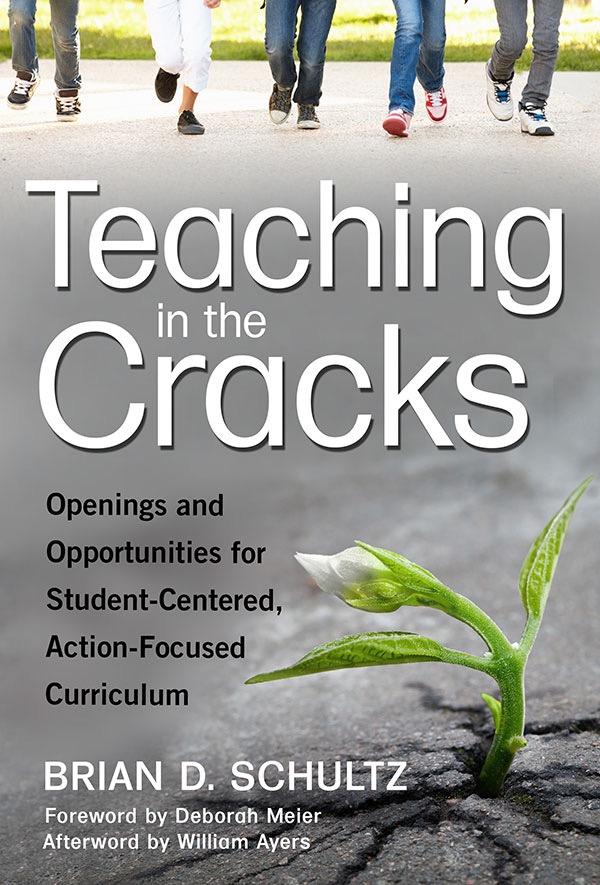
Teaching in the Cracks: Openings and Opportunities for Student-Centered, Action-Focused Curriculum Brian D. Schultz New York, NY: Teachers College Press, 2017 (xiv + 128 pages, ISBN 9780807758311, $29.95) Teaching in the Cracks by Brian D. Schultz, a professor of education at Northeastern Illinois University in Chicago, explores ways to make current K-12 classrooms more student-empowering, justice-oriented, and action-based. It is not that already available curricula are not student-empowering, have no concern for justice, or seldom inspire creative student actions; What most concerns the author are school systems that dictate almost everything that students experience, think, and do. In such a system, says Schultz, learning is largely top-down, authoritarian, controlled by agendas that perpetuate the status quo, and “bombarded by standards, assessments, [and] evaluations” (86). Shultz’s critiques and enthusiasm focus on reforming this “troubling” system and more specifically on transforming current everyday curricula in classrooms (86). His proposal, however, stays at the level of reforming or transforming, rather than completely negating or overhauling our current educational practices. That is why he calls his suggestive methodology and transformative tactics “teaching in the cracks.” He encourages educators to find creative loopholes in the present system where they can make education more democratic, collaborative, and thus bottom-up. Schultz acknowledges that his proposal sounds great on paper but is hard to implement in the classroom, and so throughout he offers numerous practical examples of proposed curricula and how they are working around the nation. Examples vary, covering everything from a single classroom, the entire school’s curriculum, forming close partnerships with surrounding communities, and specific topics, to teacher preparation (all covered in chapters two to six). Together they make this book an invaluable reference for field educators. In particular, chapter six, “Becoming the Teacher I Want to Be: Finding Support to Teach in the Cracks,” and chapter seven: “Turning the Corner: Techniques, Resources, and Tools for Taking-Action,” should be helpful for those who would like to implement the proposed learner-centered class education in a seemingly impotent school context. In chapter six, Schultz gives two fine examples of veteran teachers who introduced several effective strategies that are applicable to other contexts as well. To be sure, contexts differ. Yet, as long as a similar school structure is involved (for example, executive administrators, a sizable student body and its own governing entity, supportive community groups, and an aspiring teacher), these strategies would be beneficial anywhere. Websites introduced in chapter seven are extremely useful resources too. This book is not per se a theoretical book on student-centered, action-focused curriculum. Rather, it is full of vivid examples of actual current practices. Some readers may find this book insufficiently radical to make a dramatic change in the existing school system, but that is not the author’s purpose. Its particular strength lies in its unabashed focus on the classroom itself. The author believes that the real change can and must happen in each individual classroom where the teacher and students meet for daily education, before any large-scale systematic change is possible. In this respect, this book provides a small, yet reliable, hope for most field educators who, like me, aspire to create a more learner-led class environment.
Alice laughed. “There’s no use trying,” she said: “one can’t believe impossible things.” “I daresay you haven’t had much practice,” said the Queen. “When I was your age, I always did it for half-an-hour a day. Why, sometimes I’ve believed as many as six impossible things before breakfast.” -- Lewis Carroll, Through the Looking Glass The matter-of-factness of the Queen’s statement about believing impossible things is her formidable strength. My contribution to a society that must take seriously its issues of inclusion, equity, eradication of poverty, economic justice, and ecological ruin is showing my students that belief in impossible things is their prophetic obligation. I want to teach my students to be more like the Queen, and less like Alice. The current hegemonic reality would have us believe that the current state of things is all there is. And, how it is now is as it should be – and anything else is impossible. We are distracted from imagining a world of communal mindedness and cooperation. We are taught that justice is impossible, improbable, and, I dare say, imprudent. For some students, the challenge to believe impossible things is the immediacy of being taught by an African American, female professor who has, by the position she holds in the school, authority over them. “How is it possible,” I hear them attempting to reconcile their cognitive dissonance, “that a person deemed by society to be inferior can be in this place of higher education? She must be a credit to her race; She must be an Affirmative Action hire; she must have slept with somebody to get this kind of job.” For other students, the challenge to believe impossible things is when they see someone like themselves–same racial identity, same gender, same hair texture, and possessing the same ability to suck my teeth and roll my eyes like a champ. “How is it possible,” I hear them attempting to reconcile their confusion, “that a person like Her can be in this place of higher education? She must think she’s white. She must have left the church–she ain’t Christian. She must be sleeping with somebody to get this kind of job.” If I can press past the immediate narrowness of some students when gazing upon my Black, female body in my own classroom, I am eager to get to deeper urgencies of believing impossible things for social change. The politics of inferiority, the oppressions of white supremacy, white nationalism, and the current state of misogyny would have us believe, require us to believe, that the current reality is all that is possible. The status quo truncates the imagination as a way of maintaining control. Unimaginative students routinely resist learning about social transformation and the creativity necessary to disentangle and revision society without systemic oppressions. Every teacher, if you get to teach long enough, develops a shtick. The word “shtick” comes from the Yiddish language meaning “bit”–as in a “comedy bit” performed on stage. If you are not sure if you have a shtick or if you are not sure what it is–ask your students, they know. Or attend the annual end-of-the-year skits where students gleefully parody the faculty. Keep in mind that imitation is the greatest flattery and smile during your moments. One of my many classrooms shticks goes like this: With a wry smile on my face and beginning with a dramatic pause I pose this question: Which came first – race or racism? Some students recognize my wry smile, become cautious--suspicious that this is a trick question. Some students hesitate to answer for fear of getting the answer wrong. A silence wafts through the classroom. I then answer my own question: Racism birthed race and not the other way ‘round. Students’ faces signal more suspicion, disbelief, and occasionally . . . curiosity. The silence moves deeper into disbelief and some low-grade fear (like something dangerous is about to happen). Feeling a teachable moment potentially approaching, I keep going: It took the depravity of racist hearts to construct race and not the other way ‘round. Race was created as a social/political system whose ultimate and exclusive aim is to create a permanent social under- caste of human inferiority. (Dramatic pause, I breathe deeply so students can breathe also.) I continue: Given the spiritual evil necessary to maintain the system of patriarchy, white supremacy and white nationalism, it would make sense to assume that the victims of this social system (all women and children, people of color, the poor, LGBTQ brothers and sisters, disabled folks–for example) should be, and many are, either annihilated, embittered, or paralyzed with fear . . . . Yet, the African American men and women I know, while they have suffered tremendous hardship, oppression, and loss, exemplify a story other than defeat. When you are a people who know how to believe impossible things, the reality of a situation does not keep you from freedom. I ask for questions and comments, linger only for a little while, and then continue with discussion questions such as: What would it take for you and your people to be able to imagine a more just society-a world without racism, sexism, classism, heterosexism, ableism? What obstacles make imagining this society difficult? What is at stake for your people if you do not imagine this world? What is the role and responsibility of church leadership in the more just society? What skills, capacities, and know-how do you need to assist your people in transitioning into a more just society, church, and world? These are not questions proffering a utopian society, nor are they questions for idle flights of fancy or busy-work. Believing in the impossible as well as teaching belief in impossible things is what it will take in order to save the racists and the victims of racism. If we are to teach our students, in the words of Bishop Desmond Tutu, to endure hardship without becoming hard and to have heartbreak without being broken, then they have to have an imagination that can conjure that which evil says is impossible.

If you are like me, the weeks since the inauguration of the 45th president of the United States have been filled with shock, horror, disbelief, sadness and fear. These feelings come not only from the executive orders and policies that have been emerging from the White House but even more from the contest of what counts as “real news" vs. “fake news" or “facts” vs. “alternative facts." To be fair, there has been plenty of “fake news" coming from the left side of the spectrum as well. As a professor of Religious Studies deeply steeped in the methods of critical theories and postmodern thought, I have found myself a bit angry that political figures are using the critiques of objectivity and truth coming out of the academy to promote their own political agenda. The critiques of Enlightenment thought are well known within the humanities. Horkeheimer and Adorno’s Dialectic of Enlightenment, for instance, brought attention to the ways in which reifying the whole world within the confines of a specific understanding of human reason (writ large) is violent toward many earth bodies (including humans).[1] Liberation thought and critical theories have been challenging the maleness, whiteness, euro-centric, and heteronormative understandings of Reason, Ultimate Truth, and Reality. Furthermore, the horrors of two world wars, the threat of nuclear annihilation, and the rise of global environmental problems associated with advances in industrialized technologies have challenged faith and belief in the narrative of scientific progress. But the last 40 years of postmodern discourse and identity politics within the humanities has, it seems, come back to haunt progressive politics. Whereas the critique of objectivity and enlightenment values has marked a certain progressive strand of academic discourse within the western academy, this same “uncertainty” over knowledge and truth is being misused to spread confusion and “alternative facts” for motives of political power. The postmodern turn is multi-perspectival, takes many turns, and has many different movements (it is really too large to be considered “one,” but none-the-less here we are talking about it under common nomenclature). The critique of objectivity comes, as mentioned above, from a place of valuing diversity and difference. Yet, the other side of this is that those on the “right” (especially) have been able to use this epistemic uncertainty toward their own advantage. Donald Trump and others on the right have used postmodern tools to undermine any truth at all: this is not, however, what postmodern voices call for. This is merely chaos spreading and propaganda. The logic seems to be that if there is no objectivity or universal truth, the only option left is relativity. This is simply a false choice.[2] Objectivity and relativity pay little to no attention to what postmodernism is all about: embodiment. It is the fact that we can’t escape our embodiment (and the histories that lead up to that embodiment shaping our experiences of the world) that neither objectivity nor relativity is possible. What is possible is a multi-perspectivalism. A multi-perspectivalism doesn’t say “anything goes.” In fact, we can have common ground [3]. My favorite ones to argue for are: we are all subject to gravity on this planet, we are all mammals, we are animals, we need oxygen, water, and food to live, and we can’t claim to know exactly what any other person (or animal) is “thinking” or “feeling.” There are things we can agree upon as common ground - but this does not mean they are universal, for all times and places the earth was once not and it will be burned to a cinder one day. Paradigms from 100 years ago are different today and will likely be different 100 years from now. Who knows, maybe we are in some sort of bizarre multiverse?[4] Contextuality and embodiment, then, mean that we need multiple perspectives to help articulate the common grounds on which we stand, but that none of them can fully exhaust that reality. The parable of the elephant and the three blind men comes to mind. One still must argue for his/her position; facts and events still matter, it is just that they are not in some way naively “out there” for all to see in the same way. So while the uncertainty of postmodernism has fueled Trumpism and those of his ilk, it is a really, really bad interpretation and misuse of postmodernism. In fact, if postmodernity suggests (which I think it does) that certainty is always more dangerous than uncertainty, he has proven that. He is so certain that he needs to listen to no one else and take no other perspectives into account before tweeting to the masses. This is solipsism gone wild. As an educator, how might we best resist the erosion of facts and truths in public discourse, while maintaining the best fruits of postmodernity? I think, first, we need to really start talking about vision. The education system in the US and in other countries is still geared toward educating national citizens. This has led to a false choice between globalization and nationalism. I (and others) have tried to talk about "planetarity" (following and developing on Spivak's understanding of this word).[5] A planetary understanding of the world recognizes us first and foremost as planetary citizens among other citizens (both human and non). We are, after all, but one species on a planet full of non-human bodies that are each just as diverse (if not more) as every human body. Second, planetarity recognizes that the globalization of neo-liberal economics is not good for all bodies equally but only a few (the now so-called 1%). We need safeguards for local peoples, places, other animals, and environments in general. We need safeguards that do not undermine the integrity of our earth's systems, nor the integrity and dignity of peoples. Nationalism, however, is not the proper response. Nationalism leads to an every-person-for-himself/herself mentality. The worst, rotten fruits of which we saw in WWII. Going "back" is not an option; so how do we go forward? Third, while protecting local places, a planetary vision of the world also recognizes that we are multiple, hybrid, pluralistic and changing. Difference in all of its forms is good and what constitutes our very own self-identity - there is no me, without a lot of you's. Hence the multiple "isms" that seek to wall one group of people off from another will always fail. We are interdependent (with other humans, other animals, and the rest of the natural world both present and past) and there is no getting away from that. All attempts to flee interdependence will result in violence toward other earth-bodies. It may sound simple, and I don't have answers in terms of where we ought to go. But before we can even begin to answer the question of "ought", we have to raze the structures of our educational systems and get out of the current rut of the political rhetoric that assumes we must choose between nationalism and localism or globalization and neo-liberalism. Call it "planetarity," call it a new form of "Eco-cosmopolitanism," or by some other name.[6] But let's start imagining again together a different world to co-inhabit and fighting to break down the old structures that prevent us from doing so. If the university is not a place for critically reimagining what it means to be humans, on a common planet with a lot of other-than-human life, then I don’t know what the university is for. [1] Max Horkeimer and Theodor Adorno, Dialectic of Enlightenment (Palo Alto, CA: Stanford University Press, 2002). [2] This is Haraway’s argument in: Donna Harraway, “Situated Knowledges: The Science Question in Feminism and the Privilege of Partial Perspective,” in Feminist Studies 14.3(Autumn 1988): 575-599. [3] Laurel Kearns and Catherine Keller, EcoSpirit: Religions and Philosophies for the Earth (New York, NY: Fordham University Press, 2007), 1-20. [4] Mary-Jane Rubenstein, Worlds Without End: The Many Lives of the Multiverse (New York, NY: Columbia University Press, 2014). [5] Whitney Bauman, Religion and Ecology: Developing a Planetary Ethic (New York, NY: Columbia University Press, 2014). [6] Isabelle Stengers, Cosmopolitics, 2 vols. (Minneapolis, MN: University of Minnesota Press, 2010-2011).
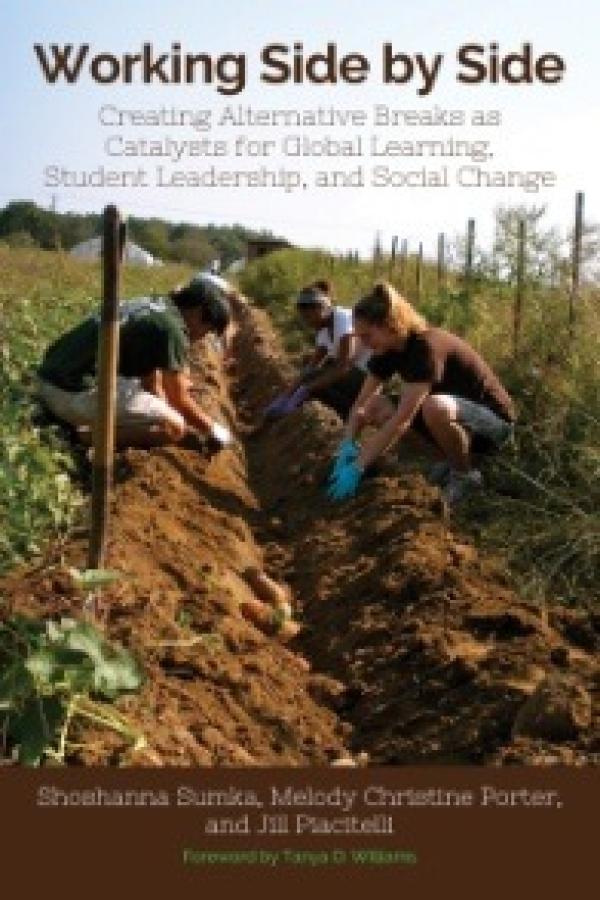
Sumka, Porter, and Piacitelli offer both the history and strategy of an emerging educational model that crosses borders between disciplines to develop competencies and leadership characteristics for social change. The authors document “short-term, student-run immersion service trips” designed to sharpen critical thinking and deepen commitment to future action for social justice (8). In this study their primary example of the alternative break movement is an organization called Break Away that grew out of Vanderbilt University. This and other new programs like the Alternative Break Citizenship school (ABCs) are rooted in efforts from the 1960s that experimented in transformational learning experiences combining travel, intercultural dialogue, collective action, and critical theorizing. A common denominator of these programs is the goal of social justice education. One theoretical framework undergirding these programs is an “active citizen continuum” pointing the way toward authentic relationships for life-long reflection, action, and community enrichment (10). The integration of critical theory and practice moves participants beyond charity and critical theorizing to active citizenship and intercultural competence. A key component of these programs is student leadership. By practicing the actual implementation of the model from the planning and training stages, students gain confidence and facility with each step of the work. In addition to providing the history and theory behind the programs, this book offers practical details contributing to the success of the learning. Readers find pointers on working relationships between staff and students as organizers and leaders of the trips, the alcohol and drug free policy, clarification of the roles of staff versus student leaders, as well as ideas about training, assessing, and fund-raising. The study would be strengthened by further development of the concept of justice. Despite the significance of social justice to this work, little attention is given to making explicit what is meant by justice. Similarly, the concept of global learning could be explored in relationship to literature on intercultural dialogue, collective action, and transcending political borders. Although this book provides an introductory discussion of what community means, contrasting communities of affinity versus communities of geography, the extensive body of work in philosophical and critical theory developing that distinction is not acknowledged (351). In other words, the academic and intellectual strands contributing to this model are not noted with as much care as the recent history of the particular program. This is a compelling read for anyone interested in learning that fosters authentic relationships rooted in “values of social justice, dignity, empowerment, and capacity building” (33). Although religious and theological frameworks are not discussed directly, schools or educators who offer immersion or intercultural learning experiences will benefit from reading this research. The authors’ caution about the tendency to slip toward do-gooder tourism, poverty tourism, and forms of educational travel where privileged students unwittingly perpetuate legacies of colonialism is timely and relevant.The conclusion of this book includes observations about the “need for inspiration and collective action” (359). If faith communities hope to be known as sources of inspiration and collective action in the future, this book offers potential for fertile common ground.
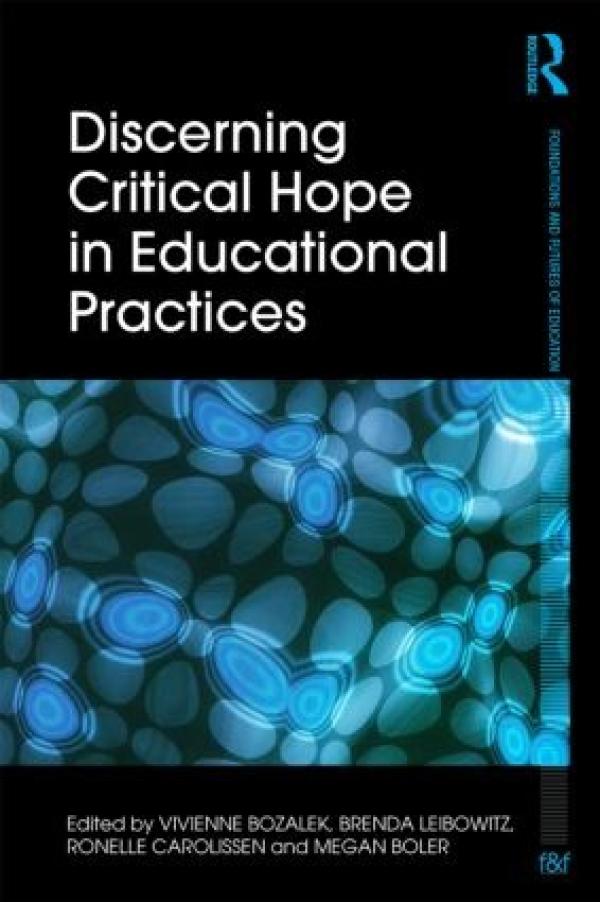
Discerning Critical Hope is a continuation of the work of Paulo Freire, whose famous Pedagogy of the Oppressed (1970) formed a basis for critical and liberation pedagogy. While his early work included hope, he reiterated the importance of that portion of his framework in Pedagogy of Hope (1992). A small but growing literature on critical hope is extant in the field of pedagogy, but this idea has not yet made many inroads into the published works of theologians, despite its connections with liberation theology and the other contextual and critical branches of theological discourse and activism. (Works on critical hope in the religious education and theology literature include: Bock, “Climatologists, Theologians, and Prophets,” Cross Currents; Kim, “Seeking Critical Hope in a Global Age,” Religious Education; and Kuhne, “A Community Pedagogy of Critical Hope,” PhD dissertation). Many readers of the Wabash Center’s publications will undoubtedly already teach in a way consistent with the critical and liberative themes in Freirean thought, critiquing oppressive social structures and advocating for a world grounded in God’s justice and love. After deconstructing oppressive systems and our complicity in them, however, it can be difficult to provide hope in the theological classroom. I personally find it challenging to move students beyond critique and not simply leave ministry students and seminarians with the task of reconstructing their shattered beliefs and worldviews on their own. Critical hope provides a way forward. Within this framework, critique and hopefulness cannot be separated: the point is that we need both. We need to be able to critique the world as it is, while retaining hope for a different future. Within this framework, the educator engages history with a critical lens, invokes students’ imaginations, envisioning a different way, and provides space for practical steps to enact that vision. Discerning Critical Hope includes chapters by a number of scholars, educators, and practitioners. The authors distinguish between critical hope, naïve hope, and false hope. Naïve hope is optimism without a sense of personal responsibility: expecting that things will turn out alright even if one puts forth no effort to make it so. False hope refers to the idea that working hard will result in one joining the oppressing class, a personal rather than systemic release from injustice. Several chapters critique neoliberal education and other forms of supposedly equality-based educational practices that promise merit-based successes, while in reality supporting colonial and patriarchal systems of power. These can serve as cautions for those who teach religion as well. Which of the forms of hope offered in classrooms are naïve or false hopes? Are faculty willing and able to be drawn to a deeper level of hope that can handle the paradox and mystery of critique, of looking in the face of real suffering and injustice, and struggling – hope-filled – toward a better world? Although each chapter has its helpful points, I found chapters 2, 5, and 10 most useful. Chapter 2, “Teaching for Hope: The Ethics of Shattering Worldviews,” by Megan Boler, provides hope for my own teaching. Boler recognizes the real difficulties in engaging critical hope in the classroom: intentionally invoking a pedagogy of discomfort is, not surprisingly, uncomfortable for students and educators alike. Boler states that, when utilizing this pedagogical method, about a third of students will be receptive, about a third will be vocally and angrily resistant, and another third will be numb or apathetic. She shares a difficult classroom experience, including her fears and other feelings as she navigated dealing with resistant students. It gave me courage to continue practicing this form of teaching. Chapter 10 provides a brief history of thinkers who have written about hope, from the Greek myth of Prometheus to Francis Bacon, Immanuel Kant, Georg Hegel, Karl Marx, W.E.B. Du Bois, Ernst Bloch, and Paulo Freire. This provides a helpful entry point into different explications of hope throughout history, especially since many of these philosophers had such a major impact on Western culture and on theology. This chapter delineates how and why critical hope differs from previous understandings of hope. Chapter 5, “Plasticity, Critical Hope and the Regeneration of Human Rights Education,” by André Keet, explains critical hope through the lens of deconstruction, bringing Derrida and other philosophers into the conversation. Keet describes critical hope as that leftover form present after deconstruction occurs, that kernel of truth or “trace” that remains when one strips away all the systems and structures that get layered on top of that essential form. Forms must be physical, must be enacted: these traces cannot remain metaphysical or theoretical, but must be lived. For theological educators, as we critique and deconstruct, we hope and trust there is an essential kernel there for our students to discover, a trace, a divine encounter or transcendent truth, a knowing that goes beyond the laws and organizational structures with which we so often burden our faith. As we critique, we also hope: we sense something there, something infinite, personal and universal, a never-changing essence and a dynamic Spirit of creative transformation. We can never pin it down; it is always a process of becoming. Hope is a means and an end, a way of being and a goal to strive for, but we cannot know for what we hope without critiquing the present context and imagining a different world. Nor can we truly hope unless we embody that hope in praxis, naming the problem, developing a solution, enacting it, reflecting, modifying, and trying again in a constant cycle of transformation. Though the authors of this text do not often discuss religion or spirituality, these topics do come up at points, and the struggles to name injustice and enact a truly just and hope-filled form of education will be recognizable to many religious educators. I recommend this book to educators in the religious academy who want to enact a form of education that goes beyond the banking model, who want to challenge their students to engage in critical thinking, who need courage and a sense of solidarity from knowing they are not alone in this struggle, and who also sense a deep undercurrent of hope in taking one step, and then another, toward that imagined future.

Caleb Elfenbein Assistant Professor Grinnell College Some time back, I wrote a blog post called “Teaching Islam and gender: why we need to set an ethical agenda for the classroom.” It described how, working collaboratively, my class on Islam, gender, and sexuality drew on the work of Lila Abu-Lughod to..

Nekeisha Alayna Alexis Coordinator Intercultural Competence and Undoing Racism Anabaptist Mennonite Biblical Seminary Safwat Marzouk Assistant Professor of Old Testament Anabaptist Mennonite Biblical Seminary Recent spates of lethal violence against people of color—and black men and women in particular— are devastating reminders of the high cost of unaddressed oppression. The race- and class-based killings of Mike Brown in Ferguson, Mo.; John Crawford in Beavercreek, Ohio; Eric Gardner in Staten Island, New York; and Renisha McBride in Dearborn Heights, Mich.; to name a few, undercut illusions of how close we are to a “post-racial” or just society. However, these tragedies must...