Resources
There is wide agreement that student-centered pedagogies yield deeper student engagement and stronger learning outcomes than more traditional “sage-on-the-stage” teaching does. Learning shines when students are invited and equipped to integrate course content with their own experiences, insights, and prior knowledge. In this volume Renee K. Harrison and Jennie S. Knight reflect on personal experiences in the classroom, explore pedagogical theory, and provide examples of applied practices to create a map of the key elements of engaged pedagogy. The map, divided into four sections, moves from the selfhood of the teacher to teaching methods and course content to community context and engagement. Harrison and Knight begin with a premise: that the enterprise of teaching involves the very personhood of the teacher. Either we can acknowledge this and cultivate an awareness of our strengths, blind spots, and biases, or we can ignore it. That deep learning involves the very personhood of students is another key premise. Nurturing this two-pronged awareness – that teachers and students do not leave their wider selves at the door of the classroom – is the necessary ground of engaged teaching. Whole persons are welcomed into the classroom and empowered to reflectively integrate course content with who they are. Sections two and three explore how form and content can either undermine or buttress one another and how, even when teachers aim for the latter, they may unwittingly miss the mark. For example, in classrooms in which more democratic teaching practices are employed, course content may still hew closely to a traditional textual canon, with marginalized voices tacked on at the end. Or content may offer a wide range of perspectives while teaching methods minimize student voices. Ideally, democratic pedagogies and a widened canon reiterate one another. If the goal of learning is not just knowledge acquisition but transformation and if we are inviting students’ whole lives into the process, attending to communal context is likewise crucial. The authors thus cap the volume with strong advocacy for community-based learning (CBL). They discuss the logistical and pedagogical challenges of incorporating community work into courses and illustrate why it is well worth the effort. They offer tools for implementing such work, while acknowledging that sustained success in CBL requires significant institutional buy-in that some teachers may not enjoy. In fact, a particular strength of this volume is its honesty about engaged teaching practices, which while considered innovative in pedagogical circles, are still perceived in many academic circles as less rigorous and less respectable than more classic methods. Harrison and Knight lament that this should be so especially in theological-religious education, where the integration of curricular and worldly knowledge is paramount. Should engaged teaching not be the norm? Recognizing that teachers will need to calculate risks depending on institutional context, they counsel courage for the sake of students’ whole-person integrity – and of the credibility of theological-religious education. The wisdom conveyed in these pages is clearly hard won, over the course of many years across varied institutions. In distilling their experiences, Harrison and Knight offer their readers a real gift. However, while teachers can benefit from the ideas, strategies, and examples laid out in the book, they should not expect to change their own teaching methods and courses overnight. Rather, this volume invites teachers to an ongoing practice of engaged pedagogy that requires continual self-reflection, awareness of institutional and classroom contexts, a willingness to take creative risks, and a commitment to engaging one’s students as whole persons. It is a compelling invitation indeed. For those who prize transformative pedagogy, this volume weaves the best of theory and practice in teaching theology and religion – accessibly, comprehensively, and indeed engagingly. Highly recommended for undergraduate, seminary, and graduate teachers alike.

The up-tick of media covered violence in the USA, as well as the reports of violence from around the world, causes me to pause. While I believe that experiencing the pain, suffering, and uncertainty of the world is calling us to become a nation of compassion, forgiveness, respect and equity, I am also afraid. The Golden Rule or the rule of reciprocity is pursuing us with gusto and I am fatigued. The survival of the planet depends on our willingness to examine ourselves and change. It is mid-summer, and my attentions have turned toward preparing for fall and spring courses. Given the backdrop of terrorism and violence in the world – I feel tentative and uprooted. It is easy to slip into the narrative of “an eye for an eye.” Or fall down the slippery slope of thinking that the suffering of some “expendable” populations is acceptable if others can live well as a result- just collateral damage for the greater cause of democratized capitalism. The anxiety in the nation is palpable. The media identifies the acts of violence and hatred by their geographic locations; Nice, France; Orlando; Charlotte; Ferguson (to name a scant few). We are reeling from news coverage which includes cell phone videos of neighbors and family members who are shot, mauled, assaulted, maimed and murdered. Conversations are polarized about police corruption and arrogance. Colleagues, friends, and politicians are writing public letters in response; public manifestos in protest; public statements of dismay and clarion calls for change. I am appreciative that each literary piece is like a musical note in the score for a new symphony of resistance. In the straining for meaning – comparisons are drawn. Grasping for perspective, people are comparing this 2016 era of violence to the civil rights movement. People are harkening back to the days of blatant assassinations: JFK – 1963, Malcolm X – 1965, King – 1968, Bobby Kennedy – 1968. Others are saying that the flagrant violence dappling the nation is a-day-in-the-life for our brothers and sisters in Israel – or is the everydayness for our brothers and sisters in Beirut and Iraq and Afghanistan. Some people liken the current national violence of 2016 to nights in Watts or Camden or Chicago or Detroit – where nightly gun violence and murder is normal, routine, customary - terrorizing. They use the words of Malcolm X, “… the chickens have come home to roost,” as prophetic finger wagging. The mainstream news routinely including a person who is professing that terrorist attacks cannot change our (U.S.) way of life! The person, usually a white, middle aged, man, proclaims that we must live our lives, keep our habits, and not “let the terrorists win!” I suspect my definition of “terrorists” is more expansive than his. My 88-year-old father now refuses to attend the Saturday matinee for fear of being shot. The most piercing uproar and outcry is for - what to do. Thankfully, the counter-narrative is coming on strong. Organizations like #blacklivesmatter and the Samuel Proctor Conference, led by Dr. Iva Carruthers, are diligently, systemically, and effectively working on the issues of violence, corruption and white supremacy in thoughtful, strategic and transformative ways. These organizations are calling us to empathy, compassion, and justice so we all might live and our babies yet-to-be-born might know safety. As a Drew faculty person, I am thankful for Drew graduates who are on the front lines of the 2016 fight, the 2016 journey toward compassion. An exemplar from Drew is the Rev. Dr. William Barber, II, the President of the North Carolina State Conference of the NAACP and the National NAACP Chair of the Legislative Political Action Committee. When I think of Bill and his tireless work I know I do not teach in vain. Bill’s activism and public theology is shaped, not in spite of his theological education, but by his theological education. With discipline and faith, I tell myself to gather myself – I have to, with intention, keep myself grounded. I force myself to stretch beyond myself. My impulse, like so many of us, given the events of violence across the world, is TO DO SOMETHING! When I quiet myself and take a breath I re-purpose myself to commit to teach as a service of justice. I am convinced we must marshal our smartnesses/our best minds, our most creative spirits, our best innovators to solve the problems of violence, racism, militarism – which, if unchecked, will kill us. My fears are allayed when I think of gathering with my students in the fall semester. Embedded in my course content (explicitly or implicitly) is my yearning for them to be change agents. I believe to teach well is to instill in students the ability to discern work which is meaningful, work which is transformative, work which yields compassion and empathy for the stranger. I am looking forward to challenging my students to exercise and hone their abilities to think deeply, to think imaginatively, and to think with their hearts about new ways of being in the world. The world will become more compassionate when we teach and learn that we all are God’s children – no exceptions. Obscure classrooms in seminaries are full of people who will partner with and collaborate with Bill Barber and the others. My job is to train folks in such a way that they are not seduced nor intoxicated by the trivial, and who can engage the deeper issues of alienation, xenophobia, and hatred which are our plague. The old moorings are gone and the new ones are wrenching and cricking into existence. My job is to assist my students in doing work that is worth doing – the work of justice and compassion.
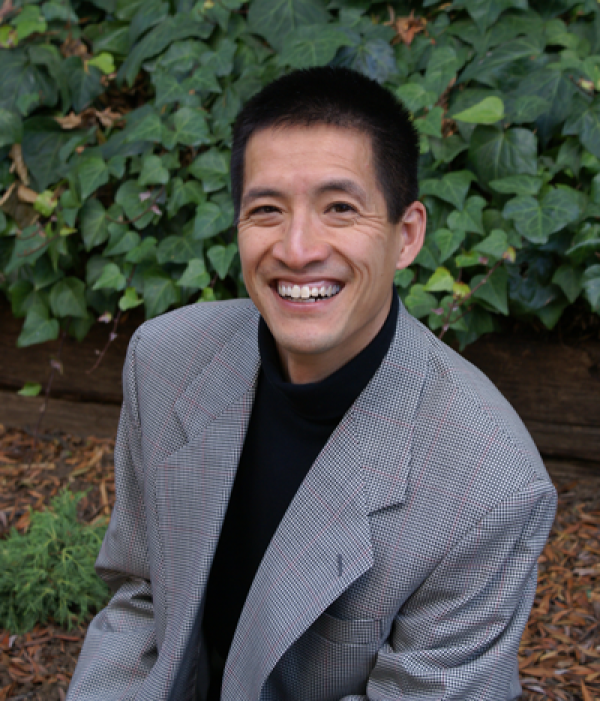
Tat-siong Benny Liew Class of 1956 Professor in New Testament Studies College of the Holy Cross “You are now entering the real world.” This is undoubtedly one of the most popular remarks that college/university graduates hear around the time of their commencement ceremony. The comment implies, of course, that life
Nancy Lynne Westfield Associate Professor of Religious Education Drew Theological School The proximity of violence is the terror. Violence is not new – it is, for much of our society and in many, many ways, a preferred way of life. The illusion is that violence can be controlled, patrolled, contained,
Growing up with a father who served as the director of the service-learning experiences at a faith-based college, I heard many stories of the joys and challenges of academic and non-profit agencies trying to work together. Later in my own teaching career, similar stories emerged as I witnessed the power and problems of out-of-the-classroom learning experiences. With a clearly stated goal (12), the authors of Community Partner Guide to Campus Collaboration effectively present an orderly guide for non-academic organizations to begin to develop mutually beneficial partnerships with post-secondary institutions. Building on the premise that “effective community-campus relationships educate students and enhance communities” (4), the authors provide multiple ideas and strategies for a community group to function in partnership with a post-secondary institution. After a brief introductory chapter, the book lays out in subsequent chapters particular ways for non-profit leaders to explore and establish potential relationships with colleges and instructors. Within the opening chapters, the authors provide a useful definition of reciprocity that notes the differences between charity and solidarity (41) in community-campus relationships. The authors set a foundation on which a mutually beneficial relationship for both organizational and individual involvement in such partnerships can be constructed. The book also presents a variety of examples to explain the concepts of community-campus relationships. Building on the opening chapters, the authors outline specific steps to assist an agency coordinator in both engaging faculty and empowering students for engaged learning. Again, a variety of practical examples and creative ideas are suggested. The final chapter on evaluation helps community partners, academic instructors, and students evaluate both the impact of their work with the organization and their own personal involvement and learning through such engaged learning experiences. There is little to criticize about this book since it speaks clearly to both academic and non-academic organizations. The authors’ illustrations demonstrate a breadth of experience working within both types of organizations and their writing style is welcoming to readers who may be unacquainted with how community group and college partnerships work together to produce significant student learning outcomes. Some checklists may have provided a helpful summary, but there are other visual clues in the book to emphasize their key points and demonstrate the benefits of this educational approach. The authors are clearly convinced that “communities are stronger when campuses and community agencies collaborate because it creates knowledgeable and engaged students who give back to their communities as committed citizens long after they graduate” (108). Their manual, written specifically for helping non-academic people navigate the post-secondary world, also benefits academics interested in connecting their students to experiential learning opportunities.
In 1950, just over 25,000 foreign students were enrolled in institutions of higher education in the United States. At the time this review appears on the Internet, that number will be close to 1 million (1). While many schools’ admissions offices have sought to increase their enrollment of international students as an important source of revenue, those who work at colleges and universities in the U.S. should understand that the integration of so many international students into campuses poses a special challenge. If faculty and administrators do not do it well through intentional policies and practices, institutions run the risk of failing the students who have chosen to come to their schools. This book seeks to identify the types of campus environments that lead to the greatest flourishing and growth for international students. The authors draw from two primary types of data in order to discover best practices for integrating international students on campus. They combine analysis of the big data provided by the ongoing Global Perspective Inventory with stories from individual international students. As they put it, the authors’ goal is to use both the “big stories” and the “small stories” to learn what factors contribute to flourishing for such students. The small stories are one of the real strengths of the book, as they are drawn from a variety of schools: small private liberal arts colleges, large state universities, and community colleges are all represented. Over the course of the book, the authors tackle a number of big issues that they see as central to international student flourishing. Individual chapters are devoted to: how diversity is recognized and addressed in the classroom; how international students are involved in campus student leadership; the roles that friends and peers, family, and social media in helping students; and what types of campus contexts create a sense of belonging. Ultimately, the authors conclude that intentional campus-wide policies and practices that support integration of students into many different aspects of campus life are the most successful. They give a number of specific suggestions for best practices, which are well summarized in the last chapter of the book. One of their central arguments is that such measures should not be limited to particular offices (the advising office, the admissions office, and so forth), but that entire campus cultures need to be adjusted, and that this requires buy-in not only from administrative units, but from academic units as well. This book provides much to think about, and would be useful for people in a number of different positions within academia. It is a welcome contribution at a time when faculty and administrators are engaging with the question of what it means to have increasing numbers of international students in college, university, and seminary classrooms.
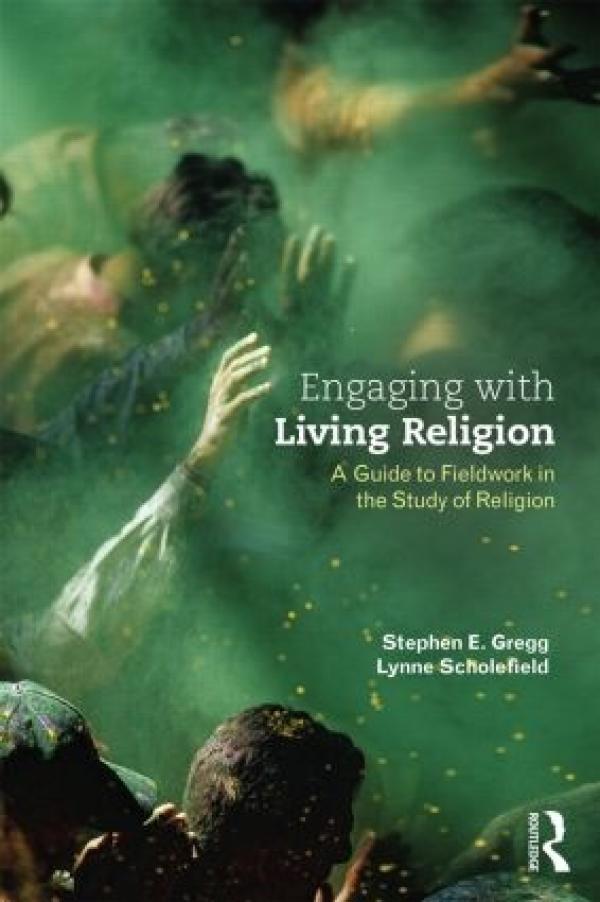
What is “religion”? Many would argue that religion is the single most important element of a person’s existence: “I am [Christian, Buddhist, Jewish, et cetera] and my understanding of reality is predicated by my religious affiliation.” Others would argue that it is nothing more than a sociological aspect of a person’s existence. “I am [Christian, Buddhist, Jewish, et cetera], and it is important to me in the same way that my Irish, Indian, or Russian heritage predicates my social interactions.” On one hand, we have persons who understand themselves within the context of their religion. On the other hand, we have persons who understand their religion within the context of themselves. Yet, how does one define religion? One definition that I have found helpful for many years is from Winfried Corduan’s tome Neighboring Faiths: “A religion is a system of beliefs and practices that provides values to give life meaning and coherence by directing a person toward transcendence” (InterVarsity, 1998, 21). This definition provides a simple construct for understanding what religion is and what it does without taking sides. Whether one is on the devout or the affiliated end of the spectrum, people might generally agree that the purpose of religion is to teach people values that will give life meaning. The next question, then, is how should students in higher educational classroom contexts study religion? Talk about a tricky wicket! Any student of religion is going to have shelves of books that all make the same claim – this one has the answer! Some offer tremendous analysis on the all-encompassing and captivating nature of religion. Others provide summative studies of various religions that may stir the reader’s appetite for meaning and transcendence. Still others provide a sociological approach to the study of religion, a field manual for understanding why persons cling to religious belief and practice that belief as they do. Authored by religious studies professors Stephen E. Gregg (University of Wolverhampton) and Lynne Scholfield (St. Mary’s University, Twickenham), Engaging with Living Religion offers a practical introduction to the field study of religion. The intention of the book is not to develop religious ideation or affiliation in its readers, but to provide a professionally-appropriate way for researchers to analyze and comprehend why Christians pray with their eyes closed, why Muslims pilgrimage to Mecca, and why Jews light a menorah. While this last statement may sound simplistic, it is anything but – each of these actions are essential expressions of that religion and, as the authors argue, one cannot understand Christianity, Islam, Judaism, or any other religion without understanding the liturgy and locations that provide structure to the world’s religions. Designed as a guide for the fieldwork student (or as a study companion in a lecture course on religious sociology), Gregg and Scholefield create not only a keen eye for studying religion but also a deep respect for religious adherence. Although the volume does take more of a sociological stance – religion is more akin to a social activity or organizational membership than a guiding force for one’s life – the authors keep the idea that religion is living ever before the reader/researcher. Each chapter is bursting with sidebars, such as passages from foundational readings or case studies, discussion questions, recommended bibliographies, and websites for further research. Although this is a book about the study of religion, one thought comes through subversively on every page – Religion, however it is defined, is living and active, and it provides meaning and direction to individuals seeking transcendence. Therefore, treat it with care and respect. Overall, I found this volume to be both intriguing and engaging. In addition to a chapter that advocates why studying religion is important, there are chapters on where to study religion, how to study religion through class field trips or study-abroad programs, how to use case studies and social media to understand religion practically, and how to develop an ongoing appreciation for the sociological study of religion. My recommendation would be that this volume be read alongside a more extensive volume on ethnography. Van Maanen’s Tales of the Field (University of Chicago, 2011) or Emerson, Fretz, and Shaw’s Writing Ethnographic Fieldnotes (University of Chicago, 2011) would constitute good choices.

Dr. Molly Bassett Associate Professor of Religious Studies Georgia State University By the time you read this, I will have met the students in “Religious Dimensions in Human Experience: Between Animals and Gods.” In this completely redesigned dual-level (grad/undergrad) course, we will explore how people can know a single animal—the...

Eric D. Barreto Editor’s note: Today’s blog is Eric's final individual entry for this year of Stories from the Front (of the Classroom). Look for our final collaborative post on Tuesday May 19. One of the things I love most about teaching is the rhythm of the academic year: the...

Stephen G. Ray Jr. Neal A. and Ila F. Fisher Professor of Theology Garrett-Evangelical Theological Seminary I admit that I was a bit flumoxed by how disoriented most of the students in my class were through much of the semester. My two very talented TAs were likewise lost for an answer. We realized late in the game that the reason for this seeming disorientation was there before us the entire time - we just resisted seeing it. Before continuing, it might be helpful if I shared a pedagogical decision I made about the teaching of the class. As I shared...