Resources
This edited transcript of a roundtable “fishbowl” conversation at a session of the 2018 national conference of the American Academy of Religion brings three teaching scholars together around a shared reading of Jane Fried's book, Education, Fishbowls, and Rabbit Holes: Rethinking Teaching and Liberal Education for an Interconnected World (Stylus, 2016). Fried's concept of student “self‐authorship” quickly emerges as the dominant theme of the conversation, providing fresh perspectives on the purposes and goals of an academic classroom and the place of the study of religion within the liberal arts curriculum.
With his knack for making science intelligible for the layman, and his ability to illuminate scientific concepts through analogy and reference to personal experience, James Zull offers the reader an engrossing and coherent introduction to what neuroscience can tell us about cognitive development through experience, and its implications for education. Stating that educational change is underway and that the time is ripe to recognize that “the primary objective of education is to understand human learning” and that “all other objectives depend on achieving this understanding”, James Zull challenges the reader to focus on this purpose, first for her or himself, and then for those for whose learning they are responsible. The book is addressed to all learners and educators – to the reader as self-educator embarked on the journey of lifelong learning, to the reader as parent, and to readers who are educators in schools or university settings, as well as mentors and trainers in the workplace. In this work, James Zull presents cognitive development as a journey taken by the brain, from an organ of organized cells, blood vessels, and chemicals at birth, through its shaping by experience and environment into potentially to the most powerful and exquisite force in the universe, the human mind. Zull begins his journey with sensory-motor learning, and how that leads to discovery, and discovery to emotion. He then describes how deeper learning develops, how symbolic systems such as language and numbers emerge as tools for thought, how memory builds a knowledge base, and how memory is then used to create ideas and solve problems. Along the way he prompts us to think of new ways to shape educational experiences from early in life through adulthood, informed by the insight that metacognition lies at the root of all learning. At a time when we can expect to change jobs and careers frequently during our lifetime, when technology is changing society at break-neck speed, and we have instant access to almost infinite information and opinion, he argues that self-knowledge, awareness of how and why we think as we do, and the ability to adapt and learn, are critical to our survival as individuals; and that the transformation of education, in the light of all this and what neuroscience can tell us, is a key element in future development of healthy and productive societies. (From the Publisher)
From an early age, it is drilled into our heads: Restlessness, distraction, and ignorance are the enemies of success. We’re told that learning is all self-discipline, that we must confine ourselves to designated study areas, turn off the music, and maintain a strict ritual if we want to ace that test, memorize that presentation, or nail that piano recital. But what if almost everything we were told about learning is wrong? And what if there was a way to achieve more with less effort? In How We Learn, award-winning science reporter Benedict Carey sifts through decades of education research and landmark studies to uncover the truth about how our brains absorb and retain information. What he discovers is that, from the moment we are born, we are all learning quickly, efficiently, and automatically; but in our zeal to systematize the process we have ignored valuable, naturally enjoyable learning tools like forgetting, sleeping, and daydreaming. Is a dedicated desk in a quiet room really the best way to study? Can altering your routine improve your recall? Are there times when distraction is good? Is repetition necessary? Carey’s search for answers to these questions yields a wealth of strategies that make learning more a part of our everyday lives—and less of a chore. By road testing many of the counterintuitive techniques described in this book, Carey shows how we can flex the neural muscles that make deep learning possible. Along the way he reveals why teachers should give final exams on the first day of class, why it’s wise to interleave subjects and concepts when learning any new skill, and when it’s smarter to stay up late prepping for that presentation than to rise early for one last cram session. And if this requires some suspension of disbelief, that’s because the research defies what we’ve been told, throughout our lives, about how best to learn. The brain is not like a muscle, at least not in any straightforward sense. It is something else altogether, sensitive to mood, to timing, to circadian rhythms, as well as to location and environment. It doesn’t take orders well, to put it mildly. If the brain is a learning machine, then it is an eccentric one. In How We Learn,Benedict Carey shows us how to exploit its quirks to our advantage. (From the Publisher)
To most of us, learning something “the hard way” implies wasted time and effort. Good teaching, we believe, should be creatively tailored to the different learning styles of students and should use strategies that make learning easier. Make It Stick turns fashionable ideas like these on their head. Drawing on recent discoveries in cognitive psychology and other disciplines, the authors offer concrete techniques for becoming more productive learners. Memory plays a central role in our ability to carry out complex cognitive tasks, such as applying knowledge to problems never before encountered and drawing inferences from facts already known. New insights into how memory is encoded consolidated, and later retrieved have led to a better understanding of how we learn. Grappling with the impediments that make learning challenging leads both to more complex mastery and better retention of what was learned. Many common study habits and practice routines turn out to be counterproductive. Underlining and highlighting, rereading, cramming, and single-minded repetition of new skills create the illusion of mastery, but gains fade quickly. More complex and durable learning come from self-testing, introducing certain difficulties in practice, waiting to re-study new material until a little forgetting has set in, and interleaving the practice of one skill or topic with another. Speaking most urgently to students, teachers, trainers, and athletes, Make It Stick will appeal to all those interested in the challenge of lifelong learning and self-improvement. (From the Publisher)
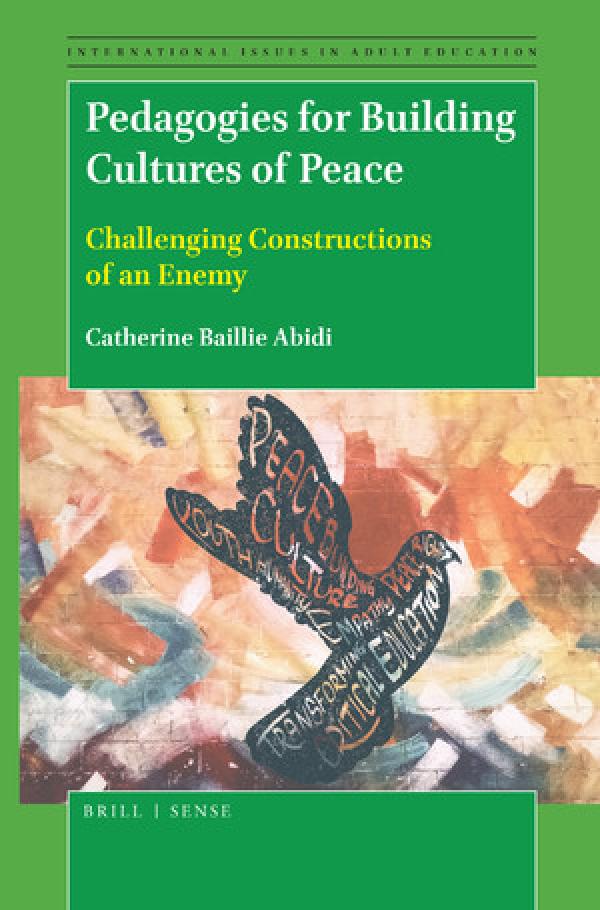
Click Here for Book Review A qualitatively designed, intentionally dialogic strategy for understanding the depth of normalized violence and constructing pedagogies for promoting peace. - Ryan Korstange, Middle Tennessee State University Pedagogies for Building Cultures of Peace explores how normalizations of violence are constructed from the perspective of young adults and how pedagogies can be created toward building cultures of peace. Findings show the diverse ways in which enmity (or the dehumanized other) is constructed, including through socialization processes, associating difference as deficient, systems of exclusion, disengaged citizenship, and cultures of competition and rivalry. Results also show how critical adult education can reveal hidden forms of power embedded within normalizations of violence, creating opportunities for peacebuilding education. By collaboratively engaging in peace research with youth, and by explicitly exploring power as a central component of violence, violence transformation and peacebuilding education led by youth become imaginable. (From the Publisher)
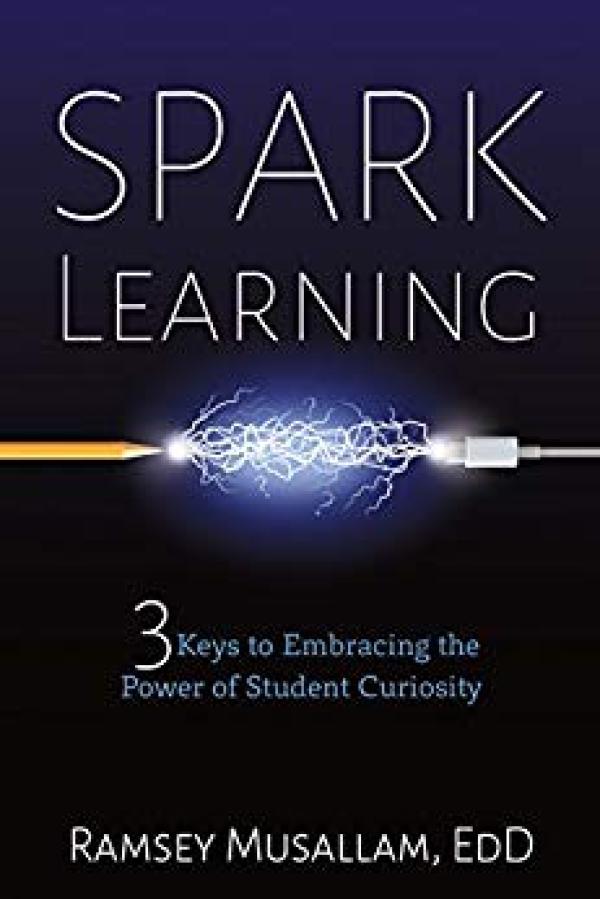
In 2008, Ramsey Musallam was stuck in what he describes as an ineffective rut of "pseudoteaching." Students liked him, but they didn't get the point of his lessons. They did well enough on the tests, but they failed to really understand the material. He wanted more--for them and for himself. Maybe you can relate. For Ramsey, the journey to a better way of teaching began not in the classroom, but on the operating table where he underwent a new, lifesaving heart surgery. His surgeon's confidence, dedication, and curiosity sparked an idea in Ramsey: What if teachers adopted the qualities his surgeon exhibited and were inquisitive, ready to explore, discover, try, and, yes, even fail? What if students could learn to adopt those traits as well? Those questions launched a quest to inspire inquiry and harness its benefits. (From the Publisher)
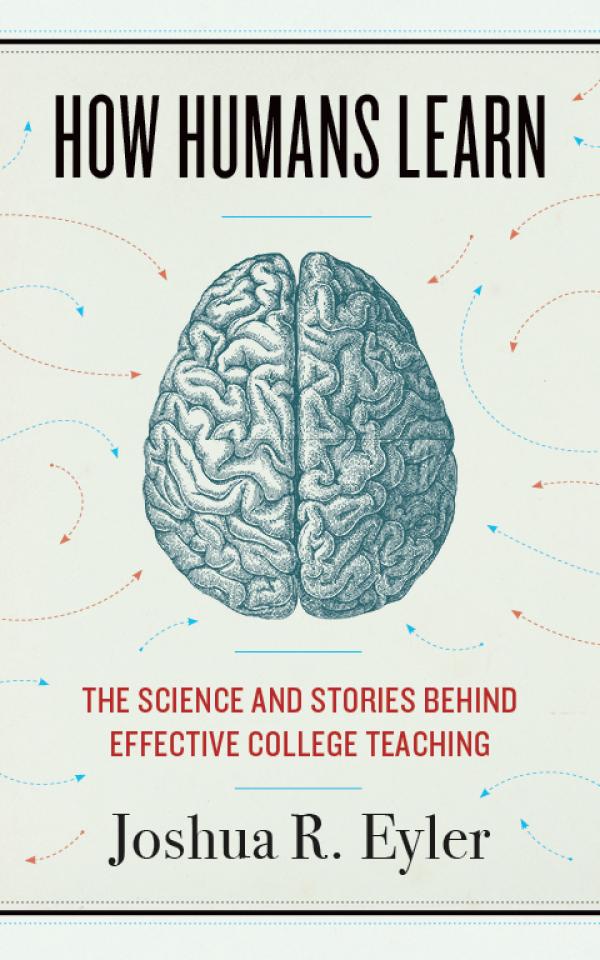
Click Here for Book Review Even on good days, teaching is a challenging profession. One way to make the job of college instructors easier, however, is to know more about the ways students learn. How Humans Learn aims to do just that by peering behind the curtain and surveying research in fields as diverse as developmental psychology, anthropology, and cognitive neuroscience for insight into the science behind learning. The result is a story that ranges from investigations of the evolutionary record to studies of infants discovering the world for the first time, and from a look into how our brains respond to fear to a reckoning with the importance of gestures and language. Joshua R. Eyler identifies five broad themes running through recent scientific inquiry—curiosity, sociality, emotion, authenticity, and failure—devoting a chapter to each and providing practical takeaways for busy teachers. He also interviews and observes college instructors across the country, placing theoretical insight in dialogue with classroom experience. (From the Publisher)
Click Here for Book Review Teaching Readers in Post-Truth America shows how postsecondary teachers can engage with the phenomenon of “post-truth.” Drawing on research from the fields of educational and cognitive psychology, human development, philosophy, and education, Ellen C. Carillo demonstrates that teaching critical reading is a strategic and targeted response to the current climate. Readers in this post-truth culture are under unprecedented pressure to interpret an overwhelming quantity of texts in many forms, including speeches, news articles, position papers, and social media posts. In response, Carillo describes pedagogical interventions designed to help students become more metacognitive about their own reading and, in turn, better equipped to respond to texts in a post-truth culture. Teaching Readers in Post-Truth America is an invaluable source of support for writing instructors striving to prepare their students to resist post-truth rhetoric and participate in an information-rich, divisive democratic society. (From the Publisher)
The Baltimore Mural Project (BMP) seeks to connect religious studies education to the growing literature on threshold concepts in order to address bottleneck areas in student learning. The project is designed for undergraduate service courses comprised of mostly non‚Äêmajors: for example, world religions. Students in these courses often struggle to understand and apply the discipline's unique approaches to the study of religion (i.e. its threshold concepts). Rather than merely memorize certain facts about a religious tradition's myths [or world forming stories], rituals [or embodied disclosures], materials, and so on... students are asked to apply threshold concepts related to religion, art, and the social good to the study of murals in Baltimore. Through a series of project elements (including: field work, photography, digital geomapping, and quantitative, qualitative, and archival research) the BMP helps students who struggle with threshold concepts in religious studies by creatively connecting the more conventional aspects of world religions courses to social justice issues related to mural art in Baltimore. By experientially helping students to make these connections, they are able to find creative routes through otherwise hindering barriers to their learning in religious studies.