Resources
One might think that primary research in library and church archives would be a dry, lifeless endeavor, far removed from the present–day spiritual urgency that quickens the religious studies classroom. After all, archives raise the specter of musty tomes housed in dark, dank, and isolated basements. To the contrary, based on interviews with several students and teachers doing such research, this article maintains that primary archival research in religious and theological studies is often experienced as empowering, connecting researchers to their subjects with an immediacy that secondary sources simply cannot provide. Diaries, letters, hymns, administrative reports, and church–school teaching notes are the sorts of documentary evidence and personal effects at issue, and these offer unexpected insights to researchers who brave the archives.
The following essay is based on an oral presentation, "On Being a Good Teacher and a Good Writer," which the author was asked to make for the Southwest Commission on Religious Studies, March 16, 2003. The purpose of the presentation was to encourage conversation among theological educators on the character of their vocation. A panel discussion of the theme followed the presentation. The presentation was designed to engage this subject at an autobiographical and reflective level rather than as an academic argument. The published version of the essay seeks to retain something of the personal reflective character of the original presentation.
Practical advice and candid reflection on the author’s 20 years experience writing both successful and unsuccessful grant proposals.
A short article by Diane Jonte-Pace, reviewing recent literature and issues, and commenting on specifically on aspects of the situation at Santa Clara University.
An article that reviews progress scholars and institutions have made to reshape the potential connections between faculty research and student learning, since Ernest Boyer’s landmark 1990 essay, “Scholarship Reconsidered” – developing our understanding of the research evidence, focusing on course design, and starting to reshape institutions.
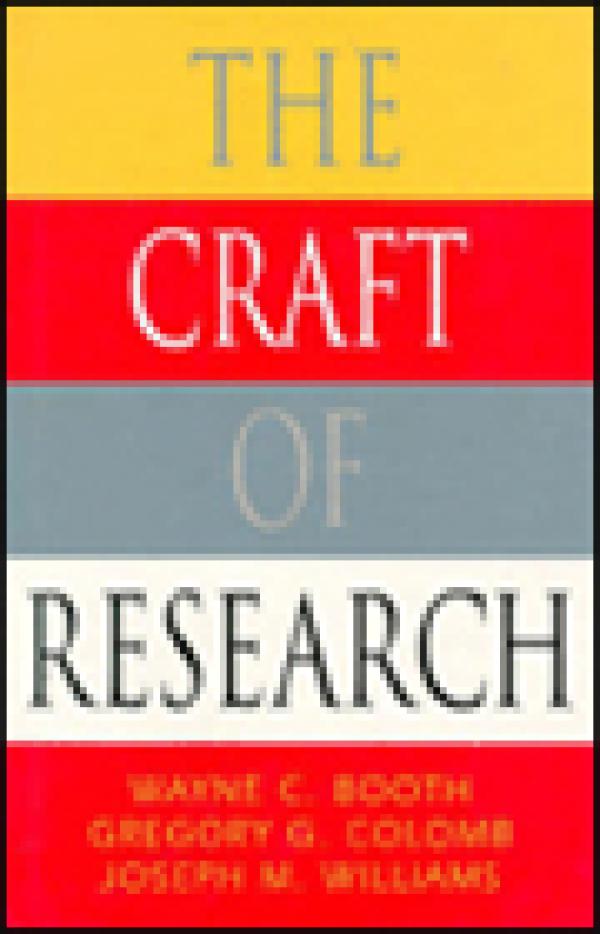
Here's a concise, practical guide to mastering the art of research. Filled with the tested strategies and expert advice of three distinguished scholars, this book helps you plan, carry out, and report on research in any field, at any level - a term paper, a dissertation, an article, or a book. The Craft of Research is about more than the mechanics of fact gathering: it's a unique introduction to doing research effectively. Clearly written and easy to use, it teaches the skills that are essential to the success of any research project. Wayne Booth, Gregory Colomb, and Joseph Williams chart every stage of the research process, from finding a topic and generating research questions about it to marshalling evidence, constructing arguments, creating a first draft, and revising that draft for a final report that meets the needs of a community of readers. (From the Publisher)
This new edition of a common-sense guide to all aspects of academic publishing contains an entirely new chapter on writing nonfiction for a general audience. It has been revised and updated throughout to reflect the state of new technologies and their meaning to authors. (From the Publisher)
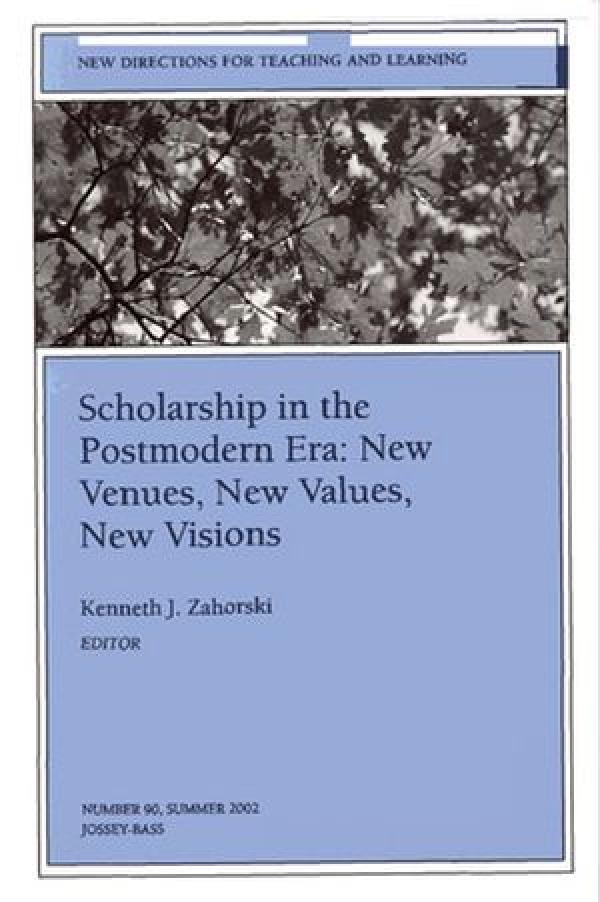
A little over a decade ago, Ernest Boyer's Scholarship Reconsidered burst upon the academic scene, igniting a robust national conversation that maintains its vitbaality to this day. This volume aims at advancing that important conversation. Its first section focuses on the new settings and circumstances in which the act of scholarship is being played out; its second identifies and explores the fresh set of values currently informing today's scholarly practices; and its third looks to the future of scholarship, identifying trends, causative factors, and potentialities that promise to shape scholars and their scholarship in the new millennium. One of the greatest legacies of Scholarship Reconsidered is the advocacy of a more holistic and humane approach to promoting, evaluating, and rewarding scholarship. This volume hopes to help nurture that legacy. This is the 90th volume of the quarterly journal New Directions for Teaching and Learning. (From the Publisher)