Resources
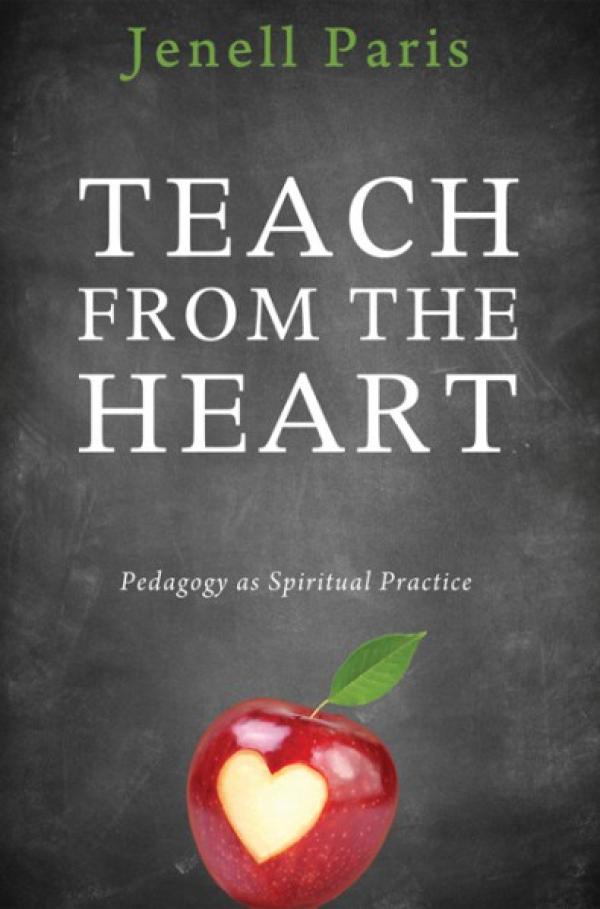
How can a teacher remain whole and happy, able to teach well for an entire semester, an entire year, and an entire career? Teach from the Heart is about finding, rediscovering, or holding on to the heart of the teaching life, which is, quite literally, the teacher's heart. It is an encouragement to take up teaching as more than a service to provide, a profession to master, or a job to perform. It is an invitation to artisanry, teaching as a craft that we master by working with our hands over long periods of time, producing results that bear the mark of their maker. Whether you're just beginning, or in it for the long haul, sit down with Teach from the Heart and deepen your heart for the teaching life. We need not bring to class the wisdom and knowledge we gained elsewhere; we can take up teaching as a spiritual practice, with the classroom as a sacred space for our own formation as persons. With nearly forty years' experience as both student and teacher, Jenell Paris's perspective is hard-won, but still lighthearted and enthusiastic. Teachers from any context will benefit: stories and examples include preschool, K-12, community education, and college teaching. (From the Publisher)
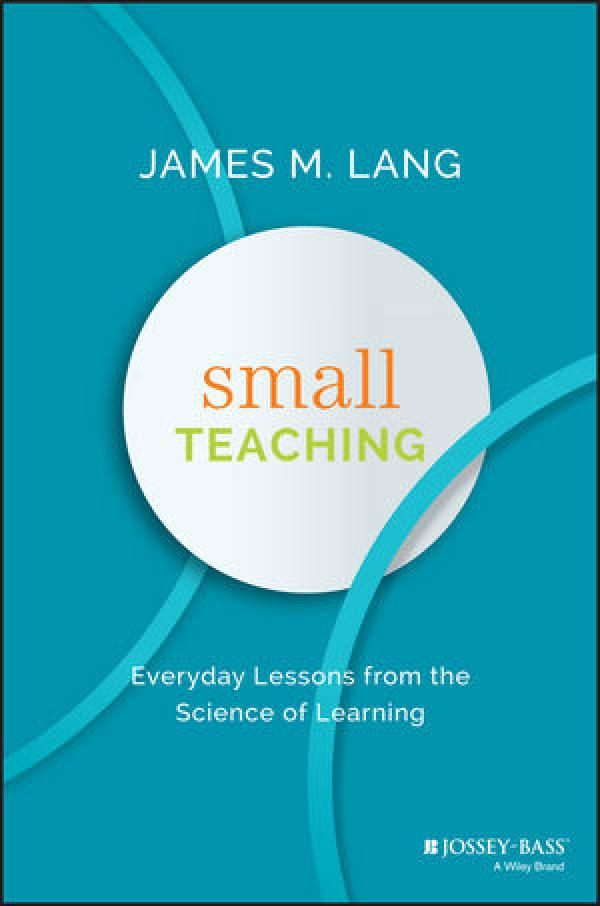
Click Here for Book Review Abstract: Employ cognitive theory in the classroom every day Research into how we learn has opened the door for utilizing cognitive theory to facilitate better student learning. But that's easier said than done. Many books about cognitive theory introduce radical but impractical theories, failing to make the connection to the classroom. In Small Teaching, James Lang presents a strategy for improving student learning with a series of modest but powerful changes that make a big difference—many of which can be put into practice in a single class period. These strategies are designed to bridge the chasm between primary research and the classroom environment in a way that can be implemented by any faculty in any discipline, and even integrated into pre-existing teaching techniques. Learn, for example: - How does one become good at retrieving knowledge from memory? - How does making predictions now help us learn in the future? - How do instructors instill fixed or growth mindsets in their students? Each chapter introduces a basic concept in cognitive theory, explains when and how it should be employed, and provides firm examples of how the intervention has been or could be used in a variety of disciplines. Small teaching techniques include brief classroom or online learning activities, one-time interventions, and small modifications in course design or communication with students. (From the Publisher)
Click Here for Book Review Abstract: If you find yourself thinking or saying any of the following, this is a book you need to pick up. I know or suspect that I am underpaid, but I hate negotiating. I do everything else first and then write in the time left over. I’m not sure exactly what the promotion requirements are in my department. Since earning tenure, my service load has increased and my research is suffering. I don’t get enough time with my family. This is a practical guide for women in academe – whether adjuncts, professors or administrators – who often encounter barriers and hostility, especially if women of color, and generally carry a heavier load of service, as well as household and care responsibilities, than their male colleagues. Rena Seltzer, a respected life coach and trainer who has worked with women professors and academic leaders for many years, offers succinct advice on how you can prioritize the multiplicity of demands on your life, negotiate better, create support networks, and move your career forward. Using telling but disguised vignettes of the experiences of women she has mentored, Rena Seltzer offers insights and strategies for managing the situations that all women face – such as challenges to their authority – while also paying attention to how they often play out differently for Latinas, Black and Asian women. She covers issues that arise from early career to senior administrator positions. This is a book you can read cover to cover or dip into as you encounter concerns about time management; your authority and influence; work/life balance; problems with teaching; leadership; negotiating better; finding time to write; developing your networks and social support; or navigating tenure and promotion and your career beyond. (From the Publisher)
Click Here for Book Review Abstract: Mindful Teaching and Learning: Developing a Pedagogy of Well-Being features a community of scholar-practitioners from across disciplines, methodologies, and ideological perspectives exploring and examining contexts that support mindful teaching, mindful learning, and a pedagogy of well-being. Collectively, these chapters document and analyze the opportunities and challenges within pedagogical sites and discuss how the disposition of mindfulness can be nurtured and sustained in educational practice and praxis. Bolstered by the positive evidence-based standards emanating from clinical settings, mindfulness based training has spread into a variety of other fields like psychology, healthcare, and more recently, education. Within pedagogical environments, an emergent secular conception of mindfulness, under the auspices of educational psychologists like Langer (1987; 1997), Goleman, (2008), Lantieri (2008), Roeser, Skinner, Beers, and Jennings, (2012), and Schonert-Reichl and Lawlor (2010), is making headway. Consequently, Mindfulness Training (MT) resources have been applied to educational contexts in order to maximize the academic, emotional, physical, and psychological benefits provided by this mind-body approach to well-being. Acknowledging the increasing evidence base for the efficacy of mindfulness interventions as well as the elevated stress levels reported by many educators and their students, this book discusses how mindful practices, praxis, and research can inform and support pedagogy, curriculum, and leadership initiatives in higher education in the twenty-first century. Alongside the multitude of recent studies in the area of Mindfulness, contributors discuss their own experiences using Self-study, Contemplative pedagogy, Living Educational Theory, and Curriculum Inquiry. The content of this book examines ways in which to develop habits of mind and courses of action, as well as a curriculum of study that can support educators as they cultivate competencies for thriving and coping with the modern demands of being a teacher. (From the Publisher)
Click Here for Book Review Abstract: Higher educations professionals face a myriad of competing demands on their time. Many of these pressures exist apart from teaching and outside the classroom altogether. Career requirements can seem to be never ending, and if they are not carefully managed and balanced, they can overrun even the most committed scholar’s resolve. The latest book in Atwood’s 147 Tips series, 147 Practical Tips for Emerging Scholars presents readers with a much-needed guide to the varied ins and outs of a career in higher education. Advocating detailed planning and clear priorities, the authors have crafted a thorough and accessible book to simplify and de-stress the navigation of a scholar’s world. Their pragmatic and detailed tips offer advice on crucial topics including: - Writing grants - Research - Working with technology - Collaboration - Mentoring The authors write: 147 Practical Tips for Emerging Scholars assists you in developing your successful professional journey as a scholar by delivering proven and succinct guidance.... You can use this book as a ready reference that you can turn to again and again for solid direction, clarity, and encouragement. This essential volume offers fresh and enriching insights, and will prove an indispensable tool for higher education professionals - new and veteran alike. (From the Publisher)
Initial findings from this exploratory study indicate significant questions, such as: why does the focus of faculty work appear to shift and, in later career? How do the administrative and leadership roles often assumed by midlife and mid-career faculty affect other dimensions of faculty work? Is the level of work satisfaction of mid-career faculty a function of the job demands or of life assessment and career questioning? What roles do institutional context and disciplinary field play in the experiences and perceptions of the middle years of the academic life cycle?
Policies should encourage senior professors to engage in periodic review of their performance and professional goals and allow deans and department chairs to negotiate revised responsibilities are necessary to take fuller advantage of the gifts senior faculty can share with their institutions – and to ensure that senior faculty are treated fairly and consistently. 
A series of invited blog posts by Wabash Center program participants, reflecting back on earlier moments in their teaching careers, what they learned, and what they wish they had known.
A referenced study suggests that, while discussing content of one's research with students does not significantly improve instruction, there is a better way to use your research in teaching: choose forms of teaching (like inquiry-based and problem solving approaches) that "mirror the research process."
Podcast. Zoe Alderton leads a group of academics with experience of all levels of academic publishing in a discussion which aims to demystify the process.