Resources
How can I tell what my students are thinking? Classroom Assessment Techniques (CATs) are feedback devices to help us determine how much, how well, and simply how our students learn.
Full-length videos and video clips can be very useful in teaching. However, it is important to consider ahead of time what you hope your students will learn from the videos.
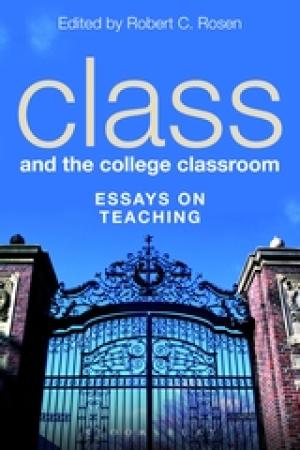
Click Here for Book Review Abstract: We have long been encouraged to look to education, especially higher education, for the solution to social problems, particularly as a way out of poverty for the talented and the hard working. But in its appointed role as the path to upward mobility that makes inequality more acceptable, higher education is faltering these days. As funds for public institutions are cut and tuition costs soar everywhere; as for-profit education races into the breach; and as student debt grows wildly; the comfortable future once promised to those willing to study hard has begun to fade from sight. So now is a good time to take a more serious look at the ways class structures higher education and the ways teachers can bring it into focus in the classroom. In recent decades, scholarly work and pedagogical practice in higher education have paid increasing attention to issues of race, class, gender, and sexuality.But among these four terms of analysis -- and clearly they are interrelated -- class is often an afterthought, and work that does examine class and higher education tends to focus only on admissions, on who is in the college classroom, not on what happens there. Class and the College Classroom offers a broader look at the connections between college teaching and social class.It collects and reprints twenty essays originally published in Radical Teacher, a journal that has been a leader in the field of critical pedagogy since 1975. This wide-ranging and insightful volume addresses the interests, concerns, and pedagogical needs of teachers committed to social justice and provides them with new tools for thinking and teaching about class. (From the Publisher)

All too often a culture of silence permeates academia, where faculty and administrators ignore or misunderstand difficult situations. A Faculty Guide for Succeeding in Academe is a practical guide for prospective and current faculty that addresses real, complex issues that are too often left unexamined. Chapters explore typical aspects of the faculty career and life cycle—such as appointment, tenure, promotion, incivility, plagiarism, teaching, online delivery, interactions with chairs and deans, and performance appraisal—but focuses on the prickly issues as well as the routine. A Faculty Guide for Succeeding in Academe presents authentic, engaging vignettes that feature faculty and administrators as they maneuver through academe encountering authentic, difficult situations. Focusing on positive outcomes, each case is analyzed and readers are encouraged to reflect about the ways these incidents could have been resolved. Offering concrete suggestions and best-practices, this book provides insights that will help prospective, new, and current faculty maneuver more effectively through academe and their collegial culture. This important resource enhances a culture of openness and will help faculty gain direction and support in their career. (From the Publisher)
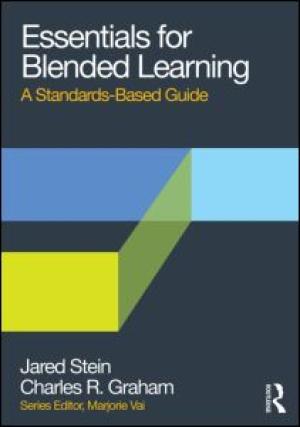
Essentials for Blended Learning: A Standards-Based Guide provides a practical, streamlined approach for creating effective learning experiences by blending online activities and the best of face-to-face teaching. This guide is: Easy to use: Clear, jargon-free writing; illustrations; and references to online resources help readers understand concepts. Streamlined: A simple but effective design process focuses on creating manageable activities for the right environment. Practical: Real-world examples from different subject areas help teachers understand principles in context. Contemporary: The variety of modern, connected technologies covered in the guide addresses a range of teaching challenges. Forward-Looking: The approach bridges the gap between formal classroom learning and informal lifelong learning. Standards-based: Guidelines and standards are based on current research in the field, relevant learning theories, and practitioner experiences. Effective blended learning requires significant rethinking of teaching practices and a fundamental redesign of course structure. Essentials for Blended Learning: A Standards-Based Guide simplifies these difficult challenges without neglecting important opportunities to transform teaching. This guide is suitable for teachers in any content area. (From the Publisher)

The Handbook of Race and Adult Education provides a discourse on the theory, the real-life experiences, and the structure of privileges within race and racism. Edited by leaders in this field, the unique resource presents ways for changes in classrooms, communities, and homes for marginalized or oppressed groups and individuals. As the first comprehensive resource on race, racism, and adult education, this book is essential for introductory level graduate students in understanding the complexity of race and racism in an educational context. (From the Publisher)
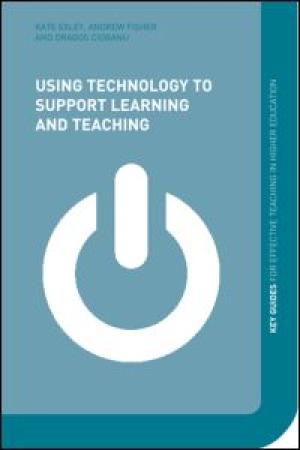
Click Here for Book Review Abstract: The climate of Higher Education is changing rapidly. The students are more likely to see themselves as consumers and have increasingly high expectations regarding teaching and learning. Universities are in part aiming to meet this need by increasing the use of technology; for example, whether to increase access to teaching materials outside the classroom or to make lectures more interactive. Although there is no illusion amongst Higher Education intuitions that technology is a panacea, it is clear that technology is a vital tool in meeting expectations and one that will be used more and more. Consequently the context of this book is one in which technology needs to be understood as part of an overall teaching practice. Technology continues to move on a pace and is used increasingly within Higher Education to support and enhance teaching and learning. There are books which are steeped in technical detail and books which are steeped in theoretical pedagogy with little discussion about the impact on learning and student/teacher behaviour. Using Technology to Support Learning and Teaching fills a gap in the market by providing a jargon free (but pedagogically informed) set of guidance for teaching practitioners who wish to consider a variety of ways in which technology can enrich their practice and the learning of their students. It integrates a wide range of example cases from different kinds of HE institutions and different academic disciplines, illustrating practicable pedagogies to a wide range of readers. It is full of advice, hints and tips for practitioners wanting to use technology to support a style of teaching and learning that is also built on sound pedagogical principles. It will provide a quick user-friendly reference for practitioners wanting to incorporate technology into Higher Education in a way that adheres to their learning principles and values . This book is primarily for teaching practitioners, particularly those who are new to the industry.This book would also prove useful on training courses for practitioners; such as the Postgraduate Certificate for Higher Education. The authors also intend that the book be of value to newer teachers (perhaps taking teacher training programmes) who wish to see where recommended approaches link to pedagogy. (From the Publisher)
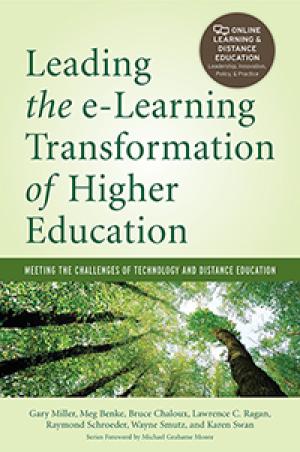
Click Here for Book Review Abstract: Written by pioneers in the field of online learning, Leading the e-Learning Transformation of Higher Education is a professional text that offers insights and guidance to the rising generation of leaders in the field of higher education. It explains how to integrate online learning into an institution during a period of rapid social and institutional change. This important volume: • Shares success stories, interviews, cases and insights from a broad range of leadership styles • Reviews how technology is transforming higher education worldwide • Provides an overview of how distance education is organized in a range of institutional settings • Breaks down current leadership challenges in both unit operations and institutional policy This volume launches the new Stylus series that is aimed at the online learning and distance education market. It offers readers the opportunity to benefit from the collective experience and expertise of top leaders in the field. All of the contributors have held leadership roles in national and international distance education organizations. Five of the contributors have been recognized as Sloan Consortium Fellows in 2010 and they have all collaborated with the Institute for Emerging Leaders in Online Learning. These contributors have helped pave the way and now share their insights, advice, and broad vision with the future leaders of the field. (From the Publisher)

Journal Issue.
Click Here for Book Review Abstract: This volume presents findings from recent research focusing on young people and the way they relate to religion in their education and upbringing. The essays are diverse and multidisciplinary - in terms of the religions they discuss (including Christianity, Islam and Sikhism); the settings where young people reflect on religion (the classroom, youth club, peer group, families, respective religious communities and wider society); the different perspectives which relate to religious education and socialisation (the teaching of RE, the role of teachers in pupils’ lives, the way teachers’ personal lives shape their approach to teaching, school ethos and social context, and the place and rationale of RE); the contexts within which the authors work (different national settings and various academic disciplines); and the methodology used (qualitative, quantitative and mixed-method approaches). The authors make important contributions to the debate about the role of religious education in the curriculum. They demonstrate the crucially important formative influence of religious education in young people’s lives which reaches well into their adulthood, shaping religious and other identities, and attitudes towards the ‘other’ - whatever that ‘other’ may be. This book was originally published as a special issue of the Journal of Beliefs & Values. (From the Publisher)
Wabash Center Staff Contact
Sarah Farmer, Ph.D.
Associate Director
Wabash Center
farmers@wabash.edu