Resources
Are you doing all you can to improve teaching and learning? Culturally proficient instruction is the result of an inside-out journey of teaching and learning during which you explore your values and behaviors while evaluating the policies and practices of your workplace. The journey deepens your understanding of yourself and your community of practice. In the newest version of their best-selling book, the authors invite you to reflect on how you engage with your students and your colleagues as a community of learners. The third edition features a case study to show cultural proficiency in practice and: • An updated discussion of standards-based education guidelines • A conceptual framework for the tools of cultural proficiency • New language for understanding the microaggressions of dominant cultures • An integrated guide for use with study groups Each chapter contains reflective activities and group work conducive to collaborative professional development. Culturally Proficient Instruction is invaluable for anyone dedicated to creating an environment in which all learners can succeed. (From the Publisher)
This article emphasizes the need for religious educators to address the issue of divine violence in Scripture with students, and it offers various pedagogical strategies for doing so. The focus is on violent Old Testament texts, with special attention given to the issue of Canaanite genocide. A general framework for structuring class time around divine violence in Scripture is proposed which includes (1) encouraging students to encounter violent biblical texts firsthand, (2) helping them understand why people find these passages problematic, and (3) offering various options for dealing with the potential problems these passages raise. In the second half of the article, significant attention is devoted to a number of practical considerations that should be taken into account when talking about this sensitive issue in class. A brief word about assessment is offered at the end.

Revenues and expenditures of schools are analyzed for this ten year period. Enrollment trends, including extension sights and distance education, are reviewed. Qualitative factors that contribute to financial stability are examined, including findings from six schools whose financial performance was remarkably consistent and solid for this decade. (From the Publisher)
The twenty-first century is a world in constant change. In A New Culture of Learning, Doug Thomas and John Seely Brown pursue an understanding of how the forces of change, and emerging waves of interest associated with these forces, inspire and invite us to imagine a future of learning that is as powerful as it is optimistic. Typically, when we think of culture, we think of an existing, stable entity that changes and evolves over long periods of time. In A New Culture, Thomas and Brown explore a second sense of culture, one that responds to its surroundings organically. It not only adapts, it integrates change into its process as one of its environmental variables. By exploring play, innovation, and the cultivation of the imagination as cornerstones of learning, the authors create a vision of learning for the future that is achievable, scalable and one that grows along with the technology that fosters it and the people who engage with it. The result is a new form of culture in which knowledge is seen as fluid and evolving, the personal is both enhanced and refined in relation to the collective, and the ability to manage, negotiate and participate in the world is governed by the play of the imagination. Replete with stories, this is a book that looks at the challenges that our education and learning environments face in a fresh way. (From the Publisher)
Each and every day teachers show up in their classrooms with a relentless sense of optimism. Despite the complicated challenges of schools, they come to and remain in the profession inspired by a conviction that through education they can move individuals and society to a more promising future. In Teaching with Heart: Poetry that Speaks to the Courage to Teach a diverse group of ninety teachers describe the complex of emotions and experiences of the teaching life – joy, outrage, heartbreak, hope, commitment and dedication. Each heartfelt commentary is paired with a cherished poem selected by the teacher. The contributors represent a broad array of educators: K-12 teachers, principals, superintendents, college professors, as well as many non-traditional teachers. They range from first year teachers to mid-career veterans to those who have retired after decades in the classroom.  They come from inner-city, suburban, charter and private schools.  The teachers identified an eclectic collection of poems and poets from Emily Dickinson, to Richard Wright, to Mary Oliver to the rapper Tupac Shakur. It is a book by teachers and for all who teach. The book also includes a poignant Foreword by Parker J. Palmer (The Courage to Teach), a stirring Introduction by Taylor Mali (What Teachers Make), and a moving Afterword by Sarah Brown Wessling (Teaching Channel). Where Teaching with Fire honored and celebrated the work of teachers; Teaching with Heart salutes the tenacious and relentless optimism of teachers and their belief that despite the many challenges and obstacles of the teaching life, much is possible. (From the Publisher)
Click Here for Book Review Abstract: This concise guidebook is intended for faculty who are interested in engaging their students and developing deep and lasting learning, but do not have the time to immerse themselves in the scholarship of teaching and learning. Acknowledging the growing body of peer-reviewed literature on practices that can dramatically impact teaching, this intentionally brief book: * Summarizes recent research on six of the most compelling principles in learning and teaching * Describes their application to the college classroom * Presents teaching strategies that are based on pragmatic practices * Provides annotated bibliographies and important citations for faculty who want to explore these topics further This guidebook begins with an overview of how we learn, covering such topics such as the distinction between expert and novice learners, memory, prior learning, and metacognition. The body of the book is divided into three main sections each of which includes teaching principles, applications, and related strategies – most of which can be implemented without extensive preparation. The applications sections present examples of practice across a diverse range of disciplines including the sciences, humanities, arts, and pre-professional programs. This book provides a foundation for the reader explore these approaches and methods in his or her teaching. (From the Publisher)

The fruit of the authors’ more than 15 years of using and writing about ePortfolios in general education and disciplinary programs and courses, this book is a comprehensive and practical guide to the use of the ePortfolio as a pedagogy that facilitates the integrative learning that is a central goal of higher education. Faculty and administrators of programs using ePortfolios can use this guide to help their students work individually on an ePortfolio or as part of a class or program requirement. Readers will discover through examples of student portfolios and targeted exercises how to assist students in making their learning visible to themselves, their peers, their instructors and their future employers. While interest in ePortfolios has exploded—because they provide an easier and more comprehensive ways to assess student learning than traditional portfolios, and because they have the potential to transformatively develop students’ ability to connect and apply their knowledge—faculty and administrators all too often are disappointed by the lackluster ePortfolios that students submit. Reynolds and Patton demonstrate how systematically embedding practices in the classroom that engage students in integrative learning practices dramatically improves outcomes. The authors describe easy to use and practical strategies for faculty to incorporate integrative ePortfolios in their courses and curricula, and create the scaffolding to develop students’ skills and metacognition. The book opens by outlining the underlying learning theory and the key concepts of integrative learning and by describing the purpose, structure and implementation of ePortfolios. Subsequent sections cover classroom practices and assignments to help students understand themselves as learners; make connections between course content, their personal lives, and to the curriculum; bridge theory to practice; and consider issues of audience and communication and presentation in developing their portfolios. The book goes on to cover technological issues and assessment, with a particular emphasis on the use of rubrics; and concludes with explicated examples of ePortfolios created in a first-year program, ePortfolios created by graduating students, career-oriented ePortfolios, and lifelong ePortfolios. For both experienced faculty and administrators, and readers just beginning to use ePortfolios, this book provides a framework and guidance to implement them to their fullest potential. (From the Publisher)
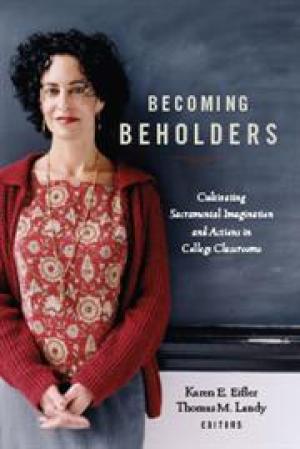
Click Here for Book Review Abstract: Catholic colleges and universities have long engaged in conversation about how to fulfill their mission in creative ways across the curriculum. The "sacramental vision" of Catholic higher education posits that God is made manifest in the study of all disciplines. Becoming Beholders is the first book to share pedagogical strategies about how to do that. Twenty faculty—from many religious backgrounds and teaching in fields as varied as chemistry, economics, English, history, mathematics, sociology, and theology—discuss ways that their teaching nourishes students' ability to find the transcendent in their studies. (From the Publisher)
Journal Issue.
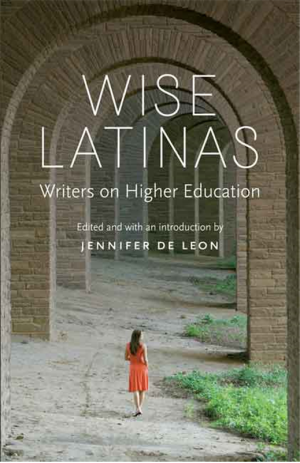
Click Here for Book Review Abstract: College can be a complex time for Latinas, who are traditionally expected to leave home when they get married. In her essay “Only Daughter,” author Sandra Cisneros remarks, “After four years in college and two more in graduate school, and still no husband, my father shakes his head even now and says I wasted all that education.” Wise Latinas is a collection of personal essays addressing the varied landscape of the Latina experience in higher education. For some Latinas, college, where they are vastly underrepresented, is the first time they are immersed in American culture outside their homes—and where the values of two cultures often clash. Wise Latinas is in part a response to this widening gap. Featuring acclaimed writers such as Sandra Cisneros, Norma Cantú, and Julia Alvarez, to name a few, Wise Latinas shows that there is no one Latina college experience. With thoughtful and engaging pieces, Wise Latinas provides a platform for Latina writers to share their experiences in higher education and gives a voice to the many Latina women who have taken risks; embraced the new, confronted change; and maintained (and in some cases found) their roots. (From the Publisher)
Wabash Center Staff Contact
Sarah Farmer, Ph.D.
Associate Director
Wabash Center
farmers@wabash.edu