Resources
Annotating a text can be a powerful strategy to comprehend difficult material and encourage active reading. High school teacher Carol Porter-O’Donnell provides several activities and tools to help students learn to purposefully mark up what they read.
A simple and short chart that provides  a few simple strategies for making lectures more interactive. 
Georgia State University associate professor of religious studies, Molly Bassett, writes about a dual-level course she's teaching for a third time this fall titled "Religious Dimensions in Human Experience.” Part 2, is a reflection by one of her former graduate students, Sarah Levine, who took the course the first time Bassett taught it in the fall of 2010.
An overview of research in cognitive psychology, linguistics, and teaching science. 1) note taking strategies used by students; 2) the different factors involved in comprehension through note taking; 3) “writing to learn”; 4) the learning contexts that allow effective note taking.
Reviews research on the impact of notetaking and how the review of notes affects student learning. The paper also explores the role that instructors can play, suggesting several specific strategies to support students. 
Short, accessible, review of several recent studies showing that lectures are a pedagogical technique that “favor some people while discriminating against others, including women, minorities and low-income and first-generation college students.” All the more reason for adopting active learning strategies that have proved to be more effective for ALL learners.
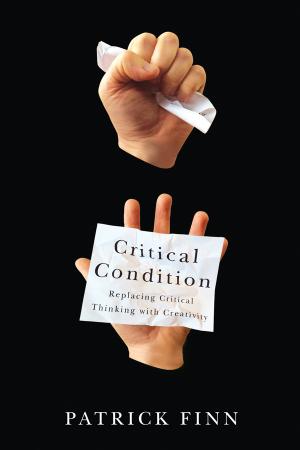
Should we stop teaching critical thinking? Meant as a prompt to further discussion, Critical Condition questions the assumption that every student should be turned into a “critical thinker.” The book starts with the pre-Socratics and the impact that Socrates’ death had on his student Plato and traces the increasingly violent use of critical “attack” on a perceived opponent. From the Roman militarization of debate to the medieval Church’s use of defence as a means of forcing confession and submission, the early phases of critical thinking were bound up in a type of attack that Finn suggests does not best serve intellectual inquiry. Recent developments have seen critical thinking become an ideology rather than a critical practice, with levels of debate devolving to the point where most debate becomes ad hominem. Far from arguing that we abandon critical inquiry, the author suggests that we emphasize a more open, loving system of engagement that is not only less inherently violent but also more robust when dealing with vastly more complex networks of information. This book challenges long-held beliefs about the benefits of critical thinking, which is shown to be far too linear to deal with the twenty-first century world. Critical Condition is a call to action unlike any other. (From the Publisher)
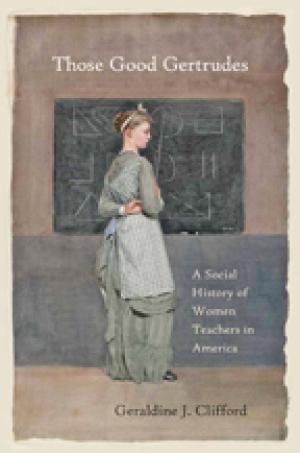
Those Good Gertrudes explores the professional, civic, and personal roles of women teachers. Its voice, themes, and findings build from the mostly unpublished writings of many women and their families, colleagues, and pupils. Geraldine J. Clifford studied personal history manuscripts in archives and consulted printed autobiographies, diaries, correspondence, oral histories, interviews—even film and fiction—to probe the multifaceted imagery that has surrounded teaching. This work stands alone: it is broad ranging, inclusive, and comparative. It surveys a long past where schoolteaching was essentially men's work, with women relegated to restricted niches such as teaching rudiments of the vernacular language to young children and socializing girls for traditional gender roles. Clifford documents and explains the emergence of women as the prototypical schoolteachers in the United States, a process apparent in the late colonial period and continuing through the nineteenth century, when they became the majority of American public and private schoolteachers. She finds that this trend continues in the twenty-first century, despite the diversion of women to competing professions, a precipitous reduction in the number of Roman Catholic nuns, and repeated efforts and incentives to recruit and retain male teachers. Cross-national comparisons suggest that America's early reliance on women teachers quickened and extended the reach of schools across the nation’s social classes, religious and ethnic groupings, and cultural and physical landscapes. The capstone of Clifford’s distinguished career, Those Good Gertrudes will engage scholars in the history of education and women’s history, teachers past, present, and future, and readers with vivid memories of their own teachers. The first woman to receive a Guggenheim Fellowship for research in education, Geraldine J. Clifford is professor emerita at the University of California, Berkeley. Her previous books include Ed School: A Brief for Professional Education. (From the Publisher)
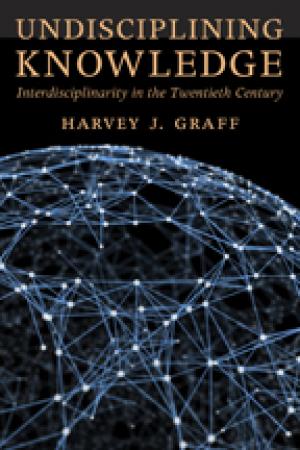
Interdisciplinarity—or the interrelationships among distinct fields, disciplines, or branches of knowledge in pursuit of new answers to pressing problems—is one of the most contested topics in higher education today. Some see it as a way to break down the silos of academic departments and foster creative interchange, while others view it as a destructive force that will diminish academic quality and destroy the university as we know it. In Undisciplining Knowledge, acclaimed scholar Harvey J. Graff presents readers with the first comparative and critical history of interdisciplinary initiatives in the modern university. Arranged chronologically, the book tells the engaging story of how various academic fields both embraced and fought off efforts to share knowledge with other scholars. It is a story of myths, exaggerations, and misunderstandings, on all sides. Touching on a wide variety of disciplines—including genetic biology, sociology, the humanities, communications, social relations, operations research, cognitive science, materials science, nanotechnology, cultural studies, literary studies, and biosciences—the book examines the ideals, theories, and practices of interdisciplinarity through comparative case studies. Graff interweaves this narrative with a social, institutional, and intellectual history of interdisciplinary efforts over the 140 years of the modern university, focusing on both its implementation and evolution while exploring substantial differences in definitions, goals, institutional locations, and modes of organization across different areas of focus. Scholars across the disciplines, specialists in higher education, administrators, and interested readers will find the book’s multiple perspectives and practical advice on building and operating—and avoiding fallacies and errors—in interdisciplinary research and education invaluable. (From the Publisher)
Wabash Center Staff Contact
Sarah Farmer, Ph.D.
Associate Director
Wabash Center
farmers@wabash.edu