Resources

When we suddenly made the transition online, I wanted to try to maintain as much normalcy for my students (and myself) as possible. I teach a small, honors section of our introductory Religions of the World course. There are only 11 students enrolled this semester—a real luxury. I thought we might be able to continue synchronously, if they all were able. So, I asked: Did they have the technology to make it happen? Did they have the availability? Did they have the space? Did they have the desire? They did. After our first synchronous class session, the Monday after an extended Spring Break, I asked my class, anonymously, how it worked using Zoom for our class that day, in a PollEverywhere poll (which they were used to doing face-to-face). This is the kind of check in, a form of formative assessment, that I love. If I want to know what students think or how a class activity is going for them, I ask. Among their replies: “I really liked how we could all see each other” and “It will be a good way to keep the community feel.” We made it to the end of the first week, during which time I led whole-group discussions among all students, offered mini lectures, used Zoom’s breakout rooms to set up pair and group work, asked them to do quick writes and type their thoughts in the chat box, showed videos, and even had them share drawings on the computer screens. In their weekly reflections, which I’ve written about elsewhere, I asked them to respond to one additional question: “How did it go having our class online this first week?” As expected, students were struggling with motivation and time management, known challenges in any online learning environment. But they also shared: “This is the only class I use Zoom for and it also feels the most normal because of the level of interaction;” “I think having class online this week went well, especially since we are using Zoom, which I think helps preserve the community feel of our class;” I like the fact that we are able to break out into smaller groups and still have discussions with each other;” “I am really happy we are able to maintain the personal contact and the feeling that our class is a community.” What my students have reminded me, in this moment of social distancing, working remotely, and self-imposed isolation, is just how much they crave connection, how much they benefit from learning in place and among people. I work hard, in a variety of ways, to create this community in my face-to-face classes—and I have worked hard to maintain that communal feeling, even though we are now all separated, flung across the corners of the United States, with our cats crawling across the video feed and our classroom attire now consisting of grungy sweatshirts and bed covers. What this COVID-19 crisis has underscored for me is just how much students knowingly appreciate and crave those connections too. There are lots of ways to stay engaged and connected with your classroom community without all meeting at the regular class time as I’m doing. I recognize that what I’m doing may not be possible, or even advisable, for all religion instructors, given class sizes, content, personal comfort with technology, instructor and student availability, and so forth. Perhaps it’s as simple as creating an announcement on your LMS just to ask students how they’re doing—not academically, but as people. Perhaps it’s creating a Google Voice Number so that you can give students a way to text you, without giving out your private contact information. Perhaps it’s holding online office hours, through Zoom, WebEx, or Google Hangouts, so students can see you if they’re in need of a friendly face. Perhaps it’s calling all of your advisees, as one of my colleagues did, or reaching out to former students with a mass email. Perhaps it’s creating opportunities for pair or group work, for instance, through an online discussion board. Perhaps it’s simply sharing with students that you’re feeling anxious or stressed or worried or discombobulated too. On our campus, we are hearing from students (and sometimes from their concerned parents) just how disconnected, discouraged, and dissatisfied they are now that the human dimension of learning has largely been taken from them. Students do not simply want to read a textbook and submit a short essay in response. They want to talk to their peers; they want to hear from a real, live instructor; they want to sit in the same space; they want to learn in the context of others. A student once asked me, a few semesters back, if I thought learning always takes place among others. I said yes. Another student disagreed. By way of evidence, he said that he taught himself how to play guitar. I asked how he did that. He said he watched YouTube videos. Okay, I said, but who created those videos? There was a long pause. Learning is communal. Never has there been, paradoxically, a moment when this has been more clear—to me and to my students.
Dr. Nancy Lynne Westfield hosts Dr. Emilie Townes (Vanderbilt University - The Divinity School) and Dr. Valerie Bridgeman (Methodist Theological School in Ohio).In crisis times, the creative voice speaks to the soul. The scholarly voice does not have to eclipse the creative voice. As published poets and scholars, these womanists will talk about their creative process and its influence upon their scholarship. They will also read original works.
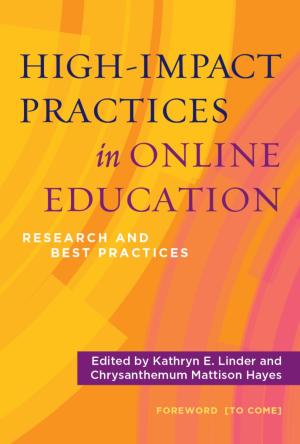
What are the potential benefits of high-impact practices (HIPs) for online education? That is the key question addressed in this well-researched collection of essays. Whether the reader is new to innovative theory and techniques in online education or an experienced distance educator, they will find a valuable resource here. Each contributor provides a helpful short list of key takeaways and a solid bibliography at the end of their chapter. The introduction and conclusion by the editors, Linder and Hayes, set the framework for the discussion and aptly describe possible future directions for teaching online, blended, or face-to-face courses. High-Impact Practices in Online Education reads like a dynamic conversation on research with practical recommendations for how to strengthen a variety of teaching contexts. Each topic selected for inclusion covers a specific high-impact educational practice. That list was largely identified in 2008 by George D. Kuh as ten critical components of undergraduate education. First-year seminars, learning communities (LCs), writing-intensive courses, and internships were among those featured components. These practices are still considered high-impact, but newer practices, such as ePortfolios, have been added in subsequent years. All have become part of developing educational strategies to impact student retention and graduation rates. So, where will readers find what they most need in this collection? For some, a particular topic will draw their attention. My suggestion is to resist that impulse. Try, instead, reading the introduction and conclusion before sampling individual chapters. Understanding the context for the conversation about HIPs matters. The research and literature in this emerging field has been somewhat scattered, but a representative sample is nicely gathered and incorporated into this single volume. There are no chapters specifically on theological education or religious studies. That said, there is much of worth to educators in those disciplines. For example, June Griffin’s “Writing-Intensive Classes” or Pamela D. Pike’s “Internships” speak directly to theological and religious educators. The same can be said about Stefanie Buck’s “High Impact Practices and Library and Information Resources.” No doubt other readers will discover other favorites as well. Remember that any one of these chapters could make a dramatic difference in most teaching and student learning. Is there one overarching idea offered as a takeaway? Yes, and it is that best practice principles are, in the end, more important than modalities. That is a valuable point to have in mind as exciting new technologies continue to emerge.
Emerging Self-Directed Learning Strategies in the Digital Age (2018) edited by Frank Giuseffi is one of the volumes among the Advances in Educational Technologies and Instructional Design Book Series. In the preface, Giuseffi acknowledges that self-directed learning (SDL) is not a new concept. Yet, twenty-first century technology continues to transform the platforms of SDL. His desire is to highlight the importance of self-directed learning in today’s teaching-learning environment. With each chapter written by a different scholar (or group of scholars), the reader is exposed to a number of strategies useful among multiple teaching-learning platforms to foster self-directed learning with the desired outcome of promoting student success and greater teacher–student engagement. The text is organized into eight chapters, with each chapter addressing a specific SDL platform or process. Included among the topics: online learning, an android-based mobile application for students to monitor their performance via grade point average, Massive Open Online Courses and their applicability to technical and vocational education and training in developing countries, non-mandatory employee training, the necessity of self-motivation among doctoral students to complete their dissertation (built upon Malcolm Knowles’s andragogical assumptions), cultural influences on self-directed language learning, the relationship between metacognition and knowledge transfer along with critical thinking and SDL, and teachers’ use of digitally based SDL strategies to employ essential questions to nurture the students’ critical thinking skills. While the editor’s goal may have been to provide a wide range of scenarios for the engagement of self-directed learning, chapter 4, addressing employee training and the organization’s responsibility for offering the training, seemed out of place. Job training is not germane to the discussion of SDL in the academic setting or specific teaching-learning platform or process. All eight chapters in the text are well researched, referencing pertinent studies and pedagogical principles. Two of the chapters share specific research conducted on the phenomenon addressed. Chapter 5 (“The Intersection of Andragogy and Dissertation Writing”) outlines the mixed methods study conducted by a doctoral student exploring the dissertation completion process. Dissertation chairs and doctoral students in the dissertation-writing phase will find this chapter insightful. Chapter 8 (“Transformational Shifts of Pedagogy Through Professional Development, Essential Questions, and Self-Directed Learning”) describes a year-long case study of professional development among teachers and their use of digital technology in designing essential questions targeting critical thinking among students. Though the emphasis of the research was on the subjects of math and reading, the reader will gain information on how to use questions to help develop critical thinking skills among students. The layout of the book lends itself to use as a reference guide. Each chapter begins with an abstract succinctly stating the purpose of the chapter and relevance to SDL. The chapters end with a concluding paragraph reiterating the thesis and main tenets shared. Finally, you will find a list of pertinent references for further study. Our goal as educators is to help our students become self-directed learners. This text will broaden your understanding of how to use today’s technology to help in this quest.
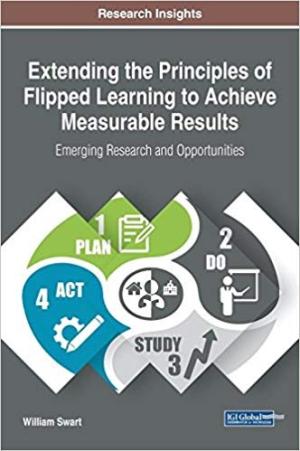
As higher education continues to grapple with expanding online coursework in meaningful ways, faculty must confront a perennial question: how can online coursework mirror the rigor of in-person classes while preserving the flexibility that makes online learning attractive to students? In Extending the Principles of Flipped Learning to Achieve Measurable Results: Emerging Research and Opportunities, William Swart argues that flipped learning has the potential to balance these demands by winnowing the transactional distance, a barrier to student engagement, that is common in traditional coursework. In traditional learning, a lecture typically occurs in class and homework extends beyond the classroom; conversely, flipped learning requires students to study course material at home, including recorded lectures, before engaging in collaborative, problem-solving activities in class. By flipping the traditional model of higher education, flipped learning allows students to invest more deeply in their coursework while simultaneously receiving feedback and peer support in class. While flipped learning may be alluring, enacting such a dramatic reordering requires resources, knowledge, and tools that most faculty do not possess. Written in a straightforward, practical style, Swart’s text provides a viable throughway for faculty members hoping to enact a flipped classroom. Swart begins his exploration of the concept by reviewing the proliferation of online coursework and noting the near-universal agreement among university faculty regarding the disparity of quality in online learning versus face-to-face learning. As an antidote to this pattern, Swart touts the considerable benefits that flipped learning affords students, instructors, and college administrators. Following this introductory material, the text grounds the Plan-Do-Study-Act (P-D-S-A) cycle as the primary vehicle for introducing, executing, and maintaining a flipped classroom. This cycle, originating from business and management, ensures that meaningful learning occurs throughout a new intervention, rather than relying solely on outcome data to judge the effectiveness of an intervention. The heart of the text unpacks each step of the PDSA cycle and its use in a flipped classroom, offering practical advice and data to support those wishing to use the flipped model. This occurs through direct discussion of the model and an embedded case study that illustrates core concepts. Before closing with an exploration of possible future research, Swart also includes candid discussion of the challenges—both anticipated and unanticipated—that flipped learning often produces. As Swart notes, while there is positive evidence regarding student preferences, achievement, and satisfaction concerning flipped learning, there is a paucity of research documenting its role in promoting other desirable values in students. This text adds to a growing body of research explicating the promise of flipped learning within K-12 and higher education. Particularly for faculty members in theological education or religious studies in a liberal arts setting, this text provides short-term and lasting benefits. Swart’s thorough unpacking of flipped learning delivers a robust catalog of research-based, practical advice for enacting this model. Perhaps most valuable for these faculty is the opportunity for students to engage with weighty ideas in a collaborative manner after having initial, independent preparation.
Adult learners are different than younger learners. These groups do, however, share some interests and learning similarities; for instance, both are motivated to use technology in learning. Yet adult learners often have additional challenges using technology because of their late involvement with the digital world. Older adult learners’ participation in online learning and continuing education pose institutional, situational, and dispositional challenges. Online learning provides particular possibilities for adult learners, thereby allowing them to cope with specific adult learning demands. It helps adult students to maintain some sustainability while navigating new technological terrains. Adult learners may have particular learning issues and challenges arise from time to time. The Handbook of Research on Student-Centered Strategies in Online Adult Learning Environments was developed for educators who work with adult learners in online programs. It is a book primarily focused on helping teachers by offering specific ideas for working with students in online environments and serving as a guide for structuring learning experiences for people at different stages of development. The book comprises 22 chapters organized in four sections. Section 1, “Integrating Educational Practices into Online Learning,” provides insights into how educators can link natural learning tendencies in teaching to students’ learning. Furthermore, it highlights competency-based education and the position of student-centered online learning. Section 2, “Adult Learners and Learning,” discusses andragogy in relation to the transitions in knowledge acquisition, focusing on concepts of digital natives and digital immigrants. Discourse on preparing the efficient teacher in the age of information and communication technology is foregrounded in Section 3, “Professional Learning.” For instance, Chapter 14, “A Guide to Professional Learning for Secondary Mathematics Teachers,” explores the impact of a professional learning program on mathematics teachers’ self-efficacy. Section 4, “Student-Centeredness and Collaboration,” provides an overview of collaborative learning as well as student-centered online learning. This handbook also provides arguments on converting theoretical frameworks into practical work in an online classroom or any other digital context. The chapters are organized subsequently in a rational order, yet the reader can start with any chapter of potential interest. However, the discourse on neoliberalism, along with austerity, and their impact—on online education generally, and online adult education particularly—is absent. Furthermore, the counter-argument which debates that online learning should be accepted with much caution receives only 15 pages. Moreover, while Dan Patroc argues that insufficient non-verbal communication is a major drawback in online learning, non-verbal communication receives only one paragraph. Overall, the editors and authors provide a remarkable contribution to the literature on online adult education. Handbook of Research on Student-Centered Strategies in Online Adult Learning Environments is highly recommended for adult educators, online trainers, researchers, and policymakers.
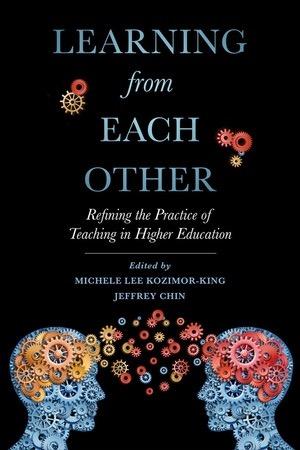
As faculty seek more effective learning and teaching practices, several disciplines have taken a “turn to reflective pedagogy” in recent years. Learning from Each Other: Refining the Practice of Teaching in Higher Education makes a substantive contribution to pedagogical practice in the discipline of sociology; this book is the result of workshops sponsored by the international honor society for the discipline. Contributors reflect a wide range of institutional types, teaching contexts, and research areas. Following a brief introduction by the editors, the book is divided neatly into four parts: curricular innovations, classroom techniques, out-of-class situations, and assessment. Each chapter treats theory and strategy; this combination assures that topics are discussed with sufficient depth and adequate breadth of coverage across the discipline. References are included at the end of each chapter and the book closes with a useful index. Four of the twenty-one chapters in this book will be given attention here. “Courting Controversy and Allowing for Awkward: Strategies for Teaching Difficult Topics,” by Mari Plikuhn, offers sound guidance applicable to any number of classroom discussions and contexts. The chapter addresses controversial content as well as classroom space; it includes helpful strategies for class structure and management. In “Becoming a Culturally Inclusive Educator,” Dena R. Samuels provides a guided sequence of practical steps for faculty engagement in this “transformative process” (203). The reader is encouraged to consider carefully the question of preparedness before working through the eight steps in this process. “The Value of Games and Simulations in the Social Sciences,” by Amanda M. Rosen, assesses the use of this active-learning strategy in a clear way. Rosen weighs barriers and incentives before addressing best practices. Finally, “Putting the Student at the Center: Contemplative Practices as Classroom Pedagogy,” by Tracey Wenger Sadd, supplies a succinct discussion of goals, outcomes, practices, and assessment of contemplative pedagogy. The chapter concludes with considerations and questions for determining the application of this pedagogy. Instructors in Religious Studies and Theology are fortunate that these disciplines are strong in SOTL (scholarship of teaching and learning). These disciplines have a robust infrastructure for engaging in workshops, colloquies, and grant work to strengthen critical reflection on pedagogy. It is telling that instructors in these disciplines continue to produce and contribute highly impactful work on pedagogical research and practice that informs the national discourse. For this reason, there is much to be gained from this book. Discrete chapters may arouse interest in current trends, common questions, and shared efforts. Furthermore, attention to alternative perspectives on recurrent challenges and concerns distinct to a discipline can raise awareness. Finally, the recognition that higher education is growing ever more interdisciplinary makes this an opportune time to reflect on learning and teaching as a collaborative enterprise.
Building the Field of Higher Education Engagement: Foundational Ideas and Future Directions presents twelve landmark articles from 1996-2012 that contributed significantly to the emergence of the field of engagement. Along with the articles, the book presents updated commentaries and responses by the original authors or noted scholars to the questions they proposed. The format of this publication is thoughtful as each chapter presents conversation-provoking questions about engagement across academic disciplines. In addition, Chapter 13 is a prospective look into the future. Nine authors provide their insights to what engagement may look like in the next two decades. This book is valuable to those in the specific field of religious education as it strives to rethink the work of the academy. Lorilee Sandmann states that colleges and universities remain one of the greatest hopes for intellectual and civic progress because they search for answers in light of pressing problems (xiii). Furthermore, higher education in its highest ideals is committed to the scholarship of engagement. She defines engaged scholarship as a mutual relationship between academia and the community that leaves a positive legacy for all partners (xiv, 196). These concepts challenge established notions about higher education. First, this book examines the most foundational values of education. Engagement should be built from these values and not the expectation to do research and achieve tenure. As a result this creates ripples in the culture and expectations of the academy so that a new or revised model for higher education may emerge. Second, this book challenges the way educators see themselves and how they are to engage the community. The community has come to view them as ivory tower elites. Conversely, this volume challenges institutions and educators to participate in outreach to the community at large. The text provides several interdisciplinary examples of outreach. It is important because it generates conversations about the role of faculty and their role in outreach. This is a valuable contribution as the book also gives suggestions on how engagement and outreach can be measured so as to be included in the tenure process. Another valuable idea is the notion that knowledge is now non-linear. It was expected that the academy would study, research, and provide solutions for the world. The consequence is that the academy does not answer the questions the community is asking. In a non-linear world, the community has knowledge. The academy must necessarily be more engaged in the world that surrounds it. Through interdisciplinary dialogue, the text provides valuable insight into these conversations. For theological educators this is an important book because it provides language to understand the complex relationships between the community and the academy; as well as that between faculty and administration. It causes the reader to reimagine the requirements of tenure and the meaning of higher education in a fast-changing cultural milieu. This book conceptualizes the changes in the work of the academy so that one is better prepared to engage an institution’s culture and values so that it may be more true to education’s highest ideals and values.
This moment of crisis has rendered most of us speechless, unable to articulate or reflect upon the unfolding crisis. What other kinds of knowledge will assist us with grappling with this kind of suffering, isolation and grief? What metaphors, similes, sounds, body postures/movements, or ways of knowing will aid us? Dr. Nancy Lynne Westfield hosts Dr. Carolyn Medine (University of Georgia).
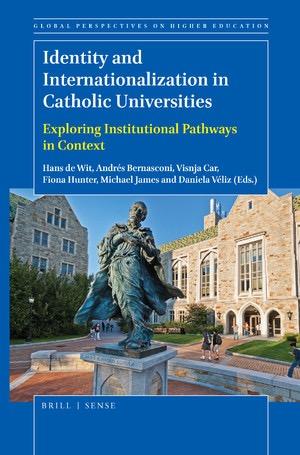
Based primarily on case studies, Identity and Internationalization in Catholic Universities brings readers a global perspective on the ways in which Catholic universities are grappling with questions of identity and internationalization. Although many books are limited to a single country or region, this edited collection includes contributions from Latin America, the United States, Asia-Pacific, and Europe. The result is an informed and global account of institutional and socio-political experiences that are shaping and being responded to by Catholic universities today. This book would be helpful for several audiences. Most obviously, this book would benefit administrators in Catholic higher education who regularly face questions not only of identity and internationalization, but also questions of academic rigor, institutional relevance, and others that the various contributions explore in different ways; this book will put these administrators’ institutional commitments into conversation with other similar institutions. Also, because identity and internationalization are not unique to Catholicism, many universities of secular or other religious heritage would find these contributions insightful for their own institutional contexts. Additionally, Catholic centers that seek to advance issues related to multiculturalism, globalization, international collaboration, issues of common concern (such as climate change or peace studies), or Catholic identity would likewise benefit from learning the ways that these are being discussed among other Catholic institutions in a variety of cultural contexts. Finally, this book would help instructors of practical theology or religion and society courses to have a more global perspective on the ways identity and internationalization affect Catholic organizations. Equipped with this book, faculty could better explain the ways a shifting Catholic identity and a changing society affect Catholic schools, hospitals, nonprofits, and others. Perhaps a more universal and unique contribution of this book is the frame that the introductory chapter provides for the forthcoming chapters. In walking readers though the impact of identity and internationalization within Catholic universities and providing insights for crafting a strategic plan to more intentionally address these, all of the above audiences are provided with practical ways to navigate the challenges they are facing. Likewise, the chapters that follow each illuminate the ways mission and vision are enabled or constrained by identity, internationalization, and the strategic plan of the university. The editors could have expanded the reach of their book by providing more theory and analysis, the dearth of which is demonstrated in the lack of scholarly resources in many of the chapters. A more extensive theoretical base would have embedded the valuable empirical findings in a stronger theoretical frame, making the insights more portable to readers. Still, my desire for a stronger theoretical underpinning to this collection does not take away from the fact that this book makes a valuable contribution to the conversations surrounding identity and internationalization in higher education. Identity and Internationalization in Catholic Universities is indispensable not only for those in leadership in Catholic higher education, but also for those leading Catholic schools, hospitals, nonprofits, networks, Bishops conferences, and other organizations that seek to make a distinctly Catholic impact in an increasingly global and pluralist world.
Wabash Center Staff Contact
Rachelle Green, Ph.D.
Associate Director
Wabash Center
greenr@wabash.edu