Scholarship on Teaching
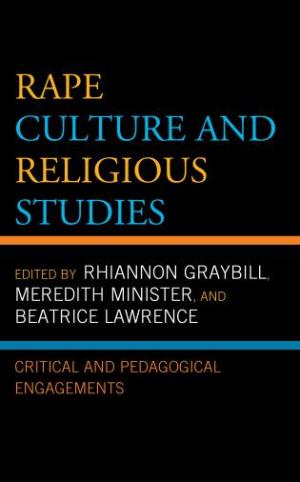
Rape Culture and Religious Studies: Critical and Pedagogical Engagements stages a critical engagement between religious texts and the problem of sexual violence. Rape and other forms of sexual violence are widespread on college and university campuses; they also occur in sacred texts and religious traditions. The volume addresses these difficult intersections as they play out in texts, traditions, and university contexts. The volume gathers contributions from religious studies scholars to engage these questions from a variety of institutional contexts and to offer a constructive assessment of religious texts and traditions. (From the Publisher)
One-page Teaching Tactic that adopts and adapts a technique of classical theological education, secularizing it for an undergraduate context.
One-page Teaching Tactic that taps into students' interest in and knowledge of Facebook to help them read the Bible's four Gospels with fresh eyes.
One-page Teaching Tactic that describes ways that to enhance a class field trip to an academic conference.
How is quilt‐making both metaphor and pedagogy for early‐career faculty of theology and religion who seek to cultivate critical and creative imagination for teaching, and to probe the challenges and promises of complex identities and vocations within 21st‐century landscapes of theological education? This forum presents essays (with explanatory introduction) by five members of the 2016–2017 Workshop for Early Career Theological School Faculty, who were impelled to story their experience of being “handed over to themselves” by an “arts and craft” project which forced them to think with their hands, speak with found objects, and re‐present themselves in the form of 12 × 12‐inch quilt squares. In self‐reflexive prose, these scholar‐teachers offer through this medium a glimpse of their unexpected moments of revelatory learning, as each was pulled into deeper contemplation of their personhood, experience, know‐how, and practical wisdom, each uncovering valuable hidden sources for more expansive theological query, and each re‐thinking the possibilities for theological education and its pedagogies.
This edited transcript of a roundtable “fishbowl” conversation at a session of the 2018 national conference of the American Academy of Religion brings three teaching scholars together around a shared reading of Jane Fried's book, Education, Fishbowls, and Rabbit Holes: Rethinking Teaching and Liberal Education for an Interconnected World (Stylus, 2016). Fried's concept of student “self‐authorship” quickly emerges as the dominant theme of the conversation, providing fresh perspectives on the purposes and goals of an academic classroom and the place of the study of religion within the liberal arts curriculum.
This article discusses an experiential teaching method that uses secular activities that are simple, accessible, and analogous to religious practice in order to facilitate comparative religious study. These “analogous activities” – for example, social rituals, stillness, yoga, a social media fast, singing, nonviolent communication, and mindfulness meditation – provide a third point of reference that allows students to pivot between their understanding of religion and those of practitioners and scholars of religion. Experiential learning can be quite successful if deliberately sequenced to allow students to encounter a series of interpretive frameworks and structured with prompts and parameters that encourage reflection and critical analysis of their experience. In my course engaging in analogous activities not only impacted students' understanding of Asian religions, but also led them to question two previous assumptions: first, that religious beliefs were more important than religious practices, which is particularly problematic in regards to Asian religious traditions that place more emphasis on orthopraxy than orthodoxy, and second, that religion was something separate from one's everyday or lived reality.
Many early efforts at teaching preaching online incurred disastrous losses in quality. Revamped versions now claim to meet, and in some areas even exceed, classroom learning effectiveness, with potentially significant gains for students from non‚Äêdominant cultures. Students preach in local ethnic and denominational contexts, so a wider range of sermon styles can flourish in indigenous soil. Students hear immediate feedback from their community, and from their online peers and professor. Online discussion formats level the playing field for non‚Äênative speakers. By remaining embedded in their denominational and ethnic environments, student's cultural differences may be simultaneously affirmed and critiqued. This article describes capacities which predict success among preaching students, and how culture may influence the manifestation of these capacities. It details best practices and continuing challenges for professors making the transition to online preaching courses, as they seek to build culturally sustaining learning environments in which diverse students may flourish.
The increasing religious diversity in educational space has raised a legitimate question on how Catholic theology/catechesis must be taught in Philippine Catholic universities given the institutional mandate to educate students “into the faith of the Church through teaching of Christian doctrine in an organic and systematic way” (Wuerl, 2013, 1). On this note, the paper makes reference to “centered pluralism” (CP), a positional posture espoused by Georgetown University in dealing with this predicament. In an attempt to (re)appropriate CP into local context, there is a need to explore the Filipino conception of self/others as enveloped within the indigenous concept of kapwa. Hereon, the paper finds that CP is not just feasibly suitable in local context but with kapwa's more inclusive description of the relationship of self and others, a CP‐based teaching paradigm in theology/catechesis is a promising project in the educational scene of the Philippines.
The insights in these 90+ essays are nothing short of inspiring! Their tips on best practices for social engagement, time management, social media as a resource for scholarship or creativity, technology and pedagogy, etc. will help readers tremendously. The contributors are diverse. They include.... - Public theologians like Ben Corey, Brian McLaren, and Richard Rohr - Younger scholars like Tripp Fuller, Jory Micah, and Alexis Waggoner - Biblical scholars like Michael Gorman, Joel Green, and Daniel Kirk - Philosophers like Helen De Cruz, Aaron Simmons, and Kevin Timpe - Establish scholars like James Crossley, Kwok Pui-lan, and Amos Yong - Scholars outside North America like Deane Galbraith, RT Mullins, Hanna Reichel, and Atle Sovik - Pastoral theologians like Patricia Farmer, Len Sweet, and Kurt Willems - Historical theologians like Kim Alexander and Christine Helmer - Science and religion scholars like Ron Cole-Turner, Karl Giberson, Lea Schweitz, and Jim Stump - Constructive theologians like Oliver Crisp, Grace Ji-Sun Kim, and Jason Lepojärvi - Ethicists like Miguel De La Torre, David Gushee, and Michael Hardin ...and the list goes on! Whether the reader is an armchair theologian, a professional scholar, a graduate student, or simply interested in how social media is changing religious and philosophical studies, that reader will find Theologians and Philosophers Using Social Media of great help.