Resources
These probing essays, factual case studies and critical commentaries by thirty-nine prominent scholars, educators, seminary administrators and church executives together address the emerging issues of the globalization of theological education. What does it mean to minister in a world of both interdependence and polarization? How can leaders be prepared to build up a church able and willing to respond to the challenge of global witness and service? What new ways of teaching and learning can seminaries and congregations develop toward the ultimate goal of faithfully and effectively embracing all of God's creation? (From the Publisher)
One of the most significant changes in theological education during the past two decades has been a dramatic rise in the enrollment of women in the seminaries. In this ground-breaking book, Rebecca Chopp explores the impact these new voices are having on theological education. She looks at how women and men are actually forming a new Christian praxis through their engagement with feminist practices and thought that often exist outside the sphere of official recognition. This important book will be a starting point for dialogue about the role theological education will play as this new Christian praxis emerges. (From the Publisher)
The colorful study of university divinity schools in America. This historical analysis of American Protestant university-related divinity schools tells their story in terms of powerful social and cultural forces that decisively influenced American education in general and Protestant theological education in particular. (From the Publisher)
The aim of this book is both to raise questions about the contemporary theological enterprise and to suggest ways to improve theological education at the college, seminary, and graduate levels. With that in mind the editors have here gathered together important essays by leading theologians and prominent bishops that provide expert assessment of the present state of Catholic theological education and its future prospects, treating a full range of the most pressing topics, from undergraduate and graduate programs to the role of bishops and the task of inculturation. (From the Publisher)
The essays in this volume ... were prepared for a conference sponsored by the Institute for the Advanced Study of Religion of the Divinity School of the University of Chicago on October 8-11, 1987. (From the Publisher)
Banks enters the debate on contemporary theological education with a comprehensive and refreshingly practical call to a missional model for theological education. He strives to root this model in a greater appreciation for biblical perspectives on formation for ministry.... Banks provides an extensive review of historical and contemporary issues and models of theological education. His review is critical, and while his missional model is ambitious, he does not avoid facing the practical consequences and challenges faced by those who would move toward what he considers a more authentic approach to the formation of persons called to theological education as teachers and students. (From the Publisher)
Twenty-nine articles from international journals that 'will provide the reader with both a comprehensive map of how contemporary Christian theologians approach the tasks of Christian education, and also skillfully selected excursions in the complex terrain. (From the Publisher)
Acutely aware of the North American religious landscape, the editors introduce the volume by noting two ironies – a vast majority of young people subscribe to a superficial understanding of self, God, and the world, and those who are more complexly informed are often mistakenly considered by youth ministries to be “already won” (8). With this awareness, the editors bring together a diverse set of essays that intentionally make an effort to overcome this irony. By making critical references to High School Theology Programs, the different authors weigh in on the matter by treating high school students as full persons who desire and invite serious mentorship, challenge conventionally held notions, and are ready to hit the spiritual formation ball out of the park. Several authors highlight how young people are often liturgically formed by dominant social conventions that impact their behavior and their ability to articulate the meaning of self and world. If young people are thus culturally tutored, how can those in youth ministry enable a different way of theologically framing lived experiences? How can they creatively disrupt unhelpful naming systems, for example, that young people are enculturated into in such a way that naming the issue could become a means to rethink and rename ways of being in the world? What would this take and what would it cost? Each author presents arguments and perspectival interventions that are based on hard evidence and long-term work with high school students. Work with youth, in the end, affects youth and those who work with them. The book argues that such giving and receiving offers grounds for holy friendship and mutual companionship that can and will positively change self and world. Faculty members in theological schools are encouraged to actively seek out for themselves and others opportunities to teach age groups that they may not otherwise readily engage. No age is “too young.” While the difficulty of the task is not underestimated, the rewards, the authors argue, are many. Church workers are called to focus not so much on saving churches but rather on “saving lives” (275). Both may eventually be saved in the process. The subtitle “If We Let It” captures the philosophical framework of this book. Readers interested in learning how youth ministry can change theological education – if we let it – will learn a great deal from this work that serves as a well-researched handbook, an indictment of theological malnourishment, and a mirror that poses hard and important questions to those interested in more than a cosmetic makeover of theological education today.
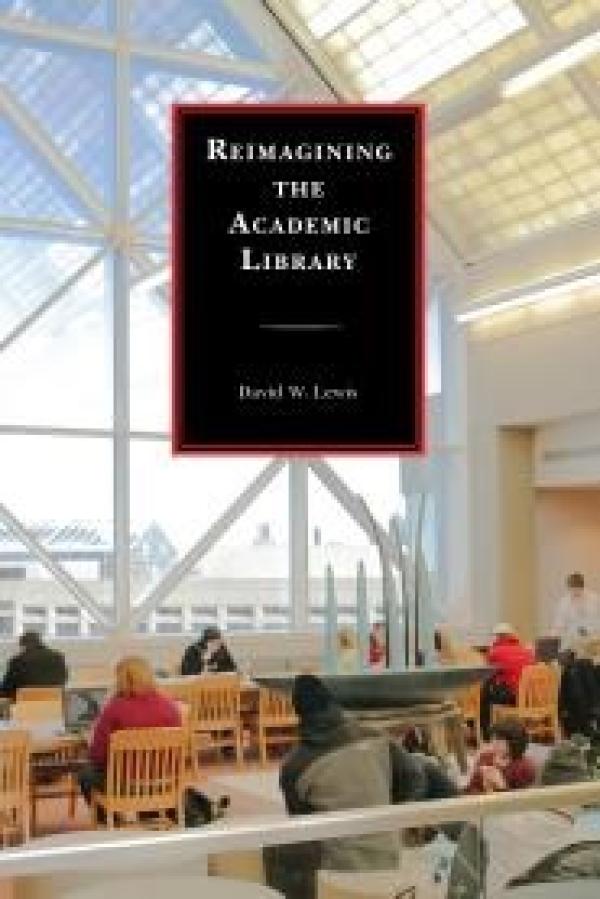
Technology and the digital age are rapidly changing the landscape of education. Theological institutions are not immune. Even though these changes can be difficult and painful, the fulfillment of our mission is enhanced and expanded when we embrace and lean into them. One big current issue is the future of our libraries – what the digital academic library looks like and what it will take to get there. Even though significant change is necessary, a discernable path forward does exist (viii). This includes a substantial change in the role of library staff and the roles libraries play in their institution. As digital technologies replace print as the primary means of access to nearly everything, libraries will “move from using technology to do old things in new ways to using technology to do new things” (vii, viii). This will require new technologies, strategies, values, and even a new culture (xv). It is encouraging that Lewis writes this as an academic librarian with forty plus years of experience. He is a digital immigrant who has learned to accept and navigate the changes. Instead of holding onto the comfortable past, he is excited about the future! This book reminds me of a well-written backcountry trail guide. It is divided into two sections. The first, “The Forces We Face,” describes the landscape, including the history and background; the second, “Steps Down the Road,” is the practical description of the trail ahead, including landmarks along the way. Whereas my backcountry guides discuss the flora, fauna, geology, people, and events significant to say Olympic National Park, Lewis takes us on a historical journey of academic libraries. The central theme is that libraries have always done three things: (a) kept documents for the long haul, (b) provided the knowledge and information that the communities and institutions that fund them need, and (c) assisted individuals in finding and using information (xi, 153). Libraries of the future will continue to do these same things, but how they do them will look different. The focus has been and will continue to be their role in research and preservation and distribution of scholarship. As with any trail guide, section two is the most important: the trail descriptions are found here. My backcountry guides list waypoints, elevation, mileage, landmarks, campsites, and other important information needed to successfully navigate the trail and arrive at the destination. Lewis in like manner describes important steps that need to be taken to arrive at his destination: an academic library, relevant and effective in the digital age. The trailhead is the library of the past, a place that builds local collections and staffs them with people who organize and know how to find the documents and facts in them (153). The destination at the end of the trail looks much different. Collections will be streamlined and library space will be utilized differently. Staff requirements and roles will not be the same. You will be uncomfortable with some of Lewis’ ideas, but you will be stretched and prompted to thought and healthy conversation. We are using the book for this purpose at Denver Seminary. I heartily recommend this book. The price may be high for a paperback, but this is a unique book that should be read by key members of every institution that wants to be proactive in moving ahead into the digital age. If nothing else, get ahold of a copy and read the Conclusion. This provides a quick summary of the major premises and practical steps.
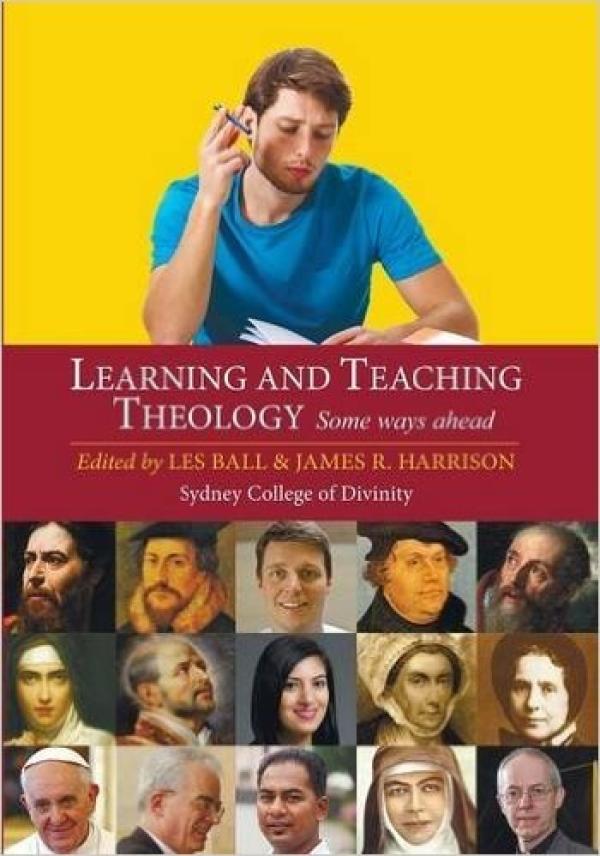
The genesis of this book was a Learning and Teaching conference held at the Sydney College of Divinity that focused on issues and practices in theological education from the perspective of Australia and New Zealand. The aim of the book is to “generate further impetus in charting effective ways to make progress along the important journey of delivering relevant contemporary educational experiences for the learners of theology” (7). For the most part the book succeeds in doing this. It contains seven sections. Section 1, and in particular the essay “Where are We Going,” sets the stage well for the other essays and sections of the book. This essay argues that the philosophical starting point for theological education is student-centered learning and teaching. This pedagogical philosophy then answers the questions about what shall be taught (content of theological learning and teaching), how it will be taught (methods of learning and teaching), and how the curriculum is built. Section 2 gives a biblical road map, using the apostle Paul as a model of a theological educator, that centers on learning communities and their effects on the immediate context and implications for theological education today. Section 3 constitutes a strength of the book since it brings together the philosophical, curricular, and theological theories about learning and teaching into an integrative whole connected to formational assessment. The various essays are informed by the works of David Ford and Walter Brueggemann, integrative and transformative learning theories, and multiple intelligences, to name a few. The book transitions in Sections 4 and 5 to a more practical focus that brings theory and practice together from the medical and health science disciplines to enhance theological education, and the use of technology. The two essays in Section 4 look at lessons that theological education can learn from medical education; they challenge theological education to move from an emphasis on competencies to a focus on capabilities that adapt to contextual changes that in turn improve ministerial practice. The essays in Section 5 center on e-learning technologies and its impact on the learner from formational, instructional design, gamification, and embodiment perspectives. The last two sections continue to emphasize practice and give creative examples of innovative practices from theological practitioners around teaching and learning methodologies. These include problem-based learning, transformative pedagogy in the context of cross-cultural experiences and traditional courses, and workplace formation. The last two essays feature teaching and learning from a non-Western context. The editors laid out the direction of the book well in that it generally moves from a theological, philosophical, and pedagogical core to learning and teaching practices. However, in a book of this nature with multiple authors, there is an unevenness in the depths of the essays. That is, some essays give excellent theoretical depth and description, fresh analysis of data, creative accounts of practice that oftentimes challenges the theological status quo, or thoughtful theological and pedagogical integration, while other essays do not. Having said this, the book does present fresh thinking and offers innovative practices about the theological education enterprise and as a result urges continual and effective development.