Resources
“Tell Me a Story of Jesus: Teaching as Storytelling and Four Recent Short Histories of Christianity”
Offering a review of four short introductory books on Christianity, this essay discusses how introductory textbooks, and introductory religion courses more generally, are like storytelling. Books by Lindberg, Tomkins, Norris, and Woodhead are reviewed with an emphasis on their classroom use. These books share several things in common – most notably, each is a "short," popular text. Dealing with the topic of Christianity in abbreviated form presents certain challenges and possibilities in the task of teaching. After examining these short histories, the essay reflects on several questions that emerge: When should we use textbooks in college classrooms? What are the goals that teachers have in the use of textbooks? How do textbooks define the subject matter of a course? And finally, how do teachers use texts to aid in telling a story in the classroom?
White and African-American students in the American South are able to meet and learn from Confucianism on its own terms much more readily than their peers elsewhere. This is because of their tendency to respect authority, participate in intergenerational ritual performances (especially those concerned with manners, meals, and mortuary practices), and judge the present in terms of the past (especially the U.S. Civil War). This is true despite the incompatibility that many southern students sense between Confucianism and their own religious doctrines. Instead, southern students' grasp of Confucianism rests on the grounds of lived religious experience. When southern students learn to see in Confucianism a set of beliefs, practices, and experiences that, in some ways, mirror their own, they are empowered to identify the tradition as "religious" in a way that renders "religion" a descriptive category of comparison rather than a limiting category of unique identity.
The proliferation of methods of literary criticism in biblical studies raises the question of how to introduce students to the field. This article argues that the work of Northrop Frye is useful for teaching the existential meaning and social impact of the Bible. The first section introduces relevant aspects of Frye's literary theory. The second presents the author's teaching as a case study. The third section concludes with implications for a philosophy of theological education.
As the result of an extensive self-study for the purpose of reaccreditation, the Department of Theology at The University of Portland began offering a new series of courses called Theological Perspective Courses (THEP). THEP courses are upper division and offered by theology faculty in conjunction with another department that has required core courses in the College of Arts and Sciences. They are intended to be interdisciplinary, with two faculty members from different disciplines collaborating on new course design and implementation. THEP 482, Theology in Ecological Perspective, was one of the first two THEP courses taught. This article describes and reflects on the nature of this religion and science course in terms of subject matter, learning theory, and development of community. Several additional appendices to this article appear online at: http://www.wabashcenter.wabash.edu/journal/article2.aspx?id=12397
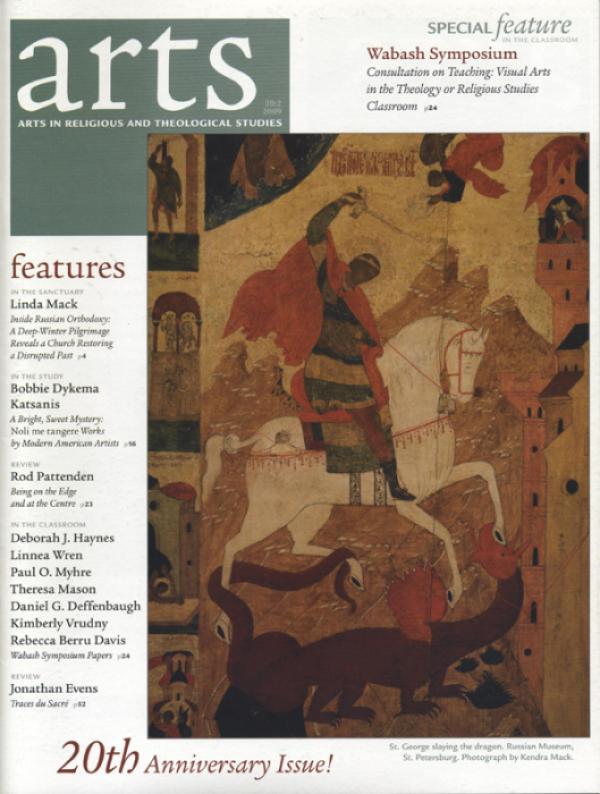
Journal Issue.
In this book, Elisabeth Schüssler Fiorenza continues her exploration of a radical democratic ethos in graduate biblical education. She argues that it is necessary to reframe the field of biblical studies and replace the competitive teaching models prevalent in graduate programs with an emancipatory, radical democratic pedagogical model that fosters collaboration, participation, and critical engagement. To achieve constructive engagement with the differences of social location and diversity of perspectives that exist both in the Bible and in our contexts, we must become aware of the pitfalls of one-dimensional thinking that seeks to use the Bible to find definite answers and to exclude different understandings. Schüssler Fiorenza addresses such questions as, What are the educational practices and procedures that are advocated by traditional educational models and how can they be changed? What kind of educational and communicative practices do biblical studies need to develop in order to fashion an emancipatory democratizing rhetorical space and a forum of many voices? To envision, articulate, debate, and practice a radical democratic ethos of biblical studies, she identifies emerging didactic models that can foster such a radical democratic style of learning. (From the Publisher)
Many college students are interested in spirituality and the "big questions" about life's meaning and values, but many professors seem not to know how to respond to that interest. In this article, the author offers several strategies to help students confront the "big questions". One way is to structure assignments and discussions so that students can have a chance to bring critical thinking directly into relationship with their own experiences and beliefs.
AAR Teaching Religious Studies Series (Oxford University Press) The Daode Jing, a highly enigmatic work rooted in ancient Chinese cosmology, ontology, metaphysics, and moral thinking, is regularly offered to college and high-school students in religion, philosophy, history, literature, Asian studies, and humanities courses. As a result, an ever-expanding group of faculty with very different backgrounds and training routinely confront the question: "How should I teach the Daode Jing?" Written for non-specialists who may not have a background in ancient Chinese culture, the essays collected in this volume provide up-to-date information on contemporary scholarship and classroom strategies that have been successful in a variety of teaching environments. A classic text like the Daode Jing generates debate among scholars and teachers who ask questions like: Should we capitalize on popular interest in the Daode Jing in our classrooms? Which of the many translations and scholarly approaches ought we to use? Is it appropriate to think of the Daode Jing as a religious text at all? These and other controversies are addressed in this volume. Contributors are well-known scholars of Daoism, including Livia Kohn, Norman Girardot, Robert Henricks, Russell Kirkland, Hans-Georg Moeller, Hall Roth, and Michael LaFargue. In addition, there are essays by Eva Wong (Daoist practitioner), David Hall (philosophy), Gary DeAngelis (mysticism), and a jointly written essay on pedagogical strategies by Judith Berling, Geoffrey Foy, and John Thompson (Chinese religion). (From the Publisher)
Even the most casual observer of Chinese society is aware of the tremendous significance of Confucianism as a linchpin of both ancient and modern Chinese identity. Furthermore, the Confucian tradition has exercised enormous influence over the values and institutions of the other cultures of East Asia, an influence that continues to be important in the global Asian diaspora. If forecasters are correct in labeling the 21st century 'the Chinese century,' teachers and scholars of religious studies and theology will be called upon to illuminate the history, character, and role of Confucianism as a religious tradition in Chinese and Chinese-influenced societies. The essays in this volume will address the specifically pedagogical challenges of introducing Confucian material to non-East Asian scholars and students. Informed by the latest scholarship as well as practical experience in the religious studies and theology classroom, the essays are attentive to the various settings within which religious material is taught and sensitive to the needs of both experts in Confucian studies and those with no background in Asian studies who are charged with teaching these traditions. The authors represent all the arenas of Confucian studies, from the ancient to the modern. Courses involving Confucius and Confucianism have proliferated across the disciplinary map of the modern university. This volume will be an invaluable resource for instructors not only in religious studies departments and theological schools, but also teachers of world philosophy, non-Western philosophy, Asian studies, and world history. (From the Publisher)
AAR Teaching Religious Studies Series (Oxford University Press) Many teachers share an interest in bringing a better appreciation of ritual into their religious studies classes, but are uncertain how to do it. Religious studies faculty know how to teach texts, but they often have difficulty teaching something for which the meaning lies in the doing. How do you teach such "doing"? How much need be done? How does the teacher talk about the religiosity that exists in personalized relationships, not textual descriptions or prescriptions? These practical issues also give rise to theoretical questions. Giving more attention to ritual effectively suggests a reinterpretation of religion itself-an understanding less focused on what people have thought and written, and more focused on how they engage their universe. Many useful analyses of ritual derive from anthropological and sociological premises, which may be foreign to religious studies faculty and even seen by some as theologically problematic. This is the first resource to address the issues specific to teaching this subject. A stellar cast of contributors, all scholars of ritual and teachers experienced in using ritual in a wide variety of courses and settings, explain what has worked for them in the classroom, what has not, and what they have learned from the experience of being more real about religion. Their voices range from personal to formal, their topics from ways to use field trips to the role of architecture. The result is a rich guide for teachers who are new to the subject as well as the experienced willing to think about new angles and fresh approaches. (From the Publisher)