Resources
Museums were a significant aspect of my childhood education. Living in Philadelphia, we were a family who regularly visited museums and historic sites. Saturday family activities, summertime daytrips, and adventures when out-of-town relatives visited, would typically involve museum excursions. The spring field trips by George Washington Carver Elementary School, funded in-part by monies raised by the parents’ organization, were, joyfully, to the museums. In the 5th and 6th grades, respectively, my parents enrolled me and my brother in Saturday enrichment classes at the Franklin Institute. By high school, we had regularly visited the: Philadelphia Art Museum, Franklin Institute, Please Touch Museum, Pennsylvania Academy of the Fine Arts, Betsy Ross House, Academy of Natural Sciences, Carpenter’s Hall, the African American Museum, and several neighborhood museums. All this is to say, museums were an integral part of how I learned as a child. Then, in college, graduate school, while serving local churches and while on the faculty of a theological school, I only sparingly incorporated museums into my teaching or research. Yes, I planned the occasional field trip, but museums were not vital to my teaching. Museums were not part of my pedagogical repertoire. With delight! - museums have returned to my awareness. I have had the good fortune to visit the National Museum of African American History and Culture, Washington, DC, twice within the past six weeks. These two visits have given me a renewed appreciation for museums and the ways they can and do nurture our curiosity. While visiting the museum, I experienced the power of exhibits to interpret the stories of people. On both visits, we were hosted by Eric Lewis Williams, Ph.D., Curator of Religion at Smithsonian National Museum of African American History & Culture. Dr. Williams curated the exhibit, “Spirit in the Dark: Religion in Black Music, Activism, and Popular Culture.” The exhibit brilliantly and provocatively suggests the myriad of ways in which religion is a part of the cultural fabric of African American experience. As Dr. Williams designed, the viewer’s imagination is captured through photographs, objects, and depictions which makes the exhibit a marvel. With Dr. Williams’ help, I experienced a kind of magic and majesty in the stories told by the artifacts. I viewed, and sometimes handled, objects, relics, remnants, and fragments. Being able to discuss the exhibit, and its design, with the curator - was riveting. The exhibit prompted new perspectives for even the most familiar cultural story. It was fun. It was intriguing. I was wowed and was led to epiphanies! How, rather than planning courses, might we design learning experiences for our adult learners? Since returning to my desk, I have continued to dialogue with Dr. Williams. I am curious about the ways religion and theological classrooms might be strengthened through partnering with museum educators, curators, and administrators. I want to know more about curating, archiving, conservation, and material culture so I can improve my own teaching. I want to better understand collecting, and the ways storytelling through artifacts might be added to adult classrooms. Dr. Williams and I are thinking together about ways the Wabash Center might engage these kinds of questions: What would it mean for the Wabash Center to support faculties to explore ways of incorporating museums into their undergraduate and graduate level curriculum? What could be the role of museums in theological education for the preparation of congregational leadership; for teaching religion in the public; for more interactive educational experiences? In what ways could religion scholars assist museums in their interpretation and presentation of exhibits? What does it mean that, increasingly, critical interpretation of religion and theology is encountered by the public in museums? What if the work of critical interpretation employed in our classrooms is enhanced and enriched through the storytelling approaches of museums? In what ways can we learn to incorporate archiving, curating, conservating and exhibiting into our course design? What can be learned from museum pedagogies to strengthen religious and theological education? Given the prospects of enhancing teaching through museum education practices and visits, and since many professors spend their summers involved in course planning, I encourage you to consider spending part of your summer in museums and historic sites to: get to know museum educators get acquainted with museum curators and administrators enquire about exhibits scheduled for display in the fall and spring semesters plan for certain artifacts to be brought to your classroom during the semester enroll in a workshop offered by the museum learn the ways museums educate the public on your scholarly interests take notice of the many ways that museums make use of digital interaction in order to tell stories rethink and redesign an upcoming course imagine learning activities, student assignments, and excursions that invite students to become curators, archivers, and create exhibits Find the museums on your campus, in your town or city – and have fun!
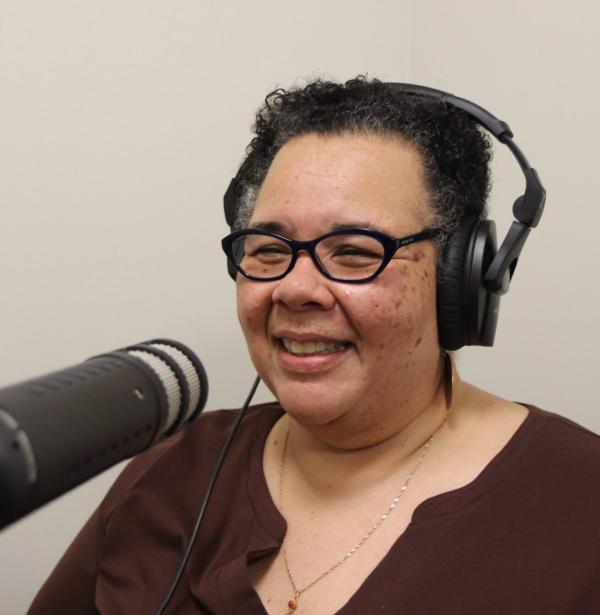
Preface It is my pleasure to co-author this blog with Dr. Roger Nam, Professor of Hebrew Bible, Candler School of Theology, Emory University. Dr. Nam and I have been a part of the Wabash Center project for over twenty years. We have had the opportunity to hear, as participants and as participant leaders, the kinds of questions and concerns early career colleagues pose over meals, while canoeing or during the late-night hours in Clifford Lounge. Invariably, issues of thriving, surviving, and knowing “what to do” as an early career person navigating the academy are at the forefront of the concerns and conversations. We understand that questions about the teaching life are just as important as questions about the craft, praxis, and art of teaching. Generative teaching requires a life that is healthy, whole, and resilient – especially in the early stages of any colleague’s career. Roger and I have recorded a series of podcast conversations which engages the questions we heard regularly posed by early career colleagues. These conversations are not meant to give advice to particular situations or specific people, nor are they intended to provide guidance for opportunities. The conversations are intended to suggest the kinds of issues, questions, and curiosities needed to frame moments of discernment, decision making, mentoring, and dreaming. Further, Roger and I are not claiming expertise in any particular situation. Our expertise is in the many conversations we have had with colleagues and the many years we have had as leaders in our own fields of endeavor. Flourishing in the Teaching Life Series Personal Finance and Planning: Roger Nam Healthy and career stability includes planning for the financial future and managing personal funds. Understanding 403B retirement accounts investments, and estate planning is part of faculty wellness. Understanding Institutional Finances: Roger Nam Learning to read institutional budgets, understand endowments, and be knowledgeable about financial reports will assist faculty persons. Being informed about your school’s financial picture is an aspect of personal wellness. Negotiating Job Offers: Roger Nam What is possible as you accept a new job? What kind of agency is needed to feel like you belong at hire? What does it mean to know your worth and value? Charting the Course of a Scholarly Career: Roger Nam Scholarly careers are not linear or tidy. Hear about helpful tools for career management like: creating a map/plan for tenure process and promotion (6 year plan), having more than one mentor, knowing when to leave the first job and when to stay, finding conversation partners for career decisions. Entrepreneurial Ambitions and Insights: Roger Nam What scholarly skills are transferrable to other enterprises? What does it mean to consider an executive position like a deanship or presidency? How do I manage speaking engagements, book deals, and other kinds of opportunities? What is an LLC and do I need one? Negotiating Once you are given a job offer, then it is time to negotiate your needs for hire. Negotiating your contract presumes you have agency concerning your career decision-making and that you have, in depth, researched the institution from which you have received an offer. Negotiating requires that you are not ambivalent about the job. You must have clarity about your needs, the needs of your family and the kinds of provisions you would need to thrive in that specific environment given the geographic location, kind of institution, and your hoped-for career trajectory. Negotiation is context specific – there is no “one size fits” every situation. Be mindful, that while we have heard of each of these items listed below having been negotiated, we have never heard of all these items in any one contract. When negotiating for a job offer, you must consider the context of the school, know your own value to the institution, and consider what you will need to thrive in that location. Your requests should not be capricious and, as in any negotiation, compromise must be part of the engagement. Salary is too often the only consideration of negotiation. Most schools have a determined entry-level salary for early career colleagues and/or the institution has established bans of salaries for the entire institution, which cannot be ignored nor changed. Many starting salaries are not negotiable. That said, even a 1% increase can accrue into a significant amount of money over 10, 20, 30 years of employment. Beyond salary negotiation, it is likely that your ability to thrive depends more on the kinds of items in the list below. Consider negotiating toward these kinds of needed aspects of the job: Title and Status Housing Short term or long term / rent reduction/ mortgage support Equipment (computers, and other technologies) Teaching resources Office location and office furnishings Funds and Funding (access to funds is typically not taxable as they are not part of salary) Moving Funds (Since 2018 moving expenses are not tax deductible except for military members). Often funding amounts are pre-set and moving funds are always considered salary and thus taxable. Consider that if you do not need to move to take the job, ask that these funds be considered a hiring bonus or accessed for some other purpose. Research Funds Travel Funds Student Loan relief Startup costs to help establish a research trajectory (e.g., library funds, index services) Eligibility for tuition remission for children Access to institutional credit card so you do not need to “front” expenses Membership to or use of school’s membership in local institutions (e.g. country club) Classroom resources Scheduling and Timing Course release Course timing and flexibility in mode of teaching Tenure Clock and Sabbatical Clock Committee Relief or Committee Assignment Delay or reduce administrative obligation (e.g., will not chair department until after tenure) Junior faculty sabbatical (leave in preparation for tenure or promotion, year 3, 4, or 5) Staff Support Research Assistant Teaching Assistant Publishing Assistance for: content editing, copying editing, indexing, footnote verification, etc. Access to administrative assistant services Hire of coach for administrative role and responsibilities Grant writing assistant Creation of a center or other institutional project of your own scholarly interest Bottom Line Negotiation depends upon your own agency. Your agency, exercised for your own wellbeing, begins when you submit your job application and continues throughout your career. Too many colleagues accept a job offer without negotiating or without having read the Faculty Handbook, the benefits package, or knowing enough about the culture of the faculty. Learning about the job begins with your preliminary research on the institution before making application, continues with posing your questions at the interviews, includes conversations with knowledgeable mentors and colleagues at other schools. By the time you are offered the position, you should have a clear sense of what is possible for the position you are considering and what you would need from that institution to thrive, flourish, and be well in your work.
In junior high school, we were taught that all the sections of any assigned book were to be read. We were instructed that “good students” never overlook any section of the book. This point was reinforced when the answers to a few critical test questions came from the preface and introductory sections of the text. Most students, having overlooked those sections, missed the questions – thus forfeiting a grade of “A.” We learned, from this punitive experience, that all the sections of all the books were fair game. As I have learned to teach, I too have been interested in my adult learners taking notice of and appreciating the entire text – all the sections. While I am not interested in posing obscure questions on tests, I am interested in students getting in touch with all that any book has to offer. Authors take quite seriously the writing of the sections which come before the principal content. For many writers, much time and great effort is spent in the pages which precede the content. Writers are hoping that the front matter invites the reader into their work. From a publisher’s perspective, books are generally divided into three sections: front matter, principal text, and back matter. The front matter is the material at the front of the book that usually offers information about the book, about the author, about the author’s intent, and about the presumed audience. The front matter is not the principal text, but the “get ready” information for the principal text. The front matter is the author’s opportunity to set the tone for the readers’ experience. Reading the front matter is like watching the beginning ten to twelve minutes of a film. In these opening scenes, the film maker is establishing the pretext of the storyline with images, sounds, pace and rhythm to pique the viewers’ interest. Or the front matter is like the moments of boarding a roller coaster ride. It is like when we are being harnessed-in, then the thrill of the ever-so slow trip up the steep incline. Creating anticipation of the ride is what the front matter is about. In many of my courses, I would guide my students in lingering over the front matter. I wanted my students to have their appetites whetted. I wanted their anticipation to be heightened. During class sessions I would, with my students, review the provided front matter sections. I would rehearse all the sections: Copyright page, Dedication, Epigraph, Table of Contents, Foreword, Preface, Acknowledgements, Introduction – any pre-sections which the author had provided. Please know that as I am extolling the virtue of and necessity of front matter, I am not saying that the back matter should be overlooked or disregarded. The footnotes, endnotes, appendix, bibliography, and the index, are important. My experience is that students, when needed, find their way to those tools provided in the back matter. It is the tools of the front matter that I think need support for our students’ improved reading habits. As I reviewed the front matter with students, I would make sure they knew how to decipher the codes of the Copyright page (for many, this was their first experience knowing this code). I would call their attention to the Dedication as it usually provided a personal and loving note from the author. We would read the Epigraph and discuss whether the author was providing a summary, a counterexample, or was juxtaposing their work with a wider literary canon. I would ask – “To what is the author inviting the reader?” I would point out that the typeset design of the Table of Contents is meant to communicate as much as the listing of the chapter titles. “Read the design as much as you read the words,” I would say. We would read aloud the Forward, Preface, and Introduction then invite the students to compare-and-contrast the three sections. I would remind them that the author has free-range concerning the role, responsibility, and weight of each of these sections and each author decides how these sections will function as preliminary for the reading of the text. I would suggest that these sections tell us something important about how the author is thinking, and I would ask them to speculate or extrapolate what the author is promising. Sometimes, I would break the class into small groups to read and report back the role of each section or to report back a comparison of all sections. Finally, I would say – “We have saved the best for last!” The best way to understand the motivation of an author, the way to see into the author’s soul, is to read the Acknowledgements. Writing about an author’s gratitude is to write about one’s own heart. Acknowledgements provide glimpses into the writer’s process, and likely, insight into the writer’s project which, invariably, is bigger than the book at-hand. Some groups, by the end of the semester, began to ascertain that – for some authors - the promised book in the front matter was not the book in principal content. With these observations, I knew they had become better readers. Once students develop better reading habits they become better learners, better thinkers, and more able to understand the complexities and curiosities of other people as well as their own people. I discovered that taking time to teach adult students good reading habits is time well spent – for me and for them.
A common aspect of websites is “Frequently Asked Questions.” This is a handy feature. It is meant to assist the inquiring person with succinct information. It is meant to answer questions searchers did not know they have or provide answers to questions for which they have specific interest. It is also a way for the business to be able to articulate, in a concise way, their benefits, capacities, and capabilities. The key to FAQ is that they are not the questions of the business, but they are the questions of the client to the business. The value is that the business has answers to these distinct and important questions. I do not want to push this metaphor too far. I do not think our students are our clients, customers, nor benefactors. At the same time, I do think that it is important for us, in introductory course preparation, to take-on an empathic perspective for our students. We must consider, from their perspective, that they are learning new language, new concepts – never before exposed to - ideas. We must anticipate a version of their FAQ. Teachers must take time to think-through, reflect upon, and design succinct articulation of the benefits, functions, and qualities so that introductory courses are not perfunctory, stale, or unintelligible. Learners should not have to wait until the completion of the degree before they are able to understand and meaningfully interpret the introductory syllabus. Below, is a list of reflection questions with learner’s FAQ in mind. Of course, this is not an exhaustive list of their questions. This list is meant to spark conversation so colleagues, in context, can discuss, compare-and-contrast, and consider what is better/best for their own introductory courses and the students who trust us with their learning. One: What is the intention of this introductory course? This might be the most difficult of all their questions. If you cannot say the thesis of the course WITHOUT jargony words or technical language or theoretical phrases for which the students have yet to be exposed or taught, then the course is not yet ready to be taught. For your introductory course, what is the punch line, thesis statement, refrain, big idea? Please write in language that can be understood before the study of the course material. From the student’s perspective, what am I about to be graded about? Two: What is the approach of the course? The information age is eroding the notion of one supremist perspective for teaching the big questions of life and scholarship. Unmistakably, there are major shifts in the academy for including multiple voices and many worldviews, even starting with introductory courses. Ideas in introductory courses are no longer “obvious” or “natural” or “to be expected under the circumstances” – a kind of “of course” attitude or “everyone knows” posture as if there is no need for deliberation or new planning or thinking anew. The question of scholarly approach is in story. In the course, whose story are the learners being asked to enter into? And if not their own story – then why not? What cultural assumptions and presuppositions are operative in the framing of the introductory course? To what are you asking me (the learner) to open my mind and how will this benefit the people who have sacrificed for me to be a student? What student skills, practices and habits will I need to be successful? What new skills will you expose me to for my learning? The more racial, cultural, ethnic, and age diversity of your learners, the more complex the response must become. Remember that complexity does not have to lead to convolution. Three: Why does this course matter? The question of relevance is a critical question to learners. The question is sometimes pragmatic and sometimes political – always on their minds. What do you expect students to become or do as a result of the course? How much time will it likely take before students learn, change, grow in this material – weeks, months, years? The question of relevance will shift with the demographics of your students. The more divers your students, the more complex the response to this question must become. There can be, if we grapple well, elegance in complexity. The question of relevance is directly related to teaching anecdotes to mis-education. This will be particularly vital for majority culture students. Four: What is the vocabulary of the course? In the first session of my introductory courses, I got in the habit of initiating a conversation about vocabulary. As part of rehearsing the syllabus, I would tell my students that during the semester I would teach them words that, at first, would feel awkward in their mouths. I told them we would be using a language and jargon that would not work at church potlucks or cocktail parties. But I told them, as learned people, we have a vocabulary for which they must become proficient, even fluent. The presence of students who speak many languages learning along-side students who speak only one language makes this question more complex. Five: How? How will students learn? How will students pass this course? What will I be asked to do to learn? What will be the task of my body while learning? Am I just to sit and listen as you talk? What student skills, practices and habits will I need to be successful? What new skills, practices and habits will you teach me to engage my learning in this course? What will there be to: see, smell, taste, hear, feel – to intuit? Will there be field trips, excursions, people to meet, new places and encounters where I welcome the stranger and make them my friend? Will I have opportunity to be as a stranger in hopes of being welcomed? The educational formation which brought students to college, graduate school and seminary will have shaped, formed or deformed learners. Awareness and attention to student’s previous experiences of coursework is critical to answering this question. If there are a diversity of students, e.g. international students and minoritized students, this question becomes much more complex. Six: Teacher – who are you? We know that many minoritized students learn better when they relate well to the teacher. For them/us, learning is communal and relational. For many majority culture students, the attitude, opinions, and affirmations of teachers is less important and plays a lesser role in their achievement. For BIPOC faculty, all students will likely wonder or question the credentials, institutional value, and authority of those instructors. The identity politics in classrooms is often dangerous for BIPOC faculty, so knowing what and what not to disclose is complicated. We know from Parker Palmer, noted teacher and author, that we teach who we are. Seven: Who is the learner? What does it take to design an introductory course before meeting the students on the first day of class? What can be known about the enrolled students for better course planning? What are the fears of the learners? By what course design and strategy will you quiet their fears early on course? The more diverse the student body, the more difficult and complicated an answer to this question will be. Who in your institution is tasked with providing a profile of each incoming class and a summary report of each enrolled student’s previous experiences and exposures to learning? Eight: How is the teacher’s passion taught in the introduction course? If not – why not? I have heard senior scholars say that they do NOT teach what interests them until they teach upper-level seminars because they believe introductory courses are not meant to reflect one’s own research interests, passions, or professional curiosities. From my perspective, this is wrong-headed and explains, a bit, why some introductory courses are so dull and insipid. How will your passions, unique knowledges, and scholarly knowhow be the cornerstone of your introductory course? Answering these questions does not create a syllabus. And I am not suggesting you add a section to your syllabus for “frequently asked questions.” These questions, as a combination, assortment, and hodgepodge, are meant to encourage your planning, preparation, and thoughtfulness to create empathy with and compassion for adult learners who dare to enter into classrooms of religion and theology. Our students, from the very beginning, deserve teachers who are ready and know how to invite them to learn. Learners want courses that are shared endeavors and not just the presence of a subject expert who has not considered the broader experience of their learning.
I do not believe teaching, itself, to be miraculous. I can bear witness to miracles which have come with teaching. The wonders come in the learning. Learning is both improbable and extraordinary. Classrooms with adult learners can be places where the splendor of miracles is known. The first kind of miracle depends upon time. On the first day of the course, students racked with hesitation, reticence, nervousness, fear of failure, and fear of success, are the same students, who miraculously, enter the classroom on the final day of class with confidence, sometimes swagger, having metabolized that which they did not know. Time can afford us miracles if we can see the shifts, modifications, accepted considerations, and the full out rethink. Sometimes, over the span of a few semesters, or in-between the first session and the last, through learning activities, discussions, cognitive dissonance, the yearning for wisdom, the torment of grappling with new ideas, and the challenge of grasping new practices, skills, and habits, students learn that the world is more than they previously suspected or feared. The second miracle happens when the illusion of inferiority is successfully shattered. Teaching is an embodied art. I inhabit any classroom as I am. I am, by the pronouncement of my physical body, an African American, woman, age 60 plus. By U.S. societal norms created by white supremacy, capitalism, patriarchy, misogyny, and racism, I am perceived as inferior. I am, according to the accepted (albeit contested by some) systemic hatreds which permanent social norms, at the bottom of the societal and academy hierarchy. I am, as an older Black woman, less than those who are men, those who are white, and those who are young. The politics of inferiority is operational in society, and these real and dangerous mindsets enter my classrooms in the imaginations of my students. Inferiority is not scientific, but it is a real part of the moral matrix of U.S. society. Regardless of my credentials or standing in the academic community, my students have been given license by ruling power structures to see me as inferior. The miracle is when I can dissuade students, Black, white and otherwise, that the lie of inferiority must be exorcised, purged, eliminated. Most times I have not been successful in provoking this miracle--it is not an easy miracle to summon. But there have been a few times I can bear witness. There have been a few students who have left my courses no longer deceived or duped by patriarchal mindsets. They discover the ability to refuse to live in, and believe in, a narrow world of sameness and homogeneity. They summon the capacity to see a world that is dripping with Maybe? and Perhaps? This is their miracle - they have had the audacity to accept the keys which unlock their miseducated minds. The third miracle is the most difficult to perform and not easily witnessed or claimed. It is the miracle of possibility. It is akin to the miracle of ridding students of white supremacy, but not exactly the same. Students, especially adult students, insist upon risk-less learning. They want assurances, guarantees--proof. They prefer learning experiences to be like Disney World simulations, no risk and only gleeful reward. A championing of mediocrity. They want learning that is carefully scripted, with an ending that is foolproof and predictable. With experience, I have learned to watch for the glad surprise in my teaching. It is in the surprise, the unplanned for and sometimes unpleasant, that we have a chance of being visited by new possibility, new opportunity, and perhaps grace. Some semesters, everything happens as planned on cue, and with exacted precision. These are the semesters I know the learning is flimsy. Beyond these three kinds of classroom miracles, my hunch is that the best miracles happen when I can-- simply and with a Buddhist’s kind of detachment--invite students to take from my teaching what they can. And so, for our own critical reflection, we ask: By the end of your long and productive teaching career, what miracles will you have performed or witnessed? What miracles, between now and retirement, will you invoke, provoke, evoke in your classrooms or in your teaching life? If one of the tools of teaching is the ability to rely upon, ascertain, identify, or produce miracles, what habits, practices, or strategies will you need to nurture in order to strengthen this capacity? When you were a student, what miracles assisted your learning and sustained your knowledges? Keep in mind that the fulfillment of student learning outcomes, the successful completion of assignments, and the granting of high grades does not necessarily indicate the activity of the miraculous.
It is well substantiated that the retention rate in predominantly white institutions (PWI) for BIPOC faculty is abysmally low. Newly hired BIPOC faculty in PWIs report feeling ignored, unwelcomed, even shunned by colleagues and students. They are treated as if, though hired for the job, that they do not belong. Yes, there are some PWIs for which providing hospitality to BIPOC faculty is done well. However, the majority of BIPOC colleagues who leave employment after less than three years report that their reason for leaving hinges upon experiences of being treated inhospitably. With this assertion, I am not focused on overt acts of racism or discrimination. I am, instead for this blog, focused upon acts of cultural insensitivity, lack of basic social skills, and the inability of an institution to be caring, compassionate, and friendly to newcomers who are BIPOC. What goes wrong? Simply put, the new people are not on-boarded, not offered kindness and warmth. Climates of care, hospitality and belonging do not just happen. An ethos of welcoming new people must be attended to by many, many persons. The habits and practices of care, compassion, and belonging when BIPOC persons enter the PWI must be painstakingly exercised and attended to conscientiously. Regrettably, so many schools do NOT have systems for on-boarding, orienting, and providing for the arrival of new persons in the first six to nine months of employment. People feel unwelcomed because no one, in a robust and institutionalized way, is welcoming them. I would like to offer this list of activities, rituals, and happenings for your context so that, from the very beginning, BICOP colleagues feel a strengthen of ties and a genuine forming of connections. All these possibilities will not be for every context and every hire. Find what works for you and the person who is newly hired. Consider this list, and given your context, create new ideas of care for newly hired BIPOC colleagues: Invite the colleague to meals hosted in their honor. These are not meant as informal committee meetings, but gatherings to get acquainted with one another. Decide if the meals are better in an area restaurant or hosted in a private home. In either case, ask about the person’s dietary preference and restrictions. Who on your faculty gives the best parties? Soon after arrival, ask the best host to throw a party for the new BIPOC faculty and have fun. If you are a well-established member of the community, do not be stand-offish. Do not hold-up waiting for the new faculty to ask you to coffee. Take the initiative – invite the new person to coffee or a meal - with no other agenda than getting acquainted. During the conversation listen more than you talk. Develop a ritual of welcoming professors by having the president, provost, dean, or department head introduce the new colleague to their first class, then applaud wildly in front of students. Send the message to students that this new person is not on probation, not still being interviewed, is not less significant as a faculty colleague due to race. Send the message that there is an expectation that all respect will be given to this colleague. Invite the new person to participate in campus rites, rituals, religious services in a role of their own choosing. Assist the person with finding a religious community for themselves and their family should they desire it. Invite the person to the trustee meeting, alum gathering, student event. Plan to introduce and celebrate the arrival of the colleague at the event. Invite the person to attend the campus sports event and sit in the location of honor. Invite the person to the faculty retreat and make sure they have transportation to the location. If the venue is in a rural location where the BIPOC colleague would be unwelcomed, or in danger, change the venue. Make sure the person has club or institutional memberships that are common and available in that context. For example, membership to the local country club, membership to the local gym, membership to the local library, etc. Connect the person to known childcare networks, if desired. Inform the person of access to certain “insider” goodies, e.g., campus guest housing, coupons for travel, use of vacation properties, meals in the refectory, bookstore discounts, etc. Connect the person with one or two colleagues (one from faculty and one from staff) who will take responsibility for on-boarding. Assign an elder faculty colleague to mentor the person on issues of tenure, promotion, and institutional culture. Make sure the person has necessary keys, identifications, computer accesses. Help the person with office set-up. Make sure all available institutional documents are provided, e.g., Employee Handbook, campus calendar, trustee meeting minutes, faculty meeting minutes, organizational chart, phone and email directory, etc. Connect the person with persons who have a similar family structure (persons caring for children, elderly, pets, etc.). Help the person locate doctors, groceries, barber shops, hair and nail salons which are culturally woke. Consider what is unique about the town, city, or area and invite the new person to participate in that regionally cultural event. Create an “ambassadors” list, i.e. a profile of families who would welcome getting calls from new persons about issues as they arise. Ask the new person what they need, or what their family might need, to secure a good quality of life in the new location, then work to provide for that need. In the most hospitable schools, it is understood that all persons in the community have a role and responsibility in welcoming the new colleague - ALL PEOPLE - EVERYBODY! The key is for the new BIPOC faculty person not to feel alone, isolated, abandoned, unwanted, or suspect. In the words of my mother, Nancy B. Westfield, “You do not have to become friends with all the new people, but you do have to be friendly.”
Reclined on my large, red, comfy, couch, I was reading, The Book of Delights by Ross Gay. I was enjoying the read, and then I got to #14, entitled “Joy Is Such a Human Madness.” In this section, Ross wrote about a student in his class, Among the most beautiful things I’ve ever heard anyone say came from my student Bethany, talking about her pedagogical aspirations or ethos, how she wanted to be a teacher, and what she wanted her classroom to be: “What if we joined our wildernesses together?” Sit with that for a minute. That the body, the life, might carry a wilderness, an unexplored territory, and that yours and mine might somewhere, somehow, meet. Might, even, join… And what if the wilderness – perhaps the densest wild in there – thickets, bogs, swamps, uncrossable ravines and rivers … is our sorrow?... What if we joined our sorrows … What if that is joy? I was so taken with this idea of teaching, as espoused by Gay’s student, that I sat up, closed the book, tossed it on my coffee table and said out loud, in vernacular speak, “Ross! What you done done?” His poetic prose crystallized for me the plight of teaching as recently described by distressed colleagues. In the last several months, colleagues have reported a kind of lingering malaise among students and colleagues. The reports say that teachers and students are making efforts to continue in the routine while at the same time there is a palpable sense of forlornness, sadness, even, dread. Most of this, they say, is unspoken and oftentimes unacknowledged. One colleague said, “Students are just acting weird.” Another colleague said, “I feel like no one is able to hear anyone else.” Still another said, “I suspect this is a kind of depression, but none like I have seen before.” The conversations also told of an exacerbation. There is, colleagues have said, no singular trouble, no discrete problem, no focused event that can be blamed, fixed, nor done away with, to adjust or that would return us to “normal.” We have intuitive knowledge that “things don’t feel right,” and a confusion, reticence, unclarity about what to do and how to do. The intangible which we cannot identify, and for which our semester is so heavily ladened, is – if Ross Gay and his student are accurate - sorrow. We are burdened by collective sorrow, and we possess few institutional coping skills for this corporate onus. Our classrooms are situated in brittle times. We do not know how to navigate the depth of sorrow which enters our classrooms – either brought by our students or by ourselves. I suspect we have underestimated the collective consequences of having lived as a society on lockdown for more than a year. Having lived in mandatory isolation, and now emerging from that strange lifestyle, we are coming to know that our collective minds, bodies, and spirits are irrevocably changed – for better or for worse. We enter our classrooms as changed people tasked with discovering those changes by trial and error, by first-hand experience, or by pretending they are not there. We are ill-prepared to navigate these changes. In addition to the effects of the quarantine, like so many others, I have been staggered by the myriad of events which are contributing to our individual and collective sorrow, our inner terrains of wilderness. We know the list of recent events that have us on edge, that are strangling us: grief for the millions worldwide who have died from Covid, the violent attack on the U.S. Capital to overturn the 2020 presidential election, the ongoing triple-threat health crisis of Covid/RSV/the flu, new outbreaks of polio, the uptick of police violence caught on camera, recent hurricanes, wild fires, war in Europe, the annihilation of Haiti, the British Prime Minister debacle, mass shootings across the country, rises in domestic violence, swells of suicide in all age groups, and on… and on… We wonder if we are living through a foreclosure of democracy, and if we are, upon what can we depend for survival? Our sorrow is deep. Our inner bogs, swamps, and uncrossable ravines are expanding. We bring our expanding wildernesses into our classrooms. Ross Gay asks, “What if we joined our sorrows… What if that is joy?” Ross Gay is pointing us toward delight and joy, even amid profound sorrow. The crux is that our sorrow, our wilderness, might be better handled, survived, coped with, if classrooms, rather than ignore or pretend our sorrows away, are joined together – allow us to come together and acknowledge one another’s humanity. It is then through community that we will grapple through these new troubles – come what may. I know that for some teachers the call for classrooms to become places of community is as arresting as the current plight of our sorrow. We must redesign, rethink, recommit or continue to falter and come up short. Classrooms that allow our wilderness to meet and join might be thought to be invitations to a shared onslaught of tears, gnashing of teeth, ringing of hands, heightening distress for already anxious people; a kind of therapeutic approach to teaching for which few of us are prepared, and even fewer are interested. That is not how I hear this profound vision of teaching toward communities of care. Joy is not the antidote for sorrow. Joy emerges when a community of persons are present one to another in times of distress, grief, uncertainty, and doubt. Classroom spaces which encourage that our wildernesses meet, and possibly join are spaces for which the communal values of listening, compassion, tenderness, and accountability are a shared priority. Ross Gay is suggesting that our classrooms, if they are going to be balm for this strange moment, are best when they are spaces of caring community. In this peculiar moment, when we do not recognize ourselves, our teaching task is to pivot away from climates of isolation, individualism, and those assignments that insist upon gratuitous stress or hollow competitions. This is a moment to call one another together in care and compassion. The joy will be in the discovery that none of us are alone as we navigate these unfamiliar, uncertain, and death dealing times.
#1 I am hoping we can learn to teach toward justice. Teach what justice looks like, sounds like, feels like, tastes like, smells like. Learn to know justice with our intuitions, our inside knowledges that see, smell, taste, hear or just know because some things are just known. #2 What kind of study, pilgrimage, lessons for us to learn how does justice live and breathe and find meaning and have meaning and purpose? How does justice enflesh itself? When you gather in a circle of like-minded people working on behalf of justice and you talk about what you are teaching toward – what is the conversation if, instead of focusing upon what you are against, the sustained talk is about what you are in favor of, visioning, dreaming and futuring? How can we materialize justice? How can we learn, together, to conjure justice? What if – should we not be able to talk together, vision and dream of our collective future that then that is why we are stuck? #3 Knowledge without action is impotence. #4 War mongers depend upon our fear. They depend upon our good-hearted willingness to use up our resources in insignificant skirmishes and the business of charity for which no permanent change results. #5 This is not a question of nuance. I am not splitting hairs between knowing what you are against as opposed to knowing what you are in favor of. Knowing where NOT TO ride your bicycle is not the same thing as knowing where TO ride your bicycle. The lessons of “no, don’t, stop, halt” are not the lessons of “yes, do, proceed, go.” Living in yes takes practice. #6 You can be against war – but do you know how to work for peace? You can be against misogyny – but do you know how to love women and our contributions? You can be against racism – but do you know the cultures, ways, histories, traditions, experiences of BIPOC peoples? You can be against poverty – but do you know how to create a society without starvation, homelessness and enough prideful work for all people? We all been taught to be anti-Black even those of us who are Black. Mis-education is just that. #7 In too many of our classrooms – we are quite adept at training students in deconstruction, negative criticism, dismantling analysis and scathing critique. How do we train our students in the know-how of construction of ideas, formulation of strategies, creation of newness – regardless of field, discipline, or school? What would it mean to teach our students to be visionaries, able to converse with one other about the complexities of political identities and agendas, then, together, design the new? Simplistic thinking is killing us. #8 Learning to teach toward new visions, new communities, new systems requires different muscles, different thinking, different strategizing, different knowledges than teaching against current injustices and exploitations. This is why it is not enough to be against. Learning the terrains of being-for requires particular perspectives, new moorings, and emotional maturity to withstand those who thwart the new, the needed, the possible. #9 Octavia Butler said, “So be it. See to it.” I think she meant us, about our teaching toward justice, and right now.
#1 It is not enough to teach against injustice in its myriad forms of racism, sexism, islamophobia, homophobia, patriarchy, classism, ableism, antisemitism, white supremacy, etc. It is not enough to rail against what is wrong and what must be changed, restructured or done away with. We, those entrusted with the responsibility of educating, must teach toward, teach visioning, teach futuring, must teach what we are in favor of, teach what we are for, i.e., the complex notions of community, solidarity, partnerships, coalitions, and collaborations. #2 We cannot settle for, nor be placated by, that which comes with individualized successful escapes, successful assimilation, successful fleeings into the dark nights, successful trickeries, and moments when one or two outsmart, outwit, out fox, or beat back the oppressors. While that is good, that is not enough. These kinds of successes are illusions and meant to deceive. They come at a high, high price. #3 In taking up the struggle, fighting, resisting, we must be about more than …. swimming against the tide, standing against the wind, raising a fist against evil or bullies or the common enemy or fiend. Resisting. Clinching our fists, fighting, while necessary, keeps us from handling tools and opening our hearts. All of these acts-against are, indeed, noble – but not enough. Our liberation must include acts of vulnerability, creativity, imagination, risky business and designing for new kinds of hopes for communal living. #4 We, the collective us – those who are mindful, aware, woke, conscious, faithful, and living as if all lives depend upon all other lives, and all Black lives matter, and that the human family or our earth-house really truly means everyone, all lives matter, and not just a select few who possess all the power, and land and clout, and the vote, not to mention all plants, all animals – the seen and unseen which make-up the tapestry that is our planetary home, all must understand that passive waiting or simply resisting is not enough. It is foolish to think that we can save just a small percentage of the people and the land, and the animals if the rest goes asunder. We are all interconnected. All life affects all other life. The collective us must teach to understand that all of humanity are intertwined and interrelated, and our survival is threatened by the overwhelming greed and selfishness of a few; so, we must decide to teach what we are in favor of and not just what we are against. #5 Friends, Toward what will we teach? What will we be for? What will we be in favor of, say “aye” to? What vision will we cast for our community as a common good? What will we build together? What will we sacrifice, together, for all our children? Who will ally, join, partner, pioneer, and experiment? With whom will we be in solidarity? We know that what we imagine will happen; that’s the nature of imagining. #6 And if we can, and if we do, make this shift – move from being against to working for that which we are in favor of, then: How will we teach our students to think strategically for what we are for? To mobilize for the new marvelous? To know practices of creativity, healing, dream casting, imagination, wonder, planning, no longer to combat against, but to use their energies for what we have agreed will be our hopeful future? How will we teach our students to call up from the deep? What will it mean to teach our students to depend upon their own abundances, knowledges, courages, and hard work? Can they learn to cooperate rather than compete? #7 Teacher, what do you champion? I am hoping it is love, compassion, empathy – for all of life – Lottie, Dottie and Everybody! And that you come to believe that life for some does not mean living at the expense and fodder of others who have been, for generations, weakened, impoverished, downtroddened, and victimized for the survival and thriving of a few others, selected as special, chosen, or entitled by birthright or muscle or raw greed.
Reading. Our family was a reading household. Newspapers, magazines, books – purchased and borrowed from many kinds of libraries – were sprinkled throughout our home. Each day three newspapers were delivered to our house: the Philadelphia Enquirer, the Bulletin, and the Daily News. On Tuesdays and Thursdays my dad purchased the Philadelphia Tribune from the corner store. On Sundays, my mother received the New York Times for the fashions and crossword puzzle. Also, our list of magazines subscriptions was plentiful. Each month the postman delivered: Psychology Today, Ebony, Jet, Better Homes & Gardens, Reader’s Digest, Life, National Geographic, Journal, Good Housekeeping, and Redbook. My brother and I shared (fought over) Highlights. We also regularly purchased comic books, coloring books, and puzzle books. When my parents purchased a set of the World Book Encyclopedia and proudly displayed them in the living room for guests to see, my brother and I were baffled by their excitement. We made use of those encyclopedias for many, many years. ~~~~~~~ We think of literature as being divorced from people, when in fact, people are intimately connected by reading. What we choose to read is often cherished. I didn’t realize it as a child, but now I know that connections between family members, friends, and colleagues are strengthened, deepened and improved by reading. We can, a little bit, glimpse an individual’s inner-self by understanding their reading choices. ~~~~~~~ The required reading in courses speaks about who the teacher is. ~~~~~~~ By the time I was age 10 or 11, the periodical I read most consistently and thoroughly was Psychology Today. Some of the content I understood. Most – I did not. I was aided by the well-placed photos, bold sub-titles, and the frequently included colorful charts and grafts. I read the magazine because my dad read it. My dad was a school psychologist. Every two weeks, he checked-out books from the library on child and adolescent psychology, pedagogy, epistemology and anthropology. At the library, I helped him in the card catalogue search using the Dewey Decimal system. Of course, when I tried to read his library books, I could not understand them – too dry and no pictures. But I quickly learned that I could read, at least a little bit, the Psychology Today magazine. I read what my father read to better understand his curiosities, interests and concerns. Reading what he read helped me glean his love for teaching and his commitment to children. ~~~~~~~ Reading illumines. For several years, I took Master of Divinity students with me to the professional guild meeting and conference of scholars of religion. Together, we attended the American Academy of Religion and the Society for the Study of Biblical Literature (AAR/SBL). The best part of attending the conference with my students was their joy in meeting the authors of the books we assigned in courses. When they met the authors, asked for their books to be signed, and took selfies (yes – it was that kind of moment!) – my hunch is that the students’ respect and perspective about the texts deepened. One such joyous moment was when a group of students gasped, then ran down the hotel corridor to meet Dr. James Cone. Dr. Cone, flattered, paused, took selfies and signed all their books. Many other scholars at the meeting received similar “star” treatment. We had fun. ~~~~~~~ What we read does not float in the ethers untethered from their authors and readers. ~~~~~~~ At the start of my courses, soon after rehearsing the syllabus, I would show pictures and or have my students view TedTalks and YouTube videos of the authors of the assigned texts. Throughout the course I invited the authors of the texts as guests – either live or on zoom. I wanted students to experience the authors’ voice, personality, and quirkiness. Inviting authors into the classroom brought an excitement and added dynamism to the conversation. It matters who wrote the book. Knowing the author’s social location, political bend, and intention assists the student in reading critically, emphatically, and with deeper meaning-making possibility. Hearing directly from the author about their scholarly lives and writing made learning more human. I wanted students, especially when the authors were BIPOC colleagues, to know that people who write books are as assorted as the books themselves. ~~~~~~~ Ask your students what kinds of texts they routinely like to read and why. Ask yourself what you like to read and why. ~~~~~~~ I have learned that an effective way to gather people, have good conversations, establish relationships, is to start a reading group. Twice, just after moving to a new town where I knew hardly any one, I started a reading group. Both groups, in relative quick fashion, coalesced into a group who enjoyed one another’s company. In both cases, even though I no longer live in either place, I still maintain friendships with the people who were members of those groups. The intimacy of reading, discussing, sharing, sometimes arguing and fussing, together, is the stuff of friendship and collegiality. ~~~~~~~ Invite students to texts they would not find on their own. The magic of reading is that it can and does connect, expand and illumine all of us.