Resources

I love the face-to-face learning environment. Even when I stood before my first class, uncertain if I knew enough to teach for 10 minutes much less 75, I thrived on the energy in the room. I also felt somewhat at ease with the basics, given I could draw on a lifetime of experience as a student. When we become teachers, most of us start by emulating the best we have known and their classrooms. In my career, I have handled the auditorium lecture, the seminar, the project-based learning course, and on-site education in the streets of another country. I had good models for them all. Then came online. Until I started working on a system-level “e-learning” committee, I knew little about this mode of delivery. It did not exist when I went to school. And at my institution, there was a decided distrust about the whole enterprise. Most faculty thought online education ran counter to the best of what college instruction should be. Many administrators thought it ran counter to the ethos of the institution itself. But I needed a change and a challenge. Out of curiosity, I enrolled in an online course at another UNC-system institution. The course was well thought out, beautifully mounted, and, with an engaged instructor, I loved it. I wanted to try teaching in this format, although I recognized that I was an advanced adult learner and my students were largely beginning undergraduates. Luckily, my chair and colleagues said okay. Even with no institutional training or incentives, I dove in. My first time out, I taught three different fully-enrolled general education courses. Miraculously, I survived and some fifteen years later, I have no desire ever to go back to a traditional classroom. The reasons for that change are complicated, but I want to focus on three ways in which I found myself becoming a better teacher online. First, online teaching reinforced that learning happens when students invest in pursuing questions that intrigue them. Thus, when conceptualizing my classes, I chose to position myself as a mentor and a guide instead of the authoritative voice or the day’s entertainment. By creating opportunities that assist students in understanding and formulating the kinds of questions scholars ask, I watched the learning space become less about transmitting knowledge and more about helping students find their own academic voices in line with their interests and learning goals. Rather than mastering a set of facts, we spend our time on skills such as locating appropriate academic resources, analyzing primary and secondary texts, crafting better arguments, and making persuasive and polished presentations. Second, being attached to a computer all day produced greater diligence with my own research. The pressure of setting up an online course (and I change my courses almost every term) feels intense while it is happening. But once class gets underway, the structure of each week produces a rhythm. The teaching tasks (answering questions, grading, interacting in discussion) come in predictable spurts and get accomplished more efficiently. I am not constantly scrambling to get materials together for the next class session. This calmer and steadier pace allows me to build in the time I need for my scholarship, which, in turn, feeds back into my teaching and makes for improvements on the next course iterations. Third, I see student needs and challenges more clearly. Believe it or not, evaluations prove key here. Do not get me wrong. Feedback about online courses invites trolling. And many students, most likely due to the physical remove, tend to be harsher with their assessments. But if you look past the complaining, you see that they are frequently saying “we are ill-equipped for self-directed learning” (especially if the expectation was for something rote). My students are smart and capable. But they have often not been pushed by an increasingly impoverished K-12 system to ask their own questions, to evaluate resources analytically, or to make cogent arguments in sound grammatical form. They are also not accustomed to seeing professors as partners in learning, who will work with them. I have to do considerable outreach and encourage students to ask for the time and attention they might need. I still have spent more of my life in a face-to-face educational environment as opposed to online. But I now know more about the mechanics of learning because of leaving my comfort zone and teaching online. I was forced to think through my pedagogical choices. I stay current with and adapt to the available technology. And I have to work to construct a learning community, rather than counting on shared space to do the job. Teaching online is making me a better teacher. Questions for Consideration: Who am I in the classroom? How do I define my role and how does my pedagogy reflect that position? Do I make time to review my classes over the duration of each term, making certain that my assignments correspond to the learning goals I have established, including the skills I want to help my students develop? How can technology be helpful to me in my instruction? What do I use outside of the classroom (e.g., to stay in contact with family and friends, to shop, to organize my life) that might be useful in the classroom?

Teaching the World is a welcome volume on online theological education that seeks to ground educational practice with a theological foundation. The work is a critically needed guide that directs leaders and administers in developing online education programs. Readers will find practical insight on program development on three levels: framework, faculty, and classroom. An introductory chapter entitled, “Past Patterns and Present Challenges in Online Theological Education,” describes the delivery of theological education from the early days of correspondence in the eighteenth century to the current practice of providing multimedia curricula fully online. After advocating the legitimacy of online theological education, the authors maintain that educational institutions have often not built their online programs on theological foundations. Instead, they have unwittingly overlooked this step in their rush to launch programs for primarily pragmatic reasons – increased enrollment and profitability. The balance of the book is divided into three sections. Section I, “Better Foundations for Online Learning,” examines the role of the Pauline Epistles in theological education, ministry preparation, and spiritual formation from a distance. The authors argue that Paul's Epistolary practice provides biblical support for theological education from a distance and an example of how to deliver it. Subsequent pages integrate “social presence theory” with Paul's epistolary practice, resulting in a conceptual framework for online program development. Section II, “Better Faculty for Online Learning,” provides theological guidance for faculty roles in online programs. Here the authors argue for faculty who: (1) emphasize the spiritual formation of students over the mere transfer of knowledge, (2) demonstrate the ability to leverage the medium of online education to accomplish the desired outcomes for students, and (3) model the theological and professional standards for ministry. In such an environment, online faculty members embody the values of the institution and effectively facilitate the desired outcomes of programs. Section III, “Better Practices in the Classroom,” maintains that the students’ ministry contexts make effective online learning possible. Students in online programs are typically older and engaged in some form of ministry. Consequently, online programs should incorporate adult learning theory and facilitate learning in the student’s ministry context – the local church serving as an active partner in ministry preparation. A concluding chapter, “To Teach, to Delight, and to Persuade,” argues that online programs are not a replacement for residential programs, but are a means for developing stronger partnerships for ministerial preparation. This book’s emphasis on using theology as a conceptual framework for online theological education is its conspicuous strength. Teaching the World: Foundations for Online Theological Education presents a grand vision for online theological education that is particularly valuable for leaders of theological schools who seek to develop online programs that are effective in fulfilling the educational outcomes of their institutions.
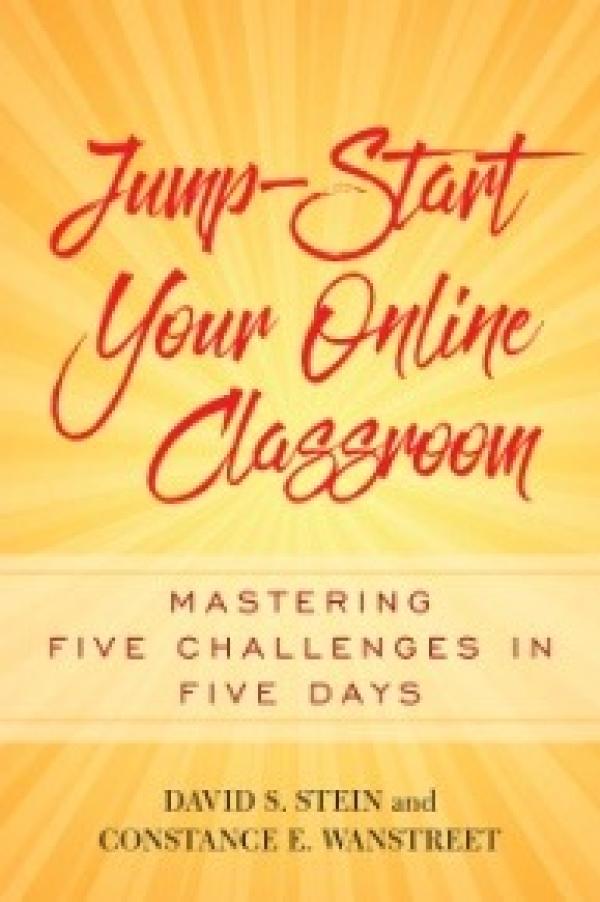
As a twenty-plus year veteran professor in a face-to-face classroom environment, I know to expect adjustments due to technological advances. These adjustments typically include learning to use new technologies and including them in your established and comfortable pedagogical practices. These adjustments are additions to your teaching norm. Now, with entire programs being converted to online interface, the norm shifts continually. With shifting norms in mind, I chose to review this book and actually apply its approach while converting one of my own classes to online delivery. The brevity of Jump-Start Your Online Classroom should not be underestimated. Based on practical application of the content and concepts, its organization contains helpful hints on various aspects of successfully constructing a learner-centered, virtual classroom experience. The organization of the book is its greatest strength. Its five-day approach is based on five challenges: (1) Making the transition to online teaching, (2) Building online spaces for learning, (3) Preparing students for online learning, (4) Managing and facilitating the online classroom, and (5) Assessing learner outcomes. One to three chapters are devoted to each of the five tasks and guide in confronting, conquering, and mastering each challenge. Embedded in the chapters are the almost clairvoyant voices of novice online instructors as well as online learners. Additionally, each chapter includes highlighted “Points to Remember” and ends with a section “For Reflection.” This reflection portion, if done in depth, makes the five-consecutive-day plan less realistic. The reflections may include assignments such as developing a communication or time management plan, an assessment of technology tools, or a careful consideration of your own teaching philosophy or pedagogical approach. The fourth challenge, on classroom management, was especially helpful, as it contemplates interpersonal interaction and community building with people that may never meet. The section on teaching presence was especially helpful and thought-provoking. The authors use the analogy of the working parts of a car. For example, teaching presence is described as the “transmission component that allows us to set the pace, sequence, and activities that support and encourage students to work with materials and build their understanding of the content,” and also as the “timing belt that helps us manage learners, the dialogue, and the conditions for learning” (78). I understood those analogous functions even though I could not pick out either of those parts on an actual car! Challenge four also looks at dealing with group work and disgruntled students. The perspective of the novice online instructor underscored the importance of modeling the behavior that is required of the students. Although this book is marketed toward the novice online instructor, its approach, organization, and content make it a foundational tool that could have long-term value in troubleshooting and future course design.

Time and time again, I find that successful online students are those with skills of self-direction, self-regulation, and time-management. Self-directed learners determine their learning needs, set learning goals, locate and access suitable resources for learning, manage their learning activities, monitor and evaluate their performance, and reflect on and reassess their learning strategies. Self-directed learners have skills of self-regulation—this encompasses concentration, self-awareness, self-discipline, time-management, delaying gratification, and self-assessment. However, as Sandie Gravett notes in her blog post, students often feel ill equipped for self-directed learning (https://www.wabashcenter.wabash.edu/2018/09/becoming-a-better-teacher/). How do we encourage students to assume responsibility for their learning and become self-directed learners? It takes more than signposts and reminders. For many years, I signaled the importance of these skills by linking to websites such as "What Makes a Successful Online Student" which states: “With the freedom and flexibility of the online environment comes responsibility. The online process takes a real commitment and discipline to keep up with the flow of the process.” I also encouraged them at the beginning of the semester to write down all of their deadlines in a scheduler. I would even email them reminders each week. And still, I found some students fail simply because they fell behind: they prioritized other courses and responsibilities, or they procrastinated and left it until a later time that never came. Online environments can exacerbate tendencies towards procrastination and distraction. We can find endless rabbit holes online that fuel procrastination and undermine our efforts at self-discipline (as Tim Urban humorously depicts in his popular blog post on procrastinators, https://waitbutwhy.com/2013/10/why-procrastinators-procrastinate.html). We are also prone towards continuous partial attention–the process of paying simultaneous attention to numerous sources of information, but at a superficial level. Unlike multitasking, which is driven by a desire to be productive and efficient, continuous partial attention is motivated by the desire to continuously connect and be connected in an effort not to miss anything. As Linda Stone remarks, “It is an always-on, anywhere, anytime, anyplace behavior, and it involves an artificial sense of constant crisis” (https://lindastone.net/qa/continuous-partial-attention/). Our students have a fear of missing out (“FOMO”), and their attention is often interrupted by notifications and alerts on their cell phones. Although we have no control over our students’ behavior and whether they will ultimately succumb to the pull of distraction and procrastination, we can incorporate various activities in our online courses to encourage them to develop skills of self-directed learning. For example, you can facilitate greater self-awareness of their study habits and learning strategies by assigning introspective writing exercises where they answer questions such as: What tasks am I currently procrastinating? Is it because I’m unsure of how to do them, or afraid of doing them poorly? What activities do I gravitate to when I procrastinate? (Nilson 2013, 83) Here I share a few strategies drawn primarily from Linda Nilson’s Creating Self-Regulated Learners: Strategies to Strengthen Students’ Self-Awareness and Learning Skills (Stylus, 2013). Again, self-regulation refers to a sub-skill of self-directed learning: how students approach learning tasks in our online courses. You can introduce them to self-regulated learning from the outset by assigning a reading such as Robert Leamnson’s (2002) article, “Learning (Your First Job)” available through the University of Georgia Center for Teaching and Learning: http://www.ctl.uga.edu/uploads/main/mainLearningYourFirstJob.pdf. It begins by emphasizing that learning is “not something that just happens to you, it is something that you do to yourself,” and then shares strategies for focusing attention, managing one’s time, studying, and preparing for exams. You can encourage students to set goals for their learning by having them write a paper at the beginning of the course entitled “How I Earned an A in This Course” (Zander and Zander 2000). This exercise encourages students to envision concrete and attainable goals for their learning, and it also gives you a sense of their hopes for the course. You can have students revisit them at the end of the semester, reflecting on the extent to which they followed their strategic plan, when, how, and why they might have strayed, and how this impacted their actual performance in the course. You can help them self-test their understanding of the course materials through reflective writing and visual mapping tools. You can do “learning logs” where they identify the main points of each reading, what they found most surprising, what they found most confusing, and why they found it confusing (Bean 2011). Or you could have them write double-column notes on the readings: one column with substantive notes similar to those of “learning logs” but another for their personal reactions (feelings, attitudes, values, beliefs, perspectives, prior knowledge, changes in their way of thinking). (Nilson 2013, 27) You can have them test their understanding through “mind dumps,” where they write down all they can remember about the readings, videos or podcasts, or have them create visual study tools that map out, integrate, and structure what they’ve learned (Nilson 2013, 33). After you give students feedback on their work, you can have them complete meta-assignments that ask them to explain what they think our feedback means (Nilson 2013, 56), or write a letter to the next class about the paper or project: how to prepare for tackling the assignment, what strategies to take, what missteps to avoid, and the value of the assignment (Nilson 2013, 56). Finally, you can have students reflect on their learning through course “wrappers”: at the beginning of the course, students write what they think the subject matter or discipline is about, how it’s done, and why it’s important, and then at the end of the course they revisit those questions and compare their answers (Nilson 2013, 87). Another closing activity might be short “Future Uses” papers where they identify the three most important concepts or skills they learned in the course, why they consider them important, and how they might use them in the future (Nilson 2013, 88; Svinicki 2004). These are just some ways that we might help students develop skills of self-direction, self-regulation, and time-management so that they can be successful in our online courses. Works Cited Bean, John C. 2011. Engaging ideas: The professor’s guide to integrating writing, critical thinking, and active learning in the classroom (Second Edition). San Francisco: Jossey-Bass. Nilson, Linda. 2013. Creating Self-Regulated Learners: Strategies to Strengthen Students’ Self-Awareness and Learning Skills. Sterling, V.A.: Stylus. Svinicki, Marilla D. 2004. Learning and motivation in postsecondary classrooms. San Francisco: Jossey-Bass. Zander, Rosamund Stone and Benjamin Zander. 2000. The Art of Possibility. Boston, MA: Harvard Business School Press. min Zander. 2000. The Art of Possibility. Boston, MA: Harvard Business School Press.
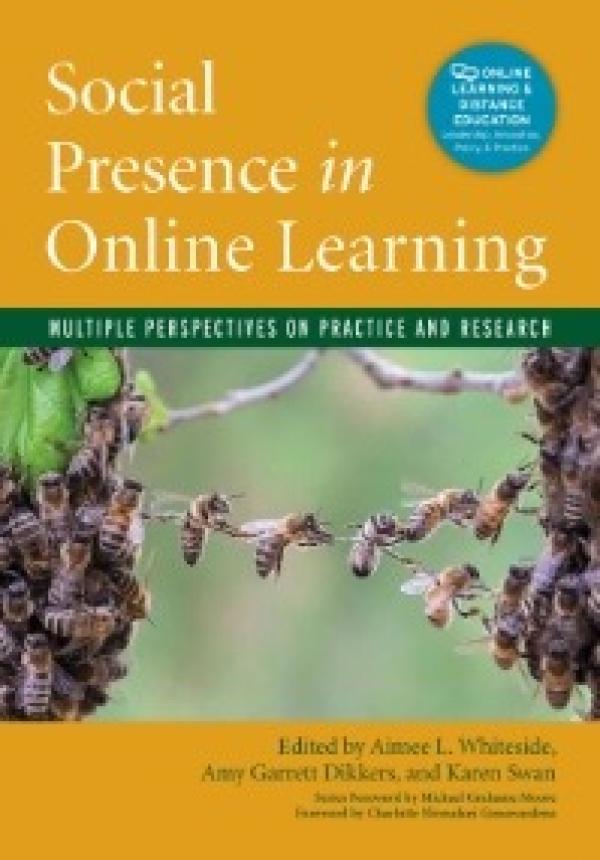
As post-secondary institutions, theological schools continue to participate in various forms of online learning, and the criticism (or question), “It’s not really the same as being in a classroom with a real instructor” is commonly heard. The simple reply to this concern is the concept of social presence. Starting with the initial definition of social presence from Short, Williams, and Christies (1976), this compilation of articles attempts to summarize the historical perspectives and present the current state of discussion, recognizing the constant updating of online course options. The authors successfully present the historical perspectives, grouping them in three broad categories – as technologically facilitated, as learners’ perceptions, and as critical literacy. However, the chronological and developmental approach leaves the reader realizing the earlier chapters have minimal application to current teachers and learners since the understanding of social presence and the technology used have changed so dramatically. The initial discussions about social presence whether through computer-mediated communication or later within the community of inquiry framework were informative, but the reader quickly realizes that the later frameworks and models have improved. Thus the earlier discussions in the book are of little value for today’s teaching-learning environment. In essence, only the last section is relevant, except as historical background. The editors demonstrate their breadth of knowledge of the literature and are involved with and connected to the latest research in social presence. A useful chapter (11), “Cultural Perspectives in Social Presence,” provides valuable guidelines for communicating effectively in a multi-cultural learning context. Multiple examples explain how one subset of students find an online learning activity contributes positively to social presence while those of another culture find it impacts social presence negatively. Variations in anonymity, informal chat, self-disclosure, trust building, and conflict resolution are considered. The chapter concludes with useful tips for monitoring and mediating communication which could be misunderstood because of cultural differences. Likewise, various practices for building social presence into discussions, feedback, and interactions are shared throughout the book. The literature reviewed includes a range of educational levels from K-12 and post-secondary as well as a range of disciplines. The final section provides interesting chapters (17 and 18) about the future of online learning and incorporates social presence into various models of instruction. They suggest social media tools enable instructors to incorporate cohesive and affective elements into courses to enhance social presence. The authors conclude, “Never stop learning because life never stops teaching” (210). The information shared is relevant for any faculty member teaching online, including theological and religious studies professors. While the final chapters contain valuable tips as noted above, I cannot recommend the book as a whole since it is predominantly a historical overview of the concept of social presence. Though it contains various up-to-date strategies in the closing chapters, it was tedious for the reader to sift through the detailed literature for meaningful insights.

Anyone who has developed an online course knows how important the design of the course is. Poorly designed courses make the course navigation difficult, causing unnecessary frustration and limiting the ability of students to achieve learning outcomes. The author of this book understands these difficulties. Drawing upon her own negative experiences with initial online offerings, she provides readers with important lessons on designing effective online experiences for both teachers and students. Davis suggests, rightly, that the reader should use the text like a workbook, drawing from the ideas presented in the text as the reader creates her/his own course in the platform the reader uses. She encourages readers to draw upon the backward course design model: begin with learning objectives, discern appropriate ways to assess those objectives, and then generate online learning activities that will enable success in the course. Such alignment will promote student success. The author provides an acronym, L.I.T.E., for the design framework she encourages. Readers should be sure to create clickable links to external content (L), integrate well the multimedia included (I), use typography and white space to enhance the legibility of the course (T), and embed the content at the point of need (E). She identifies four types of content pages that should be part of the design: landing page, navigation page, instructional page, and assignment submission page. Of course, most learning platforms will provide these. The key, she contends, is to create them in a way that achieves the course objectives and is user-friendly for the student. The remainder of the chapters illustrate how readers can develop the various components of a good online course, including images and videos, integrating multimedia, facilitating instruction and interaction, and the all-important assessment. Davis provides helpful hints regarding the tools included in software such as PowerPoint, like using it to download and edit images or to incorporate online media. She also points to a number of free online tools one can use to develop a course, such as the presentation tool Brainshark, and the interaction tool VoiceThread. At the same time, she cautions users not to incorporate too many technologies into the course. The focus should be on learning the content of the course, not on overwhelming students with too many technologies. As with any text, there are some limitations. Parts of the book require knowledge of html language. Many faculty do not know html language because they use software to develop their courses that does this automatically. In addition, for a book that emphasizes visual design, many of the illustrations are difficult to read, leaving the reader to wonder how well the text follows its own advice on legibility. Yet over all, the text is a useful step-by-step guide for developing an online course or for improving the visual design of existing courses.
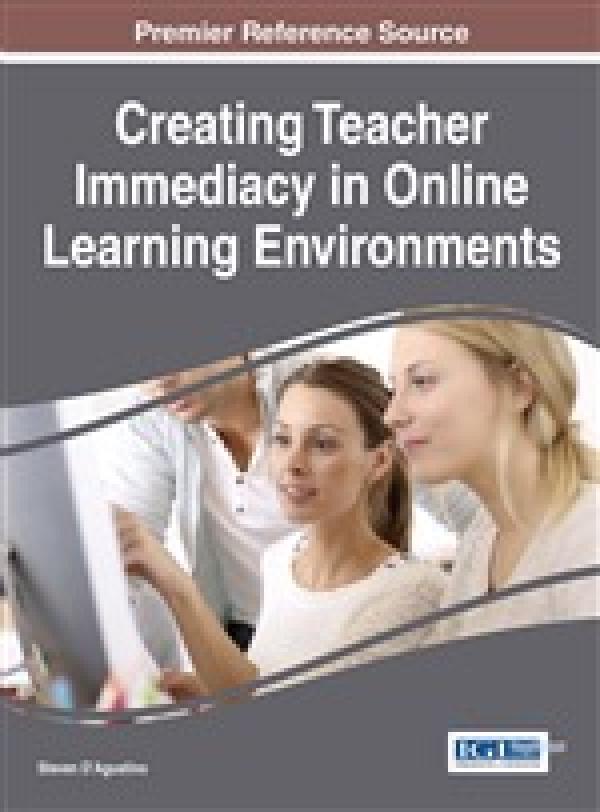
A key issue in distance education is how to establish a vital two-way, personal communication between learner and instructor. Borje Holmberg, among other theorists, argues that the primary role of an instructor is to empathize with the learner; imparting information is a secondary matter. What, then, are the most effective ways to form a dyadic alliance between a learner and instructor? This is the major question that D’Agustino’s Creating Teacher Intimacy in Online Learning Environments seeks to answer. This is a reference work, so it can be read profitably article by article or completely. The volume begins with a helpful detailed table of contents that provides a brief synopsis of each chapter. There is also a useful foreword by Karen P. Kaun which underscores the importance of the human component in teaching and learning regardless of the instructional format. The preface speaks to the impact of the “interactive turn,” the “undesigned remainder,” and the “modelling function” in asynchronous learning. In addition, there is a brief description of each chapter that complements the summaries in the table of contents. Every chapter also starts with an abstract and an introduction. Pedagogy, not technology, is the focus of each chapter. Therefore, this reference is valuable for course designers, media specialists, instructors, and researchers across a range of academic disciplines. That said, there are a few chapters that all will want to read and ponder. Oliver Dreon’s “Building Teaching Presence in Online Classes,” for example, provides an overview of the main issues along with strategies that support learning and interaction. A list of design principles is included, suggestions for future research are indicated, and there is a concise paragraph of conclusions plus an extensive list of references. A central contention made by Dreon is that practices that contribute to high quality, traditional undergraduate instruction also apply to establishing meaningful instructor presence in online classes. Many readers will also want to look closely at Caroline M. Crawford’s “Instructor Immediacy and Authenticity: Engaging in Cognitive Vulnerability within the Instructional Environment.” Often, learner success in an online course – synchronous or asynchronous – will largely depend on the instructor’s efforts to generate worthwhile interactive opportunities. These activities require that the instructor have a clear philosophical belief system united with an understanding of the learner’s cognitive vulnerability in an online environment. Crawford explores these core issues while calling for the development of a “talent propelled” instructional environment. Neal Shambaugh’s “Interactivity and Immediacy in Online Academic Programs” addresses quality issues in higher education distance classes. This is an important theme because, as D’Agustino notes in the preface, “online learning still has a perceived lack of legitimacy” (xxiv). Shambaugh advocates interactivity as a method to counter this concern. He offers a list of best practices for creating and sustaining online immediacy. Then he sketches a series of recommendations for undergraduate, master’s, doctoral, and specialized programs, such as teacher education, certificates, and professional development. There is an extensive compilation of references and notes about the contributors that conclude this collection. The references alone are an excellent guide for further research and course syllabi.
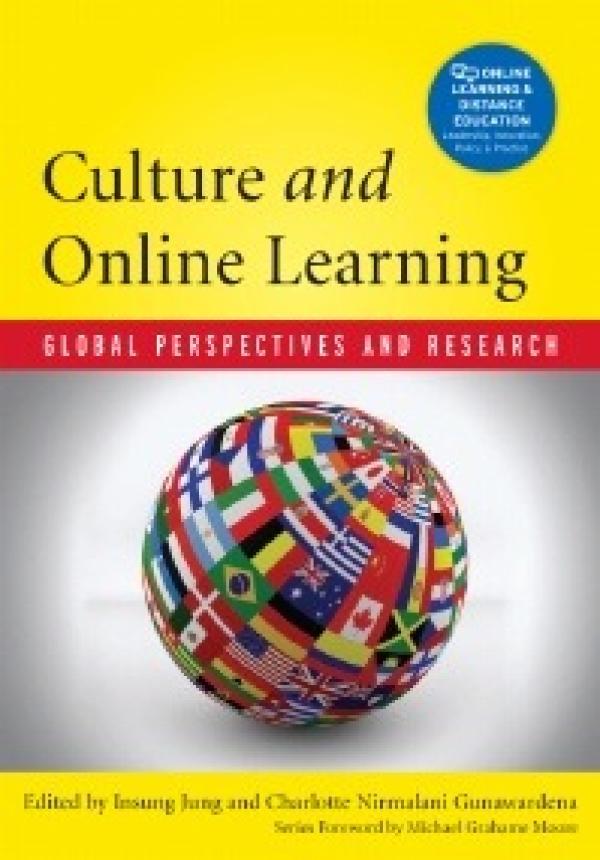
This helpful collection of seventeen essays addresses two important concerns within religious and theological studies: culture and online learning. Scholars of religion are giving increasing consideration to culture. (A search of Amazon for books on “religion and culture” yielded a hundred pages of “hits.” The first four books were simply entitled Religion and Culture.) Furthermore, more and more courses in religion and theology are offered online. Surprisingly, little research has been done in culture and online learning, and this book seeks to address this lack. Authors in this collection hail from Europe, North and South America, Asia, and Australia. (Unfortunately, none are from Africa.) The book appears as the third in a series, Online Learning and Distance Education. Editors Jung (from Japan) and Gunawardena (from Sri Lanka, teaching in the U.S.) write solely or collaboratively in eleven of the seven essays. The essays are grouped around eight themes: (1) learners, learning, and learner support, (2) non-native speakers, (3) facilitating learning, mentoring, and professional development, (4) learning design, identity, gender, and technology, (5) visual culture, (6) leadership, (7) quality, and (8) research. Many of the authors wrestle with a definition of culture. In the first essay, “Perspectives on Culture and Online Learning,” the editors write, “Culture impacts every facet of online learning, from course to interface design, to communication in a socio-cultural space, and to the negotiation of meaning and social construction of knowledge; thus a definition of culture that is flexible, dynamic, and negotiable is more appropriate to understand the online learning context” (1). Interesting insights are scattered through this collection. In “Online Identity and Interaction,” Gunawardena notes that students from Sri Lanka and Morocco “look to the online medium as a liberating environment that equalizes status differences” (35). In “Emerging Visual Culture in Online Learning Environments,” Ilju Rha (South Korea) urges online educators to integrate more visuals in their online courses. In “Accounting for Culture in Instructional Design,” Gunawardena, Casey Frechette (US), and Lumila Layne (Venezuela) introduce the Wisdom Communities instructional design model (WisCom), which “was developed to inform the design of collaborative online learning experiences” (57). (For more about WisCom, see https://prezi.com/1unppl6dh2a-/new-model-new-strategiesinstructional-design-for-buildingonline-wisdom-communities/.) In “Transformative Learning through Cultural Exchanges in Online Foreign Language Teaching,” Kerrin Ann Barrett (US) includes tips for instructors, such as “remember to breathe,” and tips for learners, such as “show your creative side in activities (asynchronous and synchronous)” (146). In “International Interpretations of Icons and Images Used in North American Academic Websites,” Eliot Knight (US), Gunawardena, Elena Barberà (Spain), and Cengiz Hakan Aydin (Turkey) write, “Many of the images and icons used in online environments depend on the meanings, concepts, metaphors, objects, and so on that are bound to the particular cultural context in which they were designed” (149). Just as neither religion nor culture is monolithic, neither is online learning. This stimulating collection from around the world will help online teachers to negotiate better the various cultural divides and thus offer our students better online learning experiences.
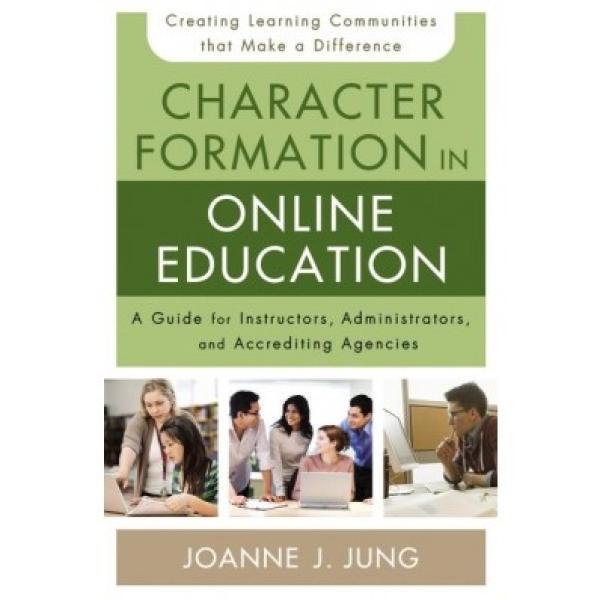
Joanne Jung’s overview of character formation in online education serves as an introductory resource for the topic. It is primarily intended to be a practical and accessible guide for faculty and administrators at religious institutions that offer online courses. Throughout the book Jung tackles the “skepticism among educators about character formation in online education” (15). The book examines various aspects of online learning and how it contributes to character formation. In the beginning section, Jung addresses the purpose of online education alongside best practices for online pedagogy. She provides an overview of Learning Management Systems, which house online classes, as well as an overview of the course design process, which involves working as a team with a curriculum and instruction expert. The second section discusses best practices of pedagogy within online courses, focusing on a holistic view of human personhood that drives one’s approach to character formation. Jung discusses practical means for using discussion forums, hybrid classroom formats, and social media toward the end of character formation, including an important chapter on integrating faith and learning. The final section addresses assessment and improvements that administrators and faculty can make to online courses in order to achieve learning outcomes for character formation more consistently. Jung also includes an accessible and informative glossary of terms relevant to online education. Faculty who are unfamiliar with teaching online courses will find this book a valuable help in beginning to teach and form character in online modalities. Administrators and accrediting agencies will find many sections useful for their purposes as well, especially chapter three on course design teams, chapter seven on the integration of faith and learning, and chapter nine on assessment. As Jung writes, her purpose in the book is to give “practical ideas for customizing your online courses and improving your pedagogical methodology, irrespective of your discipline” (9). One concern with the text is its basic, introductory approach. For faculty and administration who are experienced with online education, the book will be primarily review, albeit with a clear focus on character formation. Chapter seven on the integration of faith and learning and chapter nine on assessment are important exceptions, and they present insights for any institution concerned with character formation in education. Additional studies could help supplement and add insight to some of the essential points that Jung makes, particularly studies that focus on the creation, delivery, and assessment of learning outcomes specifically designed for the purpose of character formation. Such studies could engage resources on moral or character education and focus on the application of character formation research to online modalities. If one is looking for an introductory guide to forming character in the world of online education, this book provides resourceful and insightful suggestions toward best practices. In order to delve deeper into character formation for online education, there remains a need for further pedagogical study regarding the application of character formation research in general to online education in particular and regarding the means of facilitating character growth in the learning environments of online education.
The challenge of teaching an online course brings a measure of trepidation into the heart and mind of even the most experienced classroom instructor. The authors provide a resource for the online instructor to understand who online students are, how they learn, and how to help them achieve their educational goals online (vi). While they accomplish this objective in some senses, the constant repetition of themes detracts from its overall contribution and makes it difficult to recommend. The opening chapter explains the pros and cons of traditional versus online learning, as well as differences and myths of online instruction. The second chapter covers critical issues in online education and then offers success strategies and best practices for instructors. A short explanation of synchronous, asynchronous, and hybrid models and the pros and cons of each strategy, including the type of content best taught by each method, forms the third chapter. At this point, the reader is prepared to start delving into actual practices for online teaching but instead the authors repeat the content of the previous three chapters. Arguably they offer additional perspectives about online teaching and learning in the ensuing chapters, yet the material is so repetitious, one cannot remember the new focus because the text reads like a perpetual review of content. This practice continues for the next five chapters. The one exception is found in chapter 7 where the authors are more focused on specifics necessary for instructors to successfully begin a course with students – including examples of pre-course and early communication (130-131). Chapter 9 continues the specific and valuable contribution chapter 7 begins by looking at specific activities and skills online instructors need for developing critical thinking skills in students, including teamwork practices, and how to assess such learning. The final chapter identifies various strategies that help instructors to manage time well when engaging the demands of teaching online courses. Though partially redundant, the addition of specific tactics and illustrations make the book a helpful contribution. Overall, some helpful principles emerge clearly from the book to help a novice online instructor plan and prepare for a course. The samples provided are beneficial, though an experienced instructor may have been able to develop these on their own from the principles discussed. Unfortunately, in a few instances an example was given that was contrary to the summative advice given. For example, one of the communication tips, to avoid the use of all caps (135), was followed by sample messages to students that included all caps. While appreciating some concepts presented in this volume, this reader will continue to look for a better-organized and more step-by-step book for assisting online instructors.