Resources

Giving constructive feedback to students is one of the most powerful pedagogical functions a teacher can provide for learners. Yet, teachers often are reluctant to provide feedback for various reasons, like the fear of coming across as critical or the risk of hurting someone’s feelings. But the fact is that good learners crave teacher feedback—even in the form of challenge for deeper thinking. Constructive instructor feedback in an online course helps promote and maintain student engagement. The following four-step approach to effective feedback can make for an efficient “formula” for providing feedback without getting overwhelmed. Additionally, instructors can offer this four-step approach as the standard practice for students’ own feedback responses in discussion forums. Here is a four-step process for giving constructive feedback in an online class (this works just as well in a classroom context). A Four-Step Approach to Constructive Feedback Step 1: Clarify The first step in this feedback procedure is the question of clarification. These are questions that can be answered with very brief responses. They do not raise substantive or philosophical issues, and they are not judgmental. They are merely a way to establish that you heard and understood what was said and/or meant and get clear on important details that affect understanding. Asking students to clarify their responses helps them take responsibility for their thinking and for their answers. It also helps them correct vagueness and to clarify their own initial thinking and “go deeper.” Examples: “Did you mean to say…?” “How are you using the term ___. Can you provide a definition?” “When you said x, did you mean y?” “Was it a sophomore class?” “Were you the only teacher?” “Was this at the start of the year?” “How long was this unit?” “Can you give an example?” Step 2: Value Next, state what you value in the student’s effort or response. Too often, we skip this step and go right onto points of contention, assuming people know we appreciate their engagement and effort in responding. But it’s amazing how much everyone needs affirmation that their efforts are heard and appreciated. Tell the student what makes sense, what seems inspired, what aligns with your own perceptions and experience, what informs your own thinking. Or simply acknowledge a good effort. This sets up a great foundation from which to deal with the (often minor, but sometimes large) points of disagreement or challenges to deeper or more responsible thinking. Step 3: Challenge At the third step, get into those ideas that you want your students to wonder about or wrestle with. This is a good time to use techniques like using “I-messages” (“When you talk about doing x, I think about…” or “When I’ve done x in the past, students have…”) or raising questions by wondering rather than pronouncing judgments (“I wonder if x would happen when I did y,” or “When you suggested x, I wondered if it might…” or “What do you think would happen if…”). This is the phase for honest, constructive concerns, and, at the same time, for delicacy. If we establish a culture of respectful questioning and a challenge for learning that makes it clear that reasonable people can disagree and differences in contexts really do make different solutions effective, such a climate can keep conversation going. Staying in conversation means we help students learn how be able to understand each other better over time. Step 4: Suggestions for Deeper Thinking/Exploration Finally, after exploring the questions that arise in response to someone’s work, we can offer suggestions for deeper engagement. For example: “From our perspective, and the limited view we have of the complexity of the situation, I wonder if [suggestion] would make a difference?” “Once I tried [some suggested solution] in a similar situation, and z happened.” “I’ve heard of someone doing [a suggestion] in the face of such challenges, and I was so inspired by that idea!” “What if you [a suggestion]?” “I wonder if you’ve tried [a suggestion]?” Adding “...what do you think?” to these types of questions invites a response for deeper engagement. The key here is staying genuinely open to the possibility that you don’t know what’s best for this situation, but that you hope you’ll be able to offer something helpful, some bit of insight that might make sense in the complexity of the question or dilemma the person is managing or attempting to address. Adapted from an online course from the Harvard Graduate School of Education, WIDE Program.

In remote teaching we all wrestle with how to effectively translate our typical assessments of student learning, and possibly, how to create new assessments. This requires (re)determining what we most want our students to achieve and thinking creatively about how they can best demonstrate their learning in an online environment. While there are tips to discourage cheating online, many instructors are concerned about academic integrity in online high-stakes, closed-book exams. Because students are more likely to learn from (and less likely to cheat on) assessments that provide authentic experiences or reflection on learning, it is valuable to think broadly about how best to assess our students learning in creative ways online. The principles of inclusivity and sustainability can guide our development of online assessments from the beginning to the end of the course. Sustainable assessments are those that help students develop skills necessary to direct and monitor their future learning. Shifting students’ expectations from all feedback originating from the instructor to using self and peer assessment will help them reflect on their learning processes, and identify gaps in their skills and understanding. Making this shift will allow students to begin to assess and monitor their own learning, making it sustainable a skill that students can use after leaving your course. Inclusive assessments are those designed to measure students equitably, and in ways that are sensitive to cultural, economic and social differences. Transparency and clear communication regarding expectations for successful completion of work is key so that students understand its purpose, the necessary tasks to successfully complete the work, and upon what specific criteria they will be evaluated. This approach levels the playing field for diverse students while facilitating learning for all students. To apply these principles in your online course: Begin by seeking input from your students At the beginning of a course, surveys can be used to discover students’ incoming knowledge and skills as well as something about them as a person. Rather than focusing on knowledge ‘deficits’ that the curriculum must fill, this kind of preassessment will allow you to discover students’ interests, lived experiences and motivations. Equitable assessments should be accessible and responsive to students whose abilities, access to computational tools and reliable high-speed internet, access to quiet work spaces, and extent of flexibility in setting their study schedules may vary. Therefore, it will be important for you to know about your students for your course planning. Ask students to share what they are most excited about in the class, unique skills they are proud of, past educational experiences, and their own perceptions of their current knowledge and skills. Use students’ input to help them build connections between the course content and their interests. To help them take ownership in creating spaces that welcome all members of the class, invite students to contribute to ground rules for class interactions. Where possible, provide opportunities for students to make choices about an assessment topic or format that leverages their skills and interests to help them feel more empowered and engaged in the course. Use frequent low-stakes assessment to guide students’ learning throughout the course As your course progresses, assessments are a learning tool that can develop the students’ sense of belonging in the course community, as well as a shared responsibility for and awareness of their learning. There are many ways to accomplish this. Here are a few: Include a variety of low-stakes activities and assignments early and frequently such as short quizzes, reflective writing prompts, group projects, and synchronous or asynchronous discussions. This allows students to calibrate your expectations, get feedback they can incorporate, and understand their individual progress. Use online discussions to build opportunities for interaction that develop students’ sense of belonging, and motivate them to learn from each other in their responses and question of each other. In both asynchronous discussions and synchronous sessions, guide opportunities for effective peer feedback by modeling it yourself, highlighting examples of productive exchanges, prompting them to ask each other guiding questions and asking them to use rubrics / clear criteria to guide and assess their responses. Before students hand in work, ask them to self-evaluate according to the grading criteria and to identify areas where they would most benefit from your feedback. Culminate the course with authentic applications of course knowledge and skills with integrative assessments Students can demonstrate their achievement of the course goals by applying disciplinary tools to real-world situations, analyzing authentic data or exploring solutions to so called “wicked problems.” These are problems that have changing parameters, are resistant to solutions, involve incomplete data, or are difficult to recognize (Hanstedt 2018). Creative projects with formative feedback will support students in developing the sustainable assessment skills necessary for lifelong learning. Consider To synthesize key ideas or reflect on what they’ve taken away, have students write research reports or papers. These can provide opportunities to practice disciplinary language and styles of communication. To creatively demonstrate learning, have students create artifacts such as maps, figures, photo essays, journals, videos, blogs, podcasts, or portfolios. Structure checkpoints and opportunities for formative feedback to support students in successfully completing these projects. To learn to self-assess the quality of their work, have students use use rubrics, peer-feedback, and/or compare it to exemplary examples. Whatever forms of assessment you choose, clear communication is critical to their success. Consider starting each unit with a brief overview of how all the course components fit together and alerting them to upcoming deadlines. Make sure to inform students how each assessment will be useful for their learning, make expectations as transparent as possible, and be clear about where students can find answers to questions as they arise. Learn More The Art & Science of Successful Online Discussions (Faculty Focus) Five Discussion Ground Rules for the Online Classroom (Colorado State University Online Blog) Professors Share Ideas for Building Online Community (Inside Higher Ed) Alternative to Exams for Remote Teaching (Teaching@Tufts) Creating Epic Finales or Limping Across the Finish Line (Teaching@Tufts) Curricula for Wicked Problems (Wicked Problems Project) Transparency in Learning and Teaching (TILT Higher Ed) Inclusive Assessment: Equal or Equitable? (Teaching@Tufts) Selected References Dewsbury, Bryan, and Cynthia J. Brame. “Inclusive Teaching.” CBE—Life Sciences Education 18, no. 2 (April 26, 2019): fe2. https://doi.org/10.1187/cbe.19-01-0021. Gikandi, J. W., D. Morrow, and N. E. Davis. “Online Formative Assessment in Higher Education: A Review of the Literature.” Computers & Education 57, no. 4 (December 1, 2011): 2333–51. https://doi.org/10.1016/j.compedu.2011.06.004. Hanstedt, P. (2018). Creating wicked students: Designing courses for a complex world. Stylus Publishing, LLC. Kelly, D., J. S. Baxter, and A. Anderson. “Engaging First-Year Students through Online Collaborative Assessments.” Journal of Computer Assisted Learning 26, no. 6 (2010): 535–48. https://doi.org/10.1111/j.1365-2729.2010.00361.x.

What simple gestures and accommodations at the end of a semester can lighten the load without compromising teaching and learning? Educators expect waning energy as a semester and academic year conclude. Students are overwhelmed trying to finish overdue assignments, final projects, and exams. Faculty are at the breaking point with grading, administrative tasks, and work/life balance. While student energy for learning flags, most faculty tap into their very last teaching reserves to end courses in the best possible spirit. This normal rhythm of attenuating energy is intensifying in the Covid-19 crisis. End of year celebrations like graduation are not there to provide momentum, needed affirmation, and closure. Educators have become a last line of continuity and support for increasingly vulnerable students. We are teachers turned life-coach, counselor, parent, and pastor. All the while, grief and loss are mounting on every side. Here are four simple ways to lighten the teaching and learning load to finish well: Take a hard look at any remaining assignments left in the semester. Chances are, only one or two assignments are crucial assessment indicators for final grades. In one of my courses, it is a final exam. In another, it is an accumulative writing project. Other smaller-scale learning assignments that support student engagement and course tracking won’t impact an overall course grade to any significant degree. In the last few weeks of teaching, be transparent about which few assignments are crucial to finishing well in order to lighten the teaching and learning load. In one course, I’ve made other assignments optional or extra credit. In another, I’ve made select assignments pass/fail. Options and clarity help students make informed decisions about where they should focus their waning energy, and faculty can save significant time doing less low priority grading. Diversify ways an assignment can be submitted. In one of my courses, students are required to write a formal film review. I’ve offered them the alternative of submitting a slide presentation with audio narration. Or they can choose a creative project connecting a film’s themes to the challenges of Covid-19. Different choices allow students to meet assignment objectives with less fatigue and anxiety or less intensive editing help from remote support services. Including opportunities to connect with Covid-19 fosters learning engagement and helpful conversations in their life circles. Students reveal surprisingly diverse and creative communication skills when modes of presentation are flexible. And diverse submissions make the drudgery of grading … almost … fun. Allow students to partner with peers on assignments. In one of my courses, students were writing individual reviews on one of three books to complete the semester. Fifteen papers to write, fifteen papers to read and grade. I adjusted the assignment and asked students reading the same book to submit one review written collaboratively. They divided tasks and wrote with improved shared insight while bolstering their peer-to-peer relationships weakened by less classroom interaction. Overall, shared grades were higher, everyone benefited, and I graded 3 book reviews instead of 15. Most important: reassure, reassure, reassure. Students need a strong ongoing word of encouragement to finish well. Let them know expectations and goals are shifting and simplifying in response to Covid-19. I remind students at every possible moment that their singular task is to stay engaged in course learning to the degree they are able and maintain good communication about their circumstances and needs. In return, it is my responsibility to make sure they have every possible opportunity to finish their courses well. Reassurance means hosting conversations on Zoom or other discussion platforms about specific challenges or griefs impacting students’ lives. Reassurance means reminding them that, even in very uncertain times, they have value and gifts and a future. Reassurance means sharing our passion for our area of study and its resourcefulness during a pandemic. Reassure, reassure, reassure. It is less time intensive than grading, and it will help students reach the finish line with wellbeing in mind. Teaching and learning are life-giving and can be a lifeline. Though our energy is low, and our grief is high, we can do some simple things to ease the load and finish well.

Without fail, every recent conversation that even remotely touches upon assessment leads to an increasingly intricate and technical discussion about how to prevent the cheating, presumed to be rampant, now that we’re all online. Should we use Lockdown Browser? Should we enable webcams? But what about smart phones? What proctoring services are available? Will time limits help? How many questions should we have in our question bank? What’s a good proportion of questions in the bank to questions drawn for the exam? Should we shuffle questions? Should we show only one question at a time? Should we allow students to see their incorrect answers right away? The questions concerning cheating proliferate—with each solution presenting further considerations and, often, new challenges. These conversations can’t help but remind me of one of the many theories for the pandemic “panic buying” of toilet paper: psychologists claimed that such hoarding was an attempt to retain or regain a sense of control over an uncontrollable situation, in which feelings of fear, disorientation, and overwhelm (in addition to actual physical danger) abound. We can’t control Covid-19 (yet), but we may be able to control how many toilet paper rolls we have stashed away in our homes. Perhaps teaching online feels similar to instructors: something that was thrust upon us, something most of us didn't want to do, something that most of us probably aren’t doing very well (either by default or by design). Trying to tamp down on cheating may be the academy’s version of toilet paper hoarding. When I’m part of these conversations, I keep James M. Lang’s Cheating Lessons in mind. (If you don’t have time for the whole book now, he wrote a series in The Chronicle of Higher Education that offers many of the same insights in shorter form.) Here are a few important considerations about cheating: • So far, we don’t have evidence that students are cheating now more than ever—though our worries about cheating have obviously increased. Even typical indicators of cheating, for instance, fast time on a test or an unusually high score, may be attributable to other factors. One colleague told me that some of her students were studying more at home, without all the distractions, and were more relaxed about taking tests—which led to better performance. • Most students in any given class won’t cheat (even if most people admit to having cheated at least once over the course of their lives; I know I have); this seems to be an especially important time to be viewing our students charitably, with positive regard, and avoiding a “deficit” lens. • Why do people cheat? Well, among other reasons, we know that certain conditions in a learning environment can incentivize cheating; one example is a single, high-stakes assessment for which students have been given little to no practice or preparation (e.g., one exam worth 50% of their course grade). To the extent that we can give students multiple opportunities to demonstrate knowledge or mastery of a skill, to the extent that we can offer them practice and timely feedback, and to the extent that we can help reduce their anxiety at this anxiety-inducing time, we will go a long way in creating conditions where they will not make the choice to cheat. • What is cheating anyway? We can’t assume students will know in the context of our specific class; even within the same field, the same department, these definitions and expectations may vary (just as there is no consistency across what we mean by different assignment types). Some students, like the first-generation population, are severely disadvantaged by this kind of “hidden curriculum.” The less that’s tacit, the more that’s explicit (or “transparent”)—on cheating and otherwise—the better for all students (but especially for underserved populations). • But okay, let’s assume, for a moment, that students know it’s cheating to look up answers online or in their books, and they do it anyway. One colleague of mine said, “Who cares? The point is I want them to learn. Maybe looking up the answers will help them learn.” What is our end goal here? How can we leverage or even embrace (perhaps newly) open testing situations? • Or, rather than focusing on the cheating that we defeatedly accept will occur—and trying to prevent the inevitable with complicated surveillance and other apparatuses—perhaps we might sidestep the issue entirely by designing our assessments to be as “cheat-proof” as possible. Questions of foundational knowledge are easy to look up; “higher-order” questions—application, analysis, evaluation, or creation—are not. (“Which of the following is the best definition of karma”? is easy to find in the textbook I use. “What would a Marxist interpretation of this [current news headline about religion]?” isn’t.) For those teaching large classes, those with heavy teaching loads, those without TAs, those stretched to capacity already, etc., these questions needn’t be asked only in short-answer or essay form, which can take way longer to grade. Multiple-choice questions can work here too, even if we don’t usually think of them as such. (A caveat: some folks find these kinds of multiple-choice questions harder to create.) I’m not convinced that we have to accept cheating as inevitable, even now. We, as instructors, have some control(!) over the learning environments, the testing conditions, and the assessments themselves. Let’s continue to use the influence we do have to encourage authentic, deep, transformative learning—not short-cuts or hacks.
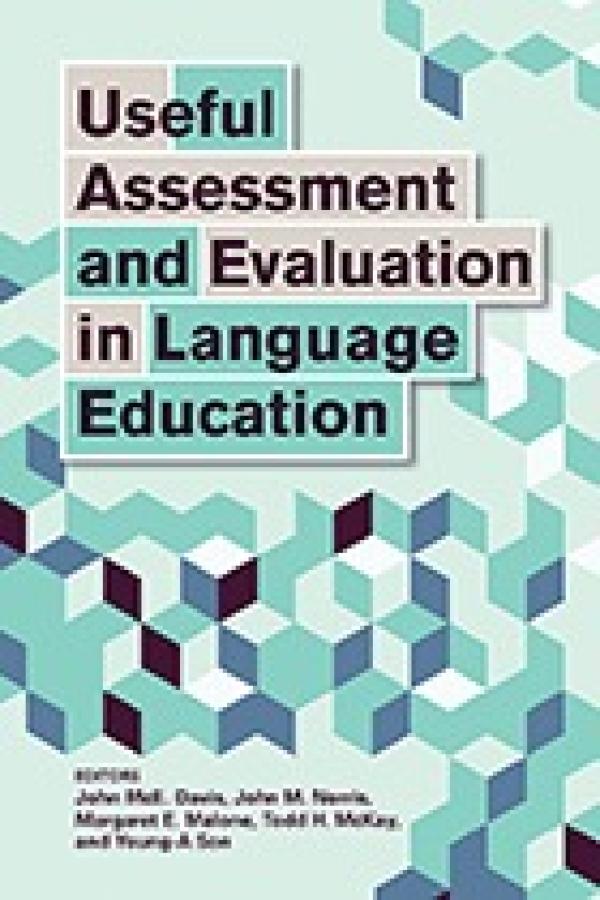
This book is a collection of fourteen essays representing presentations made at the 2016 Georgetown University Round Table (GURT) conference, sponsored by the Georgetown University Department of Linguistics and the Assessment and Evaluation Language Resource Center (AELRC). These essays showcase a diverse set of ap-proaches to treating assessment and evaluation as “tools of educational transformation” for foreign-language learning (vii). They focus on primary, secondary, and undergraduate-level foreign language instruction, with none concentrating specifically on graduate-level theological education or religious studies. Nonetheless, the volume offers some novel proposals for structuring language courses that may benefit biblical or modern language sequences offered in theological schools and religious studies pro-grams. The book is organized into three sections, each representing emerging research and praxis on transformative foreign language assessment and evaluation for e-learning platforms, language course instruction, program development, and ESL student placement. Part one—Connecting Assessment, Learners, and Learning—surveys theories and practical implementations of assessment and evaluation for enhancing language learning, particularly from the perspective of student and teacher self-assessment processes. In five essays, this section establishes self-assessment as a continual process and offers practical steps for integrating self-assessment in foreign language acquisition. Part two—Innovating, Framing, and Exploring Assessment in Language Education—covers topics such as the formative use of task-based assessment “in primary schools, the implementation of technology-mediated speaking performance assessment, and validation of educational placement decisions for immigrant learners” (ix). Some of the proposals may provide seminaries and graduate-level liberal arts programs fresh avenues for (1) going about its sequence of biblical language instruction or (2) resourcing multilingual students navigating North American theological and religious education. Part three—Validity Evaluation—includes five essays that address processes for assessment validation, such as corroborating the outcomes of university entrance exams or language placement exams with student achievement and retention. These essays provide suggestions for the evaluation of overall language programs implemented by institutions. As a whole, it may supply new considerations about evaluating outcomes of language instruction for theological ESL programs. The perspectives offered in this volume present innovative research on foreign language learning from outside the academic contexts of theological education and religious studies. As a result, they reflect fresh theoretical and practical considerations that may not have, as of yet, permeated conventional resources and “common knowledge” about assessment and evaluation in theological education. While it may prove to be a beneficial read, those primarily located in theological education and religious studies who grapple with issues of language instruction—especially biblical language instruction or the implementation of theological ESL programs—may still find this a challenging read. While the scholarship is relevant at times, its application is left to the reader from theological education and religious studies to make. Despite this potential difficulty, the volume represents the kinds of knowledge and resources available to theological education and religious studies from other educational stages and learning environments that may be further along in considerations about institutional learning processes, e-learning pedagogy, foreign language classroom instruction, and support of multilingual, international students.
One of the major advantages of the online learning environment is the capacity to help students develop critical thinking in more effective and efficient ways than the classroom environment allows. Emphasizing student engagement through online discussion forums is a powerful way to cultivate critical thinking. By having students engage more intentionally with texts and media, and respond to well-crafted prompts and questions, instructors can immediately assess the level of a student's understanding and concepts acquisition. Reading student responses to well-crafted prompts and questions is akin to a form of mind reading. The instructor gains immediate feedback on what the student thinks, how a student is thinking, the level of understanding achieved, and can identify misunderstandings. Assessing online student responses allows the teacher to provide correctives, follow up with clarifying questions, challenge fuzzy thinking, and push for specificity. In this way the teacher can cultivate critical thinking and assess evidence about how well students achieve it throughout the course. Critical thinking is one of the universally desired goals in teaching. The current ATS M.Div. program goals includes “. . . development of capacities—intellectual and affective . . . ” as one of its ministerial formation outcomes (Degree Program Standards A.3.1.3.). The online discussion experience is one of the most useful methods for developing and assessing critical thinking. What is Critical Thinking? Critical thinking is a particular cognitive activity evidenced by specific components. Attached is a handout, "Assessing and Cultivating Critical Thinking Online" with nine of those components. Other components of critical thinking not included are credibility, sufficiency, reliability, and practicality. You can use the handout to assess student responses for critical thinking. Sharing the chart with your students, or, converting it into an assessment rubric for online academic discussion can help your students cultivate critical thinking and help you assess how well they achieve it.
One of the most unfortunate practices in instruction is a teacher trying to get “right answers” from students. This is not to say that getting your students to get it right is a bad thing–in fact, it’s very desirable. Usually what happens, however, is that the teacher is engaged in teaching a concept and then pauses to “test” to see if students are getting it. The teacher asks a question intended to solicit a right answer, then is satisfied when one or two students answer correctly. The trap is that in the mind of the teacher a right answer indicates that learning has taken place and the student understands the concept. The truth is that a “right answer” may merely indicate that the learner has learned to mimic the teacher’s explanation—or maybe the learner made a lucky guess! When I was in grade school, I was chosen to be the spokesperson for an exhibit at the annual science fair. My job was to stand in front of a large container of water upon which were two small model boats. One model was intact and floated on the surface, but the other model had a hole in it. When I placed the second model boat on the surface of the water it would soon take on water and sink. I remember that my job was to explain to people why a boat with a hole in its hull sinks. I was chosen for the job because apparently I gave the "right" explanation well. But I have to confess that I was well aware that I didn’t really understand what it was that I was explaining! Even as I was giving the explanation to enraptured groups of students and teachers, I was keenly aware that I didn’t comprehend what I was talking about. I’d learned to mimic my science teacher’s explanation, but I didn’t understand it. Even when a learner gives a right answer, the skilled teacher will use the opportunity to follow up on how the learner arrived at the correct answer. Effective teachers assess understanding of the concepts being learned, not just test for “right answers.” In other words, effective teachers do not just focus on what a student says in an answer, but also assesses how a student arrived at the answer. One way to help learners acquire deeper understanding is to be more intentional in your response to student answers. When responding to a learner’s correct answer, don’t just say, “Right!” or “That’s correct!” Respond in a way that will both enforce the correct answer and help teach the group about why an answer is correct and how to arrive at the right answer. Teacher responses that include information about why the learner’s answer is correct, such as rephrasing the response to emphasize factors that make the answer correct, or the steps or methods used to get the correct answer, are helpful to other learners who are in the process of learning the reasoning behind why something is so, or who are trying to figure out the steps for arriving at an accurate answer to the question being posed. You can help students move beyond mimicking a right answer and toward comprehension by: - Amplifying the student’s response - Restating, modifying, or rephrasing the learner’s response and redirect for further discussion - Asking the student to explain how he or she arrived at the answer - Asking the student to provide an example or a corollary - Probing for further discussion. By the way, can you explain why a boat sinks?
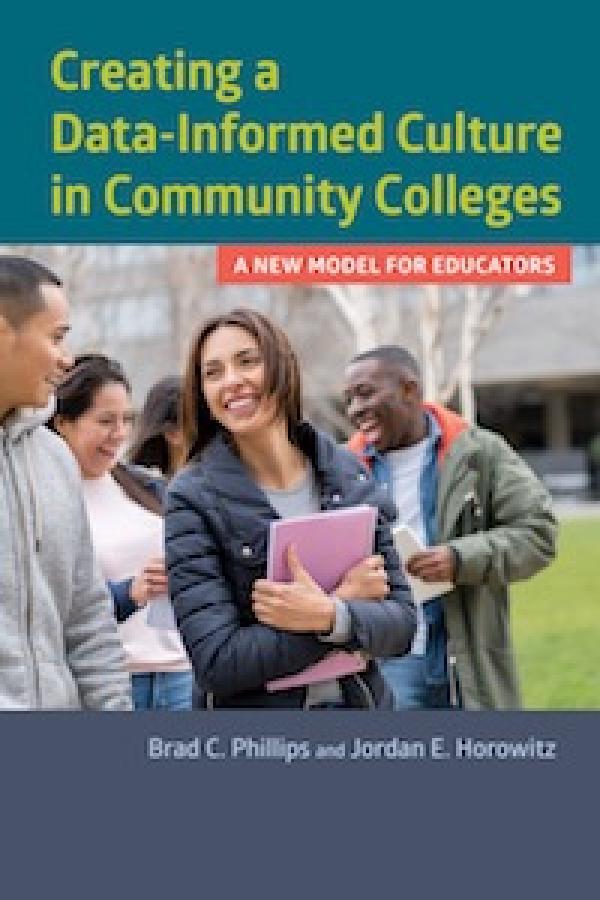
Armed with strong backgrounds in institutional research and effective educational leadership, Phillips and Horowitz provide educators with an excellent resource for improving academic success with proven data use strategies and practices for community colleges. A central, uniting focus of the book is the need for information to be contextual, “useful, useable, and actionable” (9), and the need to enlist the widest number of stakeholders within its ecosystem. Administrators, researchers, faculty, and staff are encouraged to be co-partners in cultivating academic excellence. Rather than placing data at the center, the authors advocate for a model that places “the use of data” at the center. The book is divided into three sections: (1) “A New Model for Data Use,” (2) “Putting the Model to Work,” and (3) “Case Studies of Data Driven Reform.” The first part outlines a new model for data use that is user-friendly, improves educational instruction, and maximizes student success, combined with intentional adaptation to those it serves. For example, “few educators want to [be] analysts; they want to be provided with useful information and assisted in applying it toward student success” (56). Attention is also given to analytics, behavioral economics, organizational theory and habits, and the role of emotion in decision making. In the second section, Phillips and Horowitz reveal a data use model that is put to work removing obstacles to student success. Specific consideration is given to leading and lagging indicators and the employment of backward mapping that begins with the identification of lagging indicators or goals. Attention is then refocused on the leading indicators that influence them, and which a college has the ability to control and reshape in proactive ways. Lagging and leading indicators have the ability to switch places from time to time. Scrutiny is also given to disaggregation and how different demographic subpopulations can impact the design of programs, services, and policies. The authors make use of a four stage, continuous improvement approach for use of educational strategies that moves from assessment, to planning, to implementation, to monitoring, and back again to assessment (110). They believe that data should be processed in manageable bites and reflect an institution’s unique cultural context and problem areas (176). When evaluating outcomes of particular programs or services, Phillips and Horowitz call for academic institutions to review all other policies and programs that may or may not have an impact, positively or negatively. When introducing data and discussing it educators need to make sure that the content is real, that they include moments of humor, that they engage with the data, and that it works towards a consensus in decision-making. Resistance is another key factor for community colleges to scrutinize. College staff often bring their “own history of belief and experiences to the process and accept only information that confirms those beliefs” (104). Helping people to move outside their comfort zones and embrace change can assist in creating a positive, data-informed culture. The last section provides actionable approaches and case studies drawn from community colleges from differing socio-economic and ethnic settings that intentionally choose to embrace a data-informed culture and foster proactive uses of information for student success. A failing institution was among the colleges examined – it had been on the verge of being shut down by state authorities because of dissatisfaction with its academic quality and student success. This book is more than a guide for interpreting data by academic researchers. It also provides a research-based, comprehensive, and practical approach for improving academic excellence in all areas, and amongst all segments of the college community. This book will help teachers of religion and theology to increase their classroom effectiveness – in lecturing and interacting with students.
Motivating students a primary goal of education - is complex, to say the least. This issue focuses on a model for motivation, volition, and performance that acknowledges the importance of volition as action subsequent to motivation: action that leads to improved performance. This MVP model provides a framework for considering various teaching and learning topics and can be extended into other areas such as professional development. While models such as MVP are particularly helpful in establishing the relationships among constructs and in explaining theoretical bases, integration and application of such models are equally important. This issue discusses applications of the model and provide concrete ideas for integrating it into ongoing teaching practice. This is the 152nd volume of this Jossey-Bass higher education series. It offers a comprehensive range of ideas and techniques for improving college teaching based on the experience of seasoned instructors and the latest findings of educational and psychological researchers. (From the Publisher)
Feedback is one of the most powerful influences on student achievement, yet it is difficult to implement productively within the constraints of a mass higher education system. Designing Effective Feedback Processes in Higher Education: A Learning-Focused Approach addresses the challenges of developing effective feedback processes in higher education, combining theory and practice to equip and empower educators. It places less emphasis on what teachers do in terms of providing commentary, and more emphasis on how students generate, make sense of, and use feedback for ongoing improvement. Including discussions on promoting student engagement with feedback, technology-enabled feedback, and effective peer feedback, this book: -Contributes to the theory and practice of feedback in higher education by showcasing new paradigm feedback thinking focused on dialogue and student uptake -Synthesises the evidence for effective feedback practice - Provides contextualised examples of successful innovative feedback designs analysed in relation to relevant literature -Highlights the importance of staff and student feedback literacy in developing productive feedback partnerships -Supports higher education teachers in further developing their feedback practice. Designing Effective Feedback Processes in Higher Education: A Learning-Focused Approach contributes to the theory and practice of higher education pedagogy by re-evaluating how feedback processes are designed and managed. It is a must-read for educators, researchers, and academic developers in higher education who will benefit from a guide to feedback research and practice that addresses well recognised challenges in relation to assessment and feedback. (From the Publisher)