Resources

Like most construction projects in the neighborhood where I live, education rarely takes place on an empty lot. A building is already present. It can be demolished and replaced, repaired, or enlarged; but a successful builder will not ignore it. Learners and teachers alike need to consider how new information relates to learners’ prior understandings. Learners ordinarily integrate new ideas and experiences within existing knowledge structures, but sometimes new information causes enough cognitive dissonance to motivate either a replacement of old understandings or a rejection of the new. Regular readers of this blog may remember that I am participating as a learner in a course on womanist hermeneutics taught by Dr. Mitzi Smith of Columbia Theological Seminary.[i] Dr. Smith knows from hard experience that teaching womanist hermeneutics typically requires much deconstructive as well as constructive work. Her most recent post, “Decentering Biblical Interpretation is Anti-Racism Work,” testifies to the taxing nature of that challenge, especially for an African American woman teaching in a majority white context. As a learner, I have the freedom and responsibility to decide whether and how I will change my understanding of hermeneutics. This work, too, can be emotionally and intellectually taxing. It can involve modifying or discarding beliefs that have been central to my identity and sense of purpose. Or it can require negotiating tensions while moving toward synthesis and integration. With the intensive portion of the course about to begin, I would like to survey some of my prior commitments in order to test their compatibility with womanist hermeneutics. Along the way, I will mention some pedagogical implications of those commitments. I interpret the Bible as a Christian immersed in the Anabaptist and Pietist streams of the Radical Reformation. “Seeking the mind of Christ together” is an essential goal in this tradition, and Bible study is one means to pursue that goal. For me, seeking the mind of Christ is analogous to other interpersonal relationships in which I attempt to learn how someone feels and thinks. Along with other disciples, I ask the living Jesus, “What do you think of this text, and how do you want us to respond to it now?” I ask similar questions when the interpretive process begins with a contemporary situation instead of a biblical text. For example, “What do you think of unjust policing, or of the disproportionate impact of Covid-19 on people of color? How do you want us to respond?” Christ-centered hermeneutics allows for prioritization and critique of biblical texts. It is not a matter of doing whatever we want with scripture, but of prayerfully discerning what Jesus wants. When asked about a text, Jesus may answer, “You have heard that it was said . . . , but I say to you” (Matt 5:21-48); or “Go and learn what this means: ‘I desire mercy and not sacrifice’” (Matt 9:13; 12:27). Justice, mercy, and love are essential values in Jesus’ reading of scripture. Jesus is especially inclined to reject scriptural reasoning that reinforces unjust privilege and marginalization. Dr. Smith has offered a similar thought about African-American hermeneutics: “Critical engagement with the Scriptures could involve a resistance to and/or a rejection of some biblical texts and yet leave ‘my Jesus’ intact.”[ii] To imagine Jesus faithfully is often counter-cultural work. Although incarnated in a male body, Jesus does not conform to societal expectations of gender. Jesus has never been white. Thus, I am especially drawn to the image that Dr. Smith put at the top of her Moodle page: Jesus, who is black, covers his eyes in dismay at the injustice around and within us. Although students may or may not share my Christ-centered approach, it affects how I teach them. I assume that another Teacher is present in the classroom (or wherever the students are). Jesus may speak through anyone, most often through people who have been marginalized. My academic training is a resource for students, but it gives me no claim to superior authority. Instead, my primary task is to lead students in the formation of an intersubjective and intercontextual community of inquiry where they can learn from one another, from me, and from a range of other interpreters. In such communities we can all hope to stand corrected as Jesus uses conversation partners to raise insights, questions, or objections that we might have otherwise ignored. The communal emphasis of Anabaptism warns against a complacent, individualistic approach in which any interpretation is deemed valid regardless of its impact on peoples’ lives or its relationship to the text. We need loving communities to correct unloving interpretations while teaching and modeling better ones. I am aware, of course, that communal interpretation is not a panacea. Entire communities might be wrong, and majority votes at church conferences might or might not bring people closer to the mind of Christ. Systemic injustices (racism, sexism, etc.) are endemic to many communities, including many denominations, congregations, and seminaries. These injustices distort both the processes and the outcomes of our discussions. In such circumstances, Jesus often speaks through prophetesses, iconoclasts, and activists to call for repentance by the majority.[iii] My claim that some interpretations merit rejection does not mean that there is only one right interpretation. Jesus is free to inspire the multiple understandings that different interpreters need at different times. When communal conversations uncover more of a text’s “meaning potential,”[iv] interpreters are better able to discern which possible meanings are just and faithful for their contexts. As a professor I accept responsibility for designing and leading courses in ways that maximize the potential and avoid the pitfalls of communal interpretation. I strive to avoid any hint of systemic injustices in my courses, but I am not perfect in that regard. Sometimes I have allowed a few students to dominate discussions instead of ensuring that all voices are heard. Sometimes the best I can do is repent, apologize, and work to improve in the future. This survey has revealed some common ground between my Christ-centered, communal approach to hermeneutics and what I am learning from Dr. Smith. I, too, decenter the Bible to some extent, and I understand Christ to have an ethical agenda like hers. [i] Earlier blogs have introduced this learning opportunity. See Daniel W. Ulrich, “Learning Womanist Hermeneutics during Covid-19” at https://www.wabashcenter.wabash.edu/2020/07/learning-womanist-hermeneutics-during-covid-19/, and Mitzi J. Smith, “Change and the Baggage I Bring to This Collaboration” at https://www.wabashcenter.wabash.edu/2020/07/change-and-the-baggage-i-bring-to-this-collaboration/. [ii] Mitzi J. Smith, Insights from African American Interpretation (Minneapolis: Fortress, 2017), 66. [iii] See Mitzi J. Smith, “‘This Little Light of Mine’: The Womanist Biblical Scholar as Prophetess, Iconoclast, and Activist,” in I Found God in Me: A Womanist Biblical Hermeneutics Reader, ed. Mitzi J. Smith (Eugene, OR: Cascade Books, 2015), 109-127. [iv] Brian K. Blount, “The Souls of Biblical Folks and the Potential for Meaning,” Journal of Biblical Literature 138 (Spring 2019): 6–21, esp. 14.
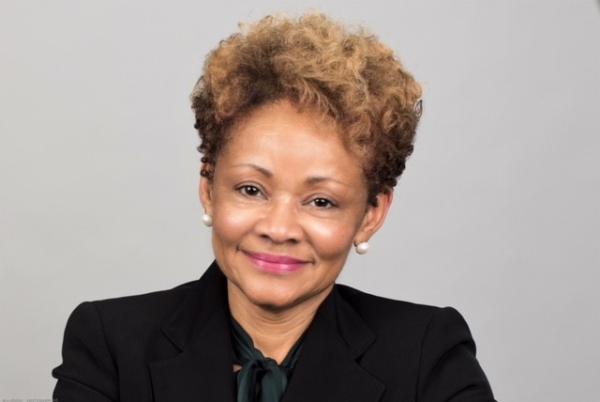
In a webinar on “white allies” moderated by Dr. Lynne Westfield, her guests Drs. Melanie Harris and Jennifer Garvey discussed their collective anti-racism work. Dr. Harris stated that she feels called to work with white colleagues around anti-racism, but that white colleagues must do some preparatory anti-racism work before engaging black people in conversation or enlisting their help. I do not sense a call to anti-racism work with or for white people, but I find myself in the thick of it every time I teach a class open to all students and more so in a seminary where white students are the majority. When white students arrive in my courses, they find that black and brown scholars and our scholarship are centered, thereby decentering whiteness. A question that some white colleagues and students ask after reading my womanist work for the first time, which is the case with this “African American Biblical Interpretation and the Gospel of Luke” course I am currently teaching, is “how do we know when we have gone too far?” (implication, you have gone too far?). Or they assert that “we must find the original meaning of the Bible before we can apply the truth” to contemporary contexts. I have never expressly articulated my work as a womanist biblical scholar as anti-racism work prior to this collaboration between a white male professor, Dr. Dan Ulrich (as learning professor in the course) and the dominantly white Bethany Theological Seminary/Earlham School of Religion where he teaches. This collaboration is my most labor-intensive anti-racism work in the classroom to date. Teaching biblical studies as an African American female has never been without the challenges of sexism, racism, and classism. I am sure that this isolation required of me during this pandemic has lowered my threshold for racism, but I maintain my composure. Whether it is intentional or not, decentering whiteness while teaching as a black woman is emotionally, spiritually, intellectually, and physically taxing. White people in general are oblivious to the impact of anti-racism work on black scholars as teachers and colleagues. In one breath, many white people position themselves as both progressives and gatekeepers of Eurocentric approaches to interpretation. When the participants (white and black) in this course were polled about how many books they had read by African American biblical scholars prior to this course, many named black theologians like James Cone or Delores Williams. One white male participant wanted to use his knowledge of Martin Luther King Jr. to demonstrate how radical my work is. King is only palatable to most white people and many nonwhite people post-mortem; in his later years King was regarded as radical. To racism, black bodies are easily interchangeable. As the instructor, I can muster the bandwidth to challenge racist assumptions and ideas or I can preserve my energy for other things. Dr. Harris asks herself “what is the garment I must place on my mind, my body, on my spirit to work with white students today?” Yes, so true. Our consultants to this collaboration, Drs. Marcia Riggs and Mary Hess, asked me how I plan to create empathy among my students for people experiencing homelessness. My response was through stories, guest speakers (one of whom experienced homelessness and is now the founder/director of Love Beyond Walls in Atlanta), and Matthew Desmond’s book, Eviction. In a Consciousness-Raising document I constructed, one of the questions is “have you ever experienced trauma?” and “… or homelessness?” Quite a few said they had not. In Eviction, Desmond shares the stories of poor white people (living in a trailer park in the North side of Milwaukee) and poor black people (living in an apartment building on the South side of Milwaukee). Through their stories, readers witness the violent intersectional impact of systemic poverty, racism, and sexism. The question that also arises is how does one create empathy for the plight of black people? The deaths of too many black and brown women and men have been videotaped and circulated on social media; they were suffocated or shot to death by police officers ‘before our eyes.’ George Floyd was not the first; the killers of Breonna Tylor have yet to be arrested. It is unclear whether most white people marching with BLM and SayHerName protests empathize with black people, it is popular now to do so, and/or the pandemic allows for and compels their participation. In this course, how do I create empathy for black people and encourage a need and desire for becoming anti-racist when white people believe they can have their Eurocentric exegesis cake and be progressive or progressing toward unmitigated anti-racism that both empathizes with black peoples and their lived realities with systemic racism and acknowledges (and exposes) sacralized rituals that perform whiteness? John Warren argues that “education relies on maintenance of imagined purity, that education effectively treats and reproduces the cultural logic that bodies of color represent a disturbance in a culture of power, a contaminant against the performative nature of whiteness as a pure and perfect ideal . . . education is a social process and that social process often works in violent ways to erase and inscribe violence on the bodies it encounters.”[1] Whiteness and its performance must be named, made visible to be displaced. One cannot empathize with black people and marginalize the black people’s stories, epistemologies, wisdom, and historical and contemporary experiences. Feminism centers women’s experiences and voices; this alone is troubling to exegesis born in the womb of eurocentrism, androcentrism, and racism. In a recent womanist reading of the story of the so-called “woman caught in adultery,” a white male biblical scholar asked why I must rescue all women. Yesterday, I made the comment “Yoho Must Go” on the YouTube video of Rep. Ocasio-Cortez’s response to Rep. Yoho. Someone responded to my comment by calling me a “FemiNazi.” I laughed out loud, but sexism, racism, classism, and homo/trans/queer phobia are no laughing matters; oppression is traumatic, debilitating, and death-dealing. The majority students in this course have been indoctrinated to believe that exegesis is the scientific method that yields the truth and/or truths about the Bible; it is the sine qua non to biblical truth. In another student poll, I placed in the Moodle course for the week of July 20, majority students responded with certainty that exegesis is the opposite of eisegesis, as reading out of the text versus reading into the text. How does one encourage empathy for centering black women and our communities, our epistemologies, and our approaches to biblical interpretation that challenge what students believe is objective science (or subjective but superior)? There were no scientists at the table during the Enlightenment when European white biblical scholars invented exegesis as the antithesis of eisegesis. We all read into texts; we bring our biases, our training, the impact of our culture and ecclesial affiliations, to the task of reading. Most students believe exegesis is a skill; a few responded that it as a gift. Exegesis is a skill that is taught and with much practice is learned. But it, of course, is not a science with a guaranteed outcome/truth provided one uses a set formula, as evinced, at least, by the hostile arguments among biblical scholars over in/correct exegetical truths. Let’s be honest; few students leave theological schools with the ability to write a good exegesis paper, but our institutions persist in their efforts to inculcate the notion that exegesis is the best and/or only legitimate approach to biblical interpretation and to claim to be doing anything but exegesis is unacceptable; only the uneducated or miseducated perform eisegesis. Seminary graduates interpret biblical texts variously on Facebook, for example, and label them ‘exegetical’ and themselves ‘exegetes’; often they are doing anything but exegesis. Labeling their efforts at interpretation as exegesis legitimizes them and their readings. Religion often dismisses common sense questions as not spiritual, but I am committed to challenge students with probing questions, such as “what is at stake?” “who loses?” and “what is the impact?” I hope to encourage or compel them to re/consider their assumptions and assertions. But it is also necessary to directly refute or challenge racist beliefs, assumptions, and assertions. [1] John T. Warren, “Bodily Excess and the Desire for Absence: Whiteness and the Making of (Raced) Educational Subjectivities,” Performance Theories in Education: Power Pedagogy, and the Politics of Identity, eds. Bryant K. Alexander et al., (NJ: Lawrence Erlbaum, 2005), 86.

Education is the process of learning and knowing, an undertaking unrestricted to our schools, curriculums and textbooks. Rather, it is a holistic process that continues all throughout our lives. Even mundane, regular events and occurrences around us are educational in some way or another. It wouldn’t be an overstatement to say that our lives without education would be stagnant, hollow even. No change would occur, no milestones would be reached. We would float in the same place without meaning. Thus, we organize the dissemination of knowledge not just to give meaning to others, but to ourselves. When we educate a person, we can shift a world; to educate a person, passes on meaning from one person to the next; to educate a person, changes the world. Teachers possess such a power. We teachers and professors should find immense meaning in our work—especially when the role has been recently reconstructed to something radically new. We must challenge ourselves to find inspiration again during a time when teaching and education has been entirely digitized to muted chatrooms and emails, forcing the traditional to become innovative, and the personal to become impersonal. In this moment when the comforts and familiarities of regular life has been put on pause, and slowly started again, we reflect on how to make use of the sudden changes brought on during the pandemic. The fervent discussions about race in America remain at the top of our concerns. It’s timely that attention to the racial and economic divide during the crisis have turned this omnipresent national issue into an urgent and revolutionary world protest given that Covid-19 cases and deaths have targeted black and brown communities. It reminds professors that we cannot forget to tackle basic struggles, and inform others that such a struggle even exists. We must teach our students to be actively anti-racist, and even further, to understand how racism intersects with other forms of prejudice to create stronger forms of discrimination. Be it one’s gender, body type, economic status or sexual orientation, we must remind ourselves and our students that no one issue stands alone, but converges with others. Susan Shaw and I co-wrote a book, Intersectional Theology which talks about how there are no single axis issues, but multiple axis issues. Our identities are not dimensional but multi-dimensional; we understand ourselves through the very personal experience of our gender, sexuality, ethnicity, ableism, class etc., One’s identity is the converging of multi-axis identities. These identities all shape us and define who we are. But these identities are also points of justice as racism, patriarchy, homophobia embed themselves in the fabric of our society. In doing intersectional theology, we recognize that it comes with the requirement to create social justice. In the same way, we want our teaching to be meaningful, to address social issues and to further justice. How can we do this? The books that we need to advocate for students to read must be racially and gender diverse, written by a diverse breadth of writers, covering a diversity of perspective and subject matters. The history of theology is mostly written by men. It is crucial that we listen to voices other than white men’s to get a deeper and more expansive theological understanding. Therefore, pedagogically, we need to urge students to read non-white books[1]. We can strategically put them in our syllabus, include authors of color whose work touch on justice, and also select them for their assignments. Projects in class and outside the class can also incorporate social justice elements. I know in some seminaries and colleges, service learning is part of the curriculum. In those schools, part of the justice work is included in the courses throughout their studies. Early on in our schooling we are required to volunteer or participate in service learning, however this idea of justice work should also be upheld by professors in later education, adjusting the work for students studying for their bachelor’s, Master’s, or higher. Whoever the student or professor, whatever the format, setting or institution, informing and encouraging students to promote justice should be lifted as one of the highest priorities in our teaching. Going forward, we can utilize social media as a vital tool to share information and ideas. We can encourage students to blog (for their seminary, church or denominational blogsite), share, or write social justice posts. Social activism on the internet can be a powerful source of information sharing, encouragement and engagement. Political petitions are shared online, protest events are shared and organizations who do the work can also be shared. These elements can be tied into the course content and assignments. Another powerful tool is the media: movies, videos, music, etc. which used in teaching can make for a more poignant, dynamic tactic to promote social justice. I have used movies such as “Sophie’s Choice,” “God on Trial,” and “The Mission” to raise awareness of the social injustices such as anti-semitism, slavery, and colonialism and how to move forward. As we continue to teach during a pandemic, we can harness all the tools we have available online to express our plights, our activism, and our hopes for the uncertain future. We can be motivated by the challenges of virtual learning, and develop new ways to encourage community engagement, even at a distance. Community building, church building can be done online as COVID-19 continues to spread and spike across the United States. The professor has essential power not just in the classroom, but for the next generation. If the professor can also exemplify what they teach in their own lives, it will make a stronger impact in the classroom. Practice what you preach can also apply to practice what you teach. Teaching should be meaningful and substantive—but above all, it should be transformative. Let yourself be open to the quiet, and grand transformations in the everyday; the ones that shift your consciousness and provide an experience to learn from and be shared. In this way, we, as professors and learners, can continuously provide pieces of wisdom to promote justice and demand change. [1]A few examples of books to consider reading and adding to your syllabus: De La Torre, Miguel, Burying White Privilege, (Grand Rapids:Eerdmans, 2018) Cone, James, The Cross and the Lynching Tree, (Maryknoll: Orbis Books, 2011) Kim, Grace Ji-Sun, Embracing the Other (Grand Rapids: Eerdmans, 2015) Townes, Emilie, Troubling in My Soul, (Maryknoll, Orbis Books, 2015)

Minority faculty at predominantly white institutions (PWIs) should be keenly aware of the controversial nature of teaching about race. Black faculty who teach about race must simultaneously manage contentious conversations about racism against Black people, while also being confronted with the stereotyped biases of racially-primed white students toward them. Addressing common objections white students may bring into the classroom requires creating space for dialogue and critical engagement. Common issues range from ambivalence, racial colorblindness, white fragility, to white supremacist ideologies. Asian, Black, Indigenous, Latinx, and other minority students in PWI classrooms may be reluctant to speak up or participate for any number of reasons. Research has shown that students in a majority white environments tend to downplay ethnic and cultural differences. Research has also shown that minority status in PWIs often comes with additional stress due to racism, discrimination, interracial conflict, lack of support and representation, sense of alienation, or an unwelcoming campus environment. Appealing to the institutional identity, history, and demographics of your institution helps to frame the classroom conversation. PWIs do not exist in a vacuum or on an even playing field. They have particular cultures and histories based on the community in which they are embedded. Framing conversations about race within local systems facilitates a historical understanding of racial disparities. If students can see the inequities of race in the immediate context of their own school, neighborhood, and city, the chances of creating a sympathetic learning environment are much greater. Since the Bible has been used to promote the ideology and practices of racism, an important pedagogical move is to identify the biblical and theological roots of the problem. This history is important to tell, expose, and dismantle, particularly in a Christian PWI and perhaps especially in a biblical studies classroom. Minority faculty should be mindful of striking a balance between a persuasive teaching style and difficult conversations, especially when addressing the hard truths about systemic racism. Faculty and administrators at PWIs must seek to understand the nature of negative assessments made by students of Black faculty. Tenure and promotion for Black faculty are often threatened by negative evaluations by white students who perceive them as anti-white especially when discussing Blackness or anti-Black racism. Some Black faculty may experience psychological discomfort when teaching at PWIs. By virtue of the limited numbers of other Black faculty on campus, you may be more visible to other colleagues and students. Some find this hyper-visibility uncomfortable. These dynamics might make you feel compelled to constantly monitor yourself or avoid social situations altogether. Building a strong inter-minority coalition with colleagues inside and outside of the walls of your institution is highly recommended for all faculty of color. Working in your institution requires working on your institution. This is especially true for minority faculty who are committed to creating a culture of diversity and inclusivity at PWIs. Minority faculty should be aware of the impact of racial battle fatigue. In addition to managing course loads, committee meetings, research agendas, and student issues, Black faculty use additional energy to fight microaggressions, overt racism, and institutionalized racism. The effort that it takes becomes emotionally, physiologically, and psychologically distressing. This is racial battle fatigue, and it can lead to a reduced sense of well-being for Black faculty. It is imperative that Black and other minority faculty practice good self-care to mitigate the negative impact of racism and racial battle fatigue. According to Quaye et al. (2019), self-care strategies for Black faculty to consider include “unplugging from people and places that cause them harm, building community with other Black educators, caring for their bodies, finding safe spaces, and using counseling.” References Alexander, R., & Moore, S. E. (2008). The benefits, challenges, and strategies of African American faculty teaching at predominantly White institutions. Journal of African American Studies, 12, 4-18. Arnold, N. W., Crawford, E. R., & Khalifa, M. (2016). Psychological heuristics and faculty of color: Racial battle fatigue and tenure/promotion. The Journal of Higher Education, 87, 890-919. Bailey, Randall C., Tat-Siong B. Liew, and Fernando F. Segovia, eds. (2009). They Were All Together in One Place: Toward Minority Biblical Criticism. Atlanta: Society of Biblical Literature. Chancellor, R. L. (2019). Racial Battle Fatigue: The Unspoken Burden of Black Women Faculty in LIS. Journal of Education for Library and Information Science, 60, 182-189. Daniel, B. J. (2019). Teaching while Black: Racial dynamics, evaluations, and the role of White females in the Canadian academy in carrying the racism torch. Race Ethnicity and Education, 22, 21-37. JBL Forum on Black Lives Matter for Critical Biblical Scholarship (2017). Journal of Biblical Literature 136.1: 203-244. Nasrallah, Laura and Elisabeth Schüssler Fiorenza (2009). Prejudice and Christian Beginnings: Investigating Race, Gender, and Ethnicity in Early Christian Studies. Minneapolis: Fortress Press. Pizarro, M., & Kohli, R. (2018). “I stopped sleeping”: Teachers of color and the impact of racial battle fatigue. Urban Education, 1-25. Quaye, S. J., Karikari, S. N., Rashad Allen, C., Kwamogi Okello, W., & Demere Carter, K. (2019). Strategies for practicing self-care from racial battle fatigue. Journal Committed to Social Change on Race and Ethnicity, 5, 95-131. Resources on Racism, White Supremacy, and Black Lives Matter Smith, W. A. (2004). Black faculty coping with racial battle fatigue: The campus racial climate in a post-civil rights era. In D. Cleveland (Ed.), A long way to go: Conversations about race by African American faculty and graduate students. Peter Lang Publishing, Inc., 171-190.

Teaching in a two-person religion program at a liberal arts college means you have the opportunity to teach in your field of study, and also in other areas of interest and expertise. It also means your students range from majors and minors to those seeking a general education course. For me, this has meant I teach primarily courses on various religious traditions, including Islam, Qur’an, Asian Religions, and now one on Islamophobia, as well as writing seminars around the topics of gender and race. While the content of these courses lend themselves to discussions that fall under the category of “other,” “diversity,” and other codes for non-dominant traditions, I would argue that the way we teach this content matters as much as, if not more so than, the content itself. To that end, I think a diversity-infused course should not be measured by its content so much as how that content is conveyed. I wish I could say that I knew this, or knew how to accomplish this, when I began my teaching career, especially as it seems so obvious to me now. As luck would have it, a few years ago I coordinated a workshop with a colleague on “demystifying diversity in the classroom,” and we brought Kyana Wheeler and Fran Partridge to help moderate our conversations. In that context, I learned how better to talk about race, whiteness, and white fragility, and I gained some techniques for creating classroom spaces where these conversations could take place. Both in terms of pedagogy and interpersonal connections, it was one of the most eye-opening and liberating experiences that I have had. The facilitators introduced us to a couple of exercises that had us examine our own position in society. We filled out worksheets identifying the various “isms” including sexism, ableism, just to name a few. Additionally, we identified privately our own places of privilege and those of oppression, for example, based on gender, sexuality, and socioeconomic status. Of note, Kyana Wheeler did not include race in these exercises and when we had finished our intense and engaged discussions, she asked us to add the layer of race and note how much worse the discrimination would be. All of this took place after we had privately taken implicit bias tests online. Leaving race out until the end for a group of predominantly white instructors was for me a very powerful demonstration of not only our own positions in the world, but how we talk about race, racism, whiteness, white fragility, and white privilege. The bottom line is we don’t; and we are very uncomfortable when we do. In the semester following this workshop, I taught a first-year writing class under the theme of white fragility focusing on issues of race and gender. In addition to readings on whiteness, white fragility, and doing race, we engaged in discussions about the book, Pushout: The Criminalization of Black Girls in Schools, by Monique W. Morris. The students, predominantly white, engaged in conversations about the intersectionality of race and gender. We were able to do so toward the end of the semester with minimal defensiveness, I think, because we had engaged in the exercises described above in the first half of the course. Rather than thinking of them as one set of exercises to set the tone for the course, I conducted these self-awareness practices throughout the course as reminders of our own positionality. During the first week, the students engaged in identifying the oppression at work in particular scenarios. Another week, they took implicit bias tests. A week later, they engaged in discussions about where they felt privilege and oppression. I borrowed the technique of leaving out race until the end. It seemed to work. Currently I am working on a course on Islamophobia and want to move away from catering to white privilege or the comfort of non-Muslim students. Based on a second takeaway from the summer workshop, specifically that race and racism are the most powerful underlying factors of most if not all forms of oppression, I believe a course on Islamophobia must engage in discussions of anti-racism. I have decided to take the tools of self-examination with respect to race and racism that successfully created a space for critical discussion of the plight of black girls in the US school and prison systems, to a course that teaches against Islamophobia. Furthermore, I believe that any course, even ones that don’t deal explicitly with racism or other forms of oppression would benefit from these activities as they help us to understand our place in the conversations, and who we might be leaving out.
[su_youtube_advanced url="https://www.youtube.com/watch?v=8JR_5IQlhxk&feature=youtu.be"] Last year I participated in a Colloquy at Wabash entitled “Teaching the Black Presence.” Not long after, for the first time in my career, a white male New Testament scholar, Dan Ulrich, approached me about teaching an African American biblical interpretation course for students, primarily white, attending Bethany Theological Seminary in Indiana; for some reason I imagined them to be primarily male. Dan had read and assigned students to read the essays I wrote in True Our Native Land (2007). By Dan’s own admission, he might have been “scared away by the strong hermeneutics of suspicion developed” in my recent work, much of which he has now read for this course. That reflects change. In my experience it is not unusual for scholars in biblical studies to be more familiar with the work of black males than with the scholarship of black females, but that is changing. This collaboration between Dan and me is novel for both of us, and taking it online in the pandemic brings its own challenges. We each carry our own ‘baggage,’ and we are committed to working through it to create a pedagogical experience that will enhance learning for the students enrolled and for ourselves. I am the teaching faculty for the course, the expert in African American and womanist biblical interpretation, although my dissertation and the book I published from it are readings of the Acts of the Apostles. I am a biblical scholar--this is often lost on some colleagues across the academy, as well as students, in my experience. So, as we navigate our way through this course—become acquainted with each other as scholars and human beings—our ‘baggage’ will trip us up at times. But hopefully we will also shed some ‘baggage.’ This is not an easy journey for either of us because of experiences, the ways that we have been socialized in the academy and society, both of which are racialized and gendered in favor of white males and the scholarship they do. We both have been shaped in ways we can and cannot immediately identify. In a meeting during the Colloquy with our consultants (Dr. Marcia Riggs and Dr. Mary Hess), Mary provided feedback to Dan on his first draft blog. It was feedback that I withheld because I did not believe Dan could receive it from me. This is my baggage. After Mary spoke, I confessed that I had a similar impression, but did not want to ‘hurt Dan’s feelings.’ But as I reflect now that was not the reason I withheld my critique. I believed that Dan would not receive my critique, and so why offer it. I was guilty of what I and other black scholars and scholars of color believe (and have experienced) too many white scholars to be guilty of, which is of not providing needed critical feedback to black students and other students of color, of being patronizing and assuming they can’t handle it or are not up to doing the work. I never fail to provide critical feedback to students, regardless of race-ethnicity, gender, sexuality, and so on. But I neglected in Dan’s case to offer useful critique, and my failure was not beneficial to him. I didn’t give Dan the chance to receive my feedback with grace and collegiality until after the white woman scholar offered hers. Going forward I must be honest with Dan, tactful, but honest in offering critique, because he has said he is participating in this collaboration as a learner and peer. This change would reflect neighbor-love informed by a self-love that values critical feedback as necessary for success. As a learner-collaborator, I am grateful for the idea from our consultants to ask students to write more than a two-paragraph statement describing the contexts that impact their selection and reading of a pericope. Our consultants have encouraged me to ask students to write an extended hermeneutical autobiography that will assist them in thinking more critically about their contexts and how culture and social identities, for example, shape them. This collaboration is not easy, but it is giving me life and pedagogical strategies and ideas. Read About Dan Ulrich's Experience with Mitzi Smith
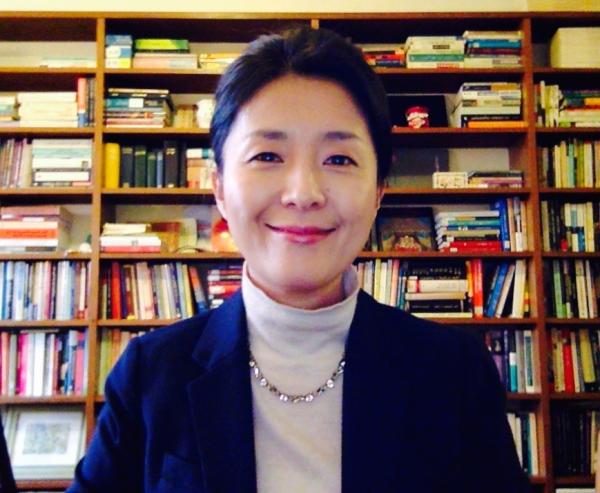
Parasite, directed by Bong Joon-ho, is the first non-English-language, subtitled film to win Best Picture in the Oscars’ 92-year history. President Trump censured the award of the foreign film in a February 2020 campaign rally, wanting to get back to the 1939 classic movie “Gone with the Wind” often criticized for its racist stereotypes. The distributor of Parasite immediately responded to the President with a tweet: “Understandable. He can’t read.” In an earlier speech accepting the Golden Globes Foreign Film Award, Bong observed, “Once you overcome the 1-inch-tall barrier of subtitles, you will be introduced to so many more amazing films.” In contrast to #OscarsSoWhite, the US President’s view of Oscars-not-quite-so-white reminds me of the connections between cultural texts and imperialism Edward Said explores in his work. I want to bring this discussion to my teaching context. When social justice is addressed in the classroom, one may assume that the teacher should discuss particular social issues or subjects that exist outside the classroom. Yet, if social justice is primarily about power, privilege, and oppression, a curriculum is inevitably a site in which social justice issues emerge. Curriculum selects, structures, and reproduces knowledge while authorizing certain constructions of knowledge and hence, producing the truth. How have knowledge and the truth been constructed? The western academy and education are rooted in a modern liberalism that presupposes “human” as the white European male. This ideology is racist and colonialist. In a Wabash podcast, “After Whiteness,” Willie Jennings points out that western education has been shaped by the dominant image of formation, “becoming”—becoming a “white self-sufficient man” and suggests an alternative view that highlights “belonging.” It was enlightening to understand where my frustration, along with a sense of inferiority, arose throughout my fourteen years of theological education in South Korea and the U.S. What you are going to “become” is not only unidentified but also, instinctively, unattainable. In my seminary, I was introduced to Luther, Barth, Bultmann, and Moltmann, just to name a few, by all male professors who had earned their doctorates in the U.S. and Europe. In my first year of Master’s studies in the U.S., I couldn’t believe that I was being taught by the prominent male professors whose names I had only seen in books. One of the professors, whom I respected greatly, said to me, “Korean students’ exegesis skills are good, but there is something they lack.” The second part of his words haunted me and I desired to have what I did not have without knowing what it was. Obviously, the professor did not mean that it is whiteness that I lack. Yet the ghost of whiteness surfaces in classrooms in various forms. The student-led campaign in the U.K., “Why is My Curriculum White?”, argued that the course content at universities served to reproduce the ideology of whiteness. This argument can apply to any discipline which was founded on the work of Anglo-European white males, including theological and biblical studies. What’s wrong with using their profound work that has influenced not only Western civilization and Christianity, but also the minds of people in other parts of the world? Why am I anxious about not using one of the canonized textbooks, which white male scholars authored, for my New Testament introduction course? Because we are speaking about power structures that normalize whiteness and white privilege. Institutional whiteness is incorporated in and reproduced through curriculum. As Jennings reminds us, that is how minoritized students and faculty in religious and theological education suffer the “racially formed sense of inadequacy.” Including one or two recommended readings written by non-white scholars in the syllabus is not enough, though one may start from there. Multiculturalism often promotes diversity by including a few minority individuals or groups, while still concealing power structures that perpetuate white supremacy and racism. In order to overcome white curriculum, the teacher needs to disclose the effects of racism embedded in the discipline and institutions, dismantle the ideology of whiteness inscribed in the textbook, and develop students’ ability to critically evaluate knowledge. There are “so many great [white] movies,” as the President said. Breaking “the 1-inch-tall barrier of subtitles” is more than watching a foreign film. Students know, or need to know, how to read subtitles. Can I read? Asking the question of whether my curriculum reads as white is a matter of social justice—the matter of death-dealing or life-affirming in the classroom.
Anti-Muslim bias manifests in antagonism or ill will towards Muslims and often builds upon white-supremacist, xenophobic, and racist tropes. Anti-Muslim bias can sometimes manifest as Islamophobia, which is antagonism towards the religion of Islam or towards regions of the world historically associated with Islam. Anti-Muslim bias can be experienced by religiously practicing Muslims as well as those of an ethnic or racial background associated with Muslims. Hence, anti-Muslim bias does not just affect Muslims, it can impact North Africans and Arabs (including Christians) and brown people who present with perceived similar characteristics as Muslims (e.g., Sikhs). White Muslims of non-Arab backgrounds, Black, Latinx, and Muslims of East Asian backgrounds experience the effects of anti-Muslim bias as well. In the North American and European context, there are several motivating factors for anti-Muslim bias. Some of them are explicitly geopolitical, others are rooted in the historic encounter and—in some respects, direct competition—between Islamic and Christian faith-based civilizations. Still others are seemingly rooted in an existential discomfort with human difference. In other words, anti-Muslim bias serves simultaneously as an expedient mobilization technique, as a theological polemic, and as a means to sow animosity and mistrust for personal gain. These motivating factors can overlap and be mutually reinforcing. For instance, many American and European politicians have ignited a political base by that is largely white and Christian by appealing to stereotypes of Muslims as invaders who are frenzied, culturally unsophisticated, nonsensical actors with a propensity toward violence. The white, Christian-identified politicians can then depict themselves as savior–protectors who are poised to guard territory, religion, and national identity. In this way, anti-Muslim bias becomes a lever of ethnic nationalism. Such strains of anti-Muslim bias have foreign policy implications beyond their domestic utility; it is much easier to wage a war in a territory if constituents supporting the war effort believe that their enemy is culturally and religiously inferior and a legitimate existential threat. Likewise, it becomes easier to morally justify news of mass civilian casualties abroad if those bearing the brunt of the suffering are seen as not like “us” in fundamental ways. Their suffering then becomes, in this paradigm, an unfortunate but ultimately unavoidable result of “our” need to protect “our values” from being attacked. Thus, the gross prejudice and bigotry undergirding much anti-Muslim and anti-Islamic sentiment is readily disguised as noble patriotism. Political discourses that are hostile toward Islam and Muslims—and especially those promulgated and propagated at a national level—readily feed into everyday prejudices and implicit biases against the individuals of minority race, ethnicity, and/or religion; after all, these minorities only tenuously belong to the conceived “we” of the dominant national identity. False narratives, gross generalizations, and academically ungrounded analyses all serve to support notions that Muslims, or those appearing Muslim, are to be regarded circumspectly. Often anti-Muslim and anti-Islamic sentiments are promoted with coordinated talking points through prominent media outlets and personalities who stand to benefit personally from stoking the flames of bigotry. Rather than appearing as hate-mongers, trafficking in destructive stereotypes, these media personalities can cast themselves as patriots who stand for freedom and democracy over and against the repression and theocracy supposedly valued by Muslims (as a result of their purported collective disposition and religiously mandated convictions). Anti-Muslim bias is a social justice issue because it tears at the civic fabric in a way that exacerbates ideological divides and makes minorities particularly vulnerable to the violence of vigilantes and the mentally unstable. It does not just impact civic life. Like other bigotries, it clouds collective moral judgement. Education about anti-Muslim bias and Islamophobia should include discussions of its effects on targeted individuals and groups, clarification of the stereotypes and false information that propel it, and exploration of the media and financial networks that enable it. Anti-Muslim bias can be taught in the context of how other large-scale religious and ethnic prejudices have led to blatant injustices, crimes, and other morally questionable actions. The topic of compound social marginalizations, the ways in which gendered stereotypes operate, and the niche roles of so-called native informants are all relevant topics to explore in depth. There are many provocative works on these subjects. For instance, for understanding anti-Muslim biases in the United States, I recommend Stephen Sheehi’s Islamophobia: The Ideological Campaign Against Muslims (2011) which covers the nuances of anti-Muslim sentiment with extensive coverage of the approaches of the Bush and early Obama administrations. I also recommend Peter Morey’s Islamophobia and the Novel (2018) for an exploration of how Islamophobic tropes are imbedded in English literature. Sara R. Farris contributes an excellent analysis of how gendered and racially biased assumptions impact European social policies in her book, In the Name of Women’s Rights (2017). The sheer magnitude of the systemic issues and their complexity can be daunting and even depressing, but many creative and entrepreneurial efforts have taken root to try to ameliorate biases and disparities. In this regard, one of my favorites for classroom use is The Secret Life of Muslims, a short-form, web-based series of first-person documentaries that was Emmy-nominated and a Peabody finalist. I have mainly referenced the American and European context here, but Islamophobia and anti-Muslim bias, of course, have a global reach; at present, India, Myanmar, and China are areas of elevated concern.

I’ve been interested in the connection between culture and education for most of my adult life. My wife and I spent 8 years in pastoral work in Central Europe, and since 2005 my work with online education has brought me into intercultural spaces that include the intersection of multiple kinds of experiences, such as international, intercultural, and interracial. We in theological higher education must be aware of the ways multiple perspectives both enrich the learning experience as well as complicate the online learning culture. In the last decade I started inquiring about how different cultures experience online education and learning systems. My article, “Global Contexts for Learning” (2014), was an earlier attempt to describe how cultural backgrounds bring different contextual expectations, a matter course designers and online teachers ought to consider for the sake of leveling the opportunities for intercultural learning spaces. More recently my dissertation journey explored race and faith-based higher education and brought me into meaningful conversations with African American adult learners in non-traditional programs in predominantly white institutions (see Westbrook 2017, published by Routledge). These conversations exposed my own white blindness and helped me see with more focus the ways experiences of racialization affect one’s perspective, including in online education courses. I write this blog from a white perspective, and to be totally honest, this post probably is best suited for white readers. In other words, people who live with race consciousness day after day might not find this essay particularly unusual or insightful. However, those, like myself, who have lived most of life from the white position in predominantly white settings need to be informed of the extra layer of challenges racialization adds to online learning. “The Wall” of Anonymity Two broad themes surface when we consider online learning spaces and race. First, the nature of one’s working through a screen and often written-based exercises presents an “impression of anonymity” (Al-Harthi, 2005, p. 7). One of my interviewees described the online learning environment as “the wall” (Westbrook, 2017, p. 118) that protects students from racially motivated prejudices. Ibarra (2000, p. 7) cited an interviewee in which the person said, “No one can hear my accent on the keyboard.” When a person is interacting in an online course from her or his own context, the student is approaching the learning activities from a comfortable and personally selected environment. Stereotype threat may be minimalized from one computer screen to another. For many, macro-aggressions are recent experiences and the effects of segregation laws from the Jim Crow South have lingered. Some students may welcome an added layer of protection from racial discrimination. “The Wall” of Separation The second major theme is that in spite of the “wall” effect of online learning, each person brings to the classroom previous experiences of racialization, including micro-aggressions in previous schooling, the work place, and in society at large. In addition, each student also has one’s own learning style, preferred communication style, and cultural filter through which one interprets the course. What might be “normal” for some could be intimidating for others, and if the course is based in writing, then social cues and non-verbal regulators are missing, which leaves room for the imagination to infer both positive and negative presumptions about others in the course. For example, one of my interviewees said the following about her online course activities, “But I could also tell when there was a Caucasian writing . . . . Because sometimes they can get too lengthy” (Westbrook, 2017, p. 118). According to this student, she felt like her classmates’ writing styles were obviously white and different from how she would have communicated. Another example was how one interviewee presumed white privilege of her classmates because of their personal introductions in the course (Westbrook, 2017, p. 119). Now, imagine this race awareness by the students who have a background of being followed in department stores, who have had car doors locked while they were passing by, and purses held tighter when they enter elevators, all white responses to the color of the students’ skin. Such examples were given my interviewees. Then, enter back into the online discussion. What impact do these previous experiences of not being trusted have on students who feel underrepresented in a predominantly white online course? In addition, not all of my interviewees’ experiences in the predominantly white institutions were online. Some described their experiences on the physical campuses. They were quite aware of the majority white demographics in student population, faculty, and staff; and one person reported feeling insecure when she started her program due to matters of race. The point here is that this student was thinking about racial differences as well as the macro- and micro-aggressions from before. It was unlikely her white classmates thought about race at all when they were answering personal introductions or doing their course work. Some of their white classmates might even deny such a difference would exist, adding further pain to the problems. Move Toward eQuality in Online Education Online education learning spaces are not neutral spaces. Each student brings personal memories, expectations, hurts, fears, and stereotypes to the online classroom. Although the computer screen may appear to filter “in the moment” forms of discrimination and provide a safe space for “colorblind” interaction, the online experience is still a form of human interaction. Whatever social challenges people have when face to face also extend into the online domain. Rather than presuming a colorblind or neutral space, online education brings together through digital technology communities that are diverse. As theological educators, whether online or onground, we have a moral imperative to design and offer our students learning spaces that resemble the teachings of Jesus and have a spirit of peace and reconciliation. The image of the mosaic of believers before the throne of God in Revelation 7:9, 10 provides a wonderful depiction of the kingdom of God. Our theological institutions that are designed to prepare people to serve in the kingdom of God ought to hold high this image in Revelation as the standard for the reality and beauty of diversity within God’s people. As we envision the near and distant future of our distance learning, I offer the following thoughts to ponder: Design courses in such a way that maximizes access for working adults and parents. Consider accessibility matters in every possible way that digital technology may open new doors; watch out for the incidental new barriers. Predominantly white schools must continue to make diversification of faculty, staff, and students a priority. Design online courses in such a way that recognizes diversity and encourages multiple perspectives to be shared freely and safely. Adult learning programs must provide academic support and ongoing encouragement for online students, recognizing that systemic barriers have created unequal starting points for many adult learners who are returning to school. Faculty and staff must be trained for race consciousness and cultural diversity. Tim Westbrook Harding University Works Cited Al-Harthi, A. S. (2005). Distance higher education experiences of Arab Gulf students in the United States: A cultural perspective. International Review of Research in Open and Distance Learning, 6(3). Ibarra, R. A. (2000). Studying Latinos in a “virtual” university: Reframing diversity and academic culture change (Occasional Paper No. 68). Westbrook, Timothy Paul (2014). Global Contexts for Learning: Exploring the Relationship Between Low-Context Online Learning and High-Context Learners, Christian Higher Education, 13(4), 281-294. Westbrook, Timothy Paul (2017). Spirituality, community and race consciousness in adult higher education. New York: Routledge.

Mai-Anh Le Tran, an associate professor of religious education and practical theology at Garrett-Evangelical Theological Seminary, tackles a profound question in her book Reset the Heart: Unlearning Violence, Relearning Hope when she asks, “what does it mean to educate for faith in a world marked by violence?” Tran, who is a past president of the Religious Education Association, is an ordained elder of the United Methodist Church. This intriguing volume about the problem of faith in a violent world begins in August 2014 with the deaths of Eric Garner in New York City and Michael Brown in Ferguson, Missouri. Situated within this violence and racism, Tran allows three questions to guide her search for meaning and answers: “What does it mean to educate for faith in a world marked by violence? How are Christian faith communities complicit in the teaching and learning of violence? What new (or renewed) practices of faith and educational leadership can help us unlearn violence and relearn hope?” (10). The search for these answers provides her agenda for “resetting the heart” (10). Tran’s first two chapters struggle with her first question as she draws upon frameworks from social psychology, cultural studies, postcolonial theory, and racial formation theory. In Chapter Three, she examines the church’s complicity in the teaching and learning of violence. She offers a reframing of Charles Foster’s five major critiques of the church’s “catechetical culture” as a foundation of her answer. Finally, she attempts to answer her third question in Chapters Four, Five, and Six as she models relearning hope. Throughout this volume, Tran explores a number of subjects that interrelate with her subject including race as political theology, racism as a form of violence, religious education malpractice, and the erasure of historical memory. Her model for relearning hope includes practicing communicability, redeemability, and educability. She reminds her readers again and again of the vital importance of religious education and the role of the religious educator in fostering transformation. As she writes in her conclusion, “Let the people of God say ‘Amen.’ And let Christian religious educators remind the people what ‘Amen’ means” (164). Tran makes excellent use of a powerful theological writing technique rooted in what theologian Heather Walton describes as “performance autoethnography.” Her use of this technique makes the book’s content come alive in a faithful and academically solid narrative; Tran shows readers theology instead of just telling them. This is particularly true in her opening chapter as well as in Chapters Four, Five, and Six, when she integrates the support of 14 other theological voices that she engages as “theological reflectors.” This complex and stimulating writing does make the writing style in Chapters Two and Three, where Tran establishes her argument within the wider academic narrative, seem flat and uninspiring. Nevertheless, this is a very well-written narrative that is a pleasure to read. Tran provides readers with a valuable and insightful addition to the theological understanding of religious education. This volume should be added to all theological libraries and is a must read not only for academics who specialize in religious education but also for clergy and leaders in parish religious education.